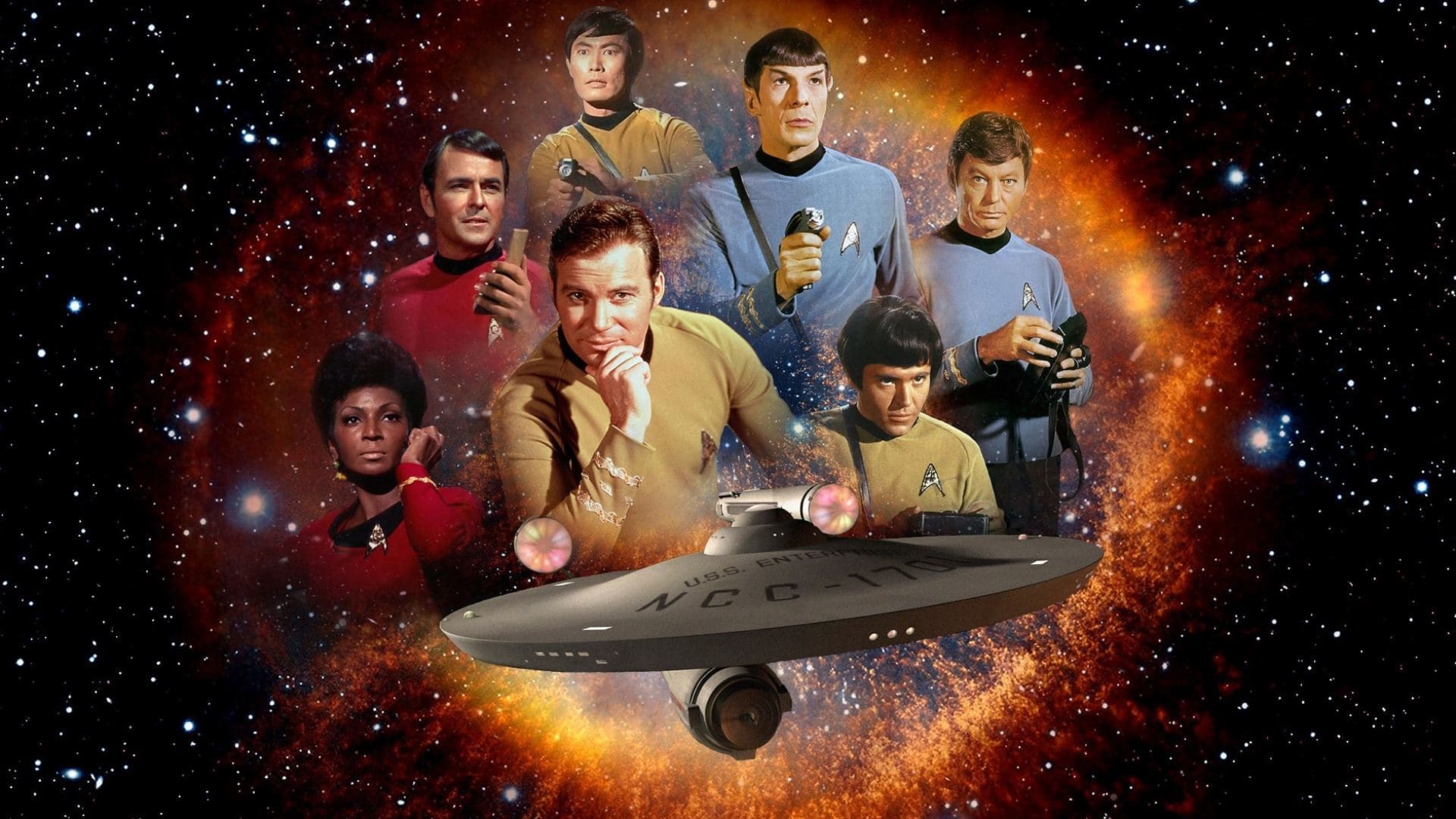
Star Trek Budget
Updated
Synopsis
"Star Trek" (2009) serves as a thrilling reboot of the iconic franchise, directed by J.J. Abrams. The film takes viewers on an exhilarating journey through space and time, introducing a new generation of characters while paying homage to the beloved originals.
The story begins with the birth of James T. Kirk, who grows up to become a rebellious and ambitious young man. His life takes a dramatic turn when he joins Starfleet, where he meets the brilliant Spock, a half-human, half-Vulcan officer struggling with his identity. As they navigate their differences, they are thrust into a conflict with the menacing Romulan, Nero, who seeks revenge against the Federation.
Set against a backdrop of stunning visuals and groundbreaking special effects, "Star Trek" explores themes of friendship, sacrifice, and the quest for identity. The film not only revitalizes the franchise for a new audience but also sets the stage for future adventures in the final frontier. With a talented cast and a compelling narrative, it captures the essence of exploration and the spirit of discovery that has defined "Star Trek" for decades.
What Is the Budget of Star Trek (1966)?
Star Trek premiered on NBC on September 8, 1966, with a per-episode production budget of approximately $190,000 in its first season, equivalent to roughly $1.7 million in 2024 dollars. That figure was reduced to $185,000 per episode in Season 2 and $175,000 in Season 3 as the network cut costs. The most expensive single episode of the entire run was "The City on the Edge of Forever," which cost $250,396 to produce, partly because of its complex time-travel narrative and the extensive work required from guest writer Harlan Ellison. By the standards of hour-long drama in the late 1960s, the show ranked in the middle of the field, spending less than Land of the Giants ($250,000 per episode) but more than Lost in Space ($140,000 per episode).
Key Budget Allocation Categories
The Star Trek budget was spread across an unusually demanding mix of practical construction, optical effects, and intensive post-production work that set it apart from nearly every other television production of its era.
- Sets and Production Design: The Enterprise bridge, engineering section, transporter room, and sickbay were all built as standing sets on Desilu Stage 9 and 10 at Gower Street in Hollywood. Maintaining and redressing these sets consumed a large share of each episode budget.
- Optical Visual Effects: Every space sequence required hand-crafted in-camera optical composites. The production used a four-foot and eleven-foot model of the Enterprise shot by a dedicated effects unit, with each shot requiring multiple film passes for lighting and planet overlays.
- Costume and Makeup: The distinctive Starfleet uniforms, alien makeup prosthetics, and alien creature suits required both a full-time wardrobe department and specialized makeup artists. Some alien costumes cost thousands of dollars per episode to construct.
- Writing and Script Development: Gene Roddenberry maintained an unusually rigorous script development process, hiring science fiction authors including Theodore Sturgeon, Richard Matheson, and D.C. Fontana. Script costs exceeded typical network television norms.
- Film Stock and Post-Production: Creator Gene Roddenberry shot upward of 50,000 feet of film per screen hour, more than twice the industry average, generating editing and lab costs well above typical one-hour drama budgets.
How Does Star Trek's Budget Compare to Similar Films?
Star Trek occupied a unique cost position among late-1960s science fiction television, spending more than most competitors while still operating far below what its ambitions arguably required.
- Lost in Space (1965): Budget $140,000 per episode | Network NBC competitor. Lost in Space relied more heavily on reused sets and simplified effects, producing a visually lighter show at a lower cost per hour.
- Land of the Giants (1968): Budget $250,000 per episode | Irwin Allen production for ABC. Spent significantly more per episode than Star Trek, with a large portion of that going to miniature construction and scale effects.
- The Outer Limits (1963): Budget approximately $100,000 per episode | ABC anthology. An earlier anthology format allowed for lower recurring set costs but required new creature builds each week.
- Voyage to the Bottom of the Sea (1964): Budget $130,000 per episode | ABC adventure series. Another Irwin Allen production, it shared some effects techniques with Star Trek but used a narrower, submarine-focused setting that reduced location variety costs.
Star Trek Season Performance
Star Trek ran for three seasons on NBC, airing 79 episodes between September 1966 and June 1969. The show never ranked among the top 30 in the Nielsen ratings during its original run, but its audience demographics, which skewed toward educated, higher-income viewers, made it more valuable to advertisers than raw numbers suggested. The Season 2 premiere drew a respectable audience before the series was moved to an undesirable Friday 10 p.m. time slot in Season 3, which NBC executives privately acknowledged was intended to set up a cancellation.
- Per-Episode Production Budget (Season 1): approximately $190,000
- Per-Episode Production Budget (Season 2): approximately $185,000
- Per-Episode Production Budget (Season 3): approximately $175,000
- Total Episodes Produced: 79 across 3 seasons (1966 to 1969)
- Syndication Revenue: Paramount Pictures licensed the series into syndication beginning in 1969, generating revenue that ultimately dwarfed the original production cost many times over across decades of reruns worldwide.
- Franchise Value: Star Trek grew into one of the highest-grossing entertainment franchises in history, spawning 13 feature films, 11 additional television series, and billions of dollars in merchandise revenue.
The series was cancelled in February 1969 after NBC received a second wave of fan letters campaigning for renewal. Despite the cancellation, the studio held the rights and kept the show in syndication, where it found a vastly larger audience than it ever had during its network run.
NBC's original investment in three seasons of Star Trek, totaling roughly $15 million across all 79 episodes, produced a franchise valued at billions. The original production cost represents a tiny fraction of the downstream value the network effectively gave away by cancelling and then licensing the property to Paramount.
Star Trek Production History
Star Trek originated with Gene Roddenberry, a former commercial pilot and television writer who pitched the concept to NBC in 1964 as "a Wagon Train to the stars." The network commissioned a pilot, "The Cage," starring Jeffrey Hunter as Captain Christopher Pike, which NBC rejected in early 1966 as "too cerebral." In an almost unprecedented move for the time, the network ordered a second pilot, "Where No Man Has Gone Before," which recast the captain as James T. Kirk played by William Shatner. That second pilot convinced NBC to order a full series.
Roddenberry assembled a writers room that deliberately recruited science fiction literary authors rather than standard television writers, seeking scripts that engaged with genuine ideas about society, war, race, and human nature. The network repeatedly clashed with Roddenberry over content, forcing changes to scripts dealing with religion, politics, and the Vietnam War allegory. The casting of Nichelle Nichols as Lieutenant Uhura, one of the first Black women in a recurring professional role on American network television, drew both significant attention and pushback from NBC affiliates in the South. Dr. Martin Luther King Jr. personally persuaded Nichols to remain on the show when she considered leaving after Season 1.
Production took place at Desilu Productions studios in Hollywood. After Paramount acquired Desilu in 1967, the studio became Paramount Television, which retained the Star Trek library. The physical production was managed by producer Robert Justman, who fought constantly with the network over budget, and by associate producer D.C. Fontana, who became the show's primary script editor and wrote some of its most acclaimed episodes.
Awards and Recognition
Star Trek received significant recognition from the television industry and the science fiction community during and after its original run, earning 13 Primetime Emmy nominations despite never winning in any category.
- Hugo Award for Best Dramatic Presentation (1967): Won for "The Menagerie," the two-part episode that repurposed footage from the rejected first pilot.
- Hugo Award for Best Dramatic Presentation (1968): Won for "The City on the Edge of Forever," written by Harlan Ellison, considered by many the finest episode of the series.
- Writers Guild of America Award (1968): Won Best Original Teleplay for "The City on the Edge of Forever."
- NAACP Image Award (1967): One of the first television programs to receive this recognition, cited for its diverse cast and progressive representation.
- Emmy Nominations (1967 to 1969): 13 total nominations including Outstanding Dramatic Series (twice), Outstanding Supporting Actor (Leonard Nimoy, three consecutive years), and multiple technical categories. No wins.
Critical Reception
Contemporary critical reception for Star Trek in 1966 and 1967 was cautiously positive but not effusive. Reviewers recognized the show's ambition while sometimes finding its execution uneven. The Hollywood Reporter called the premiere "an imaginative and exciting science fiction series." Variety praised the production values and the character chemistry between Shatner and Nimoy but questioned whether the network audience was ready for serious science fiction storytelling.
Retrospective critical consensus elevated Star Trek far above its original reviews. On Rotten Tomatoes, the series holds a 95% approval rating. The original run is now regarded as a landmark in American television history, praised for using science fiction as a vehicle for social commentary on civil rights, war, and human nature at a time when network censors would not allow such subjects to be addressed directly. The Shatner-Nimoy dynamic, in particular, is cited by television scholars as one of the most influential character pairings in the medium's history.
Frequently Asked Questions
How much did it cost to make Star Trek (1966)?
The production budget has not been publicly disclosed.
How much did Star Trek (1966) earn at the box office?
Box office figures are not publicly available.
Was Star Trek (1966) profitable?
Insufficient data for a profitability assessment.
What were the biggest costs in producing Star Trek?
Specific cost breakdowns are not publicly available.
How does Star Trek's budget compare to similar sci-fi & fantasy films?
Without a confirmed budget, comparison is not possible.
Did Star Trek (1966) go over budget?
There are no widely reported accounts of significant budget overruns for this production. However, studios rarely disclose precise budget overrun figures publicly. The reported production budget reflects the final estimated cost.
Who directed Star Trek and who were the key crew members?
Directed by Unknown.
Where was Star Trek filmed?
Star Trek was filmed in United States of America.
Filmmakers
Star Trek

Official Trailer
Build budgets like this one in Saturation
Start from an industry-standard feature film template, import the schedule and rates you already have, and let the cost report keep itself current as you spend. Real-time collaboration, no spreadsheets.