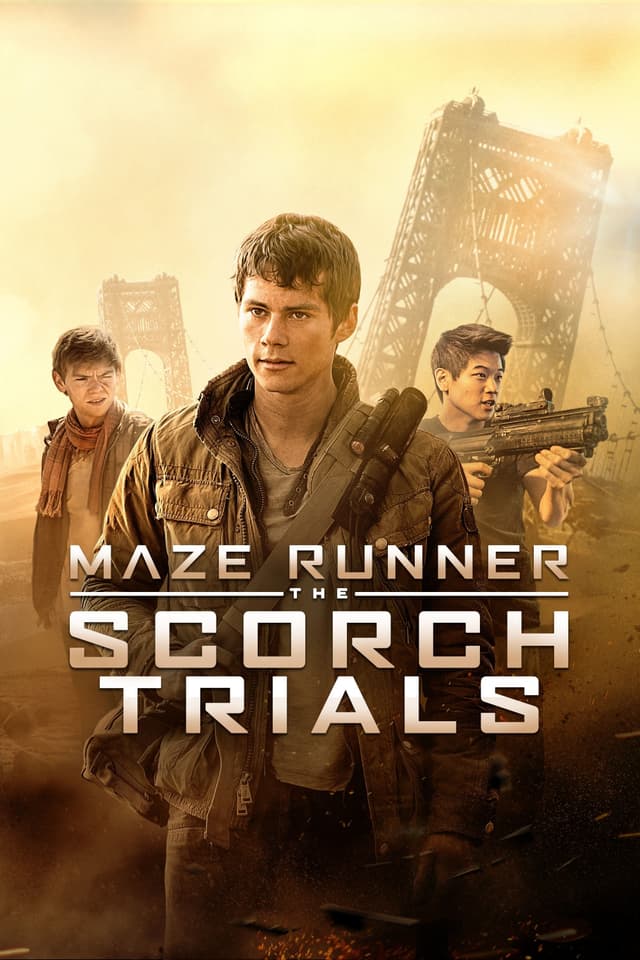
Maze Runner The Scorch Trials Budget
 Science FictionActionThrillerAdventure2h 11m
Updated
Synopsis
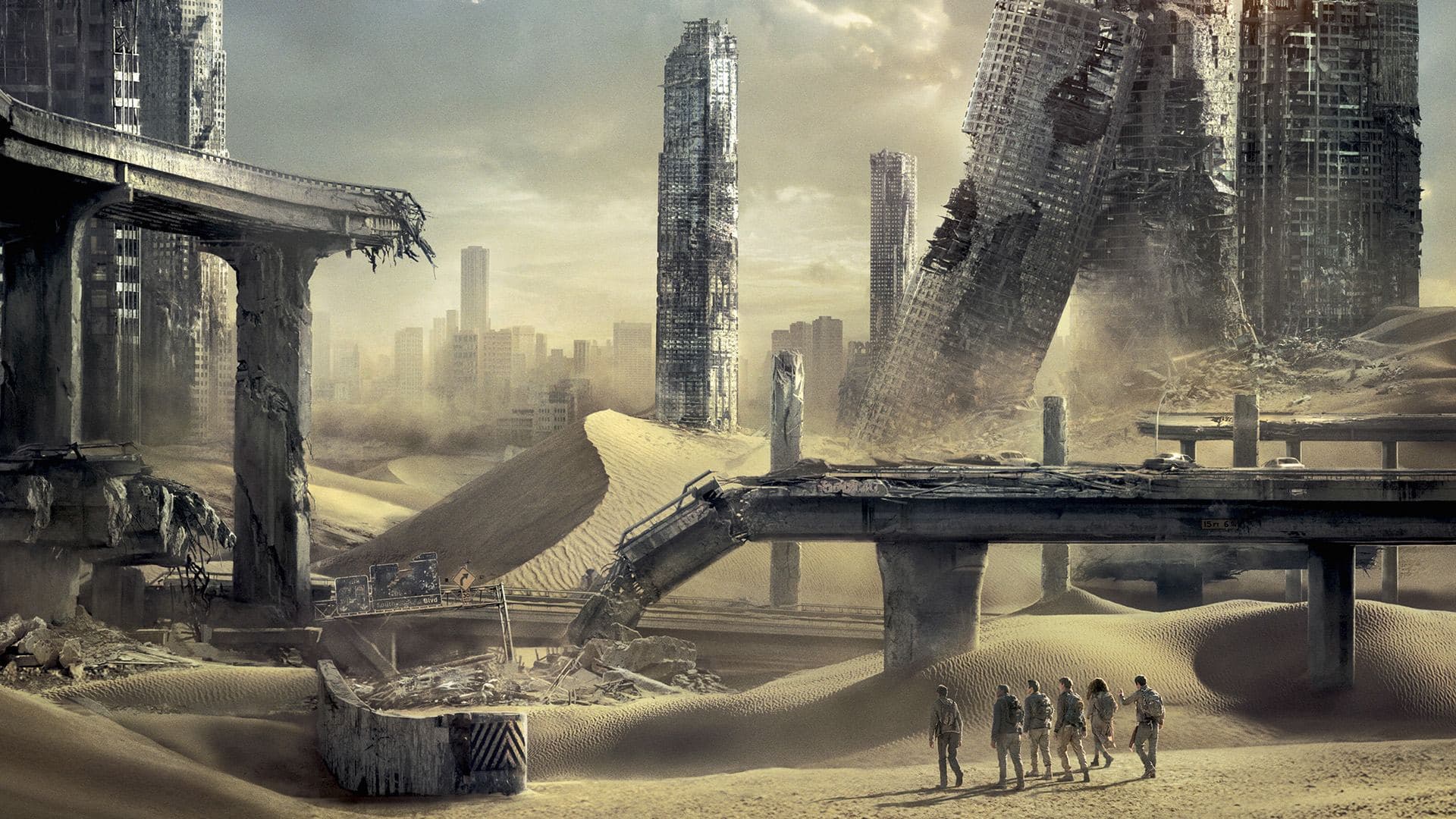
Thomas and his fellow Gladers face their greatest challenge yet: searching for clues about the mysterious and powerful organization known as WCKD. Their journey takes them to the Scorch, a desolate landscape filled with unimaginable obstacles and infected survivors known as Cranks. Teaming up with resistance fighters, the Gladers take on WCKD's vastly superior forces and uncover its shocking plans for them all.
What Is the Budget of Maze Runner: The Scorch Trials (2015)?
Maze Runner: The Scorch Trials (2015), directed by Wes Ball and distributed by 20th Century Fox, was produced on a reported budget of $61,000,000. The sequel to The Maze Runner (2014) marked a modest budget increase of roughly $27,000,000 over the original, a calculated bet by Fox after the first film grossed $348,000,000 worldwide on a $34,000,000 outlay. The studio backed the expansion with confidence that James Dashner's young-adult dystopian trilogy could sustain a larger canvas: open desert environments, decaying urban ruins, infected "Crank" hordes, and a substantially expanded ensemble cast.
Producers Ellen Goldsmith-Vein, Wyck Godfrey, Marty Bowen, Lee Stollman, and Joe Hartwick Jr. financed the production through Gotham Group, Temple Hill Entertainment, and TSG Entertainment, with Fox handling worldwide distribution. The budget reflected the operating math of a mid-tier YA franchise sequel in 2015: large enough to deliver visual spectacle on par with The Hunger Games and Divergent series, small enough to remain comfortably profitable against the genre's plateauing global ceiling.
Key Budget Allocation Categories
The Scorch Trials' $61,000,000 budget broke down across several core production areas:
- Above-the-Line Talent: Returning lead Dylan O'Brien commanded a sequel bump after the surprise success of the first film, with Kaya Scodelario, Thomas Brodie-Sangster, Will Poulter, and Ki Hong Lee also returning at escalated franchise rates. The expanded ensemble brought in Aidan Gillen (Game of Thrones), Giancarlo Esposito (Breaking Bad), Patricia Clarkson, Lili Taylor, Rosa Salazar, and Alan Tudyk, each adding established adult salaries to a YA cast that had previously skewed entirely toward newcomers.
- New Mexico Location Shoot: Principal photography relocated from Louisiana to New Mexico to take advantage of the state's 25% to 30% refundable film production tax credit and its varied desert, mountain, and urban-decay landscapes. The unit shot extensively in Albuquerque and on locations across the state, including the abandoned 5 Points warehouse district and the desert scrubland outside Belen, with set construction also occupying multiple stages at Albuquerque Studios.
- Practical Set Construction: Production designer Daniel T. Dorrance built large-scale practical sets including the WCKD facility interiors, a multi-story ruined shopping mall used for the Crank ambush sequence, and an underground bunker network. The shopping mall set alone occupied a full stage at Albuquerque Studios and required extensive distressing, set dressing, and rigging for the wirework-driven Crank attack.
- Visual Effects: Method Studios, Rodeo FX, and Hybride Technologies delivered the film's visual effects work, including the sun-scorched desert sky extensions, the lightning storm sequences, the digital augmentation of the Crank infected, and the massive WCKD facility exteriors. Approximately 800 effects shots were completed across the production, a meaningful step up from the more contained maze environments of the first film.
- Stunts and Choreography: Stunt coordinator Garrett Warren designed a stunt program built around foot chases, parkour-style descents through collapsing structures, and a high-volume Crank attack staged inside the shopping mall set. Multiple stunt doubles and a dedicated parkour unit shadowed the principal cast across the New Mexico shoot.
- Score and Music: Composer John Paesano returned to score the sequel, expanding his orchestral palette to incorporate electronic textures suited to the broader Scorch landscape. The music budget covered original composition, orchestra recording, and licensing of needle drops for the soundtrack album released by Sony Classical.
- Marketing and Distribution: While not part of the reported production budget, Fox's marketing spend was estimated at $60,000,000 to $70,000,000, encompassing a global trailer campaign, San Diego Comic-Con activations, and extensive social-media engagement targeting the existing YA reader base.
How Does Maze Runner: The Scorch Trials's Budget Compare to Similar Films?
At $61,000,000, The Scorch Trials sits in the mid-range of contemporaneous YA dystopian sequels. The comparison set illustrates how its budget choices and commercial outcome stacked up against the genre cohort:
- The Maze Runner (2014): Budget $34,000,000 | Worldwide $348,319,861. The franchise opener proved the property could clear ten times its cost worldwide, validating Fox's decision to nearly double the budget for the sequel.
- Maze Runner: The Death Cure (2018): Budget $62,000,000 | Worldwide $288,177,663. The trilogy closer held the line on budget at roughly the same level as The Scorch Trials, though delayed by lead Dylan O'Brien's on-set injury during a stunt and ultimately earning slightly less than the second installment.
- The Hunger Games: Catching Fire (2013): Budget $130,000,000 | Worldwide $865,011,746. Lionsgate's YA juggernaut spent more than twice as much on its second installment and earned nearly three times The Scorch Trials' worldwide gross, demonstrating the ceiling that better-known source material and a more established star (Jennifer Lawrence) could reach.
- Divergent (2014): Budget $85,000,000 | Worldwide $288,886,623. Summit's YA dystopian franchise opener cost 40% more than The Scorch Trials and earned roughly the same worldwide, a comparison Fox executives cited as evidence the Maze Runner property was punching above its weight.
- The 5th Wave (2016): Budget $38,000,000 | Worldwide $109,938,070. Sony's Chloë Grace Moretz YA sci-fi adaptation arrived months after The Scorch Trials with a lower budget and a third of the worldwide gross, illustrating how saturated the genre had become by 2016.
- The Giver (2014): Budget $25,000,000 | Worldwide $66,977,065. The Weinstein Company's Lois Lowry adaptation cost less than half of The Scorch Trials and earned a fraction of its gross, underlining the importance of a built-in franchise audience.
Maze Runner: The Scorch Trials Box Office Performance
Maze Runner: The Scorch Trials opened on September 18, 2015 in the United States, where it took the top spot at the domestic box office with $30,316,510 over its opening weekend. The opening matched almost exactly the $32,512,804 first weekend of the original Maze Runner a year earlier, suggesting Fox had successfully held the franchise audience even after a 12-month gap. Internationally the film opened day-and-date in most major markets and quickly became the dominant title across Europe, Latin America, and Asia.
Against a reported production budget of $61,000,000, the sequel needed approximately $150,000,000 in worldwide gross to clear profitability when marketing and distribution costs were included. Here is the financial breakdown:
Box Office Breakdown
Maze Runner The Scorch Trials

The Scorch Trials returned approximately $2.38 in worldwide theatrical revenue for every $1 invested across production and marketing, comfortably profitable for a non-tentpole sequel. The domestic gross of $81,697,192 represented a 26% share of the worldwide total, with international markets contributing the remaining $230,598,864, a 74/26 international skew that confirmed the property's strong global reach.
The result greenlit the trilogy closer Maze Runner: The Death Cure, originally scheduled for February 2017 but pushed to January 2018 after Dylan O'Brien suffered a serious on-set injury during a stunt sequence early in production. The franchise's total worldwide gross across all three films exceeded $948,000,000, anchored by the consistent performance of the second installment.
Maze Runner: The Scorch Trials Production History
Development on a sequel began almost immediately after The Maze Runner opened to $32,500,000 domestically on September 19, 2014. 20th Century Fox confirmed the sequel within days of the first film's opening weekend, with director Wes Ball, screenwriter T.S. Nowlin, and producers Wyck Godfrey, Marty Bowen, Ellen Goldsmith-Vein, Lee Stollman, and Joe Hartwick Jr. all returning. James Dashner, the author of the source novel, served as an executive producer and consulted on the screenplay's adaptation of his second book, which the filmmakers significantly restructured to compress the desert journey and add new characters.
Principal photography began on October 27, 2014 in Albuquerque, New Mexico, a relocation from the first film's Louisiana base driven by the state's 25% to 30% refundable film tax credit and its desert and urban-decay landscapes. The production shot at Albuquerque Studios for stage work, in the abandoned 5 Points warehouse district for the ruined-city sequences, and across desert locations near Belen, Los Lunas, and the Sevilleta National Wildlife Refuge. The shoot ran for roughly 16 weeks and wrapped in late February 2015.
Wes Ball, a first-time feature director on the original film, returned for the sequel with significantly more resources. The production expanded to include a multi-story ruined shopping mall set occupying a full stage at Albuquerque Studios, a complex Crank attack sequence requiring wirework and contortionist performers, and a lightning storm finale demanding extensive visual effects integration. The ensemble cast also doubled in size with the addition of Aidan Gillen, Giancarlo Esposito, Patricia Clarkson, Lili Taylor, Rosa Salazar, and Alan Tudyk, all of whom shot their scenes during the New Mexico block.
Post-production ran from March through August 2015, with visual effects work distributed across Method Studios, Rodeo FX, and Hybride Technologies. The film made its world premiere at a fan event in Sydney, Australia on September 8, 2015, followed by the wide theatrical release on September 18. The 10-month turnaround from wrap to release was aggressive for a visual-effects-heavy franchise picture and reflected Fox's confidence in the property and its desire to maintain the franchise's annual September release cadence before the trilogy closer.
Awards and Recognition
Maze Runner: The Scorch Trials received limited awards recognition, as is typical for mid-budget YA franchise sequels. The film earned a Teen Choice Award nomination in 2016 for Choice Movie: Sci-Fi/Fantasy and a Choice Movie Actor: Sci-Fi/Fantasy nomination for Dylan O'Brien, neither of which it won. Kaya Scodelario was nominated for Choice Movie Actress in the same category.
The film was also recognized at the 2016 Saturn Awards with a nomination for Best Science Fiction Film, losing to Star Wars: The Force Awakens. Composer John Paesano received an ASCAP Composers' Choice nomination for his work on the score. The film did not figure in the major Academy or industry technical awards conversations, though its production design and visual effects work for the shopping mall Crank sequence were singled out for praise in genre press end-of-year coverage.
Critical Reception
Maze Runner: The Scorch Trials received mixed reviews. The film holds a 47% approval rating on Rotten Tomatoes based on 184 critic reviews, with a critical consensus that praised the visual ambition while flagging a meandering second act. On Metacritic, the film scored 43 out of 100, indicating mixed or average reviews. Audiences surveyed by CinemaScore gave the film a B+, a notable step down from the original Maze Runner's A- but still firmly in positive territory and consistent with the genre's typical audience response.
Critics broadly praised the production design, the action choreography for the Crank shopping mall sequence, and Dylan O'Brien's charisma as the franchise lead, but objected to the screenplay's significant departures from James Dashner's source novel and the film's 132-minute runtime, which several reviewers considered overlong for a young-adult genre piece. Variety's Joe Leydon called it "a solidly crafted if overstuffed sequel that benefits from Wes Ball's confident direction," while The Hollywood Reporter's Frank Scheck wrote that the film "delivers the franchise goods without quite advancing the conversation."
Genre press reaction was more divided. IGN praised the expanded scope and the strong supporting performances from Aidan Gillen and Giancarlo Esposito while flagging the second-act pacing, and Collider noted that fans of Dashner's novel would likely be split on the film's structural rewrites. The mixed-but-not-hostile reception, combined with the strong worldwide gross, validated the franchise's commercial trajectory and cleared the path for the trilogy closer Maze Runner: The Death Cure in 2018.
Frequently Asked Questions
How much did it cost to make Maze Runner: The Scorch Trials (2015)?
The reported production budget was $61,000,000, a roughly $27,000,000 increase over the original Maze Runner's $34,000,000 budget. 20th Century Fox financed and distributed the film alongside producers at Gotham Group, Temple Hill Entertainment, and TSG Entertainment.
How much did Maze Runner: The Scorch Trials earn at the box office?
The film grossed $81,697,192 domestically and $230,598,864 internationally, for a worldwide total of $312,296,056. It opened to $30,316,510 in the United States, finishing first on its September 18, 2015 opening weekend.
Was Maze Runner: The Scorch Trials profitable?
Yes. Against a $61,000,000 production budget and an estimated $60,000,000 to $70,000,000 in marketing spend, the film returned approximately $2.38 in worldwide gross for every $1 invested, a comfortable profit that triggered greenlight on the trilogy closer Maze Runner: The Death Cure.
Who directed Maze Runner: The Scorch Trials?
Wes Ball directed the film from a screenplay by T.S. Nowlin, adapted from James Dashner's 2010 novel. Ball returned after directing The Maze Runner (2014) and would also direct the trilogy closer Maze Runner: The Death Cure (2018).
Where was Maze Runner: The Scorch Trials filmed?
Principal photography took place primarily in New Mexico, with stage work at Albuquerque Studios and location shoots in the 5 Points warehouse district, the desert near Belen and Los Lunas, and the Sevilleta National Wildlife Refuge. The production relocated from the first film's Louisiana base to take advantage of New Mexico's 25% to 30% refundable film production tax credit.
How does The Scorch Trials compare to the other Maze Runner films?
The Maze Runner (2014) cost $34,000,000 and grossed $348,319,861 worldwide. The Scorch Trials cost $61,000,000 and grossed $312,296,056 worldwide. Maze Runner: The Death Cure (2018) cost $62,000,000 and grossed $288,177,663 worldwide. The trilogy's combined worldwide gross exceeded $948,000,000.
Who stars in Maze Runner: The Scorch Trials?
Dylan O'Brien returns as Thomas, with Kaya Scodelario as Teresa, Thomas Brodie-Sangster as Newt, Will Poulter as Gally, and Ki Hong Lee as Minho. The expanded ensemble adds Aidan Gillen as Janson, Giancarlo Esposito as Jorge, Rosa Salazar as Brenda, and Patricia Clarkson as Ava Paige.
How does Maze Runner: The Scorch Trials compare to The Hunger Games and Divergent?
The Scorch Trials sat in the mid-range of YA dystopian sequels. The Hunger Games: Catching Fire (2013) cost $130,000,000 and grossed $865,011,746 worldwide, more than twice the Scorch Trials gross. Divergent (2014) cost $85,000,000 and grossed $288,886,623 worldwide, similar to The Scorch Trials despite a 40% larger budget. The Scorch Trials' worldwide return on investment was stronger than either competitor sequel.
What did critics think of Maze Runner: The Scorch Trials?
The film received mixed reviews, with a 47% approval rating on Rotten Tomatoes (184 critics) and a 43 out of 100 score on Metacritic. Audiences gave it a B+ CinemaScore. Critics praised the production design and the Crank shopping mall sequence but objected to the 132-minute runtime and the screenplay's significant departures from James Dashner's source novel.
Did Maze Runner: The Scorch Trials win any awards?
The film earned a 2016 Saturn Award nomination for Best Science Fiction Film, losing to Star Wars: The Force Awakens. It also received Teen Choice Award nominations for Choice Movie: Sci-Fi/Fantasy and for lead performers Dylan O'Brien and Kaya Scodelario. Composer John Paesano received an ASCAP Composers' Choice nomination for the score.
Filmmakers
Maze Runner The Scorch Trials

Official Trailer
Build budgets like this one in Saturation
Start from an industry-standard feature film template, import the schedule and rates you already have, and let the cost report keep itself current as you spend. Real-time collaboration, no spreadsheets.