V for Vendetta Budget
 ActionThrillerScience Fiction2h 12m
Updated
Synopsis
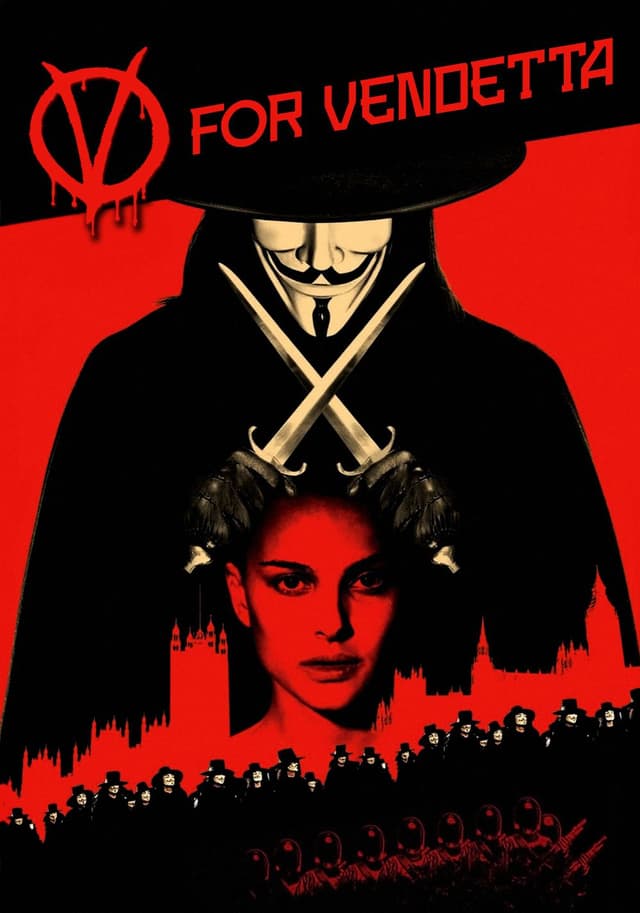
In a world in which Great Britain has become a fascist state, a masked vigilante known only as “V” conducts guerrilla warfare against the oppressive British government. When V rescues a young woman from the secret police, he finds in her an ally with whom he can continue his fight to free the people of Britain.
What Is the Budget of V for Vendetta?
V for Vendetta was produced with a budget of $54 million, financed and distributed by Warner Bros. Pictures. The film was developed under the creative stewardship of the Wachowskis, who wrote the screenplay and produced alongside Joel Silver through Silver Pictures. Directing duties went to James McTeigue, a longtime Wachowski collaborator who had served as first assistant director on The Matrix trilogy.
For a mid-2000s action thriller adapted from a beloved graphic novel, $54 million represented a measured investment. Warner Bros. recognized the built-in audience for the source material while keeping the budget restrained enough that a moderate worldwide gross would ensure profitability. The production leveraged European studio facilities and tax incentives to stretch the budget further, a strategy that allowed the film to achieve impressive production values without ballooning costs.
Key Budget Allocation Categories
- Cast Salaries: Natalie Portman commanded the largest acting fee as lead Evey Hammond, while Hugo Weaving took the physically demanding masked role of V. Supporting cast including Stephen Rea, John Hurt, and Stephen Fry added veteran talent without blockbuster-tier salary demands.
- Production Design and Sets: The dystopian London setting required elaborate set construction at Babelsberg Studios in Potsdam, Germany, along with practical London locations. The Shadow Gallery, V's underground lair filled with banned art and literature, was one of the most complex interior builds on the production.
- Visual Effects: The climactic Parliament explosion sequence, the domino scene, and various action set pieces required significant VFX work. While not as effects-heavy as The Matrix, the film still allocated a substantial portion of its budget to digital compositing and practical pyrotechnics.
- Stunts and Action Choreography: V's knife-fighting sequences and the large-scale protest march demanded extensive stunt coordination. The finale involving thousands of masked marchers combined practical crowd work with digital augmentation.
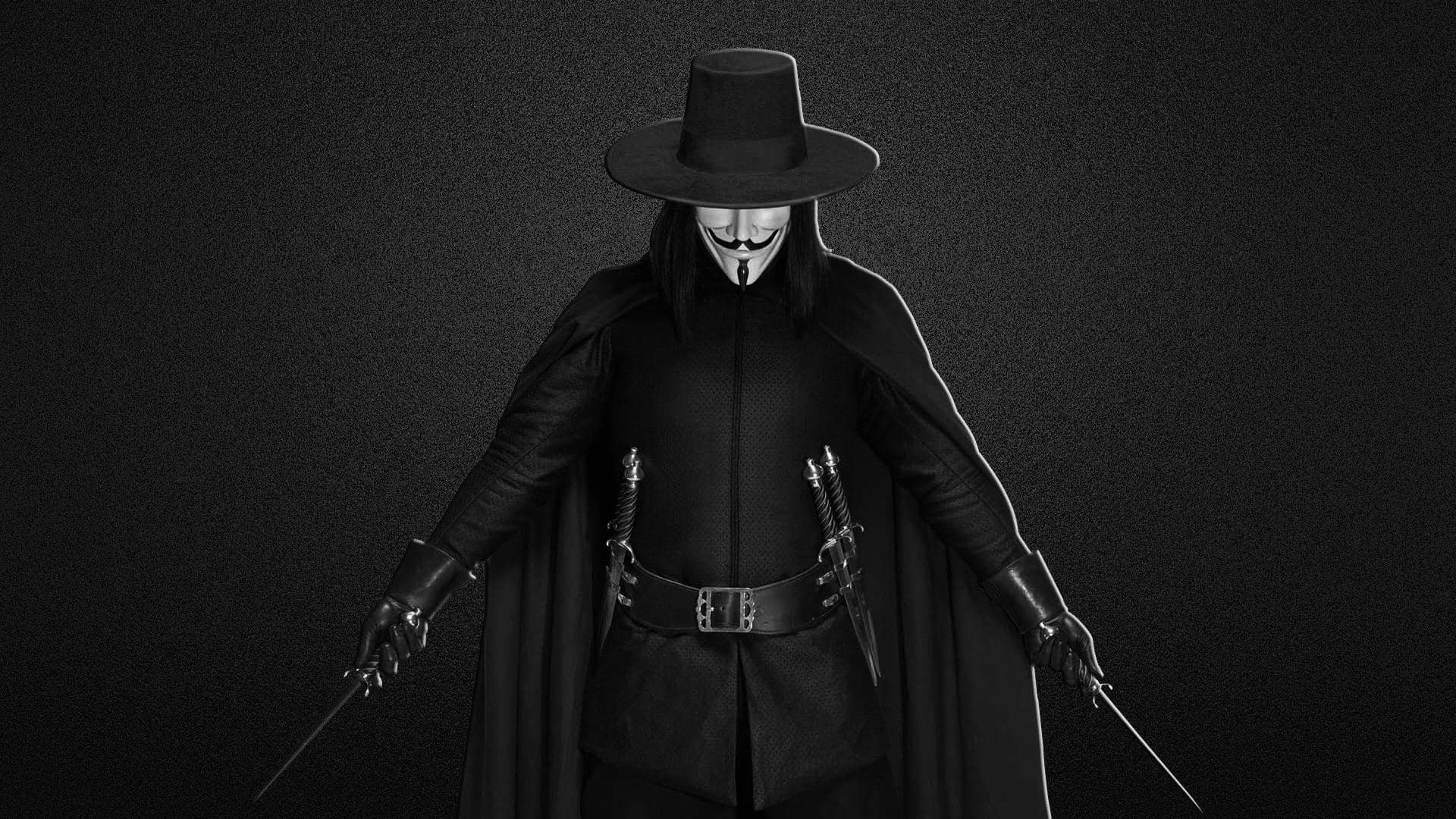
- Wardrobe and Makeup: The iconic Guy Fawkes mask and costume required careful design to maintain visual impact across every scene. Natalie Portman's on-camera head shave was a single-take practical effect that eliminated the need for prosthetic or digital solutions.
- Location and Studio Costs: Filming split between Babelsberg Studios in Germany and practical locations across London, including the Old Bailey courthouse exterior and various government buildings. The German studio facilities offered favorable rates compared to UK or US alternatives.
How Does V for Vendetta's Budget Compare to Similar Films?
- Batman Begins (2005): Budget $150M | Worldwide $373M. Christopher Nolan's DC reboot cost nearly three times as much, reflecting the scale difference between a franchise tentpole and a standalone graphic novel adaptation.
- Sin City (2005): Budget $40M | Worldwide $159M. Robert Rodriguez's stylized comic book film operated on an even tighter budget using heavy green-screen work, making it the closest budgetary peer to V for Vendetta among mid-2000s graphic novel adaptations.
- 300 (2007): Budget $65M | Worldwide $456M. Another Warner Bros. graphic novel adaptation released the following year, 300 spent slightly more but generated dramatically higher returns through its visual spectacle and action-heavy marketing.
- Children of Men (2006): Budget $76M | Worldwide $70M. Alfonso Cuaron's dystopian thriller cost more than V for Vendetta yet earned far less at the box office, illustrating how V's accessible action elements helped it connect with a broader audience.
- Watchmen (2009): Budget $130M | Worldwide $185M. Zack Snyder's later DC/Vertigo adaptation spent more than double V for Vendetta's budget but earned only modestly more worldwide, suggesting that V's restrained budget was the wiser financial approach to adapting complex graphic novels.
V for Vendetta Box Office Performance
V for Vendetta opened on March 17, 2006, debuting at number one with a domestic opening weekend of $25.6 million. The film held well in subsequent weeks, finishing its domestic run with $70,511,035. International markets contributed an additional $62 million, bringing the worldwide total to $132,511,035.
Using the standard industry formula where a film needs roughly twice its production budget to break even (accounting for prints and advertising costs), V for Vendetta's break-even threshold was approximately $108 million. The worldwide gross of $132.5 million cleared that mark comfortably, confirming the film as a profitable release for Warner Bros.
The return on investment calculation yields a strong result: ($132,511,035 - $54,000,000) / $54,000,000 x 100 = 145.4% ROI. Beyond theatrical revenue, V for Vendetta became a significant home video performer. DVD and Blu-ray sales added substantially to the film's lifetime earnings, driven by strong word-of-mouth and the film's growing cultural relevance in the years following its release.
Box Office Breakdown
V for Vendetta

V for Vendetta Production History
The Wachowskis first acquired the rights to Alan Moore and David Lloyd's graphic novel in the late 1990s, originally planning to develop it alongside The Matrix. The project sat in development while the siblings focused on the Matrix sequels, with a completed screenplay circulating within Warner Bros. by 2003. Joel Silver signed on to produce through his Silver Pictures banner, and the studio greenlit the film with James McTeigue attached to direct.
McTeigue's selection was unconventional for a first-time feature director, but his decade of experience as first assistant director on the Matrix trilogy, Star Wars: Episode II, and other major productions gave the studio confidence. The Wachowskis remained closely involved as producers and screenwriters, effectively mentoring McTeigue through production while allowing him creative ownership of the final film.
Alan Moore publicly disowned the adaptation before filming began, requesting his name be removed from all promotional materials and credits. Moore had grown deeply disillusioned with Hollywood adaptations of his work following From Hell and The League of Extraordinary Gentlemen, and he objected to the screenplay's political reframing of his original Cold War-era story into a post-9/11 context. David Lloyd, the graphic novel's illustrator, supported the film and served as a creative consultant.
Principal photography began in March 2005 at Babelsberg Studios in Potsdam, Germany, with additional location work across London. The production chose German facilities partly for cost efficiency and partly because Babelsberg offered the large soundstages needed for the Shadow Gallery and Parliament interior sets. London locations included exteriors around the Old Bailey, Whitehall, and various residential streets standing in for the story's dystopian version of the city.
Natalie Portman's commitment to the role included shaving her head on camera during a pivotal torture sequence, a scene filmed in a single continuous take. Hugo Weaving performed the entire film behind the Guy Fawkes mask, relying entirely on vocal performance and body language to convey V's emotional arc. The original release date was set for November 5, 2005 (Guy Fawkes Night), but Warner Bros. delayed it to March 2006 following the July 2005 London bombings, citing sensitivity concerns about the film's themes of political violence.
Awards and Recognition
V for Vendetta received a Saturn Award nomination for Best Science Fiction Film from the Academy of Science Fiction, Fantasy and Horror Films. Hugo Weaving earned recognition for his masked performance despite the unusual challenge of acting without visible facial expressions. The film won the Hugo Award for Best Dramatic Presentation, Long Form in 2007, voted on by members of the World Science Fiction Convention.
The film's most enduring legacy lies outside traditional awards. The Guy Fawkes mask designed by David Lloyd became one of the most recognized symbols of the 21st century, adopted by the hacktivist collective Anonymous beginning in 2008 and later by Occupy Wall Street, Arab Spring protesters, and political movements worldwide. Time Warner, which owns the mask's licensing rights, reportedly earns revenue from every officially sold mask, creating the unusual situation where a symbol of anti-corporate resistance generates profit for a major media conglomerate.
Critical Reception
V for Vendetta holds a 73% approval rating on Rotten Tomatoes based on 247 reviews, with a critics' consensus praising the film's visual style and thought-provoking themes while noting its heavy-handed political messaging. The audience score sits considerably higher at 73%, reflecting the film's stronger connection with general viewers than with professional critics.
Critics were divided along clear lines. Supporters praised the film's willingness to engage with genuinely provocative political ideas in a mainstream action format. Roger Ebert awarded it three and a half stars, calling it "a bold, political, poetic film" that took real creative risks. The New York Times' A.O. Scott noted the film's ambition in translating Moore's dense material into accessible cinema while maintaining its ideological edge.
Detractors argued that the Wachowskis' screenplay oversimplified Moore's nuanced anarchist philosophy into a more conventional liberal vs. fascist framework. Some critics felt the film's action sequences and Hollywood polish diluted the graphic novel's darker, more challenging themes. Alan Moore's public rejection of the adaptation also colored some reviews, with critics weighing the film against its source material rather than evaluating it on its own terms.
The passage of time has been generous to V for Vendetta. Its themes of government surveillance, media manipulation, and the thin line between terrorism and revolution have only grown more relevant, and the film is now widely regarded as one of the more prescient political thrillers of its era. Its cultural impact, particularly through the global adoption of the Guy Fawkes mask as a protest symbol, has far exceeded what its initial box office or critical reception would have predicted.
Frequently Asked Questions
How much did it cost to make V for Vendetta (2006)?
The production budget was $54,000,000, covering principal photography, visual effects, cast and crew salaries, locations, sets, post-production, and music. Marketing and distribution (P&A) costs are estimated at an additional $27,000,000 - $43,200,000, bringing the total studio investment to approximately $81,000,000 - $97,200,000.
How much did V for Vendetta (2006) earn at the box office?
V for Vendetta grossed $70,511,035 domestic, $64,175,422 international, totaling $134,686,457 worldwide.
Was V for Vendetta (2006) profitable?
The film did not break even theatrically, earning $134,686,457 against an estimated $135,000,000 needed. Ancillary revenue may have improved the picture.
What were the biggest costs in producing V for Vendetta?
The primary cost drivers were above-the-line talent (Natalie Portman, Hugo Weaving, Stephen Rea); visual effects, practical stunts, and A-list talent compensation; international production across Germany, United Kingdom, United States of America.
How does V for Vendetta's budget compare to similar action films?
At $54,000,000, V for Vendetta is classified as a mid-budget production. The median budget for wide-release action films in the 2000s ranges from $30 - 80M for mid-budget to $150M+ for tentpoles. Comparable budgets: 16 Blocks (2006, $55,000,000); Any Given Sunday (1999, $55,000,000); Blades of Glory (2007, $53,000,000).
Did V for Vendetta (2006) go over budget?
There are no widely reported accounts of significant budget overruns for this production. However, studios rarely disclose precise budget overrun figures publicly. The reported production budget reflects the final estimated cost.
What was the return on investment (ROI) for V for Vendetta?
The theatrical ROI was 149.4%, calculated as ($134,686,457 − $54,000,000) ÷ $54,000,000 × 100. This measures gross revenue against production budget only - it does not account for P&A or exhibitor shares.
What awards did V for Vendetta (2006) win?
7 wins & 29 nominations total.
Who directed V for Vendetta and who were the key crew members?
Directed by James McTeigue, written by Lilly Wachowski, Lana Wachowski, shot by Adrian Biddle, with music by Dario Marianelli, Benjamin Wallfisch, edited by Martin Walsh.
Where was V for Vendetta filmed?
V for Vendetta was filmed in Germany, United Kingdom, United States of America.
Filmmakers
V for Vendetta

Official Trailer
Build budgets like this one in Saturation
Start from an industry-standard feature film template, import the schedule and rates you already have, and let the cost report keep itself current as you spend. Real-time collaboration, no spreadsheets.