Listen to Me Marlon Budget
Updated
Synopsis
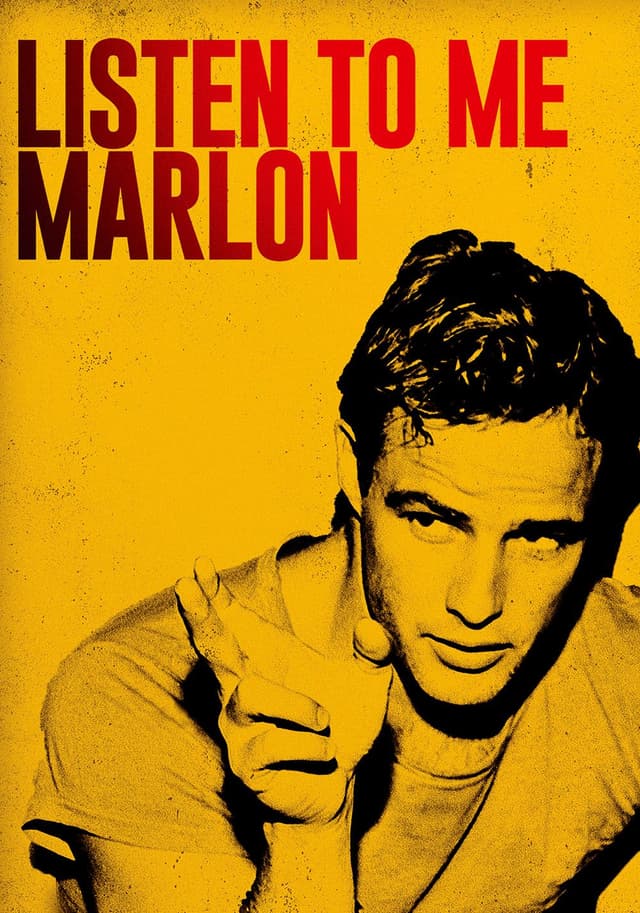
Marlon Brando, one of the most influential actors in cinema history, recorded approximately 200 hours of private audio tapes over decades, including self-hypnosis recordings, audio journals, and recorded interviews. Stevan Riley assembles those tapes into a feature-length autobiographical portrait narrated entirely in Brando's own voice, supplemented by clips from across his filmography. An archive-driven prestige documentary released through Passion Pictures and Showtime.
What Is the Budget of Listen to Me Marlon (2015)?
Listen to Me Marlon (2015), directed by Stevan Riley, was produced on an undisclosed budget that documentary production scale, the film's archive-driven editorial methodology, and the rights-clearance burden for the Marlon Brando audio archive place in the range of $1,000,000 to $2,500,000. The film was financed by Passion Pictures and produced by John Battsek, the documentary producer behind Searching for Sugar Man (2012), One Day in September (1999), and many others. Universal Pictures, which controls Marlon Brando's estate-licensed archive, was a key institutional partner, with Showtime acquiring exclusive North American television rights and Universal handling theatrical platform.
The investment reflected the prestige-documentary tier of the mid-2010s, the period when archive-driven biographical documentaries about iconic mid-century cultural figures were achieving notable critical and commercial success. The budget allocation centered on archival rights clearance for the Brando estate audio tapes (which Brando had recorded privately over decades as personal audio journals), licensing of Brando filmography clips, intensive editorial work to assemble the audio-driven narrative, and a small post-production crew built around director Stevan Riley's editorial-led approach.
Key Budget Allocation Categories
Listen to Me Marlon's estimated $1,000,000 to $2,500,000 budget was distributed across several core production areas:
- Marlon Brando Estate Audio Rights: The film's defining creative element is the use of approximately 200 hours of private audio recordings Marlon Brando made over decades, including self-hypnosis tapes, audio journals, interview tapes, and rehearsal recordings. The Brando estate (controlled after the actor's 2004 death by his executor Mike Medavoy and his children) licensed the archive to Passion Pictures under a comprehensive rights agreement that consumed a meaningful share of the production budget.
- Brando Filmography Clip Licensing: The film integrates clips from across Marlon Brando's filmography including A Streetcar Named Desire, On the Waterfront, The Godfather, Apocalypse Now, Last Tango in Paris, The Wild One, and many others. Rights clearance with Warner Bros., Paramount, Sony, and other rights-holding studios required extensive legal and licensing work that consumed a meaningful slice of the budget.
- CGI Brando Avatar: The film features a digital 3D-scanned Brando head, captured from a 1980s laser scan that Brando had commissioned of his own face, that lip-syncs to portions of the audio archive. The CGI work, including the lighting and rendering for theatrical specification, consumed a portion of the budget and provides one of the film's most distinctive visual elements.
- Archival Research and Production: The film required extensive research across the Brando estate audio archive, the broader Brando home-video archive, period news footage, and Brando filmography. Archival researcher Jonathan Sharman and the broader production team spent months cataloguing and selecting audio and visual material.
- Editorial: Director Stevan Riley, an editor-director who had cut his previous Passion Pictures documentary Fire in Babylon (2010) and the Andre Agassi documentary Open (2013), edited Listen to Me Marlon himself across approximately 18 months. Self-editing kept editorial cost minimal while maintaining creative consistency between the directorial conception and the final cut.
- Score and Sound: Composer Max Richter (Waltz with Bashir, The Leftovers, Ad Astra) delivered an ambient orchestral score that supports the introspective audio-journal structure. Sound design and audio restoration for the often degraded source Brando recordings consumed a meaningful slice of the post-production budget.
How Does Listen to Me Marlon's Budget Compare to Similar Films?
At an estimated $1,000,000 to $2,500,000, Listen to Me Marlon sits within the prestige-documentary tier of the mid-2010s. The comparison set illustrates the budget context:
- Amy (2015): Budget approximately $2,000,000 | Worldwide $23,800,000. Asif Kapadia's contemporaneous Oscar-winning Amy Winehouse documentary operates at a comparable budget tier and demonstrates the upper end of the archive-driven biographical documentary commercial ceiling.
- Searching for Sugar Man (2012): Budget approximately $1,000,000 | Worldwide $11,400,000. Malik Bendjelloul's Oscar-winning prior Passion Pictures-distributed documentary operates at the same budget tier and offers the closest direct production-company comparison.
- Senna (2010): Budget approximately $2,000,000 | Worldwide $19,800,000. Asif Kapadia's previous archive-driven biographical documentary on Ayrton Senna operates at a comparable budget tier and demonstrates the upper end of the worldwide commercial ceiling.
- The Act of Killing (2012): Budget approximately $1,000,000 | Worldwide $1,178,000. Joshua Oppenheimer's Oscar-nominated documentary about Indonesian death-squad veterans demonstrates the prestige-documentary tier Listen to Me Marlon competed within.
- Apollo 11 (2019): Budget undisclosed (estimated $2,000,000 to $4,000,000) | Worldwide $14,800,000. The Todd Douglas Miller archive-driven space-program documentary operates at a comparable budget tier and offers a creative parallel for the audio-and-archive-driven documentary form.
Listen to Me Marlon Box Office Performance
Listen to Me Marlon premiered at the Sundance Film Festival on January 23, 2015, where it won the World Cinema Documentary Editing Award. Universal Pictures and Showtime Documentary Films acquired distribution rights, with theatrical release in the United States on July 29, 2015 through Showtime's theatrical-platform partner Adopt Films. The film grossed approximately $400,000 in North American theatrical, with limited European and UK theatrical adding approximately $150,000 across the back half of 2015.
Against an estimated production budget in the $1,000,000 to $2,500,000 range, the film's commercial framework was the prestige festival circuit, Showtime television premiere, and ongoing home-video and streaming licensing rather than mass theatrical recoupment. Here is the financial breakdown:
Box Office Breakdown
Listen to Me Marlon

Prestige documentary financing of this type depends on broadcast pre-sales (Showtime in the US, BBC and other public broadcasters internationally) and the prestige value of festival awards rather than theatrical box office. Listen to Me Marlon's Sundance editing award and the subsequent Oscar-qualifying theatrical run secured its prestige positioning across North American, UK, and continental European markets.
The film extended Passion Pictures' standing as one of the most consistently successful prestige-documentary production companies of the 2010s, with the company building on the company's prior Searching for Sugar Man Oscar win and laying groundwork for subsequent documentary releases through the decade.
Listen to Me Marlon Production History
Stevan Riley began developing Listen to Me Marlon after the 2013 release of Fire in Babylon, his Passion Pictures cricket documentary, in conversations with producer John Battsek. The Brando estate, executor Mike Medavoy, and Brando's children had been considering an authorized documentary that could draw on the actor's extensive private audio archive, which included approximately 200 hours of self-recorded tapes spanning self-hypnosis, audio journals, recorded interviews, and rehearsal recordings made by Brando over decades.
Riley and Battsek secured rights agreements with the Brando estate in 2013-2014, with Universal Pictures providing institutional support and additional financing through Showtime Documentary Films. Riley's creative concept was to build a feature-length documentary entirely from Brando's own voice, supplemented by archival film clips, period news footage, and minimal external interviews. The methodology required intensive cataloguing of the Brando audio archive, careful identification of recording dates and contexts, and editorial selection of material that could anchor a narrative spine.
Production was almost entirely editorial and post-production, with no conventional principal photography. The film features the previously commissioned CGI 3D-scanned Brando head, captured from a 1980s laser scan that Brando had ordered of his own face during the special-effects-development phase for The Island of Dr. Moreau, which the production lip-synced to portions of the audio archive. Composer Max Richter delivered an ambient orchestral score in the final months of post-production. Approximately 18 months of editorial work, led by Stevan Riley himself, produced the final cut.
The film premiered at the Sundance Film Festival on January 23, 2015, where it won the World Cinema Documentary Editing Award and drew immediate acquisition interest. Showtime Documentary Films and Universal Pictures acquired US rights, with theatrical platform release on July 29, 2015 followed by Showtime television premiere later in 2015. Universal handled UK and continental European platform release across the back half of 2015 and into 2016.
Awards and Recognition
Listen to Me Marlon received significant international awards recognition. The film won the World Cinema Documentary Editing Award at the 2015 Sundance Film Festival, along with the BAFTA Award for Best Documentary in 2016 (the British Academy of Film and Television Arts' equivalent of the Oscar). It was nominated for the Critics' Choice Documentary Award for Best Documentary Feature and the Producers Guild Award for Outstanding Documentary, both in 2016.
The film was nominated for the Best Editing of a Documentary at the American Cinema Editors Eddie Awards, the Cinema Eye Honors' Outstanding Achievement in Editing, and multiple regional critics circle awards. It did not earn an Academy Award nomination for Best Documentary Feature despite extensive Oscar campaigning by Passion Pictures and Showtime, an omission that drew industry trade-press comment but did not significantly dent the film's prestige positioning.
Critical Reception
Listen to Me Marlon received widespread critical acclaim. The film holds a 97% approval rating on Rotten Tomatoes based on 138 critic reviews with an average score of 8.5 out of 10, with the critical consensus calling it "an extraordinary, intimate portrait that brings Marlon Brando to life through his own words." On Metacritic, the film scored 87 out of 100, indicating universal acclaim. Audience response on documentary streaming platforms was similarly strong.
Critics broadly praised the film's archive-driven structure, the editing by Stevan Riley, and the way the audio archive opened up an intimate first-person perspective on Brando's creative life. The New York Times's Manohla Dargis called it "a haunting auto-portrait assembled from the bones of one of cinema's greatest actors," and The Guardian's Peter Bradshaw described the film as "an emotional excavation that may be the strangest and most affecting Brando experience now available." The Hollywood Reporter's Stephen Farber wrote that "Riley has crafted a remarkable meditation on a complicated cultural giant."
A small number of critics raised structural or critical objections. Sight & Sound's Nick Roddick argued that the archive's self-recorded character meant the film occasionally veered toward unmediated self-mythology rather than critical biographical inquiry, and Slant Magazine noted that the CGI Brando head, while visually distinctive, occasionally pulled focus from the audio-driven narrative. These objections were a minority view in an otherwise broadly enthusiastic critical reception that positioned the film firmly as one of the most critically acclaimed documentaries of 2015.
Frequently Asked Questions
How much did it cost to make Listen to Me Marlon (2015)?
The production budget was not publicly disclosed, but documentary production scale, the archive-driven editorial methodology, and the rights-clearance burden for the Marlon Brando audio archive place the figure in the range of $1,000,000 to $2,500,000. Passion Pictures financed the production, with Universal Pictures and Showtime Documentary Films providing institutional partnership and US distribution.
Who directed Listen to Me Marlon?
Stevan Riley directed and edited the film, working from his own concept and an extensive Brando estate audio archive. Riley's prior credits included the 2010 Passion Pictures cricket documentary Fire in Babylon and the Andre Agassi documentary Open (2013). He developed the project in collaboration with producer John Battsek and the Brando estate over 2013-2014.
Where do the Marlon Brando audio tapes come from?
Marlon Brando recorded approximately 200 hours of private audio tapes over decades, including self-hypnosis recordings, audio journals, recorded interviews, and rehearsal recordings. The Brando estate (controlled after the actor's 2004 death by his executor Mike Medavoy and his children) licensed the archive to Passion Pictures under a comprehensive rights agreement that consumed a meaningful share of the production budget.
What is the CGI Brando head in Listen to Me Marlon?
The film features a digital 3D-scanned Brando head, captured from a 1980s laser scan that Brando had commissioned of his own face during the special-effects-development phase for The Island of Dr. Moreau, that lip-syncs to portions of the audio archive. The CGI work, including the lighting and rendering for theatrical specification, provides one of the film's most distinctive visual elements.
How did Listen to Me Marlon perform at the box office?
The film grossed approximately $400,000 in North American theatrical release through Showtime's platform partner Adopt Films from July 29, 2015. Limited European and UK theatrical added approximately $150,000 across the back half of 2015, for a worldwide total of approximately $550,000. The film's commercial framework was Showtime television rights and international broadcast pre-sales rather than mass theatrical recoupment.
Did Listen to Me Marlon win at Sundance?
Yes, an editing prize. The film won the World Cinema Documentary Editing Award at the 2015 Sundance Film Festival on January 23, 2015. The Sundance recognition drew immediate acquisition interest from Showtime Documentary Films and Universal Pictures, who acquired US rights.
Did Listen to Me Marlon win the BAFTA?
Yes. The film won the BAFTA Award for Best Documentary at the 2016 ceremony, the British Academy of Film and Television Arts' equivalent of the Oscar. It was also nominated for the Critics' Choice Documentary Award for Best Documentary Feature and the Producers Guild Award for Outstanding Documentary.
Why was Listen to Me Marlon snubbed by the Oscars?
The film did not earn an Academy Award nomination for Best Documentary Feature despite extensive Oscar campaigning by Passion Pictures and Showtime, an omission that drew industry trade-press comment. The Academy's documentary branch has historically favored more politically engaged work, and the broadly biographical and personal focus of Listen to Me Marlon may have weighed against it in the voting compared with that year's eventual nominees.
What did critics think of Listen to Me Marlon?
The film received widespread critical acclaim, with a 97% Rotten Tomatoes approval based on 138 reviews (8.5 average) and an 87 out of 100 score on Metacritic, indicating universal acclaim. Critics broadly praised the film's archive-driven structure, the editing by Stevan Riley, and the way the audio archive opened up an intimate first-person perspective on Marlon Brando's creative life.
How does Listen to Me Marlon compare to Amy?
Both films are archive-driven prestige biographical documentaries released in 2015 at comparable budget tiers around $1,000,000 to $2,500,000. Asif Kapadia's Amy went on to win the Academy Award for Best Documentary Feature and grossed approximately $23,800,000 worldwide. Listen to Me Marlon won the BAFTA but missed the Oscar nomination and grossed approximately $550,000 worldwide. Both films contributed to the mid-2010s prestige-documentary boom.
Filmmakers
Listen to Me Marlon

Official Trailer
Build budgets like this one in Saturation
Start from an industry-standard feature film template, import the schedule and rates you already have, and let the cost report keep itself current as you spend. Real-time collaboration, no spreadsheets.