Bully Budget
 DocumentaryDrama92 minutes
Updated
Synopsis
This year, over 13 million American kids will be bullied at school, online, on the bus, at home, through their cell phones and on the streets of their towns, making it the most common form of violence young people in this country experience. BULLY is the first feature documentary film to show how we've all been affected by bullying, whether we've been victims, perpetrators or stood silent witness. The world we inhabit as adults begins on the playground. BULLY opens on the first day of school. For the more than 13 million kids who'll be bullied this year in the United States, it's a day filled with more anxiety and foreboding than excitement. As the sun rises and school busses across the country overflow with backpacks, brass instruments and the rambunctious sounds of raging hormones, this is a ride into the unknown. For a lot of kids, the only thing that's certain is that this year, like every other, bullying will be a big part of whatever meets them at their school's front doors. Every school in the U.S. is grappling with bullying-each day more than 160,000 kids across the country are absent because they're afraid of being bullied-but for many districts it's just one more problem that gets swept under the rug. BULLY is a character-driven film. At its heart are those with the most at stake and whose stories each represent a different facet of this crisis. From the first day of school through the last, BULLY will intimately explore the lives of a few of the many courageous people bullying will touch this year.
What Is the Budget of Bully?
Bully was produced on a budget of approximately $1.1 million, financed by The Weinstein Company and Bully Project LLC. The film was directed by Lee Hirsch and follows five families across the United States whose children have experienced bullying: Alex in Sioux City, Iowa; Kelby in Tuttle, Oklahoma; Ja'Meya in Yazoo County, Mississippi; and the families of Tyler Long in Murray County, Georgia, and Ty Smalley in Perkins, Oklahoma, both of whom committed suicide. The film was released in 2012 following a significant controversy over its MPAA rating.
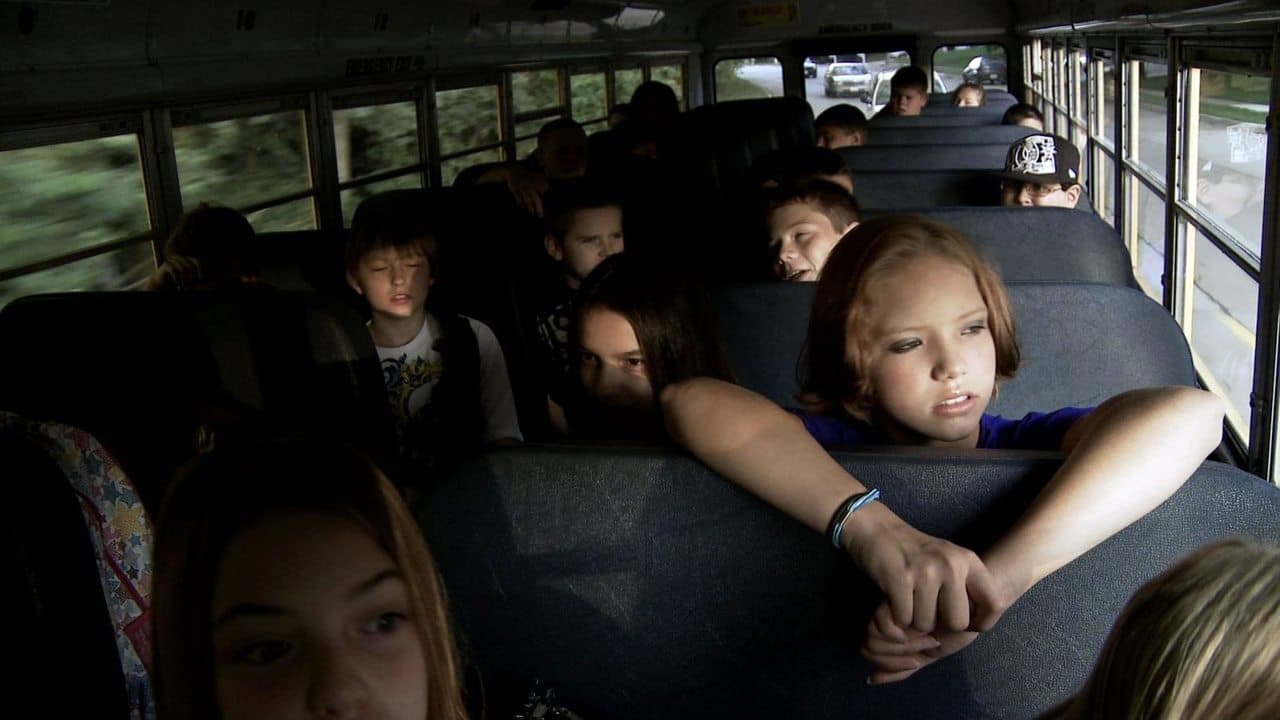
The $1.1 million budget reflects the production's embedded, observational approach, in which Hirsch and his small crew spent extended time with each family over the course of a school year. The film does not use narrator, reenactments, or expert commentary; it follows its subjects through school hallways, on school buses, and at home, capturing bullying events in real time including a sequence on a school bus in which Alex is physically assaulted by classmates while the bus driver ignores the situation.
Key Budget Allocation Categories
- Embedded Production Across Five Families in Five States: Hirsch and his crew embedded with five families in Iowa, Oklahoma, Mississippi, and Georgia over an extended filming period, building the access and trust required to document intimate family moments alongside the school-day sequences. Two of the five children featured, Tyler Long and Ty Smalley, had committed suicide before or during filming; their parents' sequences focus on grief, advocacy, and the aftermath of loss rather than active bullying documentation.
- Director Lee Hirsch and the Observational Method: Hirsch, who had made his first documentary in Israel at age 19 and had directed music videos and corporate documentaries before returning to social issue documentary filmmaking, developed the film through multiple pre-production school visits to establish the relationships and the institutional access required to place cameras in school buses, classrooms, and hallways. The observational method, which relies on extended presence rather than scheduled interviews, required sustained field production across multiple locations.
- The Bus Sequence and School Access Negotiations: The most discussed sequence in the film shows Alex, a 12-year-old in Sioux City with social difficulties related to his early birth and developmental challenges, being physically assaulted by classmates on his school bus while the bus driver at the front of the vehicle fails to intervene. Capturing this sequence required camera access to a school bus with parental permission and school district cooperation. The school district initially sought to suppress the footage after the film's release, disputing the film's characterization of the driver's response.
- The Weinstein Company's MPAA Rating Battle: The MPAA gave Bully an R rating due to language, specifically F-words used by bullies in several sequences. Harvey Weinstein personally appealed the rating, arguing that a PG-13 classification was necessary for the film to reach its intended audience of students and schools. The appeal was denied; the film was then submitted unrated. The MPAA rating battle generated press coverage that significantly increased public awareness of the film beyond what its limited release platform would normally have achieved.
- Ellen DeGeneres, Katy Perry, and Celebrity Advocacy Partnerships: Ellen DeGeneres hosted a special screening of the film and used her television platform to promote anti-bullying messaging tied to the film's release. Lady Gaga, whose Born This Way Foundation had made anti-bullying a central cause, performed at related events. These celebrity partnerships, coordinated by The Weinstein Company, extended the film's reach into mainstream media coverage that a $1.1 million documentary would not normally access.
How Does Bully's Budget Compare to Similar Films?
Bully sits at the low end of Weinstein Company theatrical documentary budgets. Its domestic performance of $3.5 million was achieved despite, or partly because of, the MPAA controversy that gave the film national media coverage without standard theatrical advertising.
- Bowling for Columbine (2002): Budget ~$4M | Domestic $21.6M. Michael Moore's documentary about American gun culture and school violence, which won the Academy Award for Best Documentary Feature, spent nearly four times what Bully cost and found a domestic audience more than six times larger. The comparison illustrates how much Moore's participatory persona and the specific shock of the Columbine shooting drove commercial performance relative to Hirsch's more observational approach.
- Waiting for "Superman" (2010): Budget ~$2M | Domestic $6.4M. Davis Guggenheim's education system documentary spent nearly twice what Bully cost and found a domestic audience about twice as large. Both films used emotional personal stories of children and families navigating broken systems; Guggenheim's charter school lottery as dramatic device proved more commercially effective than Hirsch's school bus observation.
- I Am Jane Doe (2017): Budget ~$500K | Limited theatrical. Defendant's documentary about the legal battle against Backpage.com's facilitation of child sex trafficking spent less than half what Bully cost and bypassed wide theatrical release. Bully's Weinstein Company backing and celebrity partnerships gave it a theatrical platform that most comparable social issue documentaries do not achieve.
- Dear Zachary (2008): Budget ~$18K | Limited theatrical. Kurt Kuenne's documentary letter to the son of a murdered friend, one of the most emotionally devastating documentaries of its decade, spent almost nothing and found a tiny theatrical audience before becoming widely seen through Netflix. Bully's production investment gave it production values and school access that justified the wider theatrical platform, but the comparison demonstrates how low-budget documentary filmmaking can achieve comparable emotional impact.
Bully Box Office Performance
Bully opened March 30, 2012, in a limited platform release in New York and Los Angeles, releasing unrated following The Weinstein Company's unsuccessful appeal of the MPAA's R rating. The film expanded nationally through April and May, reaching over 200 theaters as the MPAA controversy continued to generate national media coverage. The domestic total finished at $3.5 million. International distribution was limited, with the film finding its primary audience in the United States where the school bullying debate the film addressed was concentrated.
Against a production budget of approximately $1.1 million and an estimated $1.5 million in prints and advertising for the theatrical release, the total investment was approximately $2.6 million. With theaters retaining roughly 50 percent of gross, The Weinstein Company's share of the domestic theatrical gross was approximately $1.75 million, below the total investment in theatrical alone. The film's educational distribution, through which it was licensed to thousands of schools and youth organizations, provided significant additional revenue and extended its audience far beyond its theatrical reach.
Box Office Breakdown
Bully

For every dollar invested in production, Bully returned approximately $3.17 at the domestic box office. Accounting for P&A, the film returned approximately $0.67 for every dollar of total investment in theatrical. The educational distribution market, where the film was licensed to schools, libraries, and youth organizations at significantly higher per-unit prices than consumer DVD releases, was the most commercially significant window beyond theatrical. The Bully Project, the accompanying advocacy campaign, used the film as the basis for a national anti-bullying movement that partnered with corporations, schools, and advocacy organizations.
Bully Production History
Lee Hirsch began developing Bully after becoming interested in anti-bullying advocacy through his own experience of childhood bullying. The film was designed as an observational documentary that would place cameras inside the school environment where bullying occurs rather than relying on after-the-fact testimony. This approach required building trust with school administrators in multiple districts, a process that took months of pre-production work and involved commitments about how the footage would be used.
The five subjects were identified through research into families who had publicly advocated for anti-bullying awareness following their children's experiences. The families of Tyler Long and Ty Smalley had already become public advocates after losing their sons to suicide, and their willingness to participate gave the film its most emotionally devastating sequences. Alex Libby in Sioux City was identified through the local school district and became the film's primary active-situation subject, whose school bus footage captured bullying behavior in real time rather than through testimony.
The MPAA's R rating decision, announced in February 2012, triggered the most significant public debate about MPAA rating practices in years. Harvey Weinstein orchestrated a media campaign that brought the rating controversy to the front pages of major newspapers and generated coverage on national television news programs. Ellen DeGeneres devoted segments of her program to the issue. Katy Perry organized a petition signed by hundreds of thousands of people calling on the MPAA to change its rating. The MPAA ultimately did not change the rating, and The Weinstein Company released the film unrated rather than cut the offending language.
The film premiered at the Tribeca Film Festival in April 2011, over a year before its theatrical release, where it generated early critical attention and advocacy press. The delay between festival premiere and theatrical release reflected the production's work on the accompanying advocacy campaign, The Bully Project, which was designed to launch alongside the theatrical release rather than after it. The campaign partnered with organizational sponsors including the Southern Poverty Law Center and secured commitments from school districts to screen the film as part of their anti-bullying curricula.
Awards and Recognition
Bully was not nominated for the Academy Award for Best Documentary Feature. The film received the Peabody Award in 2012, one of the most prestigious recognitions in American journalism and documentary filmmaking, which cited the film's contribution to national awareness of bullying and its impact on school policy. The Peabody recognized the film not only as a documentary achievement but as a journalistic and civic intervention that produced measurable real-world effects.
The Bully Project advocacy campaign, which accompanied the film's theatrical release, is credited with contributing to increased school adoption of anti-bullying programs and to the passage of anti-bullying legislation in several US states. The film is considered among documentary works that produced specific, traceable policy outcomes rather than general awareness. The accompanying book, also titled Bully, extended the film's reach into school library and classroom adoption programs that sustained its advocacy impact through the following decade.
Critical Reception
Bully holds an 83% approval rating on Rotten Tomatoes, with critics broadly praising the film's emotional honesty and the quality of its observational footage while some noting that the film's avoidance of systemic analysis limited its diagnostic usefulness. Metacritic scored it 66 out of 100, indicating mixed to positive reviews. The film's IMDb rating of 7.6 out of 10 reflects a general audience that found it moving and important.
Critics who praised the film consistently cited the school bus sequence as the most powerful section: the footage of Alex being poked, choked, and threatened by classmates while the bus driver at the front of the vehicle looks forward and does nothing provided a visual argument about institutional indifference to bullying that no statistical analysis could replicate. Critics also praised the film's restraint in presenting its subjects without exploitation or sentimentalization, treating bullied children and grieving parents with equal dignity.
Critics who raised reservations argued that the film's emotional power came at the cost of analytical depth. By focusing on individual victims and perpetrators without examining the social, economic, and institutional conditions that produce bullying cultures, Bully left audiences with empathy but without the structural understanding that effective advocacy requires. Several critics also noted that the MPAA controversy, which was widely covered as a Harvey Weinstein media campaign, had the effect of framing the film's reception around the rating battle rather than its documentary content, a trade-off that increased public awareness while potentially reducing the quality of critical engagement.
Frequently Asked Questions
How much did Bully (2011) cost to make?
The production budget was approximately $1,500,000. The Weinstein Company acquired the documentary at Tribeca Film Festival 2011 and partnered with director Lee Hirsch on a theatrical release strategy aimed at school screenings and family audiences.
How much did Bully earn at the box office?
The film grossed $3,490,799 domestically and approximately $1,200,000 internationally, for a worldwide total of approximately $4,700,000. It opened to $115,500 in five theaters on March 30, 2012, before expanding to a peak of 265 screens.
Who directed Bully?
Lee Hirsch directed the film. Hirsch had previously directed Amandla! A Revolution in Four-Part Harmony (2002), which won the Documentary Audience Award and the Freedom of Expression Award at Sundance. Bully drew on Hirsch's personal experience with bullying as a child.
What is Bully about?
The documentary follows five American families during the 2009 to 2010 school year as their children navigate severe peer bullying, including students Alex (Sioux City, Iowa), Ja'Meya (Yazoo County, Mississippi), Kelby (Tuttle, Oklahoma), and the families of Tyler Long (Murray County, Georgia) and Ty Smalley (Perkins, Oklahoma), both of whom died by suicide after extended bullying.
What was the MPAA rating controversy around Bully?
The MPAA initially rated Bully R for language, restricting access by the children most affected by its subject. A petition campaign by Michigan teenager Katy Butler gathered over 500,000 signatures, and the MPAA eventually granted a PG-13 rating after Hirsch agreed to mute several uses of strong language in the theatrical cut.
What did critics think of Bully?
The film received largely positive reviews, with an 86% approval rating on Rotten Tomatoes and a 74 out of 100 score on Metacritic. Critics praised the documentary's unflinching access to families in crisis while some questioned the limited focus on intervention or systemic solutions.
Did Bully change school anti-bullying policies?
The film prompted significant policy attention, including state-level anti-bullying legislation in multiple states and a White House anti-bullying conference. The Weinstein Company partnered with educational organizations on a 1,000,000-student school-screening initiative tied to release.
Where was Bully filmed?
Filming took place across small-town communities in Iowa, Mississippi, Oklahoma, and Georgia, capturing the day-to-day school environments of the featured students. Hirsch's small documentary crew embedded with families for the entire 2009 to 2010 school year.
How does Bully compare to other education documentaries?
Bully became one of the most commercially successful theatrical documentaries about American schools, outperforming Waiting for Superman (2010, $6,400,000 worldwide) on critical reception while trailing on commercial scale. The Weinstein Company's educational-distribution model became a template for later social-issue documentaries.
Where can I watch Bully now?
The film is available for digital rental and purchase on Amazon Prime Video, Apple TV, and Google Play. It also streams on Tubi and Kanopy through their free or library-supported tiers. The Bully Project, the educational organization launched alongside the film, continues to license screenings to schools.
Build budgets like this one in Saturation
Start from an industry-standard feature film template, import the schedule and rates you already have, and let the cost report keep itself current as you spend. Real-time collaboration, no spreadsheets.