Amy Budget
 DocumentaryMusic128 minutes
Updated
Synopsis
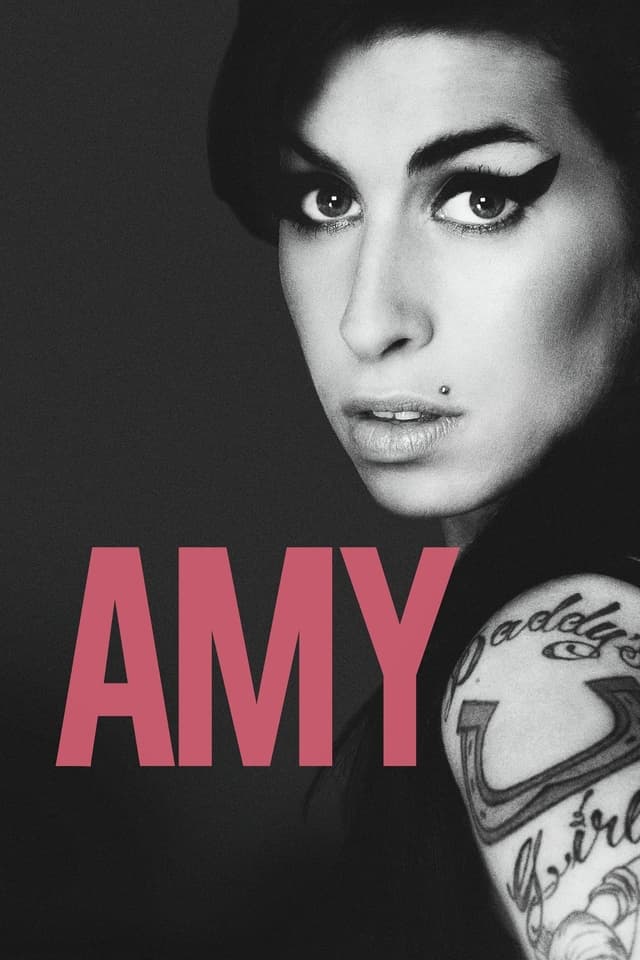
A documentary on the life of Amy Winehouse, the immensely talented yet doomed songstress. We see her from her teen years, where she already showed her singing abilities, to her finding success and then her downward spiral into alcoholism and drugs.
What Is the Budget of Amy?
Amy was produced on a budget of approximately $2.5 million, financed by Universal Music Group, Film4, and On The Corner Films, the production company of James Gay-Rees. The film was directed by Asif Kapadia, whose prior documentary Senna (2010) had established the observational archival methodology that Amy employs: no narrator, no talking heads on camera, only archival footage and audio interviews used as subtitled voices over the images.
The $2.5 million budget reflects the cost of securing an enormous volume of archival material, including home videos, professional footage, and audio recordings from Amy Winehouse's life and career. Winehouse died on July 23, 2011, at the age of 27, from alcohol poisoning. The film was released four years after her death and required extensive licensing and clearance work to assemble the footage that forms its core.
Key Budget Allocation Categories
- Archival Footage Licensing and Clearances: The film draws from thousands of hours of home video, professional production footage, live concert recordings, and television appearances spanning Winehouse's career from age 14 through her death. Licensing fees for music rights, footage rights, and image rights from multiple rights holders, including Island Records, Universal Music, and various television broadcasters, represented a major budget line.
- Director Asif Kapadia and Production Team: Kapadia, a BAFTA and Grammy Award winner for Senna, spent three years developing the film. His research team conducted more than 100 audio interviews with people from Winehouse's life, including friends from childhood, family members, musicians, and industry figures. These interviews were recorded but the speakers' faces are never shown, only their voices heard over archival imagery.
- Music Rights and Performance Licensing: Amy Winehouse's catalog is among the most commercially controlled in British music, with Island Records and Universal Music holding the master recordings. Securing rights to use her songs, including extended performances of Frank, Back to Black, and Lioness: Hidden Treasures tracks, required negotiation with multiple parties, some of whom had competing interests in how Winehouse was depicted.
- Post-Production and Editorial: Editor Chris King worked with Kapadia to structure more than 100 hours of archival material into a 128-minute narrative. The editorial challenge was constructing a coherent biographical arc entirely from pre-existing footage, with no ability to shoot new material to clarify timeline or context. Color grading and audio restoration of home video footage were additional post-production requirements.
- Contested Access and Legal Complexity: Mitch Winehouse, Amy's father, initially cooperated with the film and provided personal footage, then objected to its portrayal of him following the film's completion. He organized screenings of a competing documentary. The legal and clearance complexity around a subject whose estate, family members, and former label all had different interests in the film's content added to the production's cost and timeline.
How Does Amy's Budget Compare to Similar Films?
Amy sits at the lower end of the budget range for commercially successful music documentaries, and its worldwide gross of $23.3 million makes it one of the highest-returning music documentary investments relative to production cost. Its closest comparisons are other archival-driven biographical documentaries of musicians who died young.
- Senna (2010): Budget ~$3M | Worldwide $7.0M. Kapadia's prior film, the archival documentary about Formula 1 driver Ayrton Senna, established the methodology Amy would use. Amy spent slightly less and earned more than three times as much worldwide, reflecting Winehouse's broader cultural recognition compared to Senna.
- Whitney (2018): Budget ~$3M | Worldwide $5.2M. Kevin Macdonald's documentary about Whitney Houston attempted a similar archival biography of a musician who died young under circumstances involving substance abuse. Amy outgrossed it by more than $18 million worldwide despite a comparable production cost.
- Kurt Cobain: Montage of Heck (2015): Budget ~$2M | Domestic $600K (limited release). Brett Morgen's authorized documentary about Kurt Cobain premiered at Sundance the same year as Amy but found most of its audience on HBO rather than in theaters. Amy's theatrical distribution by A24 and Altitude Films captured a significantly larger theatrical audience.
- Free Solo (2018): Budget ~$5M | Worldwide $29.7M. National Geographic's Oscar-winning adventure documentary spent twice as much as Amy and earned modestly more worldwide. Music subjects historically attract larger documentary theatrical audiences than adventure subjects, making Amy's returns at half the budget particularly strong.
Amy Box Office Performance
Amy opened July 3, 2015, in a limited theatrical release in the United Kingdom, where Winehouse's cultural significance was greatest. The film expanded internationally through the summer of 2015, distributed by A24 in the United States and Altitude Films in the United Kingdom. The domestic (US) total reached $8.5 million after an expansion to over 300 screens. International markets, where Winehouse's music had large followings in the UK, Australia, and Europe, added $14.8 million for a worldwide total of $23.3 million.
Against a production budget of approximately $2.5 million and an estimated $3 million in prints and advertising across multiple international distributors, the total investment was approximately $5.5 million. With theaters retaining roughly 50 percent of gross, the studio's share of the worldwide theatrical gross was approximately $11.7 million, covering the total investment more than twice over in theatrical alone.
Box Office Breakdown
Amy

For every dollar invested in production, Amy returned approximately $9.32 at the worldwide box office. Accounting for P&A, the film returned more than $2.12 for every dollar of total investment. The Academy Award win for Best Documentary Feature in February 2016 extended the film's theatrical run and drove additional streaming uptake, making Amy one of the most profitable music documentaries of its decade.
Amy Production History
Asif Kapadia was approached by producer James Gay-Rees about making a documentary on Amy Winehouse after the success of Senna. The project took three years to develop, beginning in 2012 with an extensive archival research phase. Kapadia's researcher Juliette Larthe contacted hundreds of people from Winehouse's life, conducting audio interviews that would form the documentary's voice. Winehouse's childhood friends from North London, including Juliette Ashby and Catriona Guthrie, were among the first to provide material and participate in interviews.
Access to footage was the central production challenge. Winehouse had been photographed and filmed extensively from her teenage years, including home video made by family members and friends before her professional career began. Her manager Nick Shymansky, who managed her early career, provided significant personal footage. Island Records and Universal Music held master recordings and promotional footage. Negotiations with multiple rights holders ran concurrently with the research phase.
Mitch Winehouse, Amy's father, initially cooperated with the production and provided access to home videos, including footage of Amy as a child. His cooperation was partial: he objected to the film's depiction of his relationship with Amy, particularly sequences suggesting he discouraged her from seeking treatment for her addiction during a period when she appeared to be stabilizing. After seeing the completed film, Mitch organized rival screenings of an alternative documentary produced by his associates. The controversy generated substantial press coverage that preceded the film's UK theatrical opening.
The film had its world premiere at the Cannes Film Festival on May 16, 2015, screening out of competition in the Special Screenings section. The Cannes premiere generated extensive critical coverage and established the film's awards trajectory. The UK theatrical release followed on July 3, with the US opening on July 10 via A24. The film was released in more than 30 countries through the summer and autumn of 2015.
Awards and Recognition
Amy won the Academy Award for Best Documentary Feature at the 88th Academy Awards on February 28, 2016. It was the first documentary in Asif Kapadia's career to receive Oscar recognition, following Senna's omission from the shortlist in 2011. The win was broadly expected given the film's critical standing and awards trajectory.
The film also won the Grammy Award for Best Music Film at the 58th Grammy Awards in February 2016, making it one of the rare documentaries to win both the Oscar for documentary and the Grammy in the same year. It won the BAFTA Award for Best Documentary at the 69th BAFTA Film Awards in February 2016. Additional recognition included the BIFA Award for Best Documentary, the Critics' Circle Film Award for Documentary of the Year, and inclusion on numerous critics' top-10 lists for 2015.
Critical Reception
Amy holds a 97% approval rating on Rotten Tomatoes based on 205 reviews, one of the highest scores for any documentary released in the 2010s. Metacritic scored it 93 out of 100, indicating universal acclaim. Critics praised Kapadia's decision to let the archival footage speak without narration, the emotional force of hearing Winehouse's voice as a teenager before her career began, and the film's unflinching engagement with her addiction and the people around her.
The Guardian called it 'devastating and essential.' The New York Times praised 'the extraordinary intimacy of the footage and the rigorous ethical clarity of its method.' Several critics noted that the film functions simultaneously as a portrait of Winehouse's talent, a document of the mechanisms by which the music industry and tabloid culture contributed to her deterioration, and a lament for what was lost. The scenes of Winehouse writing Back to Black in a friend's apartment, and her duet recordings with Tony Bennett, were frequently cited as the film's most affecting sequences.
The IMDb user rating of 7.8 out of 10 reflects a broad audience that received the film as a definitive account of Winehouse's life. Some viewers objected to the film's framing of the people around her, consistent with Mitch Winehouse's public objections. Among music journalists and documentary critics, Amy is regarded as one of the canonical music documentaries, establishing Kapadia's archival observational method as the approach against which subsequent music biographical films are measured.
Frequently Asked Questions
How much did Amy (2015) cost to make?
The production budget was approximately $3,000,000. A24 acquired North American distribution rights after Universal Pictures International financed the documentary, with the modest cost reflecting the film's primary reliance on archival footage rather than expensive contemporary cinematography.
How much did Amy earn at the box office?
The film grossed $8,408,243 domestically and $16,400,000 internationally, for a worldwide total of approximately $24,800,000. It became one of the highest-grossing documentaries of 2015 and the highest-grossing British documentary of all time at the time of its release.
Did Amy win the Oscar for Best Documentary?
Yes. Amy won the Academy Award for Best Documentary Feature at the 88th Academy Awards on February 28, 2016, beating out Cartel Land, The Look of Silence, What Happened, Miss Simone?, and Winter on Fire.
Who directed Amy?
Asif Kapadia directed the film. Kapadia had previously directed the documentary Senna (2010) about the Brazilian Formula 1 driver Ayrton Senna, which grossed $11,400,000 worldwide and established Kapadia's archival-driven documentary approach. He went on to direct Diego Maradona (2019).
What footage does Amy use?
The film is built primarily from over 100 hours of personal home video, mobile phone footage, professional concert recordings, and archival broadcast material, supplemented by audio-only contemporary interviews with friends, family, and collaborators. The structure avoids on-camera interviews entirely.
What did critics think of Amy?
The film received nearly universal acclaim, with a 95% approval rating on Rotten Tomatoes and a 85 out of 100 score on Metacritic. Critics praised the unprecedented intimacy of the archival footage and Kapadia's ability to construct a sustained narrative without traditional documentary on-camera interviews.
Did Amy Winehouse's family approve of the film?
No. Amy Winehouse's father Mitch Winehouse publicly objected to the film, particularly its portrayal of his role in her relationships with management and her decisions around treatment. The family's objections did not affect the production's access to existing archival material licensed from various sources.
Where was Amy filmed?
The film primarily uses archival footage shot across London, Camden, New York, the Caribbean, and concert venues worldwide. Kapadia's contemporary audio interviews were recorded across the United Kingdom and the United States with Winehouse's closest friends, family, and professional collaborators.
How does Amy compare to other Asif Kapadia documentaries?
Amy substantially outperformed Senna (2010, $11,400,000 worldwide) and the follow-up Diego Maradona (2019, $2,800,000 worldwide). The trilogy established Kapadia as the preeminent practitioner of the archival-only documentary form, with Amy as its commercial and critical peak.
Where can I stream Amy?
The film is available on Hulu through the A24 streaming distribution deal. It is also available for digital rental and purchase on Amazon Prime Video, Apple TV, and Google Play, and continues to be widely cited in music journalism on Amy Winehouse and contemporary celebrity culture.
Build budgets like this one in Saturation
Start from an industry-standard feature film template, import the schedule and rates you already have, and let the cost report keep itself current as you spend. Real-time collaboration, no spreadsheets.