Legend of the Guardians: The Owls of Ga'Hoole Budget
 AnimationAdventureFamilyFantasy1h 37m
Updated
Synopsis
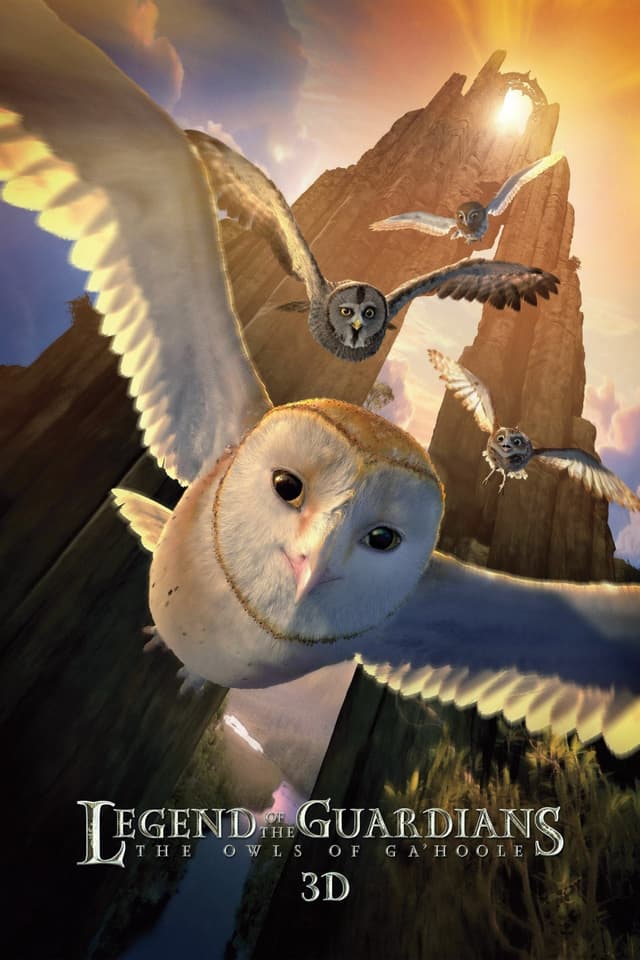
Soren, a young barn owl, is kidnapped by owls of St. Aggie's, ostensibly an orphanage, where owlets are brainwashed into becoming soldiers. He and his new friends escape to the island of Ga'Hoole, to assist its noble, wise owls who fight the army being created by the wicked rulers of St. Aggie's.
What Is the Budget of Legend of the Guardians: The Owls of Ga'Hoole (2010)?
Legend of the Guardians: The Owls of Ga'Hoole (2010), directed by Zack Snyder and distributed by Warner Bros. Pictures, was produced on a reported budget of $80,000,000. The film was a co-production between Warner Bros. Pictures, Village Roadshow Pictures, and Sydney-based animation studio Animal Logic, which had previously delivered the Oscar-winning Happy Feet (2006) for the same partnership. Adapted from the first three novels in Kathryn Lasky's fifteen-book Guardians of Ga'Hoole young-adult fantasy series, the project marked Snyder's first animated feature and his first film aimed primarily at family audiences.
The investment reflected the scale required to deliver photoreal feathered character animation, fully digital environments, and stereoscopic 3D conversion for a major studio release. Animal Logic built every frame at its Sydney facility over a multi-year production cycle, and the budget covered original score recording, voice cast featuring eight Australian and international leads, and the Warner Bros. global marketing rollout. The math assumed the film needed to clear roughly $180,000,000 worldwide to reach theatrical break-even once prints and advertising were folded into the total commitment.
Key Budget Allocation Categories
The reported $80,000,000 budget was distributed across several core production areas:
- Above-the-Line Talent: Zack Snyder, coming off 300 (2007) and Watchmen (2009), commanded a director rate aligned with his rising studio profile. The voice cast pulled together internationally recognizable names including Jim Sturgess (Across the Universe, 21), Hugo Weaving (The Lord of the Rings, The Matrix), Helen Mirren (The Queen), Geoffrey Rush (Shine, Pirates of the Caribbean), David Wenham, Ryan Kwanten, Anthony LaPaglia, and Sam Neill, each commanding compensation reflecting their feature credits.
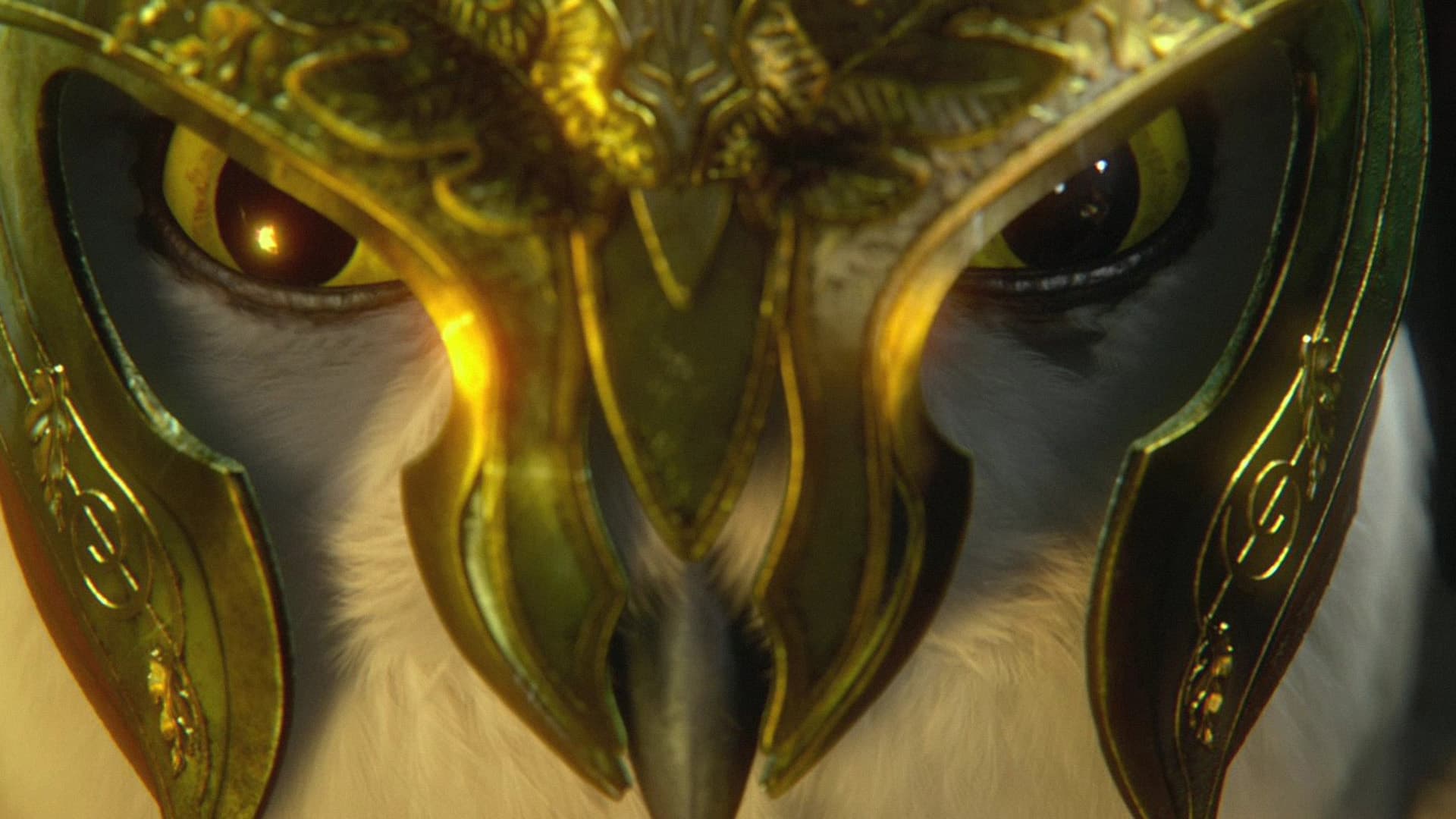
- CG Character Animation: Photoreal feathered owl animation represented the most technically demanding line item. Animal Logic developed proprietary feather grooming, dynamics, and rendering tools to handle the dozens of layered primary, secondary, and down feathers required per character, with each shot requiring multiple iterations to achieve flight motion that read as both believable and emotionally expressive.
- Digital Environments and Set Build: The film's locations, the Great Ga'Hoole Tree, the cliff-side Eyrie of Tyto, the desert StoneLands, and the Beaks battlefield, were built entirely in-camera as digital matte environments. Lighting and atmospheric simulation, particularly the storm sequence and the firefly forest, consumed significant render farm capacity over the back half of the schedule.
- Stereoscopic 3D Production: The film was natively rendered in stereoscopic 3D rather than post-converted, which doubled certain rendering and compositing costs but produced premium-quality depth playback in IMAX 3D and RealD theaters during the 2010 3D theatrical boom that followed Avatar.
- Original Score: Australian composer David Hirschfelder, an Academy Award nominee for Shine and Elizabeth, wrote the orchestral score, recorded with a full symphony orchestra. The soundtrack also incorporated a cover of Owl City's Fireflies performed by the Sydney Children's Choir, used over a key flight sequence.
- Sydney Studio Operation: Animal Logic's Sydney facility ran the production with a peak crew exceeding 250 animators, lighters, riggers, and effects artists. Operating a full-pipeline animated feature in Australia, with offshore studio support and asset hand-offs to Warner Bros. in Burbank, added coordination costs absorbed across the schedule.
- Marketing and 3D Premium: Warner Bros. mounted a full late-summer marketing campaign positioning the film as a tentpole family release, including theatrical trailers attached to Toy Story 3 and Inception, a tie-in deal with McDonald's, and IMAX 3D promotional partnerships.
How Does Legend of the Guardians' Budget Compare to Similar Films?
At a reported $80,000,000, Legend of the Guardians sat comfortably in the middle of the 2010 animated feature field. The comparison set illustrates how its commercial outcome stacked up against contemporaneous family releases:
- Happy Feet (2006): Budget $100,000,000 | Worldwide $384,335,608. Animal Logic's previous Warner Bros. collaboration cost 25% more, won the Academy Award for Best Animated Feature, and earned nearly three times Legend of the Guardians' worldwide total, demonstrating how much the right concept could earn from the same Sydney pipeline.
- How to Train Your Dragon (2010): Budget $165,000,000 | Worldwide $494,879,471. DreamWorks Animation spent more than twice as much on its 2010 flight-and-fantasy hit and earned more than three times the worldwide haul, becoming the runaway family success of the year.
- Tangled (2010): Budget $260,000,000 | Worldwide $592,461,732. Disney's princess-driven Thanksgiving release cost more than three times Legend of the Guardians and out-grossed it by roughly $450 million worldwide.
- Despicable Me (2010): Budget $69,000,000 | Worldwide $543,113,985. Illumination launched its mega-franchise on a budget smaller than Legend of the Guardians and earned nearly four times the worldwide gross, the year-over-year reminder that brand-new family IP could outperform pre-sold adaptations.
- Rio (2011): Budget $90,000,000 | Worldwide $484,635,760. Blue Sky Studios' bird-led adventure released the following spring at a similar budget and earned more than three times Legend of the Guardians' total, suggesting the brighter palette and broader-comedy register sat closer to mainstream family expectations.
- Rango (2011): Budget $135,000,000 | Worldwide $245,724,603. Paramount and ILM's adult-leaning animated Western cost nearly 70% more and earned roughly $100 million more worldwide, another case of a stylistically distinctive animated feature finding a narrower audience than the broad family slate.
Legend of the Guardians Box Office Performance
Legend of the Guardians: The Owls of Ga'Hoole opened on September 24, 2010, in 3,575 North American theaters, finishing second on its opening weekend with $16,100,889. The film trailed Sony's Resident Evil: Afterlife by roughly $10 million but held the family audience for several weeks against limited direct competition until DreamWorks' Megamind arrived in early November. The fall release window, traditionally softer for animated features than summer or holiday corridors, capped the film's domestic ceiling.
Against a reported production budget of $80,000,000, the film needed approximately $180,000,000 in worldwide gross to reach profitability when accounting for marketing and distribution costs. Here is the financial breakdown:
Box Office Breakdown
Legend of the Guardians: The Owls of Ga'Hoole

Legend of the Guardians returned approximately $0.93 in theatrical revenue for every $1 invested when measured against the total estimated production and marketing spend, placing the film roughly at theatrical break-even with home entertainment and television sales eventually pushing it into modest overall profitability for Warner Bros. The domestic share of the gross was $55,675,313 against an international share of $84,398,077, a 40/60 split that reflected stronger overseas appetite for the natural-world animation register pioneered by the BBC and Disneynature.
The mixed result effectively closed the door on further entries in the planned Guardians of Ga'Hoole adaptation. Kathryn Lasky's fifteen-book source series provided ample material for a multi-film franchise, but Warner Bros. and Animal Logic declined to greenlight a sequel after the worldwide gross came in below the level needed to justify another four-year production cycle. Animal Logic instead moved on to The LEGO Movie (2014), which became the studio's next major Warner Bros. partnership and a runaway commercial success.
Legend of the Guardians Production History
Development began in 2005 when Warner Bros. Pictures and Animal Logic optioned Kathryn Lasky's Guardians of Ga'Hoole young-adult fantasy series, with producer Zareh Nalbandian (Happy Feet) attached from the outset. John Orloff (A Mighty Heart, Anonymous) wrote the initial screenplay, with Emil Stern handling subsequent revisions. The script compressed the first three novels in Lasky's series, The Capture, The Journey, and The Rescue, into a single feature arc.
Zack Snyder, fresh off the breakout commercial success of 300 (2007) and the divisive critical reception of Watchmen (2009), signed on to direct in 2008. The choice was deliberate. Warner Bros. and Animal Logic wanted a director with a strong visual identity who could translate Lasky's medieval-fantasy register into a stylized, cinematic register that would distinguish the film from the brighter Disney and Pixar slate. Snyder approached the material with his signature speed-ramped action grammar, treating the owl combat sequences with the same balletic intensity he brought to live-action.
Production took place at Animal Logic's facility in Sydney, Australia, with the Australian Producer Offset and state location incentives helping anchor the four-year animation cycle. The studio's proprietary feather pipeline, originally developed for Happy Feet, was extensively rebuilt to handle the photoreal feathered owls and their flight motion. Snyder directed remotely from Los Angeles using a custom virtual camera system, with daily reviews handed off across the 18-hour time difference. A peak crew exceeding 250 worked across animation, lighting, effects, and stereoscopic 3D rendering.
Voice recording took place primarily in Los Angeles and London during 2009, with Snyder directing the cast on enclosed soundstages in batches. The Australian and New Zealand voice talent, including Jim Sturgess, Hugo Weaving, Geoffrey Rush, David Wenham, Ryan Kwanten, Anthony LaPaglia, and Sam Neill, was deliberately weighted to give the film a distinctive vocal register that distinguished it from the predominantly American animated competition. The final stereoscopic 3D version was completed in mid-2010 for the September theatrical release.
Awards and Recognition
Legend of the Guardians: The Owls of Ga'Hoole won the AACTA Award (Australian Academy of Cinema and Television Arts) for Best Visual Effects, recognizing Animal Logic's feather pipeline and digital environment work. The film also received multiple Annie Award nominations from the International Animated Film Society, including nods for animated effects, character animation in a feature, and production design, though it did not convert any of them into wins against Toy Story 3 and How to Train Your Dragon.
The film was largely absent from the major awards ceremonies. It received no Academy Award nomination for Best Animated Feature, with the 2010 slate going to Toy Story 3 (winner), How to Train Your Dragon, and The Illusionist. Visual Effects Society Award nominations recognized the technical animation but did not yield a win, and the film did not register at the Golden Globes, BAFTAs, or Critics' Choice Movie Awards.
Critical Reception
Legend of the Guardians: The Owls of Ga'Hoole received mixed reviews. The film holds a 52% approval rating on Rotten Tomatoes based on 162 critic reviews, with a critical consensus that called it visually stunning but narratively overstuffed and tonally uneven. On Metacritic, the film scored 53 out of 100, indicating mixed or average reviews. Audiences surveyed by CinemaScore gave the film an A minus, a notable disconnect between critic reservations about story complexity and family-audience enthusiasm for the photoreal owl spectacle and stereoscopic 3D presentation.
Critics broadly praised the photoreal feather animation, the stereoscopic 3D craft, and David Hirschfelder's orchestral score, while objecting to the dense mythology, the compressed adaptation of three source novels, and a final-act tonal shift toward graphic battle imagery that some reviewers flagged as misaligned with the film's PG marketing. Roger Ebert wrote that the film was "so beautiful that it deserves an Oscar nomination, and so confusing that it might not get one," while Variety's Justin Chang called it "a feast for the eyes that often outpaces its narrative capacity to feed the heart."
The Owl City needle drop and the climactic Battle of the Beaks sequence drew the most polarized reactions, with younger audiences responding strongly to both and critic press treating them as evidence of unresolved tonal choices. The film's eventual reputation has settled as a visually impressive curio in Zack Snyder's filmography, a single-entry animated experiment that displayed the director's craftsmanship while highlighting the challenges of adapting dense fantasy literature for a family-audience theatrical release.
Frequently Asked Questions
How much did it cost to make Legend of the Guardians: The Owls of Ga'Hoole (2010)?
The reported production budget was $80,000,000. The film was co-financed by Warner Bros. Pictures, Village Roadshow Pictures, and Sydney-based animation studio Animal Logic, which produced the entire four-year animation cycle at its Australian facility.
How much did Legend of the Guardians earn at the box office?
The film grossed $55,675,313 domestically and $84,398,077 internationally, for a worldwide total of $140,073,390. It opened to $16,100,889 in the United States, finishing second on its September 24, 2010 opening weekend behind Resident Evil: Afterlife.
Was Legend of the Guardians a box office success?
The film roughly broke even theatrically. Against an $80,000,000 production budget and an estimated $60,000,000 to $80,000,000 in marketing spend, it returned approximately $0.93 in worldwide gross for every $1 invested. Home entertainment and television sales eventually pushed it into modest profitability, but the result was soft enough that Warner Bros. and Animal Logic declined to greenlight a sequel based on the remaining novels in Kathryn Lasky's fifteen-book series.
Who directed Legend of the Guardians: The Owls of Ga'Hoole?
Zack Snyder directed the film, working from a screenplay by John Orloff and Emil Stern adapted from the first three novels in Kathryn Lasky's Guardians of Ga'Hoole series. It was Snyder's first animated feature, made between Watchmen (2009) and Sucker Punch (2011).
Where was Legend of the Guardians animated?
The film was animated at Animal Logic's Sydney, Australia facility over a four-year production cycle, supported by the Australian Producer Offset and state location incentives. A peak crew exceeding 250 animators, lighters, riggers, and effects artists worked the project, with Snyder directing remotely from Los Angeles via a virtual camera system.
How does Legend of the Guardians compare to Happy Feet?
Both films were produced by Animal Logic for Warner Bros. with the same Sydney pipeline. Happy Feet (2006) cost $100,000,000 and grossed $384,335,608 worldwide, while Legend of the Guardians cost $80,000,000 and grossed $140,073,390. Happy Feet also won the Academy Award for Best Animated Feature, while Legend of the Guardians received no Oscar nomination.
What is the voice cast of Legend of the Guardians?
The principal voice cast includes Jim Sturgess as Soren, Hugo Weaving as Noctus and Grimble, Helen Mirren as Nyra, Geoffrey Rush as Ezylryb, David Wenham as Digger, Ryan Kwanten as Kludd, Emily Barclay as Gylfie, Anthony LaPaglia as Twilight, and Sam Neill as Allomere. The Australian and New Zealand weighted cast gave the film a distinctive vocal register.
Who composed the score for Legend of the Guardians?
Australian composer David Hirschfelder, an Academy Award nominee for Shine and Elizabeth, wrote the orchestral score, recorded with a full symphony orchestra. The soundtrack also featured a cover of Owl City's Fireflies performed by the Sydney Children's Choir over the firefly forest flight sequence.
What did critics think of Legend of the Guardians?
The film received mixed reviews, with a 52% approval rating on Rotten Tomatoes based on 162 critics and a 53 out of 100 score on Metacritic. Audiences surveyed by CinemaScore gave it an A minus, well ahead of critic sentiment. Reviewers praised the photoreal feather animation, the stereoscopic 3D craft, and David Hirschfelder's score, while objecting to the dense mythology and the compressed adaptation of three source novels.
Did Legend of the Guardians win any awards?
The film won the AACTA Award (Australian Academy of Cinema and Television Arts) for Best Visual Effects, recognizing Animal Logic's feather pipeline and digital environment work. It received multiple Annie Award nominations from the International Animated Film Society for animated effects, character animation, and production design, but did not convert any into wins and received no Academy Award nomination for Best Animated Feature.
Filmmakers
Legend of the Guardians: The Owls of Ga'Hoole

Official Trailer
Build budgets like this one in Saturation
Start from an industry-standard feature film template, import the schedule and rates you already have, and let the cost report keep itself current as you spend. Real-time collaboration, no spreadsheets.