Peter Pan: Return to Neverland Budget
 AdventureFantasyAnimationFamily1h 12m
Updated
Synopsis
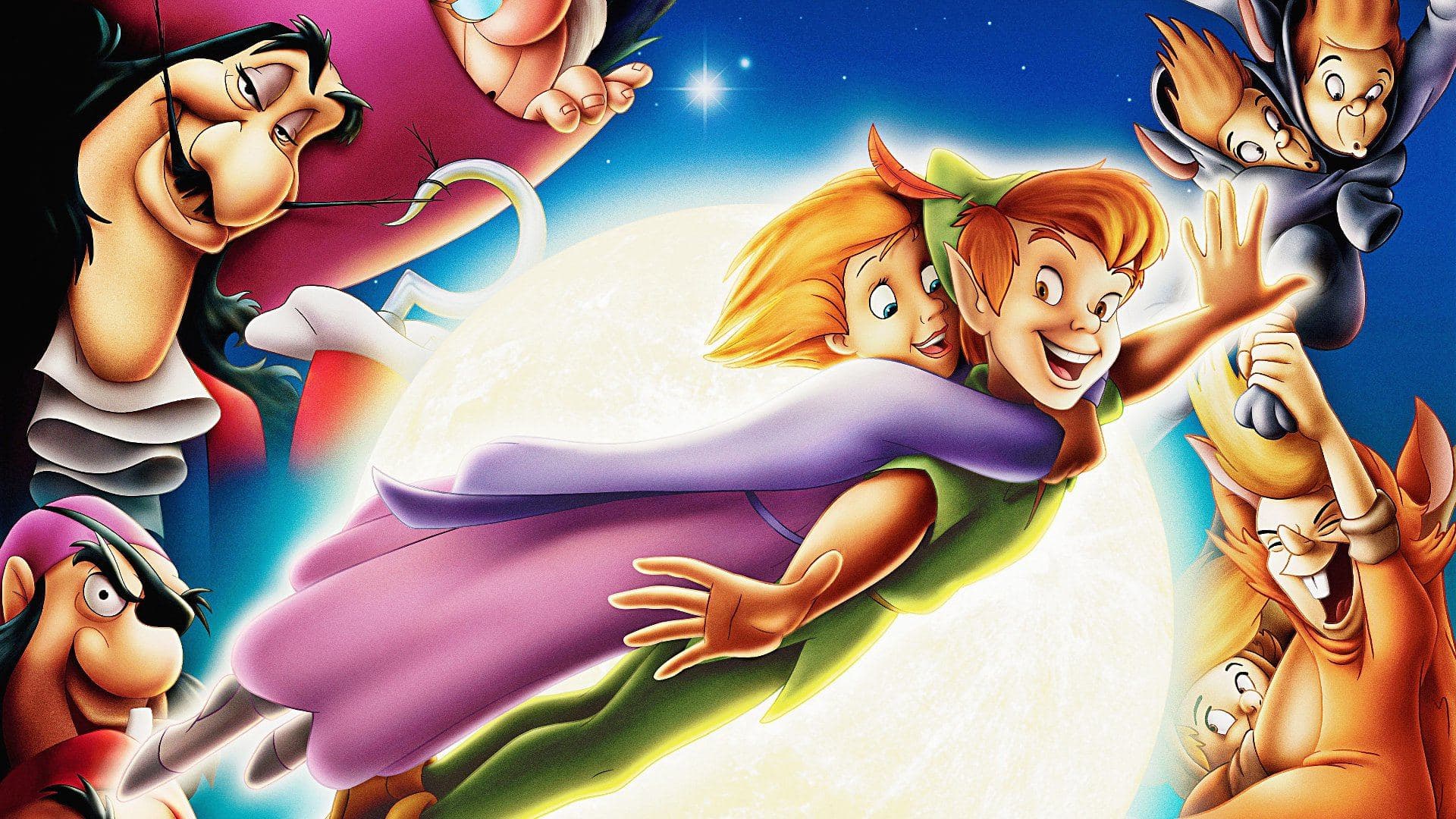
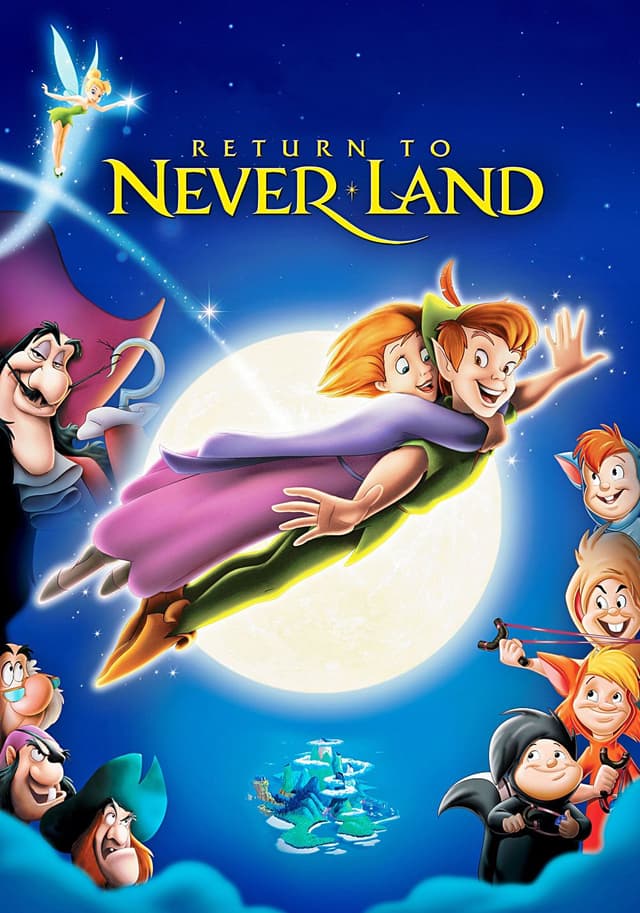
"Peter Pan: Return to Neverland" (2002) is an animated sequel that transports viewers back to the enchanting world of Neverland. The story unfolds years after the original adventures of Peter Pan, focusing on Wendy's daughter, Jane. Struggling with the loss of her childhood and the realities of growing up during World War II, Jane is whisked away to Neverland after being kidnapped by Captain Hook.
In this magical realm, she encounters Peter Pan, Tinker Bell, and the Lost Boys, who are determined to rescue her from Hook's clutches. Initially skeptical of the fantastical world around her, Jane gradually learns to embrace her imagination and the spirit of adventure. As she teams up with Peter and his friends, they embark on a thrilling quest to thwart Hook's evil plans and restore peace to Neverland. Ultimately, Jane discovers the importance of believing in magic and the power of friendship, leading her to a heartfelt reunion with her family and a newfound appreciation for the wonders of childhood.
What is the budget of Peter Pan Return to Neverland?
"Peter Pan Return to Neverland," an adventure released in 2002, was directed by Robin Budd and stars Harriet Owen, Blayne Weaver. The production budget was $20,000,000, placing it in the mid-budget range for adventure productions of its era.
Key Budget Allocation Categories
While specific budget breakdowns are not publicly available, typical cost drivers for an adventure production like this include:
- Stunts, Action Sequences & Visual Effects: Action films allocate a substantial portion of their budget to choreographing and executing practical stunts, pyrotechnics, and CGI-heavy sequences.
- Above-the-Line Talent (Cast & Director): A-list talent commands significant upfront fees plus backend participation.
- Production Design, Sets & Locations: Action films frequently require multiple international shooting locations, large-scale set construction, vehicle acquisitions and modifications, and specialized equipment , all of which drive production costs well above those of dialogue-driven genres.
- Production: The project began as Peter and Jane, a sequel to Peter Pan and intended as the first theatrical release from Disney Animation Canada, who worked on the project until the fall of 1999, when the studio was shut down.
What were the major cost factors in Peter Pan Return to Neverland?
Several factors contributed to the overall production costs of "Peter Pan Return to Neverland."
- Stunts: Stunts, Action Sequences & Visual Effects is one of the primary cost drivers in adventure productions of this scale.
- Above-the-Line Talent (Cast: Above-the-Line Talent (Cast & Director) is one of the primary cost drivers in adventure productions of this scale.
- Production Design: Production Design, Sets & Locations is one of the primary cost drivers in adventure productions of this scale.
How Does Peter Pan Return to Neverland's Budget Compare to Similar Films?
At $20,000,000, Peter Pan Return to Neverland sits in the mid-budget range. Here is how it compares to productions with a similar budget:
- 12 Years a Slave (2013): Budget $20,000,000, Worldwide Gross $187,000,000
- 21 Grams (2003): Budget $20,000,000, Worldwide Gross $60,427,839
- 3 Ninjas Kick Back (1994): Budget $20,000,000, Worldwide Gross $11,798,854
- A Guy Thing (2003): Budget $20,000,000, Worldwide Gross $17,400,000
- A Most Violent Year (2014): Budget $20,000,000, Worldwide Gross $12,007,070
The median budget for wide-release adventure films in the 2000s ranges from $30 to 80M for mid-budget to $150M+ for tentpoles.
Peter Pan Return to Neverland Box Office Performance
"Peter Pan Return to Neverland" earned $48,430,258 domestically and $109,862,682 worldwide at the box office. Against a production budget of $20,000,000, the film performed strongly at the box office.
A film typically needs to earn approximately twice its production budget to cover marketing and distribution costs. For "Peter Pan Return to Neverland," that break-even threshold was roughly $40,000,000. With worldwide earnings of $109,862,682, the film cleared that threshold comfortably.
Box Office Breakdown
Peter Pan: Return to Neverland

At 449.3%, "Peter Pan Return to Neverland" earned roughly $5.49 for every $1 invested in production.
Peter Pan Return to Neverland Production History
Several original songs were written for the film: "I'll Try" (written and performed by Jonatha Brooke, which is put into three different versions. A short version; sung at the beginning of the film, a reprise; heard towards the film's climax, and a full version; which is used in the end credits), "Here We Go Another Plan" (written by Randy Rogel and performed by Jeff Bennett), and "So to Be One of Us"/"Now that You're One of Us" (written by They Might Be Giants). The song "Second Star to the Right" from the original film is covered by Jonatha Brooke.
Awards and Recognition
4 nominations total
Critical Reception
On review aggregator website Rotten Tomatoes, the film has an approval rating of 46% based on 96 reviews, and an average rating of 5.5/10. The site's critical consensus reads, "With its forgettable songs and lackluster story, this new Pan will surely entertain kids, but will feel more like a retread to adults." On Metacritic, the film has a weighted average score of 49 out of 100, based on 26 critics, indicating "mixed or average reviews". Audiences polled by CinemaScore gave the film an average grade of "A" on an A+ to F scale.
Frequently Asked Questions
How much did Return to Neverland cost to make?
The production budget was approximately $20,000,000, modest by Disney theatrical-animation standards. DisneyToon Studios, the dedicated sequel division based in Sydney, Australia and Burbank, California, produced the film using a more cost-efficient pipeline than feature-animation division titles.
How much did Return to Neverland earn at the box office?
The film grossed $48,430,258 domestically and $61,000,000 internationally, for a worldwide total of $109,400,000. It opened to $11,838,000 on February 15, 2002, finishing third in a weekend with strong holiday family attendance.
Is Return to Neverland a direct-to-video sequel?
No, despite originating in DisneyToon Studios. The film was elevated to a theatrical release after the studio felt the animation quality merited a wide opening. Most DisneyToon titles released in the same period, including The Hunchback of Notre Dame II and The Little Mermaid II, went direct to home video.
Who directed Return to Neverland?
Robin Budd directed the feature with co-direction credit to Donovan Cook. Budd had previously served as story artist on Beauty and the Beast (1991) and The Lion King (1994). Cook moved into directing across the DisneyToon Studios slate including the Stitch! direct-to-video series.
Who voices the characters in Return to Neverland?
Blayne Weaver voices Peter Pan, replacing Bobby Driscoll from the 1953 original. Harriet Owen voices Jane, with Corey Burton replacing Hans Conried as Captain Hook. Roger Rees voices Mr. Darling and Kath Soucie voices Wendy as an adult.
Where was Return to Neverland made?
Production was based at DisneyToon Studios in Sydney, Australia and Burbank, California. The Sydney unit handled the bulk of character animation while Burbank handled effects animation, with a smaller satellite contribution from the DisneyToon studio in Tokyo.
What did critics think of Return to Neverland?
Reviews were mixed, with a 47% approval rating on Rotten Tomatoes and a 51 out of 100 score on Metacritic. Critics praised the period detail of the World War II London setting but objected to weak songs compared with the 1953 original. Audiences gave it an A CinemaScore.
Was Return to Neverland profitable?
Yes. Against the $20,000,000 production budget and an estimated $30,000,000 in marketing spend, the worldwide gross of $109,400,000 delivered theatrical profit. Subsequent home video, Disney Channel rotation, and the launch of Disney+ have substantially compounded the long-tail return.
How does Return to Neverland compare to the original Peter Pan?
Return to Neverland grossed $109,400,000 worldwide against $87,400,000 for Peter Pan (1953) on initial release, though the 1953 original ultimately earned far more across multiple theatrical reissues. The 2002 sequel sits among the most successful Disney theatrical sequels alongside The Rescuers Down Under (1990) and Fantasia 2000 (1999).
Where can I stream Return to Neverland?
The film is available on Disney+ as part of the streaming service's permanent animation catalog. It is also available for digital purchase on Apple TV, Amazon Prime Video, and Google Play.
Official Trailer
Build budgets like this one in Saturation
Start from an industry-standard feature film template, import the schedule and rates you already have, and let the cost report keep itself current as you spend. Real-time collaboration, no spreadsheets.