How to Train Your Dragon Budget
 FantasyFamilyActionAdventure2h 5m
Updated
Synopsis
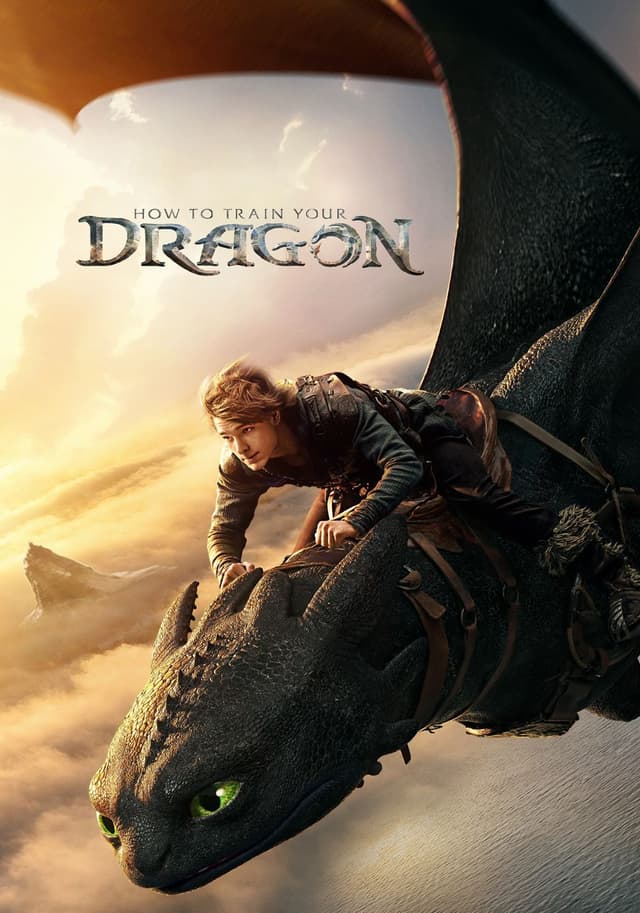
As an ancient threat endangers both Vikings and dragons alike on the isle of Berk, the friendship between Hiccup, an inventive Viking, and Toothless, a Night Fury dragon, becomes the key to both species forging a new future together.
What is the budget of How to Train Your Dragon?
"How to Train Your Dragon," a fantasy released in 2010, was directed by Dean DeBlois and stars Mason Thames, Nico Parker. The production budget was $150,000,000, placing it in the blockbuster range for fantasy productions of its era.
Key Budget Allocation Categories
While specific budget breakdowns are not publicly available, typical cost drivers for a fantasy production like this include:
- Visual Effects & Creature Design: Fantasy productions require extensive VFX for magical elements, mythical creatures, and fantastical battle sequences.
- Costumes, Prosthetic Makeup & Production Design: Period-inspired or wholly original costumes, elaborate prosthetic and makeup applications, and richly detailed set construction are hallmarks of fantasy filmmaking.
- Music Score & Sound Design: Fantasy epics typically commission full orchestral scores recorded with 80 to 100 piece ensembles, plus extensive sound design for magical effects, creature vocalizations, and immersive world audio.
What were the major cost factors in How to Train Your Dragon?
Several factors contributed to the overall production costs of "How to Train Your Dragon."
- Visual Effects: Visual Effects & Creature Design is one of the primary cost drivers in fantasy productions of this scale.
- Costumes: Costumes, Prosthetic Makeup & Production Design is one of the primary cost drivers in fantasy productions of this scale.
- Music Score: Music Score & Sound Design is one of the primary cost drivers in fantasy productions of this scale.
How Does How to Train Your Dragon's Budget Compare to Similar Films?
At $150,000,000, How to Train Your Dragon sits in the blockbuster range. Here is how it compares to productions with a similar budget:
- 6 Underground (2019): Budget $150,000,000
- Angels & Demons (2009): Budget $150,000,000, Worldwide Gross $485,930,816
- Batman Begins (2005): Budget $150,000,000, Worldwide Gross $374,218,673
- Bee Movie (2007): Budget $150,000,000, Worldwide Gross $287,594,577
- Beverly Hills Cop: Axel F (2024): Budget $150,000,000
The median budget for wide-release fantasy films in the 2020s ranges from $30 to 80M for mid-budget to $150M+ for tentpoles.
How to Train Your Dragon Box Office Performance
"How to Train Your Dragon" earned $171,805,710 domestically and $636,351,148 worldwide at the box office. Against a production budget of $150,000,000, the film performed strongly at the box office.
A film typically needs to earn approximately twice its production budget to cover marketing and distribution costs. For "How to Train Your Dragon," that break-even threshold was roughly $300,000,000. With worldwide earnings of $636,351,148, the film cleared that threshold comfortably.
Box Office Breakdown
How to Train Your Dragon

At 324.2%, "How to Train Your Dragon" earned roughly $4.24 for every $1 invested in production.
Awards and Recognition
Nominated for 1 BAFTA Award2 wins & 18 nominations total
Frequently Asked Questions
How much did it cost to make How to Train Your Dragon (2025)?
The production budget was $150,000,000, covering principal photography, visual effects, cast and crew salaries, locations, sets, post-production, and music. Marketing and distribution (P&A) costs are estimated at an additional $75,000,000 - $120,000,000, bringing the total studio investment to approximately $225,000,000 - $270,000,000.
How much did How to Train Your Dragon (2025) earn at the box office?
How to Train Your Dragon grossed $171,805,710 domestic, $464,545,438 international, totaling $636,351,148 worldwide.
Was How to Train Your Dragon (2025) profitable?
Yes. Against a production budget of $150,000,000 and estimated total costs of ~$375,000,000, the film earned $636,351,148 theatrically - a 324% ROI on production costs alone.
What were the biggest costs in producing How to Train Your Dragon?
The primary cost drivers were above-the-line talent (Mason Thames, Nico Parker, Gerard Butler); VFX creature work, elaborate costume and prosthetic design, and orchestral scoring.
How does How to Train Your Dragon's budget compare to similar fantasy films?
At $150,000,000, How to Train Your Dragon is classified as a big-budget production. The median budget for wide-release fantasy films in the 2020s ranges from $30 - 80M for mid-budget to $150M+ for tentpoles. Comparable budgets: 6 Underground (2019, $150,000,000); Angels & Demons (2009, $150,000,000); Batman Begins (2005, $150,000,000).
Did How to Train Your Dragon (2025) go over budget?
There are no widely reported accounts of significant budget overruns for this production. However, studios rarely disclose precise budget overrun figures publicly. The reported production budget reflects the final estimated cost.
What was the return on investment (ROI) for How to Train Your Dragon?
The theatrical ROI was 324.2%, calculated as ($636,351,148 − $150,000,000) ÷ $150,000,000 × 100. This measures gross revenue against production budget only - it does not account for P&A or exhibitor shares.
What awards did How to Train Your Dragon (2025) win?
Nominated for 1 BAFTA Award2 wins & 18 nominations total.
Who directed How to Train Your Dragon and who were the key crew members?
Directed by Dean DeBlois, written by Dean DeBlois, shot by Bill Pope, with music by John Powell, edited by Wyatt Smith.
Where was How to Train Your Dragon filmed?
How to Train Your Dragon was filmed in United States of America.
Filmmakers
How to Train Your Dragon

Official Trailer
Build budgets like this one in Saturation
Start from an industry-standard feature film template, import the schedule and rates you already have, and let the cost report keep itself current as you spend. Real-time collaboration, no spreadsheets.