Gung Ho Budget
Updated
Synopsis
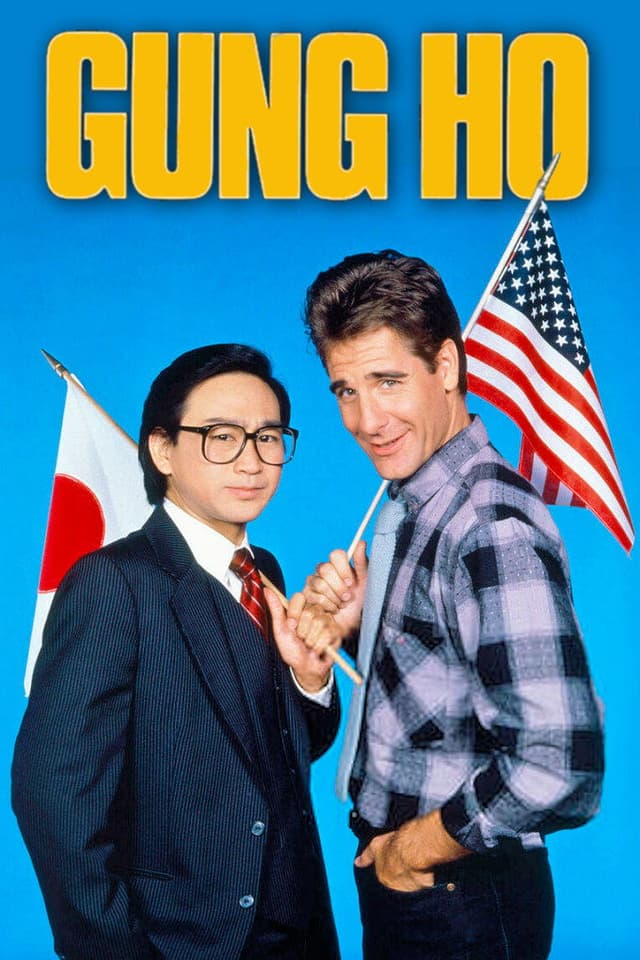
Gung Ho (1986) follows Pennsylvania auto worker Hunt Stevenson (Michael Keaton), who is dispatched to Tokyo to convince Japanese automaker Assan Motors to acquire and reopen his shuttered Hadleyville auto plant. When Assan agrees and sends executive Oishi Kazihiro (Gedde Watanabe) to manage the facility, the cross-cultural workplace conflict between the laid-off-and-rehired American workers and their new Japanese management escalates across the production-quota-and-quality-control rules that test the limits of both cultures' workplace traditions. The Ron Howard-directed Imagine-Paramount mid-budget comedy paired Keaton with George Wendt, Mimi Rogers, and John Turturro.
What Is the Budget of Gung Ho (1986)?
Gung Ho (1986), directed by Ron Howard and distributed by Paramount Pictures, was produced on a reported budget of $13,000,000. The fish-out-of-water comedy starred Michael Keaton as Hunt Stevenson, a Pennsylvania auto worker who is dispatched to Tokyo to convince Japanese automaker Assan Motors to acquire and reopen his shuttered Hadleyville auto plant, with Gedde Watanabe as Oishi Kazihiro, the Assan Motors executive sent to manage the cross-cultural workplace conflict that follows. Producer Tony Ganz and Deborah Blum (Ganz) developed the project with Imagine Entertainment, the production company Ron Howard had co-founded with Brian Grazer in 1986.
The mid-1980s mid-budget comedy figure reflected the cost of Michael Keaton's emerging-lead fee (he was coming off Mr. Mom and Johnny Dangerously and ahead of his subsequent Beetlejuice and Batman lead casting), the multi-location production tracking the Japan-to-Pennsylvania-and-back-again three-act structure, the practical auto-plant set construction, and the broader Imagine-and-Paramount above-the-line package. The financial math assumed Gung Ho would clear roughly $30,000,000 worldwide to break even after marketing, a target the film cleared and slightly exceeded while building toward its later spin-off ABC television series in 1986 to 1987.
Key Budget Allocation Categories
Gung Ho's reported $13,000,000 budget was distributed across several core production areas:
- Above-the-Line Talent: Michael Keaton, fresh off Mr. Mom (1983) and Johnny Dangerously (1984), commanded an emerging-comedy-lead fee in the $1,500,000 to $2,500,000 range typical for his pre-Batman star tier. Director Ron Howard, coming off Splash (1984) and Cocoon (1985), drew a feature-director rate consistent with his recent commercial-success track record. Supporting players Gedde Watanabe, George Wendt (Cheers), Mimi Rogers, John Turturro, Soh Yamamura, and Sab Shimono filled out the ensemble at standard supporting-actor rates.
- Pennsylvania Auto Plant Construction: The film required a practical auto-plant set with active assembly-line infrastructure, period-accurate auto-manufacturing equipment, and the recurring large-scale practical-effects work needed to render the cross-cultural workplace conflict. Production designer James Schoppe (Splash, Cocoon) built the practical Hadleyville auto-plant set in Argentine, Buenos Aires-stand-in locations in Pennsylvania.
- Multi-Location Production: The film tracks a Japan-to-Pennsylvania-and-back-again three-act structure, with practical location shooting required across both regions. The Japan production block covered Tokyo street and corporate locations, with the Pennsylvania production base covering the auto-plant-and-surrounding-town storyline. International travel, lodging, and local-crew costs added meaningful production overhead.
- Cinematography: Cinematographer Donald Peterman (Cocoon, Flashdance, Big Trouble in Little China) shot the film with a naturalist comedic palette across the multi-location production, balancing the workplace-comedy interior work with the location exteriors across the Japan-and-Pennsylvania three-act structure.
- Score and Music: Composer Thomas Newman (in his second feature credit after Reckless, 1984, ahead of his later The Shawshank Redemption-and-American Beauty career) provided the original orchestral score. The music budget covered orchestra-recording sessions and the cross-cultural-needle-drop selection for the comedic-and-emotional set pieces.
- Wardrobe and Production Design: The mid-1980s American auto-worker wardrobe and the contemporaneous Japanese corporate wardrobe required parallel costume tracks. Wardrobe department head Sherry Thompson coordinated multiple costume registers across the Tokyo corporate-meeting sequences and the Hadleyville auto-plant-and-suburban material.
How Does Gung Ho's Budget Compare to Similar Films?
At $13,000,000, Gung Ho sat in the standard mid-1980s mid-budget comedy tier. The comparison set illustrates how its commercial outcome stacked up against peer fish-out-of-water and workplace comedies of the period:
- Mr. Mom (1983): Budget $5,000,000 | Worldwide $64,783,827. Michael Keaton's previous breakthrough comedy lead cost less than half as much as Gung Ho and earned nearly twice the worldwide gross.
- Cocoon (1985): Budget $17,500,000 | Worldwide $76,113,124. Ron Howard's previous Imagine-Paramount feature cost 35% more and earned more than twice the worldwide gross, with comparable Pennsylvania-and-Florida multi-location production.
- Splash (1984): Budget $11,000,000 | Worldwide $69,821,334. Ron Howard's prior Disney-Touchstone comedy cost slightly less and earned nearly twice the worldwide gross, both films directed by Howard within a two-year window.
- Big Business (1988): Budget $19,000,000 | Worldwide $40,094,206. The Bette Midler-Lily Tomlin twin-comedy from Disney cost 50% more and earned roughly 10% more, occupying the same mid-budget studio-comedy tier as Gung Ho.
- Working Girl (1988): Budget $28,000,000 | Worldwide $103,000,000. Mike Nichols' Melanie Griffith-Harrison Ford workplace comedy cost more than twice as much and earned three times the worldwide gross, illustrating the broader 1980s studio-comedy budget-and-gross trajectory.
Gung Ho Box Office Performance
Gung Ho opened on March 14, 1986 to $5,872,387 across 1,395 theaters, a respectable per-theater average of approximately $4,210 that placed the film fourth for its opening weekend behind Pretty in Pink (which won the weekend), Out of Africa (which had been holding for months), and Highlander. The opening signaled that the Michael Keaton-led mid-budget comedy could anchor a spring-corridor mid-budget play but not at the breakout volumes that would have justified a wider release expansion. Here is the financial breakdown:
Box Office Breakdown
Gung Ho

Gung Ho returned approximately $1.50 in worldwide gross for every $1 invested when measured against total estimated production and marketing spend, a solid theatrical outcome that placed the film in the upper-tier of 1986 mid-budget studio comedies. The Box Office Mojo record shows essentially the entire reported gross coming from the domestic United States, with international box office not aggregated as a significant theatrical line, indicating Paramount routed the film through international home-video and pay-cable secondary windows.
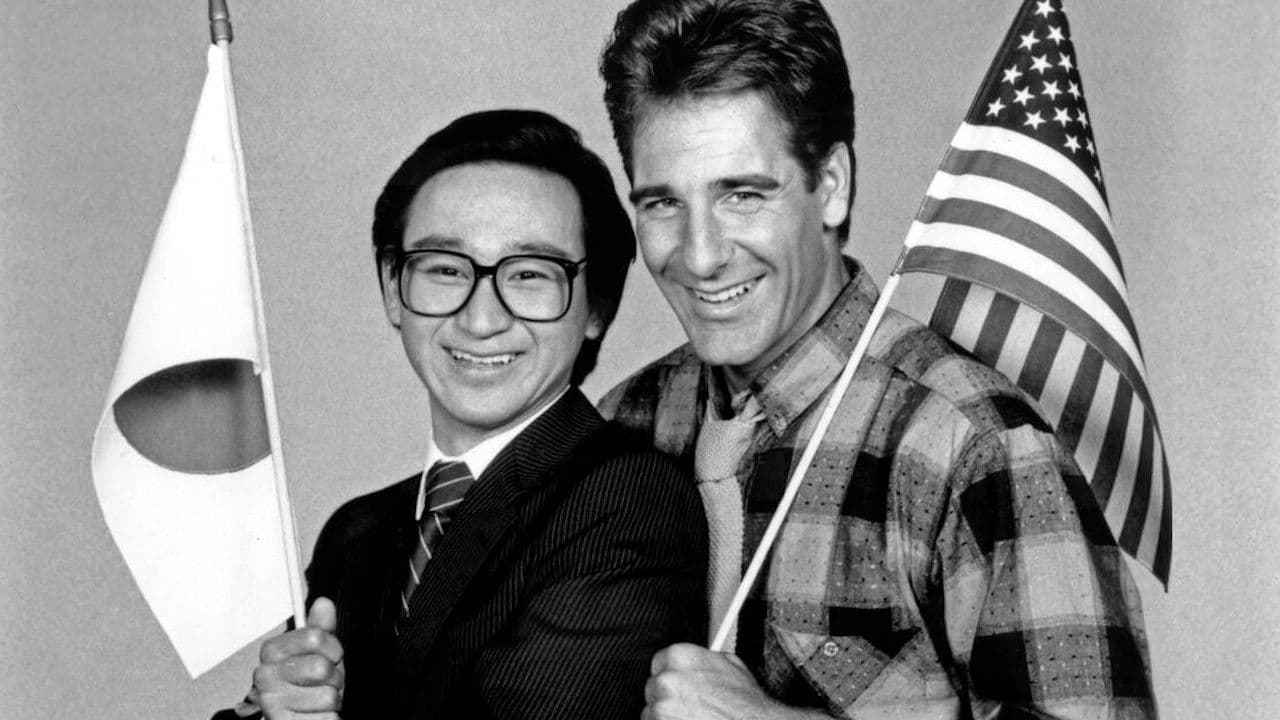
Paramount and Imagine developed an ABC television series spin-off (Gung Ho, 1986 to 1987) that ran for thirteen episodes following the feature's theatrical success. The series re-cast the central roles (Scott Bakula as Hunt Stevenson, Gedde Watanabe reprising Oishi Kazihiro) and ran for a single season before cancellation. The film also generated catalogue value across home-video, pay-cable, and streaming windows over the subsequent decades.
Gung Ho Production History
Edwin Blum and Lowell Ganz and Babaloo Mandel developed the Gung Ho screenplay across the mid-1980s, drawing on the contemporary American auto-industry crisis (Japanese automakers had been steadily gaining market share against American manufacturers across the late 1970s and early 1980s) and on the broader American cultural anxiety about Japanese economic ascendance. Ron Howard committed to direct on the strength of his recent Splash (1984) and Cocoon (1985) commercial-success track record, with Imagine Entertainment (which Howard had co-founded with Brian Grazer in 1986) co-producing alongside Paramount Pictures.
Casting Michael Keaton as Hunt Stevenson was the production's defining commercial bet. Keaton had broken through as a comedy lead in Mr. Mom (1983), and the Gung Ho casting positioned him as an emerging-leading-man comedic actor heading into his subsequent Beetlejuice (1988) and Batman (1989) lead casting. Gedde Watanabe was cast as Oishi Kazihiro after his Sixteen Candles (1984) supporting work, with George Wendt (Cheers), Mimi Rogers, John Turturro, Soh Yamamura, and Sab Shimono filling out the ensemble.
Principal photography took place across summer 1985 in Pennsylvania (covering the Hadleyville auto-plant-and-surrounding-town storyline) and Japan (covering the Tokyo corporate-and-street sequences). The Pennsylvania production used an actual auto-plant facility in Argentine and Buenos Aires-stand-in locations across the state. The Japan production block covered Tokyo corporate locations and street photography across a multi-week shooting block.
Paramount positioned the film for a March 14, 1986 release with a marketing campaign emphasizing the Michael Keaton workplace-comedy premise and the cross-cultural fish-out-of-water storyline. The campaign deliberately leaned into the auto-industry-and-Japan economic-anxiety material as a topical hook, with trailers and television spots framing the picture as a contemporary workplace comedy with broad four-quadrant appeal.
The film was subsequently spun off into an ABC television series (Gung Ho, 1986 to 1987) that ran for thirteen episodes following the feature's theatrical success. The series re-cast the central roles (Scott Bakula as Hunt Stevenson, Gedde Watanabe reprising Oishi Kazihiro) and ran for a single season on ABC's Wednesday-night schedule before cancellation in March 1987.
Awards and Recognition
Gung Ho received modest awards recognition. The film was nominated for the Young Artist Award for Best Family Motion Picture in the Comedy or Musical category, and Michael Keaton received light Golden Globe attention for his work as Hunt Stevenson without breaking through to nomination. The film did not register at the Academy Awards or BAFTAs, with the 59th Academy Awards comedy-drama slate dominated by Hannah and Her Sisters, A Room with a View, and The Color of Money.
The contemporary cultural-and-political reception of Gung Ho has generated more retrospective critical attention than its initial awards-circuit footprint. The film's treatment of Japanese-American cultural and economic interactions has been the subject of recurring academic and critical reappraisal across the 1990s, 2000s, and 2010s, with some surveys describing the picture as a defining 1980s American work on Japanese economic-and-cultural anxiety and others critiquing the film's stereotypical character framing.
Retrospective interest in Gung Ho has centered on Michael Keaton's lead performance as a precursor to his subsequent Beetlejuice (1988) and Batman (1989) leads, on Ron Howard's emerging Imagine-Entertainment production-company-and-director track record, and on the broader 1980s American cultural moment of Japanese-economic-anxiety filmmaking alongside Black Rain (1989) and Rising Sun (1993).
Critical Reception
Gung Ho received mixed reviews. The film holds a 50% approval rating on Rotten Tomatoes based on 28 critic reviews, with a Metacritic score of 67 out of 100, indicating mixed or average reviews. Critics broadly praised Michael Keaton's lead performance, the production design of the practical auto-plant set, and the multi-location production work across Japan and Pennsylvania.
Roger Ebert awarded the film two and a half stars, writing that "Keaton and Watanabe carry the picture's cross-cultural comedy, but the film's ambitions never quite match its structural easy answers." Vincent Canby of The New York Times called it "a workplace comedy that works in its set pieces but stumbles when it tries to address the cultural anxieties it deliberately invokes." Pauline Kael of The New Yorker described the picture as "Ron Howard delivering exactly the comedy his Splash-and-Cocoon track record predicted, which is to say a comfortably packaged middle-of-the-road entertainment with limited interest in its own subtext."
Contemporary criticism of the film's treatment of Japanese characters and culture has grown sharper in retrospective reappraisal across the 1990s and 2000s. Academic surveys of 1980s American-Japanese cultural-economic-anxiety filmmaking have placed Gung Ho alongside Black Rain (1989) and Rising Sun (1993) as an exemplar of the period's broader narrative tendencies, with mixed retrospective verdicts on the picture's cultural-political framing. The film remains a recurring touchstone in surveys of Michael Keaton's pre-Batman career and of Ron Howard's emergence as a major American studio director.
Frequently Asked Questions
How much did Gung Ho (1986) cost to make?
Gung Ho was produced on a reported budget of $13,000,000. Paramount Pictures financed the production in partnership with Imagine Entertainment (the production company Ron Howard had co-founded with Brian Grazer in 1986), with the budget reflecting Michael Keaton's emerging-comedy-lead fee, the multi-location production tracking the Japan-to-Pennsylvania three-act structure, and the practical auto-plant set construction.
How much did Gung Ho earn at the box office?
The film grossed $36,611,610 in its United States theatrical release through Paramount Pictures. International box office is not aggregated as a significant theatrical line, with Paramount routing the film through international home-video and pay-cable secondary windows. The film opened to $5,872,387 across 1,395 theaters on March 14, 1986, finishing fourth for the weekend behind Pretty in Pink, Out of Africa, and Highlander.
Was Gung Ho a box office success?
Yes, modestly. Against a $13,000,000 production budget and an estimated $8,000,000 to $12,000,000 in marketing spend, Gung Ho returned approximately $1.50 in worldwide gross for every $1 invested. The film was successful enough to spawn a 1986 to 1987 ABC television series spin-off and to register as a solid mid-budget studio comedy of the 1986 calendar year.
Who directed Gung Ho?
Ron Howard directed Gung Ho from a screenplay by Lowell Ganz and Babaloo Mandel. Howard was coming off Splash (1984) and Cocoon (1985) and had co-founded Imagine Entertainment with Brian Grazer in 1986 (Gung Ho was one of Imagine's earliest production-company credits). Howard later directed Parenthood (1989), Backdraft (1991), Apollo 13 (1995), and A Beautiful Mind (2001, Best Picture Oscar).
Where was Gung Ho filmed?
Principal photography took place across summer 1985 in Pennsylvania (covering the Hadleyville auto-plant-and-surrounding-town storyline) and Japan (covering the Tokyo corporate-and-street sequences). The Pennsylvania production used an actual auto-plant facility in Argentine and Buenos Aires-stand-in locations across the state. The Japan production block covered Tokyo corporate locations and street photography across a multi-week shooting block.
Who plays Hunt Stevenson in Gung Ho?
Michael Keaton plays Hunt Stevenson, the Pennsylvania auto worker dispatched to Tokyo. Keaton had broken through as a comedy lead in Mr. Mom (1983), and the Gung Ho casting positioned him as an emerging-leading-man comedic actor heading into his subsequent Beetlejuice (1988) and Batman (1989) lead casting. The role is widely cited in surveys of Keaton's pre-Batman career trajectory.
Is Gung Ho based on a true story?
Gung Ho is a fictional screenplay by Lowell Ganz and Babaloo Mandel, drawing on the contemporary American auto-industry crisis (Japanese automakers had been steadily gaining market share against American manufacturers across the late 1970s and early 1980s) and on the broader American cultural anxiety about Japanese economic ascendance. The Hadleyville auto plant is a fictional setting, and the Assan Motors corporate-acquisition storyline is fictionalized rather than based on a specific real-world transaction.
Is there a Gung Ho TV show?
Yes. Paramount and Imagine developed an ABC television series spin-off (Gung Ho, 1986 to 1987) that ran for thirteen episodes following the feature's theatrical success. The series re-cast the central roles (Scott Bakula as Hunt Stevenson, Gedde Watanabe reprising Oishi Kazihiro) and ran for a single season on ABC's Wednesday-night schedule before cancellation in March 1987.
How does Gung Ho compare to Mr. Mom?
Gung Ho cost $13,000,000 against Mr. Mom's $5,000,000, and earned $36,611,610 against Mr. Mom's $64,783,827. Both films featured Michael Keaton in a workplace-comedy lead role, with Gung Ho mounting a more ambitious mid-budget production and Mr. Mom delivering a substantially better per-dollar commercial outcome. Both films are recurring touchstones in surveys of Keaton's pre-Batman comedy work.
What did critics think of Gung Ho?
The film received mixed reviews, with a 50% Rotten Tomatoes approval rating based on 28 reviews and a Metacritic score of 67 out of 100. Roger Ebert awarded the film two and a half stars and wrote that "Keaton and Watanabe carry the picture's cross-cultural comedy, but the film's ambitions never quite match its structural easy answers." Retrospective criticism of the film's treatment of Japanese characters and culture has grown sharper across the 1990s and 2000s.
Filmmakers
Gung Ho

Official Trailer
Build budgets like this one in Saturation
Start from an industry-standard feature film template, import the schedule and rates you already have, and let the cost report keep itself current as you spend. Real-time collaboration, no spreadsheets.