Valley Girl Budget
 ComedyRomance1h 39m
Updated
Synopsis
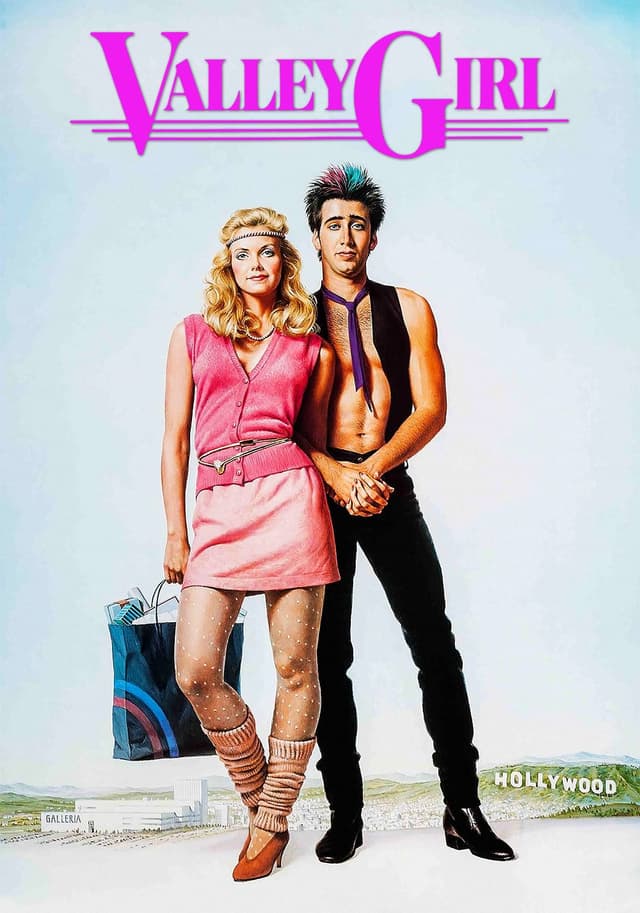
Julie, a girl from the valley, meets Randy, a punk from the city. They are from different worlds and find love. Somehow they need to stay together in spite of her trendy, shallow friends.
What Is the Budget of Valley Girl?
Valley Girl (1983) was produced on a shoestring budget of approximately $350,000, making it one of the most cost-effective productions of the early 1980s. Director Martha Coolidge and her team stretched every dollar across a tight shooting schedule in and around the San Fernando Valley. The film was financed independently, with producers Wayne Crawford and Andrew Lane securing funds outside the traditional studio system. Despite the minimal investment, the production delivered polished results that belied its micro-budget origins.
Key Budget Allocation Categories
With only $350,000 to work with, the production team prioritized practical spending and creative resourcefulness across every department.
- Cast and Talent Salaries were minimal across the board. Nicolas Cage, still early in his career and occasionally billed as Nicolas Coppola, and lead Deborah Foreman both worked for scale. Supporting cast members were largely unknown actors willing to take low pay for screen time.
- Locations and Sets Nearly all filming took place on practical locations throughout the San Fernando Valley and Hollywood, eliminating the need for expensive soundstage rentals. Real homes, malls, and clubs served as backdrops.
- Music and Soundtrack The soundtrack became a defining element of the film, featuring tracks from Modern English, the Psychedelic Furs, Bonnie Hayes, and other new wave acts. Licensing these songs consumed a notable share of the budget, but the investment paid off enormously in audience appeal.
- Production Design Costume and set design leaned heavily on the authentic Valley aesthetic of the era, using real wardrobes and existing locations rather than constructed sets. This approach kept costs down while lending the film genuine cultural texture.
- Post-Production Editing and sound mixing were handled efficiently with a small crew. The straightforward romantic narrative required no special effects or complex post-production workflows.
How Does Valley Girl's Budget Compare to Similar Films?
Valley Girl's $350,000 budget was remarkably lean even by the standards of early 1980s teen comedies. Comparing it to contemporaries reveals just how efficiently the production operated.
- Fast Times at Ridgemont High (1982) Budget $4.5M | Worldwide $27.1M. Universal backed this studio teen comedy with more than twelve times Valley Girl's budget, yet Valley Girl achieved comparable cultural impact on a fraction of the investment.
- Sixteen Candles (1984) Budget $6.5M | Worldwide $23.7M. John Hughes had studio support for his teen comedy debut, spending nearly nineteen times what Valley Girl cost. Both films became generational touchstones.
- Risky Business (1983) Budget $6.2M | Worldwide $63.5M. Released the same year, this Tom Cruise vehicle had a budget nearly eighteen times larger. Valley Girl matched it in launching a major career (Nicolas Cage) at a tiny fraction of the cost.
- The Slumber Party Massacre (1982) Budget $220,000 | Worldwide $3.4M. One of the few teen-oriented films of the era produced for even less than Valley Girl, though it operated in the horror genre with narrower commercial ambitions.
- Porky's (1981) Budget $4M | Worldwide $105.5M. This Canadian teen comedy became a box office phenomenon on a moderate budget, but still required more than eleven times Valley Girl's investment to produce.
Valley Girl Box Office Performance
Valley Girl earned $17,326,667 domestically during its theatrical run, an extraordinary return on its $350,000 production budget. The film received a limited release through Atlantic Releasing Corporation, initially opening in a handful of markets before expanding as word of mouth spread.
Using the standard break-even formula (roughly 2x production budget to account for prints and advertising), Valley Girl needed approximately $700,000 to recoup its costs. The film surpassed that threshold almost immediately, ultimately generating a return on investment of roughly 4,850% ((($17,326,667 - $350,000) / $350,000) x 100). This made it one of the most profitable independent films of 1983 on a pure ROI basis.
The film's commercial success was driven largely by its soundtrack appeal and the cultural fascination with Valley Girl speak, which Frank Zappa's novelty hit had popularized the previous year. Audiences connected with the Romeo and Juliet premise wrapped in authentic Valley culture, and the film continued to perform well in home video throughout the 1980s.
Box Office Breakdown
Valley Girl

Valley Girl Production History
The project began when producers Wayne Crawford and Andrew Lane sought to capitalize on the "Valley Girl" cultural moment that had swept Southern California in 1982, fueled by Frank Zappa and Moon Unit Zappa's satirical hit single. They initially envisioned a low-budget exploitation film, but director Martha Coolidge insisted on treating the material with genuine warmth and emotional depth.
Coolidge was one of very few women directing commercially distributed films in the early 1980s. She had studied at NYU and the Canadian Film Centre and brought a documentary sensibility to the project, pushing for naturalistic performances and authentic Valley locations. Her vision transformed what could have been a disposable cash-in into a film with lasting resonance.
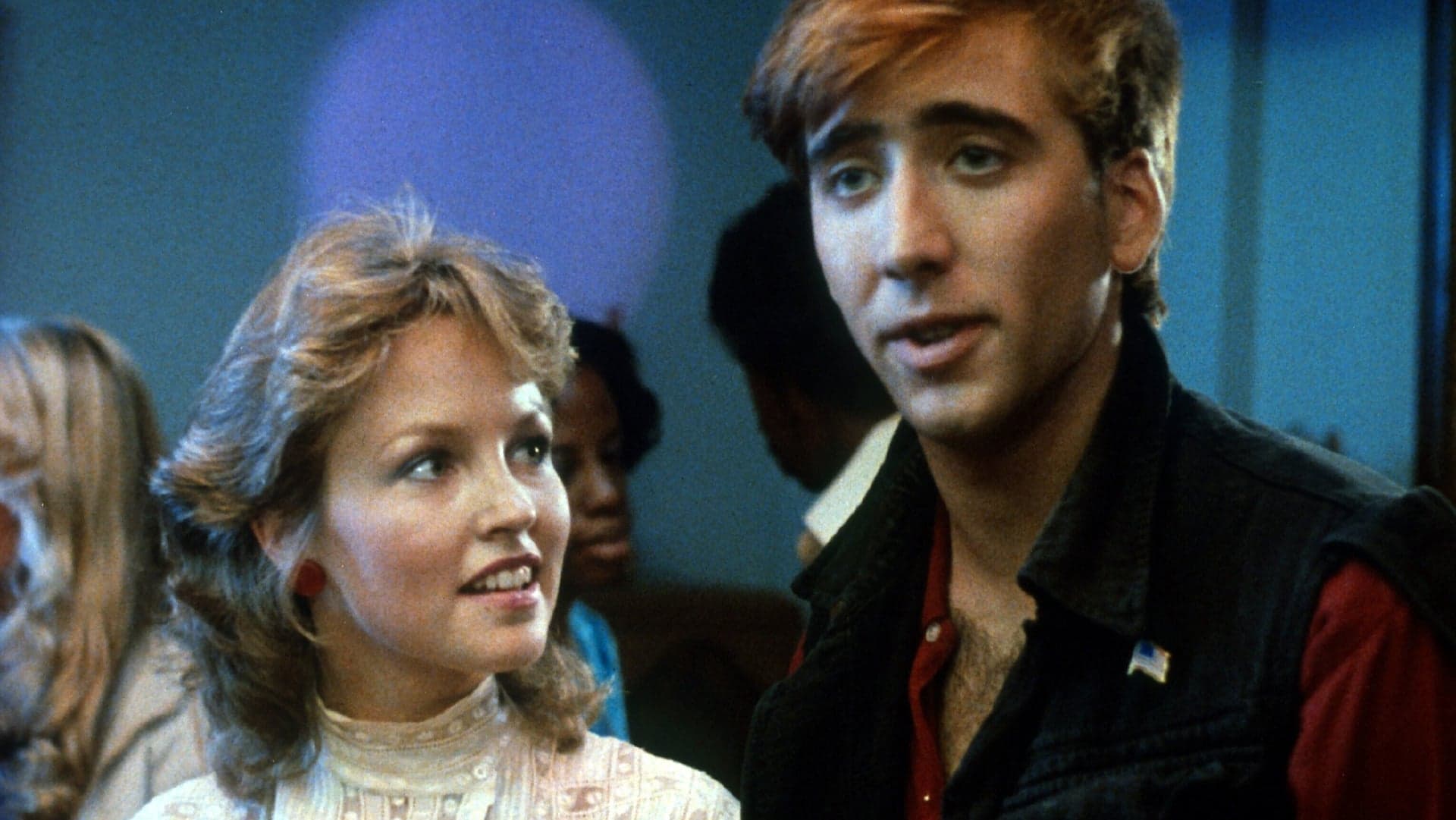
Nicolas Cage, then 18, landed the role of Randy after impressing Coolidge with his intense audition. He was Francis Ford Coppola's nephew but determined to build a career on his own merit, and some early prints credited him as Nicolas Coppola. Deborah Foreman was cast as Julie, the Valley girl who falls for Hollywood punk Randy, and the two developed genuine on-screen chemistry during the compressed shooting schedule.
Filming took place over approximately three weeks across the San Fernando Valley and Hollywood. The production used real locations including the Sherman Oaks Galleria, which had become ground zero for Valley Girl culture. The tight schedule and limited budget forced creative problem-solving: Coolidge staged a prom scene at a real venue during off-hours and filmed party sequences at actual houses rather than building sets.
The soundtrack became a crucial creative decision. Rather than commissioning original music, the filmmakers licensed existing new wave and post-punk tracks. Modern English's "I Melt with You" became inseparable from the film's identity, and the soundtrack album sold well independently. This music-forward approach anticipated the MTV-era synergy between films and pop music that would define the decade.
Awards and Recognition
Valley Girl did not compete in major award circuits, which was typical for independently produced teen comedies of the era. Its recognition came instead through cultural influence and critical reappraisal over the decades.
Martha Coolidge received praise within the independent film community for her direction, and the film's success helped her transition to larger studio projects including Real Genius (1985) and Rambling Rose (1991), the latter of which earned two Academy Award nominations. Valley Girl is widely credited as the role that launched Nicolas Cage's career, with critics noting his raw intensity even in this early performance. The film has been included in numerous retrospective lists of essential 1980s cinema and teen film canon.
In 2020, a musical remake was produced starring Jessica Rothe and Josh Whitehouse, framing the original story within a jukebox musical structure. The remake's existence confirmed the enduring cultural footprint of the 1983 original.
Critical Reception
Valley Girl holds an 82% approval rating on Rotten Tomatoes, reflecting strong critical sentiment both at the time of release and in subsequent reassessments. Critics praised the film for transcending its exploitation-film origins and delivering authentic teen romance.
Roger Ebert gave the film three out of four stars, calling it "a surprisingly sweet little treasure" and praising the performances of both Foreman and Cage. He noted that the film succeeded because it took its characters seriously rather than treating them as punchlines. Janet Maslin of The New York Times highlighted Coolidge's direction as unexpectedly sophisticated for the genre.
The film's critical legacy has only grown over time. Modern retrospectives frequently cite it as a key text in 1980s teen cinema, noting its influence on everything from Clueless (1995) to the broader cultural vocabulary around Valley culture. Coolidge's ability to find genuine emotion within a commercially motivated premise has been recognized as a model for how talented directors can elevate genre material through character-driven storytelling.
Frequently Asked Questions
How much did it cost to make Valley Girl (1983)?
The production budget was $350,000, covering principal photography, cast and crew salaries, locations, sets, post-production, and music. Marketing and distribution (P&A) costs are estimated at an additional $175,000 - $280,000, bringing the total studio investment to approximately $525,000 - $630,000.
How much did Valley Girl (1983) earn at the box office?
Valley Girl grossed $17,343,596 domestic, totaling $17,343,596 worldwide.
Was Valley Girl (1983) profitable?
Yes. Against a production budget of $350,000 and estimated total costs of ~$875,000, the film earned $17,343,596 theatrically - a 4855% ROI on production costs alone.
What were the biggest costs in producing Valley Girl?
The primary cost drivers were above-the-line talent (Nicolas Cage, Deborah Foreman, E. G. Daily); star comedian salaries, location filming, and aggressive marketing campaigns.
How does Valley Girl's budget compare to similar comedy films?
At $350,000, Valley Girl is classified as a ultra-low-budget production. The median budget for wide-release comedy films in the era ranges from $30 - 80M for mid-budget to $150M+ for tentpoles. Comparable budgets: It Happened One Night (1934, $325,000); Halloween (1978, $325,000); Bambi: The Reckoning (2025, $325,000).
Did Valley Girl (1983) go over budget?
There are no widely reported accounts of significant budget overruns for this production. However, studios rarely disclose precise budget overrun figures publicly. The reported production budget reflects the final estimated cost.
What was the return on investment (ROI) for Valley Girl?
The theatrical ROI was 4855.3%, calculated as ($17,343,596 − $350,000) ÷ $350,000 × 100. This measures gross revenue against production budget only - it does not account for P&A or exhibitor shares.
What awards did Valley Girl (1983) win?
N/A.
Who directed Valley Girl and who were the key crew members?
Directed by Martha Coolidge, written by Wayne Crawford, Andrew Lane, shot by Frederick Elmes, with music by Marc Levinthal, Scott Wilk, edited by Éva Gárdos.
Where was Valley Girl filmed?
Valley Girl was filmed in United States of America.
Filmmakers
Valley Girl

Official Trailer
Build budgets like this one in Saturation
Start from an industry-standard feature film template, import the schedule and rates you already have, and let the cost report keep itself current as you spend. Real-time collaboration, no spreadsheets.