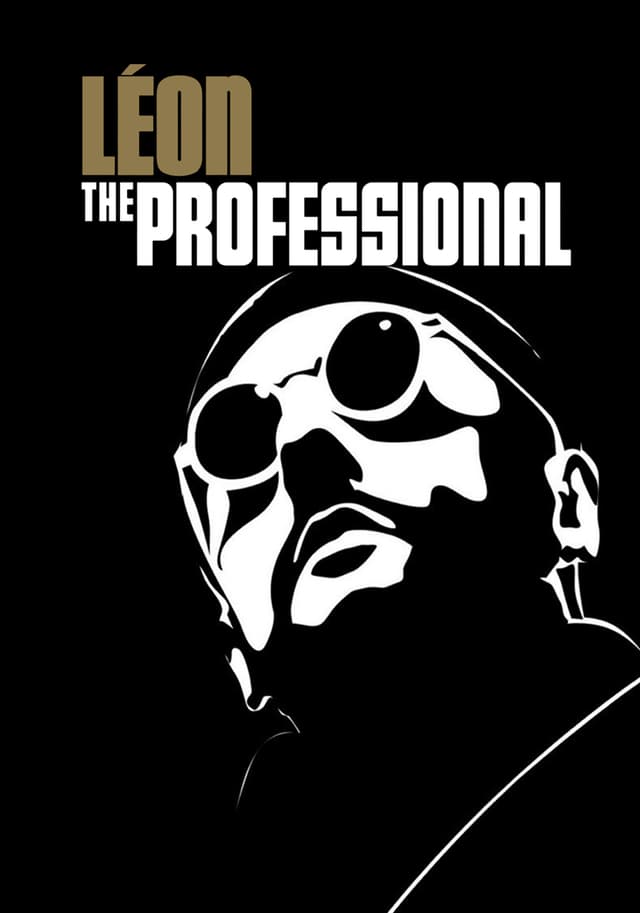
Léon The Professional Budget
 CrimeDramaAction1h 51m
Updated
Synopsis
After her father, step-mother, step-sister and little brother are killed by her father's employers, the 12-year-old daughter of an abject drug dealer manages to take refuge in the apartment of a professional hitman who at her request teaches her the methods of his job so she can take her revenge on the corrupt DEA agent who ruined her life by killing her beloved brother.
What Is the Budget of Léon: The Professional?
Léon: The Professional was produced on a budget of approximately $16,000,000, a sum that reflected Luc Besson's standing in 1994 as a French filmmaker with proven international commercial appeal. After La Femme Nikita (1990) established Besson as a name capable of crossing the Atlantic, Columbia Pictures committed to distributing the film in the United States, and that distribution deal provided a meaningful advance that allowed the budget to stretch well beyond what a purely French production could have supported.
The $16 million figure positioned the film in the lower tier of Hollywood-adjacent action productions at the time but proved entirely sufficient for the story Besson wanted to tell. The film was financed as a French-American co-production between Les Films du Dauphin and Gaumont, with Columbia Pictures holding North American distribution rights. This structure allowed Besson to retain creative control while accessing American marketing infrastructure and the credibility of a major US distributor.
Besson wrote the screenplay with Jean Reno specifically in mind, drawing on a hitman character from La Femme Nikita for whom Reno had played a brief but memorable supporting role. The decision to shoot substantially on location in New York City, with real Upper West Side streets and residential buildings rather than Paris soundstages, was a deliberate choice to ground the film in a specific American urban world.
Key Budget Allocation Categories
- Cast and Above-the-Line Talent: Jean Reno was paid a career-significant fee as the lead, having worked with Besson on multiple prior films and being the director's preferred choice for the role from inception. Gary Oldman, fresh from acclaimed performances in Dracula (1992) and True Romance (1993), commanded a meaningful above-the-line fee as a critically respected British actor at the height of his villain-playing period. Natalie Portman, then 11 years old and selected from thousands of auditions, received a nominal child-actor rate, marking her film debut. Danny Aiello, a veteran New York character actor, was paid at standard rates for his supporting role as Tony.
- New York City Location Production: Shooting on actual Upper West Side Manhattan streets, including residential buildings and the block near 103rd Street and Broadway that doubles as the exterior of Léon's apartment building, required NYPD coordination, neighborhood permits, and the logistical expense of shutting down working residential blocks for multiple shooting days. This authentic location work gave the film its distinctive gritty texture but added real cost over a controlled studio environment.
- Score and Music Licensing: Éric Serra, Besson's regular composer since The Big Blue (1988), created a synthetic-orchestral score with a notably spare and percussive quality. The iconic closing track, Sting's Shape of My Heart, was a licensed commercial song rather than an original composition, adding music licensing cost to the budget. The combination of Serra's original score and the Sting track created one of the most memorable musical identities of any 1990s action film.
- Action and Stunt Choreography: The film features multiple elaborate shoot-out sequences, culminating in the climactic police raid on Léon's apartment building, in which dozens of SWAT officers storm a Manhattan residential building floor by floor. The pyrotechnics, stunt choreography, and practical special effects for this sequence and the earlier apartment attack that opens the film required weeks of pre-production planning, specialist crews, and insurance-grade safety protocols for the New York shoot.
- Thierry Arbogast's Cinematography: Arbogast developed innovative camera work for the film, particularly the circular tracking shots within Léon's apartment that create a sense of intimate claustrophobia. These moves required specialized rigs, extensive pre-production blocking, and additional shooting time to execute. His collaboration with Besson here established a visual language that both would carry forward to The Fifth Element (1997).
How Does Léon: The Professional's Budget Compare to Similar Films?
At $16 million in 1994, Léon sits at the lower end of major studio action films of that era, a budget tier that demanded disciplined production design and creative location scouting. Its comparison set includes both its direct predecessors in the Besson canon and the hitman-thriller genre it helped define.
- La Femme Nikita (1990): Budget $6M | Domestic $5.4M | Worldwide $16M. Besson's immediate predecessor and the creative universe from which Léon was born. The much smaller budget reflects a purely French production without American distribution infrastructure. Léon's $16M was nearly three times the Nikita budget, funded by the international credibility that film generated.
- The Fifth Element (1997): Budget $90M | Worldwide $263M. Besson's next major film after Léon shows how dramatically his budget access expanded following Léon's critical and commercial success. The $74M increase in budget between the two films is a direct marker of what Léon did for his standing with international financiers.
- Heat (1995): Budget $60M | Worldwide $187M. The other defining hitman-criminal-professional film of the mid-1990s, made at nearly four times Léon's budget. Michael Mann's sprawling Los Angeles canvas required the larger spend. The comparison underscores how much Besson achieved on a fraction of that resource.
- John Wick (2014): Budget $20M | Worldwide $88M. The film most directly and explicitly influenced by Léon's aesthetic of the laconic professional killer and the particular brand of stylized, principled-hitman action the genre developed after Besson's film. The John Wick franchise, which has earned over $1 billion worldwide across its sequels, can trace a direct creative lineage to Léon.
Léon: The Professional Box Office Performance
Léon: The Professional opened in the United States on November 18, 1994, distributed by Columbia Pictures under the title The Professional. The film earned $19,501,238 domestically and approximately $25.5 million internationally in its initial theatrical run, for a worldwide total of approximately $45 million. The film performed particularly strongly in Japan, where it developed an exceptionally loyal audience and has had multiple theatrical re-releases over the subsequent decades. Estimates of cumulative worldwide gross across all theatrical runs, including Japanese re-releases, push the total well above $60 million.
Against a $16 million production budget plus an estimated $12 million in print and advertising costs, the film's total investment was approximately $28 million. With theaters retaining roughly 50% of gross receipts, the studio's share of the $45 million worldwide theatrical gross was approximately $22.5 million. The film did not fully recoup its total investment in its initial theatrical run but was not far off, and the home video market in Japan and Europe drove it to sustained profitability within two years of release.
Box Office Breakdown
Léon The Professional

The theatrical numbers alone tell only part of the story. Léon earned roughly $1.22 for every $1 invested in production during its initial run, a modest theatrical return. But the film's enormous home video afterlife, particularly in Japan where it routinely appeared on best-film lists throughout the late 1990s and 2000s, made it one of the most reliably profitable catalog titles in the Gaumont and Columbia libraries. By any measure of long-term profitability, Léon: The Professional significantly exceeded its initial investment.
Léon: The Professional Production History
Luc Besson conceived Léon as an expansion of a character he had introduced briefly in La Femme Nikita (1990). Victor the Cleaner, played by Jean Reno in a small but memorable role, was a hitman sent to clean up after Nikita's failed missions. The character lodged in Besson's imagination, and he began developing a feature-length story around a similar figure. He wrote the screenplay with Reno in mind throughout, tailoring the taciturn, plant-tending, milk-drinking Léon Montana specifically to Reno's physical presence and emotional restraint.
Casting the role of Mathilda proved more involved. Besson was looking for a child actress who could carry substantial dramatic weight opposite Reno and the theatrically volatile Gary Oldman. After seeing thousands of auditions, he selected Natalie Portman, then 11 years old, from New York City. Portman had no prior professional acting credits. Oldman was cast after Besson saw his performance in Bram Stoker's Dracula (1992), and the director wanted an antagonist who could go operatically large as a counterpoint to Reno's stillness. The result was Oldman's Norman Stansfield, a corrupt DEA agent whose menace comes from unpredictability rather than physical intimidation.
Principal photography took place in New York City and at Gaumont's studios in France. The New York work centered on the Upper West Side, with the exterior of Léon's apartment building shot at a real residential building near 103rd Street and Broadway. The neighborhood's working-class density, its mix of long-term residents and institutional buildings, gave the film a specificity that Besson had admired in American crime films. Shooting in actual New York locations required extensive NYPD coordination and neighborhood engagement, particularly for the sequences involving street closures and pyrotechnics.
The film was released in two distinct versions. The US theatrical release, marketed as The Professional, ran approximately 110 minutes and removed several scenes between Léon and Mathilda that Besson and Columbia mutually agreed were too ambiguous for American audiences. The international release, including France and Japan, ran 133 minutes and retained those scenes. This longer version, known as the Director's Cut or Version Intégrale, was later released on home video in the United States and is now the version most commonly seen. The debate over the differences between the two cuts has been a persistent thread in discussion of the film.
Awards and Recognition
Léon: The Professional received no Academy Award nominations despite its critical and commercial profile, a fact that has puzzled film commentators given the performances involved. The film did receive nominations at the César Awards, the French national film awards, where Besson's work was recognized by the industry that had supported the film's production. Multiple César nominations acknowledged the film's technical and performance achievements.
Gary Oldman's portrayal of Norman Stansfield was recognized by numerous American and international critics organizations as one of the great villain performances of the decade. Several critics circles awarded him Best Supporting Actor honors. Natalie Portman, making her film debut at age 12, won Best Debut Performance recognition from multiple US critics associations, a remarkable achievement for a first-time actress in a major international production.
The film won the Saturn Award for Best Action/Adventure/Thriller Film from the Academy of Science Fiction, Fantasy and Horror Films. It received BAFTA nominations, and its technical categories, including Thierry Arbogast's cinematography and Éric Serra's score, were cited by industry bodies in France and internationally. In Japan, where the film developed its most devoted long-term following, it received special recognition in multiple retrospective and audience-vote contexts over the years.
Critical Reception
Léon: The Professional received mixed-to-positive reviews on its initial US release in 1994, with the film's critics divided primarily on questions of tone and the nature of the relationship between the adult hitman and the 12-year-old girl. Roger Ebert awarded the film 3.5 out of 4 stars, praising Jean Reno's central performance as a remarkable piece of physical and emotional restraint and calling Gary Oldman's Stansfield one of the year's most entertaining screen villains. Ebert noted some ambiguity in the screenplay's handling of Mathilda's attachment to Léon but ultimately found the film gripping.
The film holds a 72% score on Rotten Tomatoes based on its initial critical reception, though its audience score is substantially higher, reflecting the gap between the critical caution of 1994 and the enthusiasm of viewers who discovered the film on home video through the late 1990s and 2000s. That home-video generation, in Japan, Europe, and the United States, transformed Léon into something critics had not quite anticipated: a cult film with broad mainstream appeal.
Today, Léon: The Professional is considered a modern classic of the action-thriller genre. Natalie Portman's debut performance is universally cited as one of the most remarkable first appearances by a child actor in film history, a performance that announced an entirely formed screen presence in a first role. Gary Oldman's Stansfield is ranked regularly on lists of cinema's best villains alongside performances from actors decades his senior in the role. The film's influence on the hitman genre, and specifically on the John Wick franchise, is acknowledged openly by the Wick films' directors and writers. Luc Besson has described it as the film he is most proud of.
Frequently Asked Questions
How much did Leon: The Professional cost to make?
The production budget was $16,000,000. Gaumont financed the film entirely in France, with Columbia Pictures handling North American distribution under an output deal that brought the European-produced thriller to U.S. audiences.
How much did Leon: The Professional earn at the box office?
The film grossed $19,501,238 domestically and approximately $26,500,000 internationally, for a worldwide total of approximately $46,000,000. It opened to $5,313,000 on November 18, 1994, finishing fifth behind The Lion King re-release and Interview with the Vampire.
Who directed Leon: The Professional?
Luc Besson wrote and directed the film, his fifth feature after Subway (1985), The Big Blue (1988), Nikita (1990), and Atlantis (1991). Leon expanded the assassin character Victor briefly seen in Nikita into a full feature.
Was Leon Natalie Portman's first film?
Yes. Leon: The Professional was Natalie Portman's feature debut at age 12, chosen from more than 2,000 audition candidates. The role launched her career, leading to Beautiful Girls (1996), Star Wars: Episode I (1999), and ultimately her Oscar win for Black Swan (2010).
Who stars in Leon: The Professional?
Jean Reno plays the Italian hitman Leon Montana, Natalie Portman plays the 12-year-old orphan Mathilda, and Gary Oldman plays the corrupt DEA agent Norman Stansfield. Danny Aiello plays Leon's handler Tony.
Where was Leon: The Professional filmed?
Principal photography took place in New York City, primarily in the Little Italy and Hell's Kitchen neighborhoods, with interior soundstage work completed at the Studios de Boulogne in France. The mixed production used French crew on American locations.
What did critics think of Leon: The Professional?
The film received largely positive reviews, with a 74% approval rating on Rotten Tomatoes and a 64 out of 100 score on Metacritic. Critics praised Jean Reno's restrained performance and Natalie Portman's breakout work while objecting to the age-gap dynamic between the two leads.
What is the difference between the theatrical cut and the international version?
The international version, released in some markets as Leon: Version Integrale and on later home video as the Extended Cut, runs 133 minutes compared to the 110-minute U.S. theatrical cut. The 23 additional minutes restore character development between Leon and Mathilda that Gaumont removed for the U.S. release after test audiences objected to the relationship.
How does Leon compare to other Luc Besson films?
Leon was Besson's commercial breakthrough in the U.S., outperforming Nikita (1990, $8,000,000 budget, $5,000,000 U.S. gross) and setting up the much larger budget of The Fifth Element (1997, $90,000,000 budget, $263,900,000 worldwide). It remains his highest-regarded critical work.
Was there ever a sequel to Leon?
No direct sequel was produced. Luc Besson developed a script titled Mathilda that would have followed Natalie Portman's character into adulthood as an assassin, but Portman declined the project after Columbia Pictures expressed concerns about its content. The story elements were eventually repurposed for Colombiana (2011).
Build budgets like this one in Saturation
Start from an industry-standard feature film template, import the schedule and rates you already have, and let the cost report keep itself current as you spend. Real-time collaboration, no spreadsheets.