Fast and Furious 6 Budget
 ActionThrillerCrime2h 10m
Updated
Synopsis
Hobbs has Dominic and Brian reassemble their crew to take down a team of mercenaries led by the ruthless Owen Shaw. The only price for their freedom is to apprehend Shaw, but in the process the team discovers that Dom's presumed-dead lover Letty is now working for Shaw with no memory of her past life.
What Is the Budget of Fast & Furious 6 (2013)?
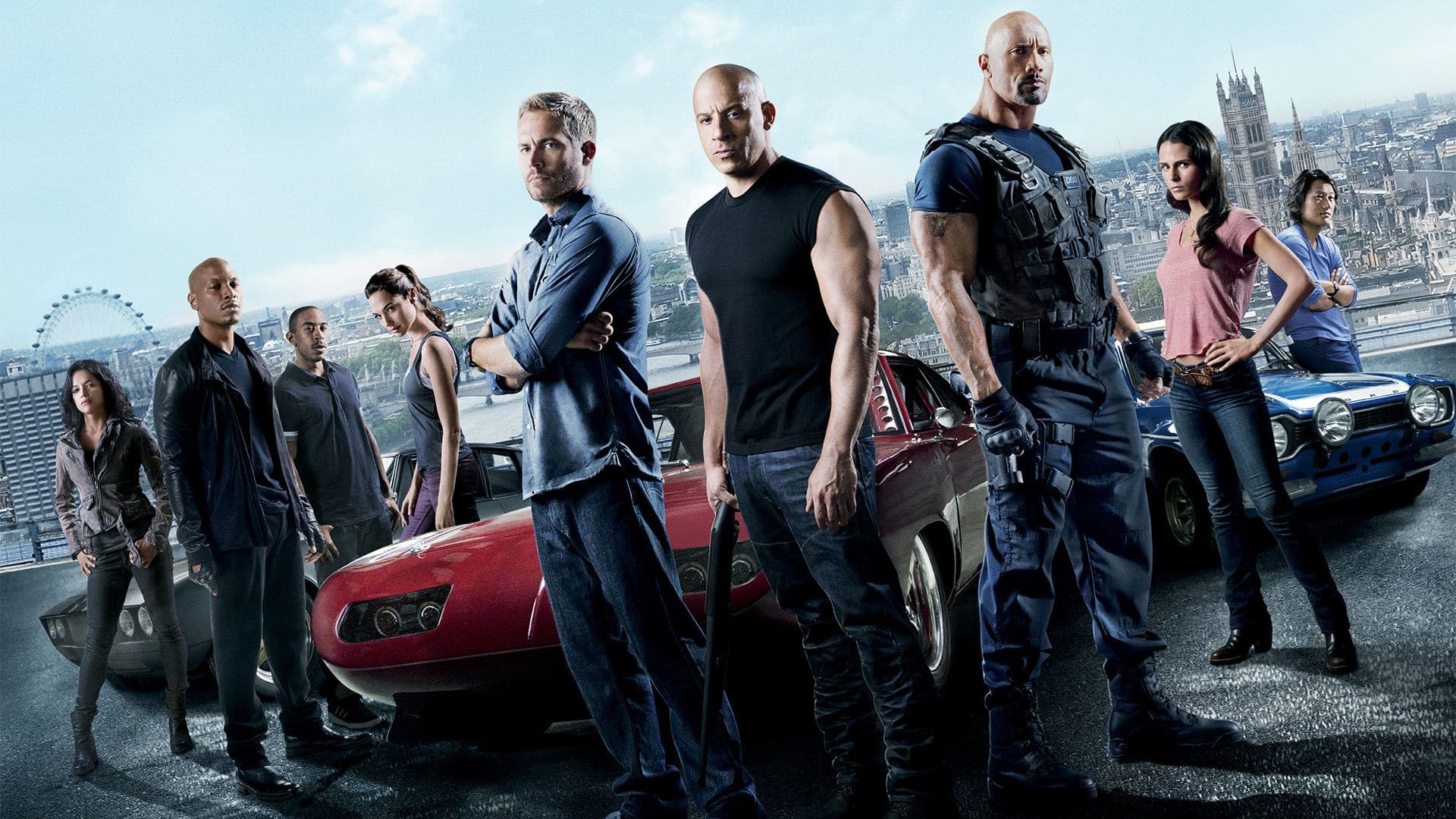
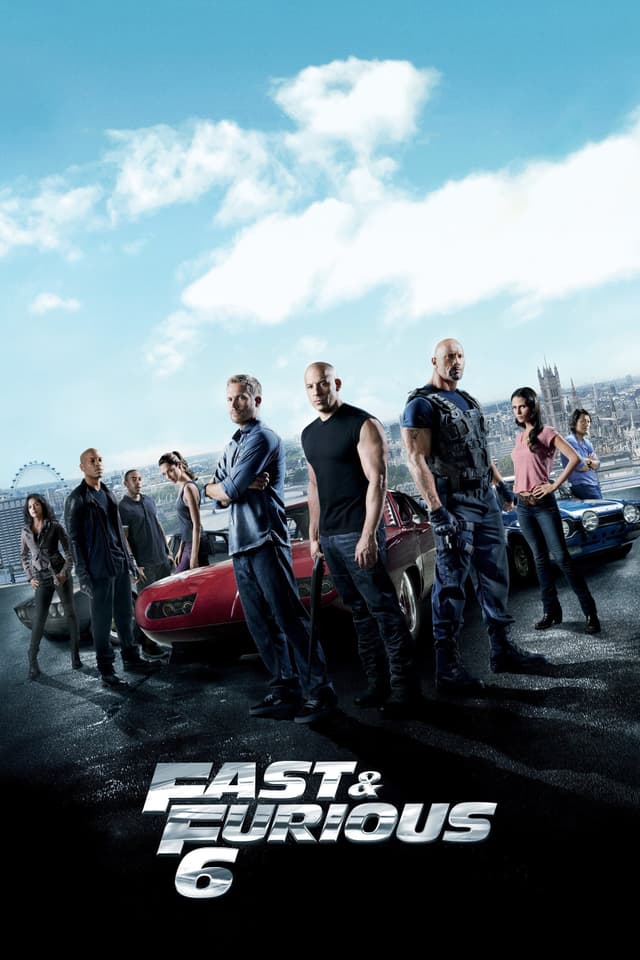
Fast & Furious 6 (2013), directed by Justin Lin and distributed by Universal Pictures, was produced on a reported budget of $160,000,000. The sixth installment in the Fast & Furious franchise represented a meaningful step up in scale from Fast Five (2011), which had cost $125,000,000, reflecting Universal's confidence after Fast Five became the first film in the series to clear $600 million worldwide. The additional capital funded a multi-country shoot across the United Kingdom, Spain, and Los Angeles, expanded vehicular set pieces including the Antonov cargo plane finale, and a larger ensemble that brought back Michelle Rodriguez's Letty alongside Vin Diesel, Paul Walker, Dwayne Johnson, Tyrese Gibson, Ludacris, Sung Kang, Gal Gadot, and a villainous turn from Luke Evans.
Universal greenlit the production back-to-back with Fast & Furious 7, treating the two films as a continuous campaign across 2013 and 2015 to bridge Han Lue's death scene with the Tokyo Drift continuity and the Jason Statham introduction. The roughly 28 percent budget bump over Fast Five paid for the longer London-anchored shoot, the elaborate runway sequence reportedly built on a stretch of disused runway at RAF Bovingdon, and a global press tour designed to lock in the franchise's now-international fanbase.
Key Budget Allocation Categories
Fast & Furious 6's $160,000,000 budget was distributed across several core production areas:
- Above-the-Line Talent: Vin Diesel, Paul Walker, and Dwayne Johnson each commanded eight-figure paychecks, with Diesel additionally collecting producer fees through his One Race Films banner. Returning ensemble members Michelle Rodriguez, Tyrese Gibson, Ludacris, Sung Kang, and Gal Gadot received raises reflecting Fast Five's breakout success, while Justin Lin returned to direct his fourth Fast film in a row on a producer-director deal.
- UK Location Shoot: Principal photography centered on Leavesden Studios outside London with extensive location work across the city, plus exteriors in Glasgow, Scotland (doubling for London streets during the tank chase) and Tenerife in the Canary Islands (doubling for the climactic runway sequence). International travel, lodging, local crew, location permits, and the multi-unit footprint added significant cost compared with the Atlanta or Los Angeles bases used elsewhere in the franchise.
- Vehicular Action and Stunts: Stunt coordinator Greg Powell and second unit director Spiro Razatos oversaw a fleet of more than 300 vehicles, including custom Dodge Daytonas, Ford Escorts, Jensen Interceptors, a Mil Mi-26 helicopter mock-up, a Ural-375D military truck, and the Russian T-55 tank used in the Spain chase. The Antonov An-124 cargo plane sequence required a runway built and dressed across multiple shoot weeks, with the finale's on-screen distance often estimated at the length of 19 standard runways.
- Visual Effects: Double Negative led the VFX work, supported by Lola VFX, Ollin VFX Studio, and Pixomondo. Effects work covered the digital extension of the runway finale, the helicopter and harpoon sequences on the Spanish highway, Letty's motorcycle jump and mid-air catch, and the photoreal de-aging required to integrate Michelle Rodriguez back into the franchise after her character's apparent death in Fast & Furious (2009).
- Score and Soundtrack: Composer Lucas Vidal scored the film with a brass-and-percussion-heavy orchestral palette, while Universal's music division assembled a soundtrack album anchored by Ludacris and Wiz Khalifa's "We Own It," 2 Chainz and Wiz Khalifa's "We Own It (Remix)," and tracks from Hardwell and Benny Banks. Music licensing and clearance fees for the album sat alongside the original composition costs.
- Post-Production and Reshoots: Editing was handled by Christian Wagner, Greg D'Auria, Kelly Matsumoto, and Leigh Folsom Boyd, with sound design and mix carried out at Skywalker Sound. Reshoots in early 2013 covered the end-credits Tokyo Drift bridge scene introducing Jason Statham's Deckard Shaw, a sequence specifically designed to set up Furious 7.
- Marketing and Global Press: Universal mounted a major global marketing campaign with premieres in London, Moscow, Tokyo, Berlin, Madrid, and Los Angeles. The studio paired the campaign with a re-release strategy across digital platforms for Fast Five and earlier entries to bring lapsed viewers back to the franchise ahead of the May 24, 2013 opening.
How Does Fast & Furious 6's Budget Compare to Similar Films?
At $160,000,000, Fast & Furious 6 sat in the upper-mid tier of 2013 studio tentpoles. The comparison set illustrates how its capital efficiency stacked up:
- Fast Five (2011): Budget $125,000,000 | Worldwide $626,137,675. The immediate predecessor cost 22 percent less and grossed 21 percent less, meaning Universal got a near-linear return on its incremental investment when moving up to Fast & Furious 6.
- Furious 7 (2015): Budget $190,000,000 | Worldwide $1,515,341,399. Shot back-to-back conceptually with Fast & Furious 6, the immediate sequel cost only 19 percent more but earned nearly twice the worldwide gross, in large part due to the cultural moment around Paul Walker's death and the film's emotional sendoff.
- The Fate of the Furious (2017): Budget $250,000,000 | Worldwide $1,236,005,118. Two installments later, the budget had ballooned by more than 56 percent over Fast & Furious 6 while worldwide gross grew by only 56 percent, signaling the early plateau of the franchise's commercial expansion.
- Iron Man 3 (2013): Budget $200,000,000 | Worldwide $1,214,811,252. The summer 2013 Marvel tentpole cost 25 percent more than Fast & Furious 6 and out-grossed it by a wide margin, anchoring the year's box office hierarchy.
- Man of Steel (2013): Budget $225,000,000 | Worldwide $668,045,518. Warner Bros.' Superman reboot cost roughly 41 percent more than Fast & Furious 6 yet earned less worldwide, highlighting how efficient the Fast franchise had become at converting budget into global gross.
- The Hobbit: The Desolation of Smaug (2013): Budget $225,000,000 | Worldwide $959,027,992. The Peter Jackson sequel cost 41 percent more and earned only modestly more globally, a comparison that further underscores Fast & Furious 6 as one of 2013's most cost-effective blockbusters.
Fast & Furious 6 Box Office Performance
Fast & Furious 6 opened on May 24, 2013 over the four-day Memorial Day weekend in North America, earning $97,375,245 across the holiday frame and $117,008,000 across the four-day extended weekend. That opening was the second-best Memorial Day debut of all time at the date, trailing only Pirates of the Caribbean: At World's End (2007), and represented a 36 percent jump over Fast Five's opening. The film opened simultaneously in dozens of international markets, with day-and-date launches across Europe and Latin America designed to capitalize on the global press tour.
Against a reported production budget of $160,000,000, the film needed approximately $300,000,000 in worldwide gross to reach profitability when accounting for marketing and distribution costs. Here is the financial breakdown:
Box Office Breakdown
Fast and Furious 6

Fast & Furious 6 returned approximately $2.65 in theatrical revenue for every $1 invested when measured against total estimated production and marketing spend, placing it among the most profitable studio releases of 2013. Domestic gross totaled $238,679,850 against an international share of $550,000,000, a 30/70 split heavily weighted toward overseas markets and a clear signal of the franchise's globalization since Fast Five.
The success cemented Universal's decision to lock in Justin Lin's replacement (James Wan) and accelerate Furious 7 into a 2014 production start. The end-credits Tokyo Drift bridge scene, which depicted Jason Statham's Deckard Shaw murdering Han Lue and calling Dominic Toretto, retroactively folded The Fast and the Furious: Tokyo Drift (2006) into the timeline and set up the franchise's next chapter.
Fast & Furious 6 Production History
Development on Fast & Furious 6 began before Fast Five had even opened. Universal greenlit the sequel in April 2011, with Chris Morgan returning to write a script that would bring Michelle Rodriguez's Letty back from her apparent death in Fast & Furious (2009). Justin Lin returned for his fourth consecutive Fast film, having directed Tokyo Drift, Fast & Furious, Fast Five, and now this sixth installment, a continuity that had become central to the franchise's identity.
Casting was anchored by the core ensemble of Vin Diesel, Paul Walker, Dwayne Johnson, Michelle Rodriguez, Tyrese Gibson, Ludacris, Sung Kang, and Gal Gadot. Luke Evans was cast as the principal antagonist Owen Shaw in May 2012, with Gina Carano (the former MMA fighter and star of Steven Soderbergh's Haywire) joining as DSS agent Riley Hicks. Lucas Black, who had headlined The Fast and the Furious: Tokyo Drift in 2006, was approached for a cameo to set up the Tokyo Drift continuity bridge, and although his on-screen appearance in this film was minimal, his return was a deliberate signal of the timeline being formalized.
Principal photography began on July 30, 2012 and ran through December 2012, based primarily at Leavesden Studios in the United Kingdom, with extensive location shooting across London including streets near Piccadilly Circus and the Lambeth Bridge. The unit relocated to Glasgow, Scotland for the tank chase sequence, where production took over a section of the M8 motorway and the city's streets to double as London. Additional location work took place in Tenerife in the Canary Islands of Spain, doubling for the climactic runway sequence, and a brief pickup unit shot in Los Angeles. The Antonov cargo plane finale was filmed primarily on a disused runway dressed for the production, with extensive visual-effects extensions added in post.
The shoot was notable for the death of stunt performer Bruno Cabrerizo, who was killed in a non-production-related car accident in Tenerife in October 2012, casting a somber tone over the Canary Islands unit. Reshoots in early 2013 covered the end-credits Tokyo Drift bridge scene introducing Jason Statham's Deckard Shaw, a sequence specifically designed to set up Furious 7. The film was originally titled simply Fast Six during pre-production and was retitled Fast & Furious 6 for the international release campaign, with the on-screen title card reading "Furious 6" in most territories.
Post-production was tight, with the film locking less than two months before its May 24, 2013 release. Editing duties were split among four editors (Christian Wagner, Greg D'Auria, Kelly Matsumoto, and Leigh Folsom Boyd) to manage the parallel cutting required across multiple action sequences. The film was the penultimate completed Fast film for Paul Walker, who died in a car accident in November 2013 during the production of Furious 7.
Awards and Recognition
Fast & Furious 6 was nominated for Choice Movie: Action at the 2013 Teen Choice Awards, with Vin Diesel nominated for Choice Movie Actor: Action and Paul Walker for Choice Movie Actor: Action. The film won the Teen Choice Award for Choice Summer Movie. At the 2014 People's Choice Awards, it was nominated for Favorite Action Movie and Vin Diesel was nominated for Favorite Action Movie Actor.
At the 2014 MTV Movie Awards, Fast & Furious 6 was nominated for Best On-Screen Duo (Vin Diesel and Paul Walker) and Best Fight (Michelle Rodriguez vs. Gina Carano subway-station sequence), with the Rodriguez-Carano fight winning the category. The film was also recognized at the 2014 BMI Film, TV and Visual Media Awards for Lucas Vidal's score. It received no major industry awards attention at the Oscars, BAFTAs, or Golden Globes, which is typical for the action-blockbuster category.
Critical Reception
Fast & Furious 6 received generally positive reviews. The film holds a 70% approval rating on Rotten Tomatoes based on 233 critic reviews, with a critical consensus that read: "With high-octane thrills, fast cars, and a homicidal Michelle Rodriguez, Fast & Furious 6 delivers the formula that fans of the franchise have come to expect." On Metacritic, the film scored 61 out of 100 based on 41 critics, indicating generally favorable reviews. Audiences surveyed by CinemaScore gave the film an A, a typical high for the franchise and well above the A- floor that defines a buzzed-about action release.
Critics broadly praised Justin Lin's direction of the vehicular set pieces, Michelle Rodriguez's return, and the chemistry of the ensemble cast. Roger Ebert's site, writing through critic Sheila O'Malley, called the film "ridiculous in a glorious way" and praised the runway finale as "an absurd marvel of practical and digital stunt work." Variety's Justin Chang wrote that the film "delivers what its audience comes for, and then some," while The Hollywood Reporter's Todd McCarthy noted that Lin "remains one of the most underrated action filmmakers working at this scale."
Detractors flagged the plot's convolutions and the cartoonish physics of the Spanish highway tank chase and the runway finale. The New York Times' Manohla Dargis described the film as "a perpetual-motion machine that occasionally hits a coherent dramatic beat," and Slate's Dana Stevens questioned the franchise's growing reliance on retroactive continuity. The mixed-but-largely-positive reception, combined with the franchise-best opening, cemented Fast & Furious 6's reputation as the film that fully crystallized the post-Fast Five identity of the series as an ensemble heist-and-action saga rather than a street-racing property.
Frequently Asked Questions
How much did it cost to make Fast & Furious 6 (2013)?
The reported production budget was $160,000,000, a 28 percent increase over Fast Five's $125,000,000 budget. Universal Pictures financed the production through its Original Film banner together with Vin Diesel's One Race Films and Relativity Media. The additional capital funded a multi-country shoot across the United Kingdom, Spain, and Los Angeles.
How much did Fast & Furious 6 earn at the box office?
The film grossed $238,679,850 domestically and $550,000,000 internationally, for a worldwide total of $788,679,850. It opened to $97,375,245 over the three-day Memorial Day weekend in North America (and $117,008,000 over the four-day extended weekend), the second-best Memorial Day opening of all time at the date and a 36 percent jump over Fast Five's opening.
Was Fast & Furious 6 a box office success?
Yes. Against a $160,000,000 production budget and an estimated $125,000,000 to $150,000,000 in marketing spend, the film returned approximately $2.65 in worldwide gross for every $1 invested. It was the seventh-highest-grossing film of 2013 worldwide and the most profitable Fast & Furious installment up to that point on a return-on-investment basis.
Who directed Fast & Furious 6?
Justin Lin directed the film, working from a screenplay by series writer Chris Morgan. Lin had previously directed The Fast and the Furious: Tokyo Drift (2006), Fast & Furious (2009), and Fast Five (2011), making Fast & Furious 6 his fourth consecutive Fast film.
Where was Fast & Furious 6 filmed?
Principal photography ran from July 30, 2012 through December 2012, based primarily at Leavesden Studios outside London in the United Kingdom. Locations included London streets near Piccadilly Circus and the Lambeth Bridge, Glasgow in Scotland (doubling for London during the tank chase), Tenerife in the Canary Islands of Spain (for the runway finale), and brief pickup work in Los Angeles. Reshoots in early 2013 covered the end-credits Tokyo Drift bridge scene.
How does Fast & Furious 6 compare to other Fast & Furious films?
Fast & Furious 6 cost 28 percent more than Fast Five ($125,000,000) and grossed 26 percent more worldwide ($788,679,850 versus $626,137,675). It cost 16 percent less than Furious 7 ($190,000,000), which grossed nearly twice as much ($1,515,341,399). The film sits between Fast Five and Furious 7 as the inflection point where the franchise fully transitioned from a domestic street-racing series to a global ensemble action property.
What is the Han Lue death scene at the end of Fast & Furious 6?
The end-credits scene depicts Jason Statham's Deckard Shaw murdering Han Lue (Sung Kang) by ramming his Mazda RX-7 in Tokyo, then calling Vin Diesel's Dominic Toretto. The sequence retroactively folds The Fast and the Furious: Tokyo Drift (2006) into the franchise timeline, since Han's death scene was originally shown in that 2006 film, and directly sets up Furious 7's revenge plot. Lucas Black, who headlined Tokyo Drift, makes a brief cameo as Sean Boswell in the bridge sequence.
Was Fast & Furious 6 Paul Walker's last completed film?
No. Fast & Furious 6 was Paul Walker's penultimate completed Fast & Furious film. Walker died in a car accident on November 30, 2013, during production of Furious 7, which was released posthumously in April 2015. Brothers Caleb and Cody Walker, along with extensive visual effects work, were used to complete Walker's remaining scenes in Furious 7.
What did critics think of Fast & Furious 6?
The film received generally positive reviews, with a 70% approval rating on Rotten Tomatoes (based on 233 critics) and a 61 out of 100 score on Metacritic. Audiences gave it an A CinemaScore. Critics broadly praised Justin Lin's direction of the vehicular set pieces, Michelle Rodriguez's return as Letty, and the ensemble chemistry, while flagging the plot's convolutions and the cartoonish physics of the runway finale.
Did Fast & Furious 6 win any awards?
Fast & Furious 6 won the 2013 Teen Choice Award for Choice Summer Movie and the 2014 MTV Movie Award for Best Fight (Michelle Rodriguez versus Gina Carano in the subway-station sequence). It received additional nominations at the People's Choice Awards, Teen Choice Awards, and MTV Movie Awards, plus a BMI Film, TV and Visual Media Award for Lucas Vidal's score. It received no major industry awards attention at the Oscars, BAFTAs, or Golden Globes, which is typical for the action-blockbuster category.
Filmmakers
Fast and Furious 6

Official Trailer
Build budgets like this one in Saturation
Start from an industry-standard feature film template, import the schedule and rates you already have, and let the cost report keep itself current as you spend. Real-time collaboration, no spreadsheets.