The Fate of the Furious Budget
 ActionCrimeThriller2h 16m
Updated
Synopsis
When Dom Toretto inexplicably turns against his crew during a mission in Berlin, his family is left reeling. Manipulated by the elusive cyberterrorist Cipher, who holds a devastating secret over him, Dom is forced to betray everything he stands for. Hobbs, Letty, and the rest of the team must join forces with former enemy Deckard Shaw to track Dom across the globe, unravel Cipher's plan, and stop her from obtaining a nuclear weapon capable of reshaping world power.
What Is the Budget of The Fate of the Furious?
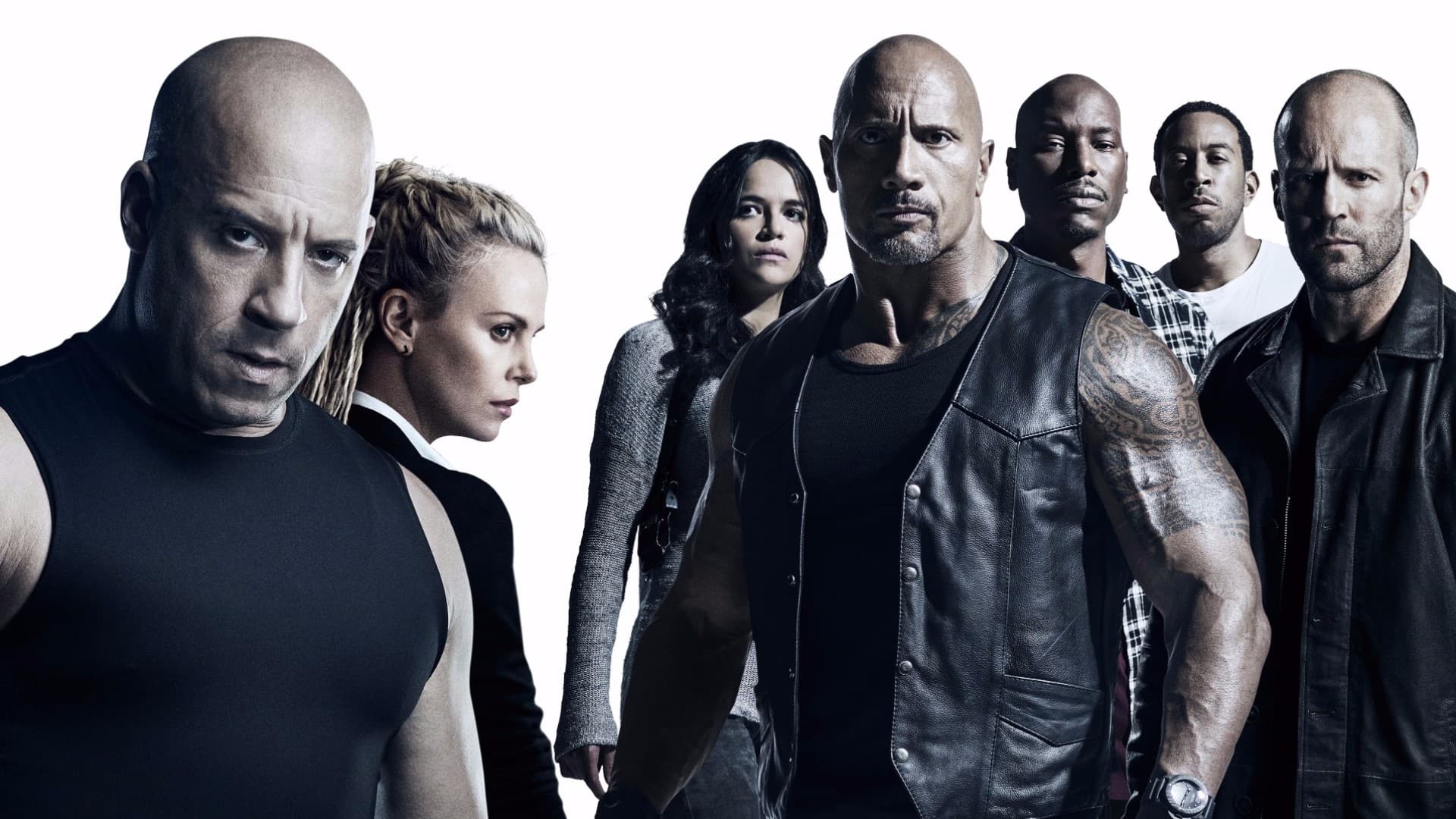
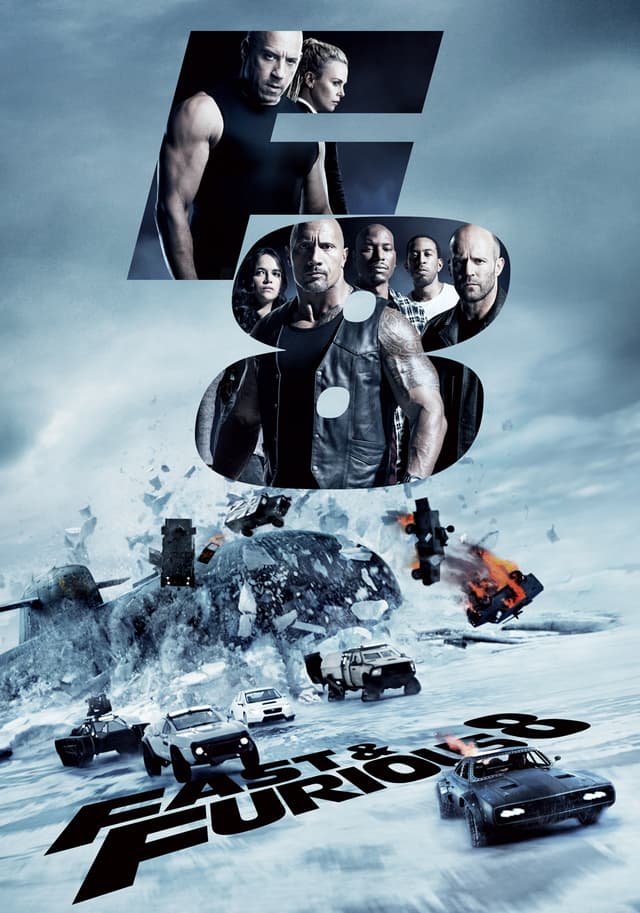
The Fate of the Furious (2017), directed by F. Gary Gray and distributed by Universal Pictures, was produced on a budget of $250,000,000. The eighth installment in the Fast and Furious franchise followed Dominic Toretto's shocking betrayal of his family crew after being blackmailed by the cyberterrorist Cipher (Charlize Theron), forcing his team to work with former enemy Deckard Shaw (Jason Statham) to stop a nuclear threat. The film was the first in the franchise made without Paul Walker, who died during production of Furious 7.
The $250 million budget made The Fate of the Furious one of the most expensive films in the franchise. Costs were driven by the global production scale (filming in Cuba, Iceland, Atlanta, Cleveland, and New York City), multiple large-scale practical action sequences (including the "zombie car" hack in Manhattan and the submarine chase in the Arctic), and the star-studded ensemble cast including Vin Diesel, Dwayne Johnson, Jason Statham, Charlize Theron, Kurt Russell, and Helen Mirren. F. Gary Gray, who had previously directed Straight Outta Compton, was brought in as the franchise's first Black director.
Key Budget Allocation Categories
The Fate of the Furious distributed its $250 million budget across the following production areas:
- Practical Action and Vehicle Destruction: The franchise's signature practical car stunts reached peak scale. The "zombie car" sequence in Manhattan, where Cipher remotely hacks hundreds of autonomous vehicles to swarm like a coordinated weapon through city streets, combined practical vehicle work (real cars dropped from parking garages) with CG augmentation for the mass-vehicle effects. The Arctic submarine chase finale used a combination of practical ice-driving stunts filmed on a frozen lake in Iceland with a full-scale submarine section and CG integration for the undersea sequences.
- Global Location Production: The production filmed across five major locations. Havana, Cuba served as the setting for the opening street race, marking the first major Hollywood production to film in Cuba in decades. Cleveland and Atlanta doubled for New York City in several sequences. Iceland's frozen landscapes provided the Arctic backdrop for the submarine chase. The multi-location approach required parallel production units, extensive travel logistics, and coordination with local film commissions across multiple countries.
- Cast and Above-the-Line Talent: The ensemble's combined salaries represented one of the largest above-the-line expenditures in franchise filmmaking. Vin Diesel's salary and producer fee, Dwayne Johnson's per-film rate (then among the highest in Hollywood), Jason Statham's expanded role, Charlize Theron's villain turn, and returning cast (Michelle Rodriguez, Tyrese Gibson, Ludacris, Nathalie Emmanuel, Kurt Russell, Scott Eastwood) plus newcomer Helen Mirren created a payroll rivaling the Avengers films.
- Visual Effects and Submarine Sequence: The Arctic submarine chase required extensive CG work to create the nuclear submarine, the ice-breaking sequences, and the underwater elements. The "zombie car" Manhattan attack combined practical vehicle drops with digital multiplication of cars and environmental effects. Wrecked and destroyed vehicles (the franchise consumed over 350 cars during production) required both practical sourcing and CG augmentation for impossible stunts.
- Score and Sound Design: Brian Tyler composed the score, maintaining continuity with his work on previous franchise entries. The Fast and Furious franchise's music strategy also included a curated soundtrack of hip-hop, Latin, and electronic tracks that were integrated into the marketing campaign. The Cuba opening sequence featured Cuban musical performances and choreography. Sound design for the vehicle sequences, particularly the submarine chase and the zombie car hack, required specialized Foley work and layered engine recordings.
How Does The Fate of the Furious's Budget Compare to Similar Films?
At $250,000,000, The Fate of the Furious sits at the high end of the franchise's budget range. Comparing it with other Fast and Furious entries and action blockbusters:
- Furious 7 (2015): Budget $190,000,000 | Worldwide $1,516,000,000. The predecessor cost 24% less and earned 23% more, benefiting from the emotional resonance of Paul Walker's farewell and the franchise's peak cultural momentum.
- Fast X (2023): Budget $340,000,000 | Worldwide $714,400,000. The tenth entry cost 36% more and earned 42% less, representing a dramatic reversal that showed the franchise's declining theatrical returns despite continued budget escalation.
- Transformers: The Last Knight (2017): Budget $217,000,000 | Worldwide $605,400,000. Released the same summer, Paramount's franchise entry cost 13% less and earned 51% less, confirming The Fate of the Furious's dominance among action franchises in 2017.
- Mission: Impossible - Fallout (2018): Budget $178,000,000 | Worldwide $791,100,000. Released the following year, Paramount's practical-action competitor cost 29% less and earned 64% of Fate's gross, though with significantly better ROI.
- Jumanji: Welcome to the Jungle (2017): Budget $90,000,000 | Worldwide $962,100,000. Dwayne Johnson's other 2017 blockbuster cost 64% less and earned 78% of Fate's gross, illustrating how Johnson's star power operated independently of the Fast franchise and at far more efficient budget levels.
The Fate of the Furious Box Office Performance
The Fate of the Furious opened in the United States on April 14, 2017, debuting to $98.8 million domestically. More significantly, the film opened to $443 million worldwide in its debut frame, including $185 million in China alone, setting a new record for the largest global opening weekend in history at the time.
Box Office Breakdown
The Fate of the Furious

At approximately +394%, The Fate of the Furious returned roughly $4.94 for every $1 of production budget invested during its theatrical run.
The eighth Fast & Furious installment demonstrated the franchise's extraordinary international appeal, with $1.01 billion (82%) of its worldwide gross coming from overseas markets. China alone contributed $392.8 million, making it the film's largest single territory. The domestic gross of $226 million, while modest relative to the worldwide total, reflected the franchise's evolution into a primarily international phenomenon.
The Fate of the Furious Production History
Development on the eighth Fast and Furious film began immediately after Furious 7's record-breaking release, with Chris Morgan returning to write the screenplay. F. Gary Gray was hired to direct in October 2015, bringing a different sensibility from predecessor James Wan. Gray, best known for Straight Outta Compton (2015), Friday (1995), and The Italian Job (2003), had experience with both intimate character work and large-scale action, making him a strong fit for the franchise's blend of family drama and vehicular spectacle.
Principal photography began in March 2016 in Havana, Cuba, where the production became one of the first major Hollywood films to shoot on location in the country following the normalization of U.S.-Cuba relations. The Havana shoot attracted enormous local attention, with thousands of Cubans gathering to watch the street-race filming. The production then moved to Iceland for the Arctic submarine chase, filming practical vehicle stunts on the frozen Lake Myvatn. Cleveland and Atlanta served as primary doubles for the New York City sequences, with limited actual New York filming.
Behind the scenes, tensions between Vin Diesel and Dwayne Johnson became public during production, with Johnson posting to social media about unnamed "candy ass" co-stars. The feud, while generating tabloid coverage, also reflected genuine creative and personality differences between the franchise's original star and its most bankable addition. The conflict eventually led to Hobbs & Shaw (2019), a standalone spinoff for Johnson's character.
The zombie car sequence required months of pre-visualization and coordination between practical stunt teams and VFX houses. Real cars were modified, dropped from ramps, and driven remotely for close-up practical shots, while digital multiplication created the effect of hundreds of vehicles operating in coordinated formation. The sequence's concept (autonomous vehicles weaponized by a hacker) resonated with contemporary anxieties about automotive cybersecurity and artificial intelligence.
Awards and Recognition
The Fate of the Furious did not receive significant traditional awards attention, consistent with the franchise's position as a commercially dominant but critically underestimated action series. The film received People's Choice Award nominations and won the Favorite Action Movie category. It earned Razzie nominations, including Worst Actress for Charlize Theron, though these were widely dismissed as reflecting the Razzies' bias against action blockbusters.
The film's cultural significance was recognized more in commercial and industry terms: it set the record for the largest global opening weekend in history ($443 million), demonstrated the Fast franchise's unmatched appeal in international markets (particularly China), and cemented Universal's position as the studio most dependent on, and most successful with, a single non-superhero action franchise. The Cuba filming also attracted attention as a cultural milestone in U.S.-Cuba creative exchange.
Critical Reception
The Fate of the Furious earned a 67% approval rating on Rotten Tomatoes based on 319 reviews, with a consensus acknowledging the franchise's reliable entertainment formula while noting diminishing creative returns. On Metacritic, the film scored 56 out of 100, indicating "mixed or average reviews." Audiences gave it an A- on CinemaScore.
Positive reviews highlighted the zombie car Manhattan sequence as the franchise's most inventive action set piece, Jason Statham's airplane fight (protecting a baby while battling armed mercenaries, delivering the film's most crowd-pleasing comedic action), and Charlize Theron's cool menace as the cyberterrorist Cipher. F. Gary Gray's direction was praised for maintaining the franchise's propulsive energy while adding his own visual sensibility.
Negative reviews focused on the strain of maintaining narrative stakes after seventeen years and eight films: Dom's betrayal was resolved too quickly, the "family" theme felt increasingly formulaic, and the escalation to nuclear submarines and EMP weapons pushed the franchise further from the street-racing roots that originally defined it. The absence of Paul Walker's grounding presence was noted by several critics as leaving the ensemble chemistry slightly off-balance. Despite these criticisms, the $1.236 billion worldwide gross confirmed that audiences worldwide continued to respond to the franchise's particular blend of vehicular mayhem, ensemble camaraderie, and escalating spectacle.
Frequently Asked Questions
How much did it cost to make The Fate of the Furious?
The production budget was $250,000,000. Costs were driven by global filming across Cuba, Iceland, Atlanta, Cleveland, and New York City, multiple large-scale practical action sequences (zombie car hack, submarine chase), and an ensemble cast with combined salaries rivaling the Avengers films.
How much did The Fate of the Furious earn at the box office?
The film grossed $226,000,000 domestically and $1,010,000,000 internationally, totaling $1,236,000,000 worldwide. It set the record for the largest global opening weekend at $443 million, including $185 million in China alone.
Was The Fate of the Furious profitable?
Extremely. On a $250 million production budget with approximately $175 million in marketing, the $1.236 billion worldwide gross yielded an ROI of approximately 394% on production costs. The international performance, particularly the $392 million China gross, drove profitability.
Where was The Fate of the Furious filmed?
The production filmed in Havana, Cuba (one of the first major Hollywood films after U.S.-Cuba normalization), on frozen Lake Myvatn in Iceland (submarine chase), and in Cleveland and Atlanta (doubling for New York City). Limited filming also took place in actual New York City locations.
Why was The Fate of the Furious so successful in China?
The film earned $392 million in China, making it one of the highest-grossing Hollywood films in Chinese box office history. Universal released it two weeks earlier in China than in the U.S. The Fast franchise's emphasis on spectacle, family loyalty, and diverse casting resonates strongly with Chinese audiences.
Was there a feud between Vin Diesel and Dwayne Johnson during filming?
Yes. During production, Johnson posted to social media about unnamed co-stars, and reports of tension between the franchise's original star and its most bankable addition circulated widely. The conflict reflected genuine creative and personality differences and eventually led to the Hobbs & Shaw (2019) standalone spinoff for Johnson's character.
What is the zombie car sequence?
In the Manhattan attack sequence, Cipher remotely hacks hundreds of autonomous vehicles to swarm through city streets as a coordinated weapon. The sequence combined real cars dropped from parking garages and driven remotely with CG multiplication to create the mass-vehicle effect. It was widely cited as the franchise's most inventive action set piece.
How does The Fate of the Furious compare to Furious 7?
Furious 7 (2015) cost $190 million and earned $1.516 billion, while Fate cost $250 million and earned $1.236 billion. The sequel cost 32% more but earned 18% less, reflecting the loss of Paul Walker's farewell emotional hook and natural audience erosion, though the international gross remained massive.
Who directed The Fate of the Furious?
F. Gary Gray directed the film, becoming the franchise's first Black director. Gray was best known for Straight Outta Compton (2015), Friday (1995), and The Italian Job (2003). His background in both intimate character work and action filmmaking suited the franchise's blend of family drama and vehicular spectacle.
What is the Rotten Tomatoes score for The Fate of the Furious?
The film holds a 67% approval rating on Rotten Tomatoes based on 319 reviews. Critics praised the zombie car sequence and Jason Statham's airplane fight but noted diminishing creative returns after eight films. On Metacritic it scored 56 out of 100. Audiences gave it an A- on CinemaScore.
Filmmakers
The Fate of the Furious

Official Trailer
Build budgets like this one in Saturation
Start from an industry-standard feature film template, import the schedule and rates you already have, and let the cost report keep itself current as you spend. Real-time collaboration, no spreadsheets.