Doctor Strange in the Multiverse of Madness Budget
 FantasyActionAdventure2h 6m
Updated
Synopsis
Following the events of Spider-Man: No Way Home, Doctor Stephen Strange accidentally casts a spell that opens a doorway to the multiverse. When America Chavez, a teenager with the power to travel between realities, arrives in his universe pursued by demonic creatures, Strange discovers that the Scarlet Witch, Wanda Maximoff, is hunting Chavez to steal her powers and reunite with her children in another universe. Strange must journey across multiple realities, confront dark versions of himself, and make impossible choices to protect the multiverse from Wanda's devastating grief.
What Is the Budget of Doctor Strange in the Multiverse of Madness?
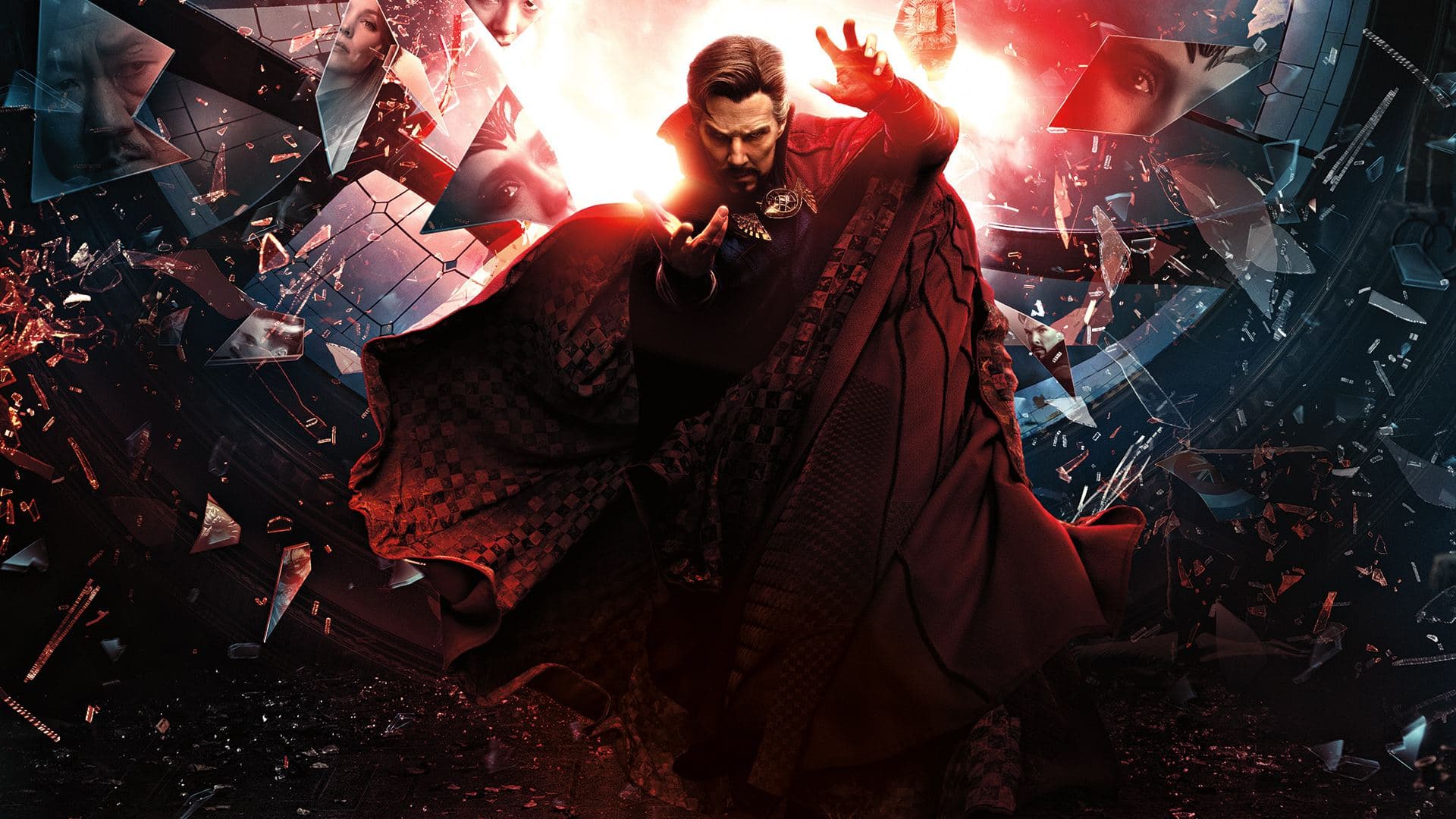
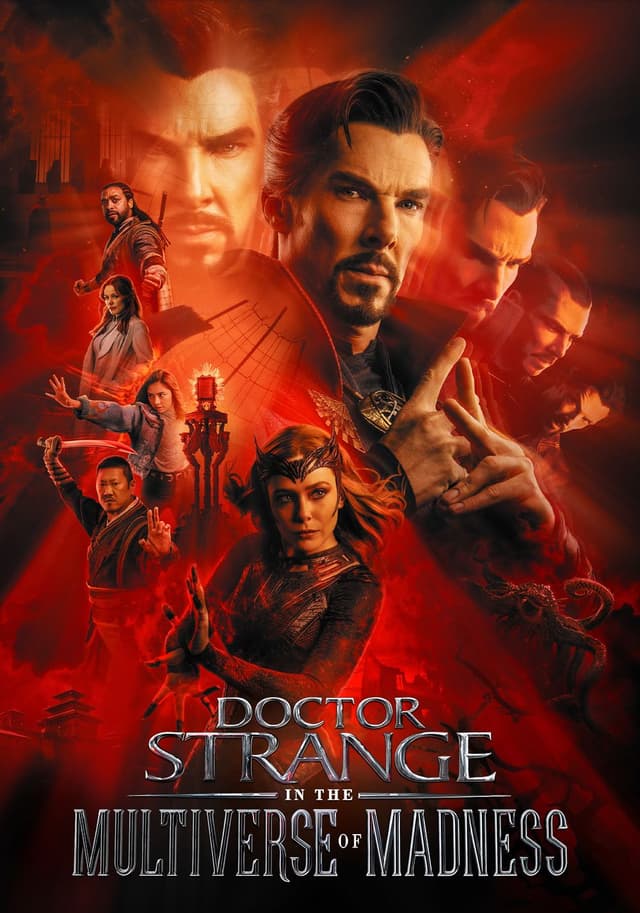
Doctor Strange in the Multiverse of Madness (2022), directed by Sam Raimi and distributed by Walt Disney Studios Motion Pictures, was produced on a budget of $200,000,000. The 28th film in the Marvel Cinematic Universe marked Sam Raimi's return to superhero filmmaking after his Spider-Man trilogy, bringing a distinctly horror-inflected visual style to Marvel's multiverse narrative. The film continued threads from WandaVision and Spider-Man: No Way Home while introducing America Chavez, a teenager with the ability to punch portals between dimensions.
The $200 million production budget placed Multiverse of Madness in the upper tier of MCU films, though below the Avengers ensemble entries. Costs were driven by extensive visual effects work required to depict multiple realities, practical horror sequences that blended Raimi's signature style with large-scale VFX, and the logistical demands of a production that shot primarily at Longcross Studios and Pinewood Studios in the United Kingdom during the COVID-19 pandemic.
Key Budget Allocation Categories
Doctor Strange in the Multiverse of Madness allocated its $200 million budget across several major production areas:
- Visual Effects and Multiverse Design: The film required over 1,700 visual effects shots, handled by 15 VFX houses including Industrial Light & Magic, Digital Domain, Framestore, and Weta Digital. Each alternate universe demanded distinct visual language, from the painted Earth-838 to the destroyed wasteland dimensions. The Illuminati sequence, the gap junction chase, and the dreamwalking sequences each required complex digital environments and character work.
- Cast and Above-the-Line Talent: Benedict Cumberbatch returned as Doctor Strange, with Elizabeth Olsen reprising Wanda Maximoff/Scarlet Witch in an expanded antagonist role. Newcomer Xochitl Gomez joined as America Chavez, and the film featured cameo appearances by Patrick Stewart, John Krasinski, and Hayley Atwell as multiverse variants. Sam Raimi's directing fee and above-the-line producer costs for Kevin Feige's team represented a significant portion of the budget.
- Production Design and Stage Work: Production designer Charles Wood built elaborate sets at Longcross Studios and Pinewood Studios in Surrey, England. Key builds included Kamar-Taj (both intact and under siege), the Illuminati headquarters on Earth-838, Wanda's Darkhold throne room, and the gap junction corridor. The practical sets were designed to integrate with digital extensions, allowing Raimi to shoot actors in tangible environments rather than relying entirely on blue-screen work.
- Horror-Inflected Action Sequences: Raimi brought techniques from his Evil Dead background, incorporating practical horror gags alongside VFX-driven sequences. The musical note fight between Doctor Strange and Sinister Strange used a combination of on-set lighting effects, motion capture, and elaborate post-production compositing. The zombie Strange sequence blended practical makeup effects by prosthetics supervisor Shane Mahan with extensive digital augmentation.
- Reshoots and Additional Photography: Marvel Studios conducted significant reshoots in late 2021 and early 2022, a common practice for MCU films but one that added weeks of additional photography and VFX work. Reports indicated that up to six weeks of reshoots altered character dynamics, action sequences, and the film's third act, contributing to both schedule and budget pressures.
- Score and Sound Design: Danny Elfman composed the score, reuniting with Raimi after their collaborations on Spider-Man (2002) and Spider-Man 2 (2004). Elfman's score incorporated both orchestral grandeur and horror-tinged motifs, complementing the film's genre-blending tone. The musical note fight required specialized sound design to integrate diegetic music into the action choreography.
How Does Doctor Strange in the Multiverse of Madness's Budget Compare to Similar Films?
At $200,000,000, Multiverse of Madness falls in the mid-range of Phase Four MCU budgets. Comparing it with other Marvel entries and multiverse-themed blockbusters:
- Spider-Man: No Way Home (2021): Budget $200,000,000 | Worldwide $1,921,800,000. The same budget yielded nearly double the worldwide gross, largely driven by the nostalgia appeal of three Spider-Man actors reuniting and stronger audience enthusiasm for the multiverse concept in a more crowd-pleasing package.
- The Marvels (2023): Budget $274,800,000 | Worldwide $199,600,000. The following year's MCU multiverse-adjacent entry cost 37% more but earned only a fraction of Multiverse of Madness's gross, illustrating the rapidly declining theatrical returns for mid-tier MCU films after 2022.
- Thor: Love and Thunder (2022): Budget $250,000,000 | Worldwide $760,900,000. Released just two months later in the same summer, this MCU entry cost 25% more and earned 20% less, suggesting audience fatigue with the MCU's 2022 release pace.
- Everything Everywhere All at Once (2022): Budget $25,000,000 | Worldwide $141,200,000. A24's multiverse film cost 1/8th of Multiverse of Madness and won seven Academy Awards, demonstrating that multiverse storytelling does not require blockbuster-scale budgets to resonate critically and commercially.
- Doctor Strange (2016): Budget $165,000,000 | Worldwide $677,800,000. The first Doctor Strange film cost 17% less and earned 71% of the sequel's gross, reflecting the franchise's growth between installments and the sequel's higher marketing push as a post-Endgame tentpole.
Doctor Strange in the Multiverse of Madness Box Office Performance
Doctor Strange in the Multiverse of Madness opened in the United States on May 6, 2022, debuting to $187.4 million domestically in its opening weekend, the largest opening of 2022 and the 11th-largest opening weekend of all time at that point. The film benefited from pent-up anticipation following WandaVision and Spider-Man: No Way Home, both of which set up narrative threads continued in Multiverse of Madness.
Box Office Breakdown
Doctor Strange in the Multiverse of Madness

At approximately +378%, Doctor Strange in the Multiverse of Madness returned roughly $4.78 for every $1 of production budget invested during its theatrical run.
The $955.8 million worldwide gross made Multiverse of Madness the highest-grossing film of 2022 at the time of its release (later surpassed by Top Gun: Maverick). The film was comfortably profitable for Disney, though its total fell short of Spider-Man: No Way Home's $1.9 billion and did not cross the symbolic $1 billion threshold that several pre-pandemic MCU entries achieved. The front-loaded nature of its domestic run, with steep week-over-week declines, suggested divisive audience reception despite strong critical reviews.
Doctor Strange in the Multiverse of Madness Production History
Development on a Doctor Strange sequel began shortly after the first film's release in 2016, with Scott Derrickson attached to return as director. Derrickson and co-writer C. Robert Cargill spent several years developing a script that leaned into the horror elements hinted at in the first film. However, creative differences with Marvel Studios led Derrickson to depart the project in January 2020, citing the classic "creative differences" explanation.
Sam Raimi was announced as Derrickson's replacement in April 2020, a choice that excited fans familiar with his horror roots in The Evil Dead and his previous superhero work on the Spider-Man trilogy. Michael Waldron, fresh from writing the Loki Disney+ series, was brought on to rework the screenplay, integrating Wanda Maximoff's arc from WandaVision as a central narrative thread. This decision transformed the film from a standalone Strange adventure into a crossover event that tied together multiple Disney+ and theatrical MCU storylines.
Principal photography took place from November 2020 to April 2021 at Longcross Studios and Pinewood Studios in England, with additional location work in various parts of the United Kingdom. The production operated under strict COVID-19 protocols throughout. The Illuminati sequence, which featured Patrick Stewart reprising Professor X, John Krasinski debuting as Reed Richards, and Hayley Atwell as Captain Carter, was kept tightly under wraps during production.
Significant reshoots took place between November 2021 and March 2022, restructuring elements of the third act and refining the Illuminati sequence. Marvel's reshoot process, while standard for the studio, drew attention due to reports of the extensive scope of the additional photography. The final cut ran 126 minutes, making it one of the shortest MCU films in Phase Four, a decision reportedly influenced by audience testing that favored a tighter runtime.
Awards and Recognition
Doctor Strange in the Multiverse of Madness received a nomination for Best Visual Effects at the 95th Academy Awards, losing to All Quiet on the Western Front. The nomination recognized the film's ambitious multiverse imagery, including the gap junction chase, the Illuminati sequence, and the incursion event that merges two universes.
The film earned additional nominations from the Visual Effects Society and received recognition from the Saturn Awards, where it was nominated for Best Comic-to-Film Motion Picture. Sam Raimi's distinctive visual approach, which blended horror techniques with superhero spectacle, was widely praised by genre critics and filmmakers, even among reviewers who found the narrative uneven.
Critical Reception
Doctor Strange in the Multiverse of Madness earned a 74% approval rating on Rotten Tomatoes based on 425 reviews, with a critics consensus praising Sam Raimi's distinctive style while noting that the overstuffed plot occasionally undermines the emotional core. On Metacritic, the film scored 60 out of 100, indicating "mixed or average reviews." Audiences gave it a B+ on CinemaScore, the lowest grade for an MCU film since Eternals.
Critics who championed the film highlighted Raimi's willingness to inject genuine horror imagery into the MCU formula: the zombie Strange sequence, Wanda's siege of Kamar-Taj, and the brutal Illuminati deaths brought an intensity rarely seen in Marvel's family-friendly output. Elizabeth Olsen's performance as the Scarlet Witch drew widespread praise, with many reviewers calling her the film's MVP.
Detractors pointed to the film's reliance on prior MCU viewing (particularly WandaVision and Spider-Man: No Way Home), a rushed resolution to Wanda's arc, and the feeling that the multiverse concept was more visually inventive than narratively coherent. Despite the mixed critical response, the film's commercial success and Sam Raimi's distinctive stamp made it one of the more distinctive entries in MCU Phase Four.
Frequently Asked Questions
How much did it cost to make Doctor Strange in the Multiverse of Madness?
The production budget was $200,000,000. Costs were driven by over 1,700 visual effects shots handled by 15 VFX houses, extensive stage work at Longcross and Pinewood Studios in England, and significant reshoots in late 2021 and early 2022 that added weeks of additional photography.
How much did Doctor Strange in the Multiverse of Madness earn at the box office?
The film grossed $411,300,000 domestically and $544,500,000 internationally, totaling $955,800,000 worldwide. It opened with a massive $187.4 million domestic opening weekend, the largest of 2022.
Was Doctor Strange in the Multiverse of Madness profitable?
Yes. With a $200 million production budget and estimated $150 million in marketing, the film's $955.8 million worldwide gross comfortably exceeded the break-even threshold of approximately $400 million to $500 million. The film generated significant theatrical profit for Disney.
Why did Sam Raimi direct Doctor Strange 2 instead of Scott Derrickson?
Original director Scott Derrickson departed in January 2020 due to creative differences with Marvel Studios. Sam Raimi was announced as replacement in April 2020, bringing his horror filmmaking background from The Evil Dead and his previous superhero experience from the Spider-Man trilogy.
Where was Doctor Strange in the Multiverse of Madness filmed?
Principal photography took place at Longcross Studios and Pinewood Studios in Surrey, England, from November 2020 to April 2021. Additional location work was done in various parts of the United Kingdom. Significant reshoots occurred between November 2021 and March 2022 at the same facilities.
How many visual effects shots are in Multiverse of Madness?
The film contains over 1,700 visual effects shots, created by 15 VFX houses including Industrial Light & Magic, Digital Domain, Framestore, and Weta Digital. Each alternate universe required distinct visual design, and sequences like the gap junction chase and musical note fight demanded complex compositing work.
Who composed the score for Doctor Strange in the Multiverse of Madness?
Danny Elfman composed the score, reuniting with Sam Raimi after their collaborations on Spider-Man (2002) and Spider-Man 2 (2004). The score blends orchestral grandeur with horror-influenced motifs and includes a diegetic musical element for the musical note fight sequence between Strange and his sinister variant.
How does Multiverse of Madness compare to the first Doctor Strange at the box office?
The sequel earned $955.8 million worldwide on a $200 million budget, while the original Doctor Strange (2016) earned $677.8 million on a $165 million budget. The sequel earned 41% more at the box office but cost 21% more to produce, reflecting both franchise growth and higher MCU production costs.
What awards did Doctor Strange in the Multiverse of Madness receive?
The film received an Academy Award nomination for Best Visual Effects at the 95th Oscars, losing to All Quiet on the Western Front. It also earned nominations from the Visual Effects Society and the Saturn Awards for Best Comic-to-Film Motion Picture.
What is the CinemaScore for Doctor Strange in the Multiverse of Madness?
Audiences gave the film a B+ on CinemaScore, the lowest grade for an MCU film since Eternals (2021). The grade reflected divisive audience reactions to the horror tone, Wanda's villain turn, and the film's departure from typical MCU formula, despite a strong $187.4 million opening weekend.
Filmmakers
Doctor Strange in the Multiverse of Madness

Official Trailer
Build budgets like this one in Saturation
Start from an industry-standard feature film template, import the schedule and rates you already have, and let the cost report keep itself current as you spend. Real-time collaboration, no spreadsheets.