Frozen Budget
 AnimationFamilyAdventureFantasy1h 42m
Updated
Synopsis
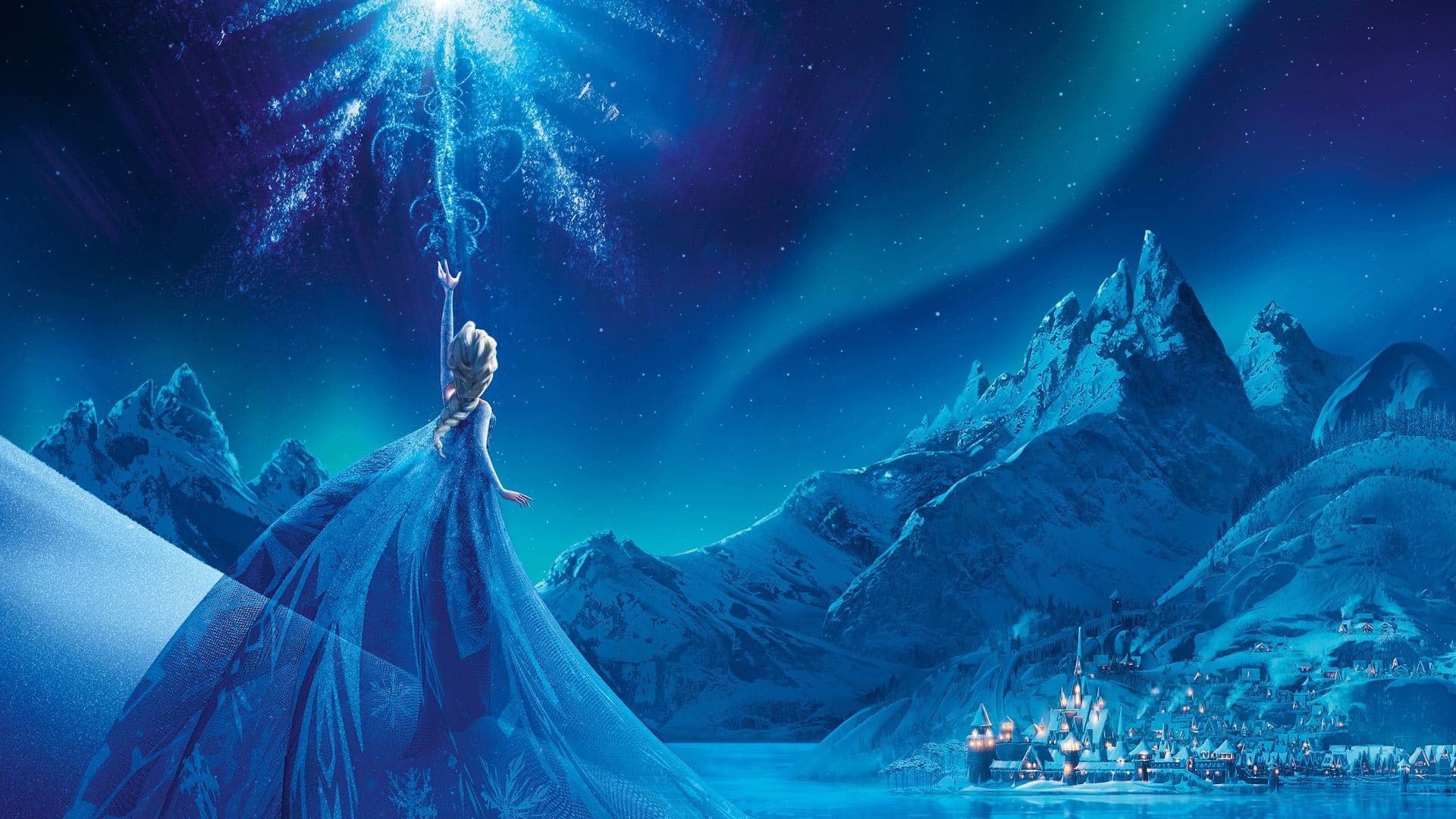
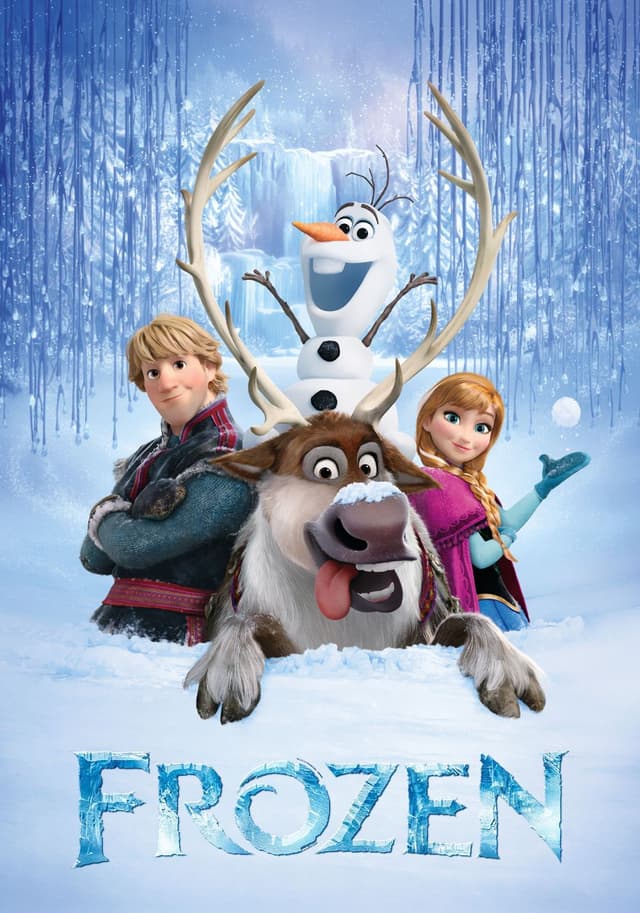
Fearless optimist Anna sets off on an epic journey—teaming up with rugged mountain man Kristoff and his loyal reindeer Sven—to find her sister Elsa, whose icy powers have trapped the kingdom of Arendelle in eternal winter. Encountering Everest-like conditions, mystical trolls and a hilarious snowman named Olaf, Anna and Kristoff battle the elements in a race to save the kingdom.
What is the budget of Frozen?
"Frozen," a animation released in 2013, was directed by Chris Buck, Jennifer Lee and stars Idina Menzel, Kristen Bell. The production budget was $150,000,000, placing it in the blockbuster range for animation productions of its era.
Key Budget Allocation Categories
While specific budget breakdowns are not publicly available, typical cost drivers for a animation production like this include:
- Animation Production Pipeline: The bulk of an animated film's budget funds the multi-year production pipeline: storyboarding, character modeling, rigging, animation, lighting, rendering, and compositing.
- Voice Talent: Celebrity voice casting has become standard for studio animation, with A-list actors earning $5 to 15 million for voice roles.
- Music, Songs & Sound Design: Original songs and orchestral scores are central to animated storytelling. Sound design for animated worlds must be created entirely from scratch.
What were the major cost factors in Frozen?
Several factors contributed to the overall production costs of "Frozen."
- Animation Production Pipeline: Animation Production Pipeline is one of the primary cost drivers in animation productions of this scale.
- Voice Talent: Voice Talent is one of the primary cost drivers in animation productions of this scale.
- Music: Music, Songs & Sound Design is one of the primary cost drivers in animation productions of this scale.
How Does Frozen's Budget Compare to Similar Films?
At $150,000,000, Frozen sits in the blockbuster range. Here is how it compares to productions with a similar budget:
- 6 Underground (2019): Budget $150,000,000
- Angels & Demons (2009): Budget $150,000,000, Worldwide Gross $485,930,816
- Batman Begins (2005): Budget $150,000,000, Worldwide Gross $374,218,673
- Bee Movie (2007): Budget $150,000,000, Worldwide Gross $287,594,577
- Beverly Hills Cop: Axel F (2024): Budget $150,000,000
The median budget for wide-release animation films in the 2010s ranges from $30 to 80M for mid-budget to $150M+ for tentpoles.
Frozen Box Office Performance
"Frozen" earned $400,953,009 domestically and $1,274,219,009 worldwide at the box office. Against a production budget of $150,000,000, the film performed strongly at the box office.
A film typically needs to earn approximately twice its production budget to cover marketing and distribution costs. For "Frozen," that break-even threshold was roughly $300,000,000. With worldwide earnings of $1,274,219,009, the film cleared that threshold comfortably.
Industry analysts typically estimate that a film needs to earn roughly twice its production budget to break even, once prints and advertising (P&A) costs, distribution fees, and exhibitor shares are factored in. For Frozen, that break-even threshold is approximately $300,000,000.
Box Office Breakdown
Frozen

With a 749.5% return on investment based on production budget alone, Frozen comfortably surpassed its break-even threshold and proved to be a strong performer for its studio. These figures represent theatrical revenue only and do not include home entertainment, streaming licensing, or merchandise revenue, which further bolster the film's overall profitability.
Frozen Production History
Disney had explored adapting Hans Christian Andersen's "The Snow Queen" since the late 1930s, but the project repeatedly stalled over the difficulty of making the Snow Queen work as a compelling character. Development resumed in the late 1990s following the Disney Renaissance, only to be shelved again in late 2002 when Glen Keane departed. In 2008, John Lasseter convinced Chris Buck to return from Sony Pictures Animation and pitch ideas including The Snow Queen. The project initially moved forward as "Anna and the Snow Queen" with traditional hand-drawn animation planned, but entered development limbo by early 2010.
A breakthrough came when Jennifer Lee was hired as screenwriter in March 2012 and promoted to co-director by August, making her the first woman to direct a full-length Walt Disney Animation Studios feature. Songwriters Kristen and Robert Lopez joined in January 2012, collaborating via two-hour transcontinental videoconferences nearly every weekday for 14 months. The team "essentially started over" with only 17 months until the release date. The pivotal creative decision was making Anna and Elsa sisters, transforming the Snow Queen from a villain into a sympathetic character struggling to control her powers. The song "Let It Go," which the Lopezes wrote early in development, fundamentally reshaped Elsa's arc and became what Robert Lopez called "the linchpin of the whole movie."
Kristen Bell was cast as Anna on March 5, 2012, recording her part while pregnant and later rerecording lines approximately 20 times as the script evolved. Idina Menzel, who had previously auditioned unsuccessfully for Tangled, was cast as Elsa after impressing directors during a table read where she and Bell sang "Wind Beneath My Wings" together. Research expeditions sent teams to Jackson Hole, Wyoming to experience deep snow in various clothing, to Quebec City's Ice Hotel to study light reflection on ice, and to Norway to examine fjords, medieval stave churches, and rosemaling folk art. Real landmarks including the Akershus Fortress in Oslo, Nidaros Cathedral in Trondheim, and Bryggen in Bergen inspired Arendelle's design.
Disney developed Matterhorn, a snow simulation software using material point method physics developed with UCLA researchers, to depict realistic snow interactions across at least 43 scenes. Additional proprietary tools included Spaces (for Olaf's deconstructible parts), Flourish (extra movement effects), and Tonic (hair animation), with Elsa's hair alone containing 420,000 computer-generated strands. The film featured 312 character rigs and 245 cloth costume rigs. The animation team of approximately 600 to 650 people, including roughly 70 lighting specialists and over 70 animators, worked under intense time pressure to complete the film in under 12 months. Disney localized Frozen into 41 languages, casting approximately 200 singers for Elsa roles across all markets, involving over 900 performers across 1,300 recording sessions.
Awards and Recognition
Won 2 Oscars. 83 wins & 60 nominations total
- BAFTA Award for Best Animated Film
- Saturn Award for Best Animated Film
- Annie Award for Best Animated Feature
- Critics' Choice Movie Award for Best Animated Feature
- Academy Award for Best Animated Feature: Chris Buck (86th Academy Awards)
- Golden Globe Award for Best Animated Feature Film
Frequently Asked Questions
How much did it cost to make Frozen (2013)?
The production budget was $150,000,000, covering principal photography, visual effects, cast and crew salaries, locations, sets, post-production, and music. Marketing and distribution (P&A) costs are estimated at an additional $75,000,000 - $120,000,000, bringing the total studio investment to approximately $225,000,000 - $270,000,000.
How much did Frozen (2013) earn at the box office?
Frozen grossed $400,953,009 domestic, $873,266,000 international, totaling $1,274,219,009 worldwide.
Was Frozen (2013) profitable?
Yes. Against a production budget of $150,000,000 and estimated total costs of ~$375,000,000, the film earned $1,274,219,009 theatrically - a 749% ROI on production costs alone.
What were the biggest costs in producing Frozen?
The primary cost drivers were above-the-line talent (Idina Menzel, Kristen Bell, Jonathan Groff); multi-year animation production, celebrity voice talent, and original musical compositions.
How does Frozen's budget compare to similar animation films?
At $150,000,000, Frozen is classified as a big-budget production. The median budget for wide-release animation films in the 2010s ranges from $30 - 80M for mid-budget to $150M+ for tentpoles. Comparable budgets: 6 Underground (2019, $150,000,000); Angels & Demons (2009, $150,000,000); Batman Begins (2005, $150,000,000).
Did Frozen (2013) go over budget?
There are no widely reported accounts of significant budget overruns for this production. However, studios rarely disclose precise budget overrun figures publicly. The reported production budget reflects the final estimated cost.
What was the return on investment (ROI) for Frozen?
The theatrical ROI was 749.5%, calculated as ($1,274,219,009 − $150,000,000) ÷ $150,000,000 × 100. This measures gross revenue against production budget only - it does not account for P&A or exhibitor shares.
What awards did Frozen (2013) win?
Won 2 Oscars. 83 wins & 60 nominations total.
Who directed Frozen and who were the key crew members?
Directed by Chris Buck, Jennifer Lee, written by Jennifer Lee, Chris Buck, Shane Morris, with music by Christophe Beck, Jake Monaco, edited by Jeff Draheim.
Where was Frozen filmed?
Frozen was filmed in United States of America.
Filmmakers
Frozen

Official Trailer
Build budgets like this one in Saturation
Start from an industry-standard feature film template, import the schedule and rates you already have, and let the cost report keep itself current as you spend. Real-time collaboration, no spreadsheets.