
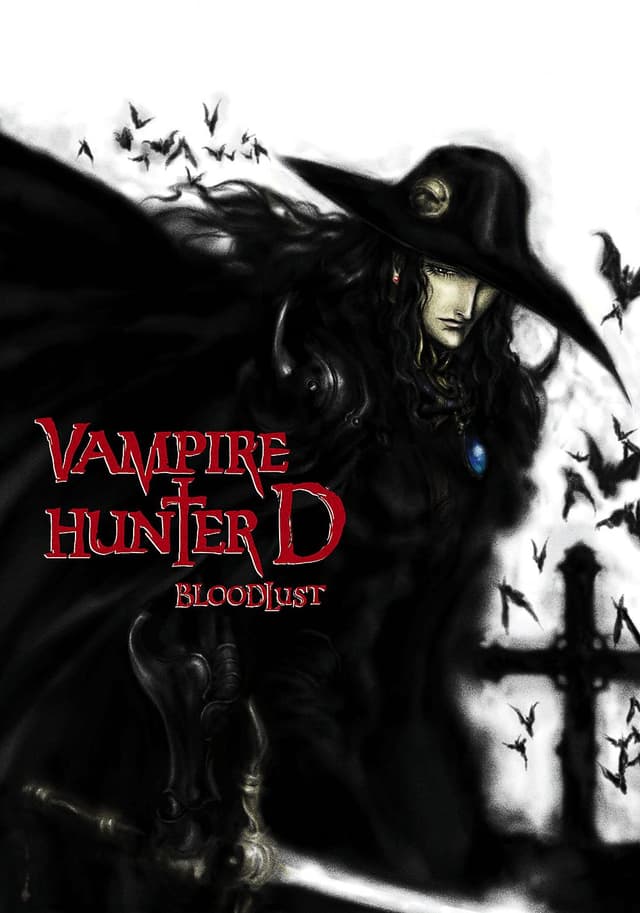
Vampire Hunter D Bloodlust Budget
 AnimationFantasyHorrorActionAdventureScience Fiction1h 43m
Updated
Synopsis
In a far-future world ruled by vampires and the half-human dhampir hunters who track them, the legendary D is hired by a wealthy frontier family to recover a daughter abducted by a powerful vampire lord. D and a rival team of bounty hunters race across a haunted landscape filled with monsters and shifting allegiances.
What Is the Budget of Vampire Hunter D: Bloodlust (2000)?
The production budget of Vampire Hunter D: Bloodlust has never been publicly disclosed in dollar terms. The picture was financed by Urban Vision and produced by Madhouse, the elite Japanese animation house. Industry estimates place the total spend in the $8 million to $15 million range, reflecting the project's status as one of Madhouse's most ambitious traditionally animated features of the era.
Director Yoshiaki Kawajiri storyboarded and supervised the picture across roughly three years of production in Tokyo. Post-production work, including the English-language dub recorded first as the primary language track, was handled in California.
Key Budget Allocation Categories
- Animation Production: Three years of traditional cel and digital ink and paint work at Madhouse Studios in Tokyo, supervised by Kawajiri.
- Character Design: Yutaka Minowa's character designs adapted from Yoshitaka Amano's original illustrations for Hideyuki Kikuchi's source novels.
- Background Painting: Detailed gothic and post-apocalyptic background plates that anchor the picture's distinctive visual register.
- Voice Cast: Andrew Philpot as D and a full English-language voice cast recorded in Los Angeles, with a parallel Japanese dub recorded for the Japanese release.
- Music and Score: Marco D'Ambrosio's orchestral score recorded with a live orchestra, unusual for an anime production of the era.
- Marketing and Distribution: Festival circuit launch followed by a microscale US theatrical run via Urban Vision in 2001 and Japanese release in 2001.
How Does Vampire Hunter D: Bloodlust's Budget Compare to Similar Films?
- Princess Mononoke (1997): Budget approximately $23,500,000 | Worldwide $169,785,629. Studio Ghibli's landmark animated feature at a far higher budget with far stronger global theatrical returns.
- Ghost in the Shell (1995): Budget approximately $10,000,000 | Worldwide $5,500,000. Mamoru Oshii's adult-oriented anime at a comparable budget with a similar limited theatrical footprint that later became iconic on home video.
- Akira (1988): Budget approximately $9,000,000 | Worldwide $49,000,000. Katsuhiro Otomo's landmark cyberpunk feature at a similar budget that performed substantially better commercially.
- Ninja Scroll (1993): Budget undisclosed | Worldwide limited. Kawajiri's earlier adult-oriented Madhouse feature at a smaller budget, a cult forerunner to Bloodlust.
Vampire Hunter D: Bloodlust Box Office Performance
Vampire Hunter D: Bloodlust received a limited US theatrical release through Urban Vision beginning August 25, 2000, with an opening weekend gross of $25,521 across a small number of art-house and anime-specialty screens.
Box Office Breakdown
Vampire Hunter D Bloodlust

For every $1 invested theatrically, the studios recouped roughly $0.02 from initial ticket sales. The picture became commercially viable through subsequent DVD, Blu-ray, and streaming releases.
Domestic accounted for 79 percent of the limited worldwide theatrical gross. The picture's real commercial life began on home video, where it became one of the best-selling anime DVDs of the early 2000s in the United States and remains in print in successive Blu-ray reissues.
Vampire Hunter D: Bloodlust Production History
Vampire Hunter D: Bloodlust adapts the third novel in Hideyuki Kikuchi's Vampire Hunter D series, Demon Deathchase, originally published in 1985. Urban Vision, a US anime distributor, financed and developed the picture in partnership with Madhouse and Kikuchi.
Kawajiri began storyboarding in 1997 and supervised animation production at Madhouse across three years. Unusually for an anime production, the English-language dub was recorded first and served as the primary audio track, with the Japanese-language version recorded subsequently. The shift reflected the financing arrangement and the US-led production structure.
The picture premiered at the Annecy International Animation Film Festival in 2000 and rolled out internationally across late 2000 and 2001. It became a touchstone for the Western anime market of the early 2000s and remains widely cited in retrospective coverage of the era.
Awards and Recognition
Vampire Hunter D: Bloodlust received nominations at the Annecy International Animation Film Festival and won the Best Theatrical Feature award at the Online Film Critics Society Awards in 2001. The picture appears on multiple critics' lists of the greatest animated features of the 2000s and is widely cited by Western animation scholars as a key adult-oriented anime feature.
Critical Reception
Vampire Hunter D: Bloodlust holds a 72 percent rating on Rotten Tomatoes. Roger Ebert gave it three stars and called the visuals "magnificent." Stephen Hunter of The Washington Post described the picture as "a kind of gothic Western, beautifully drawn." Bill Stamets of the Chicago Sun-Times praised the painterly background work. Anime News Network rated the picture A and called it "a defining moment for adult-oriented anime in the West." The picture has accumulated significant cult standing in the decades since release.
Frequently Asked Questions
What is the budget of Vampire Hunter D Bloodlust (2000)?
The production budget of Vampire Hunter D Bloodlust has never been publicly disclosed in dollar terms. Industry estimates place the total spend in the $8 million to $15 million range, making it one of Madhouse's most ambitious traditionally animated features of the era.
Is Vampire Hunter D Bloodlust a sequel?
Yes. The picture is a standalone sequel to the 1985 OVA Vampire Hunter D and adapts the third novel in Hideyuki Kikuchi's book series, Demon Deathchase.
Who directed Vampire Hunter D Bloodlust?
Yoshiaki Kawajiri directed Vampire Hunter D Bloodlust. Kawajiri previously made Ninja Scroll (1993) and Wicked City (1987) at Madhouse.
Was Vampire Hunter D Bloodlust released in English first?
Yes. Unusually for an anime feature, the English-language dub was recorded first and served as the primary audio track, with the Japanese-language version recorded subsequently to support the Japanese theatrical release.
Where was Vampire Hunter D Bloodlust made?
Animation production took place at Madhouse Studios in Tokyo across roughly three years. Post-production, including the English-language voice recording, was handled in California.
How much did Vampire Hunter D Bloodlust gross?
The picture grossed $191,106 worldwide across its limited theatrical run, including $151,086 in the United States and Canada. Its real commercial life unfolded on DVD and Blu-ray, where it became one of the best-selling anime releases of the early 2000s in the United States.
Who composed the score for Vampire Hunter D Bloodlust?
Marco D'Ambrosio composed the score, recorded with a live orchestra. The choice to use a live orchestra rather than synthesized music was unusual for an anime production of the era.
When was Vampire Hunter D Bloodlust released?
The picture premiered at the Annecy International Animation Film Festival in June 2000 and received a limited US theatrical release beginning August 25, 2000. The Japanese theatrical release followed in 2001.
How long is Vampire Hunter D Bloodlust?
Vampire Hunter D Bloodlust runs 103 minutes.
Is Vampire Hunter D Bloodlust connected to the original Vampire Hunter D?
Yes. The 1985 OVA Vampire Hunter D adapted the first Kikuchi novel and shares the same protagonist. Bloodlust adapts the third novel in the series and is the second screen adaptation, fifteen years later.
Filmmakers
Vampire Hunter D Bloodlust

Official Trailer
Build budgets like this one in Saturation
Start from an industry-standard feature film template, import the schedule and rates you already have, and let the cost report keep itself current as you spend. Real-time collaboration, no spreadsheets.