Minority Report Budget
Updated
Synopsis
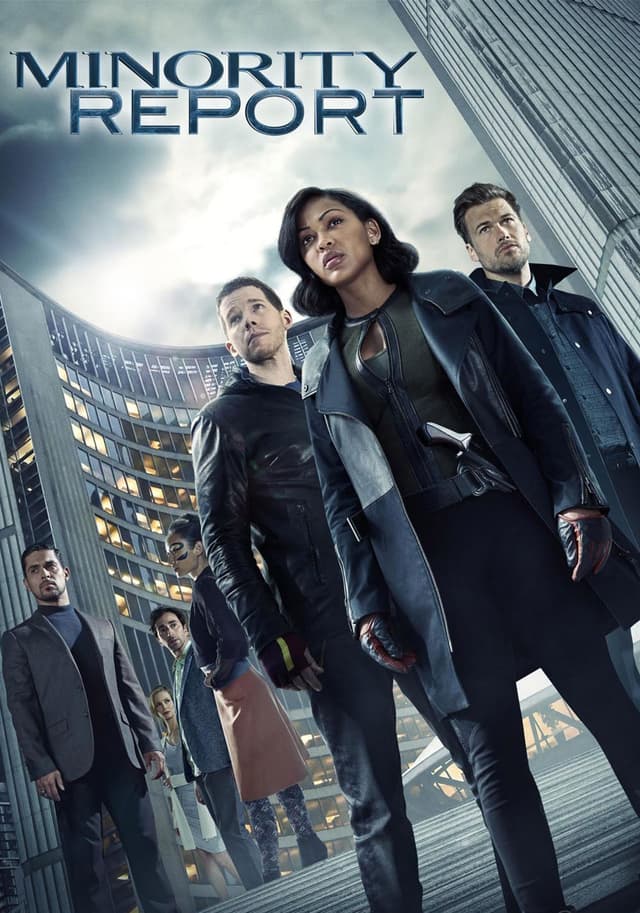
In a 2054 Washington, D.C., where a specialized PreCrime police unit uses three psychic "precogs" to arrest murderers before they kill, Chief John Anderton finds his own face flagged for a future homicide of a man he has never met. Forced to go on the run from the unit he himself helped build, Anderton must outpace his own officers and unravel a conspiracy at the heart of the program before the future he has been accused of catches up with him.
What Is the Budget of Minority Report (2002)?
Minority Report (2002), directed by Steven Spielberg and distributed by 20th Century Fox in North America and DreamWorks Pictures internationally, was produced on a reported budget of $102,000,000. The film co-financed by DreamWorks Pictures and 20th Century Fox, with Tom Cruise's Cruise/Wagner Productions and Walter Parkes and Jan de Bont serving as additional producers, and the costing reflected Cruise's back-end deal, a custom near-future visual effects program, and the unusually long pre-production research period Spielberg ran before principal photography.
The budget was sized for a top-tier Spielberg-Cruise summer tentpole at a moment when both filmmakers commanded the highest combined ticket-selling power in Hollywood. Cruise was coming off Mission: Impossible 2 (2000), which had grossed $546,000,000 worldwide, and Spielberg had just won his second Best Director Academy Award for Saving Private Ryan (1998). The investment thesis assumed Minority Report would clear $250,000,000 worldwide to be considered a success, a target the film comfortably exceeded.
Key Budget Allocation Categories
Minority Report's $102,000,000 budget was distributed across several core production areas:
- Above-the-Line Talent: Tom Cruise received a substantial backend gross-participation deal in addition to a $20,000,000-plus quote, Steven Spielberg took his standard producing and directing fee plus first-dollar gross, and supporting cast Colin Farrell, Samantha Morton, and Max von Sydow each commanded appropriate scale. Producers Gerald R. Molen, Bonnie Curtis, Walter F. Parkes, and Jan de Bont rounded out the above-the-line block.
- Pre-Production Research: Spielberg convened a three-day "think tank" of fifteen futurists, urbanists, architects, computer scientists, and writers in Santa Monica in mid-1999 to design a plausible 2054 Washington, D.C. The resulting "2054 Bible" informed every production design choice, from gesture-driven user interfaces to magnetic personal cars and self-driving highways.
- Production Design: Production designer Alex McDowell built one of the most elaborate near-future urban environments in studio history, including the PreCrime headquarters with its rotating "scrubber" workstation, the Mag-Lev highway sequence, the Sick Stick weapons, and the spider-eye scanners. McDowell's team built practical sets for the bulk of the city and supplemented with visual effects extensions only where necessary.
- Visual Effects: Industrial Light & Magic led a multi-vendor visual effects program covering the spider-scanner sequence, the precogs' visions and the holographic display interfaces, the Mag-Lev car chase, and the eye-replacement surgery sequence. Total VFX shot counts were moderate by Spielberg blockbuster standards because the production preferred practical solutions where possible.
- Cinematography: Janusz Kamiński, Spielberg's longtime collaborator, shot the film in his signature high-contrast, desaturated palette and pioneered a heavily bleach-bypass-processed look that became one of the film's signature visual elements. The complex lighting setups for chase and PreCrime headquarters sequences drove significant gaffer and grip costs.
- Score and Music: John Williams composed the orchestral score, his thirteenth collaboration with Spielberg at that time. Recording sessions with the London Symphony Orchestra and licensing of period and futurist music cues filled out the soundtrack budget.
- Stunts and Action Choreography: The Mag-Lev highway chase, the rooftop foot pursuit through future-Washington, and the Sick Stick combat sequences required extensive stunt coordination, wire rigs, and a custom moving Mag-Lev highway gimbal rig that allowed Cruise to perform many of his own physical sequences. The Mag-Lev rig alone reportedly accounted for a significant single-line capital expenditure.
How Does Minority Report's Budget Compare to Similar Films?
At $102,000,000, Minority Report sat at the upper end of the early-2000s science fiction tentpole budget range. The comparison set illustrates how its commercial and creative outcome compared with peers:
- The Matrix Reloaded (2003): Budget $150,000,000 | Worldwide $741,800,000. The Wachowskis' sequel cost roughly 50% more than Minority Report and earned more than twice as much, the genre ceiling Spielberg's film could not match without a costume franchise hook.
- I, Robot (2004): Budget $120,000,000 | Worldwide $353,100,000. Alex Proyas' Will Smith near-future sci-fi adaptation cost $18,000,000 more than Minority Report and earned roughly the same worldwide gross, illustrating the standard performance envelope for the Philip K. Dick-adjacent thriller format.
- A.I. Artificial Intelligence (2001): Budget $100,000,000 | Worldwide $235,900,000. Spielberg's own previous sci-fi feature cost almost exactly the same and earned $122,000,000 less worldwide, a useful benchmark for the gain in commercial reception when Tom Cruise headlines.
- War of the Worlds (2005): Budget $132,000,000 | Worldwide $603,900,000. Spielberg and Cruise's subsequent reteam cost $30,000,000 more and earned $245,000,000 more worldwide, demonstrating the upside available when a similarly priced Spielberg-Cruise property landed with stronger summer momentum.
- Blade Runner 2049 (2017): Budget $150,000,000 | Worldwide $260,500,000. The Denis Villeneuve sequel, the closest thematic descendant of Minority Report, cost roughly 50% more and earned less worldwide, an instructive comparison for the upper-budget Philip K. Dick adaptation.
Minority Report Box Office Performance
Minority Report opened in the United States on June 21, 2002, and grossed $35,677,125 over its opening weekend, finishing first at the domestic box office. The film legged out impressively through the summer, ultimately grossing $132,072,926 domestically and $226,300,000 internationally for a worldwide total of $358,372,926. It was the tenth highest-grossing film of 2002 worldwide.
Against a $102,000,000 production budget and an estimated $50,000,000 to $70,000,000 in worldwide prints and advertising spend, the financial breakdown was:
Box Office Breakdown
Minority Report

Minority Report returned approximately $2.10 to $2.35 in theatrical revenue for every $1 invested when measured against total estimated production and marketing spend, a solid commercial outcome that solidified the Spielberg-Cruise partnership and led directly to their 2005 reteam on War of the Worlds. Domestic accounted for $132,072,926 against an international share of $226,300,000, a 37/63 split that reflected the film's strong international reception, particularly in Western Europe.
Minority Report Production History
Tom Cruise optioned Philip K. Dick's 1956 short story "The Minority Report" in the late 1990s through his production company Cruise/Wagner Productions, with Jan de Bont initially attached to direct as a sequel concept to Total Recall (1990). The project went through multiple screenwriters before Scott Frank and Jon Cohen delivered the screenplay that attracted Steven Spielberg. Spielberg signed on in late 1999 and convened a three-day think tank in Santa Monica with fifteen futurists, computer scientists, and urban planners to design the film's 2054 Washington, D.C.
Principal photography ran from March to July 2001 across Washington, D.C., Virginia, California and other United States locations, with the Mag-Lev highway sequence shot on a custom-built rotating practical rig that allowed Cruise to perform much of his own work without green-screen substitution. Production designer Alex McDowell delivered one of the most elaborate near-future urban environments in studio history, with practical builds for the PreCrime headquarters, the gesture-controlled interfaces, and the iconic spider scanners.
The film was originally scheduled for a Christmas 2001 release but was moved to summer 2002 to give the visual effects vendors more time and to position the film against the early-summer tentpole window. Steven Spielberg delivered Minority Report just months before completing Catch Me If You Can (2002), an exceptionally productive year for the director.
Awards and Recognition
Minority Report received one Academy Award nomination, for Best Sound Editing, at the 75th ceremony in 2003. The film won three Saturn Awards at the 29th ceremony from the Academy of Science Fiction, Fantasy and Horror Films: Best Science Fiction Film, Best Director for Steven Spielberg, Best Writing for Scott Frank and Jon Cohen, and Best Supporting Actress for Samantha Morton.
The film also received nominations and wins at the Hugo Awards (Best Dramatic Presentation, Long Form, won 2003), the BAFTA Awards (Best Sound and Best Special Visual Effects nominations), and the American Society of Cinematographers (Janusz Kamiński nominated for Outstanding Achievement in Cinematography). Retrospective critical evaluation has been even stronger than its contemporary reception, with the American Film Institute placing it on its Top 10 Science Fiction Films list and the New York Times including it on its "100 Best Movies of the 21st Century" survey.
Critical Reception
Minority Report received strongly positive reviews. The film holds an 89% approval rating on Rotten Tomatoes, with a critical consensus calling it "a thrilling, thinking-man's blockbuster," and scored 80 out of 100 on Metacritic, indicating generally favorable reviews. Audiences surveyed by CinemaScore gave the film a B+, a strong grade for a complex, idea-driven blockbuster.
Roger Ebert called it a "masterpiece" and named it his best film of 2002, writing that Spielberg "creates a future world that is convincing in every detail, and a story that engages the eye and the mind at the same time." Critics across the board praised Janusz Kamiński's desaturated, bleach-bypassed cinematography, the production design by Alex McDowell, the score by John Williams, and the strong performances by Cruise, Colin Farrell, and Samantha Morton. Some critics found the third-act narrative resolution and the framing of the precogs morally tidy, but the dominant view by the time of release and in retrospective evaluation has placed Minority Report among the strongest mainstream science fiction films of the early twenty-first century.
Frequently Asked Questions
How much did Minority Report (2002) cost to make?
The reported production budget was $102,000,000. The film was co-financed by DreamWorks Pictures and 20th Century Fox, with Tom Cruise's Cruise/Wagner Productions as a producing partner. The budget covered Cruise's backend deal, a custom near-future visual effects program, and an unusually elaborate practical production design.
How much did Minority Report earn at the box office?
The film grossed $132,072,926 domestically and $226,300,000 internationally for a worldwide total of $358,372,926. It opened to $35,677,125 in the United States and finished as the tenth highest-grossing film of 2002 worldwide.
Was Minority Report profitable?
Yes. Against a $102,000,000 budget and an estimated $50,000,000 to $70,000,000 in worldwide prints and advertising spend, the film returned approximately $2.10 to $2.35 in theatrical revenue for every $1 invested, a solid commercial outcome that led directly to the Spielberg-Cruise reteam on War of the Worlds (2005).
Who directed Minority Report?
Steven Spielberg directed the film. It was his thirteenth collaboration with composer John Williams and the first of his two films with Tom Cruise, followed by War of the Worlds (2005). Spielberg signed on after Jan de Bont, initially attached to direct as a sequel to Total Recall (1990), moved into a producing role.
What is Minority Report based on?
The film is adapted from Philip K. Dick's 1956 short story "The Minority Report," which Tom Cruise optioned in the late 1990s through his production company Cruise/Wagner Productions. Scott Frank and Jon Cohen wrote the screenplay that attracted Spielberg in late 1999.
How was Minority Report's future world designed?
Spielberg convened a three-day "think tank" of fifteen futurists, urbanists, architects, computer scientists, and writers in Santa Monica in mid-1999 to design a plausible 2054 Washington, D.C. The resulting "2054 Bible" informed every production design choice, from gesture-driven user interfaces to magnetic personal cars and self-driving highways. Production designer Alex McDowell led the practical builds.
Did Minority Report win any Academy Awards?
The film received one Academy Award nomination, for Best Sound Editing, but did not win. It won three Saturn Awards for Best Science Fiction Film, Best Director, and Best Writing, plus a Hugo Award for Best Dramatic Presentation (Long Form) in 2003.
Where was Minority Report filmed?
Principal photography ran from March to July 2001 across Washington, D.C., Virginia, California, and other United States locations. The Mag-Lev highway sequence was shot on a custom-built rotating practical rig that allowed Tom Cruise to perform much of his own work.
What did critics think of Minority Report?
The film received strongly positive reviews. It holds an 89% approval rating on Rotten Tomatoes and an 80 out of 100 score on Metacritic. Audiences gave it a B+ CinemaScore. Roger Ebert called it a "masterpiece" and named it his best film of 2002.
How does Minority Report compare to other Philip K. Dick adaptations?
Minority Report cost $102,000,000 and earned $358,372,926, the strongest commercial outcome among the major Dick adaptations of its era. I, Robot (2004) cost $120,000,000 and earned $353,100,000, and the much later Blade Runner 2049 (2017) cost $150,000,000 and earned $260,500,000, illustrating the genre ceiling Minority Report comfortably exceeded.
Filmmakers
Minority Report

Official Trailer
Build budgets like this one in Saturation
Start from an industry-standard feature film template, import the schedule and rates you already have, and let the cost report keep itself current as you spend. Real-time collaboration, no spreadsheets.