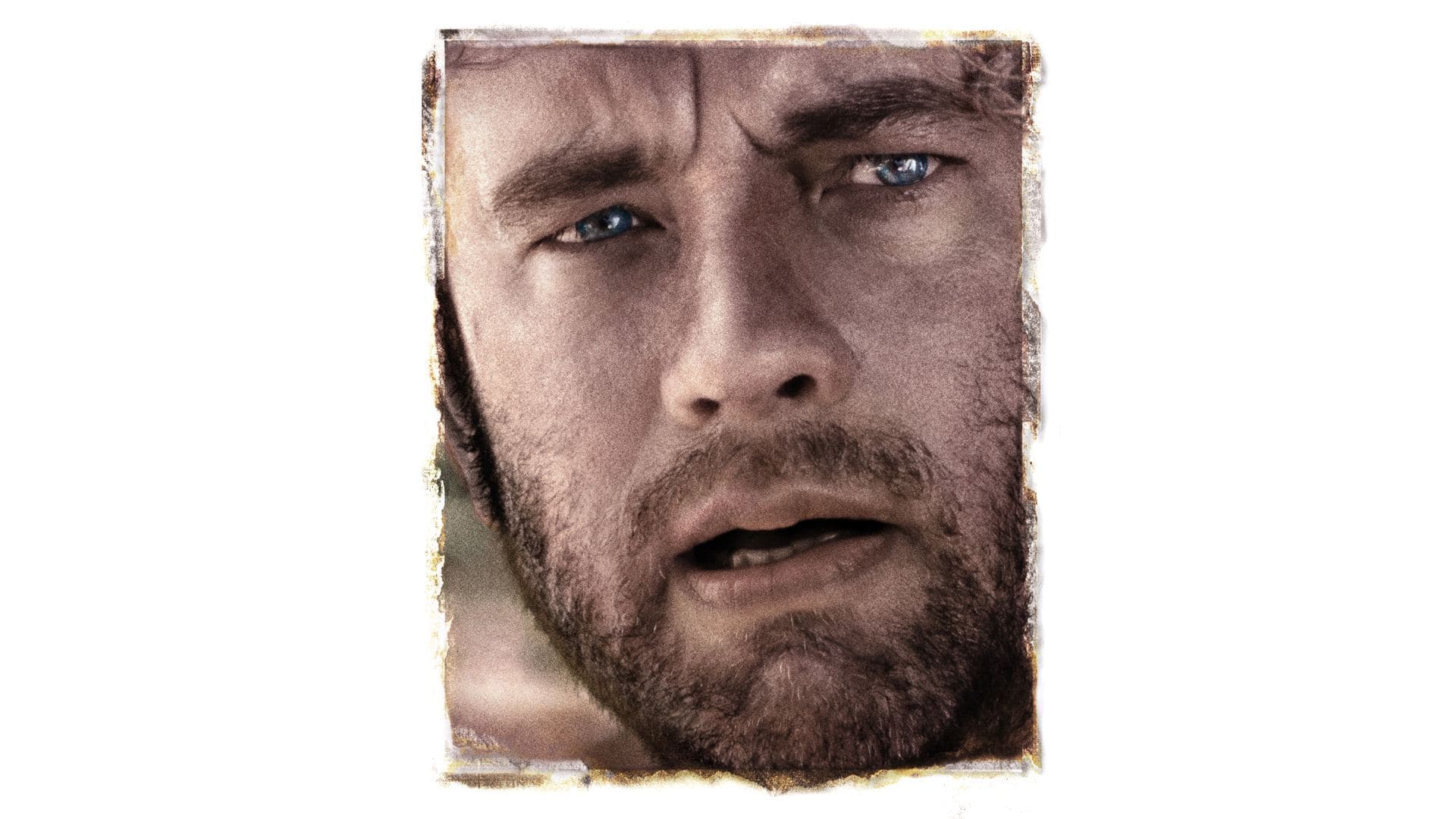
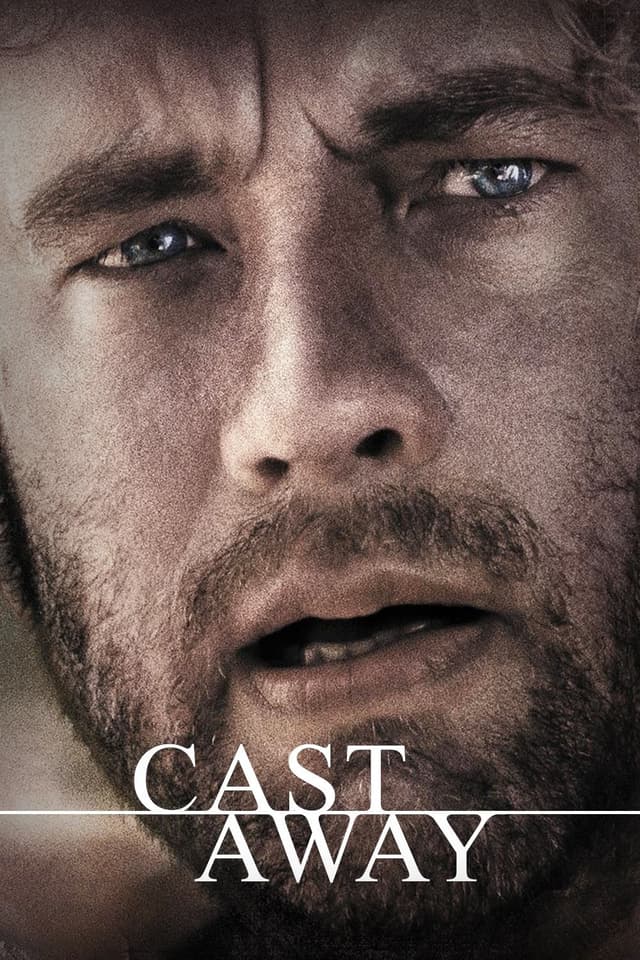
Cast Away Budget
 AdventureDrama2h 23m
Updated
Synopsis
Chuck Noland, a meticulous FedEx systems analyst, is the sole survivor of a Pacific cargo plane crash that strands him on an uninhabited tropical island. Over the four years that follow he must learn to survive with only a handful of FedEx packages, his own resourcefulness, and a volleyball named Wilson for company, while the woman he left behind tries to move on with her life. The film is a meditation on solitude, time, and the gap between the person who leaves and the person who returns.
What Is the Budget of Cast Away (2000)?
Cast Away (2000), directed by Robert Zemeckis and starring Tom Hanks, was produced on a reported budget of $90,000,000. The film was co-financed and distributed in North America by 20th Century Fox, with DreamWorks Pictures handling international distribution, and was developed through Zemeckis and Jack Rapke's ImageMovers banner together with Hanks' Playtone production company. The budget covered an unusually long production timeline because the schedule was deliberately split in half to allow Hanks to physically transform between two phases of his character's life.
Most studio survival dramas of the era cost between $40,000,000 and $70,000,000, so Cast Away sat at the upper end of the range. The premium reflected three factors: a one-year production hiatus during which the entire crew was placed on hold or rotated to other projects, location photography on Monuriki in Fiji rather than a tank or backlot, and the marquee value of pairing Hanks with Zemeckis for the first time since their $677,000,000 worldwide hit Forrest Gump (1994).
Key Budget Allocation Categories
Cast Away's reported $90,000,000 budget was distributed across the following core production areas:
- Above-the-Line Talent: Robert Zemeckis directed coming off Contact (1997) and What Lies Beneath (2000), commanding a feature director rate near the top of the late-1990s scale. Tom Hanks, fresh off back-to-back Best Actor Oscars for Philadelphia (1993) and Forrest Gump (1994) and the worldwide success of Saving Private Ryan (1998), took a base salary plus a substantial back-end participation in first-dollar gross, a deal structure standard for him by 2000.
- One-Year Production Hiatus: Principal photography was deliberately split into two blocks separated by roughly twelve months so that Hanks could lose approximately 55 pounds, grow out his hair and beard, and physically embody his character's four-year stranding. During the hiatus the production carried costs for stored sets, retained key crew on holding deals, and paid Zemeckis to direct What Lies Beneath as a placeholder feature.
- Fiji Location Shoot: The marooned-island sequences were shot on Monuriki, a small uninhabited island in the Mamanuca chain in Fiji. The unit required helicopter and boat transport for cast, crew, and equipment, on-island generators, freshwater supply, and a marine safety operation, costs an LA backlot or tank could not have come close to matching.
- Visual Effects: While Cast Away is often remembered as a small physically grounded film, it required substantial digital and physical effects work, including the FedEx plane crash sequence, the storm at sea, water tank photography in Los Angeles for the raft escape, and integration of CG water and weather. Sony Pictures Imageworks and a roster of physical effects coordinators handled the work.
- Score and Sound Design: Alan Silvestri, Zemeckis' longtime collaborator on Forrest Gump, Contact, and the Back to the Future trilogy, scored the film with an unusually restrained approach, holding back his orchestra entirely until the final reel. Sound design carried most of the audio for the island sequences, with extensive Foley and natural ambience replacing dialogue and music for long stretches.
- Production Design and Props: Production designer Rick Carter built the practical FedEx plane interior, the cargo packages that wash ashore, the raft, and the most recognized prop in the film, the Wilson volleyball, which existed in multiple hand-painted versions for continuity. The contained nature of the island setting concentrated the design budget into a small number of highly detailed elements rather than spreading it across many sets.
- Marketing Partnership with FedEx: FedEx granted full brand cooperation, including use of its logo, uniforms, planes, and Memphis hub for filming, without paying for product placement and without charging the production a licensing fee. This in-kind exchange offset what would otherwise have been a multi-million-dollar set-build or rights-clearance line item.
How Does Cast Away's Budget Compare to Similar Films?
At $90,000,000, Cast Away sat above the typical survival drama and below the typical Zemeckis-Hanks tentpole. The comparison set is grouped across three lenses, other Zemeckis films, other survival films, and other Tom Hanks films from the same era:
- Forrest Gump (1994): Budget $55,000,000 | Worldwide $677,945,399. The prior Zemeckis-Hanks collaboration cost roughly 60% of Cast Away and earned 58% more worldwide, setting the commercial expectation that drove studio willingness to absorb the year-long hiatus.
- Contact (1997): Budget $90,000,000 | Worldwide $171,120,329. Zemeckis' Jodie Foster astronomy drama cost identically to Cast Away but grossed less than half, demonstrating how much of Cast Away's ROI was attributable to Hanks rather than the director or genre.
- Back to the Future (1985): Budget $19,000,000 | Worldwide $381,109,762. Zemeckis' breakthrough hit cost less than a quarter of Cast Away but remains the most profitable film in his career on a multiple-of-budget basis.
- Life of Pi (2012): Budget $120,000,000 | Worldwide $609,016,565. Ang Lee's later survival epic spent a third more than Cast Away, leaned heavily on visual effects, and out-grossed it worldwide, illustrating how the genre evolved into a VFX showcase after Cast Away proved the commercial template.
- The Revenant (2015): Budget $135,000,000 | Worldwide $533,154,856. Alejandro Iñárritu's wilderness survival film carried a 50% higher budget than Cast Away thanks to extreme remote locations and a longer principal photography schedule, while earning 24% more worldwide.
- 127 Hours (2010): Budget $18,000,000 | Worldwide $60,738,797. Danny Boyle's contained survival drama cost a fifth of Cast Away and earned a fraction of its worldwide gross, demonstrating that the star-plus-spectacle premium Cast Away paid for actually translated into commercial scale.
- Catch Me If You Can (2002): Budget $52,000,000 | Worldwide $352,114,312. The Spielberg-Hanks collaboration that followed Cast Away cost 42% less and earned more domestically, suggesting that Hanks' commercial pull was consistent across very different premises.
Cast Away Box Office Performance
Cast Away opened wide on December 22, 2000, taking the top spot at the domestic box office with $28,883,406 over its three-day opening weekend across 2,774 theaters. The Christmas Day debut launched into a holiday corridor light on adult-skewing wide releases, allowing the film to dominate the four-week stretch from Christmas through Martin Luther King Jr. weekend and hold first place for four consecutive weekends, an exceptional run for a December opener even at the height of Hanks' star power.
Against a reported production budget of $90,000,000, the film needed to clear roughly $200,000,000 in worldwide gross to reach studio profitability after marketing and distribution. Here is the financial breakdown:
Box Office Breakdown
Cast Away

Cast Away returned approximately $2.86 in worldwide theatrical gross for every $1 invested when measured against total estimated production and marketing spend, a strong outcome for a wide-release adult drama and the largest worldwide gross of any Zemeckis film other than Forrest Gump. The film closed its domestic run with $233,632,142, ranking as the second highest-grossing domestic release of 2000 behind only How the Grinch Stole Christmas.
The 54/46 domestic-to-international split was relatively narrow for an English-language star vehicle, indicating that the film's premise traveled well across territories despite carrying only one major speaking part and very little dialogue across the middle hour. Long-tail revenue from home video, broadcast television, and FedEx-branded re-airings extended the financial return well past the theatrical window.
Cast Away Production History
Development on Cast Away began in the mid-1990s when Tom Hanks pitched Robert Zemeckis on the concept of a one-character castaway story, drawing on his fascination with the logistics of being completely cut off from modern infrastructure. Screenwriter William Broyles Jr., a Vietnam veteran and the creator of China Beach, took the assignment and famously researched the script by spending a week stranded on a beach in Mexico's Sea of Cortez with only the items his character would later have on the island. ImageMovers and Playtone packaged the project with 20th Century Fox and DreamWorks, with Fox taking domestic and DreamWorks taking international distribution rights.
Principal photography was structured around an unprecedented production split. The first block, covering the pre-crash setup and the immediate aftermath of the FedEx Flight 88 disaster, was shot from January through March 1999 in Memphis, the South Pacific, Russia, Fiji and Los Angeles, California. Production then shut down for nearly twelve months while Hanks lost approximately 55 pounds, grew out his hair and beard, and physically embodied his character's four-year ordeal. During the hiatus Zemeckis directed the supernatural thriller What Lies Beneath, also released in 2000, repurposing the same DreamWorks-Fox financing relationships and keeping key crew employed.
The second block ran from April to May 2000, returning to Monuriki in Fiji to capture the gaunt, bearded, weathered version of the character. The Monuriki shoot was logistically demanding because the island is uninhabited and three hours by boat from the nearest hotel base on Mana Island, requiring helicopter and boat ferries for cast, crew, equipment, and freshwater. The raft escape sequence was photographed in a Los Angeles water tank with practical wave generators and rain rigs, supplemented by digital water and weather work from Sony Pictures Imageworks.
Post-production carried through autumn 2000 ahead of a December 22 release. Alan Silvestri scored the film with a deliberately minimal approach, withholding orchestral music almost entirely until the final reel so that the silence of the island would carry the central hour. Editor Arthur Schmidt, a longtime Zemeckis collaborator who had cut Forrest Gump and Contact, shaped the unusual structure that gives the film three distinct acts, before, during, and after the stranding.
Awards and Recognition
Cast Away earned two Academy Award nominations at the 73rd Oscars in March 2001, for Best Actor (Tom Hanks) and Best Sound (Randy Thom, Tom Johnson, Dennis Sands, William B. Kaplan). Hanks lost to Russell Crowe for Gladiator in what was widely reported as a close two-way race, while the sound team lost to U-571. The lack of a Best Picture or Best Director nomination, despite the film's commercial dominance and critical reception, became one of the most-discussed snubs of the 2000 awards season.
Hanks received the Golden Globe Award for Best Actor in a Motion Picture, Drama, his fourth Golden Globe win, and was nominated by the Screen Actors Guild, the British Academy of Film and Television Arts (BAFTA), and the Broadcast Film Critics Association. The American Film Institute named Cast Away one of its Movies of the Year for 2000, and the film also earned nominations from the American Society of Cinematographers for Don Burgess's work and from the Motion Picture Sound Editors Golden Reels.
Wilson, the volleyball that serves as Hanks' silent scene partner across the island sequences, received the Critics' Choice Movie Award for Best Inanimate Object, a tongue-in-cheek honor created specifically to recognize the prop's outsized contribution to the film. The Wilson character has since entered the cultural lexicon and remains the single most quoted element of the film.
Critical Reception
Cast Away received broadly positive reviews. The film holds a 90% approval rating on Rotten Tomatoes based on 173 critic reviews, with a critical consensus that singles out Hanks' performance as one of the great solo acting feats of modern American cinema. On Metacritic, the film scored 73 out of 100, indicating generally favorable reviews. Audiences surveyed by CinemaScore gave the film an A-minus, a strong score for an unconventional adult drama with sparse dialogue and a deliberately ambiguous closing scene.
Roger Ebert awarded the film three and a half stars out of four, writing that "what makes the movie absorbing is not just the inventiveness of the survival mechanics but the deeper question of what the character is bringing back with him." A.O. Scott in The New York Times praised the picture as "a meditation on solitude rendered with rare commercial confidence," and Peter Travers in Rolling Stone called Hanks' performance "an acting workout of astonishing physical and emotional commitment." Some critics expressed reservations about the film's extended setup and resolution at FedEx's Memphis hub, arguing that the bookends diluted the purity of the island hour.
Contemporary reappraisals have if anything strengthened the film's critical standing. The middle hour, structured almost entirely without dialogue and built around Hanks, the volleyball, and Silvestri's withheld score, is now regularly cited in discussions of contained-setting filmmaking and is studied as an example of how a major studio can finance and release a virtually silent feature carried by a single movie star. The Wilson volleyball, the ambiguous final scene at the Texas crossroads, and the FedEx plane crash sequence each have a permanent place in modern American film vocabulary.
Frequently Asked Questions
How much did it cost to make Cast Away (2000)?
The reported production budget was $90,000,000. The film was co-financed by 20th Century Fox (domestic distribution) and DreamWorks Pictures (international distribution), with production handled by Robert Zemeckis and Jack Rapke's ImageMovers and Tom Hanks' Playtone. The figure reflects an unusually long production cycle that included a one-year hiatus while Hanks transformed physically for the second half of the shoot.
How much did Cast Away earn at the box office?
Cast Away grossed $233,632,142 domestically and $196,000,000 internationally, for a worldwide total of $429,632,142. It opened to $28,883,406 over its December 22, 2000 opening weekend and held the number one position at the domestic box office for four consecutive weekends.
Was Cast Away a box office success?
Yes. Against a $90,000,000 production budget and an estimated $50,000,000 to $60,000,000 in marketing spend, the film returned approximately $2.86 in worldwide gross for every $1 invested. It was the second highest-grossing domestic release of 2000, behind only How the Grinch Stole Christmas, and the largest worldwide gross of Robert Zemeckis' career outside Forrest Gump.
Who directed Cast Away?
Robert Zemeckis directed the film, working from an original screenplay by William Broyles Jr. It was Zemeckis' second collaboration with Tom Hanks after Forrest Gump (1994) and his sixth feature with composer Alan Silvestri.
Where was Cast Away filmed?
The island sequences were shot on Monuriki, an uninhabited island in the Mamanuca chain in Fiji. The pre-crash and FedEx sequences were filmed in Memphis, Tennessee, with additional photography in Russia and Los Angeles. The raft escape sequence was photographed in a Los Angeles water tank with practical wave and rain rigs supplemented by digital water work from Sony Pictures Imageworks.
Why did Cast Away take so long to film?
Principal photography was deliberately split into two blocks separated by approximately twelve months so that Tom Hanks could lose roughly 55 pounds, grow out his hair and beard, and physically transform between the well-fed pre-crash version of his character and the gaunt four-years-stranded version. During the hiatus Robert Zemeckis directed the supernatural thriller What Lies Beneath, also released in 2000.
How much weight did Tom Hanks lose for Cast Away?
Tom Hanks lost approximately 55 pounds during the year-long production hiatus. He also stopped cutting his hair and grew out his beard so that, when the unit returned to Monuriki in spring 2000, his physical state matched a character four years into solitary island survival. Hanks had previously dropped weight for Philadelphia (1993) but the Cast Away transformation was more pronounced and was achieved on a calorie restriction plus exercise regime supervised by his doctor.
Who plays Wilson the volleyball in Cast Away?
Wilson is a Wilson Sporting Goods volleyball, not a character with an actor. Multiple hand-painted versions of the prop were used for continuity across the shoot. Wilson is named after the volleyball's manufacturer and was created as a way to give Hanks a silent scene partner so the film could include dialogue and emotional beats during the long island middle hour. The volleyball received the Critics' Choice Movie Award for Best Inanimate Object.
Did Cast Away win any Oscars?
No. Cast Away received two Academy Award nominations at the 73rd Oscars, Best Actor for Tom Hanks and Best Sound for Randy Thom, Tom Johnson, Dennis Sands, and William B. Kaplan, and lost both. Hanks lost Best Actor to Russell Crowe for Gladiator, and the sound team lost to U-571. The film did not receive a Best Picture or Best Director nomination, which was widely reported as a notable snub. Hanks did win the Golden Globe Award for Best Actor, Drama.
What did critics think of Cast Away?
Cast Away received broadly positive reviews, with a 90% approval rating on Rotten Tomatoes (based on 173 critics) and a Metacritic score of 73 out of 100. Audiences gave the film an A-minus CinemaScore. Roger Ebert awarded the film three and a half stars out of four, and reviewers across major outlets praised Tom Hanks' largely silent middle-hour performance as one of the great solo acting feats of modern American cinema.
Filmmakers
Cast Away

Official Trailer
Build budgets like this one in Saturation
Start from an industry-standard feature film template, import the schedule and rates you already have, and let the cost report keep itself current as you spend. Real-time collaboration, no spreadsheets.