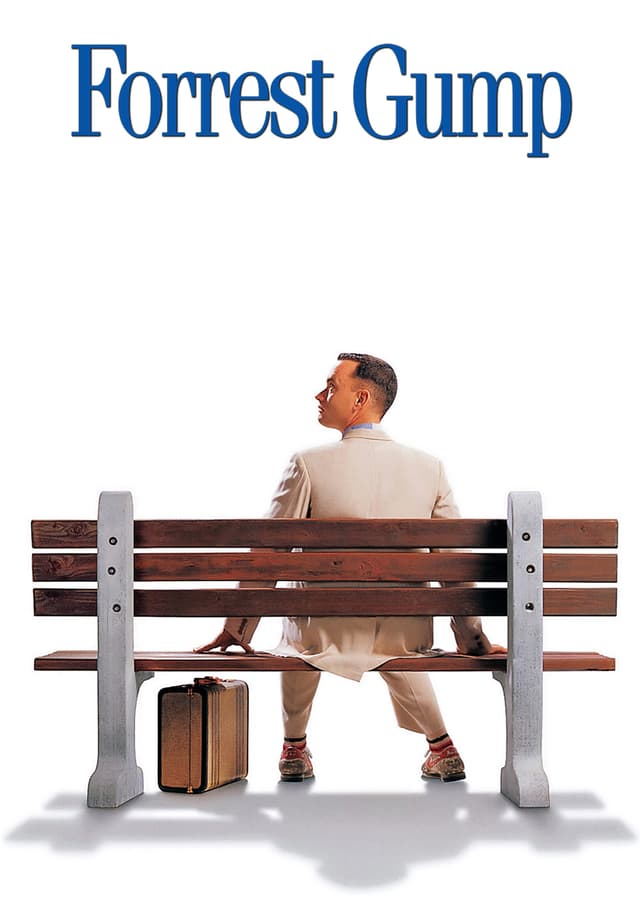
Forrest Gump
Synopsis
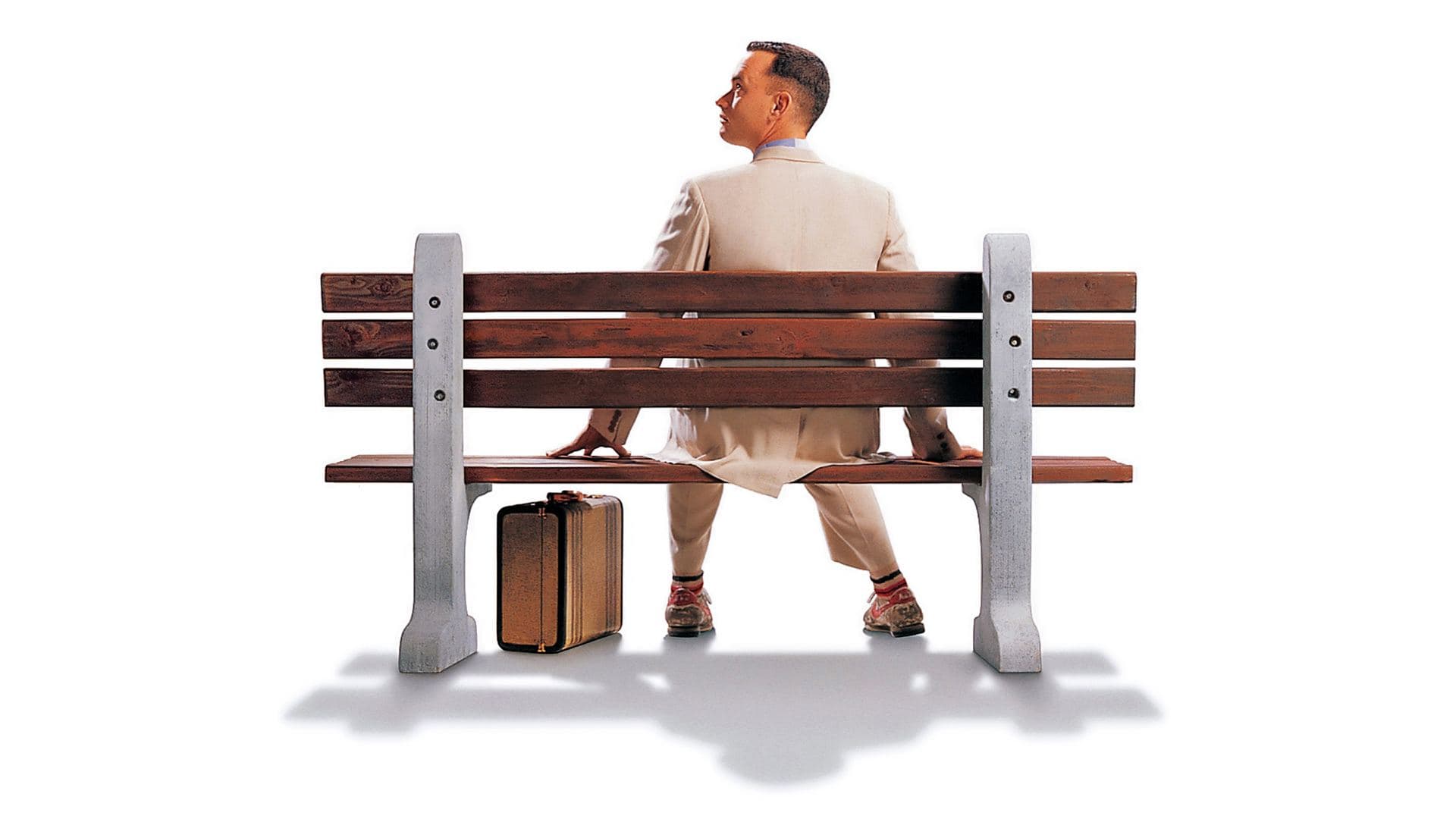
Forrest Gump is a simple man with a low I.Q. but good intentions. He is running through childhood with his best and only friend Jenny. His 'mama' teaches him the ways of life and leaves him to choose his destiny. Forrest joins the army for service in Vietnam, finding new friends called Dan and Bubba, he wins medals, creates a famous shrimp fishing fleet, inspires people to jog, starts a ping-pong craze, creates the smiley, writes bumper stickers and songs, donates to people and meets the president several times. However, this is all irrelevant to Forrest who can only think of his childhood sweetheart Jenny Curran, who has messed up her life. Although in the end all he wants to prove is that anyone can love anyone.
Production Budget Analysis
What was the production budget for Forrest Gump?
Directed by Robert Zemeckis, with Tom Hanks, Robin Wright, Gary Sinise leading the cast, Forrest Gump was produced by Paramount Pictures with a confirmed budget of $55,000,000, placing it in the mid-budget category for comedy films.
With a $55,000,000 budget, Forrest Gump sits in the mid-range of studio releases. Marketing costs for a wide release at this level typically add $30–60 million, putting the break-even point near $137,500,000.
Budget Comparison — Similar Productions
• 16 Blocks (2006): Budget $55,000,000 | Gross $65,664,721 → ROI: 19% • Any Given Sunday (1999): Budget $55,000,000 | Gross $100,230,832 → ROI: 82% • Challengers (2024): Budget $55,000,000 | Gross $94,182,533 → ROI: 71% • Joker (2019): Budget $55,000,000 | Gross $1,078,958,629 → ROI: 1862% • Paddington (2014): Budget $55,000,000 | Gross $326,113,057 → ROI: 493%
Key Budget Allocation Categories
▸ Talent Salaries & Producing Deals Established comedic talent can command $15–20 million per film, with top-tier stars earning even more through producing credits and backend deals. Comedy ensembles multiply this cost across several well-known performers.
▸ Production & Location Filming While comedies generally avoid the VFX costs of action films, location shooting in recognizable cities or exotic locales adds meaningful production expense.
▸ Marketing & P&A (Prints & Advertising) Comedies rely heavily on marketing to build opening-weekend momentum. Studios typically spend 50–100% of the production budget on marketing, with comedy trailers and social media campaigns being particularly expensive.
Key Production Personnel
CAST: Tom Hanks, Robin Wright, Gary Sinise, Sally Field, Mykelti Williamson Key roles: Tom Hanks as Forrest Gump; Robin Wright as Jenny Curran; Gary Sinise as Lieutenant Dan Taylor; Sally Field as Mrs. Gump
DIRECTOR: Robert Zemeckis CINEMATOGRAPHY: Don Burgess MUSIC: Alan Silvestri EDITING: Arthur Schmidt PRODUCTION: Paramount Pictures, The Steve Tisch Company, Wendy Finerman Productions FILMED IN: United States of America
Box Office Performance
Forrest Gump earned $330,455,270 domestically and $346,932,446 internationally, for a worldwide total of $677,387,716. Revenue was split 49% domestic / 51% international.
Break-Even Analysis
Using the industry-standard 2.5x multiplier (P&A + exhibitor shares of 40–50% + distribution fees), Forrest Gump needed approximately $137,500,000 to break even. The film surpassed this threshold by $539,887,716.
Return on Investment (ROI)
Revenue: $677,387,716 Budget: $55,000,000 Net: $622,387,716 ROI: 1131.6%
Detailed Box Office Notes
Produced on a budget of $55 million, Forrest Gump opened in 1,332 theaters in the United States and Canada on Wednesday, July 6, 1994, and grossed more than $8 million in its first two days before expanding on Friday to 1,595 theaters and grossing $24,450,602 in its opening weekend, Paramount's biggest opening non-holiday weekend gross, surpassing the record set by The Addams Family. Motion picture business consultant and screenwriter Jeffrey Hilton suggested to producer Wendy Finerman to double the prints and advertising budget based on his viewing of an early print of the film. The budget was immediately increased, in line with his advice. In its opening weekend, the film placed first at the US box office, narrowly beating The Lion King, which was in its fourth week of release. For the first twelve weeks of release, the film was in the top three at the US box office, topping the list five times, including in its tenth week of release, when it surpassed Raiders of the Lost Ark as Paramount's highest-grossing film in the United States and Canada. Paramount removed the film from release in the United States when its gross hit $300 million in January 1995, and it was the second-highest-grossing film of the year, behind The Lion King with $305 million. The film was reissued on February 17, 1995, after the Academy Awards nominations were announced. After the reissue in 1,100 theaters, the film grossed an additional $29 million in the United States and Canada, bringing its total to $329.7 million, making it the third-highest-grossing film at that time, behind E.T. the Extra-Terrestrial and Jurassic Park. Box Office Mojo estimates that the film sold over 78.5 million tickets in the US and Canada in its initial theatrical run.
The film was the fastest grossing Paramount film to pass $100 million (18 days), $200 million (46 days; fourth fastest in history), and $300 million (193 days) in box office receipts (at the time of its release). After reissues, the film has gross receipts of $330,252,182 in the U.S. and Canada and $347,693,217 in international markets for a total of $677,945,399 worldwide. Ultimately, it finished as the fourth highest grossing film of the 1990s in the United States and Canada.
With such revenue, the film was called a "successful failure"; due to distributors' and exhibitors' high fees, Paramount's losses totaled in at $62 million, leaving executives desiring better deals.
Profitability Assessment
VERDICT: Highly Profitable
Forrest Gump was a clear financial success, generating $677,387,716 worldwide against a $55,000,000 production budget — a 1132% ROI. After estimated marketing costs, the film still delivered substantial profit to Paramount Pictures.
INDUSTRY IMPACT
The outsized success of Forrest Gump likely influenced studio greenlight decisions for similar comedy projects.
Records: Crossed the $500M worldwide threshold, placing it among the top-grossing films of 1994.
PRODUCTION NOTES
▸ Casting
John Travolta was the original choice to play the title role and later said that passing on the role was a mistake. After turning down the role, he went on to play a role in Pulp Fiction instead. Bill Murray, Chevy Chase, and Matthew Broderick were also considered for the role. Sean Penn had stated in an interview that he had been the second choice for the role; he would later portray a character with a disability in the 2001 film I Am Sam. Tom Hanks revealed that he signed on to the film after an hour and a half of reading the script. He dropped out of the role of Andy Dufresne in The Shawshank Redemption in favor of Forrest Gump. Hanks initially wanted to ease Forrest's pronounced Southern accent, but was eventually persuaded by director Robert Zemeckis to portray the heavy accent stressed in the novel. Winston Groom, who wrote the original novel, describes the film as having taken the "rough edges" off the character whom he had envisioned being played by John Goodman. Additionally, Tom's younger brother Jim Hanks is his acting double in the movie for the scenes whenever Forrest was running. Tom's daughter Elizabeth Hanks appears in the movie as the girl on the school bus who refuses to let young Forrest sit next to her. Sally Field agreed to take on the role of Mrs. Gump after reading the script. Joe Pesci and Kevin Bacon were considered for the role of Lieutenant Dan Taylor, which was eventually given to Gary Sinise. Sinise drew inspiration from the struggles that Vietnam War veterans, some on his wife's side of his family, were going through when returning from serving in Vietnam. David Alan Grier, Ice Cube and Dave Chappelle were offered the role of Benjamin Buford Blue, but all three turned it down. Chappelle, who said he believed the film would be unsuccessful, has been reported as saying that he regrets not taking the role.
▸ Filming & Locations
Filming began in August 1993 and ended in December of that year. Although most of the film is set in Alabama, filming took place mainly in and around Beaufort, South Carolina, as well as parts of coastal Virginia and North Carolina, Downtown portions of the fictional town of Greenbow were filmed in Varnville, South Carolina. The studio was about to pull the plug on the film, until Zemeckis and Hanks cut the running sequence in the middle. Zemeckis and Hanks used their own money for the sequence. The scene of Forrest running through Vietnam while under fire was filmed on Hunting Island State Park and Fripp Island, South Carolina. Additional filming took place on the Biltmore Estate in Asheville, North Carolina. The Gump family home set was built along the Combahee River near Yemassee, South Carolina, and the nearby land was used to film Curran's home as well as some of the Vietnam scenes. Over 20 palmetto trees were planted to improve the Vietnam scenes.
[Filming] Filming began in August 1993 and ended in December of that year. Although most of the film is set in Alabama, filming took place mainly in and around Beaufort, South Carolina, as well as parts of coastal Virginia and North Carolina, Downtown portions of the fictional town of Greenbow were filmed in Varnville, South Carolina. The studio was about to pull the plug on the film, until Zemeckis and Hanks cut the running sequence in the middle. Zemeckis and Hanks used their own money for the sequence. The scene of Forrest running through Vietnam while under fire was filmed on Hunting Island State Park and Fripp Island, South Carolina. Additional filming took place on the Biltmore Estate in Asheville, North Carolina. The Gump family home set was built along the Combahee River near Yemassee, South Carolina, and the nearby land was used to film Curran's home as well as some of the Vietnam scenes. Over 20 palmetto trees were planted to improve the Vietnam scenes.
▸ Visual Effects & Design
Ken Ralston and his team at Industrial Light & Magic were responsible for the film's visual effects. Using CGI techniques, it was possible to depict Gump meeting deceased personages and shaking their hands. Hanks was first shot against a blue screen along with reference markers so that he could line up with the archive footage. To record the voices of the historical figures, voice actors were filmed and special effects were used to alter lip-syncing for the new dialogue. Archival footage was used and with the help of such techniques as chroma key, image warping, morphing, and rotoscoping, Hanks was integrated into it.
In one Vietnam War scene, Gump carries Bubba away from an incoming napalm attack. To create the effect, stunt actors were initially used for compositing purposes. Then, Hanks and Williamson were filmed, with Williamson supported by a cable wire as Hanks ran with him. The explosion was then filmed, and the actors were digitally added to appear just in front of the explosions. The jet fighters and napalm canisters were also added by CGI.
The CGI removal of actor Gary Sinise's legs, after his character had them amputated, was achieved by wrapping his legs with a blue fabric, which later facilitated the work of the "roto-paint" team to paint out his legs from every single frame. At one point, while hoisting himself into his wheelchair, his legs are used for support.
The scene where Forrest spots Jenny at a peace rally at the Lincoln Memorial and Reflecting Pool in Washington, D.C., required visual effects to create the large crowd of people. Over two days of filming, approximately 1,500 extras were used. At each successive take, the extras were rearranged and moved into a different quadrant away from the camera. With the help of computers, the extras were multiplied to create a crowd of several hundred thousand people.
▸ Music & Score
The soundtrack, featuring 32 songs from the film, was released on July 6, 1994. With the exception of a lengthy suite of themes from Alan Silvestri's original score, all the songs are previously released. Among the artists featured in the film are Elvis Presley, Bob Dylan, Hank Williams, Creedence Clearwater Revival, Aretha Franklin, Lynyrd Skynyrd, Three Dog Night, The Byrds, The Beach Boys, The Jimi Hendrix Experience, The Doors, Canned Heat, Harry Nilsson, The Mamas & the Papas, The Doobie Brothers, Simon & Garfunkel, Bob Seger, Randy Newman, Willie Nelson, Fleetwood Mac, KC & The Sunshine Band, and Buffalo Springfield. Reflecting on compiling the soundtrack, music producer Joel Sill stated "We wanted to have very recognizable material that would pinpoint time periods, yet we didn't want to interfere with what was happening cinematically." The film and the two-disc album have a variety of music from the 1950s to the 1980s performed by American artists. According to Sill, Zemeckis requested this because he thought that American music was the only kind of music Forrest would buy, further stating "All the material in there is American. Bob (Zemeckis) felt strongly about it. He felt that Forrest wouldn't buy anything but American." The Oscar-nominated score for the film was composed and conducted by Alan Silvestri and released on August 2, 1994.
AWARDS & RECOGNITION
Summary: Won 6 Oscars. 51 wins & 74 nominations total
Awards Won: ★ Academy Award for Best Director — Robert Zemeckis (67th Academy Awards) ★ Academy Award for Best Picture — Wendy Finerman (67th Academy Awards) ★ Academy Award for Best Picture — Steve Starkey (67th Academy Awards) ★ Academy Award for Best Picture — Steve Tisch (67th Academy Awards) ★ Academy Award for Best Writing, Adapted Screenplay — Eric Roth (67th Academy Awards) ★ Academy Award for Best Film Editing — Arthur Schmidt (67th Academy Awards) ★ National Board of Review Award for Best Film ★ Amanda Award for Best Foreign Feature Film ★ Academy Award for Best Actor — Tom Hanks (67th Academy Awards) ★ Academy Award for Best Visual Effects — Ken Ralston (67th Academy Awards) ★ Academy Award for Best Visual Effects — Stephen Rosenbaum (67th Academy Awards) ★ Academy Award for Best Visual Effects — Allen Hall (67th Academy Awards) ★ Academy Award for Best Visual Effects — George Murphy (67th Academy Awards) ★ National Board of Review: Top Ten Films
Nominations: ○ Academy Award for Best Film Editing (67th Academy Awards) ○ Academy Award for Best Supporting Actor (67th Academy Awards) ○ Academy Award for Best Director (67th Academy Awards) ○ Academy Award for Best Sound (67th Academy Awards) ○ Academy Award for Best Visual Effects (67th Academy Awards) ○ Academy Award for Best Original Score (67th Academy Awards) ○ Academy Award for Best Sound Editing (67th Academy Awards) ○ Academy Award for Best Cinematography (67th Academy Awards) ○ Academy Award for Best Writing, Adapted Screenplay (67th Academy Awards) ○ Academy Award for Best Production Design (67th Academy Awards) ○ Academy Award for Best Actor (67th Academy Awards) ○ Academy Award for Best Makeup and Hairstyling (67th Academy Awards) ○ Academy Award for Best Picture (67th Academy Awards)
Additional Recognition: Forrest Gump won Best Picture, Best Actor in a Leading Role (Hanks had won the previous year for Philadelphia), Best Director, Best Visual Effects, Best Adapted Screenplay, and Best Film Editing at the 67th Academy Awards. The film was nominated for seven Golden Globe Awards, winning three of them: Best Actor – Motion Picture Drama, Best Director – Motion Picture, and Best Motion Picture – Drama. The film was also nominated for six Saturn Awards and won two for Best Fantasy Film and Best Supporting Actor (Film).
In addition to the film's multiple awards and nominations, it has also been recognized by the American Film Institute on several of its lists. The film ranks 37th on 100 Years...100 Cheers, 71st on 100 Years...100 Movies, and 76th on 100 Years...100 Movies (10th Anniversary Edition). In addition, the quote "Mama always said life was like a box of chocolates. You never know what you're gonna get," was ranked 40th on 100 Years...100 Movie Quotes. The film also ranked at number 61 on Empires list of the 100 Greatest Movies of All Time. In 2006, Writers Guild of America West ranked its screenplay 89th in WGA's list of 101 Greatest Screenplays.
In December 2011, Forrest Gump was selected for preservation in the Library of Congress' National Film Registry.
CRITICAL RECEPTION
At the website Metacritic, the film earned a rating of 82 out of 100 based on 21 reviews by mainstream critics, indicating "universal acclaim". Audiences polled by CinemaScore gave the film a rare "A+" grade.
The story was commended by several critics. Roger Ebert of the Chicago Sun-Times wrote, "I've never met anyone like Forrest Gump in a movie before, and for that matter I've never seen a movie quite like 'Forrest Gump.' Any attempt to describe him will risk making the movie seem more conventional than it is, but let me try. It's a comedy, I guess. Or maybe a drama. Or a dream. The screenplay by Eric Roth has the complexity of modern fiction.The performance is a breathtaking balancing act between comedy and sadness, in a story rich in big laughs and quiet truthsWhat a magical movie." Todd McCarthy of Variety wrote that the film "has been very well worked out on all levels, and manages the difficult feat of being an intimate, even delicate tale played with an appealingly light touch against an epic backdrop." In contrast, Anthony Lane of The New Yorker called the film "Warm, wise, and wearisome as hell." Owen Gleiberman of Entertainment Weekly said that the film was "glib, shallow, and monotonous" and "reduces the tumult of the last few decades to a virtual-reality theme park: a baby-boomer version of Disney's America."
Gump garnered comparisons to fictional character Huckleberry Finn, as well as U.S. politicians Ronald Reagan, Pat Buchanan and Bill Clinton. Peter Chomo writes that Gump acts as a "social mediator and as an agent of redemption in divided times".


Budget Templates
Build your own production budget
Create professional budgets with industry-standard feature film templates. Real-time collaboration, no spreadsheets.

Start Budgeting Free