Hook Budget
 AdventureFantasyComedyFamily2h 22m
Updated
Synopsis
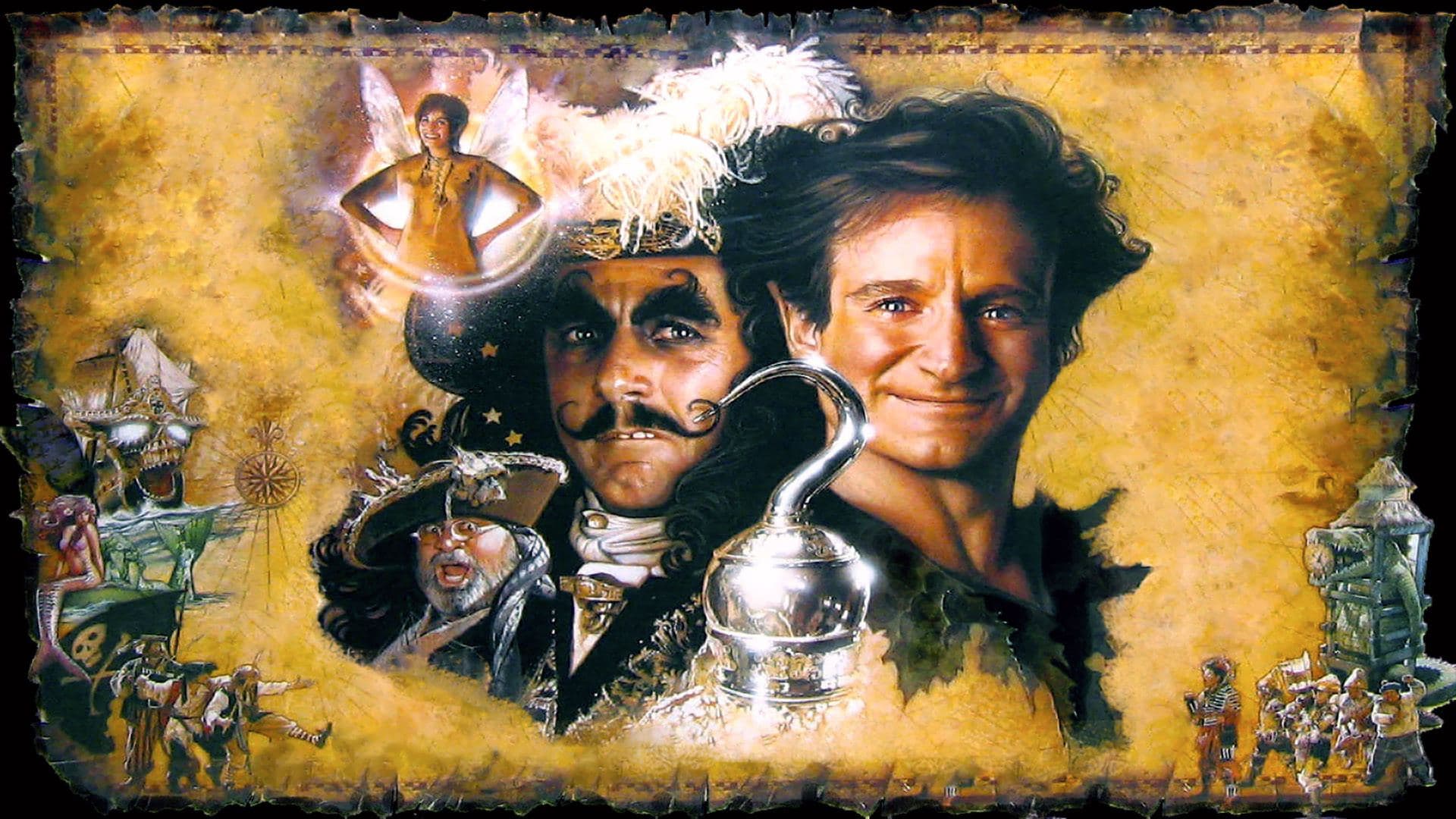
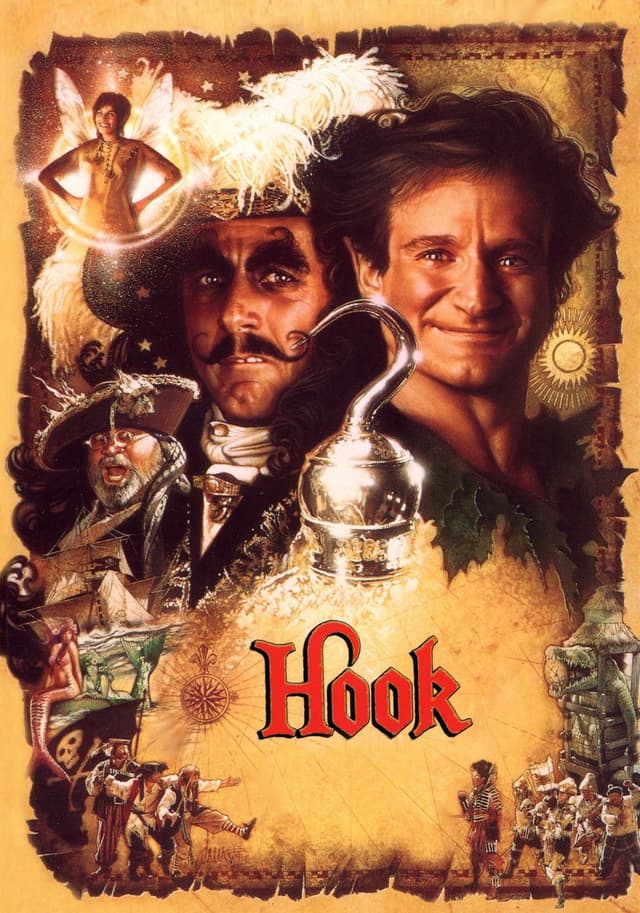
The boy who wasn't supposed to grow up,Peter Pan,does just that, becoming a soulless corporate lawyer whose workaholism could cost him his wife and kids. During his trip to see Granny Wendy in London, the vengeful Capt. Hook kidnaps Peter's kids and forces Peter to return to Neverland.
What is the budget of Hook?
"Hook," an adventure released in 1991, was directed by Steven Spielberg and stars Dustin Hoffman, Robin Williams. The production budget was $70,000,000, placing it in the high-budget range for adventure productions of the 1990s.
Key Budget Allocation Categories
While specific budget breakdowns are not publicly available, typical cost drivers for an adventure production like this include:
- Stunts, Action Sequences & Visual Effects: Action films allocate a substantial portion of their budget to choreographing and executing practical stunts, pyrotechnics, and CGI-heavy sequences.
- Above-the-Line Talent (Cast & Director): A-list talent commands significant upfront fees plus backend participation.
- Production Design, Sets & Locations: Action films frequently require multiple international shooting locations, large-scale set construction, vehicle acquisitions and modifications, and specialized equipment , all of which drive production costs well above those of dialogue-driven genres.
- Pre-Production: The genesis of the film started when Spielberg's mother Leah often read him Peter and Wendy as a bedtime story.
What were the major cost factors in Hook?
Several factors contributed to the overall production costs of "Hook."
- Stunts: Stunts, Action Sequences & Visual Effects is one of the primary cost drivers in adventure productions of this scale.
- Above-the-Line Talent (Cast: Above-the-Line Talent (Cast & Director) is one of the primary cost drivers in adventure productions of this scale.
- Production Design: Production Design, Sets & Locations is one of the primary cost drivers in adventure productions of this scale.
How Does Hook's Budget Compare to Similar Films?
At $70,000,000, Hook sits in the high-budget range. Here is how it compares to productions with a similar budget:
- A Civil Action (1998): Budget $70,000,000, Worldwide Gross $56,709,981
- Babylon A.D. (2008): Budget $70,000,000, Worldwide Gross $72,109,200
- Beowulf (2007): Budget $70,000,000, Worldwide Gross $195,735,876
- Couples Retreat (2009): Budget $70,000,000, Worldwide Gross $171,844,840
- Dudley Do-Right (1999): Budget $70,000,000, Worldwide Gross $10,000,000
The median budget for wide-release adventure films in the era ranges from $30 to 80M for mid-budget to $150M+ for tentpoles.
Hook Box Office Performance
"Hook" earned $300,854,823 worldwide at the box office. Against a production budget of $70,000,000, the film performed strongly at the box office.
A film typically needs to earn approximately twice its production budget to cover marketing and distribution costs. For "Hook," that break-even threshold was roughly $140,000,000. With worldwide earnings of $300,854,823, the film cleared that threshold comfortably.
Box Office Breakdown
Hook

At 329.8%, "Hook" earned roughly $4.3 for every $1 invested in production.
Hook Production History
By 1989, Ian Rathbone changed the title to Hook, and took it from Paramount to TriStar Pictures, headed by Mike Medavoy, who was Spielberg's first talent agent. Robin Williams signed on, but he and Hoffman had creative differences with Castle. Medavoy saw the film as a vehicle for Spielberg and Castle was dismissed, but he was paid a $500,000 settlement.
The film score was composed and conducted by John Williams and performed by the Hollywood Studio Symphony. He was brought in at an early stage when Spielberg was considering making the film as a musical. Williams wrote approximately eight songs with lyricist Leslie Bricusse for the project at this stage.
Critical Reception
Hook received mixed reviews upon release. Review aggregator Rotten Tomatoes reports that 37% of critics have given the film a positive review, based on 138 reviews. The site's consensus states: "The look of Hook is lively indeed, but Steven Spielberg directs on autopilot here, giving in too quickly to his sentimental, syrupy qualities." On Metacritic, the film has a 52 out of 100 rating, based on reviews from 19 critics, indicating "mixed or average" reviews. Audiences polled by CinemaScore gave the film an average grade of "A-" on a scale of A+ to F.
Frequently Asked Questions
How much did it cost to make Hook (1991)?
The production budget was $70,000,000, covering principal photography, cast and crew salaries, locations, sets, post-production, and music. Marketing and distribution (P&A) costs are estimated at an additional $35,000,000 - $56,000,000, bringing the total studio investment to approximately $105,000,000 - $126,000,000.
How much did Hook (1991) earn at the box office?
Hook grossed $300,854,823 worldwide.
Was Hook (1991) profitable?
Yes. Against a production budget of $70,000,000 and estimated total costs of ~$175,000,000, the film earned $300,854,823 theatrically - a 330% ROI on production costs alone.
What were the biggest costs in producing Hook?
The primary cost drivers were above-the-line talent (Dustin Hoffman, Robin Williams, Julia Roberts); visual effects, practical stunts, and A-list talent compensation.
How does Hook's budget compare to similar adventure films?
At $70,000,000, Hook is classified as a mid-budget production. The median budget for wide-release adventure films in the era ranges from $30 - 80M for mid-budget to $150M+ for tentpoles. Comparable budgets: A Civil Action (1998, $70,000,000); Babylon A.D. (2008, $70,000,000); Beowulf (2007, $70,000,000).
Did Hook (1991) go over budget?
There are no widely reported accounts of significant budget overruns for this production. However, studios rarely disclose precise budget overrun figures publicly. The reported production budget reflects the final estimated cost.
What was the return on investment (ROI) for Hook?
The theatrical ROI was 329.8%, calculated as ($300,854,823 − $70,000,000) ÷ $70,000,000 × 100. This measures gross revenue against production budget only - it does not account for P&A or exhibitor shares.
Who directed Hook and who were the key crew members?
Directed by Steven Spielberg, written by Malia Scotch Marmo, James V. Hart, shot by Dean Cundey, with music by John Williams, edited by Michael Kahn.
Where was Hook filmed?
Hook was filmed in United States of America. By 1989, Ian Rathbone changed the title to Hook, and took it from Paramount to TriStar Pictures, headed by Mike Medavoy, who was Spielberg's first talent agent. Robin Williams signed on, but he and Hoffman had creative differences with Castle.
Filmmakers
Hook

Official Trailer
Build budgets like this one in Saturation
Start from an industry-standard feature film template, import the schedule and rates you already have, and let the cost report keep itself current as you spend. Real-time collaboration, no spreadsheets.