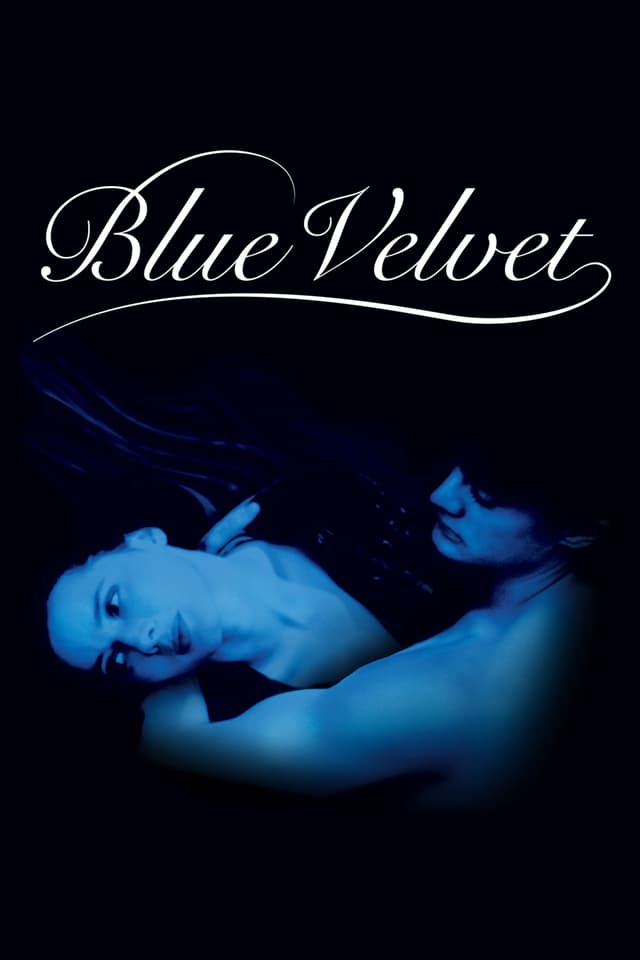
Blue Velvet Budget
 MysteryThrillerCrime2h
Updated
Synopsis
After college student Jeffrey Beaumont returns to his hometown of Lumberton to help his ailing father, he discovers a severed human ear in a field. His investigation pulls him into the orbit of nightclub singer Dorothy Vallens and the violent criminal Frank Booth, exposing a hidden underworld of obsession, violence, and corruption beneath the surface of small-town American life.
What Is the Budget of Blue Velvet (1986)?
Blue Velvet (1986), directed by David Lynch and distributed by De Laurentiis Entertainment Group with international rights handled by MGM, was produced on a reported budget of $6,000,000. The figure was modest by mid-1980s studio standards but represented a major creative gamble for producer Dino De Laurentiis, who had bankrolled Lynch's commercially disastrous Dune (1984) two years earlier and granted the filmmaker total creative control on a smaller-scale follow-up as part of their two-picture deal. Lynch famously cut his own director's fee in half to preserve final cut, a now-legendary trade that allowed the film's severed-ear, masked-villain, and abuse-of-power content to reach theaters untouched by studio notes.
The investment was structured around a tight regional shoot in Wilmington, North Carolina, where De Laurentiis had recently opened the production facility that would later become EUE/Screen Gems Studios. The combination of a non-union southern location, a small principal cast, and a contained suburban setting kept above-the-line and travel costs low. The film recovered its production budget at the domestic box office and went on to redefine American independent cinema, but its commercial profile at release was that of a controversial arthouse curiosity rather than a hit.
Key Budget Allocation Categories
Blue Velvet's reported $6,000,000 budget was distributed across these production areas:
- Above-the-Line Talent: David Lynch wrote and directed for a reduced fee in exchange for final cut. Kyle MacLachlan, fresh off Dune, took the lead as Jeffrey Beaumont at a rate commensurate with his post-Dune visibility. Isabella Rossellini, then primarily known as a Lancôme model, was cast as Dorothy Vallens in her first major dramatic role. Dennis Hopper, in the midst of his mid-1980s career comeback, took the role of Frank Booth at career-low scale, and Laura Dern was cast as Sandy Williams for a feature debut salary.
- North Carolina Production Base: Principal photography was anchored at De Laurentiis Entertainment Group's Wilmington facility, with practical street and home interiors filmed in Wilmington neighborhoods and surrounding Cape Fear coastline. The non-union regional crew, lower lodging costs, and state-side stage time produced significant savings over a Los Angeles or New York shoot.
- Below-the-Line Crew: Cinematographer Frederick Elmes, production designer Patricia Norris, and editor Duwayne Dunham executed Lynch's tightly controlled visual scheme on a contained crew. Norris's production design for Dorothy's Deep River apartment and Frank Booth's lair drew from inexpensive period dressing, vintage paint colors, and theatrical lighting rather than expensive built sets.
- Music and Score: Angelo Badalamenti composed his first feature score for Lynch, beginning a creative partnership that would define both careers. The music budget covered original orchestral composition, Julee Cruise's vocal recordings for "Mysteries of Love," and licensing of Bobby Vinton's 1963 title song and Roy Orbison's "In Dreams," the latter becoming one of the film's signature set pieces.
- Costumes and Wardrobe: Patricia Norris doubled as costume designer, sourcing period-evoking clothing that mixed mid-century suburban Americana with the dark cabaret wardrobe for Dorothy's nightclub scenes. The blue velvet robe itself became one of the most identifiable costume pieces of 1980s cinema.
- Post-Production and Sound Design: Lynch and sound designer Alan Splet, a longtime collaborator from Eraserhead and The Elephant Man, layered atmospheric drones, industrial rumbles, and amplified room tone into the film's sound mix. The post schedule was relatively short for a film of its eventual prestige, with completion in time for the September 1986 Telluride and Toronto festival debuts.
- Marketing and Release: De Laurentiis Entertainment Group's domestic marketing spend was modest, relying on festival buzz, critical attention, and the controversy generated by the film's sexual violence and unconventional villain to drive word of mouth in major markets. The theatrical rollout was a slow platform release rather than a wide opening.
How Does Blue Velvet's Budget Compare to Similar Films?
At a reported $6,000,000, Blue Velvet sits firmly in the mid-1980s independent and arthouse range. The comparison set illustrates how its commercial profile and lasting influence diverged from its budgetary peers:
- Eraserhead (1977): Budget $100,000 | Worldwide $7,000,000. Lynch's self-financed debut, shot over five years at the AFI Conservatory, returned roughly 70 times its production cost across its long midnight-movie run and established the aesthetic vocabulary Blue Velvet would refine into a feature-length narrative.
- The Elephant Man (1980): Budget $5,000,000 | Worldwide $26,010,864. Lynch's second feature, produced by Mel Brooks at a budget close to Blue Velvet, was a black-and-white period drama that earned eight Academy Award nominations including Best Director, validating Lynch as a major studio director ahead of the Dune debacle.
- Dune (1984): Budget $40,000,000 | Worldwide $30,925,690. Lynch's De Laurentiis-backed adaptation cost more than six times Blue Velvet and lost roughly $10,000,000 against its production budget alone before factoring in marketing, a catastrophic outcome that made the smaller, Lynch-controlled Blue Velvet possible as a creative recovery.
- Body Heat (1981): Budget $9,000,000 | Worldwide $24,061,861. Lawrence Kasdan's neo-noir directorial debut spent 50% more than Blue Velvet and offers the closest tonal comparison in 1980s erotic thriller terms, sharing themes of suburban corruption and dangerous obsession with a more conventional studio frame.
- To Live and Die in L.A. (1985): Budget $6,000,000 | Worldwide $17,307,019. William Friedkin's neo-noir, made for an identical budget, posted nearly twice Blue Velvet's worldwide gross on a wider release pattern, illustrating how Lynch's film traded immediate commercial scale for canonical status.
- She's Gotta Have It (1986): Budget $175,000 | Worldwide $7,137,502. Spike Lee's independent breakthrough opened the same year as Blue Velvet at a fraction of its budget and demonstrated the broader arthouse appetite of 1986 that helped Lynch's film find its audience.
Blue Velvet Box Office Performance
Blue Velvet opened in limited release on September 19, 1986, expanding through the fall as critical response built. The film grossed $8,551,228 in domestic theatrical revenue against its $6,000,000 production budget, with international receipts adding incremental revenue through 1987 territorial releases. By the standards of a controversial NC-17-rated drama with disturbing sexual content released through an independent distributor, the result was a modest commercial success and a clear case of a film whose cultural and financial value would compound over decades of home video, repertory, and streaming distribution.
Against the $6,000,000 production budget, the film required approximately $14,000,000 to $16,000,000 in worldwide gross to reach profitability when accounting for marketing and distribution costs. Here is the financial breakdown:
Box Office Breakdown
Blue Velvet

Blue Velvet returned approximately $0.78 to $0.86 in theatrical revenue for every $1 invested when measured against initial production and marketing spend. The shortfall was offset within a few years by VHS, laserdisc, cable, and international television sales, and the film has remained a perennial revenue generator across every successor home-video format. The Criterion Collection edition, multiple Blu-ray reissues, and 4K UHD restoration have kept the title commercially active through 2026, and its catalog value to MGM's library, now part of Amazon MGM Studios, has grown into the tens of millions.
More important than the immediate financial math was the film's creative payoff. Blue Velvet established Lynch as a bankable American auteur, gave Dino De Laurentiis his most prestigious credit of the 1980s, and made Isabella Rossellini and Kyle MacLachlan internationally recognizable. It also created the working partnership with Angelo Badalamenti and the actor stable (MacLachlan, Dern, Hopper alumna Grace Zabriskie) that would carry directly into Twin Peaks four years later.
Blue Velvet Production History
David Lynch wrote the first draft of Blue Velvet in the late 1970s, well before Dune, drawing on a long-standing fascination with what he called "the worm inside the apple" of small-town American life. The script circulated unsuccessfully at multiple studios, with Warner Bros. passing in part because of the severed-ear premise and the explicit sexual content. After the commercial failure of Dune in 1984, Dino De Laurentiis offered Lynch a second picture under their existing deal, guaranteeing final cut in exchange for Lynch accepting a halved director's fee and a tight $6,000,000 ceiling.
Principal photography ran from late February through mid-May 1986, primarily in and around Wilmington, North Carolina, where De Laurentiis had established his East Coast production base. The Wilmington shoot covered the suburban Lumberton streets that stand in for the film's namesake setting, the Beaumont family hardware store, Dorothy Vallens' Deep River apartment building, the Slow Club nightclub, and Frank Booth's industrial hideout. The Cape Fear coast provided exterior backdrops, and the regional non-union crew worked under cinematographer Frederick Elmes's tightly controlled lighting schemes.
The casting evolved through a series of late changes. Kyle MacLachlan was brought back from Dune as Jeffrey Beaumont, the film school graduate stand-in for Lynch himself. Isabella Rossellini, with no major film credits, was cast as Dorothy Vallens after Lynch met her at a New York restaurant. Dennis Hopper, in active recovery from substance abuse and not yet rehabilitated by his eventual Hoosiers Oscar nomination later that same year, lobbied for the role of Frank Booth, reportedly telling Lynch "I am Frank Booth." Hopper's casting was opposed by some financiers concerned about insurability and bonded with Brad Dourif as a fallback. Laura Dern, 18 at the time and the daughter of Lynch's Wild at Heart costars Bruce Dern and Diane Ladd, played Sandy Williams in her first lead role.
Lynch worked closely with Angelo Badalamenti on the score, having recruited the composer originally to coach Isabella Rossellini through the title song performance. The collaboration evolved into a full orchestral score, marking the start of the Lynch-Badalamenti partnership that would extend through Twin Peaks, Wild at Heart, Lost Highway, Mulholland Drive, and beyond. The Roy Orbison "In Dreams" sequence, in which Dean Stockwell's Ben lip-syncs the song under industrial work lights, was reportedly improvised on set after Lynch heard the track on a casual playback and decided to build a scene around it.
Post-production took place in Los Angeles through summer 1986. Lynch and longtime sound designer Alan Splet layered the film's signature drones, room tones, and industrial textures into the mix, while editor Duwayne Dunham assembled a final cut that ran 120 minutes. The MPAA initially threatened an X rating over the Frank Booth assault scenes, and Lynch trimmed certain shots to secure an R rating, a compromise that has been partially restored in subsequent home-video editions.
Awards and Recognition
Blue Velvet earned David Lynch his second Academy Award nomination for Best Director, four years after The Elephant Man and a year after the Dune commercial failure had threatened to derail his Hollywood career. The film lost the Best Director Oscar to Oliver Stone for Platoon at the 59th Academy Awards in March 1987. Dennis Hopper was nominated for Best Supporting Actor at the same ceremony but for his work in Hoosiers rather than Blue Velvet, an industry-political outcome that has become one of the most-cited Oscar snubs of the 1980s.
At the Independent Spirit Awards, Blue Velvet won Best Director and Best Cinematography (Frederick Elmes), and earned nominations for Best Feature, Best Screenplay, Best Female Lead (Isabella Rossellini), and Best Supporting Male (Dennis Hopper). Hopper won the National Society of Film Critics Best Supporting Actor prize and the Boston Society of Film Critics Best Supporting Actor for his Frank Booth work, which remained his most acclaimed performance of the era. The Los Angeles Film Critics Association named Blue Velvet Best Picture of 1986, and Lynch won Best Director from both the New York Film Critics Circle and the National Society of Film Critics.
Internationally, the film won the Cannes Film Festival's Critics Week selection acclaim ahead of its commercial release and was named one of the year's best films by Cahiers du Cinéma and Sight & Sound. In 2008, the Library of Congress selected Blue Velvet for preservation in the National Film Registry, citing its cultural, historical, and aesthetic significance. The American Film Institute ranked Frank Booth at number 36 on its 100 Years, 100 Heroes & Villains list of the all-time great screen villains.
Critical Reception
Blue Velvet received passionately divided reviews on release, with mainstream critics splitting between effusive praise and moral revulsion. The film holds a 95% approval rating on Rotten Tomatoes based on 99 critic reviews, with a critical consensus that calls it "an intriguing, disturbing film about the searing and unsettling effects love can have on the innocent." On Metacritic, the film scored 87 out of 100, indicating universal acclaim from aggregated retrospective reviews. CinemaScore was not yet standardly recorded for 1986 platform releases and no audience grade exists, but contemporaneous audience reaction was deeply polarized, with reports of walkouts and confrontational lobby debates at sold-out art-house screenings.
Roger Ebert famously gave the film one star out of four, calling Lynch's direction of Isabella Rossellini "shameful" and arguing that the film's artistry was inseparable from its degradation of its lead actress. Pauline Kael wrote a glowing review in The New Yorker, calling Blue Velvet "the work of a genius naif" and arguing that "the film's power comes from its precise observation of a dreamlike state." J. Hoberman in The Village Voice praised it as "the most original American film of the decade," and David Denby in New York magazine called it "an authentic American masterpiece."
Retrospective reception has been overwhelmingly positive, with the film regularly appearing on critics' lists of the greatest films of the 1980s, the greatest films of the 20th century, and the greatest American films ever made. Sight & Sound's 2022 critics poll ranked Blue Velvet at number 78 on the all-time list. The film's influence on the subsequent generation of American filmmakers, from Quentin Tarantino and Paul Thomas Anderson to Sofia Coppola and the Coen brothers, has been widely documented, and its imagery of suburban rot, masked menace, and erotic transgression has become a foundational reference point for late-twentieth-century cinema.
Frequently Asked Questions
How much did it cost to make Blue Velvet (1986)?
The reported production budget was $6,000,000, financed by Dino De Laurentiis through De Laurentiis Entertainment Group with international rights handled by Metro-Goldwyn-Mayer. David Lynch accepted a halved director's fee in exchange for final cut, allowing the film's controversial content to reach theaters without studio interference.
How much did Blue Velvet earn at the box office?
The film grossed $8,551,228 in domestic theatrical revenue against its $6,000,000 production budget. International theatrical receipts added incremental revenue through 1987 territorial releases. The film recouped its full investment over the long tail through VHS, laserdisc, cable, Criterion Collection editions, and subsequent home-video formats.
Was Blue Velvet a box office success?
It was a modest immediate success and a major long-term success. The film earned approximately $0.78 to $0.86 per $1 invested on initial theatrical release, falling short of the marketing-inclusive break-even point. However, its catalog value to MGM's library, now part of Amazon MGM Studios, has grown into the tens of millions across forty years of home-video and streaming distribution.
Who directed Blue Velvet?
David Lynch directed Blue Velvet from his own original screenplay. The film was his fourth feature after Eraserhead (1977), The Elephant Man (1980), and Dune (1984), and earned him his second Academy Award nomination for Best Director.
Where was Blue Velvet filmed?
Principal photography took place in and around Wilmington, North Carolina from late February through mid-May 1986. Dino De Laurentiis had established his East Coast production base in Wilmington, providing studio facilities, suburban location streets, and access to the Cape Fear coastline for exterior backdrops. The non-union regional crew significantly reduced production costs.
Who played Frank Booth in Blue Velvet?
Dennis Hopper played Frank Booth, the sadistic gas-inhaling criminal at the center of the film's underworld. Hopper, in active recovery from substance abuse, reportedly lobbied for the role by telling Lynch "I am Frank Booth." The performance is widely regarded as the defining work of his late career and was named Best Supporting Actor by the National Society of Film Critics and the Boston Society of Film Critics. The American Film Institute ranks Frank Booth at number 36 on its list of the 100 greatest screen villains.
Did Blue Velvet win any Academy Awards?
David Lynch was nominated for Best Director at the 59th Academy Awards in 1987 but lost to Oliver Stone for Platoon. The film received no other Oscar nominations. It won Best Director and Best Cinematography at the Independent Spirit Awards and Best Picture from the Los Angeles Film Critics Association. In 2008, the Library of Congress selected Blue Velvet for preservation in the National Film Registry.
What music is used in Blue Velvet?
Angelo Badalamenti composed his first feature score for Lynch, beginning the partnership that would define both careers across Twin Peaks, Wild at Heart, Lost Highway, and Mulholland Drive. The soundtrack also features Bobby Vinton's 1963 recording of "Blue Velvet" as the title song, Roy Orbison's "In Dreams" in the famous Dean Stockwell lip-sync sequence, and Julee Cruise's vocal performance of "Mysteries of Love."
What did critics think of Blue Velvet?
Reception was passionately divided on release. Roger Ebert gave it one star out of four, while Pauline Kael called it "the work of a genius naif" in The New Yorker and J. Hoberman in The Village Voice called it "the most original American film of the decade." Retrospective reception has been overwhelmingly positive. The film holds a 95% approval rating on Rotten Tomatoes and an 87 score on Metacritic. Sight & Sound's 2022 critics poll ranked it at number 78 on the all-time greatest films list.
Why is Blue Velvet considered influential?
The film established the template for Lynch's subsequent work and influenced an entire generation of American filmmakers including Quentin Tarantino, Paul Thomas Anderson, Sofia Coppola, and the Coen brothers. Its imagery of suburban rot, masked menace, and erotic transgression became a foundational reference point for late-twentieth-century American cinema, and its working partnerships (Lynch with Badalamenti, MacLachlan, Dern, and the Twin Peaks actor stable) directly seeded the television series that would arrive in 1990.
Filmmakers
Blue Velvet

Official Trailer
Build budgets like this one in Saturation
Start from an industry-standard feature film template, import the schedule and rates you already have, and let the cost report keep itself current as you spend. Real-time collaboration, no spreadsheets.