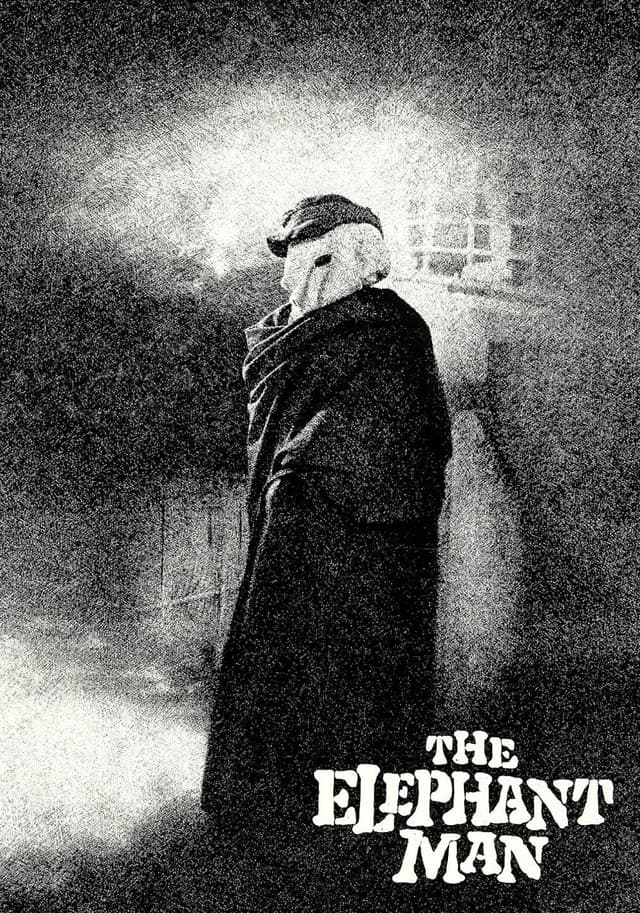
The Elephant Man Budget
 DramaHistory2h 4m
Updated
Synopsis
A Victorian surgeon rescues a heavily disfigured man being mistreated by his "owner" as a side-show freak. Behind his monstrous façade, there is revealed a person of great intelligence and sensitivity. Based on the true story of Joseph Merrick (called John Merrick in the film), a severely deformed man in 19th century London.
What is the budget of The Elephant Man?
"The Elephant Man," a drama released in 1980, was directed by David Lynch and stars Anthony Hopkins, John Hurt. The production budget was $5,000,000, placing it in the low-budget range for drama productions of the 1980s.
Key Budget Allocation Categories
While specific budget breakdowns are not publicly available, typical cost drivers for a drama production like this include:
- Above-the-Line Talent: Drama films live or die on the strength of their performances.
- Location Filming & Period Production Design: Authentic locations , whether contemporary or historical , require scouting, permits, travel, lodging, and often significant dressing to match the story's time period.
- Post-Production, Color Grading & Score: The editorial process for dramas is typically longer than genre films, with careful attention to pacing and tone.
- Development: Producer Jonathan Sanger optioned the script from writers Christopher De Vore and Eric Bergren after receiving the script from his babysitter.
What were the major cost factors in The Elephant Man?
Several factors contributed to the overall production costs of "The Elephant Man."
- Above-the-Line Talent: Above-the-Line Talent is one of the primary cost drivers in drama productions of this scale.
- Location Filming: Location Filming & Period Production Design is one of the primary cost drivers in drama productions of this scale.
- Post-Production: Post-Production, Color Grading & Score is one of the primary cost drivers in drama productions of this scale.
How Does The Elephant Man's Budget Compare to Similar Films?
At $5,000,000, The Elephant Man sits in the low-budget range. Here is how it compares to productions with a similar budget:
- Come and See (1985): Budget $5,000,000, Worldwide Gross $20,929,648
- Cinema Paradiso (1988): Budget $5,000,000, Worldwide Gross $35,962,062
- Mishima: A Life in Four Chapters (1985): Budget $5,000,000 , Gross $502,758
- Once Upon a Time in the West (1968): Budget $5,000,000, Worldwide Gross $5,380,118
- A Separation (2011): Budget $5,000,000, Worldwide Gross $24,426,169
The median budget for wide-release drama films in the era ranges from $30 to 80M for mid-budget to $150M+ for tentpoles.
The Elephant Man Box Office Performance
"The Elephant Man" earned $26,010,864 domestically and $26,000,000 worldwide at the box office. Against a production budget of $5,000,000, the film performed strongly at the box office.
A film typically needs to earn approximately twice its production budget to cover marketing and distribution costs. For "The Elephant Man," that break-even threshold was roughly $10,000,000. With worldwide earnings of $26,000,000, the film cleared that threshold comfortably.
Box Office Breakdown
The Elephant Man

At 420%, "The Elephant Man" earned roughly $5.2 for every $1 invested in production.
The Elephant Man Production History
Producer Jonathan Sanger optioned the script from writers Christopher De Vore and Eric Bergren after receiving the script from his babysitter. Brooks decided to help finance via Brooksfilms, his new company, which had just made its first film, Fatso. Brooks' personal assistant, Stuart Cornfeld, suggested David Lynch to Sanger.
Dustin Hoffman wanted the role of John Merrick, but Sanger rejected the idea, saying "We’re always going to be looking to see where the Elephant Man ends and Dustin Hoffman begins". Lynch considered his friend Jack Nance, who he worked with on Eraserhead, for the role, but he cast John Hurt in the role after seeing The Naked Civil Servant. At the time, Hurt was still making Heaven's Gate which had fallen badly behind schedule due to director Michael Cimino's perfectionism.
The budget was $5 million, $4 million of which was raised from Fred Silverman of NBC. For his second feature and first studio film, albeit one independently financed, The makeup, now supervised by Christopher Tucker, was based on direct casts of Merrick's body, which had been kept in the Royal London Hospital's private museum. The makeup took seven to eight hours to apply each day and two hours to delicately remove.
Awards and Recognition
Nominated for 8 Oscars. 11 wins & 22 nominations total
- National Board of Review: Top Ten Films
- César Award for Best Foreign Film
Critical Reception
On review aggregator Rotten Tomatoes, it has an approval rating of 91% based on 64 reviews, with an average score of 8.5/10. The site's critical consensus reads, "David Lynch's relatively straight second feature finds an admirable synthesis of compassion and restraint in treating its subject, and features outstanding performances by John Hurt and Anthony Hopkins." On Metacritic, the film has a weighted average score of 78 out of 100 based on 16 critic reviews, indicating "generally favorable reviews".
Frequently Asked Questions
How much did it cost to make The Elephant Man (1980)?
The production budget was $5,000,000, covering principal photography, cast and crew salaries, locations, sets, post-production, and music. Marketing and distribution (P&A) costs are estimated at an additional $2,500,000 - $4,000,000, bringing the total studio investment to approximately $7,500,000 - $9,000,000.
How much did The Elephant Man (1980) earn at the box office?
The Elephant Man grossed $26,010,864 domestic, $-10,864 international, totaling $26,000,000 worldwide.
Was The Elephant Man (1980) profitable?
Yes. Against a production budget of $5,000,000 and estimated total costs of ~$12,500,000, the film earned $26,000,000 theatrically - a 420% ROI on production costs alone.
What were the biggest costs in producing The Elephant Man?
The primary cost drivers were above-the-line talent (Anthony Hopkins, John Hurt, Anne Bancroft); talent compensation, authentic period production design, and meticulous post-production.
How does The Elephant Man's budget compare to similar drama films?
At $5,000,000, The Elephant Man is classified as a micro-budget production. The median budget for wide-release drama films in the era ranges from $30 - 80M for mid-budget to $150M+ for tentpoles. Comparable budgets: Come and See (1985, $5,000,000); Cinema Paradiso (1988, $5,000,000); Mishima: A Life in Four Chapters (1985, $5,000,000).
Did The Elephant Man (1980) go over budget?
There are no widely reported accounts of significant budget overruns for this production. However, studios rarely disclose precise budget overrun figures publicly. The reported production budget reflects the final estimated cost.
What was the return on investment (ROI) for The Elephant Man?
The theatrical ROI was 420.0%, calculated as ($26,000,000 − $5,000,000) ÷ $5,000,000 × 100. This measures gross revenue against production budget only - it does not account for P&A or exhibitor shares.
What awards did The Elephant Man (1980) win?
Nominated for 8 Oscars. 11 wins & 22 nominations total.
Who directed The Elephant Man and who were the key crew members?
Directed by David Lynch, written by David Lynch, Eric Bergren, Christopher De Vore, shot by Freddie Francis, with music by John Morris, edited by Anne V. Coates.
Where was The Elephant Man filmed?
The Elephant Man was filmed in United States of America. The budget was $5 million, $4 million of which was raised from Fred Silverman of NBC. For his second feature and first studio film, albeit one independently financed, The makeup, now supervised by Christopher Tucker, was based on direct casts of Merrick's body, which had been kept in the Royal London Hospital's private museum. The makeup took seven to eight hours to apply each day and two hours to delicately remove.
Filmmakers
The Elephant Man

Official Trailer
Build budgets like this one in Saturation
Start from an industry-standard feature film template, import the schedule and rates you already have, and let the cost report keep itself current as you spend. Real-time collaboration, no spreadsheets.