Big Momma's House Budget
 CrimeComedy1h 38m
Updated
Synopsis
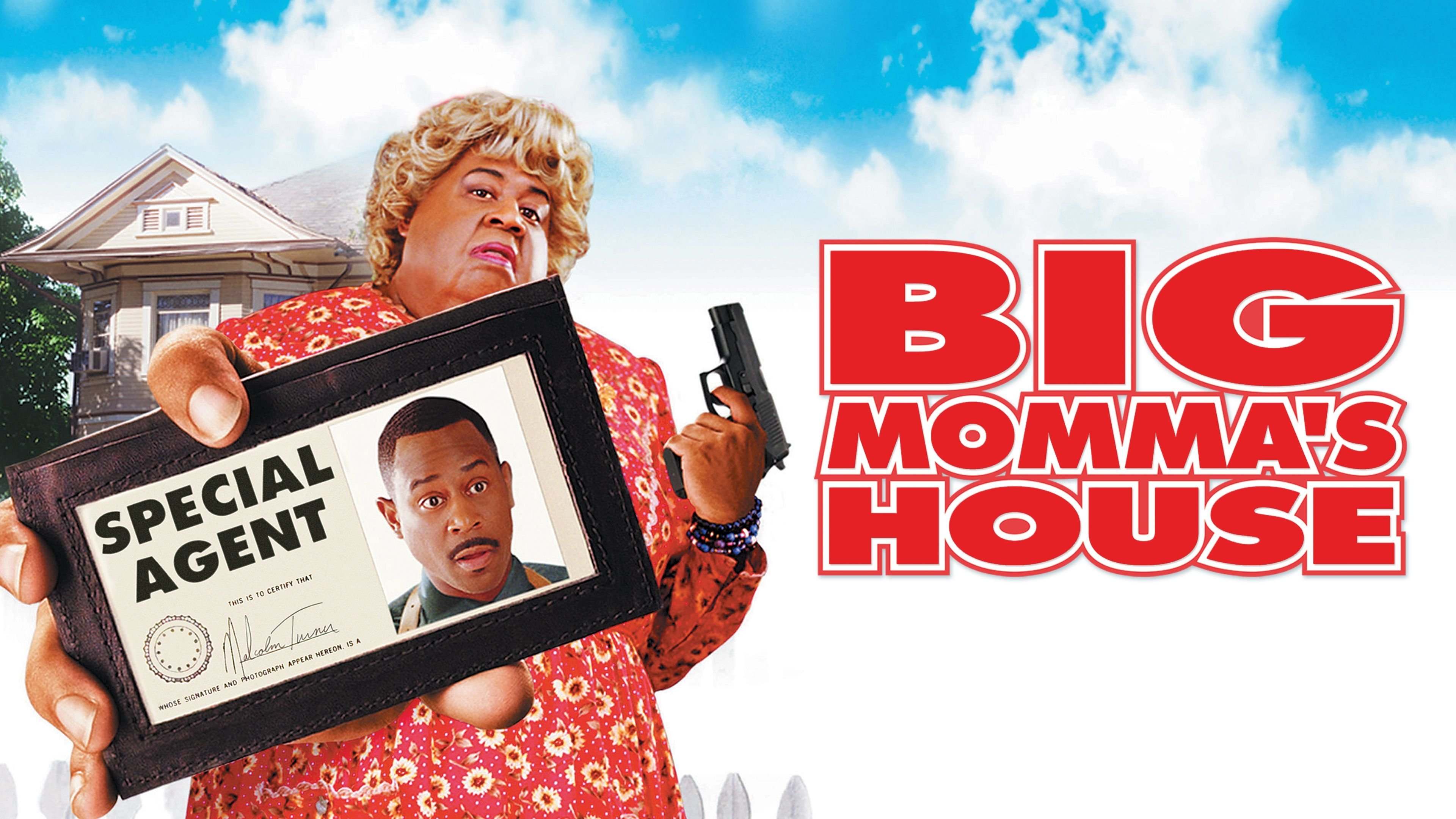
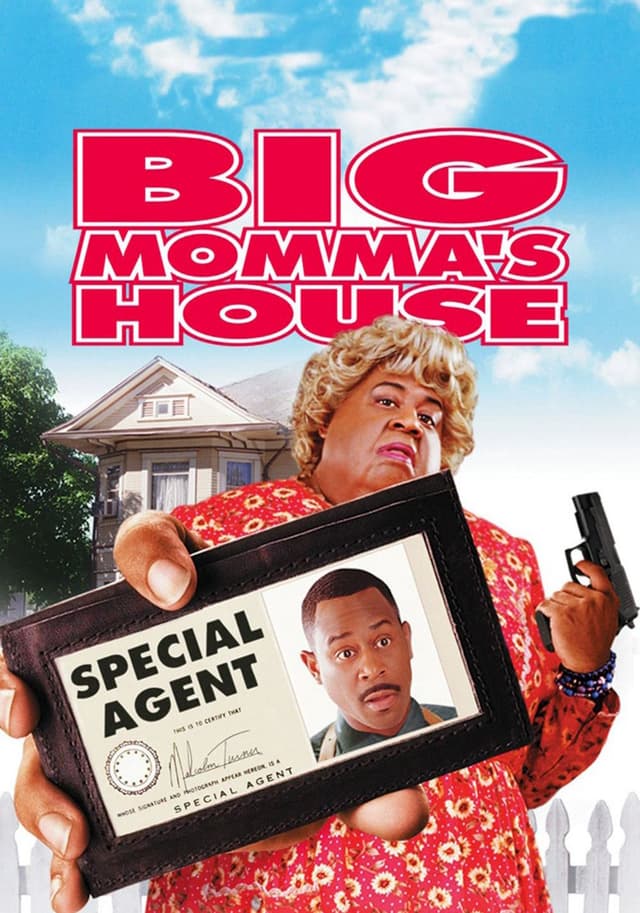
FBI agent Malcolm Turner goes undercover as the elderly southern grandmother Big Momma to surveil her granddaughter Sherry, who is connected to a violent bank robber. As his fat-suit cover deepens, Malcolm finds himself falling for Sherry while trying to keep his identity hidden.
What Is the Budget of Big Momma's House (2000)?
Big Momma's House (2000), directed by Raja Gosnell and distributed by 20th Century Fox, was produced on a reported budget of $30,000,000. The film was developed at Regency Enterprises by producer David T. Friendly and writer Darryl Quarles as a star vehicle for Martin Lawrence, capitalizing on the comedian's Bad Boys and Blue Streak box office momentum.
The mid-budget figure reflected Fox's calibrated investment in a high-concept fat-suit comedy that relied on Lawrence's star power, an undercover-grandmother premise, and PG-13 broad appeal. The math assumed the film would clear roughly $60,000,000 worldwide to reach profitability after marketing, a target it cleared multiples over within its first month of release.
Key Budget Allocation Categories
Big Momma's $30,000,000 reported budget was distributed across several core production areas:
- Above-the-Line Talent: Martin Lawrence commanded the largest single line item, coming off Bad Boys (1995), Nothing to Lose (1997), and Blue Streak (1999) as a top-tier comedy lead. Supporting roles for Nia Long, Paul Giamatti, Terrence Howard, and Anthony Anderson rounded out the cast. Director Raja Gosnell, fresh off Never Been Kissed (1999), commanded a feature-director rate appropriate to a studio comedy.
- Prosthetics and Makeup: The film's signature effect was the Big Momma fat suit and prosthetic facial makeup, designed by Greg Cannom (Mrs. Doubtfire, Bicentennial Man). Each day of Lawrence-as-Big-Momma shooting required four to five hours of prosthetic application, multiple duplicate suits, and a dedicated makeup department, making this one of the production's largest line items.
- Georgia and North Carolina Location Shoot: The production shot extensively in the Charlotte, North Carolina area, doubling for the film's fictional Georgia setting. The North Carolina shoot leveraged the state's emerging film production base and provided cost-effective southern exteriors compared with a fully Atlanta-based schedule.
- Production Design: Craig Stearns's production design created Big Momma's specific southern Black church and home environment, plus the FBI surveillance set-up, a bank robbery sequence, and various Atlanta-suburb locations. Set construction and dressing for the church, home, and bank built substantial cost into the design budget.
- Stunts and Action: The film's action set pieces included a bank robbery opening, a violent confrontation in Big Momma's house, and the climactic showdown with the antagonist. Stunt coordination, weapons rigging, and second-unit work supported the action-comedy hybrid structure.
- Score and Music: Richard Gibbs composed the score, with the soundtrack heavily featuring 1990s and turn-of-the-millennium R&B and gospel tracks from artists including Da Brat, Mya, and Yolanda Adams. Music clearance for the curated soundtrack was a meaningful line item.
How Does Big Momma's House's Budget Compare to Similar Films?
At $30,000,000, Big Momma's House sat squarely in the studio mid-budget comedy range of the late 1990s and early 2000s. The comparison set illustrates the genre context:
- Mrs. Doubtfire (1993): Budget $25,000,000 | Worldwide $441,286,195. The original man-in-a-fat-suit-and-prosthetics template earned more than 17 times its budget worldwide and established the genre template Big Momma followed.
- The Nutty Professor (1996): Budget $54,000,000 | Worldwide $273,956,255. Eddie Murphy's Universal hit set the bar for African American star comedy with elaborate prosthetics and proved the audience appetite that Fox was targeting.
- Nothing to Lose (1997): Budget $25,000,000 | Worldwide $50,778,553. Lawrence's prior Disney lead role established his solo box office baseline.
- Blue Streak (1999): Budget $36,000,000 | Worldwide $117,800,000. Lawrence's last pre-Big Momma hit demonstrated his consistent worldwide pull and gave Fox confidence in the budget tier.
Big Momma's House Box Office Performance
Big Momma's House opened on June 2, 2000, finishing first at the domestic box office with $25,659,141 over its opening weekend, beating Mission: Impossible II and Dinosaur. That figure represented an enormous outperformance for a $30,000,000 PG-13 comedy and signaled immediate sequel viability. Here is the financial breakdown:
Box Office Breakdown
Big Momma's House

Big Momma's House returned approximately $2.90 in theatrical revenue for every $1 invested when measured against total estimated production and marketing spend, ranking it among the most profitable studio comedies of 2000. The domestic share was $117,559,438 and the international share was $56,400,000, a 68/32 split that reflected the film's strong North American urban-comedy appeal.
The success triggered a sequel franchise. Big Momma's House 2 (2006) grossed $138,000,000 worldwide on a $40,000,000 budget, and Big Mommas: Like Father, Like Son (2011) closed the trilogy. Lawrence's wardrobe and prosthetics carried across all three films, and the fat-suit-undercover-cop template inspired direct-to-video imitations through the mid-2000s.
Big Momma's House Production History
Development began at Regency Enterprises in the late 1990s, with screenwriter Darryl Quarles delivering an original spec script that producer David T. Friendly brought to 20th Century Fox. Quarles drew on his own southern Black church childhood for the Big Momma character, while studio notes adjusted the script toward the FBI-undercover frame to support the action-comedy hybrid structure. Don Rhymer was brought in for shooting-draft rewrites.
Raja Gosnell signed on to direct following the box office success of his Never Been Kissed (1999). Martin Lawrence boarded as star and executive producer, and Greg Cannom (Oscar winner for Mrs. Doubtfire, Bicentennial Man) was retained for the prosthetics and makeup work that would define the film's visual identity.
Principal photography ran from August to November 1999 in the Charlotte area of North Carolina, which doubled for the film's fictional Georgia setting. The North Carolina shoot leveraged the state's emerging film production base and provided cost-effective southern exteriors. The film opened on June 2, 2000 in a counter-programming slot against Mission: Impossible II's third weekend, executing a then-unusual June launch for a Black-led broad comedy.
Awards and Recognition
Big Momma's House received modest awards recognition. Martin Lawrence won the Razzie Award for Worst Actress in 2001 for his performance as Big Momma. The film also received an NAACP Image Award nomination for Outstanding Motion Picture, and Lawrence was nominated for Outstanding Actor in a Motion Picture, reflecting the divided response between mainstream-comedy circles and Razzie satirists.
Critical Reception
Big Momma's House received mixed-to-negative reviews from critics but enthusiastic audience response. The film holds a 30% approval rating on Rotten Tomatoes based on 102 critic reviews, with a consensus that flagged the formulaic screenplay and reliance on broad fat-suit comedy. On Metacritic, the film scored 33 out of 100, indicating generally unfavorable reviews. Audiences surveyed by CinemaScore gave the film a B+, a strong audience grade that reflected the gap between critical and ticket-buying response.
Critics broadly praised Martin Lawrence's commitment to the physical comedy and the Greg Cannom prosthetic work but objected to the predictable plotting, the by-the-numbers FBI-undercover frame, and the film's reliance on cross-dressing and body-comedy beats. Roger Ebert wrote that the film "settles for easy laughs when Lawrence has the talent to reach for harder ones," while Variety's Todd McCarthy called it "a one-joke premise stretched well past its natural length." Audience reception was substantially warmer, with the film generating strong word of mouth in African American urban markets and sustaining four weeks atop the domestic box office.
Frequently Asked Questions
How much did Big Momma's House cost to make?
Big Momma's House had a reported production budget of $30,000,000. The film was developed at Regency Enterprises by producer David T. Friendly and writer Darryl Quarles, with 20th Century Fox distributing worldwide.
How much did Big Momma's House earn at the box office?
Big Momma's House grossed $117,559,438 domestically and $56,400,000 internationally, for a worldwide total of $173,959,438. The film opened to $25,659,141 in the United States, finishing first on its June 2, 2000 opening weekend.
Who directed Big Momma's House?
Raja Gosnell directed Big Momma's House. Gosnell came to the project after directing Home Alone 3 (1997) and Never Been Kissed (1999), and went on to direct Scooby-Doo (2002), Beverly Hills Chihuahua (2008), and the Smurfs films.
Who plays Big Momma?
Martin Lawrence plays both FBI agent Malcolm Turner and his undercover alter ego Big Momma. Lawrence underwent four to five hours of prosthetic application and fat-suit wardrobe per day of Big Momma filming, with prosthetics designed by Oscar winner Greg Cannom.
Who plays Sherry in Big Momma's House?
Nia Long plays Sherry Pierce, Big Momma's granddaughter and Malcolm's love interest. Long came to the project off Soul Food (1997), The Best Man (1999), and Boiler Room (2000), and went on to reprise the role in Big Momma's House 2 (2006).
Where was Big Momma's House filmed?
Principal photography ran from August to November 1999 in the Charlotte area of North Carolina, which doubled for the film's fictional Georgia setting. The North Carolina shoot leveraged the state's emerging film production base and provided cost-effective southern exteriors.
Are there sequels to Big Momma's House?
Yes. Big Momma's House 2 (2006) grossed $138,000,000 worldwide on a $40,000,000 budget, and Big Mommas: Like Father, Like Son (2011) closed the trilogy. Martin Lawrence returned in all three films, with the third entry pairing him with Brandon T. Jackson as his stepson also in disguise.
What did critics think of Big Momma's House?
The film received mixed-to-negative reviews, holding a 30% approval rating on Rotten Tomatoes based on 102 critics and a 33 out of 100 score on Metacritic. Audiences gave it a B+ CinemaScore, reflecting the gap between critical and ticket-buying response. Critics praised Martin Lawrence's physical comedy commitment but objected to the formulaic plotting.
Did Big Momma's House win any awards?
Martin Lawrence won the 2001 Razzie Award for Worst Actress for his performance as Big Momma. The film also received an NAACP Image Award nomination for Outstanding Motion Picture and a nomination for Lawrence as Outstanding Actor in a Motion Picture.
Who created the Big Momma fat suit?
Greg Cannom designed the prosthetics and makeup, including the Big Momma fat suit. Cannom is an Oscar winner for Mrs. Doubtfire (1993), Bicentennial Man (1999), and The Curious Case of Benjamin Button (2008), and his work on Big Momma's House required four to five hours of daily application on Martin Lawrence.
Filmmakers
Big Momma's House

Build budgets like this one in Saturation
Start from an industry-standard feature film template, import the schedule and rates you already have, and let the cost report keep itself current as you spend. Real-time collaboration, no spreadsheets.