Baekdusan Budget
Updated
Synopsis
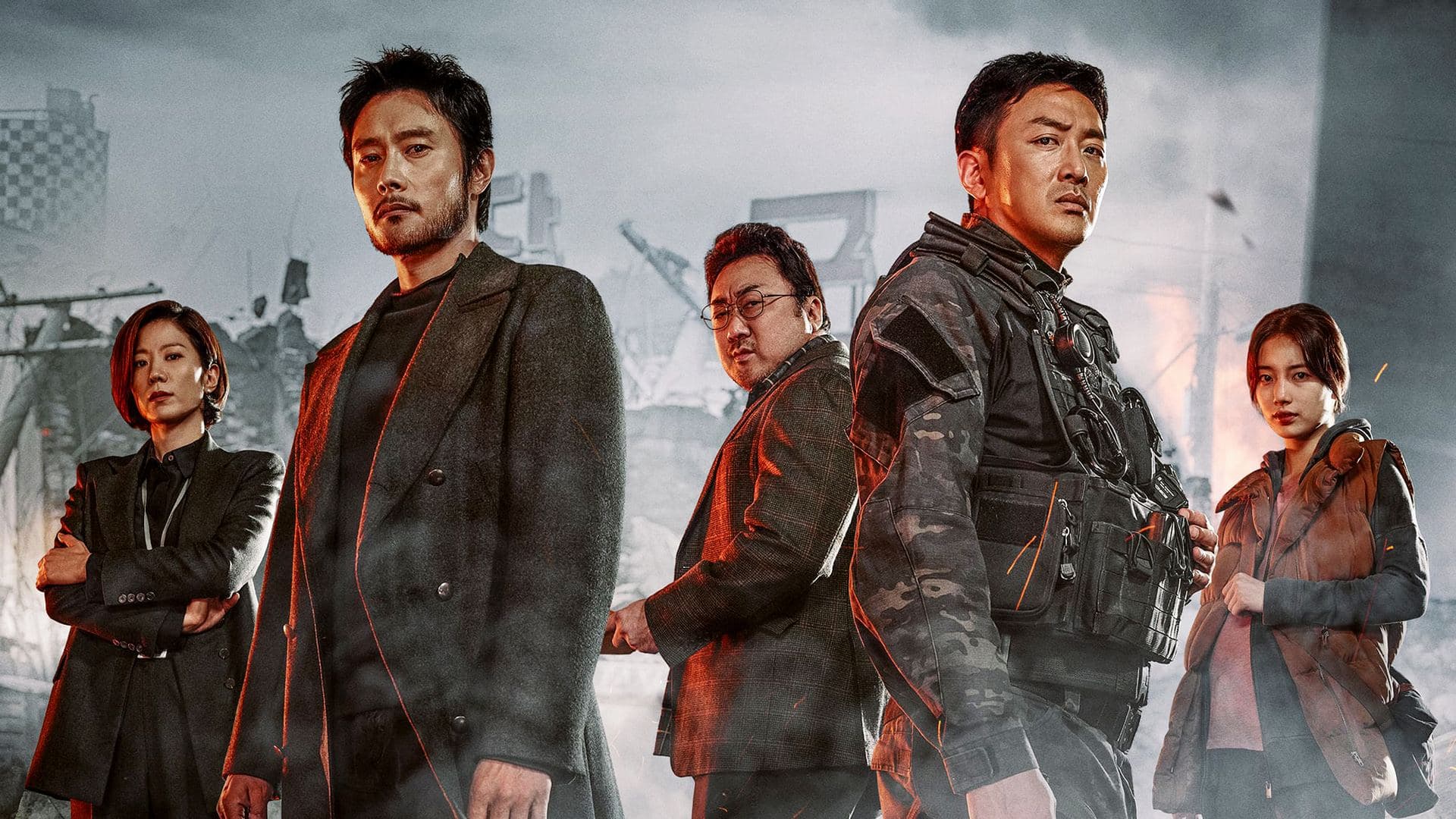
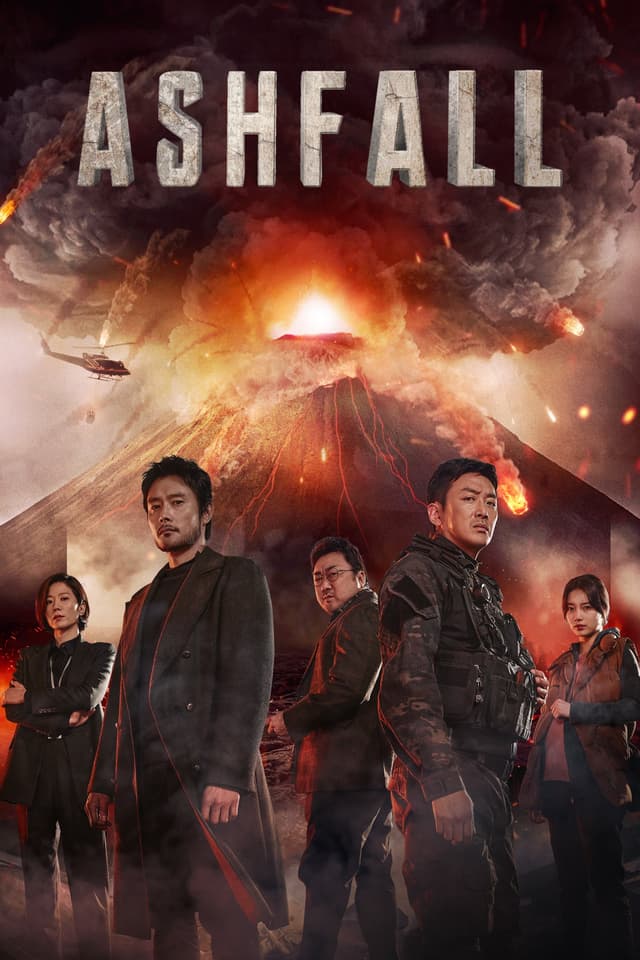
When Mount Paektu erupts on the China-North Korea border, the resulting earthquakes devastate the Korean peninsula and threaten an even larger eruption. A joint South Korean and North Korean military operation races to detonate a nuclear device near the volcano's underground magma chamber to relieve the pressure, as an EOD captain (Ha Jung-woo) reluctantly partners with a North Korean operative (Lee Byung-hun) on the mission while his pregnant wife (Bae Suzy) fights to survive in a collapsing Seoul.
What Is the Budget of Baekdusan (2019)?
Baekdusan (2019), released internationally as Ashfall and directed by Lee Hae-jun and Kim Byung-seo, was produced on a reported budget of $17,700,000 (roughly ₩26 billion at 2019 exchange rates), making it one of the most expensive South Korean productions of its release year. The volcano disaster film was co-financed and distributed by CJ ENM (CJ Entertainment) with production handled by Dexter Studios, the Seoul-based visual effects house founded by director Kim Yong-hwa whose CG work on the Along With the Gods duology positioned it as the only domestic shop capable of delivering Hollywood-scale destruction at a Korean cost basis.
The investment reflected CJ's strategy of betting heavily on a single tentpole for the lucrative late-December holiday slot. By assembling four of Korean cinema's most bankable stars (Lee Byung-hun, Ha Jung-woo, Ma Dong-seok, and Bae Suzy) and putting Dexter's in-house VFX pipeline behind a Mount Paektu eruption premise, the producers targeted a 7 million admission threshold that translates to roughly $50,000,000 in domestic gross, the standard break-even line for a $17 million Korean production once theatrical splits and marketing are factored in.
Key Budget Allocation Categories
Baekdusan's reported $17,700,000 budget was distributed across several core production areas:
- Above-the-Line Talent: Co-leads Lee Byung-hun (G.I. Joe: Retaliation, The Magnificent Seven, Squid Game) and Ha Jung-woo (The Handmaiden, The Berlin File, Along With the Gods) command the highest per-film fees in Korean cinema, reportedly in the ₩600 million to ₩1 billion range each. Ma Dong-seok (The Roundup, Eternals) and singer-actress Bae Suzy added marquee value, with cameos from Jeon Do-yeon and Byeon Woo-seok pushing the casting line item well past 20% of total budget.
- Visual Effects: Dexter Studios delivered more than 1,500 VFX shots covering the eruption sequences, seismic destruction of Seoul and Gangnam, collapsing bridges and high-rises, lahars, ash clouds, and the underground volcanic-chamber third act. VFX represented the single largest below-the-line cost, with industry estimates placing the spend at roughly 30 to 35% of the total negative cost.
- Practical Sets and Destruction: Full-scale partial builds of Seoul streetscapes, collapsing apartment interiors, and the Joint Security Area at the DMZ were constructed for in-camera destruction sequences that were then extended digitally. Custom rigs for the earthquake set pieces required specialized stunt and rigging crews working alongside the VFX previsualization team.
- Locations and Production Design: The five-month principal photography ran across Seoul, Pohang, and soundstages outside the capital, with secondary plate photography in North Korea-adjacent border regions to capture authentic terrain matching Mount Paektu. Production designer Lee Mok-won handled both the contemporary Seoul environments and the military-thriller interiors of the joint US-Korean operations room.
- Music and Sound Design: Composer Bang Jun-seok scored the film with a full orchestral palette suited to the disaster-thriller register, while sound designers built bespoke low-frequency rumbles and infrasonic textures for the eruption and earthquake sequences. The soundtrack budget covered original composition, orchestra recording, and Dolby Atmos mixing for the IMAX and premium-format release.
- Post-Production and Finishing: An extended post schedule from the July 2019 wrap through the December 19, 2019 release accommodated the heavy VFX load, color grading by Dexter's in-house finishing team, and DCP creation for simultaneous release across South Korea, Vietnam, Indonesia, Taiwan, Hong Kong, Singapore, Malaysia, and the United States.
- Marketing and Distribution: CJ Entertainment mounted a saturation marketing campaign in the four weeks leading up to the December 19 release, including primetime television buys, subway and bus wraps across Seoul, and a press tour anchored by all four leads. The film opened on 1,971 screens in South Korea, the widest release of the year, with print and advertising costs estimated at $8,000,000 to $12,000,000.
How Does Baekdusan's Budget Compare to Similar Films?
At a reported $17,700,000, Baekdusan sits comfortably above the typical Korean studio production but well below the Hollywood disaster films it deliberately echoes. The comparison set illustrates how its commercial outcome stacked up against both domestic and international peers:
- Train to Busan (2016): Budget $8,500,000 | Worldwide $98,500,000. Yeon Sang-ho's zombie thriller cost roughly half what Baekdusan spent and out-grossed it worldwide thanks to a viral festival debut at Cannes and broad theatrical pickup across Asia, Europe, and North America. Baekdusan never replicated that international crossover.
- San Andreas (2015): Budget $110,000,000 | Worldwide $474,135,000. Warner Bros.'s Dwayne Johnson earthquake film cost more than six times Baekdusan's budget and grossed roughly eight times the worldwide haul, the Hollywood benchmark that defined the disaster-film expectations Baekdusan adapted to a Korean scale.
- 2012 (2009): Budget $200,000,000 | Worldwide $791,217,826. Roland Emmerich's global-cataclysm tentpole sits at the upper end of the genre and demonstrates the ceiling Baekdusan was attempting to reach in concept (volcanic eruption, continental destruction) without the spend that defines a Hollywood disaster tentpole.
- The Wandering Earth (2019): Budget $48,000,000 | Worldwide $699,800,000. Frant Gwo's Chinese sci-fi-disaster blockbuster opened in the same calendar year, cost roughly 2.7x Baekdusan, and out-grossed it more than tenfold, illustrating the scale gap between Korean and Chinese genre filmmaking in 2019.
- Squid Game (2021): Budget $21,400,000 | Worldwide N/A (streaming). The Hwang Dong-hyuk Netflix series, which also features Lee Byung-hun, demonstrates how a comparable Korean budget shifted to global streaming achieved a cultural reach Baekdusan's theatrical-only release could not match.
Baekdusan Box Office Performance
Baekdusan opened on December 19, 2019, on 1,971 screens across South Korea, drawing 593,389 admissions on its first day and reaching 2 million admissions in only four days. The opening weekend gross of $15,112,131 was the strongest debut for a Korean film in the second half of 2019, and the film led the domestic box office for three consecutive weekends through the New Year holiday period. It finished its run with 8,254,025 admissions, placing it among the top ten highest-grossing Korean films of 2019.
Against a reported production budget of $17,700,000, the film needed approximately $35,000,000 in worldwide gross to reach profitability when accounting for marketing and distribution costs. Here is the financial breakdown:
Box Office Breakdown
Baekdusan

Baekdusan returned approximately $2.07 in theatrical revenue for every $1 invested when measured against total estimated production and marketing spend, a clear commercial success that recouped its costs in the South Korean market alone. South Korea contributed $58,737,938 of the worldwide gross, with international release in Vietnam, Indonesia, Taiwan, Hong Kong, Singapore, Malaysia, and a limited United States theatrical run contributing the remaining $2,616,916. The domestic United States gross of $372,562 reflects the niche art-house and Korean-diaspora-targeted distribution pattern typical of Korean tentpoles released stateside.
The result validated CJ Entertainment's tentpole bet for the December 2019 slot and confirmed Dexter Studios' status as the only South Korean shop capable of delivering Hollywood-scale visual effects at a Korean budget level. Despite the strong domestic performance, the limited international crossover (compared with Train to Busan or Parasite, both released the same decade) underlined the structural ceiling on Korean genre filmmaking outside Asia.
Baekdusan Production History
Development on Baekdusan began at Dexter Studios in 2016, with founder Kim Yong-hwa producing alongside CJ Entertainment. The premise (a Mount Paektu eruption threatening the Korean peninsula) drew on real geological concern about the active volcano on the China-North Korea border, which has shown periodic signs of unrest in modern monitoring data. Co-directors Lee Hae-jun (Castaway on the Moon, My Mister) and Kim Byung-seo (a veteran cinematographer making his directorial debut after shooting Cold Eyes and The Front Line) split the project so that Lee handled the character and dialogue scenes while Kim led the action and disaster set pieces.
Casting was assembled across 2018 and early 2019. Lee Byung-hun, fresh off The Fortress and Master, signed on as North Korean operative Lee Jun-pyeong. Ha Jung-woo, who had recently anchored the Along With the Gods duology for the same producer, took the role of EOD captain Jo In-chang. Ma Dong-seok joined as the geology professor Kang Bong-rae, and singer Bae Suzy was cast as Jo In-chang's pregnant wife Choi Ji-young. The casting lineup, combining four of Korean cinema's biggest theatrical draws, immediately positioned the film as the highest-profile Korean release of the December 2019 holiday corridor.
Principal photography ran for five months ending on July 21, 2019, primarily in South Korea (Seoul, Pohang, and purpose-built soundstages outside the capital), using the country's Foreign Audiovisual Production Incentive structure for domestic productions of scale. The shoot prioritized practical destruction (collapsing structures, water effects, debris rigs) wherever possible to give Dexter's VFX team a robust plate library to extend digitally. Cinematographer Kim Ji-yong, the longtime collaborator of director Bong Joon-ho on Mother and Snowpiercer second-unit work, anchored the visual language between handheld character realism and stable wide-angle disaster spectacle.
Post-production ran from the July 2019 wrap through the December 19, 2019 release, an unusually compressed five-month finishing schedule for a VFX-heavy film. Dexter Studios delivered the eruption sequences, lahars, ashfall, and Seoul destruction shots in-house, while sound design and mixing were completed in Seoul. The film was simultaneously prepared for theatrical 4DX and ScreenX release in CJ's premium-format chain CGV, an immersive-format strategy that drove a significant share of opening-weekend admissions.
Awards and Recognition
Baekdusan was nominated and won at the 56th Grand Bell Awards (Daejong Film Awards) in 2020, with Lee Byung-hun taking home Best Actor for his performance as the North Korean operative Lee Jun-pyeong. The film also won the Technical Award for Visual Effects at the same ceremony, recognizing Dexter Studios' work on the eruption and Seoul destruction sequences.
At the 40th Blue Dragon Film Awards, the film received a nomination for Best Technical Achievement. The film also drew industry attention at the Udine Far East Film Festival, where it screened as the closing-night gala in 2020, marking the first major international festival exposure for a Korean disaster tentpole of that scale. Outside Korea, the film did not register at the major Western awards, consistent with the limited theatrical footprint of Korean genre cinema outside Cannes and the streaming-era prestige circuit.
Critical Reception
Baekdusan received mixed-to-positive reviews. The film holds a 73% approval rating on Rotten Tomatoes based on 11 critic reviews, with an average rating of 5.8/10. Korean-language criticism was more divided, with Cine21 and Korean Film Council reviewers praising the technical execution of the disaster sequences and the chemistry between Lee Byung-hun and Ha Jung-woo while criticizing the formulaic genre beats and a third-act emotional climax widely viewed as overlong and sentimental.
Screen Daily's Udine review praised Dexter Studios' VFX work as "convincingly Hollywood-scale" but described the screenplay as "a familiar Korean blend of disaster spectacle and family melodrama that lands harder at home than abroad." Variety similarly noted that the film delivered "the most visually ambitious Korean disaster film to date" while flagging an overreliance on the buddy-comic rapport between the two male leads to carry stretches between the set pieces. Cinema Escapist called the film "an epic disaster film with Korean flavor and tropes galore," capturing the consensus view that Baekdusan was a competent and locally satisfying execution of an imported genre rather than a creative leap forward.
Audience response in South Korea was decisively positive, reflected in the 8.25 million admissions and three-weekend domestic-box-office reign. Online viewer scores on Naver Movies sat in the high-7 to low-8 range out of 10 across the opening weeks, a strong result for a disaster film, while CGV's in-theater Golden Egg audience meter recorded a 91% positive rating. The disconnect between strong domestic enthusiasm and muted international critical appeal has come to define Baekdusan's legacy as a Korean genre tentpole that worked exactly as designed for its home market.
Frequently Asked Questions
How much did it cost to make Baekdusan (Ashfall, 2019)?
The reported production budget was $17,700,000 (roughly ₩26 billion at 2019 exchange rates), making Baekdusan one of the most expensive South Korean productions of its release year. The film was co-financed and distributed by CJ Entertainment with production handled by Dexter Studios, the Seoul-based VFX house founded by producer Kim Yong-hwa.
How much did Baekdusan earn at the box office?
Baekdusan grossed $58,737,938 in South Korea and approximately $2,616,916 internationally (including $372,562 in the United States), for a worldwide total of $61,354,854. It drew 8,254,025 admissions in South Korea, placing it among the top ten highest-grossing Korean films of 2019.
Was Baekdusan a box office success?
Yes. Against a $17,700,000 production budget and an estimated $8,000,000 to $12,000,000 in marketing spend, the film returned approximately $2.07 in worldwide gross for every $1 invested. It led the South Korean box office for three consecutive weekends and recouped its costs in the domestic market alone.
Who directed Baekdusan?
Baekdusan was co-directed by Lee Hae-jun (Castaway on the Moon, My Mister) and Kim Byung-seo, a veteran cinematographer (Cold Eyes, The Front Line) making his directorial debut. Lee handled the character and dialogue scenes while Kim led the action and disaster set pieces. The pair also share screenplay credit.
Where was Baekdusan filmed?
Principal photography ran for five months ending on July 21, 2019, primarily in Seoul and Pohang, South Korea, with extensive soundstage work outside the capital. The film made use of South Korea's domestic production support and Foreign Audiovisual Production Incentive structures. There was no actual filming on Mount Paektu, which sits on the China-North Korea border.
Who stars in Baekdusan?
The film stars Lee Byung-hun as North Korean operative Lee Jun-pyeong, Ha Jung-woo as EOD captain Jo In-chang, Ma Dong-seok as geology professor Kang Bong-rae, and Bae Suzy as Choi Ji-young. Jeon Hye-jin plays Jeon Yu-kyung, with cameos from Jeon Do-yeon and Byeon Woo-seok.
Who did the visual effects for Baekdusan?
Dexter Studios, the Seoul-based VFX house founded by producer Kim Yong-hwa, delivered more than 1,500 visual effects shots in-house, including the Mount Paektu eruption sequences, ashfall, lahars, and the destruction of Seoul. Dexter's work earned the Technical Award for Visual Effects at the 56th Grand Bell Awards.
How does Baekdusan compare to Train to Busan?
Train to Busan (2016) cost approximately $8,500,000 and grossed $98,500,000 worldwide, while Baekdusan cost $17,700,000 and grossed $61,354,854 worldwide. Train to Busan was the bigger international crossover thanks to its Cannes festival debut and broad theatrical pickup, but Baekdusan posted stronger raw domestic numbers in South Korea, with 8.25 million admissions versus Train to Busan's 11.57 million.
Did Baekdusan win any awards?
Yes. At the 56th Grand Bell Awards in 2020, Lee Byung-hun won Best Actor for his performance as Lee Jun-pyeong, and the film won the Technical Award for Visual Effects. Baekdusan also received a Best Technical Achievement nomination at the 40th Blue Dragon Film Awards and screened as the closing-night gala at the 2020 Udine Far East Film Festival.
What did critics think of Baekdusan?
The film received mixed-to-positive reviews. Rotten Tomatoes records a 73% approval rating with an average score of 5.8/10 based on 11 critics. Screen Daily called the VFX work "convincingly Hollywood-scale" but described the screenplay as "a familiar Korean blend of disaster spectacle and family melodrama." Korean audiences responded strongly, with a 91% positive rating on the CGV Golden Egg in-theater meter.
Filmmakers
Baekdusan

Official Trailer
Build budgets like this one in Saturation
Start from an industry-standard feature film template, import the schedule and rates you already have, and let the cost report keep itself current as you spend. Real-time collaboration, no spreadsheets.