2012 Budget
 ActionAdventureScience Fiction2h 38m
Updated
Synopsis
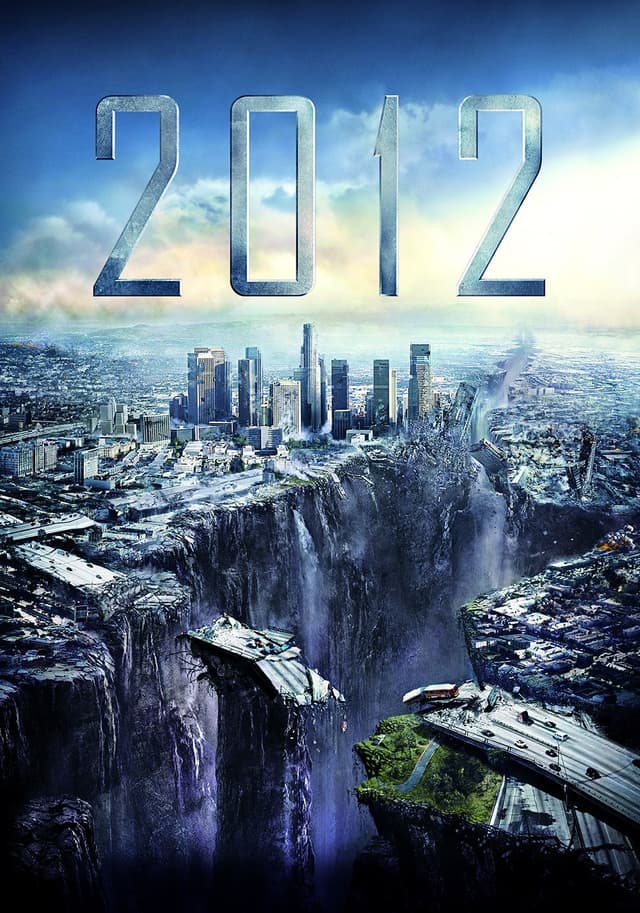
Earth’s billions of inhabitants are unaware that the planet has an expiration date. With the warnings of an American scientist, world leaders begin secret preparations for the survival of select members of society. When the global cataclysm finally occurs, failed writer Jackson Curtis tries to lead his family to safety as the world starts falling apart.
What is the budget of 2012?
"2012," an action released in 2009, was directed by Roland Emmerich and stars John Cusack, Amanda Peet. The production budget was $200,000,000, placing it in the blockbuster range for action productions of its era.
Key Budget Allocation Categories
While specific budget breakdowns are not publicly available, typical cost drivers for an action production like this include:
- Stunts, Action Sequences & Visual Effects: Action films allocate a substantial portion of their budget to choreographing and executing practical stunts, pyrotechnics, and CGI-heavy sequences.
- Above-the-Line Talent (Cast & Director): A-list talent commands significant upfront fees plus backend participation.
- Production Design, Sets & Locations: Action films frequently require multiple international shooting locations, large-scale set construction, vehicle acquisitions and modifications, and specialized equipment , all of which drive production costs well above those of dialogue-driven genres.
- Development: Graham Hancock's Fingerprints of the Gods was listed in 2012 credits as the film's inspiration, and Emmerich said in a Time Out interview: "I always wanted to do a biblical flood movie, but I never felt I had the hook.
How Does 2012's Budget Compare to Similar Films?
At $200,000,000, 2012 sits in the blockbuster range. Here is how it compares to productions with a similar budget:
- The Dark Knight (2008): Budget $185,000,000, Worldwide Gross $1,004,558,444
The median budget for wide-release action films in the 2000s ranges from $30 to 80M for mid-budget to $150M+ for tentpoles.
2012 Box Office Performance
"2012" earned $166,112,167 domestically and $791,217,826 worldwide at the box office. Against a production budget of $200,000,000, the film performed strongly at the box office.
Box Office Breakdown
2012

At approximately +296%, 2012 returned roughly $3.96 for every $1 of production budget invested during its theatrical run.
The 21/79 domestic-to-international split saw $166,112,167 from North America and $625,105,659 from overseas markets.
2012 Production History
Graham Hancock's Fingerprints of the Gods was listed in 2012 credits as the film's inspiration, and Emmerich said in a Time Out interview: "I always wanted to do a biblical flood movie, but I never felt I had the hook. I first read about the Earth's crust displacement theory in Graham Hancock's Fingerprints of the Gods." He and composer-producer Harald Kloser worked closely together, co-writing a spec script (also titled 2012) which was marketed to studios in February 2008. A number of studios heard budget projection and story plans from Emmerich and his representatives, a process the director had previously undertaken for Independence Day (1996) and The Day After Tomorrow (2004).
Filming, originally scheduled to begin in Los Angeles in July 2008, commenced in Kamloops, Savona, Cache Creek, and Ashcroft, British Columbia, in early August 2008 and wrapped in mid-October. With the possibility of a Screen Actors Guild strike looming in the wake of the 2007 to 08 Writers Guild of America strike, the film's producers drew up a contingency plan in case of a walkout by actors. Uncharted Territory, Digital Domain, Double Negative, Scanline, and Sony Pictures Imageworks were hired to create the film's visual effects.
The film's score was composed by Harald Kloser and Thomas Wander. Adam Lambert contributed a song to the film, "Time for Miracles", which was written by Alain Johannes and Natasha Shneider. The 24-song soundtrack includes "Fades Like a Photograph" by Filter and "It Ain't the End of the World" by George Segal and Blu Mankuma. "Master of Shadows" by Two Steps from Hell was used for the film's trailers.
Awards and Recognition
5 wins & 21 nominations total
Critical Reception
On Rotten Tomatoes, the film has an approval percentage of 40% based on 242 reviews, with the critics consensus reading: "Roland Emmerich's 2012 provides plenty of visual thrills, but lacks a strong enough script to support its massive scope and inflated length." On Metacritic, the film has a score of 49 out of 100 based on 34 critic reviews, meaning "Mixed or Average". Audiences polled by CinemaScore gave the film an average grade of "B+" on an A+ to F scale.
Frequently Asked Questions
How much did it cost to make 2012?
Roland Emmerich's 2012 had a production budget of $200,000,000. Director Emmerich stated the film was produced for approximately that amount, with principal photography running from early August to mid-October 2008 primarily in British Columbia, Canada.
How much did 2012 earn at the box office?
The film earned $791,200,000 worldwide, with $166,100,000 from domestic (North American) markets and $603,500,000 from international territories. International audiences, particularly in Asia and Europe, drove over 76% of the total revenue.
Was 2012 profitable?
Yes, 2012 was highly profitable. Against its $200,000,000 production budget, the film earned $791,200,000 worldwide. The strong international performance, particularly the $603,500,000 from overseas markets, provided substantial returns for Sony Pictures and Centropolis Entertainment.
What were the biggest costs in 2012?
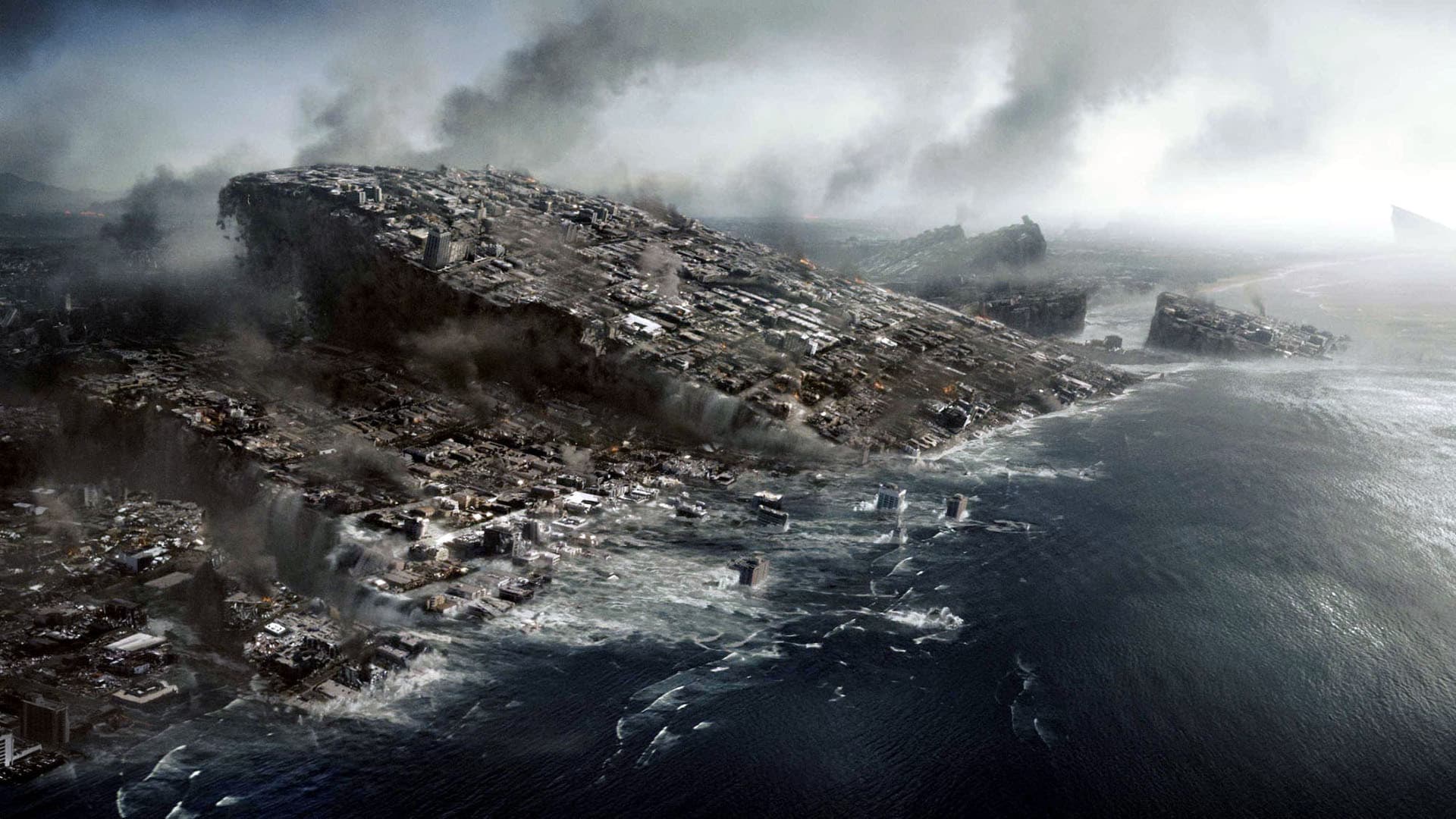
The primary expenses were massive visual effects depicting worldwide destruction, created by five major VFX companies: Uncharted Territory, Digital Domain, Double Negative, Scanline, and Sony Pictures Imageworks. The disaster sequences showing earthquakes, tsunamis, and volcanic eruptions required state-of-the-art CGI at the time.
How does 2012's budget compare to similar disaster films?
At $200,000,000, 2012 was among the most expensive disaster films ever made. Emmerich's earlier The Day After Tomorrow (2004) cost $125,000,000, and his Independence Day (1996) cost $75,000,000. San Andreas (2015) later cost $110,000,000, making 2012 nearly double the budget of comparable genre entries.
Did 2012 go over budget?
There are no public reports that 2012 exceeded its planned budget. Emmerich confirmed the film was produced for about $200,000,000. The production had a contingency plan in place due to the potential 2007 to 2008 Writers Guild of America strike, which helped ensure the project stayed on schedule.
What was the ROI of 2012?
The return on investment was approximately 295.6%: ($791,200,000 minus $200,000,000) divided by $200,000,000 times 100 equals 295.6%. The film's massive international appeal, with over 76% of revenue from overseas, made it one of the most profitable disaster films in history.
What awards did 2012 win?
The film won two Satellite Awards for Best Sound (Editing and Mixing) and Best Visual Effects. It was nominated for the Critics' Choice Award for Best Visual Effects, two Saturn Awards (Best Action/Adventure/Thriller Film and Best Special Effects), and multiple Visual Effects Society Awards.
Who directed 2012?
Roland Emmerich directed 2012. The German filmmaker is known as the master of the disaster genre, having previously directed Independence Day (1996), Godzilla (1998), and The Day After Tomorrow (2004). He also co-wrote the screenplay and produced the film through his company Centropolis Entertainment.
Where was 2012 filmed?
Principal photography took place primarily in British Columbia, Canada, from early August to mid-October 2008. Key filming locations included Kamloops, Savona, Cache Creek, and Ashcroft. The production was originally planned for Los Angeles but relocated to British Columbia, likely for Canadian tax incentives and diverse landscape options.
Filmmakers
2012

Official Trailer
Build budgets like this one in Saturation
Start from an industry-standard feature film template, import the schedule and rates you already have, and let the cost report keep itself current as you spend. Real-time collaboration, no spreadsheets.