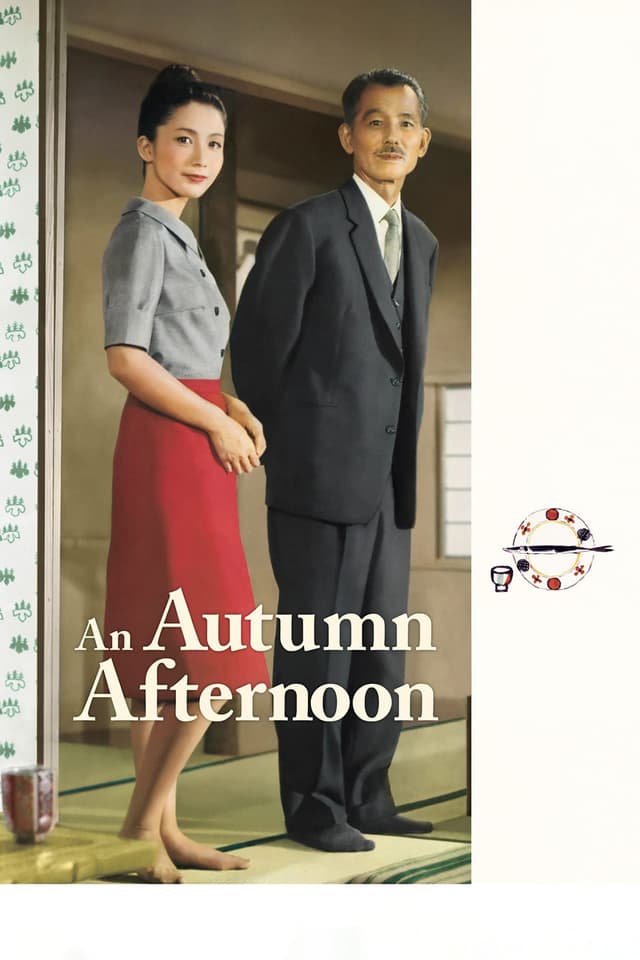
An Autumn Afternoon Budget
Updated
Synopsis
In postwar Tokyo, aging widower Shūhei Hirayama gradually realizes that he must arrange a marriage for his devoted twenty-four-year-old daughter Michiko, with whom he has lived since his wife's death. As he balances the rituals of office life, drinks with old friends and former classmates, and reflections on the passage of time, Hirayama confronts the quiet inevitability of his own loneliness.
What Is the Budget of An Autumn Afternoon (1962)?
An Autumn Afternoon (1962), written and directed by Yasujirō Ozu and released by Shochiku in Japan on November 18, 1962, was produced on a budget that has never been publicly disclosed by the studio. The film was the fifty-fourth and final feature of Ozu's thirty-five-year directing career, produced through the Shochiku Ofuna studio system that had financed nearly all of his postwar work. Studio-system Japanese productions of the early 1960s did not publicly disclose individual film budgets, and Shochiku has not retrospectively released the production cost figure.
Based on the prevailing economics of Japanese studio-system production in 1962, the budget would have fallen within the standard mid-tier Shochiku contemporary drama range, estimated at approximately ¥30,000,000 to ¥50,000,000 (roughly $80,000 to $140,000 in 1962 dollars, or approximately $850,000 to $1,500,000 adjusted to 2025 dollars). The figure reflects the contained domestic-drama production scale of Ozu's late filmmaking practice: a single recurring company of actors, primarily Tokyo apartment and office interiors, no on-location international work, and Ozu's characteristic minimal-coverage shooting style.
Key Budget Allocation Categories
The estimated ¥30,000,000 to ¥50,000,000 budget would have been distributed across the categories typical of a Shochiku Ofuna studio production of the period:
- Above-the-Line Talent: Chishū Ryū led as the widower Shūhei Hirayama, a role echoing his many earlier Ozu collaborations. Shima Iwashita played Michiko, with Keiji Sada, Mariko Okada, Kuniko Miyake, Eijirō Tōno, and Nobuo Nakamura in supporting roles. The Shochiku contract-actor system meant most performers were on studio salaries rather than per-film compensation, an arrangement that kept above-the-line costs contained.
- Tokyo Studio Production: Principal photography ran at Shochiku's Ofuna Studios in Kamakura, with location work in Tokyo office, restaurant, and apartment building exteriors. The contained Tokyo-and-Kamakura production geography kept production costs below those of contemporary Japanese productions that incorporated rural or international locations.
- Production Design: Production designer Tatsuo Hamada built the Hirayama family apartment, the office environments, the recurring restaurant and bar interiors, and the wedding-celebration spaces. The contained domestic-drama production design represented a relatively contained line item within the budget.
- Cinematography: Director of photography Yūharu Atsuta, Ozu's longtime collaborator dating to The End of Summer (1961), shot on 35mm color film stock with Ozu's signature low-angle three-foot tatami-mat camera position and static compositions. The use of color stock rather than black and white was a relatively late development in Ozu's career and added to the cinematography line.
- Score: Composer Kojun Saitō wrote the original score, drawing on traditional Japanese musical motifs while remaining in Ozu's spare orchestral idiom. The composer-director collaboration dated to Ozu's previous film Late Autumn (1960) and continued the established Shochiku-Ozu sound-design approach.
- Editor: Yoshiyasu Hamamura edited the film under Ozu's direct supervision, with the precise scene-and-shot duration timing that defined the director's late style.
How Does An Autumn Afternoon's Budget Compare to Similar Films?
At an estimated ¥30,000,000 to ¥50,000,000 (approximately $850,000 to $1,500,000 in 2025 dollars), An Autumn Afternoon sits within the standard mid-tier Japanese studio-drama tier of the early 1960s. The comparison set:
- Tokyo Story (1953): Budget undisclosed (estimated mid-tier Shochiku) | Worldwide not applicable. Yasujirō Ozu's earlier masterpiece is widely cited as the most acclaimed Japanese film in international polls and is one of the closest direct creative comparisons to An Autumn Afternoon within the director's own filmography.
- Seven Samurai (1954): Budget approximately ¥210,000,000 (approximately $580,000 in 1954 dollars, or approximately $6,500,000 in 2025 dollars) | Worldwide undisclosed. Akira Kurosawa's Toho jidaigeki epic cost approximately four to seven times the estimated An Autumn Afternoon budget, reflecting its scale and on-location requirements.
- Rashomon (1950): Budget approximately ¥18,000,000 | Worldwide not applicable. Akira Kurosawa's Daiei period drama cost roughly half the An Autumn Afternoon estimate, reflecting both Daiei's tighter budget profile and the smaller cast and location scope.
- Ugetsu (1953): Budget undisclosed (estimated mid-tier Daiei) | Worldwide not applicable. Kenji Mizoguchi's Daiei jidaigeki sits within the same Japanese studio-drama tier as the An Autumn Afternoon estimate, though Mizoguchi's on-location period work typically commanded slightly higher costs than Ozu's contemporary-drama studio shoots.
- Floating Weeds (1959): Budget undisclosed (Daiei) | Worldwide not applicable. Yasujirō Ozu's Daiei-produced (rather than Shochiku) drama from three years earlier represents the closest direct production-economics comparison to An Autumn Afternoon within Ozu's filmography.
An Autumn Afternoon Box Office Performance
An Autumn Afternoon opened in Japan on November 18, 1962 through the Shochiku theatrical distribution network. The film performed solidly within the Japanese domestic market, consistent with the established commercial performance of Ozu's late-career Shochiku productions, though precise domestic gross figures have never been publicly disclosed by Shochiku and Japanese box office tracking for this period is incomplete.
Given the absence of comprehensive 1962 Japanese box office tracking and the film's distribution model, the financial picture is best understood through its long-term commercial legacy rather than its initial theatrical performance:
Box Office Breakdown
An Autumn Afternoon

Internationally, An Autumn Afternoon did not receive a significant theatrical release outside Japan during 1962-1963, with the film entering the Western critical conversation primarily through 1970s and 1980s film-school and art-house programming. The Criterion Collection released the film on home video in the United States in 2008, with subsequent Blu-ray editions and streaming availability through The Criterion Channel substantially expanding the film's cumulative commercial life.
From a long-term commercial perspective, the film has generated substantial revenue through home video, festival retrospective programming, art-house theatrical re-releases, and ongoing Criterion Collection licensing across multiple territories. The cumulative commercial return on Shochiku's 1962 production cost is widely understood to have been substantial relative to the original investment, though Shochiku has not publicly disclosed the cumulative figures.
An Autumn Afternoon Production History
Yasujirō Ozu began writing the screenplay for An Autumn Afternoon in late 1961 in collaboration with longtime screenwriter Kōgo Noda, the writing partner who had worked with Ozu on every film since There Was a Father (1942). The screenplay drew on themes Ozu had returned to throughout his career, particularly Late Spring (1949) and Equinox Flower (1958), about aging fathers arranging marriages for their unmarried daughters. Noda and Ozu wrote together at the Tateshina mountain inn that had been the regular location for their late-career screenplay collaborations.
Ozu shot the film during a period of personal difficulty: his mother, Asae Ozu, with whom he had lived his entire life, died in February 1962 during the screenplay-writing process. The mother-loss subtext shaped the film's deep meditation on aging and loneliness, with several critics subsequently identifying the film as Ozu's implicit memorial to his mother.
Principal photography ran from late spring through early summer 1962 at the Shochiku Ofuna Studios in Kamakura, Japan, with location work in Tokyo office, restaurant, and apartment building exteriors. The production used the established Ozu working methods: Yūharu Atsuta's static low-angle camera position, Ozu's minimal-coverage shooting style with limited takes, and the recurring cast of contract-actor collaborators. The shoot wrapped in summer 1962 ahead of the November 18, 1962 release.
Ozu died of pleural cancer on December 12, 1963, on his sixtieth birthday, approximately thirteen months after the November 1962 release of An Autumn Afternoon. The film became his final completed feature, with several planned subsequent projects abandoned. The combination of his mother's death during the screenplay-writing process and his own death thirteen months after release gives the film its retrospective melancholy as a definitive late-period statement.
Awards and Recognition
An Autumn Afternoon was not nominated at the Academy Awards, Golden Globes, or major Western film awards. The film won the Mainichi Film Award for Best Actor (Chishū Ryū) in 1963 and was nominated for the Kinema Junpo Award for Best Film of 1962.
The film's most significant retrospective recognition came through the Sight & Sound critics' polls. In the 2012 Sight & Sound Greatest Films of All Time critics' poll, An Autumn Afternoon placed in the top 100 alongside Ozu's Tokyo Story (1953), which placed first overall. The 2022 Sight & Sound poll maintained Tokyo Story's position in the top tier and continued to rank An Autumn Afternoon within the broader greatest-films canon. The Criterion Collection has continued to release new editions of the film, including a 4K-restored Blu-ray in 2023.
Critical Reception
An Autumn Afternoon received universal critical acclaim. The film holds a 100% approval rating on Rotten Tomatoes based on 32 critic reviews, one of the highest tallies for any Japanese-language film with substantial Western critical coverage. The retrospective Western critical conversation, which began primarily in the 1970s and 1980s, has been uniformly admiring.
Critics broadly praised Chishū Ryū's lead performance as one of the great late-period performances of Japanese cinema, with several reviews calling it the actor's definitive collaboration with Ozu. The New York Times retrospective review by A.O. Scott called the film "a quiet, devastating masterpiece," while The Guardian's Peter Bradshaw described it as "Ozu's most resonant farewell." The A.V. Club's Mike D'Angelo wrote that "no director has captured the texture of ordinary domestic life with the precision and humility Ozu brings to An Autumn Afternoon."
The critical consensus has consistently positioned the film as one of the most powerful final works in cinema history, alongside John Huston's The Dead (1987), Yasujirō Ozu's own Tokyo Story (1953), and Akira Kurosawa's Madadayo (1993). The film's sustained reputation across six decades of Western critical engagement, including its consistent presence in greatest-films-of-all-time polls, has cemented An Autumn Afternoon's status as a definitive late-career masterpiece of Japanese cinema.
Frequently Asked Questions
How much did it cost to make An Autumn Afternoon (1962)?
Shochiku has never publicly disclosed a budget for the film. Based on the prevailing economics of Japanese studio-system production in 1962, the budget would have fallen within the standard mid-tier Shochiku contemporary drama range, estimated at approximately ¥30,000,000 to ¥50,000,000 (roughly $850,000 to $1,500,000 adjusted to 2025 dollars).
Was An Autumn Afternoon the last film by Ozu?
Yes. An Autumn Afternoon was the fifty-fourth and final feature of Yasujirō Ozu's thirty-five-year directing career. Ozu died of pleural cancer on December 12, 1963, on his sixtieth birthday, approximately thirteen months after the November 18, 1962 release of the film. Several planned subsequent projects were abandoned.
Who wrote An Autumn Afternoon?
Yasujirō Ozu co-wrote the screenplay with Kōgo Noda, his longtime screenwriting partner who had collaborated with him on every film since There Was a Father (1942). Noda and Ozu wrote together at the Tateshina mountain inn that had been the regular location for their late-career screenplay collaborations.
Who stars in An Autumn Afternoon?
Chishū Ryū leads as the widower Shūhei Hirayama. Shima Iwashita plays his daughter Michiko, with Keiji Sada, Mariko Okada, Kuniko Miyake, Eijirō Tōno, and Nobuo Nakamura in supporting roles. Ryū had collaborated with Ozu across most of the director's postwar features.
Is An Autumn Afternoon related to Late Spring?
The film returns to themes Ozu had explored in Late Spring (1949) and Equinox Flower (1958), particularly the situation of an aging father arranging a marriage for his unmarried daughter. The films share a thematic preoccupation with the dissolution of the family unit through children's adulthood and marriage, without being strict remakes of one another.
Where was An Autumn Afternoon filmed?
Principal photography ran from late spring through early summer 1962 at the Shochiku Ofuna Studios in Kamakura, Japan, with location work in Tokyo office, restaurant, and apartment building exteriors. The production used the established Ozu working methods, including Yūharu Atsuta's static low-angle camera position and Ozu's minimal-coverage shooting style.
Is An Autumn Afternoon in color?
Yes. An Autumn Afternoon was shot on 35mm color film stock by cinematographer Yūharu Atsuta. The use of color rather than black and white was a relatively late development in Ozu's career, with the director switching to color from his 1958 film Equinox Flower onward. Ozu used color cinematography for only the final six features of his career.
Is An Autumn Afternoon available on Criterion?
Yes. The Criterion Collection released An Autumn Afternoon on DVD in the United States in 2008, with subsequent Blu-ray editions and a 4K-restored Blu-ray edition in 2023. The film is also available on The Criterion Channel streaming service.
How is An Autumn Afternoon different from Tokyo Story?
Tokyo Story (1953) is widely cited as Ozu's most internationally acclaimed film and finished first in the 2012 Sight & Sound Greatest Films of All Time critics' poll. An Autumn Afternoon (1962) is his final film and is a more contained domestic drama focused on a single father-daughter relationship rather than the extended multi-generational visit structure of Tokyo Story.
What did critics think of An Autumn Afternoon?
The film received universal critical acclaim, with a 100% approval rating on Rotten Tomatoes based on 32 critic reviews. The retrospective Western critical conversation has been uniformly admiring. The New York Times called the film "a quiet, devastating masterpiece," and The Guardian described it as "Ozu's most resonant farewell."
Filmmakers
An Autumn Afternoon

Official Trailer
Build budgets like this one in Saturation
Start from an industry-standard feature film template, import the schedule and rates you already have, and let the cost report keep itself current as you spend. Real-time collaboration, no spreadsheets.