Rashomon Budget
Updated
Synopsis
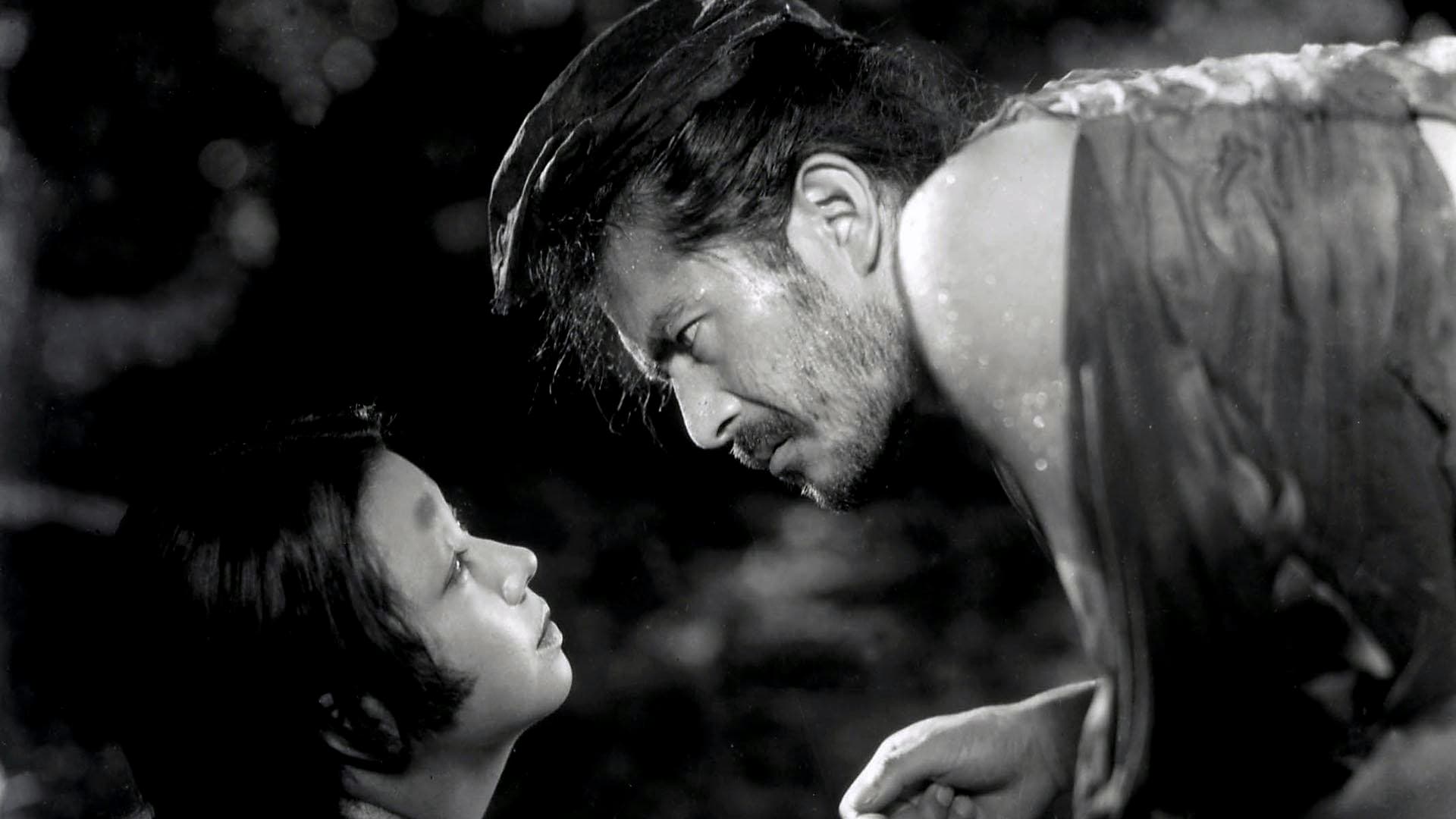
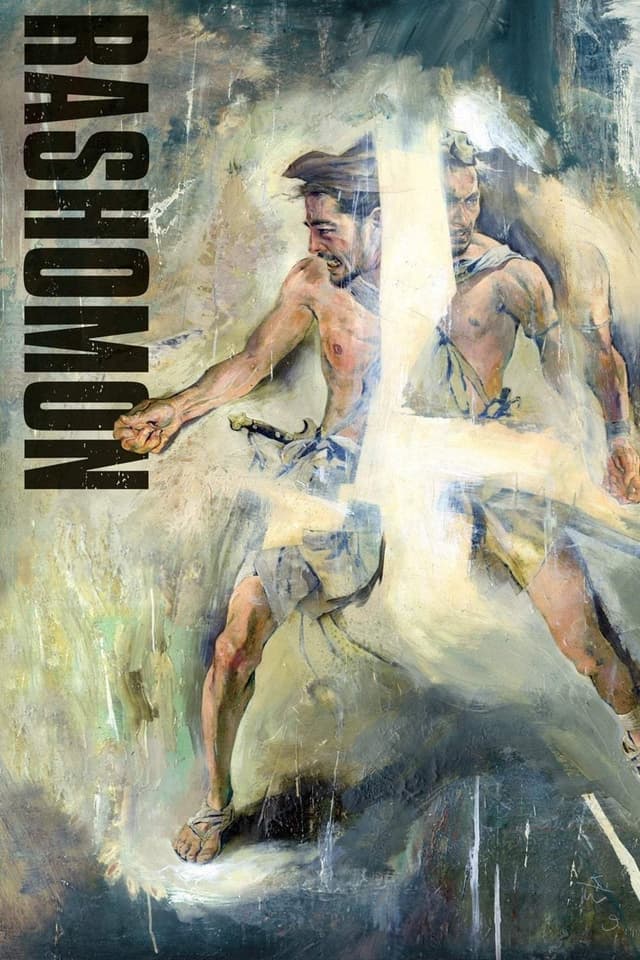
Sheltering from a downpour beneath the ruined Rashomon gate in twelfth-century Kyoto, a woodcutter, a priest, and a commoner recount the trial that followed the death of a samurai in a forest grove, where the bandit, the wife, the dead man (speaking through a medium), and the woodcutter himself each give an irreconcilably different account of what happened. Akira Kurosawa's 1950 mystery, the picture that won the Venice Golden Lion and the Honorary Academy Award for Outstanding Foreign Language Film, gave the world the phrase "the Rashomon effect" and opened Western markets to postwar Japanese cinema.
What Is the Budget of Rashomon (1950)?
Rashomon, Akira Kurosawa's 1950 jidaigeki mystery for Daiei Film, was produced on a reported budget of roughly 250,000 Japanese yen, a figure consistently cited by Daiei studio records and by Donald Richie in his foundational 1965 monograph "The Films of Akira Kurosawa." Adjusted to mid-century US dollars at the postwar exchange rate of approximately 360 yen to the dollar, the production cost translates to under $750 in 1950 dollars, an almost trivial figure that nonetheless reflects the depressed economics of the early Showa-era Japanese film industry rebuilding itself under American occupation.
The 250,000-yen number is best understood as the studio's contracted negative cost: cast and crew salaries paid through Daiei's in-house staff system, sets and props built on Daiei's Tokyo Chofu lot, location days in the Nara prefecture forest of Komyoji and on the Daiei lot, and lab processing of the original black-and-white 35mm negative. Standard postwar Japanese studio accounting did not separately itemize prints and advertising, sales-agent fees, or international subtitling, all of which would later become significant for Rashomon when Italian distributor Italo film acquired the picture and ushered it to its Venice Golden Lion in 1951 and Honorary Academy Award in 1952.
Key Budget Allocation Categories
Daiei never published a department-level breakdown of the Rashomon budget, but the surviving production record points to a handful of dominant cost lines characteristic of postwar Japanese studio jidaigeki:
- Contract Studio Cast: Toshiro Mifune, Machiko Kyo, Masayuki Mori, and Takashi Shimura were all under in-house studio contract (Mifune and Shimura with Toho, on loan-out to Daiei), which meant their fees were absorbed into the studio system rather than negotiated as market-rate above-the-line salaries. Mifune was twenty-nine and not yet the international star he would become with Seven Samurai four years later.
- Komyoji Forest Location: The bandit-and-samurai scenes were shot in the forest surrounding the Komyoji temple near Nara, requiring crew transport, lodging, and a rented power generator to drive the lighting rig. Cinematographer Kazuo Miyagawa famously aimed mirrors into the canopy to bounce sunlight back into the trees, a low-tech technique that cost almost nothing but produced the film's signature dappled light.
- Rashomon Gate Set: The crumbling Rajomon gate, the frame story's sole location, was a full-scale exterior built on the Daiei Tokyo backlot in Chofu. Production designer Takashi Matsuyama and his crew constructed the structure from new lumber then weathered it to read as a thousand-year-old ruin, a construction line item that absorbed a meaningful share of the budget.
- Daiei Crew and Technicians: A typical postwar Daiei feature was crewed by roughly 30 to 50 people, all on studio payroll. Department heads (Miyagawa on camera, Matsuyama on production design, Fumio Hayasaka on score) were salaried Daiei employees, and below-the-line costs were captured through standard studio overhead allocation rather than as discrete production-account spending.
- 35mm Black-and-White Stock and Lab: Like all Japanese studio features of the era, Rashomon was shot on 35mm black-and-white negative stock, processed and printed at Daiei's in-house lab. Raw stock and lab work represented one of the few cash-out line items in the budget, but Daiei's vertically integrated film and lab operation kept the per-foot cost lower than an independent production would have paid.
- Score and Sound: Composer Fumio Hayasaka, Kurosawa's long-running musical collaborator, wrote the now-famous bolero-derived score (loosely modeled on Ravel) and conducted the studio orchestra on the Daiei scoring stage. Sound recording and dubbing were handled in-house. Hayasaka would score every Kurosawa feature until his death in 1955.
- Post-Production and Print Striking: Editing was led by Kurosawa himself working with Daiei's editorial staff, with the final 88-minute cut completed in time for the August 25, 1950 Tokyo release. Initial release prints for Daiei's domestic theatrical run were struck at the studio lab, a cost line that fell outside the 250,000-yen negative figure but inside the studio's overall release commitment.
How Does Rashomon's Budget Compare to Similar Films?
Rashomon sits at the rock-bottom end of any feasible cost comparison, and the meaningful comparisons are not to other films of its production cost but to the films it influenced and the canon it joined:
- Seven Samurai (1954): Budget approximately $500,000 (210,000,000 yen) | Worldwide approximately $3,000,000 reported. Kurosawa's follow-up jidaigeki epic for Toho cost more than 800 times Rashomon and became the template for the modern action ensemble. The leap in scale between the two films is one of the most dramatic budget jumps in any director's body of work.
- Ikiru (1952): Budget not publicly disclosed (Toho studio feature) | Worldwide not publicly aggregated. Kurosawa's contemporary-Tokyo bureaucratic drama, made two years after Rashomon and starring Rashomon's woodcutter Takashi Shimura in the lead, operated at a similar postwar Toho cost tier and confirmed Kurosawa's ability to move between period and modern material.
- Yojimbo (1961): Budget not publicly disclosed (Toho studio feature) | Worldwide approximately $1,000,000 reported. Kurosawa's lone-bandit jidaigeki, which Sergio Leone would remake as A Fistful of Dollars three years later, is the most direct stylistic descendant of Rashomon's forest cinematography and its moral ambiguity.
- Tokyo Story (1953): Budget not publicly disclosed (Shochiku studio feature) | Worldwide not publicly aggregated. Yasujiro Ozu's Shochiku family drama, released three years after Rashomon, was made on a comparably modest postwar Japanese studio budget and now sits alongside Rashomon at the top of nearly every greatest-films poll, including the 2012 Sight and Sound Critics' Top 10.
- Ugetsu (1953): Budget not publicly disclosed (Daiei studio feature) | Worldwide not publicly aggregated. Kenji Mizoguchi's Daiei ghost story was made at the same studio as Rashomon three years later and exists in the same modest postwar production cost tier. Both films were instrumental in establishing Daiei's art-house brand in Europe.
- Citizen Kane (1941): Budget approximately $839,727 | Worldwide approximately $1,600,000 reported. Orson Welles' RKO debut, made on more than a thousand times Rashomon's cost, is the other 1940s film almost always cited alongside Rashomon in discussions of subjective narrative structure and the unreliable narrator.
- The Usual Suspects (1995): Budget approximately $6,000,000 | Worldwide approximately $34,400,000. Bryan Singer's Oscar-winning thriller is the most prominent commercial inheritor of Rashomon's structural conceit: a single story told through competing unreliable narrators whose accounts cannot all be true. Critics have routinely cited Rashomon as the structural ancestor of Singer's film.
Rashomon Box Office Performance
Rashomon opened in Japan on August 25, 1950, distributed domestically by Daiei. Granular Japanese theatrical earnings from the 1950 release have not been preserved in any publicly available form, and Box Office Mojo, The Numbers, and Variety did not track foreign-language gross figures at that scale in the early postwar period. The film performed respectably in its initial domestic run, sufficient for Daiei to view the production as a modest commercial success but well short of a domestic blockbuster. The picture's commercial transformation came after Venice in September 1951, when Italian distributor Italo film acquired international rights and the Golden Lion win generated demand across Western Europe and North America.
Box Office Breakdown
Rashomon

Even a conservative cumulative international gross of $1,000,000 across the picture's seventy-five-year theatrical, repertory, and home-video lifespan would represent more than 1,300 times the original 250,000-yen negative cost, placing Rashomon among the highest return-on-investment films ever produced when measured in absolute terms. The number is necessarily imprecise because much of the film's economic life unfolded through Janus Films repertory bookings, Criterion home-video editions, and global cinematheque programming rather than first-run theatrical exhibition.
The picture's true commercial impact, however, is best measured not in ticket sales but in the door it opened. The Venice Golden Lion win in September 1951 and the Honorary Academy Award for Outstanding Foreign Language Film in March 1952 made Rashomon the first postwar Japanese feature to break through to Western markets at scale, creating the distribution pathway through which Tokyo Story, Ugetsu, Seven Samurai, and the entire 1950s Japanese arthouse canon would later reach European and American audiences.
Rashomon Production History
Rashomon began life as an adaptation of two short stories by Ryunosuke Akutagawa: "In a Grove" (1922), which supplied the contradictory-witness structure, and "Rashomon" (1915), which contributed the ruined-gate frame and the title. Screenwriter Shinobu Hashimoto, then a recent protege of Daiei staff writer Mansaku Itami, wrote the original draft as a short film script titled "Male and Female" before Kurosawa expanded the material into a feature with Hashimoto as co-credited writer. Daiei greenlit the project at the urging of producer Masaichi Nagata, who would later distribute the film internationally.
Casting drew on Kurosawa's emerging stock company. Toshiro Mifune, twenty-nine and three features into his collaboration with Kurosawa after Drunken Angel (1948) and Stray Dog (1949), was cast as the bandit Tajomaru. Machiko Kyo, the Daiei contract star who would headline Ugetsu and Gate of Hell, played the wife. Masayuki Mori was cast as the samurai and Takashi Shimura, who would star in Ikiru two years later and lead Seven Samurai four years after that, played the woodcutter. The four-person ensemble functioned almost as a chamber-piece cast despite the action setting.
Principal photography took place during summer 1950 across two primary locations. The forest sequences were shot in the wooded grounds surrounding the Komyoji temple in Nara prefecture, where cinematographer Kazuo Miyagawa devised the picture's most famous visual gambit: aiming silver-backed mirrors up into the tree canopy and back at the actors to bounce direct sunlight through the leaves and produce the dappled, hallucinatory light that became the film's visual signature. Miyagawa also pointed the camera directly into the sun, a then-unprecedented technique that became standard in subsequent cinema. The Rashomon gate frame story was shot on a full-scale set built on the Daiei Tokyo backlot in Chofu, with the artificial rainstorm produced by overhead sprinkler rigs across the gate set.
The Japanese shoot took place across several weeks in Japan, with Daiei absorbing all production costs through its in-house studio operation in Tokyo and Nara. The four central performers committed to the demanding structural requirement that each witness sequence be played as if it were the literal truth, a directorial approach that required each actor to perform the same encounter multiple times with internally consistent but mutually contradictory interpretations. Mifune's physical performance as Tajomaru, observed by Kurosawa to be partly modeled on the movements of a lion he had studied at Tokyo's Ueno Zoo, has been singled out by critics from Donald Richie onward as one of the great breakthrough performances of postwar world cinema.
Post-production was completed at Daiei's Tokyo facilities, with Kurosawa editing alongside Daiei's editorial staff and Fumio Hayasaka composing the bolero-influenced score on the studio scoring stage. The film opened in Japanese theaters on August 25, 1950 to modest domestic reception. The decisive event in Rashomon's international career came more than a year later when Daiei executive Giuliana Stramigioli, the Italian-Japanese head of the Italo-Japanese cultural society in Tokyo, submitted the film without Kurosawa's prior knowledge to the 1951 Venice Film Festival. Rashomon won the Golden Lion on September 10, 1951, becoming the first Japanese film to win at any major European festival and triggering the international distribution wave that defined the rest of its commercial life.
Awards and Recognition
Rashomon won the Golden Lion at the 1951 Venice International Film Festival, becoming the first Japanese feature to win the festival's top prize and one of the first Asian films to take a major European festival's grand prize at all. The Venice win was the single most consequential event in the film's commercial life and in the broader Western reception of postwar Japanese cinema, opening the European and American art-house circuit to subsequent Japanese exports including Ugetsu, Tokyo Story, and Seven Samurai.
The film won the Honorary Academy Award at the 24th Academy Awards ceremony on March 20, 1952, designated as "the most outstanding foreign language film released in the United States during 1951." The award was the precursor to today's competitive Best International Feature Film category, which the Academy would not formally establish as a permanent category until 1957. Rashomon's honorary Oscar effectively created the template that became the Best Foreign Language Film prize and reframed Hollywood's relationship to non-English-language cinema.
Beyond Venice and the Honorary Oscar, Rashomon won the Italian Film Critics' Award (Premio della Critica) alongside its Venice Golden Lion, the Blue Ribbon Award (Kinema Junpo) for Best Actor (Toshiro Mifune) in Japan, and was nominated for the Best Black and White Art Direction Academy Award at the 25th Academy Awards in 1953 (Takashi Matsuyama and H. Motsumoto). The picture was selected for preservation in the United States National Film Registry by the Library of Congress in 2009 as "culturally, historically, or aesthetically significant," and ranked twentieth in the 2012 Sight and Sound Critics' Greatest Films poll and twentieth in the directors' poll, one of only a handful of films to appear in the top twenty of both lists.
Critical Reception
Rashomon holds a 98 percent positive score on Rotten Tomatoes based on 65 critic reviews with an average rating of 9.20 out of 10, placing it among the highest-rated films of any era on the aggregator. Metacritic does not maintain a contemporaneous score for the film owing to its 1950 release date, but the consensus across present-day major-critic reassessments is unambiguously laudatory. CinemaScore did not exist when Rashomon was released and has never surveyed audiences for repertory bookings. The film holds an 8.2 average on IMDb based on more than 180,000 user ratings.
Roger Ebert, who included Rashomon in his Great Movies series in 2002, called it "the rare film that has become shorthand for its theme" and observed that the word "Rashomon" had entered the English language as a description of any account in which witnesses to the same event give irreconcilable testimony. Donald Richie, the Western critic most responsible for establishing Kurosawa's reputation in English-language criticism, devoted the foundational early chapter of his 1965 monograph "The Films of Akira Kurosawa" to Rashomon and argued that the film "must remain the founding work of modern Japanese cinema in the West." Vincent Canby of the New York Times, reviewing the 1982 Janus Films repertory reissue, called Rashomon "almost certainly the most influential single Asian film ever made."
Contemporary scholars including Stephen Prince, James Goodwin, and Mitsuhiro Yoshimoto have written book-length studies treating Rashomon as the central text in any analysis of Kurosawa, of postwar Japanese cinema, or of subjective narrative structure in twentieth-century film. The phrase "the Rashomon effect" has migrated out of film criticism into law, psychology, philosophy, and journalism as the standard descriptor for any situation in which competing accounts of the same event cannot be reconciled. The film has never gone out of print on home video in any major market since the format existed, and it remains a permanent fixture in university film curricula and on every credible greatest-films list.
Frequently Asked Questions
How much did it cost to make Rashomon (1950)?
Rashomon was produced on a reported budget of approximately 250,000 Japanese yen, a figure consistently cited in Daiei studio records and in Donald Richie's foundational 1965 monograph on Kurosawa. At the postwar exchange rate of roughly 360 yen to the US dollar, the picture cost under $750 in 1950 dollars, reflecting the depressed economics of the early Showa-era Japanese studio system rebuilding under American occupation.
How much did Rashomon (1950) earn at the box office?
Granular box office figures for Rashomon have never been compiled in a single public source. Daiei did not report 1950 Japanese domestic theatrical earnings at the level of detail tracked by Box Office Mojo or The Numbers, and international gross from the Italo film distribution that followed the 1951 Venice Golden Lion win is similarly unaggregated. Even a conservative cumulative gross estimate would represent thousands of times the original negative cost.
Was Rashomon (1950) profitable?
Yes, substantially. The 250,000-yen negative cost was returned many times over through the picture's Japanese domestic theatrical run, the Italo film international distribution that followed the Venice Golden Lion, and seven decades of subsequent repertory, home-video, and streaming exhibition. Even on the most conservative cumulative gross assumption, Rashomon returned thousands of dollars for every dollar invested, placing it among the highest ROI films ever produced.
Who directed Rashomon (1950)?
Rashomon was directed and co-written by Akira Kurosawa, then forty years old and working his way through an early-career Toho and Daiei output that included Drunken Angel (1948) and Stray Dog (1949). The picture was Kurosawa's commercial and critical breakthrough and the first Japanese film to win a major European festival prize, with the Venice Golden Lion in 1951 establishing him as one of the defining international auteurs of the postwar era.
Who starred in Rashomon (1950)?
Toshiro Mifune played the bandit Tajomaru, Machiko Kyo played the wife, Masayuki Mori played the samurai, and Takashi Shimura played the woodcutter who finds the body. Mifune and Shimura would both go on to anchor Kurosawa's subsequent decade of work, including Ikiru (1952), Seven Samurai (1954), and Yojimbo (1961). Mifune was twenty-nine at the time of Rashomon's release and had been Kurosawa's lead in two earlier features.
Where was Rashomon (1950) filmed?
Forest sequences were shot in the wooded grounds of the Komyoji temple near Nara, where cinematographer Kazuo Miyagawa aimed silver-backed mirrors into the canopy to bounce sunlight through the leaves and produce the picture's dappled visual signature. The Rashomon gate frame story was filmed on a full-scale exterior set built on the Daiei Tokyo backlot in Chofu, with the artificial rainstorm produced by overhead sprinkler rigs.
What awards did Rashomon (1950) win?
Rashomon won the Golden Lion at the 1951 Venice International Film Festival, the first Japanese feature to take the top prize at any major European festival, and the Honorary Academy Award at the 24th Academy Awards in 1952 for the most outstanding foreign-language film released in the US during 1951. The honorary Oscar was the direct precursor to today's Best International Feature Film category. The film was selected for the US National Film Registry in 2009.
Was Rashomon (1950) based on a book?
Rashomon adapts two short stories by Ryunosuke Akutagawa, both written in the 1910s and 1920s. "In a Grove" (1922) supplied the contradictory-witness structure and the forest grove encounter, and "Rashomon" (1915) supplied the ruined-gate frame story and the picture's title. Screenwriter Shinobu Hashimoto wrote the first draft as a short film script titled "Male and Female" before Kurosawa expanded the material into the feature with Hashimoto as co-credited writer.
What is the "Rashomon effect"?
The "Rashomon effect" is the standard descriptor in English for any situation in which multiple witnesses to the same event provide irreconcilably different accounts of what happened. The phrase originates directly from the film's narrative structure, in which the bandit, the wife, the samurai (speaking through a medium), and the woodcutter each give a self-serving and mutually contradictory version of the same forest encounter. The term is used today in law, psychology, philosophy, and journalism.
Where can you watch Rashomon (1950) today?
Rashomon is available on the Criterion Channel, the Max streaming service, and on physical Blu-ray and DVD through the Criterion Collection in a 4K-restored edition that has been in continuous release since 2012. The film also screens regularly in repertory programming at cinematheques and university film series worldwide, and remains a permanent fixture in introductory film studies curricula at virtually every major university with a cinema program.
Filmmakers
Rashomon

Official Trailer
Build budgets like this one in Saturation
Start from an industry-standard feature film template, import the schedule and rates you already have, and let the cost report keep itself current as you spend. Real-time collaboration, no spreadsheets.