Hocus Pocus Budget
 FantasyComedyFamily1h 36m
Updated
Synopsis
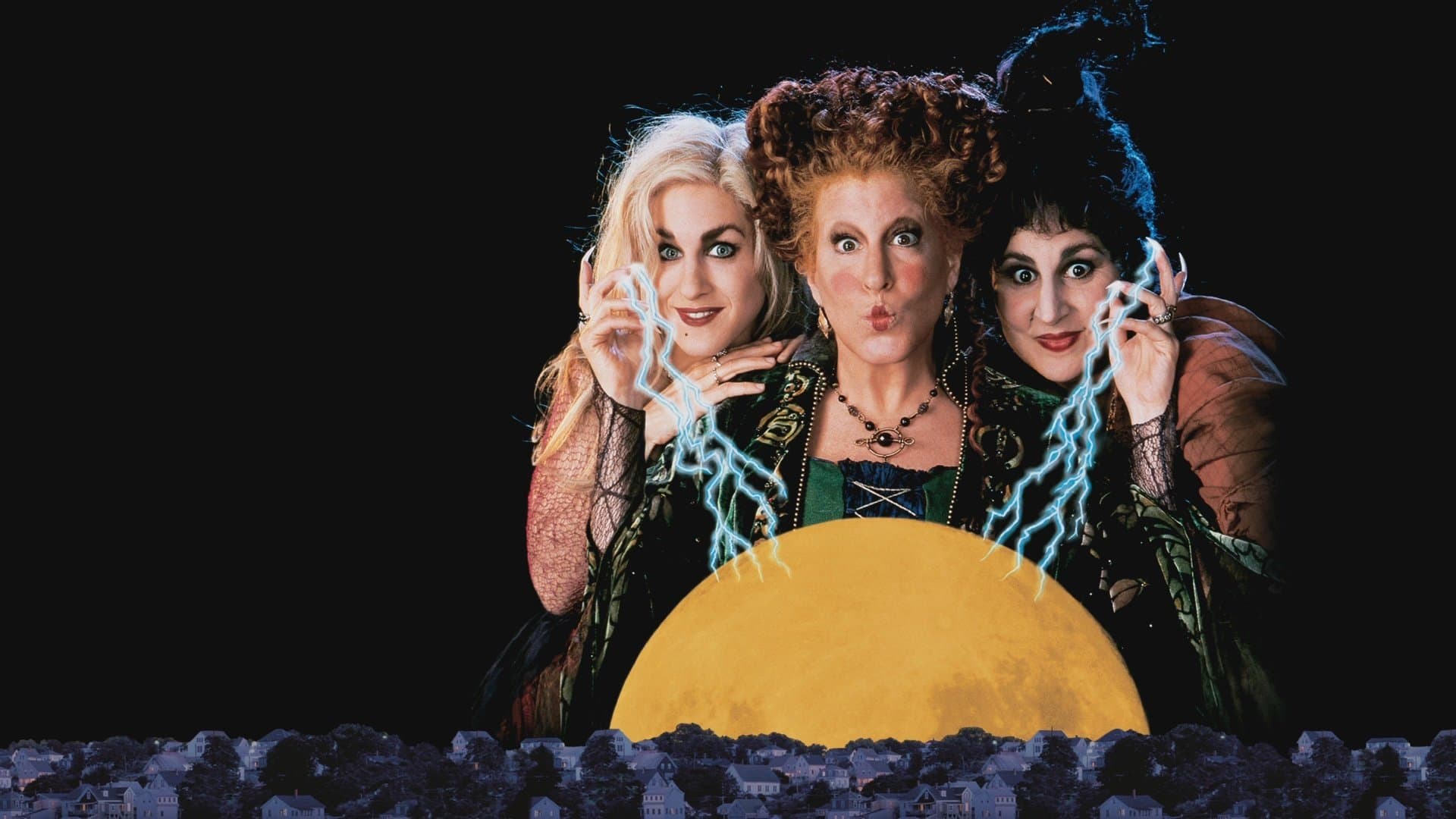
After moving to Salem, Massachusetts, teenager Max Dennison explores an abandoned house with his sister Dani and their new friend Allison. After unwittingly freeing a coven of evil witches who were executed in the 17th century, Max must steal the witches' book of spells to stop them from becoming immortal.
What Is the Budget of Hocus Pocus (1993)?
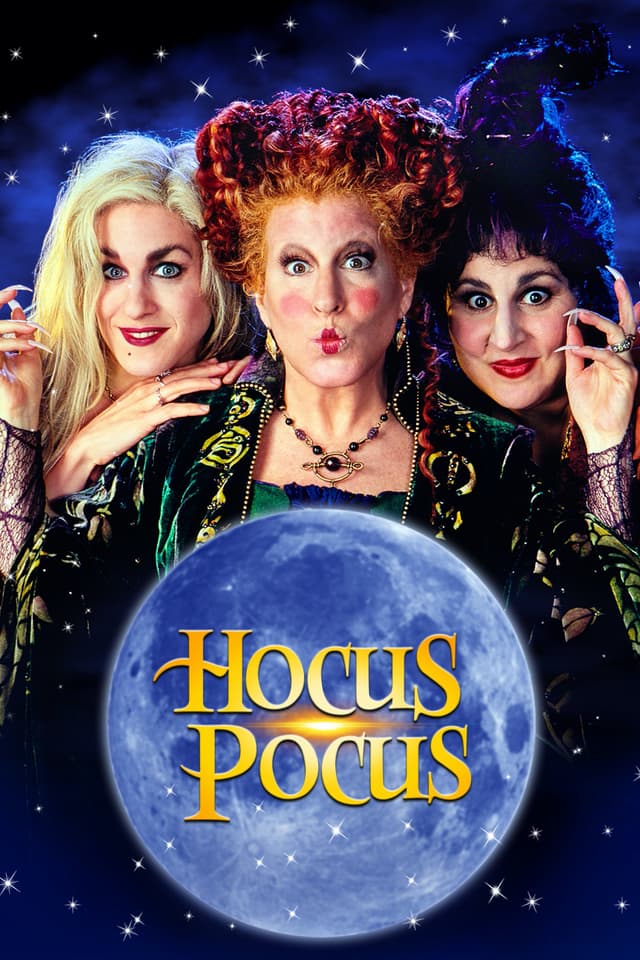
Hocus Pocus (1993), directed by Kenny Ortega and released by Walt Disney Pictures, was produced on a reported budget of $28,000,000. Conceived by producer David Kirschner as a family-friendly Halloween fairy tale, the film paired three above-the-title comedy leads, Bette Midler, Sarah Jessica Parker, and Kathy Najimy, with a young ensemble of child performers. Disney positioned it as a mid-budget seasonal release that could anchor cable libraries and home video catalogs for years after its theatrical run.
The investment funded a six-month production split between practical location work in Salem, Massachusetts, and stage photography on the Walt Disney Studios lot in Burbank. The budget covered three lead salaries pitched at peak-1990s comedy rates, an elaborate cat puppetry and animatronics package for the talking feline Binx, John Debney's full orchestral score, and a centerpiece musical number staged on a Burbank soundstage. Disney's target was a profitable theatrical window followed by a long secondary tail on VHS, the Disney Channel, and broadcast syndication, a calculus that ultimately defined the film's commercial reputation.
Key Budget Allocation Categories
Hocus Pocus' $28,000,000 budget was distributed across these core production areas:
- Above-the-Line Talent: Bette Midler, fresh off For the Boys (1991) and the Touchstone hit Beaches (1988), commanded the largest single line item as Winifred Sanderson. Sarah Jessica Parker (L.A. Story, Honeymoon in Vegas) and Kathy Najimy (Sister Act) rounded out the witch trio at established 1993 comedy rates. Director Kenny Ortega, transitioning from choreography on Dirty Dancing and helming Newsies the previous year, drew a feature-director fee, while producer David Kirschner of An American Tail and Child's Play fame produced through his Kirschner-Cuthbert deal at Disney.
- Salem Location Shoot: Several weeks of principal photography took place on the streets of Salem, Massachusetts, in October and November 1992, with additional unit work along the Massachusetts North Shore. Period dressing for the 1693 prologue, town-square crowd staging for the Halloween night sequences, exterior coverage of the Sanderson cottage and Old Burial Hill, and accommodation for a large cast and crew on the East Coast added meaningful cost above a fully Burbank-based shoot.
- Burbank Soundstage Work: Stage photography at the Walt Disney Studios lot in Burbank covered the Sanderson sisters cottage interior, the town hall ballroom set used for the "I Put a Spell on You" musical number, the high school gymnasium party, and the underground crypt sequences. Multiple standing sets were dressed simultaneously to accommodate the shooting schedule, with art direction by William Sandell building practical period detail rather than relying on visual effects extensions.
- Animatronic Cat and Creature Effects: The talking cat Binx, voiced by Jason Marsden, was realized through a combination of trained live cats, animatronic puppets built by Rick Lazzarini and The Character Shop, and early-1990s computer-generated imagery for transformation moments. The zombie character Billy Butcherson, played by Doug Jones in heavy prosthetics, required extended daily makeup application by department head Tony Gardner of Alterian Studios.
- Visual Effects: Visual effects work was supervised by Peter Montgomery, with optical and early digital compositing handled by Buena Vista Visual Effects and Industrial Light & Magic contributing select shots. The flying-broomstick sequences, the Book of Spells with its animatronic eye, and Winifred's life-essence smoke effects required custom rigs and matte composites that pushed the upper end of practical effects work at the time.
- Score and Music Production: Composer John Debney delivered a full orchestral score recorded with a large studio orchestra, drawing on traditional Halloween motifs while underscoring the comedy beats. The film's signature musical number, a stage performance of Screamin' Jay Hawkins' "I Put a Spell on You" arranged for Bette Midler, required licensing, a choral arrangement, choreography rehearsal, and dedicated music-playback production on the ballroom set.
- Costume and Period Design: Costume designer Mary Vogt designed three distinct witch silhouettes for the Sanderson sisters along with full period wardrobe for the 1693 prologue and Halloween costume crowd dressing for the contemporary sequences. The three lead costumes, each rebuilt in multiples for stunt and performance doubles, were among the most labor-intensive costume builds in the Disney live-action catalog of the early 1990s.
How Does Hocus Pocus' Budget Compare to Similar Films?
At $28,000,000, Hocus Pocus sat at the lower end of the early-1990s family-fantasy and Halloween bracket. The comparison set illustrates how its commercial outcome diverged from its budgetary peers, and why its eventual cult ascendancy stands out:
- Halloween (1978): Budget $325,000 | Worldwide $70,000,000. John Carpenter's slasher original cost roughly 1% of Hocus Pocus and earned more than 1.5 times the worldwide gross, the canonical example of micro-budget Halloween IP returning generational profits.
- The Nightmare Before Christmas (1993): Budget $24,000,000 | Worldwide $91,474,322. Released by Disney's Touchstone label the same Halloween season, Tim Burton's stop-motion production cost less than Hocus Pocus and out-grossed it by more than two to one, while also generating durable merchandise revenue that Hocus Pocus initially lacked.
- Casper (1995): Budget $50,000,000 | Worldwide $287,928,194. Universal's family ghost story spent nearly twice the Hocus Pocus budget and earned more than six times the worldwide gross, confirming that the family-Halloween appetite existed when marketing and release timing aligned.
- The Addams Family (1991): Budget $30,000,000 | Worldwide $191,502,426. Paramount's gothic comedy, released in November rather than against Free Willy in July, illustrates the upside Hocus Pocus might have captured with an October release rather than its July 16, 1993 launch.
- Hocus Pocus 2 (2022): Budget $40,000,000 | Streaming-only on Disney+. The 29-years-later sequel skipped theatrical entirely, reflecting Disney's reassessment of the property as a Disney+ subscriber driver after three decades of Halloween-season cable saturation made the original a brand of its own.
Hocus Pocus Box Office Performance
Hocus Pocus opened on July 16, 1993, against Free Willy in a counterprogrammed mid-summer Disney release that put a Halloween film into the height of beach-movie season. It debuted to $8,124,400 across 2,337 theaters, finishing fourth for the weekend behind Free Willy, In the Line of Fire, and Jurassic Park (in its sixth weekend), and the film never recovered momentum from that soft start.
Against a reported production budget of $28,000,000, the film needed approximately $60,000,000 to $70,000,000 in worldwide gross to reach theatrical profitability after marketing and distribution costs. Here is the financial breakdown:
Box Office Breakdown
Hocus Pocus

Hocus Pocus returned approximately $0.94 to $1.05 in theatrical revenue for every $1 invested when measured against total estimated theatrical-window spend, a disappointing result that Disney executives at the time treated as an outright miss. The domestic gross of $39,514,713 made up nearly 88% of the worldwide haul, with international receipts of just $5,433,640 confirming that the property did not translate outside North America during its 1993 run.
The reputational reversal came through television. Beginning in the mid-1990s, the Disney Channel and later ABC Family (now Freeform) acquired the film for annual October airings, with Freeform's "31 Nights of Halloween" programming block running Hocus Pocus on multiple slots every year throughout the 2000s and 2010s. By 2020 the film was generating tens of millions of viewer impressions every Halloween cycle and topping seasonal home-video and digital-purchase charts, an ancillary revenue stream Disney had not modeled at the original greenlight and which ultimately made the property profitable many times over.
Hocus Pocus Production History
The project originated in the late 1980s as a darker bedtime story that David Kirschner, then president of Hanna-Barbera, told his children. Kirschner partnered with screenwriter Mick Garris to develop the concept first as a Disney Channel television movie under the working title 'Halloween House' before Disney elevated it to a theatrical feature in 1991. Neil Cuthbert was brought in to rewrite the screenplay and lighten the tone for a family audience, with Kirschner producing alongside Steven Haft.
Kenny Ortega was hired to direct on the strength of his work choreographing Dirty Dancing and Pretty in Pink and his recent feature debut on Newsies (1992), where his musical-staging background made him a natural fit for the Sanderson sisters' musical numbers. Bette Midler signed on as Winifred Sanderson in mid-1992 after the script was retooled to give her character a Broadway-style centerpiece performance. Sarah Jessica Parker and Kathy Najimy filled out the trio, with Omri Katz (Adventures of Brisco County, Jr.) cast as teenage protagonist Max, Thora Birch as his younger sister Dani in one of her earliest credits, and Vinessa Shaw as classmate Allison.
Principal photography began in October 1992 on practical locations in Salem, Massachusetts, capturing the town square, Pioneer Village (which doubled for the 1693 prologue), and exteriors along the North Shore during the actual Halloween season for atmosphere. The production then moved to the Walt Disney Studios lot in Burbank, California, for several months of stage work covering the Sanderson cottage interior, the ballroom set used for the 'I Put a Spell on You' performance, and the high school gymnasium sequences. The shoot wrapped in February 1993.
Post-production was compressed to meet a July 16, 1993 release date. Disney's marketing team positioned the film as a summer family release, a counterprogramming decision later widely cited as the film's original commercial undoing. John Debney scored the film at the Newman Scoring Stage on the 20th Century Fox lot, with the orchestral recording sessions completing in May 1993. The film opened with limited critical support and modest box office, and Disney moved on quickly to its fall slate.
Awards and Recognition
Hocus Pocus received no major awards recognition during its 1993 release. Bette Midler was nominated for the Saturn Award for Best Actress at the 20th Saturn Awards by the Academy of Science Fiction, Fantasy and Horror Films, recognizing her Winifred Sanderson performance, but did not win.
The film's award recognition has come almost entirely through retrospective and audience-voted honors as the cult following grew. It has been routinely featured on listicles of essential Halloween cinema by Entertainment Weekly, Rolling Stone, IGN, and Empire, and the 'I Put a Spell on You' performance is frequently cited in best-musical-number countdowns by AV Club and Vulture. In 2019 Bette Midler hosted a Hocus Pocus 25th-anniversary reunion benefit for the New York Restoration Project at the New Amsterdam Theatre, a cultural acknowledgement of the property's reach that the original 1993 release did not earn.
Critical Reception
Hocus Pocus opened to mixed-to-negative reviews and currently holds a 39% approval rating on Rotten Tomatoes based on 67 critic reviews, with the critical consensus calling it harmless but uneven family fare salvaged by its leads. On Metacritic, the film scored 43 out of 100, indicating mixed or average reviews. Audiences responded more warmly than critics did at the time, and the film has since accumulated an 71% audience score on Rotten Tomatoes and an A- equivalent average from later audience polling, well above the typical gap between critic and audience consensus for early-1990s family films.
Critics broadly praised the performances of Bette Midler, Sarah Jessica Parker, and Kathy Najimy, with Roger Ebert of the Chicago Sun-Times giving the film 1.5 out of 4 stars but acknowledging that "the witches are wonderful, played by three actresses who pull out the stops and don't care if their characters seem ridiculous." Variety's Brian Lowry called Midler's performance "a deliciously hammy turn" while objecting that the screenplay "lurches between genuine family entertainment and material that will scare younger viewers." Janet Maslin of The New York Times wrote that the film "is best when it lets its three witches loose to chew the scenery."
The reception trajectory inverted over the following two decades. Annual Disney Channel and Freeform broadcasts converted a generation of viewers who had been children during the original release into vocal adult fans, and by the late 2010s the film was routinely covered as a defining Halloween classic by outlets that had panned it in 1993. The 2022 Disney+ sequel Hocus Pocus 2 drew more than 2.7 million households on its opening weekend, the largest opening for any Disney+ original film at that point, a result driven almost entirely by the cult equity the original had built through television exposure rather than its 1993 theatrical reception.
Frequently Asked Questions
How much did it cost to make Hocus Pocus (1993)?
The reported production budget was $28,000,000. Walt Disney Pictures financed the production through producer David Kirschner and Steven Haft, with the budget funding three lead salaries for Bette Midler, Sarah Jessica Parker, and Kathy Najimy, a Salem, Massachusetts location shoot, several months of stage work at the Walt Disney Studios lot in Burbank, John Debney's orchestral score, and the animatronic and visual effects work used to realize the talking cat Binx.
How much did Hocus Pocus earn at the box office?
The film grossed $39,514,713 domestically and $5,433,640 internationally, for a worldwide total of $44,948,353. It opened to $8,124,400 over its July 16, 1993 launch weekend, finishing fourth behind Free Willy, In the Line of Fire, and Jurassic Park in its sixth weekend of release.
Was Hocus Pocus a box office bomb?
Hocus Pocus was a theatrical underperformer rather than an outright bomb. Against a $28,000,000 budget and an estimated $15,000,000 to $20,000,000 in marketing spend, the worldwide gross of $44,948,353 returned roughly $0.94 to $1.05 for every $1 invested in the theatrical window, a soft result Disney treated as a miss at the time. Years of annual Disney Channel and Freeform Halloween airings, home video sales, and merchandising eventually turned the property into a substantial long-tail profit center.
Who directed Hocus Pocus?
Kenny Ortega directed Hocus Pocus, working from a screenplay by Mick Garris and Neil Cuthbert based on a story by David Kirschner and Garris. Ortega had previously choreographed Dirty Dancing and Pretty in Pink and made his feature directorial debut on Newsies (1992) the year before Hocus Pocus.
Where was Hocus Pocus filmed?
Principal photography took place in two phases. Several weeks of location work in Salem, Massachusetts, beginning in October 1992 covered the town square, the Pioneer Village living-history museum (which doubled for the 1693 prologue), and exteriors along the Massachusetts North Shore. The production then relocated to the Walt Disney Studios lot in Burbank, California, for several months of stage photography covering the Sanderson cottage, the ballroom set used for the "I Put a Spell on You" musical number, and the high school gymnasium sequence. Filming wrapped in February 1993.
How does Hocus Pocus compare to other 1993 Halloween-season films?
Hocus Pocus opened in July 1993 and grossed $44,948,353 worldwide against a $28,000,000 budget. Disney's Touchstone label released The Nightmare Before Christmas in October of the same year on a smaller $24,000,000 budget, and that film grossed $91,474,322 worldwide, more than double the Hocus Pocus haul, despite costing less. The timing difference, July versus October, is widely cited as the principal commercial difference between the two.
Who plays the Sanderson sisters in Hocus Pocus?
Bette Midler plays Winifred Sanderson, the eldest and dominant sister. Sarah Jessica Parker plays the boy-crazy Sarah Sanderson, and Kathy Najimy plays the more naive Mary Sanderson. All three reprised the roles for Disney+ sequel Hocus Pocus 2 in 2022.
Why did Disney release Hocus Pocus in July instead of October?
Disney positioned Hocus Pocus as a mid-summer family release alongside Free Willy on July 16, 1993, on the assumption that family audiences would respond to the comedy ensemble regardless of seasonal timing. The decision is widely retrospectively cited as the principal commercial misstep of the original release, since the film's Halloween subject matter found its audience only after annual October Disney Channel and Freeform broadcasts began in the mid-1990s. Hocus Pocus 2 in 2022 was deliberately released on Disney+ in late September to align with the Halloween season.
What did critics think of Hocus Pocus?
The film received mixed-to-negative reviews on release, with a 39% approval rating on Rotten Tomatoes based on 67 critics and a 43 out of 100 score on Metacritic. Audiences responded more warmly, with a 71% Rotten Tomatoes audience score. Roger Ebert gave it 1.5 out of 4 stars while praising the witches, and Variety's Brian Lowry called Bette Midler's performance "a deliciously hammy turn" while objecting that the screenplay lurched between family entertainment and material likely to frighten younger viewers.
Did Hocus Pocus get a sequel?
Yes. Hocus Pocus 2 premiered on Disney+ on September 30, 2022, twenty-nine years after the original. Kenny Ortega did not return; Anne Fletcher directed from a screenplay by Jen D'Angelo. Bette Midler, Sarah Jessica Parker, and Kathy Najimy all reprised their roles. The sequel drew more than 2.7 million households on its opening weekend, the largest opening for any Disney+ original film up to that point, a result driven by the cult equity the original built across nearly three decades of annual Halloween cable airings.
Filmmakers
Hocus Pocus

Official Trailer
Build budgets like this one in Saturation
Start from an industry-standard feature film template, import the schedule and rates you already have, and let the cost report keep itself current as you spend. Real-time collaboration, no spreadsheets.