Toy Story 2 Budget
 AnimationComedyFamily1h 32m
Updated
Synopsis
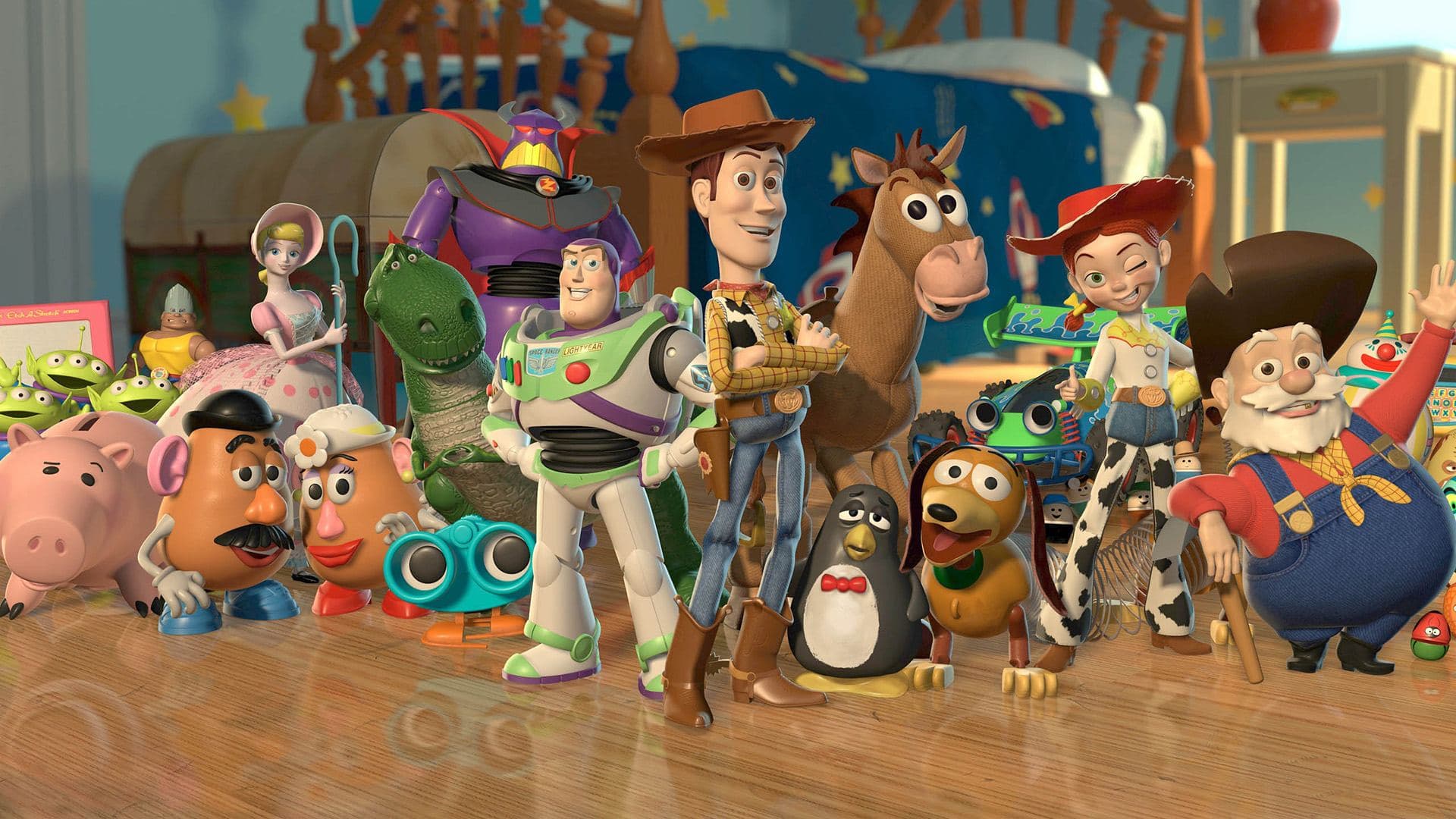
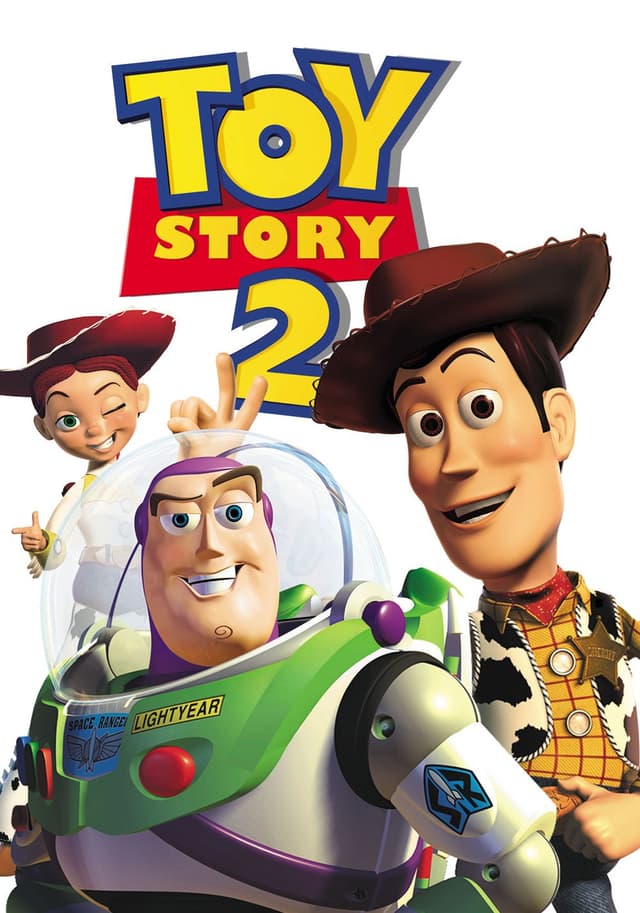
In "Toy Story 2," Woody, the beloved cowboy doll, faces an unexpected crisis when he is accidentally damaged during a play session with his owner, Andy. Fearing that he will be replaced, Woody is stolen by a toy collector named Al McWhiggin, who plans to sell him as part of a rare collection. Meanwhile, Buzz Lightyear and the rest of the toys embark on a daring rescue mission to save Woody. Along the way, Woody discovers his origins and meets other toys from his past, including Jessie, a spirited cowgirl, and Bullseye, a loyal horse. As Woody grapples with the choice between staying with his new friends or returning to Andy, the film explores themes of friendship, loyalty, and the bittersweet nature of growing up. Ultimately, Woody learns that being a toy means being there for the child who loves you, leading to a heartwarming conclusion that resonates with audiences of all ages.
What Is the Budget of Toy Story 2?
Toy Story 2 was produced on a budget of approximately $90 million, a substantial increase over the original Toy Story's $30 million price tag. The sequel's elevated cost reflected Pixar's growing ambitions and the technical demands of producing a feature-length computer-animated film with significantly more complex environments, characters, and lighting than its predecessor. Pixar was still a relatively small studio at the time, with roughly 450 employees handling every aspect of production.
The budget is particularly notable given the film's chaotic production history. Toy Story 2 was originally greenlit as a direct-to-video sequel with a modest budget, but Pixar promoted it to a full theatrical release partway through development. When the creative team scrapped approximately 95% of the existing story nine months before the scheduled release date, the budget ballooned as the entire film had to be rebuilt from scratch under extreme time pressure. Disney distributed the film through Buena Vista Pictures, and the final production cost reflected the compressed, all-hands rebuild that defined the project.
Key Budget Allocation Categories
- Computer Animation and Rendering: Pixar's proprietary RenderMan software handled all rendering, and Toy Story 2 required substantially more computing power than the original. New environments like Al's Toy Barn, the airport baggage system, and the elaborate Woody's Roundup television sequences demanded more detailed textures, more complex geometry, and longer render times per frame. The studio expanded its render farm significantly to meet the deadline.
- Story Development and Rework: The decision to scrap nearly the entire film nine months before release meant that story development costs were effectively doubled. The original direct-to-video storyline was abandoned, and John Lasseter, Andrew Stanton, Pete Docter, Lee Unkrich, and Ash Brannon led a round-the-clock rewrite. Storyboarding, voice recording sessions, and editorial work all had to be repeated from the ground up.
- Voice Cast Recording: Tom Hanks and Tim Allen returned as Woody and Buzz Lightyear, and the cast expanded to include Joan Cusack as Jessie, Kelsey Grammer as Stinky Pete the Prospector, and Wayne Knight as the villainous toy collector Al McWhiggin. Recording sessions for the new cast members, combined with re-records for returning actors to match the overhauled script, added to the voice production budget.
- Musical Score and Original Songs: Randy Newman returned to compose the score and wrote several new songs, including "When She Loved Me," performed by Sarah McLachlan. The song required dedicated recording and mixing sessions and ultimately earned an Academy Award nomination for Best Original Song. Newman's orchestral score was recorded with a full symphony orchestra.
- Technical Infrastructure and Pipeline: Pixar invested in upgrading its animation pipeline between the two films, including improvements to character rigging, cloth simulation, and hair rendering. These tools were essential for new characters like Jessie and Bullseye, whose designs demanded more sophisticated articulation than the relatively simple toy geometries in the first film.
How Does Toy Story 2's Budget Compare to Similar Films?
Toy Story 2's $90 million budget positioned it among the more expensive animated features of the late 1990s, though it remained competitive with both traditional and computer-animated contemporaries.
- Toy Story (1995): Budget $30M | Worldwide $373M. The original film cost a third of its sequel, reflecting the leaner scope and Pixar's smaller scale during its debut feature. The massive jump to $90 million for the sequel shows how rapidly the technical and creative bar was rising in computer animation.
- A Bug's Life (1998): Budget $120M | Worldwide $363M. Pixar's second feature actually cost more than Toy Story 2, partly because it was the studio's first film to build entirely new environments from scratch rather than reusing assets from a predecessor.
- Shrek (2001): Budget $60M | Worldwide $484M. DreamWorks' breakout hit was produced for significantly less than Toy Story 2, though DreamWorks was operating with a different pipeline and a less technically ambitious visual style at the time.
- Tarzan (1999): Budget $130M | Worldwide $448M. Disney's hand-drawn Tarzan, released the same year, cost $40 million more than Toy Story 2. Traditional animation at Disney's scale remained extremely labor-intensive, illustrating how CG was beginning to offer cost advantages for comparable spectacle.
- The Prince of Egypt (1998): Budget $60M | Worldwide $218M. DreamWorks' traditionally animated epic cost less than Toy Story 2 but earned far less at the box office, underscoring the commercial strength that Pixar's brand and storytelling quality had already built by the late 1990s.
Toy Story 2 Box Office Performance
Toy Story 2 opened on November 24, 1999, earning $80.1 million during its five-day Thanksgiving opening weekend in the United States. It went on to gross $245,852,179 domestically and $497,375,404 worldwide, making it the third highest-grossing film of 1999 behind Star Wars: Episode I and The Sixth Sense.
With a production budget of $90 million, the film needed approximately $180 million in worldwide gross to break even after accounting for prints and advertising costs (using the standard 2x production budget rule). Toy Story 2 cleared that threshold within its first two weeks of domestic release alone. The film's return on investment was approximately 453%, calculated as ($497,375,404 minus $90,000,000) divided by $90,000,000 times 100.
Toy Story 2 became the first animated sequel in history to gross more than its predecessor at the worldwide box office, surpassing the original Toy Story's $373 million total by over $120 million. This achievement was particularly significant because animated sequels at the time were almost exclusively direct-to-video affairs; Toy Story 2 proved that a sequel could match or exceed the original in both quality and commercial performance when given a full theatrical treatment.
Box Office Breakdown
Toy Story 2

Toy Story 2 Production History
Toy Story 2 was originally conceived as a direct-to-video sequel, following Disney's established practice of producing lower-budget animated sequels for home video (as they had done with The Return of Jafar and The Lion King II). Disney and Pixar initially agreed on a 60-minute direct-to-video format, with a smaller team and a reduced budget. The project was assigned to a secondary crew while Pixar's A-team worked on A Bug's Life.
As production progressed, Pixar's leadership grew increasingly dissatisfied with the quality of the direct-to-video version. The story centered on Woody being stolen by a toy collector named Al McWhiggin and discovering he was a valuable collectible from a 1950s television show called Woody's Roundup. While the premise had potential, the execution felt flat, and the emotional core was missing. In early 1999, roughly nine months before the scheduled November release, John Lasseter and the senior creative team watched a screening of the film in progress and made a drastic decision: they would scrap approximately 95% of the existing story and start over.
The rebuild was one of the most intense production periods in animation history. Lasseter took over as director, with Lee Unkrich and Ash Brannon serving as co-directors. Andrew Stanton, Pete Docter, and the writing team worked around the clock to craft a new screenplay that preserved the core premise but built an entirely different emotional arc around it. The character of Jessie the cowgirl, voiced by Joan Cusack, became the emotional center of the new version, and her backstory sequence set to Randy Newman's "When She Loved Me" became one of Pixar's most celebrated scenes.
The crunch took a serious toll on Pixar's staff. Employees worked seven-day weeks for months, and the studio later acknowledged that several team members suffered repetitive strain injuries during the push. One animator famously forgot to drop off his infant child at daycare during the production crunch, leaving the baby in a hot car (the child was rescued unharmed). Despite the human cost, the rebuilt film was completed on schedule and delivered to Disney for its Thanksgiving 1999 release. The experience led Pixar to implement stricter workplace safety and scheduling policies in subsequent productions.
Awards and Recognition
Toy Story 2 won the Golden Globe Award for Best Motion Picture in the Musical or Comedy category, beating live-action competition in a year that included Man on the Moon and Analyze This. The film was nominated for the Academy Award for Best Original Song for "When She Loved Me," written by Randy Newman and performed by Sarah McLachlan, though it lost to Phil Collins' "You'll Be in My Heart" from Tarzan.
The film earned the Grammy Award for Best Song Written for a Motion Picture for "When She Loved Me." It also won the BAFTA Children's Film Award and was nominated for the Annie Award for Outstanding Achievement in an Animated Theatrical Feature. The film was selected for preservation in the National Film Registry by the Library of Congress in 2021, alongside the original Toy Story, recognizing both films as culturally significant works in American cinema.
Critical Reception
Toy Story 2 holds a 100% approval rating on Rotten Tomatoes based on 163 reviews, with a weighted average score of 8.60 out of 10. The critical consensus describes it as one of the rare sequels that equals or surpasses its predecessor. On Metacritic, the film holds a score of 88 out of 100 based on 28 critic reviews, indicating "universal acclaim."
Critics praised the film's emotional depth, particularly the Jessie backstory sequence, which many reviewers called the most moving scene Pixar had produced to date. Roger Ebert gave the film four stars, writing that it was "a worthy sequel" that achieved "a new level of sophistication in computer animation." Kenneth Turan of the Los Angeles Times called it "one of those rare sequels that is the equal of the original in every way." The film's ability to function simultaneously as children's entertainment and as a meditation on mortality, obsolescence, and the fear of being forgotten was widely noted by critics.
The film's success validated Pixar's decision to promote the project from direct-to-video to theatrical release and to rebuild it from scratch rather than ship a version that did not meet the studio's quality standards. Toy Story 2 cemented Pixar's reputation as the premier animation studio of its era, demonstrating that the company could produce sequels without compromising creative integrity. It remains one of the highest-rated animated films in history and is frequently cited alongside The Godfather Part II and The Empire Strikes Back as one of the greatest sequels ever made.
Frequently Asked Questions
How much did it cost to make Toy Story 2 (1999)?
The production budget was $90,000,000, covering principal photography, visual effects, cast and crew salaries, locations, sets, post-production, and music. Marketing and distribution (P&A) costs are estimated at an additional $45,000,000 - $72,000,000, bringing the total studio investment to approximately $135,000,000 - $162,000,000.
How much did Toy Story 2 (1999) earn at the box office?
Toy Story 2 grossed $245,852,179 domestic, $251,523,225 international, totaling $497,375,404 worldwide.
Was Toy Story 2 (1999) profitable?
Yes. Against a production budget of $90,000,000 and estimated total costs of ~$225,000,000, the film earned $497,375,404 theatrically - a 453% ROI on production costs alone.
What were the biggest costs in producing Toy Story 2?
The primary cost drivers were above-the-line talent (Tom Hanks, Tim Allen, Joan Cusack); multi-year animation production, celebrity voice talent, and original musical compositions.
How does Toy Story 2's budget compare to similar animation films?
At $90,000,000, Toy Story 2 is classified as a mid-budget production. The median budget for wide-release animation films in the era ranges from $30 - 80M for mid-budget to $150M+ for tentpoles. Comparable budgets: Bad Boys for Life (2020, $90,000,000); Contact (1997, $90,000,000); DC League of Super-Pets (2022, $90,000,000).
Did Toy Story 2 (1999) go over budget?
There are no widely reported accounts of significant budget overruns for this production. However, studios rarely disclose precise budget overrun figures publicly. The reported production budget reflects the final estimated cost.
What was the return on investment (ROI) for Toy Story 2?
The theatrical ROI was 452.6%, calculated as ($497,375,404 − $90,000,000) ÷ $90,000,000 × 100. This measures gross revenue against production budget only - it does not account for P&A or exhibitor shares.
What awards did Toy Story 2 (1999) win?
Nominated for 1 Oscar. 21 wins & 27 nominations total.
Who directed Toy Story 2 and who were the key crew members?
Directed by John Lasseter, written by Andrew Stanton, Doug Chamberlin, Rita Hsiao, Chris Webb, shot by Sharon Calahan, with music by Randy Newman, edited by Lee Unkrich, David Ian Salter.
Where was Toy Story 2 filmed?
Toy Story 2 was filmed in United States of America.
Filmmakers
Toy Story 2

Build budgets like this one in Saturation
Start from an industry-standard feature film template, import the schedule and rates you already have, and let the cost report keep itself current as you spend. Real-time collaboration, no spreadsheets.