Incentive:
15-20% base (up to 27.5% with bonuses)
Annual Cap: $100M (QPF) / $25M (Practical) through 2043
Project Cap: None
More Info:
How the Arizona Motion Picture Production Program Works
Arizona's Motion Picture Production Program (MPPP) is a fully refundable tax credit administered by the Arizona Commerce Authority (ACA). The program allows productions to recover a significant portion of qualified expenditures incurred while producing content in Arizona, with the credit structure designed to reward productions that commit higher levels of in-state spending and use Arizona-based facilities and workforce.
The credit is tiered based on total Arizona spend. Productions spending up to $10 million earn a 15% base credit. Those spending between $10 million and $35 million earn 17.5%. Productions that exceed $35 million in Arizona expenditures earn the top 20% base rate. On top of these base rates, productions may qualify for additional bonus credits through the use of Qualified Production Facilities, Arizona resident labor, and long-term facility tenant relationships, pushing the maximum combined credit to 27.5%.
The refundable structure means the credit's value is not limited by the production company's Arizona tax liability. If the credit exceeds the taxes owed, the state pays the difference as a cash refund. This makes the program accessible to out-of-state production companies and single-purpose LLCs that have little or no Arizona tax exposure.
Arizona Film Tax Credit Rates
The base credit rates are:
Productions spending up to $10 million in Arizona: 15%
Productions spending between $10 million and $35 million: 17.5%
Productions spending more than $35 million: 20%
Bonus credit opportunities stack on top of the base rate:
Arizona resident labor bonus: 2.5% on wages paid to Arizona residents in production labor positions
Qualified Production Facility (QPF) usage bonus: 2.5% for productions conducting principal photography at a QPF or using an Arizona QPF for all pre-production, post-production, and editing work while filming at practical locations
Long-term facility tenant bonus: 2.5% if the production is produced in association with a company that is a long-term tenant of a QPF
A production meeting all bonus criteria could earn up to 27.5% on qualifying Arizona expenditures, though qualifying for all three bonuses simultaneously requires specific circumstances to align across facility use, labor composition, and tenant relationships.
Annual Program Caps
The MPPP operates under two separate annual caps that run through December 31, 2043:
Qualified Production Facilities (QPF) track: $100,000,000 per year
Practical Locations track: $25,000,000 per year
Productions should be aware that the QPF annual cap was recently increased from a lower threshold and that the practical locations cap remains more limited. Productions planning to use practical locations exclusively should apply early in the fiscal year as the $25 million cap can commit faster than the QPF allocation.
Minimum Spend Requirement
Arizona's MPPP does not have a single stated minimum in-state spend dollar threshold in the way some state programs do. Instead, productions must produce more than 50% of their principal photography in Arizona to qualify. The program effectively requires meaningful in-state production activity rather than imposing a specific dollar floor, though productions with minimal Arizona spend are unlikely to generate credits of significant size given the percentage-based structure.
Any amount that is below the first tier threshold means the production earns the 15% base. The scaling structure incentivizes larger in-state commitments by providing higher rates as spending increases through the tiers.
Eligible Production Types
The Arizona MPPP covers a wide range of content formats:
Feature films (narrative and documentary)
Television series and miniseries
Television movies (MOWs)
Pilots
Commercials
Music videos
Web series
Reality television
Animation
Productions must conduct more than 50% of their principal photography in Arizona to qualify for the MPPP. This 50% threshold is measured in production days, meaning the majority of the shoot must physically occur within Arizona state lines.
What Qualifies as an Arizona Expenditure
Qualified production expenses include goods, services, and labor costs that are directly related to pre-production, production, and post-production activities conducted in Arizona. Specifically eligible categories include:
Below-the-line labor wages paid to workers performing services in Arizona, including both Arizona residents and non-residents
Above-the-line wages for Arizona residents
Equipment rentals from Arizona-based companies
Location fees paid to Arizona property owners
Set construction materials purchased from Arizona vendors
Catering and craft services from Arizona businesses
Lodging costs for cast and crew while working in Arizona
Transportation and vehicle costs from Arizona vendors
Post-production services performed by Arizona facilities
Wardrobe and props sourced from Arizona suppliers
Costs that do not qualify include story rights and script acquisition, music rights and licensing, marketing and distribution expenses, above-the-line wages for non-Arizona residents, and any costs clearly incurred outside the state.
The Three-Step Certification Process
Arizona's MPPP uses a formal three-step certification process that productions must follow in sequence to receive the credit:
Step 1: Pre-Approval Application
Before principal photography begins in Arizona, the production company submits a pre-approval application to the Arizona Commerce Authority. This application includes the production budget, the projected Arizona expenditure breakdown, an estimated credit amount, details about the production company, and information about whether the production will use a Qualified Production Facility. The ACA reviews the application and issues a pre-approval certification if the project qualifies.
The pre-approval application also requires payment of a non-refundable application fee equal to 1% of the pre-approved credit amount, capped at $100,000. Productions should factor this fee into their budget planning. A refundable administrative fee may also apply.
Step 2: Nine-Month Notification Report
At the nine-month mark of the production, the production company files a notification report with the ACA. This report provides an update on actual Arizona expenditures to date, any material changes from the pre-approval application, and the projected final credit amount. The nine-month report allows the ACA to track program utilization and gives productions an opportunity to flag any issues before the final certification.
Step 3: Post-Approval Application
After production wraps, the production company submits a post-approval application with a complete CPA-certified expenditure report documenting all qualified Arizona expenses. The ACA reviews the final documentation and issues the credit certificate. The CPA audit is required for all productions, not just larger ones, and audit costs are typically borne by the production company.
Qualified Production Facilities in Arizona
Arizona's film infrastructure has grown significantly in the Phoenix metro area. The Phoenix area offers multiple soundstage complexes and production facilities that qualify as QPFs under the program, making it possible for productions to access both the facility bonus and the practical location bonus depending on how their shoot is structured.
Tucson also has a growing production community and access to the state's distinctive desert and borderlands landscapes. The University of Arizona and local studios in Tucson have contributed to film education and crew development in southern Arizona, building a workforce for productions that locate there.
Arizona Film Locations
Arizona's visual diversity gives productions access to shooting environments that are difficult to replicate anywhere else:
Phoenix Metro
Greater Phoenix offers a sprawling modern urban environment with contemporary architecture, desert residential neighborhoods, business districts, and a freeway infrastructure that makes logistics management efficient. The Phoenix area's rapid growth has created a wide variety of architectural styles and neighborhood characters suitable for suburban and urban narratives.
Sonoran Desert
The Sonoran Desert, which covers much of central and southern Arizona, is the most biologically diverse desert in North America. Saguaro cacti, rocky ridgelines, dry river washes, and dramatic desert skies create a visual environment used in productions ranging from westerns to science fiction. The desert also provides extremely reliable weather, with hundreds of sunny days each year.
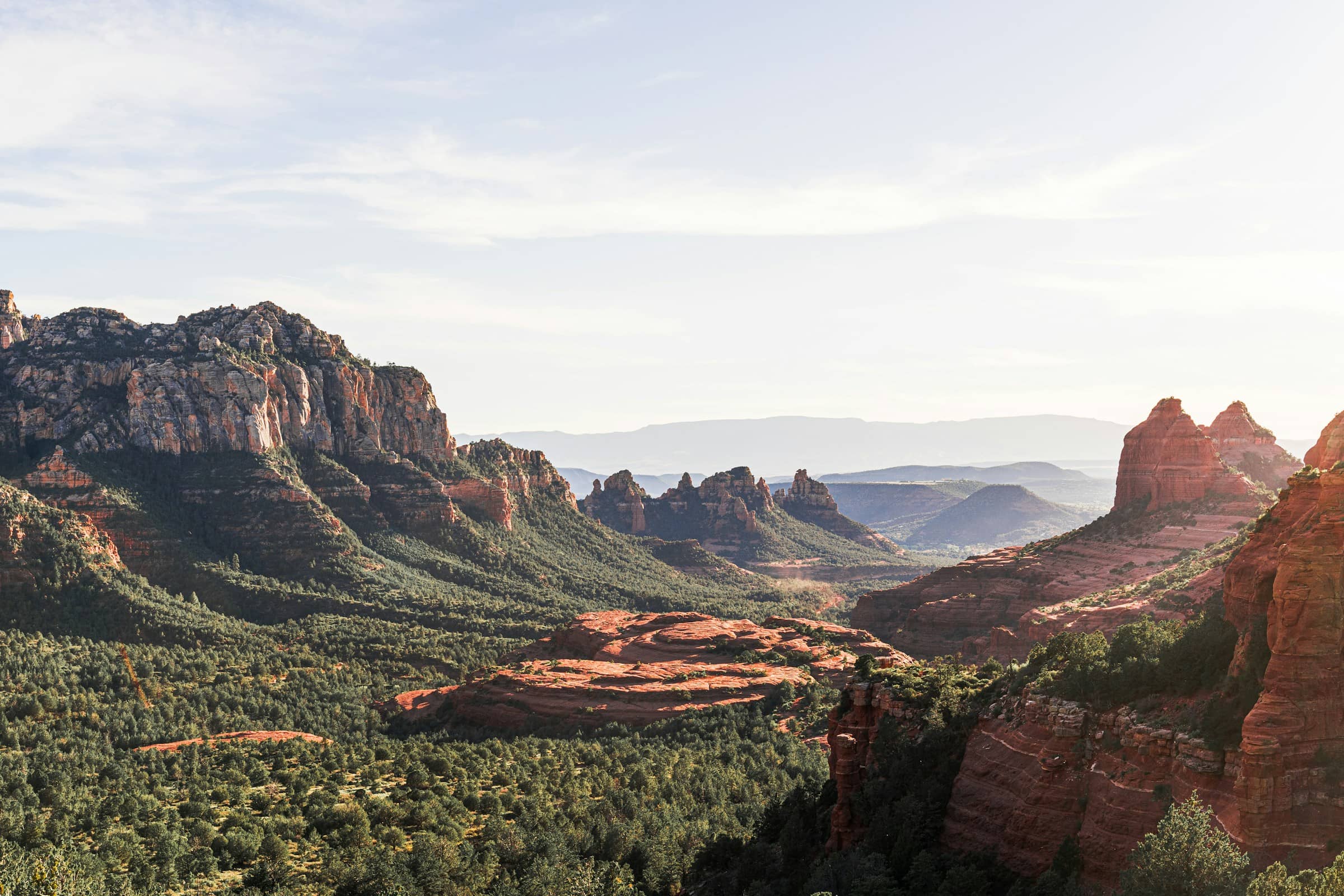
Sedona and Red Rock Country
Sedona's red sandstone formations and the surrounding canyon country in the Verde Valley are among the most recognizable geological landscapes in the United States. Red rock buttes, slot canyons, and the dramatic color contrasts of the Sedona area attract productions that need an iconic American Southwest look.
Monument Valley (Northern Arizona)
Monument Valley straddles the Arizona-Utah border and is among the most filmed landscapes in American cinema. The Navajo Nation controls the land and requires production companies to obtain tribal filming permits and work with tribal liaison programs, but the visual payoff is unmatched for productions that need the definitive American West setting.
Prescott and Northern Arizona Highlands
Northern Arizona above 5,000 feet transitions from desert to pine forest and high country terrain. Prescott, Flagstaff, and the surrounding Coconino and Kaibab National Forests give productions access to mountain environments, Victorian-era architecture in historic downtown Prescott, and the Grand Canyon and surrounding canyon country.
How Arizona Compares to Neighboring States
Arizona vs. New Mexico
New Mexico's film incentive offers up to 40% on qualifying expenditures and has a deeper track record of attracting large studio productions. However, New Mexico's program has experienced periods of high demand that stretched the fund. Arizona's $125 million combined annual cap provides substantial capacity, and Arizona's practical locations, particularly in the Phoenix metro area, offer urban production infrastructure that New Mexico's program cannot match.
Arizona vs. Utah
Utah's refundable tax credit tops out at 25% for most productions, compared to Arizona's potential 27.5% with all bonuses. Both states offer excellent desert and canyon locations, and both programs are refundable. Utah's rural bonus structure and community film program create different incentive pathways for smaller productions. For larger productions spending over $35 million in-state, Arizona's 20% base plus bonuses is competitive with Utah's top rates.
Arizona vs. California
California's program is heavily oversubscribed and limited to productions meeting specific criteria. Arizona's $125 million combined annual cap provides far more accessible funding, and Arizona's cost of living and production service costs run substantially lower than in the Los Angeles market. Productions that want Southwestern visual environments and lower crew costs often choose Arizona over California without any sacrifice in production quality.
Program History
Arizona has offered film production incentives since 2005, though the program's structure has evolved substantially over the years. After a period when the state eliminated its film incentive, Arizona re-enacted the MPPP in 2023 with expanded funding and a structure that differentiates between Qualified Production Facilities and practical locations. The current program's annual caps of $100 million (QPF) and $25 million (practical) represent a substantial commitment to film industry development in Arizona, backed by legislative authorization through 2043.
The 2043 sunset date is one of the longest program horizons in the country, giving studio decision-makers and streaming platforms the long-term certainty they need to justify permanent infrastructure investment in Arizona. Several major productions have committed to ongoing Arizona shoots based on confidence in the program's long-term stability.
Managing Arizona Production Budgets with Saturation
Arizona's three-step certification process means productions need to track qualified expenditures precisely from pre-production through the final CPA-certified cost report. Any discrepancy between the pre-approval projections and the final certified expenditures needs to be documented and explained in the post-approval application.
Saturation's cloud-based budgeting software allows productions to track Arizona-qualified versus non-qualified expenditures in real time, making it straightforward to generate the documentation the ACA requires at each stage of the certification process. Productions can share live budget reports with their CPA from within the platform, reducing the time and cost of the required audit.
For productions using a QPF and seeking the facility bonus, Saturation tracks facility-related costs separately so the bonus calculation is clean and supportable. The nine-month notification report, which requires updated expenditure projections, is easier to compile when the budget system has been tracking actuals against projections throughout the shoot.
Frequently Asked Questions
Is the Arizona MPPP credit refundable?
Yes. The Arizona MPPP provides a refundable tax credit, meaning productions receive any excess credit above their Arizona tax liability as a cash payment from the state. This makes the program accessible to out-of-state production companies with no Arizona tax liability.
Can a production qualify for the QPF bonus and the practical location bonus simultaneously?
Yes, but only under a specific scenario. A production filming at practical locations across Arizona while conducting all pre-production, post-production, and editorial work at an Arizona Qualified Production Facility can qualify for the QPF bonus despite not shooting on a stage. The production must meet the facility usage requirements defined by the ACA.
What is the application fee?
The non-refundable application fee is 1% of the pre-approved credit amount, capped at $100,000. For a production anticipating a $5 million credit, the application fee would be $50,000. For a production expecting a $15 million credit, the fee is capped at $100,000. A refundable administrative fee may also apply.
Does Arizona require a CPA audit?
Yes. A CPA-certified expenditure report is required for all productions as part of the post-approval application. Productions should identify a CPA familiar with film production expenditure audits early in the production process and budget for audit costs accordingly.
What happens if the practical locations cap is exhausted?
If the $25 million practical locations annual cap is committed before a production's certification is processed, the production may be placed in queue for the following fiscal year. Productions using a Qualified Production Facility access the larger $100 million QPF cap, which provides more capacity and less risk of year-end cutoffs.
Contact the Arizona Commerce Authority
The Arizona Commerce Authority Film and Digital Media Office administers the MPPP and is the primary point of contact for productions considering Arizona. Information including the current application, program guidelines, QPF registry, and contact details is available at azcommerce.com/film-media. Productions are encouraged to contact the ACA early in development to discuss program eligibility and the certification process before committing to an Arizona shoot.
Arizona Film Office:
Arizona Film & Digital Media Office
100N, 7th Ave. Suite 400, Phoenix, AZ 85007
Applying for the credit?
Get Free Template
Use our budget template to add qualified expenses to the proper chart of accounts as required by the state.