Once Upon a Time in Hollywood Budget
 ComedyDramaThriller2h 41m
업데이트
Synopsis
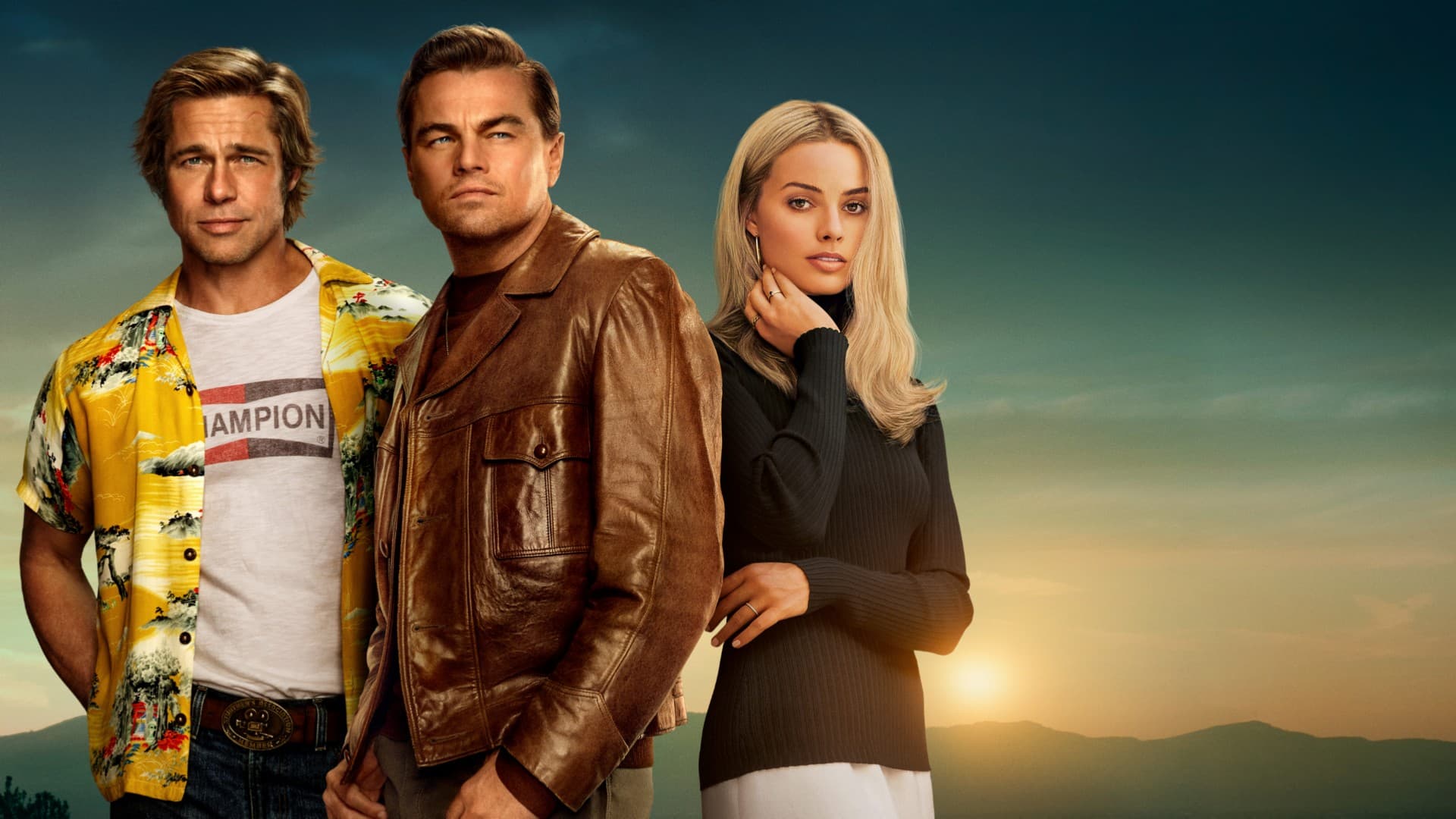
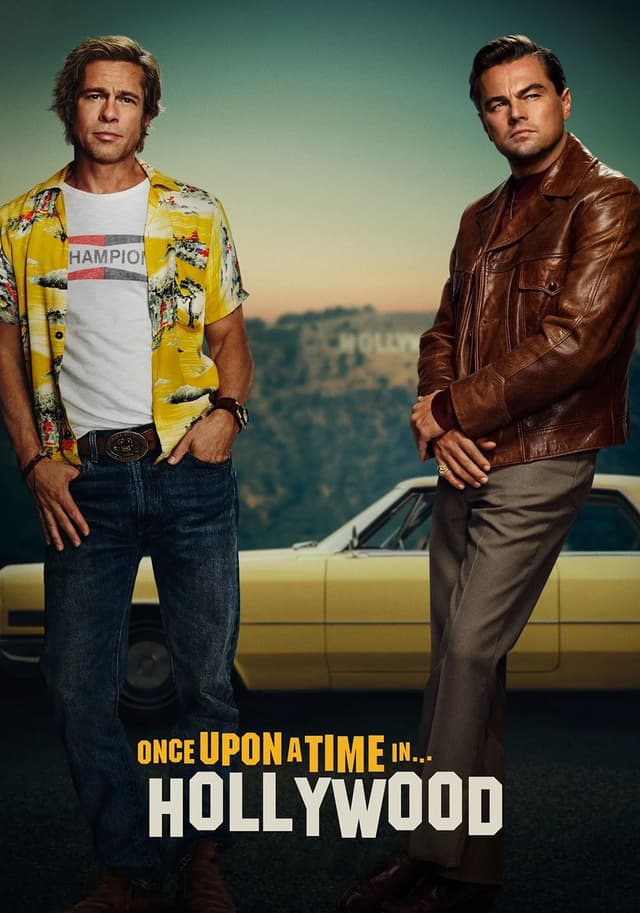
In 1969 Los Angeles, fading television western star Rick Dalton and his longtime stunt double and driver Cliff Booth try to hold on in a film industry that is leaving them behind. Dalton's new neighbors on Cielo Drive are Roman Polanski and Sharon Tate, a rising star enjoying the success he has lost. When Booth gives a hitchhiker a ride to Spahn Ranch, he crosses paths with the Manson Family, setting up a night in August that unfolds very differently from history.
What Is the Budget of Once Upon a Time in Hollywood?
Once Upon a Time in Hollywood (2019), written and directed by Quentin Tarantino and released by Sony Pictures under its Columbia Pictures label, had a production budget of $95,000,000. That is the budget The Hollywood Reporter said Sony agreed to in November 2017 as one of Tarantino's conditions for the film, and it sits inside the range Deadline reported on opening weekend, $90,000,000 to $96,000,000 net. Deadline also reported that its sources put the cost at $96,000,000 before prints and advertising, while Sony itself gave Deadline a figure of $90,000,000, which is the number Box Office Mojo and The Numbers list. Saturation uses $95,000,000 and treats $90,000,000 to $96,000,000 as the reported range.
The terms around that number were unusual for a studio film. Sony won the project in a bidding war after Tarantino ended his career-long partnership with Harvey and Bob Weinstein, and it agreed to give him final cut; The Hollywood Reporter reported that his terms also had the rights reverting to him after 10 to 20 years. China's Bona Film Group co-financed 25% of the cost, Deadline reported. Another major cost sat outside the budget: 30% of first-dollar gross went into a pool shared by Tarantino, Leonardo DiCaprio and Brad Pitt, paid before Sony recouped its costs, which pushed the film's break-even point well above what a $95,000,000 production would normally need.
Key Budget Allocation Categories
Sony has not published a line-item budget, but the production record shows where the money went. It points to a production that spent on recreating 1969 Los Angeles physically rather than digitally.
- Cast: Leonardo DiCaprio and Brad Pitt were each paid $10,000,000, roughly half what they usually command, according to Variety, a cut both took to work with Tarantino. Both also shared in the first-dollar gross pool, which is paid from box office receipts rather than the production budget.
- Period Production Design: Barbara Ling's team dressed real streets back to 1969. They covered the LED signs on the Pussycat Theater and rebuilt its neon lettering, restored the marquees of the Bruin and Fox Village theaters in Westwood, recreated the Larry Edmunds Bookshop storefront and dressed the Playboy Mansion for the party scene. The work won the Academy Award for Best Production Design.
- Sets and Backlots: Spahn Ranch, destroyed by a wildfire in 1970, was rebuilt over about three months at Corriganville Movie Ranch in Simi Valley, California. The western town for the show Lancer was built on a Universal Studios backlot street.
- Picture Cars and Street Closures: Stretches of the Hollywood Freeway and the Marina Freeway were closed for hours and filled with vintage cars for the driving scenes, and the Paramount Drive-in stood in for the long-demolished Van Nuys drive-in.
- Film Stock and Visual Effects: Robert Richardson shot on Kodak 35mm film with Panavision cameras and older anamorphic lenses, adding black-and-white, Super 8 and 16mm Ektachrome footage for the shows within the film. Tarantino wanted no computer-generated imagery, but Luma Pictures and Lola VFX still delivered more than 75 digital shots, mostly to erase modern billboards and buildings.
- Music Licensing: The film has no original score. Tarantino and music supervisor Mary Ramos built the soundtrack from licensed 1960s recordings, including several Paul Revere and the Raiders tracks, plus period KHJ radio jingles and DJ patter, after listening to 14 hours of 1969 KHJ broadcasts.
How Does Once Upon a Time in Hollywood's Budget Compare to Similar Films?
Here is how the film compares with the three Tarantino films before it and with two other studio period films set in Los Angeles. Worldwide figures are Box Office Mojo's original theatrical release totals.
- Django Unchained (2012): Budget $100,000,000 | Worldwide $425,368,238. Tarantino's highest grosser cost $5,000,000 more and earned $47,750,557 more. Deadline estimated Once Upon a Time in Hollywood needed just over $400,000,000 to break even, a little under Django's total.
- Inglourious Basterds (2009): Budget $70,000,000 | Worldwide $321,455,689. Once Upon a Time in Hollywood cost 36% more and grossed 17% more, passing Inglourious Basterds in its ninth weekend to become Tarantino's second-highest grossing film.
- The Hateful Eight (2015): Budget $44,000,000 | Worldwide $155,760,117. Tarantino's previous film cost less than half as much. Once Upon a Time in Hollywood grossed 2.4 times as much, with DiCaprio and Pitt in the leads and a summer release in place of a Christmas roadshow.
- The Nice Guys (2016): Budget $50,000,000 | Worldwide $71,261,763. Shane Black's comedy set in 1977 Los Angeles shows the risk of an original period piece: Once Upon a Time in Hollywood's $41,082,018 opening weekend was larger than The Nice Guys' entire domestic gross of $36,261,763.
- Babylon (2022): Budget $78,000,000 | Worldwide $65,267,446. Damien Chazelle's 1920s Hollywood epic paired the same two stars, Brad Pitt and Margot Robbie, cost $17,000,000 less and grossed less than its own budget, a gap that points to Tarantino's name, more than the cast, as the draw.
Once Upon a Time in Hollywood Box Office Performance
Once Upon a Time in Hollywood premiered in competition at the Cannes International Film Festival on May 21, 2019, and opened in the United States and Canada on July 26, two weeks ahead of its original August 9 date. It took $41,082,018 from 3,659 theaters in its opening weekend, including about $5,800,000 from Thursday previews, finishing second behind The Lion King (2019) and giving Tarantino the biggest opening of his career. PostTrak found that 47% of opening-weekend audiences came mainly because of the director, against a typical 7%. The film went on to gross $142,502,728 in the United States and Canada and $235,114,953 internationally, where its largest markets were the United Kingdom ($26,033,998), France ($21,810,769), Germany ($20,383,755) and Russia and the CIS ($19,250,463), for $377,617,681 worldwide according to Box Office Mojo, a total that covers the original release and a small 2020 Australian re-release. A release in China was cancelled on October 18, 2019, one week before it was due, after Tarantino declined to change the Bruce Lee scene.
Box Office Mojo's all-releases total of $409,434,480 also counts 2024 and 2026 entries for Australia and New Zealand whose totals nearly duplicate the original run's cumulative grosses, so they are excluded here; The Numbers reports $378,306,539 worldwide. Deadline reported that Sony's global marketing spend was around $110,000,000, which is the prints and advertising estimate used below.
Box Office Breakdown
Once Upon a Time in Hollywood

At 84%, "Once Upon a Time in Hollywood" earned roughly $1.84 for every $1 invested.
That gross-to-cost measure flatters this film more than most. Theaters keep a share of every ticket, and the first-dollar pool paid Tarantino, DiCaprio and Pitt before Sony recouped anything, so Deadline estimated the film needed just over $400,000,000 worldwide to break even, while a source told The Hollywood Reporter in 2017 that it needed $375,000,000. The theatrical run finished between those two estimates, leaving the size of its profit to home entertainment and television; The Numbers estimates domestic DVD and Blu-ray sales at $30,781,012, and an extended cut with four additional scenes returned to theaters on October 25, 2019. The United States and Canada supplied 37.7% of the gross, and the film finished as Tarantino's second-highest grosser after Django Unchained.
Once Upon a Time in Hollywood Production History
Tarantino developed the story slowly over several years, first as a novel, and traced its origin to the making of Death Proof (2007), when he agreed to a request to use Kurt Russell's longtime stunt double, John Casino, for a small part. The relationship between a star and his double fascinated Tarantino. He created the stuntman Cliff Booth first, then the actor Rick Dalton, made them Sharon Tate's neighbors in 1969 and wrote the ending before anything else, the first time he had worked backwards. To get inside Dalton's career he also wrote five half-hour episodes of Dalton's fictional western series, Bounty Law. He kept the only copy of the third act in a safe, and DiCaprio, Pitt and Margot Robbie were the only others to read the whole script.
The project was first reported in July 2017, with Harvey and Bob Weinstein involved. After the sexual abuse allegations against Harvey Weinstein that autumn, Tarantino cut ties with the brothers, who had backed his entire career, and David Heyman joined as a producer alongside Tarantino and Shannon McIntosh. Sony confirmed in November 2017 that it had won the film over Warner Bros., Universal, Paramount, Annapurna and Lionsgate. DiCaprio signed in January 2018, Pitt was cast as Cliff Booth when the title was announced on February 28, 2018, and Robbie followed in March as Sharon Tate; Tom Cruise had also been considered for Booth. Burt Reynolds was cast as Spahn Ranch owner George Spahn but died in September 2018 before filming his scenes and was replaced by Bruce Dern. It is also the final film of Luke Perry, who died on March 4, 2019, and it is dedicated to him.
Principal photography ran from June 18 to November 1, 2018, in and around Los Angeles. Tarantino's brief was to turn 2018 Los Angeles into 1969 without computer-generated imagery, so the crew shot at real landmarks wherever it could: Musso & Frank Grill, which supervising location manager Rick Schuler called a "must have" for Tarantino; the Playboy Mansion, after long negotiations with a new owner who was in the middle of renovating it; and Jay Sebring's actual house for the scene of Bruce Lee training Sebring. The Tate and Polanski house on Cielo Drive had been demolished in 1994, so its scenes were split across three locations, including a Universal City cul-de-sac for the driveway. Dalton flubbing his lines on the Lancer set was DiCaprio's idea, which led Tarantino to add the trailer meltdown that follows, and DiCaprio improvised that whole scene.
Sony first dated the film for August 9, 2019, the 50th anniversary of the Tate murders, before moving it up to July 26. The Cannes premiere fell on the 25th anniversary of the festival premiere of Pulp Fiction (1994), and the film screened there as a 35mm print. Tarantino later published a novelization in June 2021 that he described as a complete rethinking of the story, and in 2025 Netflix acquired his screenplay for a follow-up centered on Cliff Booth, with David Fincher directing.
Awards and Recognition
The film's awards run was led by Brad Pitt's supporting performance, which won every major televised acting award in its category, and Barbara Ling's production design.
- Academy Awards: Ten nominations at the 92nd Academy Awards, including Best Picture, Best Director, Best Actor for Leonardo DiCaprio and Best Original Screenplay. It won two: Best Supporting Actor for Brad Pitt and Best Production Design for Barbara Ling and Nancy Haigh.
- Golden Globe Awards: Won three of five nominations, Best Motion Picture Musical or Comedy, Best Supporting Actor for Pitt and Best Screenplay for Tarantino.
- British Academy Film Awards: Ten nominations, including Best Film, with a win for Pitt as Best Supporting Actor.
- Critics' Choice Movie Awards: Won four of twelve nominations, Best Picture, Best Supporting Actor, Best Original Screenplay and Best Production Design.
- Screen Actors Guild Awards: Pitt won Outstanding Performance by a Male Actor in a Supporting Role, with further nominations for the cast ensemble, DiCaprio and the stunt ensemble.
- Cannes Film Festival: Competed for the Palme d'Or and won the festival's Palm Dog award for its canine performer.
The National Board of Review named it one of the ten best films of 2019 and gave Tarantino Best Director and Pitt Best Supporting Actor, and the American Film Institute also placed it among its ten films of the year. The Writers Guild of America later ranked the screenplay the 22nd greatest of the 21st century, and Tarantino has said it is his favorite of his own films.
Critical Reception
Reviews were strongly positive. The film holds 86% on Rotten Tomatoes from 581 critics, with an average rating of 7.9/10, and a Metacritic score of 84 out of 100 from 62 critics, indicating universal acclaim. Audiences were cooler: CinemaScore polls gave it a B, and PostTrak audiences gave it 4 out of 5 stars with a 58% definite recommend. The Rotten Tomatoes consensus reads: "Thrillingly unrestrained yet solidly crafted, Once Upon a Time in Hollywood tempers Tarantino's provocative impulses with the clarity of a mature filmmaker's vision."
Peter Bradshaw of The Guardian gave it five stars and called it "Tarantino's dazzling LA redemption song." Brian Tallerico of RogerEbert.com gave it four out of four, calling it "layered and ambitious, the product of a confident filmmaker working with collaborators completely in tune with his vision," and Peter Travers of Rolling Stone wrote, "I wouldn't change a frame." Owen Gleiberman of Variety was more measured, calling it a "heady engrossing collage of a film" that was "not, in the end, a masterpiece."
The sharpest criticism was aimed at its politics and portrayals. Richard Brody of The New Yorker called it an "obscenely regressive vision of the sixties," and the depiction of Bruce Lee was criticized by Lee's daughter Shannon Lee and by Kareem Abdul-Jabbar, who called it "sloppy and somewhat racist." Since release it has regularly appeared on critics' lists of the best films of the 2010s and of the 21st century.
자주 묻는 질문
How much did it cost to make Once Upon a Time in Hollywood (2019)?
Once Upon a Time in Hollywood had a production budget of $95,000,000, the figure The Hollywood Reporter said Sony agreed to when it won the film in 2017. Deadline reported a range of $90,000,000 to $96,000,000 net, and Sony spent around a further $110,000,000 on global marketing.
How much did Once Upon a Time in Hollywood make at the box office?
Once Upon a Time in Hollywood grossed $377,617,681 worldwide, including $142,502,728 in the United States and Canada and $235,114,953 internationally, according to Box Office Mojo. It opened to $41,082,018 from 3,659 theaters, the biggest opening of Tarantino's career.
Was Once Upon a Time in Hollywood profitable?
On gross versus cost, yes: its $377,617,681 worldwide gross against about $205,000,000 in production and marketing is a net return of about $172,617,681, an ROI of roughly 84%. Because 30% of first-dollar gross went to Tarantino, DiCaprio and Pitt, Deadline estimated theatrical break-even at just over $400,000,000, so home entertainment and TV revenue decided the final profit.
Why do sources give different budgets for Once Upon a Time in Hollywood?
The Hollywood Reporter reported a $95,000,000 budget as part of Sony's 2017 deal with Tarantino. At release, Sony itself put the cost at $90,000,000, according to Deadline, while Deadline's own sources said $96,000,000 before prints and advertising. Box Office Mojo and The Numbers list Sony's $90,000,000. Saturation uses $95,000,000, which sits inside that range.
Why does Box Office Mojo show a higher worldwide total for Once Upon a Time in Hollywood?
Box Office Mojo's all-releases total of $409,434,480 also counts 2024 and 2026 entries for Australia and New Zealand whose totals nearly duplicate the original run's cumulative grosses, so Saturation excludes them. Its original release plus a small 2020 re-release comes to $377,617,681, and The Numbers reports $378,306,539.
How much were Leonardo DiCaprio and Brad Pitt paid for Once Upon a Time in Hollywood?
Leonardo DiCaprio and Brad Pitt were each paid $10,000,000, roughly half what they usually command, according to Variety. Deadline reported that both also shared a pool of 30% of first-dollar gross with Tarantino.
Who financed Once Upon a Time in Hollywood?
Sony Pictures financed and released the film through Columbia Pictures after beating Warner Bros., Universal, Paramount, Annapurna and Lionsgate in a November 2017 bidding war. China's Bona Film Group co-financed 25%, Heyday Films and Tarantino's Visiona Romantica co-produced. Tarantino's terms also had the rights reverting to him after 10 to 20 years, The Hollywood Reporter reported.
Where was Once Upon a Time in Hollywood filmed?
It was filmed in and around Los Angeles from June 18 to November 1, 2018, at locations including Musso & Frank Grill, the Playboy Mansion, the Bruin and Fox Village theaters in Westwood and the Pussycat Theater. Spahn Ranch was rebuilt at Corriganville Movie Ranch in Simi Valley.
What awards did Once Upon a Time in Hollywood win?
It won two of its ten Academy Award nominations, Best Supporting Actor for Brad Pitt and Best Production Design for Barbara Ling and Nancy Haigh. It also won three Golden Globes, including Best Motion Picture Musical or Comedy, plus Pitt's BAFTA and Screen Actors Guild awards.
Why was Once Upon a Time in Hollywood not released in China?
China cancelled the release on October 18, 2019, one week before its scheduled date, after Bruce Lee's daughter Shannon Lee complained to the China Film Administration about the film's portrayal of her father and Tarantino declined to change the scene.
Filmmakers
Once Upon a Time in Hollywood

Official Trailer
Saturation에서 이런 예산을 만들어 보세요
업계 표준 장편 영화 템플릿으로 시작해 이미 가진 일정과 요율을 가져오고, 지출과 함께 비용 보고서가 자동으로 최신 상태를 유지하게 하세요. 실시간 협업, 스프레드시트 없이.