What is a Videographer?
Overview
What Is a Videographer?
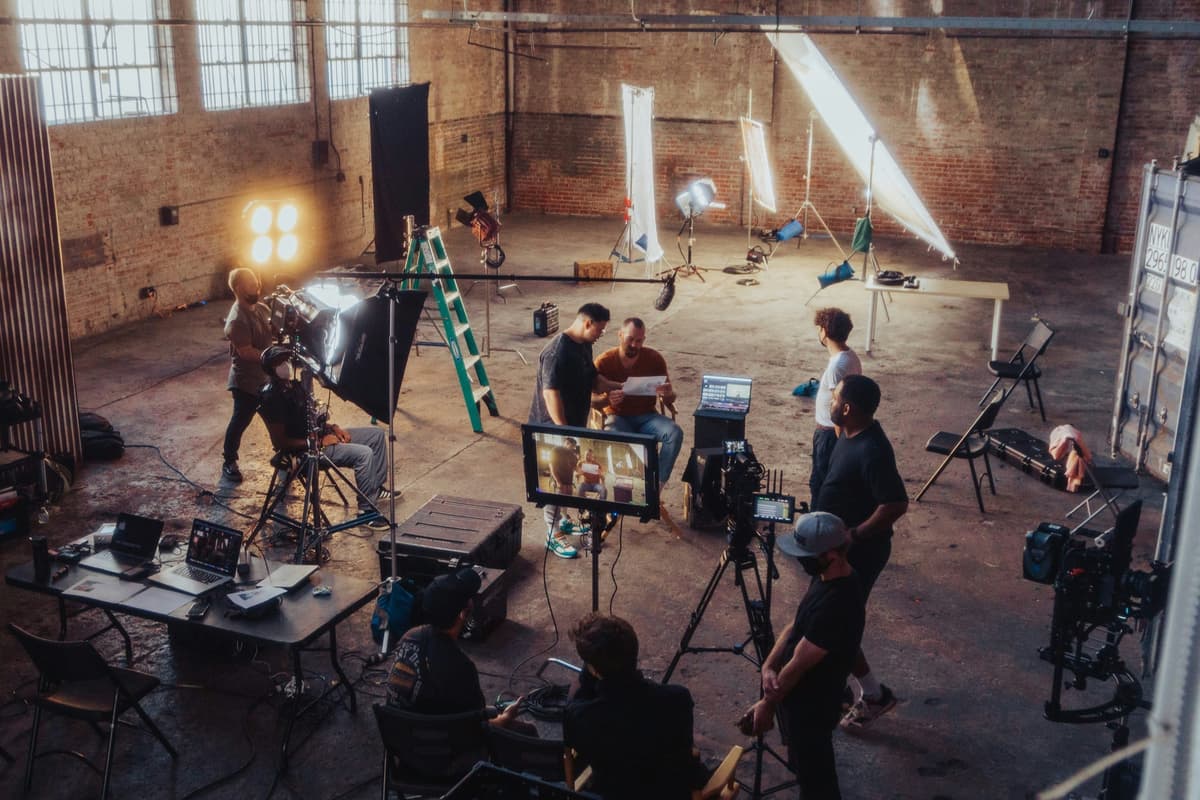
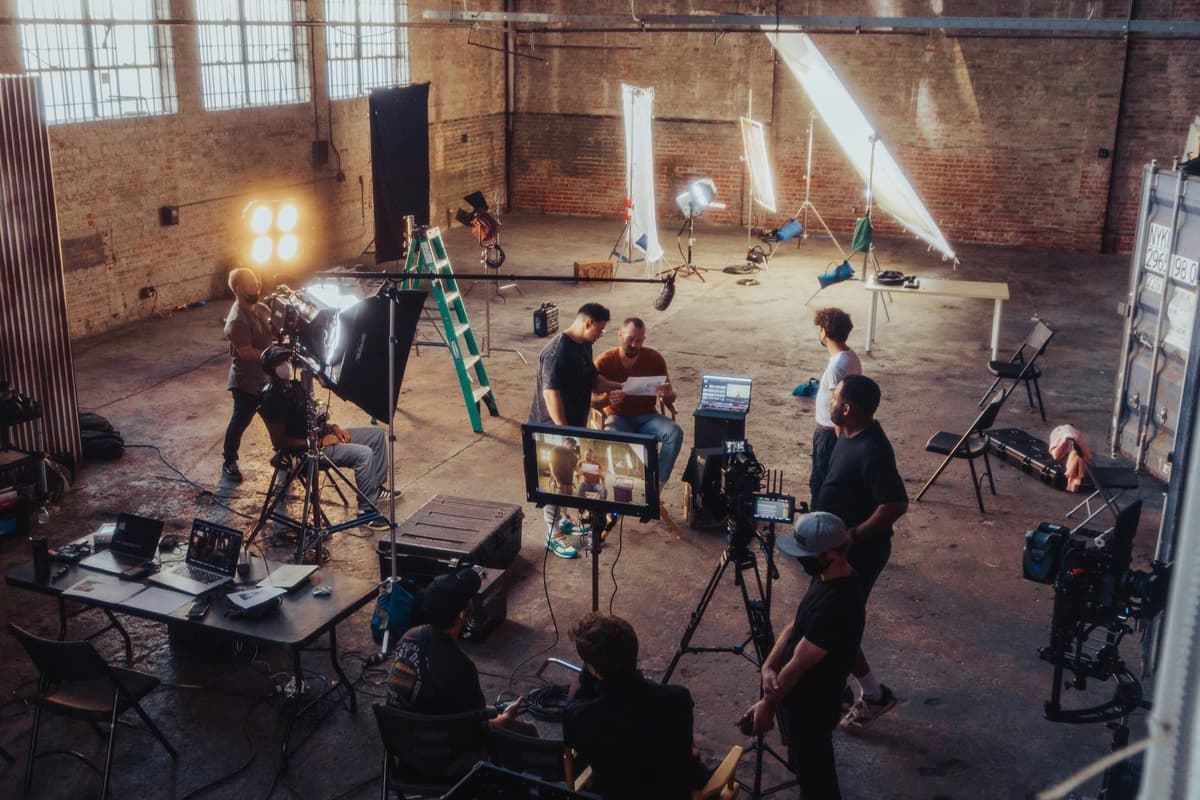
A videographer is a camera professional who captures moving images across a wide range of production contexts — from weddings and corporate interviews to documentary shoots, electronic press kits (EPK), and behind-the-scenes content on major film sets. Unlike a director of photography (DP) who leads a full camera department and shapes an entire film's visual language, a videographer typically operates as a solo shooter or within a very small crew, handling camera, basic audio, and sometimes lighting all at once.
The role sits at the intersection of technical craft and documentary instinct. A skilled videographer knows how to read a live situation, anticipate action, and capture clean, usable footage quickly — often without the luxury of lighting setups, script breakdowns, or multiple takes. This adaptability makes the videographer one of the most versatile professionals in the production economy.
Videographer vs. Cinematographer — What's the Difference?
The distinction between a videographer and a cinematographer (DP) is one of scope, scale, and creative authority. A cinematographer designs the visual look of a project from the ground up — working with the director, gaffer, grip team, and production designer to build lighting setups, choose lenses, and execute a comprehensive camera plan across weeks or months of shooting. They rarely operate the camera themselves on larger productions; they supervise the camera crew and own the film's entire visual strategy.
A videographer, by contrast, is typically a one-person operation or works with minimal support. They show up, assess the space, set up their own gear, roll camera, capture natural or minimal-setup lighting, and deliver usable footage — often on the same day. They may also handle their own editing and color grading. The work is faster, more reactive, and driven by practical output rather than cinematic vision.
That said, the line has blurred significantly in the 2020s. Many videographers shoot on cinema-grade cameras (Sony FX6, RED Komodo, BMPCC 6K), apply sophisticated color grades, and produce content that rivals narrative film in visual quality. The difference is more about context and workflow than the quality of the final image.
Types of Work Videographers Do
Videographers are hired across a broad spectrum of production types:
- Event videography — weddings, conferences, live performances, galas, award ceremonies. This is where most videographers start their careers and where the largest volume of work exists.
- Corporate and branded content — company overview videos, executive interviews, product demonstrations, internal training content, and marketing assets for social media and web.
- Electronic Press Kit (EPK) coverage — on major film and TV productions, a dedicated EPK videographer shoots behind-the-scenes footage, cast and crew interviews, on-set B-roll, and promotional clips for distribution to press outlets, streaming platforms, and home release packages.
- Documentary and news — run-and-gun shooting for documentary film, news packages, investigative journalism, and reality television inserts.
- Social media and content creation — short-form video for Instagram Reels, TikTok, YouTube, and brand channels, often requiring fast turnaround and vertical formats.
- Music videos (low-to-mid budget) — solo videographer productions for independent artists and mid-tier labels who need polished results without a full film crew.
- Real estate and architectural — property walkthroughs, drone aerials, and neighborhood overview videos for luxury real estate marketing.
When Do Film and TV Productions Hire Videographers?
On larger productions, videographers are specifically brought in for EPK duties — which are distinct from the main photography unit's work. The EPK team operates in parallel to the main shoot, documenting production without interfering with principal photography. EPK videographers capture the energy, process, and personalities behind the camera for promotional use. Studios, streamers, and distributors require this content for press junkets, streaming platform bonus features, physical media releases, and social campaigns.
Smaller productions — indie features, short films, web series, branded content — may hire a single videographer to handle all camera duties rather than building out a full camera department. In these contexts, the videographer takes on DP-level responsibilities on a smaller scale.
Managing budgets and expenses across these productions doesn't have to be complicated. Saturation.io gives producers, coordinators, and videographers a cloud-based platform to track production costs, manage expense cards, and keep everything organized from pre-production through delivery — without the overhead of legacy desktop software.
Solo Operation and the Modern Videographer
The defining characteristic of the contemporary videographer is the ability to operate as a complete production unit in miniature. They bring their own camera system, audio gear (usually a compact recorder and lavalier or shotgun mic), portable LED lighting, and often a laptop for on-location data backup and quick edits. This self-sufficiency is what makes them cost-effective for clients who need professional output without the overhead of a full crew.
The rise of mirrorless cinema cameras, affordable stabilizers like the DJI RS series, and drone technology has dramatically expanded what a single videographer can accomplish. An experienced solo shooter can deliver broadcast-quality footage, dynamic aerial perspectives, clean synchronized audio, and a polished edit — all within a single-day engagement.
Role & Responsibilities
Core Duties and Responsibilities
The videographer's day-to-day responsibilities vary by production context, but a set of core duties appears consistently across all work types. Understanding these responsibilities is essential for anyone considering the role — or for producers looking to know what they're hiring when they bring a videographer onto their project.
Pre-Production Planning
Before any camera rolls, a professional videographer invests time in pre-production. This includes reviewing the creative brief or shot list, scouting the location for lighting conditions and logistical challenges, planning equipment needs, and discussing the deliverable format with the client. For EPK work on a film set, the videographer will coordinate with the production's unit publicist to understand which scenes can be filmed, which talent is available for interviews, and what the press requirements are for the final package.
For event work, pre-production involves walking the venue, identifying key moments in the run-of-show, noting power access for charging gear, and establishing communication with the event planner or producer. The more thoroughly a videographer prepares, the fewer surprises they face on the day.
Solo Camera Operation
At the heart of the videographer's role is camera operation — but solo operation is a distinct discipline from operating as part of a camera crew. Without a focus puller, the videographer must master autofocus systems and understand when to switch to manual. Without a camera operator above them and a DP directing their eye, they must make independent compositional decisions in real time. Without a grip or gaffer, they must position their own camera support and work within whatever light is available.
This requires deep familiarity with their specific camera system. A videographer shooting on a Sony FX3 needs to know every menu setting by muscle memory, how to quickly adjust exposure in changing light, how to rig the camera for handheld versus tripod versus stabilizer use, and how to manage battery life, storage capacity, and recording formats across a long day.
Audio Capture
One of the most important — and most overlooked — aspects of videography is audio. Bad audio destroys otherwise excellent footage; clean audio can save mediocre images. Videographers are responsible for their own audio capture, which typically means running a shotgun microphone mounted on the camera hot shoe or boom arm, placing lavalier microphones on interview subjects, and monitoring levels throughout the shoot.
Common setups include a Rode VideoMicro or VideoMic NTG on-camera, paired with a wireless lav system (Rode Wireless GO II, DJI Mic 2, or Sennheiser EW 100 G4) for interview subjects. For event work, videographers often split audio from the house sound system using a DI box or mixer output, ensuring they capture the PA audio cleanly alongside their room mics.
Lighting Setup
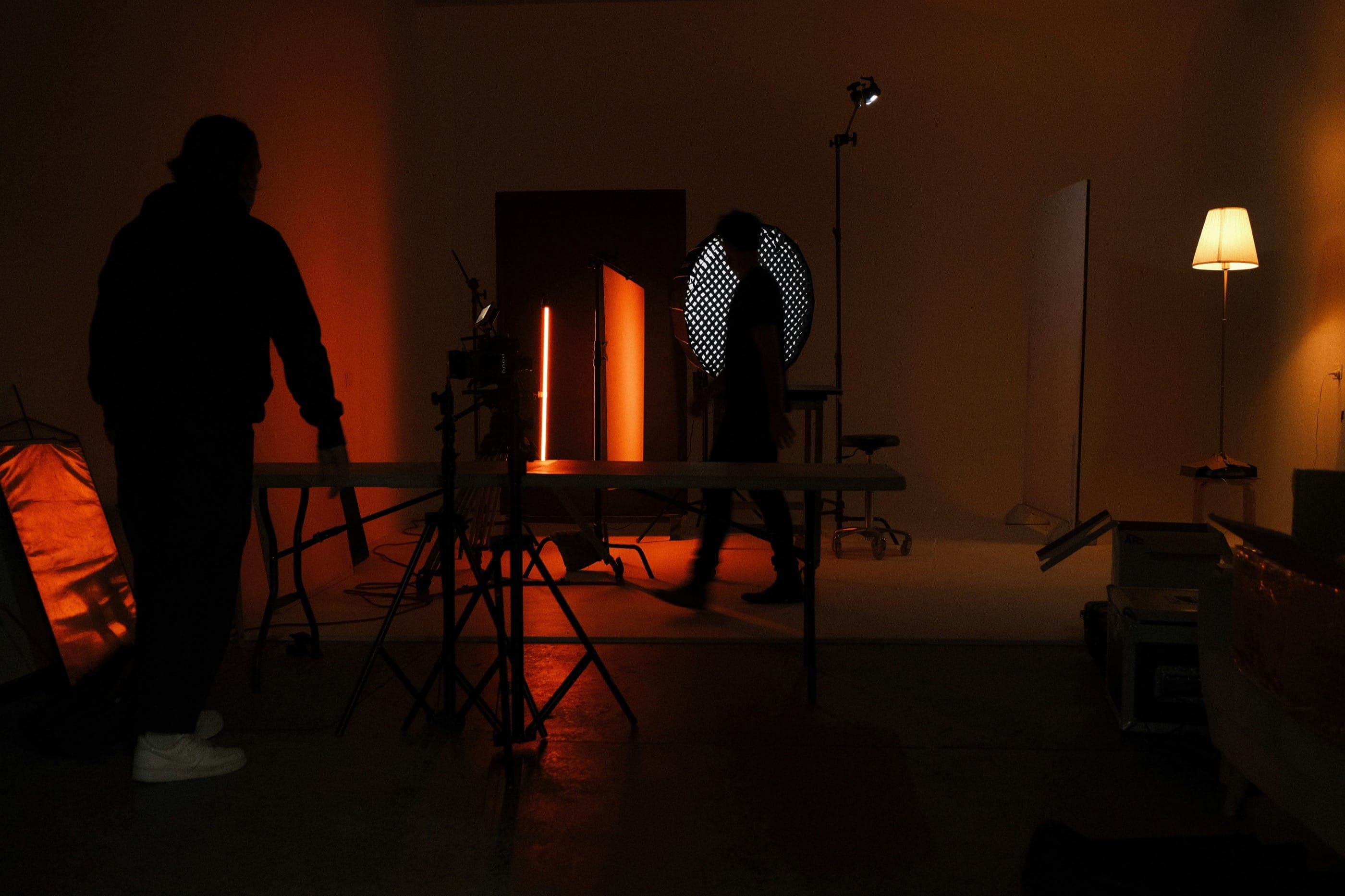
While a gaffer-and-grip team handles lighting on large productions, videographers set up and operate their own lights. For interviews and corporate shoots, this typically means a two or three-point lighting setup using portable LED panels — a key light, fill light, and optional hair/rim light. Popular tools include the Aputure Amaran 100X, GODOX SL150W, or Nanlite Forza 60 for interview setups, or compact bi-color panels like the Zhiyun Molus G60 for run-and-gun shoots.
On documentary and event work, the videographer often relies primarily on available light, using fast lenses (f/1.4-f/2.8) and high-ISO capable cameras to work in low-light environments. Knowing how to shape, supplement, and work within available light is a fundamental videographer skill that separates professionals from amateurs.
Interview and Testimonial Production
A significant portion of corporate and EPK work involves conducting and shooting interviews. The videographer is often simultaneously operating the camera, monitoring audio, and directing the subject through questions. They must make the subject feel comfortable (critical for authentic responses), frame the interview compellingly (standard off-axis framing, looking to the interviewer), and capture clean audio while maintaining proper exposure and focus.
Interview setups require the videographer to think about background depth and separation, catchlights in the subject's eyes, microphone placement for natural sound without visible mics in frame, and teleprompter use if scripted responses are required.
Event Coverage
Live event coverage is physically and technically demanding. The videographer must be mobile, anticipatory, and unobtrusive — capturing key moments without disrupting the event or drawing attention to themselves. This means working with a compact camera-and-gimbal setup, moving through crowds, switching between wide establishing shots and tight closeups, and managing exposure across rapidly changing lighting conditions (candlelight to spotlights, indoor to outdoor, day to night).
Weddings, in particular, are high-stakes events where there are no second takes. Every kiss, speech, and first dance is a once-in-a-lifetime moment. The best event videographers develop an almost predictive sense of where action will happen next.
EPK Coverage on Film Sets
The Electronic Press Kit role on a film or TV production requires a videographer who can work invisibly within a complex, hierarchical production environment. They must understand set etiquette — never crossing in front of the main camera, never speaking during a take, always checking with the 1st AD before entering the set, and respecting talent boundaries around filming.
EPK footage includes: on-set B-roll of the crew working (camera team, lighting, makeup), cast interviews conducted in a designated space between scenes, scene-specific reaction footage showing the director and crew at work, and coverage of special events like table reads, costume fittings, and stunts (with appropriate permissions).
Drone Operation
Many videographers have added FAA Part 107-certified drone operation to their skill set, enabling them to offer aerial cinematography as part of their service package. Common platforms include the DJI Mavic 3 Pro, DJI Air 3, and DJI Inspire 2 for more demanding cinematic work. Drone operation requires understanding airspace regulations, weather conditions, battery management in the field, and safe flight practices around people and property.
Editing and Post-Production
Unlike a DP on a large production, many videographers also handle their own editing — particularly for corporate clients, social content, and event work. This includes organizing footage in a project timeline (Adobe Premiere Pro, DaVinci Resolve, or Final Cut Pro X), color grading, audio mixing, adding music and sound design, incorporating motion graphics and lower thirds, and exporting deliverables in the correct format and resolution for each platform.
The ability to both shoot and edit is a significant competitive advantage in the freelance videographer market, as it allows clients to work with a single point of contact from production through delivery.
Client Communication and Project Management
As a freelance professional, the videographer is also their own account manager. This means writing proposals, negotiating contracts, invoicing clients, managing revisions, and communicating clearly about timeline and deliverables. Strong client communication skills are as important to a sustainable videography career as technical camera skills.
Skills Required
Technical and Soft Skills Every Videographer Needs
Professional videography demands a broad toolkit that spans camera technology, audio engineering, lighting design, post-production software, and interpersonal communication. The most successful videographers combine deep technical knowledge with adaptability, problem-solving under pressure, and the ability to make clients and subjects feel at ease.
Camera Operation
Camera operation is the core skill of the profession—and it goes far beyond knowing how to press the record button. Videographers need to understand:
- Exposure triangle — The relationship between ISO, aperture, and shutter speed in video contexts. The 180-degree shutter rule (shutter speed = 2x frame rate) is fundamental for natural-looking motion blur.
- Frame rates — When to shoot 24fps (cinematic look), 25fps (PAL broadcast), 30fps (US broadcast and YouTube), 60fps (slow motion at 2x), and 120fps (extreme slow motion).
- Picture profiles and log formats — Shooting in log (S-Log3, V-Log, Cinelike D) preserves dynamic range for color grading in post.
- Autofocus systems — Modern mirrorless cameras offer remarkably capable phase-detection autofocus with eye and face tracking.
- Camera movement — Handheld, tripod, gimbal, slider, and dolly operation all produce different emotional and technical results.
Camera Systems and Equipment
- Mirrorless hybrid cameras — Sony FX3, Sony A7S III, Canon EOS R5C, Nikon Z6 III. The workhorses of the modern videographer market.
- Cinema cameras (smaller format) — Blackmagic Pocket Cinema Camera 6K Pro, BMPCC 6K G2, Sigma fp L. RAW recording and cinema-grade color science at accessible price points.
- Larger cinema cameras — RED Komodo 6K, ARRI Alexa Mini LF for high-end EPK and commercial operators.
- Action cameras and specialty cameras — GoPro Hero 12 Black, DJI Osmo Action 4 for POV angles and compact B-camera use.
Audio Skills
Clean audio is non-negotiable in professional videography. Key audio skills include:
- Microphone selection — Shotgun mics (Rode NTG5, Sennheiser MKH 416) for directional capture; lavalier mics (Rode Lavalier II, Sanken COS-11D) for talent in motion.
- Wireless audio systems — Rode Wireless GO II, DJI Mic 2, and Sennheiser EW 100 G4 are the most common in the videographer market.
- Audio recorders — Zoom H5/H6, Tascam DR-60D for when camera audio inputs are insufficient.
- Audio monitoring — Wearing headphones to monitor audio levels during recording is mandatory.
- Post-production audio — Using Adobe Audition, DaVinci Resolve Fairlight, or iZotope RX to repair noise and normalize levels.
Lighting Skills
- Three-point lighting — Key light, fill light, and rim/hair light setup for interviews.
- Color temperature and white balance — Understanding the Kelvin scale and how to match or creatively contrast light sources.
- Portable LED fixtures — Aputure Amaran 100X, GODOX SL150W, Nanlite Forza 60. Bi-color panels that shift from 3,200K to 5,600K give maximum flexibility on location.
- Available light mastery — The best videographers can identify and exploit available light from windows, practical fixtures, and ambient sources.
Editing and Post-Production Software
- Adobe Premiere Pro — Industry standard in corporate and broadcast videography.
- DaVinci Resolve — Increasingly the professional standard for high-end color grading and documentary work. The free version is fully professional.
- Final Cut Pro X — Popular in the event videography and YouTube creator space.
- After Effects — For motion graphics, title design, and branded elements.
Color Grading
Color grading transforms raw or log footage into a finished visual product with a consistent look. Skills include: applying LUTs as a starting point, node-based grading in DaVinci Resolve, matching shots across different lighting conditions, and delivering color-accurate files for web, broadcast, and social distribution.
Drone Operation (FAA Part 107)
The FAA Part 107 certification is a federally required commercial drone operator license in the United States. For videographers, Part 107 certification enables legally operating small unmanned aircraft systems under 55 pounds for commercial purposes. Popular certified platforms include the DJI Mavic 3 Pro, DJI Air 3, and DJI Inspire 2 with Zenmuse X7.
Client Communication and Business Skills
- Active listening — Understanding what the client wants often requires reading between the lines of a brief.
- On-set direction — Directing non-actors to perform naturally in front of a camera is a distinct skill.
- Time management — Shoots run on tight schedules. A videographer who can execute efficiently and deliver on time builds a reputation that generates referrals.
- Negotiation — Pricing, scope, and deliverable formats must be clearly established before production begins.
Salary Guide
Videographer Salary and Freelance Rate Guide
Videographer compensation varies dramatically based on market, specialization, experience level, and whether the videographer works as an employee or freelancer. Understanding the rate landscape is essential both for aspiring videographers planning a career and for producers building budgets.
Freelance Day Rates
- Entry-level (0-2 years): $300-$600/day. Typically shooting with a basic mirrorless setup and limited lighting.
- Mid-level (3-6 years): $600-$1,500/day. More sophisticated camera package, consistent lighting setups.
- Senior/specialized (7+ years): $1,500-$3,000+/day. Cinema-grade camera package, specialized expertise (EPK, drone, branded content).
- High-demand specialists: $3,000-$5,000+/day for top EPK videographers on major studio productions or commercial videographers with major brand portfolios.
Event-Specific Rates
- Wedding videography: $1,500-$8,000+ per wedding depending on market, package scope, hours of coverage, and number of shooters. Major metro markets average $3,500-$6,000 for a single lead shooter at a mid-market wedding.
- Corporate events and conferences: $1,000-$3,500/day for a single videographer covering conferences, keynotes, and B-roll for event recap videos.
- Award ceremonies and galas: $800-$2,500 for a single-night event, scaling with crew size and deliverable complexity.
EPK Rates on Film and TV Productions
- Non-union EPK: $600-$1,500/day on indie and mid-budget productions.
- IATSE-adjacent rates: On studio productions, rates may approximate IATSE camera operator day rates ($500-$800/day for a 10-hour day) plus overtime and kit fees.
- Multi-week EPK packages: Studios often negotiate flat weekly deals of $2,500-$5,000/week depending on deliverable scope.
Corporate and Branded Content Rates
- Executive interviews/testimonials: $500-$1,500 for a half-day shoot with 1-2 camera setup and basic lighting.
- Brand overview / company story videos: $3,000-$15,000+ as a project rate including production and post.
- Ongoing retainers: Some corporate clients retain videographers on monthly agreements for consistent content—typically $2,000-$8,000/month.
Annual Income Ranges
- Entry-level staff positions: $35,000-$50,000/year. Common in local news, small production companies, and corporate communications teams.
- Mid-level staff positions: $50,000-$75,000/year. Senior videographers at media companies and marketing agencies.
- Senior staff positions: $75,000-$120,000+/year at major networks, streaming platforms, and large corporate media departments.
According to the Bureau of Labor Statistics, the median annual wage for film and video editors and camera operators was $62,360 in May 2023. Experienced freelance videographers in major markets consistently earn above this median.
Top Freelance Videographer Markets
- Los Angeles: The highest concentration of production work. Day rates are highest, competition is most intense.
- New York City: Strong corporate, media, and event market. Wedding videography rates are among the highest in the country ($4,000-$10,000+).
- Atlanta: Growing production hub driven by Georgia's film tax incentives.
- Austin, Nashville, Chicago, Miami: Active mid-tier markets with strong corporate, music, and event videography ecosystems.
Equipment Rental Income (Kit Fees)
Videographers who own professional camera packages can charge kit fees in addition to their day rate—typically 10-20% of the camera and lens package's replacement value per day. A videographer with a $15,000 camera package might charge an additional $200-$400/day in kit fees.
Frequently Asked Questions
Frequently Asked Questions
What is the difference between a videographer and a cinematographer?
A videographer typically operates as a solo or small-crew professional who captures footage for events, corporate projects, documentaries, EPK, and social content—handling camera, audio, and often editing independently. A cinematographer (Director of Photography) leads an entire camera and lighting department on larger productions. The cinematographer rarely operates the camera themselves on large productions; the videographer almost always does. The distinction is primarily one of scale, team size, and creative authority.
How much does a videographer charge per day?
Videographer day rates range from $300-$600/day for entry-level operators to $1,500-$3,000+/day for experienced specialists. Factors that affect rate include: geographic market (LA and New York command the highest rates), camera package quality, specialization (EPK, drone, commercial), experience level, and whether post-production is included. Event work is typically priced as a project package ranging from $1,500 to $8,000+ for wedding coverage.
What does an EPK videographer do on a film set?
An EPK (Electronic Press Kit) videographer documents a film or TV production for promotional purposes. Their footage is used in press junkets, streaming platform bonus features, physical media releases, and social media campaigns. Duties include: shooting behind-the-scenes B-roll, conducting and filming cast and crew interviews during breaks in production, documenting special events, and delivering organized press-ready footage packages to the studio's marketing or publicity team.
Do you need a film degree to become a videographer?
No. Many successful working videographers are self-taught. Clients hire based on portfolio quality and professionalism, not academic credentials. Formal film school provides structured training, professional equipment access, and networking opportunities—all of which accelerate career development. The most effective path is to start shooting as soon as possible and build a portfolio that demonstrates the specific type of work you want to be hired for.
What equipment does a professional videographer need?
A professional videographer's core kit typically includes: a cinema-capable mirrorless or cinema camera (Sony FX3, Blackmagic Pocket Cinema Camera 6K), a selection of versatile lenses (24-70mm f/2.8, 50mm f/1.4, 85mm f/1.8), a gimbal stabilizer (DJI RS 3 Pro), a fluid head tripod, portable LED lights, a wireless audio system (Rode Wireless GO II or DJI Mic 2), a shotgun microphone, an audio recorder backup, spare batteries, and large-capacity media cards. Total investment for a professional-level kit ranges from $8,000-$25,000+.
Is a Part 107 drone license required for commercial videography?
Yes. In the United States, any videographer operating a drone to produce commercial content must hold an FAA Remote Pilot Certificate (Part 107). The moment you accept payment for drone footage, Part 107 applies. The exam covers airspace regulations, weather interpretation, drone operation safety, and emergency procedures. The test is taken at an FAA-approved testing center for approximately $175, and the certificate is valid for two years.
How do videographers find work?
Working videographers build their client base through: personal referrals (the most powerful source of new work), platforms like ProductionHUB, Mandy.com, and StaffMeUp for production industry jobs, wedding industry directories (WeddingWire, The Knot) for event work, LinkedIn for corporate clients, and social media presence. Long-term, the most sustainable videography businesses are built on recurring corporate retainer clients supplemented by referral-based project work.
What is a realistic starting rate for a beginning videographer?
A beginning videographer with a basic camera setup and some portfolio work can realistically charge $300-$500/day for production work, or $1,000-$2,000 for a wedding package as a second shooter. As the portfolio grows and referrals accumulate, rates should increase annually. Most successful videographers increase their rates 10-20% each year during the first five years of their career.
Education
Education Requirements for Videographers
Unlike many professions, videography does not require a specific degree or formal credential. Clients hire videographers based on portfolio quality, reliability, and professionalism — not academic pedigree. That said, structured education significantly accelerates skill development and opens doors to professional networks that can define a career's early trajectory.
Film School and Formal Degree Programs
A Bachelor of Fine Arts (BFA) or Bachelor of Science (BS) in Film Production, Cinematography, Media Production, or Digital Media provides comprehensive technical training and — critically — access to professional-grade equipment, studio facilities, and faculty mentorship. Top programs for aspiring videographers include:
- New York Film Academy (NYFA) — One-year and two-year intensive programs in filmmaking and cinematography. Strong emphasis on hands-on production from the first week. Multiple campuses (New York, Los Angeles, Miami).
- Full Sail University (Winter Park, FL) — Bachelor of Science in Film Production with strong technical infrastructure and industry connections. Known for fast-track completion options.
- Savannah College of Art and Design (SCAD) — Offers BFA programs in Film and Television with excellent equipment access and industry partnership programs.
- Chapman University (Dodge College of Film and Media Arts) — Highly regarded four-year film program in Los Angeles with access to Hollywood production connections.
- UCLA School of Theater, Film and Television — One of the most competitive film programs in the United States, with deep alumni networks in the entertainment industry.
Community colleges with strong media production programs — including Santa Monica College, Houston Community College, and Austin Community College — offer associate degrees and certificate programs at a fraction of the cost of four-year schools, often with connections to local production communities.
Certificate and Vocational Programs
Short-form certificate programs offered by trade schools, media organizations, and online platforms provide targeted skill development without the time and cost investment of a full degree:
- IATSE Training Trust — Offers professional development workshops for union camera department members.
- Coursera and LinkedIn Learning — Structured video production courses from professional instructors, many with industry certifications.
- MasterClass — Camera and cinematography courses from working DPs including Roger Deakins.
- Udemy — Extensive library of videography, DaVinci Resolve, and Premiere Pro courses at low cost.
- Blackmagic Design Certification — Free DaVinci Resolve certification program covering color grading, editing, and audio post-production. Industry-recognized credential available at no cost.
Self-Taught Path
A significant portion of working videographers are entirely self-taught. The combination of affordable prosumer cameras, free tutorial content on YouTube, and an accessible freelance market has lowered the barriers to entry dramatically over the past decade. The self-taught path requires greater discipline and entrepreneurial initiative, but can be just as effective as formal education when pursued strategically.
Key milestones on the self-taught path:
- Buy a starter camera — A Sony ZV-E10, Canon EOS M50 Mark II, or used Sony A7III provides a capable starting point for under $1,000.
- Learn your camera completely — Understand every exposure mode, focus system, and recording format before moving to advanced techniques.
- Study cinematography fundamentals — The Cinematography Database on YouTube, Indy Mogul, and Film Riot offer thousands of hours of free, professional-quality instruction.
- Learn to edit — DaVinci Resolve is free and industry-standard. Blackmagic Design's official certification program provides a structured learning path at no cost.
- Shoot constantly — Short films, personal projects, YouTube videos, local events — volume of practice builds technical fluency and creative instinct simultaneously.
YouTube and Online Courses as a Primary Education Path
Several YouTube channels have become genuine educational institutions for aspiring videographers. Channels like Peter McKinnon, Matti Haapoja, Parker Walbeck, FilmRiot, and Corridor Crew cover everything from camera technique and lighting to business development and client management. Free resources on these channels, combined with structured online courses, can provide the equivalent of a film school curriculum for under $500.
Wedding and Event Videography as an Entry Point
Wedding videography is the single most accessible entry point into professional videography. The barrier to getting hired is relatively low, the pay is reasonable ($800-$3,000+ per wedding for a starting shooter), the schedule is concentrated on weekends (allowing time to build skills during the week), and the technical challenges are enormous — which accelerates skill development rapidly.
Starting as a second shooter for an established wedding videographer is an even better entry point. Second shooters capture B-angle footage while the lead shooter covers primary moments. The pay is modest ($150-$400/day), but the learning opportunity is invaluable — you work in a live, high-stakes environment with guidance from an experienced operator.
Building a Portfolio
A videographer's portfolio is their resume. Clients hire based on what they see, not what credentials are listed. A strong portfolio includes:
- 3-5 complete projects that represent the type of work you want to be hired for
- A showreel or highlight reel of 60-90 seconds maximum that opens with the strongest material
- Clear, fast-loading web presentation (Vimeo is the industry standard; personal website preferred over YouTube for client-facing work)
- Work that matches the specific clients you are targeting — if you want corporate clients, show corporate work; if you want EPK work, document set and interview footage
If you don't have paid client work yet, create the work you want to be hired for. Produce a short documentary, collaborate with a local musician on a music video, document a community event, or create a fictional commercial for a brand you admire. Spec work that demonstrates craft gets you hired faster than waiting for opportunities to arrive.
Last updated August 31, 2026
Budget this role in seconds with Saturation
Rate packs, fringes, and phases turn a crew list into an accurate production budget without the spreadsheet math.
Rate packs
Verified union rates, versioned.


Fringes and markupsRebuilt
Stack them, cap them, and see the split on every line.
PhasesRebuilt
Every column knows its type.
Auto-fill
Rates fill in as you type, from the source you turned on.