What is a Vehicle Coordinator?
Overview
What Is a Vehicle Coordinator in Film Production?
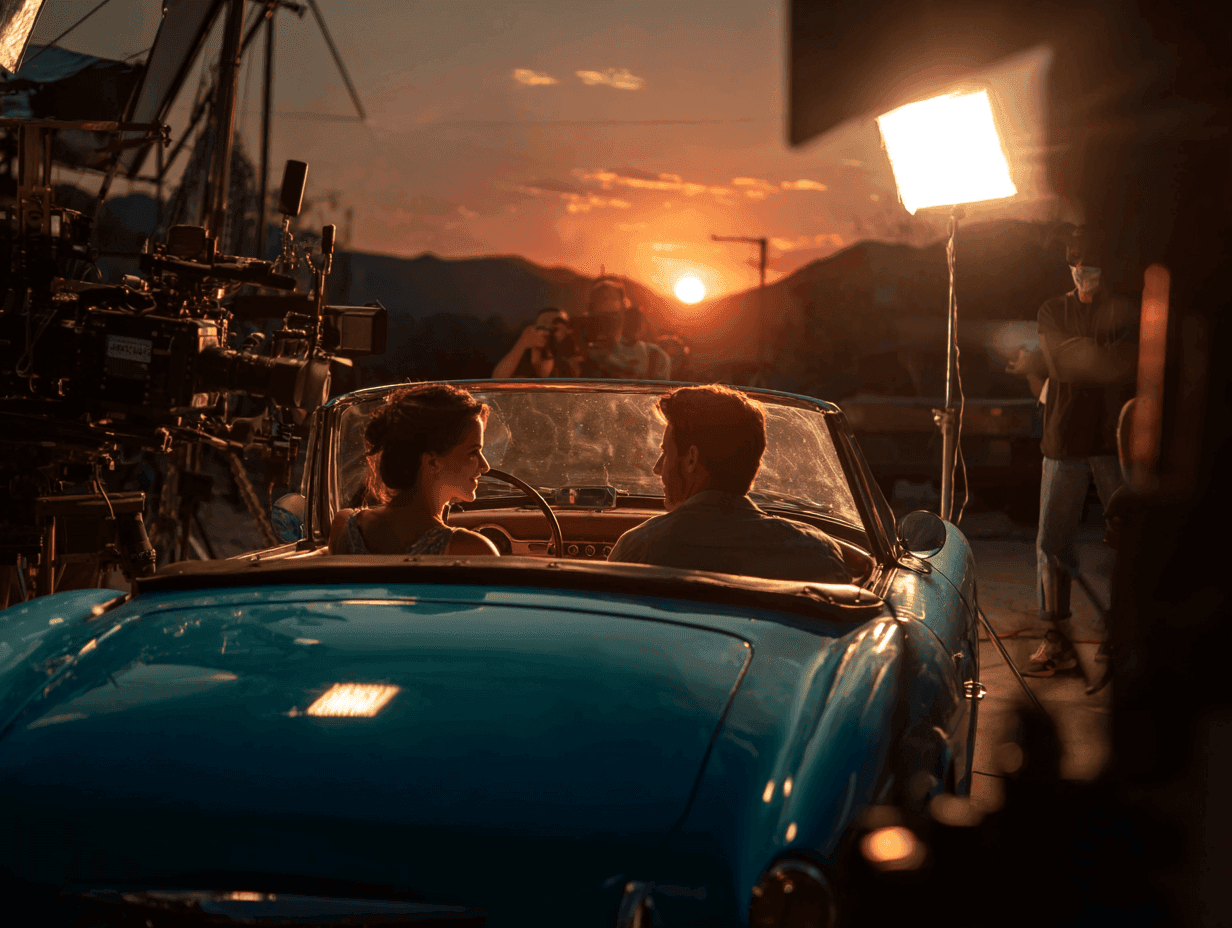
A vehicle coordinator — also widely known as a picture car coordinator — is the crew member responsible for every vehicle that appears on camera during a film, television series, or commercial production. From a 1967 Ford Mustang in a period crime drama to a futuristic concept car in a sci-fi blockbuster, the vehicle coordinator sources, schedules, insures, and manages each of those assets from pre-production through wrap.
The role sits within the transportation department, working in close collaboration with the transportation coordinator (who manages crew and equipment vehicles) and the production designer (who defines the visual world of the project). While the transportation coordinator thinks about moving people and gear, the vehicle coordinator thinks about what the audience actually sees: the cars, trucks, motorcycles, buses, boats, or aircraft that inhabit the frame.
Picture Car vs. Hero Car vs. Background Vehicle
Understanding these distinctions is core to the job:
- Hero vehicle: The primary picture car featured in close-ups and scripted action sequences. Must be in flawless condition and often duplicated for safety and stunt work.
- Picture car: Any vehicle that appears on screen, even briefly.
- Background vehicle: Vehicles that dress a set or fill a street scene without direct camera focus. Requires period-accurate or location-accurate sourcing at scale.
Where the Vehicle Coordinator Fits on Set
The vehicle coordinator reports to the transportation coordinator and works daily with the production designer, art department, locations department, and the first assistant director. On smaller productions, one person may fill both the transportation coordinator and vehicle coordinator roles. On large studio features or period films where picture vehicles are central to the story — think Baby Driver, Mad Max: Fury Road, or any Fast & Furious installment — the vehicle coordinator leads a dedicated team that can include picture car drivers, a picture car wrangler, and on-set mechanics.
Productions that require significant vehicle coordination include period dramas, action films, car commercials, and any project set in a specific historical era where every vehicle on a city street must be era-appropriate. Even contemporary productions that require exotic, military, or custom vehicles need a dedicated coordinator to manage sourcing and logistics.
Role & Responsibilities
Core Responsibilities of a Vehicle Coordinator
The vehicle coordinator's duties span the full production lifecycle: reading the script for vehicle requirements, sourcing and acquiring those vehicles, managing them on set, and returning or selling them at wrap. Below is a breakdown of the major duty categories.
Script Breakdown and Vehicle Planning
In pre-production, the vehicle coordinator reads every draft of the script, flagging any scene that includes a vehicle — whether it's a featured chase sequence or a background taxi parked on a street. They create a comprehensive picture vehicle list that includes make, model, year, color, condition requirements, and scene count for each vehicle. This breakdown informs the picture vehicle budget, which the vehicle coordinator manages in coordination with the UPM and production accountant.
Sourcing and Acquisition
Sourcing picture vehicles is one of the most relationship-intensive aspects of the role. Vehicle coordinators draw on:
- Private collectors and car clubs, especially for rare, vintage, or specialty vehicles
- Picture vehicle rental houses such as Cinema Vehicles (Los Angeles), Picture Car Warehouse, and regional equivalents
- Dealerships for contemporary vehicles, often arranged through product placement deals
- Period vehicle brokers and auction networks for historically accurate sourcing
- Military vehicle suppliers for combat, government, or law enforcement productions
For period productions, the vehicle coordinator must verify that every visible vehicle — including background cars dressing a street — is correct for the time and geography depicted. A single anachronistic car in a 1950s street scene can cost a full day of digital VFX cleanup in post.
Modification and Preparation
Many picture vehicles require modification before they can be used on set. The vehicle coordinator oversees:
- Paint and wrap jobs to match the production designer's color palette
- Mechanical preparation for stunt sequences (reinforced roll cages, remote control systems, fire suppression)
- Camera car rigging (mounting camera systems to vehicle exteriors or interiors)
- Period-accurate modifications (removing modern safety labels, swapping contemporary dashboards)
Insurance, Permits, and Logistics
Every picture vehicle must be properly insured for production use. The vehicle coordinator works with the production's insurance broker to ensure coverage for owned, rented, and borrowed vehicles, including specialty coverage for stunt work. They also coordinate any permits required to transport oversized vehicles, drive on closed roads, or operate vehicles in restricted areas.
On-Set Vehicle Management
During the shoot, the vehicle coordinator (or a designated picture car wrangler) is on set whenever picture vehicles are in use. Responsibilities include:
- Positioning vehicles exactly as the director and DP require
- Maintaining vehicle continuity across multiple takes and shooting days
- Coordinating with the stunt department for any moving vehicle sequences
- Managing picture car drivers who may need to perform driving sequences on camera
- Overseeing on-set mechanic support for vehicle reliability
Wrap and Vehicle Returns
At the end of production, the vehicle coordinator manages the return of all rented vehicles, the sale or disposal of purchased vehicles, and documentation of any damage claims. A clean wrap — with accurate records and minimal disputes with owners or rental houses — is a key measure of a vehicle coordinator's professionalism.
Skills Required
Essential Skills for a Vehicle Coordinator
The vehicle coordinator role is uniquely hybrid: part automotive expert, part logistics manager, part art department collaborator. The best in the field combine genuine passion for vehicles with sharp organizational instincts and the interpersonal skills to manage complex multi-party relationships under production pressure.
Automotive Knowledge
This is the baseline credential. A vehicle coordinator must be able to:
- Identify vehicles by make, model, year, and variant from visual inspection alone
- Assess a vehicle's mechanical reliability for production use
- Understand what modifications are feasible on a given chassis
- Spot anachronistic details (incorrect trim, wrong wheel type, post-period accessories) that would break period accuracy
- Communicate fluently with mechanics about what's needed and what's possible
For period productions — a major portion of the vehicle coordinator's market — this knowledge must extend to the specific years being depicted. Knowing that a 1962 Lincoln Continental has suicide doors and a 1965 does not is the kind of detail that defines a professional vehicle coordinator.
Sourcing and Procurement
Finding the right vehicle, at the right cost, in the right condition, in the right timeframe is the central challenge of the job. Strong sourcers maintain:
- A personal network of collectors, clubs, and rental houses built over years
- Relationships with picture vehicle rental houses across multiple markets
- Access to online marketplaces (Bring a Trailer, Hemmings, eBay Motors) for fast sourcing
- Negotiation skills to secure favorable rental rates or purchase terms
Production Logistics and Scheduling
Every picture vehicle must arrive on set at the right time, in the right condition, ready for camera. This requires:
- Coordination with the AD's shooting schedule to know when each vehicle is needed
- Managing transportation of vehicles to and from set (especially oversized vehicles requiring permits)
- Tracking vehicle status across multiple shooting locations
- Building contingency plans for mechanical failures or sourcing delays
Budget Management
The vehicle coordinator maintains a dedicated picture vehicle budget and must track rental fees, purchase costs, modification expenses, fuel, insurance, and labor. Overages in the picture vehicle budget directly affect other departments. Strong coordinators come in under budget through smart sourcing, negotiated rates, and proactive planning.
Interdepartmental Collaboration
The vehicle coordinator is a connector. Effective collaboration with the following departments is essential:
- Production designer and art department: Ensuring vehicles match the visual language of the production
- Locations: Coordinating vehicle access to locations, particularly for large fleets or period street dressings
- Stunt department: Preparing vehicles for stunt sequences safely
- Camera department: Rigging vehicles for camera mounts
- First AD: Scheduling vehicle arrivals in sync with the shooting day
Period and Genre Accuracy
For historical dramas, this is a specialized skill set in itself. Vehicle coordinators who specialize in period work develop deep expertise in automotive history, understanding not just what cars looked like in a given decade but how they were maintained, what colors were factory-available, and what accessories were period-correct. This accuracy directly impacts the production designer's overall vision and can mean the difference between a production looking authentic or jarring.
Salary Guide
Vehicle Coordinator Salary and Day Rates
Vehicle coordinator compensation in film and television varies based on union status, production type, budget tier, and geographic market. Below is a breakdown of realistic rate ranges based on current industry standards.
Teamsters Local 399 Union Rates
In Los Angeles, vehicle coordinators on union productions work under the International Brotherhood of Teamsters Local 399. Picture vehicle coordinator rates under Teamsters contracts are negotiated at the production level and vary by agreement (AMPTP, commercial, reality), but general benchmarks for experienced union vehicle coordinators in the LA market include:
- Day rate: $600–$900/day for experienced coordinators on union features and television
- Weekly guarantee: Typically 5-day guarantee with overtime provisions for union productions
- Prep and wrap weeks: Coordinators are generally hired for prep weeks before principal photography and wrap weeks after, extending total employment beyond the shoot itself
For reference, Teamsters Local 399 commercial rates (AICP) for transportation personnel are publicly available through the AICP contract and typically run $650–$950/day for senior transportation and picture vehicle roles.
Non-Union and Indie Production Rates
On non-union independent productions, rates are negotiated directly:
- Low-budget indie features: $250–$450/day depending on production budget tier
- SAG Low Budget Agreement productions: Vehicle coordinators often earn $300–$500/day
- Music videos: $300–$600/day (shorter shoots, often compressed budgets)
- Commercials (non-union): $450–$750/day (commercial budgets can be competitive with features)
Annual Income Ranges
Vehicle coordinators rarely work 52 weeks per year — the freelance nature of production means income is project-based. Working vehicle coordinators in active markets typically earn:
- Entry-level / wrangler transitioning to coordinator: $40,000–$65,000 annually
- Mid-career (5–10 years, mix of union and indie): $70,000–$110,000 annually
- Senior union coordinator (major studio features, network TV): $120,000–$180,000+ annually
For comparison, the BLS classifies vehicle coordinator work under film and television production supervisory roles, where median annual wages for experienced production specialists in the motion picture industry ranged from $75,000 to $120,000 (BLS, May 2024 Occupational Employment Statistics).
Factors That Affect Compensation
- Production budget: Studio features and premium cable/streaming series pay significantly more than micro-budget projects
- Specialization: Period vehicle specialists and stunt vehicle coordinators command premium rates
- Market: Los Angeles and New York rates are higher than secondary markets, though productions in Georgia, New Mexico, and Canada have grown significantly and pay competitive rates
- Union status: Teamsters membership opens the door to higher-paying AMPTP productions with benefit contributions
- Network: Coordinators who get called back repeatedly by the same producers and directors earn more through consistent bookings
Additional Income: Vehicle Rentals
Some vehicle coordinators supplement income by renting their own privately owned vehicles to productions. A coordinator who owns a rare 1969 Camaro, for instance, may rent it to the production as a picture car while also serving as coordinator — an income combination common in the specialty vehicle market.
Frequently Asked Questions
What does a Vehicle Coordinator do?
What Is a Vehicle Coordinator in Film Production?
What are the main responsibilities of a Vehicle Coordinator?
Core Responsibilities of a Vehicle Coordinator
What skills does a Vehicle Coordinator need?
Essential Skills for a Vehicle Coordinator
How much does a Vehicle Coordinator earn?
Vehicle Coordinator Salary and Day Rates
What education or training do I need to become a Vehicle Coordinator?
Education and Training for Vehicle Coordinators
Education
Education and Training for Vehicle Coordinators
There is no formal degree program for vehicle coordinators. Unlike some film crew positions that benefit from film school training, the vehicle coordinator role is built almost entirely on hands-on automotive expertise and production experience. That said, structured education can accelerate your path into the field.
Automotive and Mechanical Training
A deep knowledge of vehicles is the non-negotiable foundation. Many vehicle coordinators come from automotive backgrounds before transitioning to film. Useful formal training includes:
- Automotive Service Excellence (ASE) certification — demonstrates technical credibility with mechanics and rental houses
- Vocational programs in automotive technology at community colleges, particularly for understanding engine, chassis, and electrical systems
- Specialty training in classic or vintage vehicle restoration, which directly applies to period productions
Film Production Training
Understanding how a film set operates is equally important. Useful paths include:
- Production assistant (PA) work in the transportation department — the most direct entry point. Working as a transportation PA or picture car driver teaches you scheduling, logistics, and how to interact with other departments.
- Film school programs that include production practicums, helping you understand roles like the AD, DP, and production designer with whom vehicle coordinators work daily
- Community college film programs for fundamentals of production workflow without the cost of a four-year degree
The Typical Career Path
Most vehicle coordinators follow this trajectory:
- Picture car driver or PA — learn the department from the ground up
- Picture car wrangler — assist the coordinator on set, manage individual vehicles, handle logistics
- Vehicle coordinator on smaller productions — short films, music videos, commercials
- Vehicle coordinator on larger productions — features, series, large-scale commercials
Joining the Teamsters (IATSE Local 399)
In Los Angeles and on major union productions across the US, vehicle coordinators typically work under the International Brotherhood of Teamsters Local 399, which covers transportation and picture vehicle departments. Getting into the Teamsters generally requires:
- Accumulating a set number of non-union production days (varies by local)
- Applying during open intake periods
- Having a sponsoring member vouch for your experience
Union membership provides access to higher-rate productions, benefits, and pension contributions. For long-term career stability in Los Angeles, Teamsters membership is the standard path.
Recommended Resources
- Cinema Vehicles (Los Angeles) — the largest picture vehicle rental house in the US; connections here are invaluable for sourcing work
- Teamsters Local 399 — for union membership information and training
- Production networking events — AFI, Film Independent, and local production offices often host events where transportation department connections are made
Last updated April 25, 2026
Budget this role in seconds with Saturation
Rate packs, fringes, and phases turn a crew list into an accurate production budget without the spreadsheet math.
Rate packs
Verified union rates, versioned.


Fringes and markupsRebuilt
Stack them, cap them, and see the split on every line.
PhasesRebuilt
Every column knows its type.
Auto-fill
Rates fill in as you type, from the source you turned on.