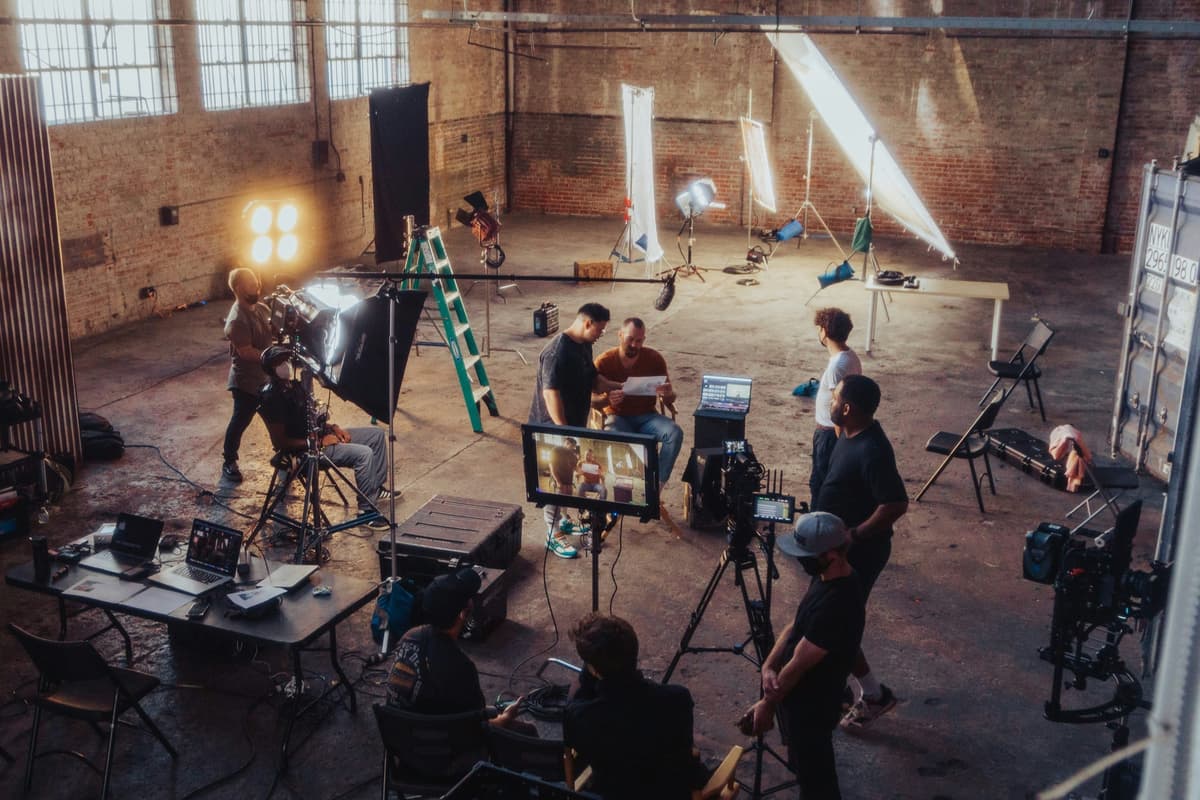
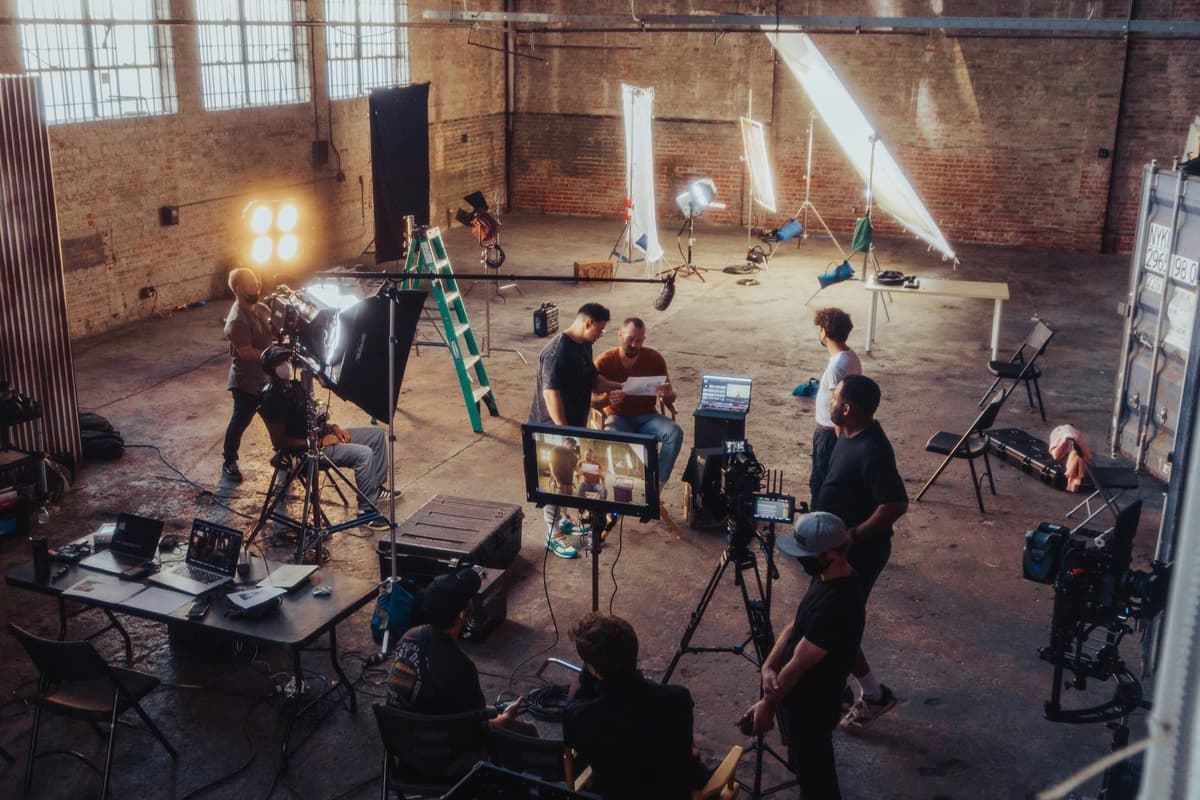
What is a Swing Gang?
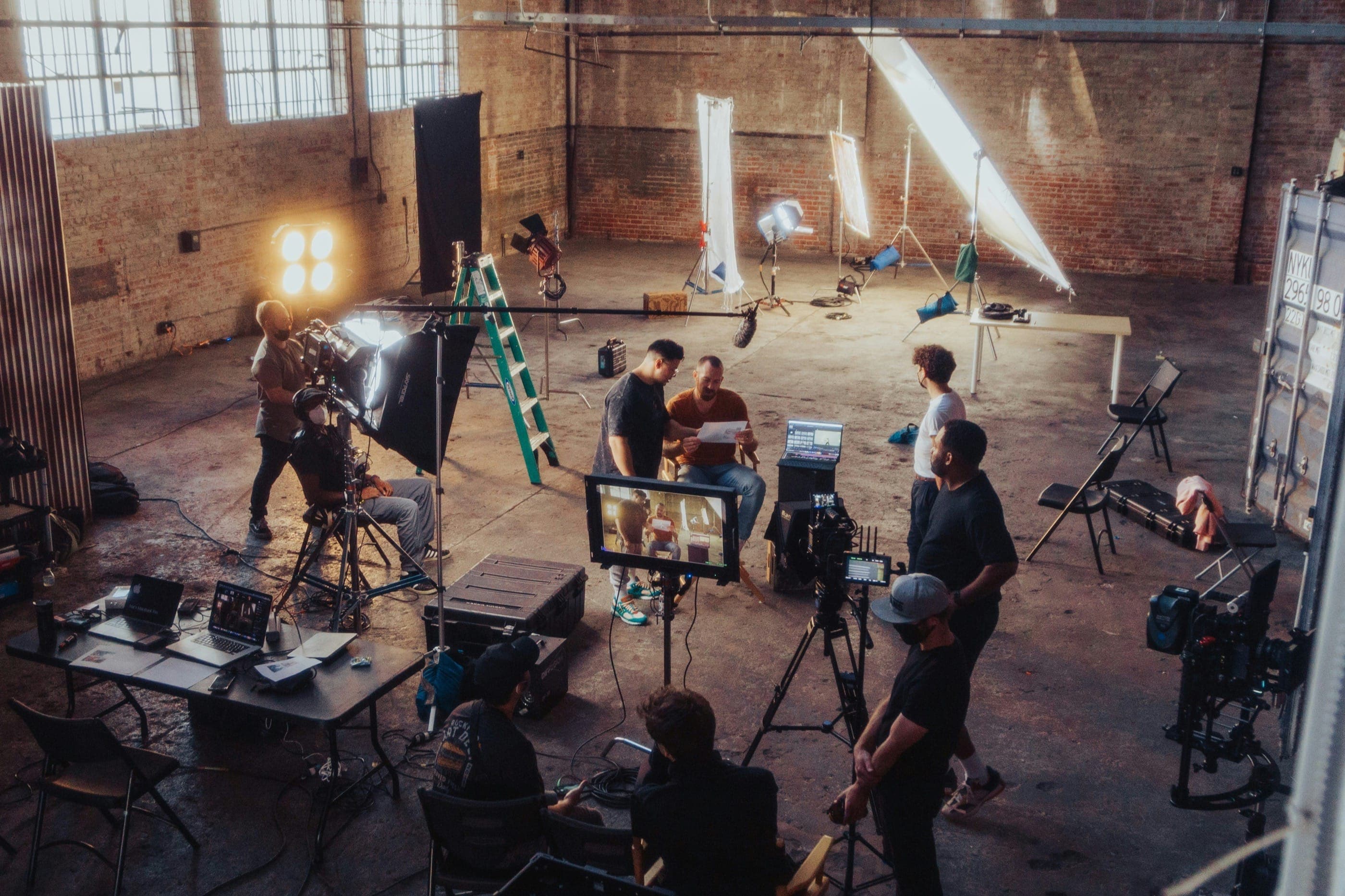
Overview
What Is the Swing Gang?
The swing gang is the hands-on labor force of the set dressing department. In film and television production, the swing gang physically moves, installs, and strikes all set dressing elements — furniture, rugs, artwork, lamps, draperies, and every decorative prop that populates a set. While the set decorator envisions how a space should look and feel, it is the swing gang that turns that vision into physical reality, often working overnight or between shooting days so the camera crew walks onto a fully dressed set in the morning.
The term "swing" reflects the crew's flexibility: they swing between sets, locations, and work shifts as the production schedule demands. On a large studio production a swing gang may consist of eight to fifteen people working across multiple stages simultaneously. On a lean independent film, two or three swing gang members handle the same scope of work compressed into tighter timelines and budgets.
Where the Swing Gang Sits in the Art Department Hierarchy
The art department is structured around the production designer at the top, who oversees all visual elements of a production. Below the production designer sits the art director, then the set decorator. The set decorator is the swing gang's direct creative authority — every piece of furniture selected, every window treatment chosen, every prop placed for atmosphere flows from the set decorator's decisions.
Between the set decorator and the swing gang sits the leadman (sometimes called the lead person). The leadman is the foreman of the swing gang: they interpret the set decorator's instructions, schedule the crew's daily workflow, manage the prop house relationships, and personally direct where each piece goes on stage. The swing gang reports to the leadman for moment-to-moment task assignments and to the set decorator for creative direction.
The gang boss is sometimes used interchangeably with leadman on smaller productions, though on larger shows the gang boss may supervise a sub-team within a larger swing gang reporting to the leadman.
On-Set vs. Off-Set Work
The swing gang operates in two modes: off-set prep and on-set stand-by. During prep, the swing gang works at the prop house pulling and loading selected items, dresses stages or locations ahead of the camera crew, and wraps sets after the crew has moved on. This prep work is where the majority of their time is spent — building the physical environments that actors inhabit.
On-set stand-by occurs when the shooting crew is actively filming. One or two swing gang members remain on set during the shoot, ready to make last-minute adjustments at the set decorator's or director's request: rotating a painting to catch the light differently, replacing a chair the actor knocked over, or adding a practical lamp the DP needs in the background. Speed and silence are essential in this mode — changes must happen in minutes between takes without disturbing the shooting crew.
Productions that track their art department budgets carefully use platforms like Saturation.io to manage set dressing costs, swing gang labor, and prop house rentals in real time — keeping the set decorator informed of expenditure against their budget as the production moves through its schedule.
Swing Gang vs. Set Dresser
The terms swing gang and set dresser are closely related and often used interchangeably on union productions. Technically, "set dresser" is the IATSE job classification under Local 44, while "swing gang" describes the team as a whole. Every member of the swing gang is a set dresser by union classification. The leadman is the senior set dresser who supervises the others. Outside union productions, non-union crews may use "swing gang member," "set dresser," and "set dressing crew" informally without distinction.
Role & Responsibilities
Core Responsibilities of the Swing Gang
The swing gang's responsibilities span the full life cycle of a set — from the initial loading of a prop truck to the final wrap and return of every rented item. Their work is physical, precise, and time-critical at every stage of production.
Pulling and Loading at the Prop House
Before a set can be dressed, the swing gang travels to the prop house (a rental warehouse stocked with period and contemporary furniture, artwork, and decor) to pull the items the set decorator has selected during the prop pull. They load the pieces carefully into production trucks, protecting fragile items with moving blankets and custom rigging. A damaged rental means a damage claim against the art department budget, so careful handling during transport is a professional expectation, not an optional courtesy.
Dressing Stages and Locations
Stage dressing and location dressing require different approaches. On a studio stage, the swing gang works in a controlled environment where they can take time to place items precisely, adjust arrangements under proper lighting, and revisit decisions over multiple prep days. Location dressing is faster and more constrained: the crew must work within the architecture of a real building, navigating homeowner or permit restrictions, limited parking for the truck, and compressed prep windows before the camera crew arrives.
The leadman assigns specific zones or rooms to each swing gang member, who is then responsible for dressing that space according to the set decorator's approved plan. Items are placed according to a set dressing breakdown — a document derived from the script that lists every prop needed in each scene, matched to the set decorator's selections.
Swinging Between Sets
The defining characteristic of the swing gang is their ability to move efficiently between sets as the shooting schedule dictates. On multi-set productions — a feature film shooting on three stages simultaneously or a television series with a standing set plus multiple episode-specific locations — the swing gang may split into sub-teams, with one group striking a completed set while another dresses the next location ahead of camera. The leadman coordinates these simultaneous workflows, often running a rolling schedule updated nightly as the first AD shifts the shooting order.
Overnight Prep and Turnaround Work
Some of the swing gang's most demanding work happens overnight. When the shooting crew finishes at the end of a shooting day, the swing gang moves in to transform the set for the next scene or next day's shoot. A dining room set dressed for a 1970s dinner party must be struck, repacked, and replaced with a contemporary office by 6 AM. This overnight turnaround work requires physical stamina and strict time management — the first AD will not hold the shooting crew's morning call because a set is not ready.
Overtime rules under IATSE agreements — including meal penalties, turnaround minimums, and night differential pay — apply to swing gang members performing overnight work. Understanding these rules is important for any production managing art department labor costs.
On-Set Stand-By During Shooting
During active shooting, at least one swing gang member (sometimes called the on-set dresser) remains on set at all times. Their job is to reset the set between takes to match continuity established in earlier takes, respond to director requests for last-minute set changes, maintain the integrity of the set decorator's original dressing under the heat and movement of a shooting day, and protect set dressing items from being moved or damaged by other departments. The on-set dresser works closely with the script supervisor, who flags continuity issues with set dressing elements visible in the frame.
Striking and Returning Props
At the end of a set's shooting life, the swing gang strikes the set: they dismantle all dressing, pack items back into transport cases and blankets, and load the truck for return to the prop house. Returns must be organized so rental items are accounted for and not mixed with production-owned purchases. A clean, organized return directly affects the art department's rental deposit and the leadman's relationship with prop house vendors — critical for securing good rental terms on future productions.
Working with Other Departments
The swing gang interfaces with multiple departments throughout production. They coordinate with the construction department on the timing of set builds — swing gang cannot dress a set until construction is complete. They work with the props department to distinguish between set dressing (decorator's domain) and hand props (props master's domain), a distinction that matters for both budgeting and on-set responsibility. They communicate daily with the art director on art department paperwork and with the location manager on any restrictions at real locations.
Inventory and Budget Tracking
Senior swing gang members and leadmen maintain running inventories of set dressing items across the production. This includes tracking which rental pieces are on which stage, which items have been purchased outright, and which need to be returned by a specific date to avoid additional rental days. On productions with tight art department budgets, this inventory discipline directly protects the set decorator's budget from unexpected rental overruns.
Skills Required
Skills Required for Swing Gang Work
Swing gang work demands a specific combination of physical capability, visual acuity, interpersonal reliability, and production floor literacy. The technical skills can be taught on the job; the core aptitudes below are what separate candidates who get called back from those who do not.
Physical Stamina and Strength
Set dressing is physically demanding work. Swing gang members carry heavy furniture up stairwells on location, load and unload production trucks in all weather conditions, kneel and crawl to position rugs and cables, and work twelve to eighteen hour shifts during heavy prep and wrap periods. Good physical fitness is not incidental to the job — it is a functional requirement. Candidates who cannot keep pace with a fast-moving overnight reset become a liability on a schedule that has no slack.
Proper lifting technique is essential. Injuries from improper handling of large furniture pieces are a common source of workers' compensation claims on productions, and experienced leadmen specifically observe how new crew members handle heavy items during their first call. Safe, efficient loading and unloading of prop trucks is a skill developed through practice and one that distinguishes experienced swing gang members from beginners.
Set Dressing Knowledge and Period Literacy
A swing gang member who can identify a Knoll Barcelona chair on sight, recognize an Art Deco mirror from a Mid-Century Modern one, or know that a specific type of wall sconce is wrong for a 1940s working-class apartment is a more valuable crew member than one who cannot. The set decorator makes the selection decisions, but the swing gang executes them — and questions and flags potential continuity or period errors before they reach the camera.
Building this knowledge comes from study of furniture design history, browsing prop house catalogues, visiting thrift stores and antique dealers to handle real period pieces, and actively observing what the set decorator selects during prop pulls and why. Over time, experienced swing gang members develop a visual library that makes them faster and more reliable on set.
Furniture Handling and Transport Skills
Large, fragile, or antique furniture items require specialized handling knowledge. Swing gang members learn to use moving straps and dollies efficiently, how to disassemble and reassemble furniture for transport without damaging joints or finish, how to wrap mirrors and artwork so they survive the truck ride, and how to load a production truck so heavy items are secured and lighter items protected. A prop house rental that comes back damaged is a charge against the art department budget that can strain the set decorator's relationship with that vendor for future productions.
Spatial Awareness and Visual Composition
Dressing a set is not the same as decorating a room for living. Set dressing is designed to be photographed from specific angles, lit by the gaffer, and inhabited by actors performing specific blocking. Swing gang members need spatial awareness to understand how furniture placement affects the camera frame, how background dressing reads at depth behind foreground action, and how the set decorator's arrangements will translate from the three-dimensional stage to the two-dimensional screen.
This visual awareness develops through time on set watching how the director of photography responds to set dressing decisions. Experienced swing gang members anticipate DP needs — keeping walkways clear for dolly tracks, ensuring practical lamps are in positions where they can be rigged and dressed simultaneously, and avoiding dressing choices that create lighting problems in the background of the frame.
Following the Set Decorator's Vision
The ability to execute someone else's creative vision faithfully and quickly is perhaps the most important professional skill for a swing gang member. The set decorator has made hundreds of specific choices about how a set should look and feel. The swing gang's job is to realize those choices exactly as intended, without improvising or substituting personal preferences. This requires active listening during set dressing discussions, asking clarifying questions before executing rather than assuming, and checking in with the leadman when a piece does not fit where it was planned to go.
Swing gang members who attempt to redesign the set decorator's arrangements based on personal taste — without instruction — quickly lose their place in the call rotation. The set decorator is the creative authority; the swing gang is their hands.
Time Management Under Pressure
Film productions run on tight schedules where a swing gang that misses their prep deadline ripples into delays for the camera crew, which costs thousands of dollars per hour. Managing multiple simultaneous tasks — furniture being delivered while another section of the set needs to be dressed while the truck is being loaded for a second location — requires strong organizational instincts and the ability to triage work under time pressure without losing attention to detail.
Leadmen prize swing gang members who can accurately estimate how long a task will take and communicate early when a deadline is at risk, rather than discovering at the last moment that the set is not ready. Honest time communication is a professional skill on any production floor.
Collaborative Communication
The swing gang works in close coordination with construction, props, locations, the art director, and the shooting crew. Clear, respectful communication with each of these groups — and the ability to shift quickly when the shooting schedule changes — is essential. Swing gang members who create friction with the AD department, props crew, or location managers by overstepping boundaries or communicating poorly find their calls dry up quickly, even if their set dressing work is technically excellent. Film crews are small, tight-knit communities where reputation moves faster than any resume.
Salary Guide
Swing Gang Salary and Day Rates
Compensation for swing gang members varies significantly based on union status, market, production type, and experience level. The ranges below reflect current 2025-2026 market data for the United States.
Non-Union Day Rates
On non-union productions — including most independent films, student productions, music videos, and lower-budget commercials — swing gang members negotiate day rates directly with the production. Typical non-union day rates in 2025-2026:
Entry-level swing gang (0-2 years experience): $175 to $250 per day
Mid-level set dresser (2-5 years experience): $250 to $375 per day
Experienced set dresser (5+ years, known leadman relationships): $350 to $500 per day
Leadman on non-union productions: $450 to $700 per day
These rates are negotiable and vary by market. Atlanta and New Orleans — major non-union production hubs — tend to run slightly lower than the national average. New York non-union rates often approach union rates due to the high cost of living and the presence of many union-adjacent productions in the market.
IATSE Local 44 Union Rates (Los Angeles)
On union productions in Los Angeles covered by IATSE Local 44, wages are set by the Basic Agreement negotiated between the IATSE and the Alliance of Motion Picture and Television Producers (AMPTP). Under the 2023-2026 Basic Agreement, approximate rates for set dressing craft workers are:
Set Dresser (minimum): Approximately $42 to $50 per hour, depending on the specific contract tier (Major Studio, Low Budget, etc.)
Leadman: Approximately $55 to $68 per hour under studio rates
On a standard 12-hour shooting day with overtime calculated at time-and-a-half after 8 hours and double-time after 12, a union set dresser at the minimum rate earns approximately $575 to $700 per day in base wages before fringe benefits. Fringe benefits — pension, health, and welfare contributions — add an additional 25-35% to the employer cost, though they flow to the worker in the form of health insurance and pension accrual rather than as direct pay.
IATSE Local 44 also negotiates additional pay provisions including meal penalties ($7.50 to $10 per occurrence when a meal break is not provided on schedule), night differential pay for overnight shoots, and turnaround minimum requirements (typically 10 hours between the end of one workday and the start of the next).
IATSE Local 52 Union Rates (New York)
In New York, set dressers and swing gang members fall under IATSE Local 52 (Motion Picture Studio Mechanics). Rates under Local 52 agreements are comparable to Local 44 and similarly structured around hourly minimums, overtime scales, and fringe benefit contributions. New York's high cost of living means that experienced union set dressers in NYC typically earn 10-15% more in effective day rates than their Los Angeles counterparts.
Annual Earnings
Swing gang work is project-based, which means annual earnings depend heavily on how consistently a crew member works throughout the year. A fully employed union set dresser in Los Angeles working 40+ weeks per year at union minimums can earn $75,000 to $110,000 annually including overtime and fringe benefits. A leadman consistently working major studio productions can earn $120,000 to $160,000 or more in strong production years.
Non-union swing gang members with strong market connections earning $300-$450 per day and working 30-40 weeks per year can expect annual earnings of $45,000 to $80,000. The gap between union and non-union earning potential is significant at the senior level — one of the primary financial incentives to pursue union membership via IATSE Local 44 or 52.
Market Variations
Los Angeles: Highest union rates. Dominated by major studio and streaming productions under IATSE Basic Agreement. Most leadman positions require Local 44 membership.
New York: Comparable to LA union rates. Strong commercial and documentary market alongside features and television. Local 52 jurisdiction.
Atlanta/Georgia: Major production hub with a mix of union and non-union work. Right-to-work state allows non-union productions to operate freely. Rates 15-25% below LA/NY for comparable work, with lower cost of living.
New Mexico, Louisiana, and New Orleans: Active production incentive states with significant studio production. Primarily non-union or card-check environments. Day rates in the $225-$375 range for experienced set dressers.
Salary Data References
For additional reference, the U.S. Bureau of Labor Statistics classifies set dressers and art department workers broadly under "Set and Exhibit Designers" (SOC 27-1027), which reported a median annual wage of approximately $61,740 as of May 2023. See the BLS Occupational Outlook Handbook for more detail. Note that BLS figures blend union and non-union, full-time and freelance workers, and do not capture the full range of senior union wages on major studio productions.
Frequently Asked Questions
Frequently Asked Questions About the Swing Gang
What is a swing gang in film?
A swing gang is the crew within the set dressing department responsible for physically moving, placing, and striking all set dressing elements on a film or television production. They dress stages and locations ahead of the camera crew, make last-minute set changes during shooting, and wrap sets when filming is complete. The swing gang works under the leadership of the leadman, who reports to the set decorator.
What does the swing gang do on set?
On set, the swing gang performs several functions: they pull furniture and decor items from prop houses and load production trucks, dress stages and locations to match the set decorator's approved plan, swap and reset set dressing between takes to maintain continuity, make last-minute changes at the director's or set decorator's request during shooting, and strike completed sets at the end of filming. They also handle overnight set transformations when the production shifts from one environment to another between shooting days.
What is the difference between the swing gang and a set dresser?
The terms are essentially interchangeable. "Set dresser" is the official IATSE job classification under Local 44 in Los Angeles. "Swing gang" refers to the team of set dressers as a group. Every member of the swing gang is a set dresser by trade classification. The leadman is the senior set dresser who supervises the swing gang. Outside union productions, people may use either term informally to describe the same role.
How does the swing gang relate to the set decorator?
The set decorator is the creative authority for everything the swing gang does. The set decorator selects all furniture, artwork, and decor; approves the arrangement of every set; and communicates the visual and emotional intent of each environment to the leadman. The swing gang executes the set decorator's decisions physically. They do not make independent creative choices about set dressing — they realize the set decorator's vision as accurately and quickly as possible.
How much does a swing gang member earn?
Non-union day rates for swing gang members range from $175 to $500 per day depending on experience and market, with leadmen earning $450 to $700 per day on non-union productions. Union set dressers under IATSE Local 44 in Los Angeles earn approximately $42 to $50 per hour at minimum rates, with a typical 12-hour day generating $575 to $700 in base wages before overtime premiums. Annual earnings for consistently working union set dressers range from $75,000 to $160,000 depending on experience and rate level.
How do you get a job as a swing gang member?
The most reliable paths into swing gang work are: starting as an art department PA and building relationships with leadmen and set decorators; working at a prop house where decorators and leadmen come for rental pulls; doing swing gang work on student films, short films, and non-union independent productions to build credits and experience; and networking within the local film community through industry events, Facebook groups, and crew referral networks. On union productions in Los Angeles, working as a permit holder through IATSE Local 44 is the standard path to eventual union membership.
Is the swing gang a union position?
On major studio and streaming productions in Los Angeles, yes — set dressers and swing gang members are represented by IATSE Local 44 (Affiliated Property Craftspersons). In New York they fall under IATSE Local 52. In right-to-work states like Georgia and Louisiana, productions may operate non-union, and swing gang work is available without union membership. Many swing gang members build their credits on non-union productions before transitioning to union status through the IATSE permit system and Industry Experience Roster.
What is the difference between the swing gang and the on-set dresser?
The on-set dresser is typically a specific swing gang member designated to remain on the set during active shooting. While the rest of the swing gang preps other sets or handles overnight wrap and load-in work, the on-set dresser stays with the camera crew to make real-time adjustments, reset set dressing between takes, and respond to director requests for last-minute changes. On larger productions the on-set dresser role may be a dedicated position; on smaller productions any swing gang member may rotate through on-set duties as the schedule requires.
Education
Education and Training for the Swing Gang
No formal degree is required to work as a swing gang member. The role is built on practical, physical, and aesthetic skills that are learned on the job rather than in a classroom. That said, certain educational backgrounds and informal training pathways can accelerate entry into the set dressing department and improve a candidate's long-term career prospects within the art department.
Does the Swing Gang Need a College Degree?
The vast majority of working swing gang members do not hold a film degree. The role is accessible to anyone willing to do physical work, learn the production environment, and develop an eye for spatial arrangement and period-appropriate decor. However, a background in interior design, fine arts, theater design, or architectural drafting provides an immediately useful foundation — set dressing is applied aesthetics, and candidates who can speak the visual language of the set decorator have a distinct advantage during their early career.
Film school graduates who have studied production design or art direction sometimes enter the swing gang as a deliberate stepping stone toward set decorator or production designer roles. The swing gang gives them hands-on experience with how designed environments are physically built and inhabited on camera — knowledge that no classroom exercise can fully replicate.
Art Department Entry Paths
There are several practical pathways into the swing gang:
Production Assistant to Art Department PA: Many swing gang members begin as general production assistants and transfer into the art department once they express interest and demonstrate reliability. Art department PAs run errands, manage paperwork, and help with prop pulls — work that puts them in proximity to the leadman and set decorator, who frequently hire from this pool when a set dresser slot opens.
Prop House Work: Working at a prop house — the rental warehouses that supply furniture and decor to productions — is one of the most direct paths into swing gang work. Prop house employees learn period furniture styles, rental inventory management, the vocabulary of set dressing, and often develop relationships with leadmen and set decorators who visit the house regularly. It is common for prop house workers to receive their first swing gang calls from decorators they met during a rental pull.
Theater and Live Events: Stage management, scenic design, and event production all involve physically dressing environments under time pressure — skills that translate directly to swing gang work. The physical labor, overnight reset mentality, and collaborative workflow of live theater production are excellent preparation for the pace of film set dressing.
Furniture and Interior Design Industry: Experience in furniture retail, moving and installation, or residential interior design gives candidates knowledge of furniture construction, safe handling techniques, and period style — all directly applicable to swing gang work.
IATSE Local 44 and Union Entry
On union productions in Los Angeles — which includes the majority of major studio features and network television — the swing gang is covered by IATSE Local 44 (Affiliated Property Craftspersons). Local 44 covers set dressers, leadmen, property masters, and related art department crafts.
Entry into Local 44 typically follows one of two paths. The apprenticeship track (the Industry Experience Roster, or IER) requires candidates to accrue a set number of work hours on union productions before becoming eligible to join. These hours are often accumulated on non-union productions or as a permit worker on union shows — a permit allows a non-union worker to fill a union slot when the local cannot supply a member. The second path is the direct hire route, where a set decorator or leadman vouches for a non-union candidate with enough work experience to justify membership consideration by the local's membership committee.
In New York, set dressers fall under IATSE Local 52 (Motion Picture Studio Mechanics). In Georgia and other right-to-work states, productions may operate as non-union, giving new entrants more direct access to swing gang positions without the hours requirement. Atlanta in particular has become a major production hub where many new swing gang members have built their credits before transitioning to union status.
Recommended Reading and Self-Study
Aspiring swing gang members benefit from studying interior design history to recognize period furniture styles, reading scripts with attention to how locations are described, and visiting prop houses and art departments on student or low-budget productions. The Set Decorators Society of America (SDSA) publishes resources about the craft and occasionally offers mentorship programs connecting emerging set dressers with working decorators.
Last updated August 31, 2026
Budget this role in seconds with Saturation
Rate packs, fringes, and phases turn a crew list into an accurate production budget without the spreadsheet math.
Rate packs
Verified union rates, versioned.


Fringes and markupsRebuilt
Stack them, cap them, and see the split on every line.
PhasesRebuilt
Every column knows its type.
Auto-fill
Rates fill in as you type, from the source you turned on.