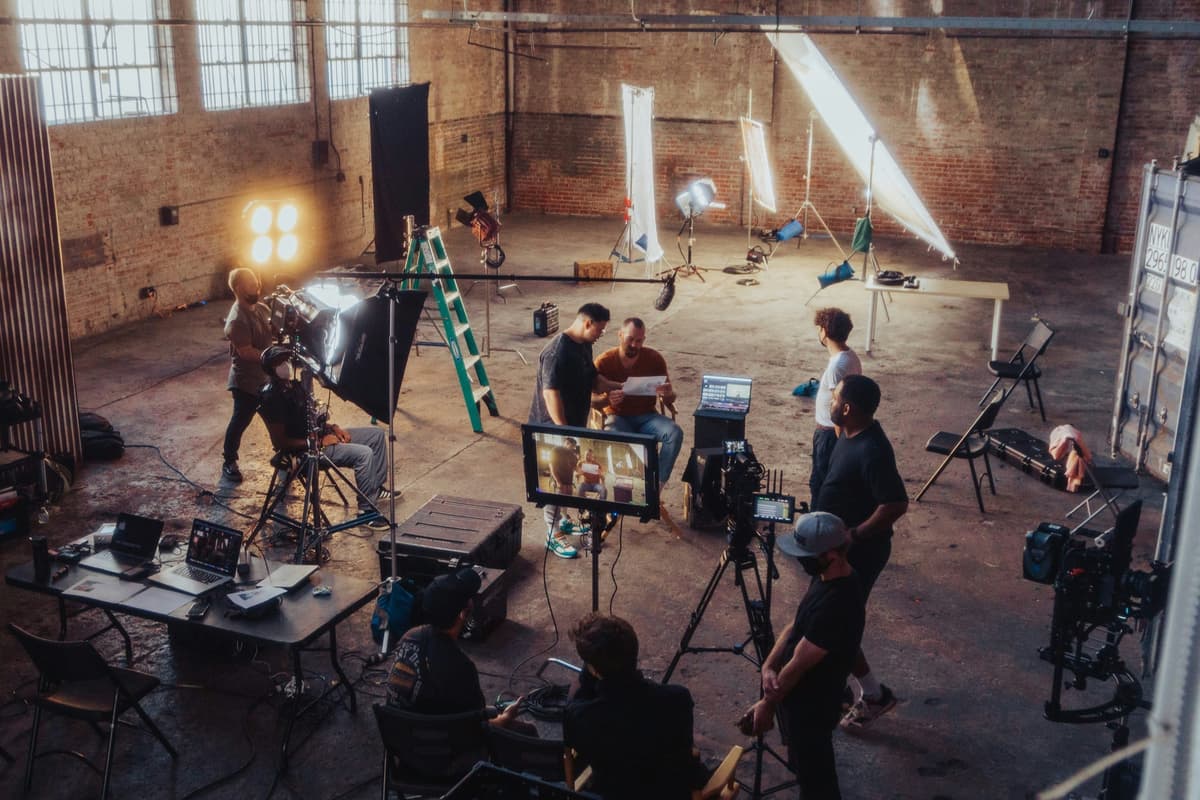
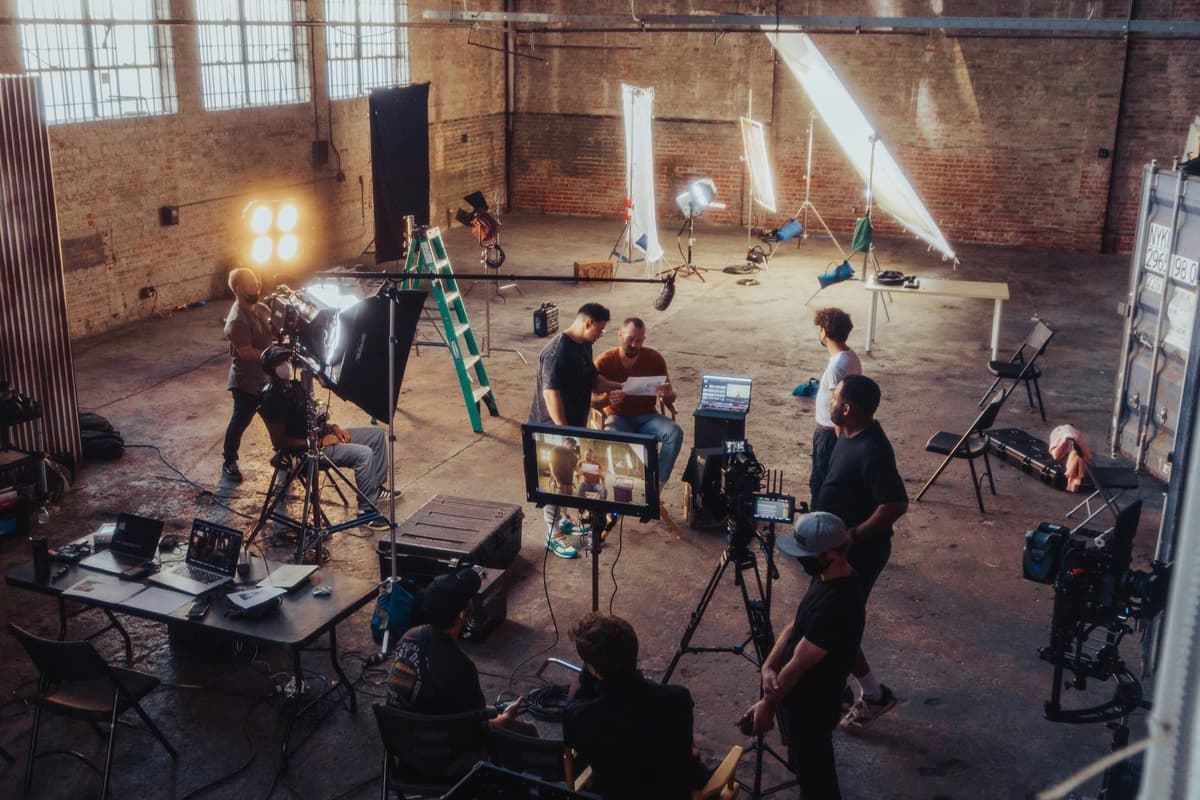
What is a Storyboard Artist?
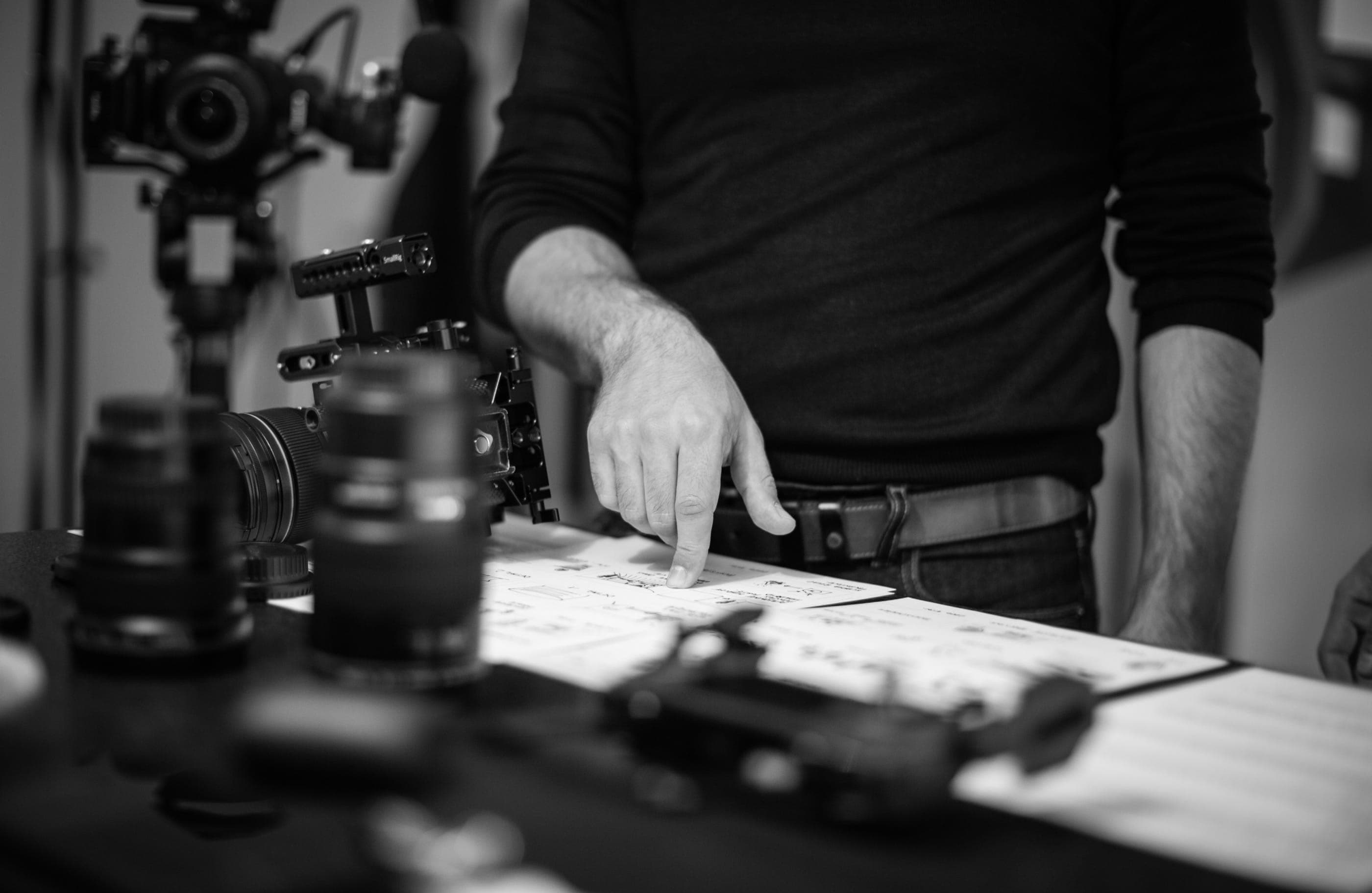
Overview
What Is a Storyboard Artist?
A storyboard artist is a visual storyteller who translates a written script into a sequence of drawn panels, giving the entire production team a visual blueprint of how each scene will be filmed. Before a single camera is set up or a dollar of the budget is spent on set, the storyboard artist has already mapped the movie, frame by frame.
Sometimes called a story artist, board artist, or visualizer, the storyboard artist occupies a unique position at the intersection of fine art, cinema, and logistics. They must understand how to draw convincingly and quickly, but they must also understand film language: shot types, camera movements, lens choices, screen direction, and continuity. A storyboard is not an art gallery piece — it is a functional communication tool, and every panel must serve the production.
Pre-Production and the Visual Blueprint
Storyboarding is fundamentally a pre-production activity. Long before principal photography begins, the director sits down with the storyboard artist to "pre-visualize" the film — deciding where the camera will be, how characters will move through a space, when to cut and when to hold, and how the emotional arc of a scene will be communicated visually. These decisions, made on paper in the relative safety and low cost of pre-production, prevent expensive mistakes and wasted shooting days on set.
On large productions — studio features, streaming tentpoles, and effects-heavy commercials — the storyboard artist may work on a production for months, producing hundreds or even thousands of individual panels. On smaller independent films, a storyboard artist may be brought in for a few key sequences: the opening sequence, a complex action scene, or any shot requiring special rigging or visual effects planning.
Traditional vs. Digital Storyboarding
The craft has evolved significantly since its origins at Disney in the 1930s. Traditional storyboarding was done with pencil and paper, sometimes in dedicated "story rooms" lined wall-to-wall with pinned panels. Today, most professional storyboard artists work digitally — using tablets, styluses, and purpose-built storyboard software — though many still sketch initial rough thumbnails by hand before rendering clean panels digitally.
Digital tools allow faster iteration, easier sharing with remote collaborators, and seamless export to animatic formats. Productions working with distributed crews — increasingly common since 2020 — can share storyboard revisions with directors and producers in real time, using cloud-based production management platforms to coordinate review and approval workflows alongside storyboard delivery.
Where Storyboard Artists Work
Storyboard artists work across feature films, episodic television, animated series, commercials, music videos, video games (for cinematics), and theme park attractions. The role looks somewhat different in each context. In live-action features, panels emphasize realistic anatomy and architectural accuracy. In animation studios, the storyboard artist is often also a storyteller who may rewrite or restructure sequences during boarding. In commercial production, speed is paramount — a storyboard may need to be delivered in 48 hours to satisfy a client presentation timeline.
Role & Responsibilities
Core Responsibilities of a Storyboard Artist
The storyboard artist's primary responsibility is to translate the director's vision into clear, communicative visual panels. This sounds simple, but it requires a sophisticated understanding of both drawing and filmmaking. The following duties define the role across most productions.
Reading and Breaking Down the Script
Before a single panel is drawn, the storyboard artist reads the script carefully — identifying the dramatic beats of each scene, the emotional arc, the locations, the number of characters, and any specific action or visual effects requirements. This breakdown informs the boarding approach: a talky two-person scene might need only a handful of panels, while a car chase or battle sequence might require a hundred or more.
Experienced storyboard artists annotate scripts with notes on camera strategy: where might a wide shot establish the geography of a location? Where does a close-up land for maximum emotional impact? Where does the edit happen relative to a piece of dialogue or a character's action? These decisions are worked out in the breakdown before committing them to panels.
Collaborating with the Director
The director is the storyboard artist's primary creative partner. In most cases, director and artist work closely together in pre-production — either in person or via video call — reviewing panels and discussing alternatives. The storyboard artist's job is to capture the director's vision, not impose their own. This requires active listening, fast iteration, and the ability to set ego aside and redraw a panel multiple times until it reflects exactly what the director wants.
Some directors arrive with extremely specific ideas about shot selection; others prefer to think through scenes collaboratively and rely on the storyboard artist to propose options. The best storyboard artists are fluent in both modes — they can execute a precise brief and they can generate creative solutions for a director who says "I know there's something here, but I'm not sure what it is yet."
Creating Shot-by-Shot Panels
The panel-drawing process is the visible output of the role. Each panel represents a single shot or a significant camera movement within a shot. Panels include:
- A sketch of the composition — where characters, props, and set elements are positioned in the frame
- Arrows or movement indicators showing character movement, camera moves (pans, tilts, dollies, zooms), or object motion
- Scene and shot numbers for reference during production
- Brief action or dialogue notes below or beside the panel
On high-priority sequences, panels may be rendered in detail — shaded, with accurate perspective and recognizable character likenesses. On rougher passes or tighter schedules, thumbnail-quality sketches are acceptable, as long as they communicate the key information clearly.
Working with the Director of Photography
Storyboards function as a communication bridge between the director and the Director of Photography (DP). The DP uses storyboards to plan lighting setups, understand lens requirements, and anticipate where the camera needs to be for each shot. A storyboard artist who understands cinematography — who can indicate a wide-angle perspective, a telephoto compression, or the specific character of handheld camera movement — makes the DP's job considerably easier and helps ensure the storyboard reflects what is actually achievable on set with the available equipment.
Working with the Production Designer
Storyboards also communicate with the Art Department and Production Designer. Panels showing sets, locations, or production design elements help the Production Designer understand what portions of a set need to be built or dressed — and which portions will never be seen on camera. This prevents unnecessary construction and helps focus the production design budget where it will have on-screen impact.
Visual Effects Pre-Visualization
On productions with significant visual effects — whether CG creatures, digital environments, or complex composited shots — the storyboard artist often collaborates with the VFX Supervisor to develop pre-visualization sequences. These pre-vis sequences are rough animated versions of storyboard panels, typically created in software like ShotPro or Maya, that allow directors and VFX teams to plan complex sequences before going to set. The storyboard artist provides the visual blueprint from which animators build these sequences.
On smaller productions without a dedicated pre-vis team, the storyboard artist's panels serve this function directly, with the VFX Supervisor referencing them during both principal photography and the VFX production pipeline.
Animatics
An animatic is a timed sequence of storyboard panels — essentially a rough cut of the film using still images in place of filmed footage, synchronized to temp music, dialogue recordings, and sound effects. Storyboard artists are often involved in the animatic process, editing their own panels together in software like Adobe Premiere or Final Cut Pro to give the director and editor a sense of the pacing and rhythm of a sequence before shooting begins.
Animatics are especially important for animated productions, where the storyboard IS the film at an early stage, and for complex action or musical sequences in live-action features where timing is critical.
Revisions and Iteration
Storyboarding is an iterative process. Directors change their minds, scripts get revised, locations fall through, and budget constraints require creative problem-solving. A storyboard artist must be willing and able to revise panels quickly — sometimes many times — without frustration. Speed and adaptability are as valued as raw drawing skill. A slow, precious artist who produces beautiful panels but resists revision will struggle in professional production.
Skills Required
Essential Skills for Storyboard Artists
Becoming a working storyboard artist requires a combination of drawing ability, filmmaking knowledge, software fluency, and professional communication skills. No single skill is sufficient on its own — the role demands competence across all of them simultaneously, often under deadline pressure.
Drawing and Illustration
Strong drawing skills are the foundation of the role. Storyboard artists must be able to draw figures convincingly in any pose, from any angle, and under the time pressure of professional production schedules. This requires:
- Figure drawing and anatomy — Understanding human proportion and movement well enough to draw characters in dynamic action without reference
- Perspective and spatial reasoning — The ability to place characters, props, and architectural elements in correct three-point perspective, creating a believable sense of space in each panel
- Facial expression and acting — In close-up panels, the character's face must communicate the emotional beat of the scene; a blank or incorrect expression undermines the storyboard's communicative function
- Speed — Professional storyboard artists regularly produce 20-50 clean panels per day; the ability to work quickly without sacrificing clarity is essential
Perfection is not the goal — clarity is. Storyboard panels need to communicate information efficiently, not win art competitions. A rough panel that tells the story is more valuable than a beautiful panel that tells it ambiguously.
Film Language and Visual Storytelling
Storyboard artists must be fluent in the vocabulary of cinema:
- Shot types — Extreme wide shot, wide shot, medium shot, medium close-up, close-up, extreme close-up — and when to use each for maximum effect
- Camera angles — Low angle, high angle, Dutch angle, bird's eye, worm's eye — and the psychological effect each conveys
- Camera movement — Pan, tilt, dolly, crane, handheld, Steadicam, zoom — and how to indicate these in a panel using arrows and notation
- Screen direction and the 180-degree rule — Understanding axis of action and how to maintain consistent spatial relationships across cuts
- Continuity — Ensuring that character position, prop placement, and costume details are consistent across panels within a continuous sequence
- Editing rhythm — Understanding when a quick cut serves the sequence and when a long take does; storyboards implicitly encode editing decisions
Digital Tools and Software
Modern professional storyboard artists work primarily in digital environments. Key software proficiency:
- Toon Boom Storyboard Pro — The industry-standard dedicated storyboarding application, used by major animation studios worldwide. Supports panel creation, camera moves, timing, and animatic export. Essential for animation industry roles.
- Adobe Photoshop — Widely used for digital panel rendering, compositing, and polish. Many live-action storyboard artists work primarily in Photoshop on Wacom tablets.
- Procreate (iPad) — Increasingly popular for freelance storyboard artists working on commercial and live-action projects. The portability and pressure-sensitive drawing experience make it effective for on-set work and rapid revisions.
- SketchBook Pro — A fast, sketch-focused digital drawing application preferred by some artists for rough thumbnail work.
- Adobe Premiere Pro / Final Cut Pro — For assembling animatics and editing panel sequences with audio.
- ShotPro — A 3D visualization tool used for rough pre-visualization and shot planning, particularly useful for communicating complex spatial setups with directors and DPs.
- Wacom Tablet (Cintiq) — The hardware of choice for most professional digital storyboard artists, providing a natural drawing surface directly on screen.
Communication and Collaboration
Storyboard artists spend much of their time in creative dialogue with directors, producers, and department heads. Strong professional communication skills are essential:
- Active listening — The ability to translate spoken creative descriptions into visual panels requires genuinely hearing what a director says and asking clarifying questions when needed
- Giving and receiving notes — Professional storyboard artists must accept directorial feedback gracefully, revise without defensiveness, and communicate clearly when they believe an alternative approach would better serve the story
- Presentation — Walking a director, producer, or studio executive through a storyboard sequence is a presentation skill; the best artists can pitch their boards with confidence and clarity
- Remote collaboration — Increasingly important since 2020, with productions distributed across cities and countries; fluency with digital collaboration tools and clear file management practices are now professional requirements
Adaptability Across Directors and Styles
One of the more underrated professional skills for storyboard artists is stylistic adaptability. A commercial director who cuts high-energy music videos has a completely different visual vocabulary than a prestige drama director who favors long takes and precise camera choreography. A freelance storyboard artist who works across multiple clients must adapt their boarding style and rhythm to match each director's approach — rather than imposing a house style on every project.
Salary Guide
Storyboard Artist Salary: What to Expect
Storyboard artist compensation varies significantly based on experience, market, production type, and whether the artist works as a freelancer or staff employee. The range is wide — from entry-level positions at animation studios earning in the low $50,000s annually, to senior storyboard artists on major studio features earning $150,000 or more per year. Freelance day rates for experienced commercial storyboard artists can exceed $1,000 per day in major markets.
Salary by Experience Level
Entry-level storyboard artists — those in their first 1-3 years in the industry — typically earn between $42,000 and $65,000 annually in staff positions. Entry-level roles at major animation studios may start slightly higher due to union agreements; TAG (The Animation Guild) IATSE Local 839 sets minimum rates for storyboard artists working under its jurisdiction.
Mid-level storyboard artists (3-7 years of experience, with a track record on produced projects) typically earn between $65,000 and $100,000 annually in staff positions. At this experience level, freelance work becomes increasingly viable and lucrative — day rates of $600-$900 are achievable in major production markets.
Senior and lead storyboard artists — those with 7+ years of experience, credits on major productions, and the ability to supervise or lead a boarding team — typically earn $100,000-$150,000+ annually in staff roles, or $1,000-$2,000+ per day as freelancers on premium commercial and feature work.
Salary by Market
Geographic location has a significant impact on storyboard artist compensation:
- Los Angeles — The largest market for live-action storyboard artists, with strong demand from both feature film and commercial production. Staff rates and freelance day rates are highest here, reflecting both demand and cost of living.
- New York — A major commercial production market, with strong demand for storyboard artists on advertising, music videos, and a growing number of streaming productions. Day rates are comparable to LA.
- Atlanta — Georgia's tax incentive program has made Atlanta a major production hub, creating significant demand for storyboard artists — but rates have not yet reached LA/NY levels.
- Vancouver and Toronto — Major Canadian production centers with significant studio activity and competitive rates; work is often performed under Canadian union agreements.
- Secondary and remote markets — Outside major production hubs, rates are typically lower, but remote work arrangements have made location less determinative than it once was.
Salary by Production Type
The type of production significantly affects storyboard artist compensation:
- Feature films (major studio) — The highest-prestige work, often with the longest engagements and strongest rates. Union work under IATSE jurisdiction may provide additional benefit packages on top of rate.
- Streaming (Netflix, Amazon, Apple TV+) — Rates are competitive with major studio features; streaming has expanded the total volume of high-budget production significantly.
- Television (episodic drama/comedy) — Strong steady work, especially in animation; live-action episodic typically employs storyboard artists less extensively than features but may offer longer-term staff arrangements.
- Animation studios — Staff storyboard artists at major animation studios (Disney, Pixar, DreamWorks, etc.) work under TAG Local 839 agreements with defined minimum rates, benefits, and residuals. As of 2024, experienced board artists at major studios can earn $130,000-$160,000+ under union scale with overtime.
- Commercial production — Shorter engagements but high day rates; an experienced storyboard artist working steadily in commercial production can earn $150,000-$250,000+ annually from day-rate freelance work alone.
- Independent film — Often the lowest rates; storyboard artists may work at reduced rates on indie features for credit, portfolio pieces, or in exchange for creative collaboration.
BLS Occupational Data
The U.S. Bureau of Labor Statistics classifies storyboard artists primarily under Fine Artists, Including Painters, Sculptors, and Illustrators (SOC 27-1013) and Film and Video Editors and Camera Operators. The median annual wage for craft and fine artists was approximately $49,000-$55,000 per BLS data, though this figure encompasses a wide range of visual artists and does not isolate storyboard artists specifically. Working storyboard artists in professional film and TV production typically earn significantly above this median. For current BLS occupational wage data, see the BLS Occupational Employment and Wage Statistics.
Freelance vs. Staff
Many storyboard artists work as freelancers, engaged on a per-project or per-day basis rather than as full-time staff employees. Freelance offers higher earning potential for experienced artists — a senior freelancer billing $1,000-$1,500 per day on commercial work can significantly out-earn a salaried staff position — but it comes with the trade-offs of inconsistent income, no employer-provided benefits, and the ongoing effort of business development and client management.
New and mid-career storyboard artists often benefit from a period of staff employment — building skills, credits, and professional relationships in a structured environment — before transitioning to freelance. Production accounting and expense tracking for freelance storyboard artists becomes increasingly important as income grows; tools that track project-by-project income and expenses are valuable for managing a freelance creative career.
Frequently Asked Questions
Frequently Asked Questions
What does a storyboard artist do?
A storyboard artist translates a film or TV script into sequential drawn panels — a visual blueprint for each scene. Working closely with the director, they determine shot selection, camera angles, character blocking, and how the story moves from one image to the next. Their panels communicate the visual plan of the production to every department: the DP uses them to plan lighting, the production designer uses them to prioritize set construction, and the VFX supervisor uses them to plan effects sequences. On animated productions, storyboards function as the primary storytelling tool through which the film is first "performed" and refined.
How much does a storyboard artist make?
Entry-level storyboard artists in staff positions typically earn $42,000-$65,000 per year. Mid-level artists with 3-7 years of experience earn $65,000-$100,000. Senior storyboard artists earn $100,000-$150,000+ in staff roles, with experienced freelancers on commercial and feature work earning $600-$2,000+ per day. Market (LA and NY pay the most), production type (major studio features and animation studios pay more than indie film), and union membership all significantly affect final compensation.
Do you need to be a great artist to become a storyboard artist?
You need to be a competent, fast, and clear artist — but "great" in the fine-art sense is not the primary requirement. Storyboard panels are functional communication tools, not gallery art. A storyboard artist who draws clearly, communicates shot information precisely, and can produce 20-50 panels per day under production pressure is more valuable than a technically gifted artist who draws slowly or struggles with revision. That said, strong drawing fundamentals — anatomy, perspective, composition — are non-negotiable. You cannot fake those under production conditions.
How do you become a storyboard artist for film or TV?
Most paths into professional storyboard artistry involve: (1) building strong drawing fundamentals through formal education or dedicated self-study; (2) developing an understanding of film language and cinematography; (3) building a portfolio of complete storyboard sequences that demonstrate storytelling ability across different genres; and (4) getting into the industry through internships, PA work, or assisting working storyboard artists. Programs at CalArts, SCAD, and SVA have strong industry placement records. Freelance commercial work is also a common entry point — commercial storyboards pay well and build a professional track record quickly.
What software do storyboard artists use?
The industry-standard dedicated storyboarding application is Toon Boom Storyboard Pro, used by most major animation studios. For live-action and commercial work, many artists use Adobe Photoshop on a Wacom Cintiq tablet, or Procreate on an iPad. SketchBook Pro is another popular option for digital sketching. For assembling animatics, artists use Adobe Premiere Pro or Final Cut Pro. ShotPro is used for 3D pre-visualization to communicate complex spatial setups to directors and DPs.
Are storyboard artists in demand?
Demand for storyboard artists remains steady in major production markets. The expansion of streaming platforms since 2016 significantly increased the volume of high-budget productions, creating more work for storyboard artists across feature film, episodic television, and limited series. Animation is a particular area of strong demand, with streaming platforms investing heavily in original animated content. The commercial advertising market also provides consistent freelance opportunities. However, the field is competitive — strong drawing skills and a compelling portfolio remain the essential entry requirements.
What is the difference between a storyboard artist and a story artist?
In animation, "story artist" is the preferred title for the storyboard artist role — because in animation, the storyboard artist does more than visualize a pre-written script. They often rewrite, restructure, and improve sequences during the boarding process itself, functioning as writer-directors working in pictures. In live-action film and commercial production, "storyboard artist" is the more common title, and the role is more execution-focused — visualizing a script that has already been locked. The skills overlap significantly; many professionals have worked in both contexts.
Education
Education Pathways for Storyboard Artists
There is no single prescribed educational pathway into storyboard artistry. The field attracts people with backgrounds in fine art, illustration, animation, graphic design, and film production — and strong portfolios have launched careers for self-taught artists without any formal degree. That said, a relevant education significantly accelerates career development, provides structured portfolio-building opportunities, and opens doors to internships and industry networks.
Undergraduate Degrees
The most directly relevant undergraduate programs are in animation, illustration, and fine arts with a strong drawing emphasis. Film studies with a concurrent art practice is another viable combination. Top programs in the United States include:
- California Institute of the Arts (CalArts) — CalArts' Character Animation program has produced a disproportionate number of working storyboard artists, particularly in animation. The program's story curriculum and industry connections are unmatched in the animation sector.
- School of Visual Arts (SVA), New York — SVA's BFA in Animation and BFA in Illustration programs both serve storyboard artists well. New York's commercial production industry also provides strong internship and early-career access.
- Savannah College of Art and Design (SCAD) — SCAD offers storyboarding as a dedicated area of study within its animation program, and its film studies curricula provide live-action production context. SCAD also maintains strong industry placement rates.
- Academy of Art University, San Francisco — Offers dedicated storyboarding coursework within its School of Animation and Visual Effects, with alumni working at major studios.
- Ringling College of Art and Design — Strong illustration and motion design programs with faculty who maintain active industry practices.
- UCLA School of Theater, Film and Television — Film production programs provide live-action context; concurrent coursework in art can build the drawing foundation needed for storyboarding.
Graduate Programs
Master of Fine Arts (MFA) degrees in animation, illustration, or production design can be valuable for artists who want to teach, pivot into concept art or production design, or deepen their practice before making an industry transition. Programs at CalArts, SCAD, SVA, and the American Film Institute (AFI) are well-regarded. However, a graduate degree is not required — and most working storyboard artists do not hold one.
Dedicated Storyboarding Courses and Online Education
For artists who do not pursue a traditional four-year degree — or who want to supplement their existing art education with storyboard-specific training — dedicated online courses have become highly effective pathways into the field:
- Animation Collaborative — Story and storyboarding courses taught by working Pixar and DreamWorks artists, with an emphasis on storytelling craft.
- CGMA (Computer Graphics Master Academy) — Offers professional storyboarding courses taught by industry practitioners.
- Toon Boom Learning Portal — Storyboard Pro-specific training that builds both software proficiency and production workflow understanding.
- SVS Learn — Illustration and visual storytelling courses that build the drawing fundamentals storyboard artists need.
- YouTube and online resources — Channels run by working story artists (like Toniko Pantoja) provide free practical guidance on breaking into the industry.
Building a Portfolio
In storyboarding, the portfolio is everything. An employer or production company evaluating a storyboard artist will look at the portfolio before they look at the resume. A strong storyboard artist portfolio typically includes:
- 2-3 complete sequences of 60-150 panels each, demonstrating different genres: action, drama, comedy
- Character acting sequences showing emotional subtlety and clear staging
- Action sequences demonstrating understanding of screen direction, continuity, and impact
- Dialogue scenes showing listening, eyelines, and how staging serves story
- Variety of shot types — not just close-ups; the ability to compose wide, medium, and detail shots is essential
Many hiring storyboard artists and animation studio story supervisors recommend boarding to existing film scenes — whether spec sequences from produced films or spec boards for original pitches — as portfolio pieces that demonstrate professional-level storytelling judgment. Drawing from existing films also provides a benchmark: your boards can be compared against the actual released film's visual approach.
Internships and Industry Entry
Major animation studios — Disney Animation, Pixar, DreamWorks, Warner Bros. Animation — run competitive internship programs that provide direct experience in professional story departments. Live-action production companies and commercial production houses also take on storyboard artist assistants and junior board artists. Film schools with strong industry networks (CalArts, SCAD, AFI) have placement programs that connect graduating students directly with these opportunities.
Last updated August 31, 2026
Budget this role in seconds with Saturation
Rate packs, fringes, and phases turn a crew list into an accurate production budget without the spreadsheet math.
Rate packs
Verified union rates, versioned.


Fringes and markupsRebuilt
Stack them, cap them, and see the split on every line.
PhasesRebuilt
Every column knows its type.
Auto-fill
Rates fill in as you type, from the source you turned on.