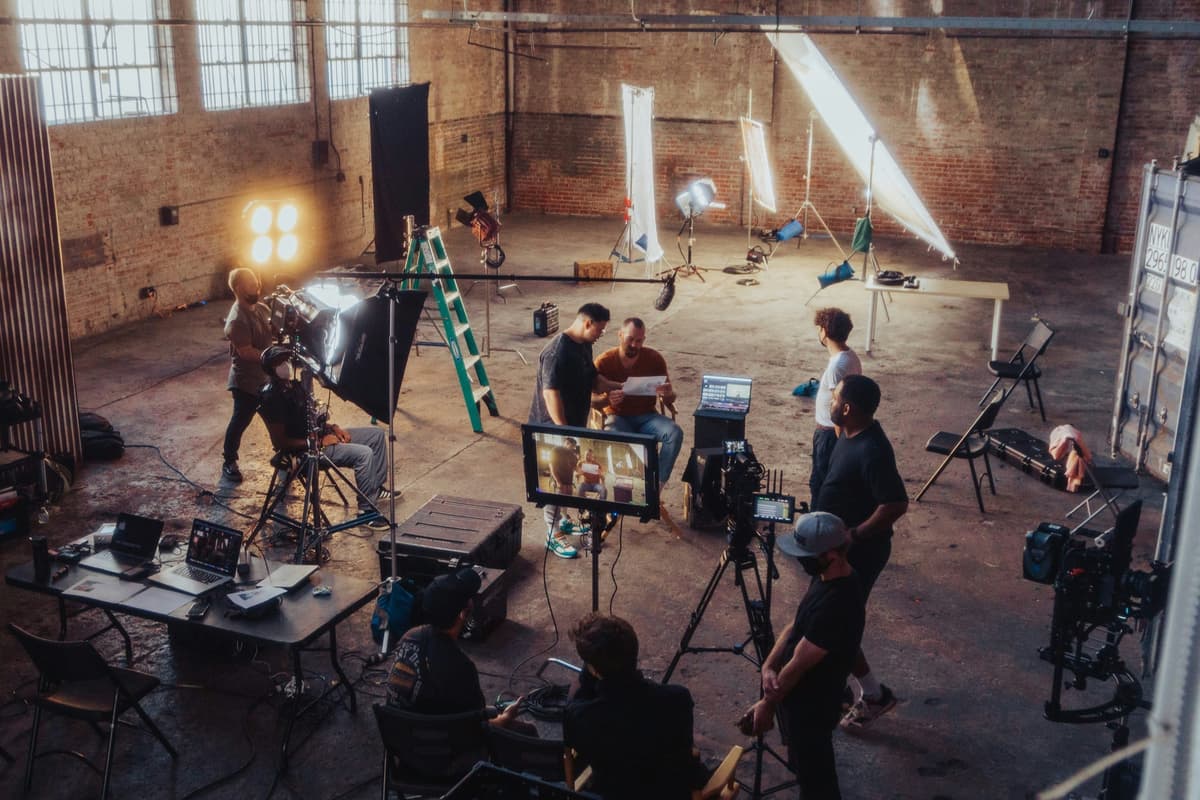
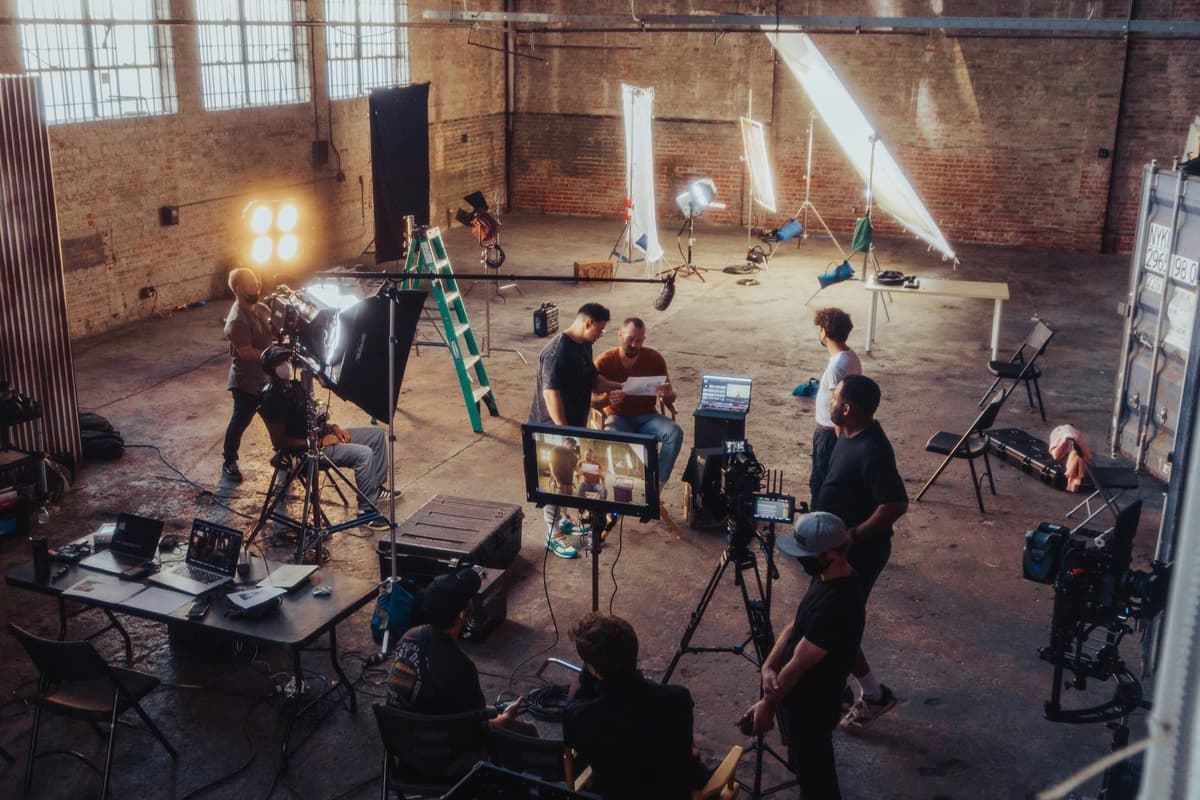
What is a Steadicam Operator?
Overview
What Is a Steadicam Operator?
A Steadicam operator is a specialized camera operator who uses a body-mounted camera stabilization system to capture smooth, fluid shots that would be impossible with a handheld camera or impractical with a dolly and track. The Steadicam rig — attached to the operator via a weighted vest and mechanical arm — isolates the camera from the operator's body movement, delivering cinema-quality glide shots even when the operator is running, climbing stairs, or navigating complex locations.
The term "Steadicam" is technically a brand name owned by Tiffen, though it has become the industry-standard word for any body-mounted camera stabilization system. You may also hear the role referred to as a camera stabilizer operator, gimbal operator, or simply "the Steadicam" on set.
The Invention That Changed Cinema
The Steadicam was invented by cinematographer and cameraman Garrett Brown, who developed the device in the early 1970s. After years of prototyping, the technology debuted commercially in 1975. Its first major Hollywood appearances cemented its legendary status: Bound for Glory (1976) showed its dolly-smooth tracking shots; Rocky (1976) used it for the iconic steps sequence; and Stanley Kubrick's The Shining (1980) used it to follow Danny riding his tricycle through the Overlook Hotel — footage that remains one of cinema's most chilling sequences.
Garrett Brown himself operated the Steadicam on these landmark films, demonstrating that one skilled operator could achieve what entire dolly-and-grip crews previously required. The technology democratized complex camera movement for productions of every budget, and Garrett Brown was awarded a Scientific and Engineering Award by the Academy of Motion Picture Arts and Sciences in 1978.
Where Steadicam Operators Work
Steadicam operators work across virtually every type of visual media production:
- Feature films and co-productions
- Television dramas, sitcoms, and limited series
- Commercials and branded content
- Music videos
- Documentaries
- Live broadcast events — sports, awards shows, concerts
- Reality television and talent competitions
Nearly every production that prioritizes dynamic, flowing cinematography uses a Steadicam operator at some point. On larger productions, the Steadicam operator may be a dedicated crew member for the entire shoot; on smaller productions, a camera operator may also double as the Steadicam operator when rig shots are needed.
Steadicam's Place in the Camera Department
The Steadicam operator reports to the director of photography (DP or cinematographer) and works closely with the director to execute specific shots. On sets where both a conventional A-camera operator and a Steadicam operator are working, the Steadicam op typically serves as the B-camera operator or is brought in specifically for Steadicam sequences. Their work coordinates with the 1st assistant camera (focus puller), the 1st assistant director for shot choreography, and the grip and lighting departments for staging.
Managing a film production requires meticulous coordination between every department — budgeting camera days, overtime for Steadicam operators, and equipment rental costs. Saturation.io gives producers and production accountants a cloud-based platform to track all of these costs in real time, keeping camera department budgets transparent and on track.
Role & Responsibilities
Core Responsibilities on Set
A Steadicam operator's primary job is to operate the stabilization rig and execute shots as directed by the DP and director. But the role goes well beyond simply strapping on a vest and pointing a camera. It demands a combination of physical athleticism, technical mastery, and creative collaboration.
Operating the Rig
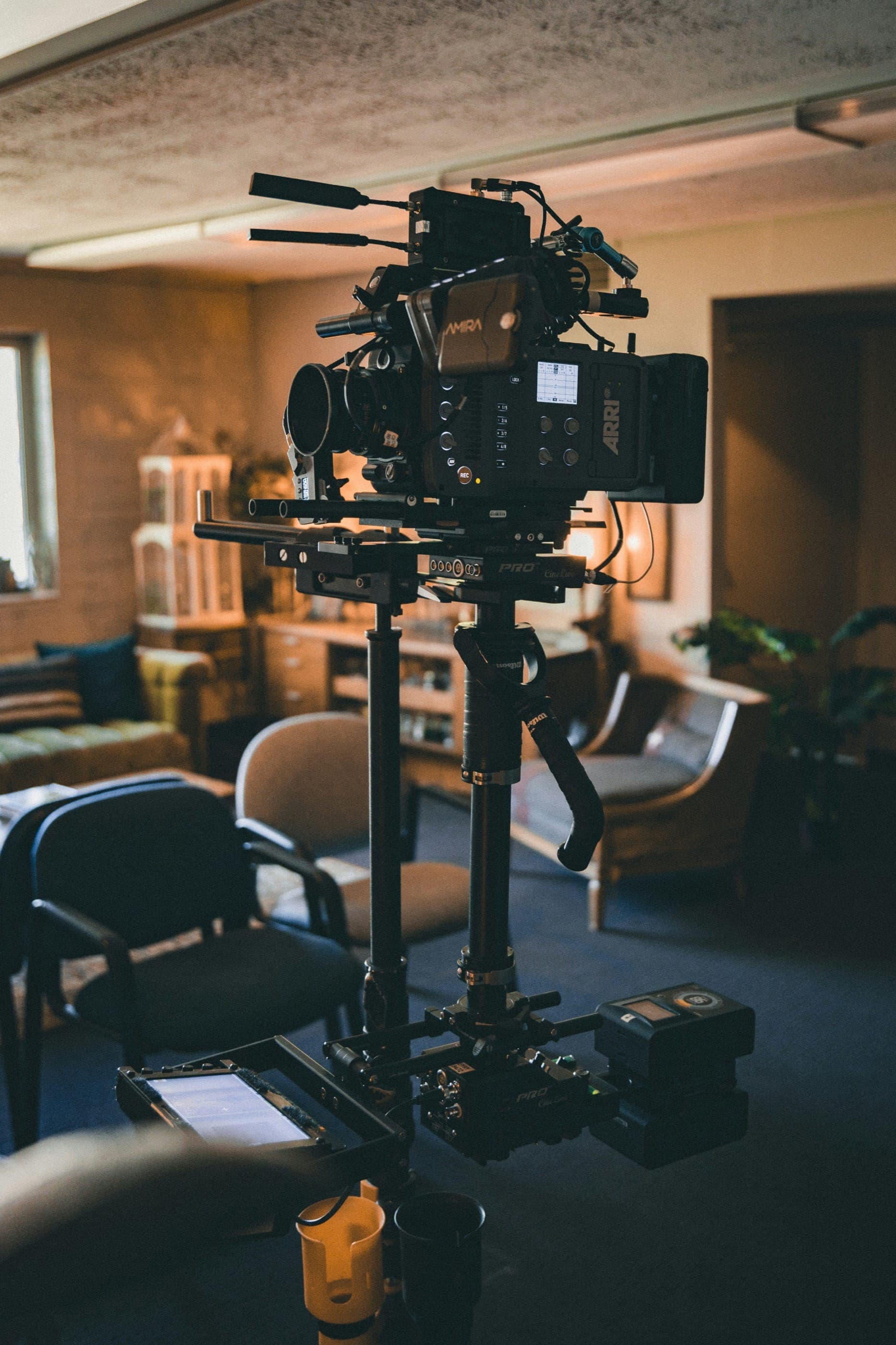
The Steadicam system has four primary components:
- Vest: A padded harness worn over the shoulders and torso that distributes the weight of the entire system across the operator's body, protecting the spine and allowing the operator to work for extended periods.
- Arm: A spring-loaded, articulated arm that attaches to the vest and provides the mechanical isolation between body movement and camera movement. The arm absorbs bounces and jerks, preventing them from reaching the camera.
- Sled: The vertical post assembly that holds the camera at the top and a counterbalancing battery and monitor system at the bottom. Proper balance of the sled is what creates the characteristic Steadicam "float."
- Gimbal: The pivot point at the center of the sled where the operator holds the rig. A properly balanced sled will hover at the gimbal point with minimal correction from the operator's hand.
Before any shot begins, the operator must "balance" the sled — adjusting camera position, battery weight, and monitor position so the rig achieves dynamic balance. A well-balanced sled has a drop time of approximately two to three seconds: if you tilt it horizontal and release, it should drift slowly to vertical. Drop time too fast means the rig is bottom-heavy and will fight the operator; too slow means it's top-heavy and prone to tipping.
Shot Blocking and Pre-Production Planning
Steadicam operators participate in shot blocking with the director and DP before filming begins. Unlike a camera mounted on a dolly, a Steadicam operator must anticipate actor movements, know the shot inside out, and choreograph their own path through the scene. On complex sequence shots — long takes following actors through multiple rooms or locations — operators will rehearse the shot multiple times before rolling.
Pre-production responsibilities include:
- Reviewing shot lists and storyboards to understand required movements
- Location scouts to assess terrain, obstacles, and staging challenges
- Collaborating with the DP on lens selection (Steadicam shots often use wider lenses to maximize depth of field)
- Coordinating with the 1st AD on how much time will be allocated to blocking Steadicam shots
- Testing different rig configurations for the cameras being used on the production
Camera Rigging and Configuration
Steadicam operators must be fluent in rigging different cameras onto the sled. Modern productions may use cameras ranging from large cinema cameras like the ARRI ALEXA to smaller mirrorless bodies, and each requires different mounting configurations and balance adjustments. The operator needs to:
- Mount and cable the camera to the top stage
- Route video signal from the camera to the onboard monitor (often called the "stage" or "sled monitor")
- Connect power from the battery system to the camera and monitor
- Configure remote follow-focus systems if the 1st AC is pulling focus wirelessly
- Test wireless video transmitters if the DP or director is watching on a separate monitor
- Dial in the balance precisely before each major camera configuration change
Working with the 1st Assistant Camera (Focus Puller)
Focus pulling on a Steadicam shot presents unique challenges. Because the operator is moving dynamically, the 1st AC typically uses a wireless remote follow-focus system rather than manually adjusting the lens. The Steadicam operator and 1st AC must communicate constantly about:
- Distance marks for moving actors
- Lens choice and depth of field (wider lenses are more forgiving)
- Cabling and antenna placement to ensure reliable wireless signal
- How quickly the operator will move relative to the actor
On complex shots, the 1st AC may walk alongside the Steadicam operator to maintain line-of-sight with the wireless focus system.
Physical Performance and Body Mechanics
Operating a Steadicam is an athletic undertaking. A fully rigged Steadicam system with a cinema camera can weigh between 30 and 60 pounds (14–27 kg), and in high-performance configurations with large cameras and extended accessories, rigs can approach 100 pounds. Operators may wear this rig for hours across a shoot day, and sequences often require running, kneeling, lying prone, climbing stairs, walking backwards, or navigating outdoor terrain.
Proper technique is essential both for shot quality and injury prevention. Key physical disciplines include:
- Core stability: The operator's core provides the primary shock absorption that the arm doesn't handle. A weak core transfers body movement to the rig.
- Smooth footwork: Steadicam operators develop a distinctive rolling gait, landing heel-to-toe to eliminate the vertical bounce of normal walking.
- Arm endurance: While the vest bears the rig weight, the operator's arm holds and guides the gimbal all day. Forearm and shoulder endurance are critical.
- Spatial awareness: Moving backwards while watching a monitor, avoiding obstacles, and following actors simultaneously requires exceptional situational awareness.
- Breath control: Even breathing patterns help prevent respiratory movement from being transmitted to the camera.
Navigating Challenging Locations
One of the Steadicam's primary advantages over dolly-and-track is its ability to work in locations where laying track is impossible or impractical. Steadicam operators regularly work in:
- Stairwells and multi-story sequences
- Elevators and tight corridors
- Outdoor terrain — beaches, forests, rocky landscapes
- Crowd-filled streets and public locations
- Inside moving vehicles
- Active construction sites or warehouses
Each environment requires the operator to adapt their technique and sometimes modify the rig configuration to handle the specific challenges.
High Mode and Low Mode Operation
The Steadicam sled can be operated in two primary configurations:
- High mode (normal): The camera mounts at the top of the sled above the gimbal, with the battery/monitor at the bottom. This is the standard configuration for most shots and allows the operator to view the monitor while walking upright.
- Low mode (inverted or "underslung"): The sled is flipped so the camera is below the gimbal and the battery is above. This allows extremely low-angle shots — ground level or just above — that would require a dolly or ground-level mount otherwise. Low mode is physically more challenging and requires the operator to walk crouched or prone.
Day-to-Day Set Responsibilities
- Arriving early to prep and balance the rig before camera department call time
- Attending camera blocking and shot rehearsals with the DP and director
- Communicating with the 1st AC about focus plans for each Steadicam shot
- Executing shots during filming, often over many takes
- Monitoring playback with the DP and director to confirm shot quality
- Swapping out batteries and reconfiguring the rig between shots as needed
- Wrapping and securing the rig at the end of each day
- Maintaining their equipment and scheduling maintenance or repair as needed
Skills Required
Physical Fitness and Endurance
Operating a Steadicam rig is among the most physically demanding jobs in the camera department. A fully assembled system with a large cinema camera — including the camera body, lens, matte box, follow-focus, onboard monitor, battery system, arm, vest, and sled — can weigh anywhere from 30 to 100+ pounds depending on the camera package. Operators wear this system for extended periods, often through full 12- to 14-hour shoot days.
Core physical skills required include:
- Core strength and stability: The abdominal and lower back muscles are the primary shock absorbers during Steadicam operation. A strong, stable core prevents the operator's body movement from transmitting through the vest to the arm and rig.
- Shoulder and arm endurance: While the vest carries the weight, the operator's hand maintains constant light contact with the gimbal to guide shots. Arm and shoulder fatigue is a common cause of deteriorating shot quality late in a shoot day.
- Leg strength: Walking backwards, crouching for low-mode shots, and climbing stairs while loaded requires strong quadriceps, hamstrings, and calves.
- Cardiovascular fitness: Action sequences, chase scenes, and long continuous takes demand aerobic endurance.
- Flexibility and body awareness: Proprioception — the sense of where your body is in space — helps operators navigate complex environments without looking away from the monitor.
Most experienced operators maintain dedicated fitness routines — strength training, yoga, or Pilates — as part of their professional practice, treating physical conditioning the same way athletes treat training.
Spatial Awareness and Movement Coordination
A Steadicam operator must simultaneously track multiple elements:
- What they see on the rig monitor (the framed shot)
- The positions of actors and where they are moving
- Their own physical path through the space — obstacles, crew, equipment, walls
- Instructions being relayed from the director or DP via headset
- Communication from the 1st AC about focus status
This multi-threaded spatial awareness is a trainable skill that develops with hours of practice, but operators also need strong natural spatial processing. Moving backwards through a crowded set while watching a monitor — and not tripping over a cable or crew member — is a genuine cognitive and physical skill.
Camera Operation Mastery
Steadicam operators must be expert camera operators before they specialize. This includes:
- Lens knowledge: Understanding focal length, depth of field, and how lens choice affects the "feel" of a Steadicam shot. Wider lenses (typically 24mm–35mm) are preferred for most Steadicam work because they provide greater depth of field and tolerate slight camera wobble more forgivingly than long lenses.
- Exposure and shutter: Understanding how exposure settings affect motion blur, and when the DP wants a specific look from the movement.
- Shot composition: Even in motion, a Steadicam shot must be composed properly — headroom, lead room, framing relationships between subjects.
- Camera system fluency: Working knowledge of the cinema cameras used on professional productions, including ARRI ALEXA, Sony VENICE, RED, Blackmagic URSA, and Canon cinema cameras.
Rig Technical Knowledge
Deep mechanical understanding of the Steadicam system itself is essential:
- Balance and calibration: Properly balancing the sled — adjusting the camera stage, battery rack, and monitor — for the specific camera package being used on each shot.
- Arm spring adjustment: Tuning the arm springs to match the weight of the rigged sled so the arm floats in the correct operating position.
- Electrical systems: Routing and managing power from batteries to camera, monitor, and accessories, including wireless video and follow-focus systems.
- Troubleshooting: Diagnosing and resolving rig problems quickly on set — a loose cable, a dead monitor, a focus system dropout — without losing significant shooting time.
- Maintenance and care: Operators who own their rigs must maintain them, including bearing replacement, spring servicing, and vest fitting adjustments.
Communication and Collaboration
Steadicam operators work closely with the director, DP, 1st AC, 1st AD, and the full camera and grip department. Strong professional communication skills include:
- Shot discussion with the DP: Translating the DP's visual intention into specific rig techniques, lens choices, and movement paths.
- Choreography communication with the director: Ensuring the operator's physical path matches the blocking and timing the director has planned with the actors.
- Focus coordination with the 1st AC: Providing distance estimates, flagging unusually tight depth-of-field situations, and ensuring the wireless system is functioning reliably.
- Set safety communication: Alerting crew to the operator's path, especially when moving quickly or in reverse, to prevent collisions or tripping hazards.
Adaptability and Problem-Solving Under Pressure
On a film set, plans change constantly. Actors don't hit marks, locations present unexpected obstacles, equipment fails, and the director changes the shot in the middle of a take. A skilled Steadicam operator must:
- Adapt in real time when actors deviate from blocking
- Find creative solutions when a location makes the planned path impossible
- Improvise in tight spaces without losing the shot
- Maintain composure and shot quality after multiple difficult takes
- Prioritize safety — their own, the crew's, and the equipment's — in every situation
Endurance for Long Working Days
Film shoots regularly run 12 to 14 hours, and Steadicam operators are typically called for multiple setups throughout the day. Managing physical and mental fatigue while maintaining shot quality on take 15 of a complex sequence is a professional discipline that separates working operators from beginners.
Experienced operators develop strategies for managing fatigue: structured rest between setups, proper hydration and nutrition, pre-shoot warm-ups, and post-shoot recovery routines including stretching and sometimes physical therapy.
Business and Freelance Skills
Most Steadicam operators work as freelancers rather than full-time employees. Running a Steadicam business requires:
- Marketing and self-promotion — maintaining a reel, website, and professional network
- Rate negotiation and contract management
- Equipment insurance and maintenance budgeting
- Tax management as a self-employed individual or loan-out company
- Relationship building with DPs, production companies, and agencies who hire operators regularly
Salary Guide
How Much Does a Steadicam Operator Make?
Steadicam operators are among the higher-paid specialists in the camera department, compensated for both their specialized skill and the fact that most own and supply their own equipment. Compensation varies significantly by market, production type, union status, and experience level.
Day Rates — Freelance Market
Most Steadicam operators work as freelancers and negotiate day rates directly with productions. Typical day rate ranges in 2025-2026:
- Entry-level / low-budget productions: $500–$900/day
- Mid-level production (independent films, cable TV): $1,000–$1,800/day
- Experienced operators on studio or network productions: $2,000–$3,500/day
- Top-tier commercial / feature work: $3,500–$6,000+/day
Most Steadicam operators charge a separate equipment rental ("kit fee" or "box rental") for the use of their Steadicam rig, typically $500–$1,500/day depending on the system and camera package. This kit fee is in addition to the operator's personal day rate.
IATSE Local 600 Union Rates
On union productions, Steadicam operators working as camera operators are covered by IATSE Local 600 (International Cinematographers Guild) agreements. Under the AMPTP Basic Agreement (2023 WGA/SAG-AFTRA negotiation cycle rates):
- Camera operator (studio, weekly): Approximately $4,200–$5,000/week minimum
- Camera operator (daily): Approximately $1,050–$1,400/day minimum
Steadicam operators on union shoots typically negotiate above scale based on the specialized nature of the work and the equipment they bring. Kit fees for the Steadicam rig are negotiated separately and are typically not covered by the union rate itself.
Salary by Experience Level
- 0–3 years (Trainee/Entry): $35,000–$60,000/year. Operators at this stage are working on student films, low-budget indie projects, and corporate/commercial work to build their reel and hours.
- 3–7 years (Mid-level): $70,000–$120,000/year. Operators at this stage have a track record and DP relationships, working on independent features, regional commercials, and television.
- 7–15 years (Experienced): $120,000–$200,000/year. Working regularly on studio productions, network TV, and major commercials.
- 15+ years (Veteran/Top-tier): $200,000–$400,000+/year. Operators in this bracket are sought by name by DPs and directors, working on major studio features and prestige television.
BLS Data: Camera Operators
The U.S. Bureau of Labor Statistics categorizes Steadicam operators under "Camera Operators, Television, Video, and Film." According to BLS data:
- Median annual wage (May 2024): Approximately $68,810
- Bottom 10% earners: Under $35,000
- Top 10% earners: Over $130,000
Note that BLS data captures a wide range including news camera operators and corporate videographers. Narrative film and television Steadicam operators on union productions typically earn significantly above the BLS median. BLS occupational employment and wage estimates.
Salary by Market
- Los Angeles: The highest-paying market. Studio and network productions headquartered in LA set the top rates. Operators with 10+ years and union status regularly earn $150K–$250K/year.
- New York: Strong commercial and independent film market. Comparable to LA at the top end, especially for commercials and branded content.
- Atlanta / Georgia: A rapidly growing production market due to tax incentives. Rates are lower than LA/NY but rising as demand increases.
- Chicago, New Orleans, Albuquerque, Vancouver: Regional markets with active production. Day rates 20–40% below LA/NY, but cost of living is also lower.
Equipment Ownership and ROI
Most professional Steadicam operators own their rig. A professional-grade Steadicam system (e.g., Tiffen Steadicam Zephyr, Archer 2, or Steadicam Volt) ranges from $5,000 to $50,000 new, depending on the configuration. The operator's kit fee — charged separately from their day rate — typically recoups the equipment cost over 30 to 100 shoot days, after which the equipment generates ongoing revenue.
Owning a high-quality rig also provides a competitive advantage: many productions specifically seek operators who can provide their own system, reducing the production's equipment rental budget.
Commercial vs. Narrative Film Work
Commercial productions (advertising) often pay the highest day rates in the industry — frequently $3,000–$6,000/day for experienced operators — due to larger budgets, tight schedules, and the high stakes of a single shoot day. Narrative film and television work offers less per day but more consecutive days of employment, which can result in comparable annual income for operators working on long-format productions.
Frequently Asked Questions
What does a Steadicam operator do?
A Steadicam operator operates a body-mounted camera stabilization system — consisting of a vest, mechanical arm, and camera sled — to capture smooth, fluid shots on film and television sets. They work with the director and director of photography (DP) to execute shots that require camera movement without the shakiness of handheld or the constraints of dolly track: tracking actors through buildings, climbing stairs, running through crowds, or executing long continuous takes across multiple locations.
How much does a Steadicam operator make?
Steadicam operators typically earn $500–$6,000 per day depending on experience, market, and production type. Entry-level operators working on low-budget productions earn $500–$900/day; experienced operators on studio and network productions earn $2,000–$4,000/day, plus a separate equipment kit fee of $500–$1,500/day for the rig. Annual income for full-time working operators ranges from roughly $70,000 at the mid-level to over $200,000 for veteran operators in major markets.
How do you become a Steadicam operator?
The standard path is: (1) build camera operation experience as a camera PA, 2nd AC, 1st AC, or camera operator; (2) attend a formal Steadicam workshop (Tiffen or Steadicam Operators Association); (3) practice extensively on low-budget productions, student films, or personal projects; (4) build a reel of Steadicam work; and (5) join IATSE Local 600 to access union productions. Most working Steadicam operators spent years as conventional camera operators or 1st ACs before transitioning to the rig.
What is the difference between a Steadicam and a gimbal?
A Steadicam is a mechanical, spring-based body-mounted stabilization system that has been the industry standard since 1975. It achieves smooth shots through precise balancing of the camera sled and the spring-loaded arm, requiring no electronics. A gimbal is an electronically motorized stabilization system that uses motors and sensors (accelerometers and gyroscopes) to keep the camera level. Gimbals are smaller, lighter, and easier to learn, but experienced operators argue that a properly operated Steadicam produces a distinctive "organic" quality of movement that motors cannot replicate. Many modern productions use both: Steadicam for larger cameras and extended sequences, gimbals for run-and-gun or tight-space situations.
How heavy is a Steadicam rig?
A complete professional Steadicam system — vest, arm, sled, camera, lens, follow-focus, matte box, batteries, and monitor — typically weighs between 30 and 60 pounds (14–27 kg). High-performance configurations with large cinema cameras (like the ARRI ALEXA 35 with accessories) can approach or exceed 80–100 pounds. Operators wear this system for hours at a time on a shoot day, which is why physical fitness and core strength are non-negotiable for the role.
Is a Steadicam operator union?
On major studio and network television productions in the United States, Steadicam operators are typically members of IATSE Local 600 (the International Cinematographers Guild) and work under the AMPTP collective bargaining agreement. The union covers camera operators, which includes Steadicam operators. Many operators also work non-union on independent films, commercials, and lower-budget productions, particularly early in their careers. Joining Local 600 requires accumulating work vouchers on union productions over time.
What famous films have used Steadicam?
The Steadicam has been used in some of cinema's most iconic sequences: Garrett Brown's original Steadicam work in Rocky (1976) and The Shining (1980, the tricycle hallway shot), the unbroken Copacabana scene in Goodfellas (1990, operated by David Nowell), the Copperfield musical number in Boogie Nights (1997), and the opening sequence of Atonement (2007) — an extraordinary 5-minute, 40-second unbroken shot on the Dunkirk beach. The Steadicam has fundamentally changed how directors and DPs think about camera movement and the possibilities of long takes.
What training do I need to become a Steadicam operator?
Most operators begin with film school or camera department experience, then attend a formal Steadicam workshop — either through Tiffen (the manufacturer) or the Steadicam Operators Association (SOA). Reading the Steadicam Operator's Handbook by Jerry Holway and Laurie Hayball is considered essential study. Beyond formal training, the most important development happens through practice: renting a rig, shooting on low-budget productions, and gradually working up to professional-level assignments where DPs and directors will trust you with complex sequences.
Education
Do You Need a Film School Degree?
There is no required degree to become a Steadicam operator. The role is entirely skill-based and earned through experience, training, and demonstrated ability. That said, a solid foundation in camera operation — whether from formal education or on-the-job experience — is effectively a prerequisite before transitioning to Steadicam work.
Film School and Formal Education
Many Steadicam operators begin their careers with film school or a degree in cinematography, film production, or electronic media. Programs at schools like the American Film Institute (AFI), New York Film Academy, USC School of Cinematic Arts, Chapman University's Dodge College, and Loyola Marymount University provide hands-on camera training that builds the foundational skills Steadicam operators need: camera operation, lens optics, exposure, lighting relationships, and on-set protocol.
Film school is not the only path, but it does provide structured exposure to professional equipment, industry terminology, and peer networks that can accelerate early career development. Some programs even have Steadicam equipment available for students to practice with.
Associate's degree programs and community college film programs can also provide entry points to the industry at lower cost. The National Film and Television School (UK), the Prague Film School, and Vancouver Film School attract international students seeking comprehensive camera training.
The Essential First Step: Camera Operator Experience
Virtually every working Steadicam operator reached the role after years of experience as a camera operator or 1st assistant camera (1st AC). This background is essential because Steadicam operation builds on a deep understanding of:
- Camera systems, lenses, and sensor formats
- Depth of field and focus mechanics
- Shot composition and framing
- On-set hierarchy and communication protocols
- Working relationships with directors and DPs
Most camera operators begin as camera production assistants (PAs), then work up to camera loader, then 2nd assistant camera, then 1st assistant camera, and eventually camera operator. The 1st AC path is particularly valuable because it builds intimate knowledge of camera mechanics that informs how to rig and balance a Steadicam effectively.
Steadicam-Specific Workshops and Training
The primary formal training path for Steadicam operation is the Steadicam workshop. Two main programs exist:
Tiffen Steadicam Workshops
Tiffen, the manufacturer of the Steadicam brand, runs multi-day intensive workshops specifically for aspiring and working Steadicam operators. These workshops cover:
- Understanding and operating the Steadicam vest, arm, and sled
- Dynamic balance techniques
- High mode and low mode operation
- Troubleshooting rig problems on set
- Practical shooting exercises with professional instructors
Workshops are held at various locations throughout the year and range from beginner to advanced levels. They are widely considered the gold standard entry point for Steadicam training.
Steadicam Operators Association (SOA) Training
The Steadicam Operators Association offers its own training program and connects working operators with educational resources, mentors, and job opportunities. SOA membership is recognized as a professional credential in the industry and signals commitment to the craft.
Society of Camera Operators (SOC)
The Society of Camera Operators (SOC) is the primary professional organization for all camera operators, including Steadicam specialists. SOC membership provides:
- Access to industry events, seminars, and educational programming
- Networking with DPs, directors, and fellow operators
- Visibility through the SOC directory
- Recognition through the SOC Award, one of the industry's most prestigious camera operation honors
While SOC membership is not a prerequisite for work, it is a meaningful credential that signals professional-level commitment and skill.
IATSE Local 600 (International Cinematographers Guild)
In the United States, camera operators — including Steadicam operators — working on union productions belong to IATSE Local 600, the International Cinematographers Guild. Getting into Local 600 requires accumulating work vouchers on union productions over time, which typically means starting on non-union productions or low-budget films and transitioning to union work as experience grows.
Membership in Local 600 is required to work on major studio films and network television. It provides access to union-negotiated minimums, health benefits, and pension.
Self-Directed Practice and Mentorship
Beyond formal education, hands-on practice is the most important element of Steadicam training. Experienced operators recommend:
- Renting a rig to practice: Many operators rent a Steadicam system before purchasing one, using low-budget shoots and personal projects to build hours on the rig.
- Reading the Steadicam Operator's Handbook: Written by Jerry Holway and Laurie Hayball, this is the definitive technical reference for Steadicam operators and covers balance, technique, troubleshooting, and professional practice.
- Finding a mentor: Many experienced Steadicam operators are willing to take on trainees informally. Working as a Steadicam assistant — managing cables, swapping batteries, and assisting with rig setup — provides on-set experience alongside a working professional.
- Filming personal projects: Student films, music videos, and corporate work allow operators to accumulate hours and build reel footage to show prospective clients and DPs.
Physical Fitness Training
Because the role is physically demanding, many Steadicam operators treat physical conditioning as part of their ongoing professional development. Strength training (particularly core, back, and shoulder work), yoga or Pilates for flexibility and body awareness, and cardiovascular endurance training all contribute to longevity in the role.
Last updated April 25, 2026
Budget this role in seconds with Saturation
Rate packs, fringes, and phases turn a crew list into an accurate production budget without the spreadsheet math.
Rate packs
Verified union rates, versioned.


Fringes and markupsRebuilt
Stack them, cap them, and see the split on every line.
PhasesRebuilt
Every column knows its type.
Auto-fill
Rates fill in as you type, from the source you turned on.