What is a Steadicam Assistant?
Overview
What Is a Steadicam Assistant?
A Steadicam assistant is a specialized camera department crew member whose job is to support the Steadicam operator before, during, and between every shot. While the Steadicam operator focuses entirely on executing fluid camera movement, the Steadicam assistant keeps the $100,000+ rig organized, powered, balanced, and ready for the next take.
The role sits within the camera department and is distinct from the 1st assistant camera (1st AC). A 1st AC manages focus pulling and the full camera package for the A or B camera. A Steadicam assistant is operator-specific — their entire workflow is tied to one person and one piece of equipment. On productions that use a Steadicam daily, having a dedicated assistant is not optional; it is a technical necessity.
How the Steadicam Rig Works
To understand the Steadicam assistant's responsibilities, you need to understand the three components of the rig:
The Vest — A body-mounted brace worn by the operator that distributes the weight of the arm and camera across the torso and hips. Fitting the vest correctly to the operator's body is one of the most important tasks an assistant performs. An ill-fitting vest causes discomfort, limits range of motion, and can lead to injury on long shooting days.
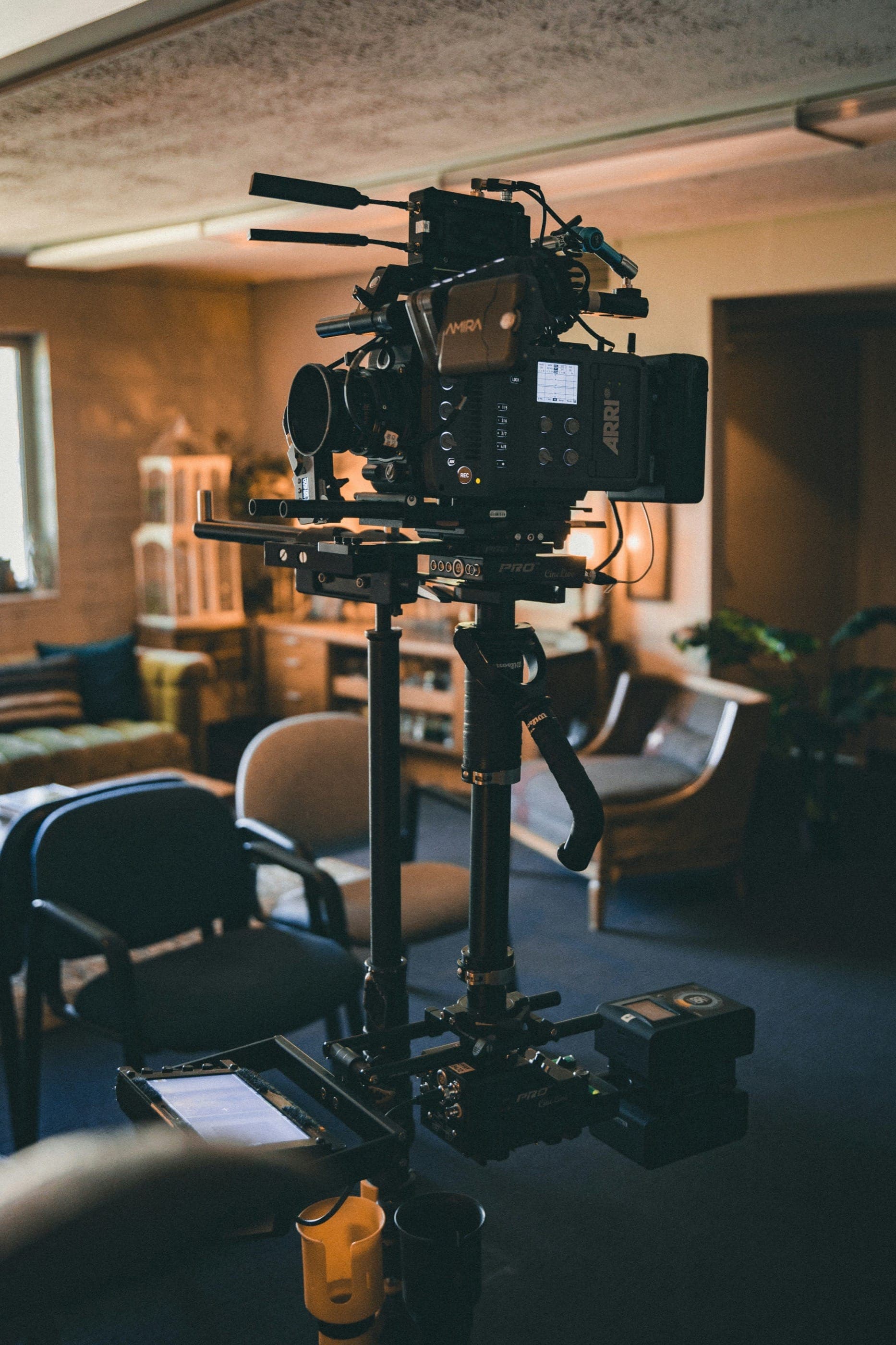
The Arm — A spring-loaded iso-elastic arm that connects the vest to the sled. The arm absorbs vertical movement and vibration while the operator walks or runs. Spring tension must be calibrated to match the camera's total weight. Adjusting the arm requires knowing the current build weight and anticipating any lens or accessory changes.
The Sled — The central post that holds the camera on top and a monitor and battery on the bottom. The sled is balanced through a gimbal at its midpoint. A properly balanced sled stays level with minimal operator effort. Any camera or lens change shifts the balance point and requires the assistant to help re-balance before the next shot.
Steadicam Assistant vs. 1st AC
On a Steadicam-heavy production, the Steadicam operator may work alongside the main camera crew but is not directly managed by the 1st AC for rig logistics. The Steadicam assistant bridges that gap: they communicate with the 1st AC about upcoming lens changes or camera modifications that will affect sled balance, coordinate with the grip department on obstructions and cable paths, and relay information from the DP or operator to the rest of the camera team.
Productions that manage budgets across every department — from camera packages to crew rates — use tools like Saturation.io to track camera department costs, equipment day rates, and crew deals in one collaborative budget. Understanding where the Steadicam assistant fits in the larger production cost picture helps line producers and UPMs allocate resources accurately.
Where the Steadicam Assistant Fits in the Camera Department
The camera department hierarchy on a feature or episodic television production typically runs: Director of Photography → Camera Operator / Steadicam Operator → 1st AC → 2nd AC → Loader / DIT. The Steadicam assistant occupies a parallel track alongside the 1st AC, working directly under the Steadicam operator. On smaller productions, the Steadicam operator may work without a dedicated assistant, relying instead on the 2nd AC or a willing grip. On larger productions — particularly those with significant Steadicam coverage — a full-time Steadicam assistant is budgeted as a separate line item.
Role & Responsibilities
Core On-Set Duties of the Steadicam Assistant
The Steadicam assistant's day is structured around one goal: making sure the operator can step into the rig and execute every shot without interruption. Every task the assistant performs serves that objective.
Vest Management Between Takes
Putting on and taking off the Steadicam vest is a two-person job. The vest is heavy, typically 15 to 22 pounds for the arm alone, and must be fitted tightly against the operator's body. Between takes — which can happen every 5 to 20 minutes on a busy set — the assistant helps the operator out of the vest, supports the arm to prevent stress on the joints, and holds everything stable until the next setup is called. Repeating this process 30 to 50 times in a shooting day requires both physical strength and a smooth, practiced routine so the transition never costs the production time.
Arm and Sled Maintenance During Shooting
When the operator is not wearing the rig, the arm and sled must be safely stored. The assistant manages the sled stand, ensures the camera is protected (often by handing camera-specific care to the 1st AC), and monitors the arm for any spring tension drift that may need adjustment between setups. The sled's electronics — including the onboard monitor and battery — must remain charged. The assistant tracks battery levels, swaps in fresh units, and ensures the monitor is displaying the correct signal before every take.
Balance Adjustment After Camera Changes
Any change to the camera build — a new lens, an added matte box, a different ND filter set — shifts the sled's center of gravity. The assistant works alongside the operator to re-balance the sled quickly. This involves sliding the camera stage forward or backward on the sled post and adjusting the bottom battery weight until the rig achieves neutral balance at the gimbal. Speed matters: the faster the assistant can anticipate and prepare for a balance adjustment, the less time the production loses between setups.
Battery and Power Management
The Steadicam sled runs on 24V or 14.4V batteries depending on the rig model (Anton Bauer, V-mount, or Gold mount systems are common). The assistant maintains a charging station — usually a compact travel charger kept near the camera department cart — and rotates batteries throughout the day. A dead sled battery mid-setup is a production-stopping failure. Experienced assistants track battery life obsessively and never let the operator step into the rig with anything below 80% charge unless a fresh battery swap is imminent.
Cable Management
On productions where the Steadicam feeds a live signal to a DIT cart or video village, a cable feeds from the sled's transmitter or tap port. Managing this cable — keeping it from tangling, tripping crew members, or pulling on the sled — is often delegated to the Steadicam assistant or a dedicated utility person. The assistant watches the cable path on every take and communicates with the 2nd AC or grip about any routing issues before they cause problems.
Communication with the 1st AC and Camera Department
When the production calls for a lens change on the Steadicam, the assistant relays this to the 1st AC who manages the lens package. They confirm the new lens weight, retrieve it from the lens case, and inform the operator so they can anticipate the balance adjustment. If the DP or director wants to add accessories like a wireless follow focus, an onboard light, or a field monitor to the Steadicam build, the assistant calculates the weight impact and communicates the new build total to the operator before anything is mounted.
Protecting the Rig from Damage
A professional Steadicam package — including the vest, arm, sled, and accessories — costs between $80,000 and $150,000. When the operator is not wearing the rig, the assistant is responsible for its physical safety. This means keeping the sled on a stable stand, protecting the arm from falls or collisions, storing accessories in appropriate cases, and monitoring the rig in environments with rain, dust, sand, or extreme temperature. On location shoots, this responsibility extends to the transit of the rig between locations and its storage in a secured camera car or truck.
Pre-Production and Prep Days
Before principal photography begins, the Steadicam assistant typically joins the operator at the camera rental house for a camera prep day. They unpack and inventory every component of the rig, check for damage or missing parts, verify that electronics are functioning, confirm that batteries hold a charge, and build the rig with the production camera to check balance and fit. They also prepare the sled stand, charging station, and any accessories the operator has requested. A thorough prep day prevents equipment failures during production.
Skills Required
Technical Skills Every Steadicam Assistant Needs
The Steadicam assistant role requires a specific combination of mechanical aptitude, physical capability, and interpersonal precision. Technical errors in this role can damage expensive equipment, delay production, or compromise the operator's performance on complex shots.
Steadicam Rig Knowledge
A Steadicam assistant must have working knowledge of every major rig system used in professional production. The primary manufacturers are Tiffen (Steadicam brand), Arri (Trinity and Artemis), and PRO (PRO vest and arm systems). Each system has different spring tension adjustment mechanisms, battery mounting configurations, and monitor connections. Knowing how to work with the specific rig the operator uses — and being able to adapt quickly if a rental substitution occurs — is fundamental to the job.
Assistants must understand: vest sizing and tightening systems, arm spring tension adjustment for different camera weights, sled balance through stage adjustment and counterweight management, gimbal maintenance and lubrication, monitor cabling and signal routing, and battery system compatibility.
Vest Fitting
Fitting the Steadicam vest to the operator's body is one of the most skill-dependent tasks the assistant performs. The vest must distribute weight evenly across the hip shelf and shoulder pads. If the hip shelf is too loose, the arm post will drift and destabilize the rig. If the shoulder pads are too tight, the operator will experience restricted movement and fatigue faster. The assistant learns the specific operator's body proportions and preferred fit, and can execute the vest-on routine in under two minutes even in cramped or chaotic set conditions.
Balance and Weight Calculation
A properly balanced Steadicam sled holds the camera level with no operator input at the gimbal. Achieving this balance requires understanding the relationship between camera weight, lens weight, monitor position, and battery placement on the sled. When the DP or director requests a lens change, the assistant mentally calculates the weight differential and pre-positions the camera stage before the new lens is mounted, minimizing the time needed for re-balancing between takes.
Battery and Power Systems
Steadicam sleds use 24-volt power in most professional configurations. Common battery systems include Anton Bauer Cine Series, IDX V-mount, and Gold mount batteries. The assistant manages a rotation of 4 to 8 batteries throughout the shooting day, maintaining the charging station and tracking usage cycles. They also manage any onboard wireless transmitters, follow focus motors, or supplemental monitors that draw power from the sled.
Physical Fitness and Stamina
Helping an operator in and out of the Steadicam vest dozens of times per day — while holding the arm stable to prevent joint stress — requires above-average physical strength and endurance. The arm itself can weigh 12 to 20 pounds without the sled, and the assistant frequently holds it at odd angles to accommodate the operator's movement during the vest-on transition. Steadicam assistants who develop muscular endurance in the back, shoulders, and core perform the job more reliably and with fewer ergonomic errors over long shooting days.
Situational Awareness on Set
A Steadicam shot often involves the operator moving through a complex environment — navigating around actors, furniture, lighting stands, and crew members. The assistant must maintain visual awareness of the entire shooting area: where the camera cable runs, where the sled stand is positioned for quick retrieval, which crew members are in the operator's path, and what the next setup will require. This spatial awareness prevents collisions, cable tangles, and the kind of scrambling that wastes production time.
Communication Skills
The Steadicam assistant operates at the intersection of the operator, the 1st AC, the grip department, and sometimes the DP or director. They must communicate concisely and accurately about technical issues — a balance problem, a low battery, an incoming lens change — without creating unnecessary noise on set. The ability to deliver information to the right person at the right moment, without disrupting the rhythm of the shoot, is a skill that separates experienced assistants from beginners.
Camera and Lens Knowledge
Because any change to the camera configuration affects sled balance, the Steadicam assistant needs practical knowledge of the production camera system. Common cameras on Steadicam builds include the ARRI Alexa 35, ARRI Alexa Mini LF, Sony VENICE 2, RED MONSTRO, and Blackmagic URSA Cine. Knowing the approximate weight of the body, the weight range of common prime and zoom lens sets (Zeiss Supreme, Cooke S7, Leica Thalia), and the impact of accessories like matte boxes and wireless follow focus systems helps the assistant anticipate balance changes before they happen.
Problem-Solving Under Pressure
Equipment problems on a Steadicam build — a gimbal that drifts, a battery that fails unexpectedly, an arm spring that loses tension mid-day — must be diagnosed and addressed quickly. The assistant is the first line of diagnosis for rig issues. They need to identify whether a problem is solvable on set or requires a call to the rental house, and they need to communicate that assessment to the operator and 1st AC without creating panic or confusion among the larger crew.
Salary Guide
Steadicam Assistant Day Rates and Salary
Steadicam assistant compensation varies significantly based on union status, production type, geographic market, and whether the assistant is working on a daily or weekly deal. Unlike the Steadicam operator, whose rate often includes an equipment package fee, the Steadicam assistant is paid for their labor only.
Non-Union Day Rates
On non-union productions — independent features, music videos, commercials, branded content, and documentary work — Steadicam assistants typically negotiate day rates directly with the operator or production. Common ranges in major markets (Los Angeles, New York, Atlanta):
Entry level (0–2 years experience): $200 to $300 per 10-hour day
Mid-level (2–5 years experience): $300 to $450 per 10-hour day
Experienced (5+ years, established operator relationships): $400 to $600 per day on higher-budget non-union productions
Overtime beyond 10 or 12 hours is negotiated as part of the deal, either at 1.5x the hourly rate or a flat additional daily fee. Kit fees are not standard for Steadicam assistants since they do not own the rig, though assistants who own personal tools, stands, or charging equipment may negotiate a nominal kit fee.
IATSE Local 600 Union Rates
On union productions working under IATSE Local 600 agreements, Steadicam assistants are typically classified under camera operator or assistant camera classifications depending on the applicable contract (Basic Agreement, AICP Commercial Agreement, or streaming platform-specific deals).
Under the IATSE Basic Agreement for features and episodic television, 1st AC rates start at approximately $52 to $58 per hour (scale, 2024–2025 contract cycle), with studio productions typically paying above scale. A 10-hour day at scale for a 1st AC-equivalent classification produces a day rate in the range of $520 to $580 before overtime, with union health and pension contributions added on top by the producer.
Weekly guaranteed minimums under IATSE typically run 54-hour guarantees, translating to weekly base pay in the $2,800 to $3,500 range at scale for camera assistant classifications.
Annual Income Estimates
Because Steadicam assistant work is project-based, annual income varies based on how many weeks of production the assistant books across a calendar year. A working Steadicam assistant in a major market who maintains relationships with two or three active operators might work 30 to 40 weeks per year.
Non-union, mid-market, 30 weeks: $45,000 to $70,000
Union scale, 35 weeks: $90,000 to $120,000
Union above scale, top operators in LA/NY, 40+ weeks: $130,000 to $160,000+
These figures do not include benefits. Union members receive health insurance and pension contributions through IATSE's Motion Picture Industry Pension and Health Plans, which adds significant value beyond the nominal wage.
Feature Film vs. Television vs. Commercial Rates
Commercial productions (advertising, branded content) often pay the highest day rates relative to production length. A well-budgeted national commercial may offer $500 to $800 per day for a Steadicam assistant, with a short 3 to 5 day shoot. Studio feature films working under IATSE scale provide stable weekly income over longer production periods (8 to 20 weeks), making them preferable for consistent annual earnings. Network episodic television falls in a similar range to features. Streaming platform productions (Netflix, Apple TV+, Amazon) typically pay competitive rates at or above IATSE scale.
Market Differences
Production markets in Los Angeles and New York command the highest Steadicam assistant rates due to production volume and union density. Atlanta has grown significantly as a production hub (driven by Georgia's tax incentives) and offers strong non-union and union opportunities with rates approaching LA/NY levels for studio productions. Markets like New Orleans, Albuquerque, and Vancouver (for US productions filming in Canada) offer competitive rates but lower overall volume of Steadicam-specific work.
BLS Reference Data
The U.S. Bureau of Labor Statistics classifies Steadicam assistants within the broader category of Camera Operators, Television, Video, and Film (SOC code 27-4031). The BLS reported a median annual wage of $68,810 for this category as of May 2024. This figure covers a wide range of camera operator roles; working Steadicam assistants in union markets typically earn above this median. For the most current wage data, see the BLS Occupational Employment and Wage Statistics for Camera Operators.
Frequently Asked Questions
Frequently Asked Questions About the Steadicam Assistant Role
What does a Steadicam assistant do on a film set?
A Steadicam assistant helps the Steadicam operator prepare, maintain, and operate the Steadicam rig throughout the shooting day. Their primary duties include putting the vest on and taking it off the operator between takes, managing the arm and sled when the operator is not wearing the rig, monitoring and swapping batteries for the sled's electronics, assisting with balance adjustments after lens or camera changes, and communicating with the 1st AC and grip department about upcoming shot requirements. The goal of every task is to ensure the operator can step into the rig and execute every shot without delay or equipment issues.
What is the difference between a Steadicam assistant and a Steadicam operator?
The Steadicam operator wears the rig and executes camera movement during shots — their focus is entirely on operating. The Steadicam assistant supports the operator by managing the equipment between shots, handling logistics, and ensuring the rig is always ready. Operators are typically more experienced professionals who may own their own rig and charge a package fee in addition to their labor rate. Assistants are usually earlier-career camera department crew who are learning the system and building toward an operator career.
What is the difference between a Steadicam assistant and a 1st AC?
A 1st AC (first assistant camera) manages focus pulling and the overall camera package for the A or B camera on a production. They work across the entire camera — all lenses, accessories, and media. A Steadicam assistant is specifically dedicated to the Steadicam operator's rig. On sets where the Steadicam operates alongside the A camera, the 1st AC and Steadicam assistant work in parallel, coordinating on lens changes and camera configuration. The Steadicam assistant does not pull focus during Steadicam shots — a separate wireless follow focus operator or the 1st AC handles that responsibility depending on the production setup.
How much does a Steadicam assistant make?
Non-union Steadicam assistants earn $200 to $450 per day depending on experience and market, with experienced assistants on higher-budget non-union productions reaching $500 to $600. On union productions under IATSE Local 600, rates follow the applicable agreement scale — typically $520 to $580 or more for a 10-hour day at assistant camera classification rates. Annual income for a working Steadicam assistant who books 30 to 40 weeks per year ranges from $45,000 to $160,000+ depending on union status, market, and the tier of productions they work on.
How do you become a Steadicam operator from assisting?
The most common path from Steadicam assistant to Steadicam operator involves three stages. First, accumulate extensive hands-on time with the rig as an assistant — ideally 3 to 5 years working with experienced operators who can mentor your development. Second, attend a Tiffen Steadicam Workshop or equivalent training program to formally develop operating technique, balance skills, and body mechanics under instruction. Third, purchase or access a personal rig to build operating credits on low-budget and no-budget productions, student films, and music videos — generating a reel that demonstrates operating capability to future clients and DPs. Many assistants transition to operating gradually, continuing to assist on larger productions while building an operator portfolio on smaller ones.
How much does a Steadicam rig cost?
A professional Steadicam package including vest, arm, sled, onboard monitor, and battery system costs between $80,000 and $150,000 new. Entry-level rigs suitable for lighter cameras (up to 15 lbs) start around $15,000 to $25,000 and are commonly purchased by early-career operators or assistants making the transition to operating. High-end rigs from Tiffen, Arri, or PRO capable of handling cinema cameras like the ARRI Alexa 35 or Sony VENICE 2 with accessories run $50,000 to $100,000+. Rental packages for a full rig typically cost $1,500 to $3,000 per day depending on the system and market.
What is the Tiffen Steadicam Workshop?
The Tiffen Steadicam Workshop is a 5-day intensive training program offered by Tiffen, the manufacturer of the Steadicam brand. The workshop teaches participants how to build and balance the rig, execute fundamental shot types, manage body mechanics to prevent operator fatigue, work with different camera systems, and develop the creative judgment required to execute complex Steadicam sequences. The workshop is primarily aimed at aspiring operators but is highly valuable for Steadicam assistants who want to understand the rig from the operator's perspective. Graduates receive a certificate of completion that is recognized within the industry.
Is the Steadicam assistant role physically demanding?
Yes. The role requires lifting and supporting the Steadicam arm — which weighs 12 to 20 pounds — at awkward angles dozens of times per day while helping the operator in and out of the vest. Assistants who work on productions with frequent Steadicam setups may perform this physical routine 30 to 50 times in a 12-hour day. Core strength, shoulder endurance, and lower back fitness are essential. Many working Steadicam assistants maintain regular strength training or physical conditioning to perform the job comfortably over long shooting days and multi-week productions.
Education
How to Become a Steadicam Assistant
There is no dedicated degree program for Steadicam assistants. The role is typically reached through the broader camera department career path, with a specific pivot toward Steadicam work as an opportunity or interest develops.
Starting in the Camera Department
Most Steadicam assistants begin as 2nd ACs, loaders, or camera production assistants on low-budget productions. The 2nd AC role provides foundational skills — managing the camera cart, labeling media cards, slating takes, loading magazines — that translate directly to Steadicam assistant work. The key difference is that Steadicam assistants specialize immediately in one operator's workflow rather than serving the full camera department.
Some assistants transition from the grip or electric department after developing a strong interest in the Steadicam rig specifically. Because the role requires physical stamina, equipment intuition, and tight communication with a single person, career paths vary more than in other camera department positions.
Film School and Formal Education
Film school programs at institutions such as AFI Conservatory, USC School of Cinematic Arts, NYU Tisch School of the Arts, Chapman University Dodge College, and Emerson College provide foundational training in camera department workflows. Film school is not a prerequisite for Steadicam assistant work, but it provides early access to camera packages, collaborative set experience, and professional networking that accelerates the early career.
Community college programs and vocational training programs through organizations like New York Film Academy and Los Angeles Film School offer lower-cost entry points for students focused on the technical side of camera work.
Tiffen Steadicam Workshops
Tiffen, the company that manufactures the Steadicam brand, runs workshops specifically designed for people entering the Steadicam world. The Tiffen Steadicam Workshop — typically a 5-day intensive — teaches the mechanics of the vest, arm, and sled, proper balancing techniques, operator body mechanics, and shot execution. While these workshops are primarily aimed at operators, prospective Steadicam assistants benefit significantly from attending. Understanding the rig from the operator's perspective makes the assistant dramatically more effective on set.
The Steadicam Operators Association (SOA) maintains resources, networking events, and workshop listings for anyone pursuing Steadicam-related careers. Many working Steadicam assistants connect with operators through SOA events before they ever land a paid credit.
IATSE Local 600 — International Cinematographers Guild
Union camera department crew in the United States work under IATSE Local 600, the International Cinematographers Guild. Steadicam assistants on union productions are typically classified as camera operators or assistant camera operators depending on the specific production agreement and how their role is defined in the deal memo.
To join IATSE Local 600, candidates must accumulate a minimum number of qualifying days worked on union productions and submit an application through the guild's membership process. Many Steadicam assistants work non-union productions first to build credits, then transition to union work once they meet the eligibility requirements. Being a union member provides access to higher pay scales, health and pension benefits, and a broader network of union operators who may hire assistants directly.
Career Path to Steadicam Operator
Steadicam assisting is widely understood to be the most direct path to becoming a Steadicam operator. The assistant learns the rig intimately through daily hands-on interaction. They observe the operator's approach to different shot types, develop an intuition for balance and timing, and build a direct relationship with an experienced professional who can mentor their development.
Many working Steadicam operators trace their entry into operating back to an assisting credit. The progression typically runs: 2nd AC → Steadicam assistant → Steadicam operator (often starting with B-camera or low-budget operator credits while continuing to assist on larger productions). Purchasing personal Steadicam equipment — which costs $15,000 to $40,000 for an entry-level rig — accelerates the operator transition by enabling self-generated practice and non-union operator credits.
Building an Assistant Network
Because Steadicam work is not continuous on most productions, Steadicam assistants often maintain relationships with multiple operators. Productions frequently hire operators on a show-by-show or even week-by-week basis, and operators tend to bring their preferred assistant when the budget allows. Building a reputation as a reliable, skilled assistant with two or three operators significantly increases steady employment across a full year.
Last updated April 25, 2026
Budget this role in seconds with Saturation
Rate packs, fringes, and phases turn a crew list into an accurate production budget without the spreadsheet math.
Rate packs
Verified union rates, versioned.


Fringes and markupsRebuilt
Stack them, cap them, and see the split on every line.
PhasesRebuilt
Every column knows its type.
Auto-fill
Rates fill in as you type, from the source you turned on.