What is a Ronin Operator?
Overview
What Is a Ronin Operator?
A Ronin operator is a camera department specialist who operates the DJI Ronin — a professional three-axis motorized gimbal stabilizer — to capture smooth, fluid camera movement on film and television productions. The term is used interchangeably with "gimbal operator," though "Ronin operator" specifically references the DJI Ronin product line, which has become the industry standard for stabilized handheld work on mid-to-large budget productions.
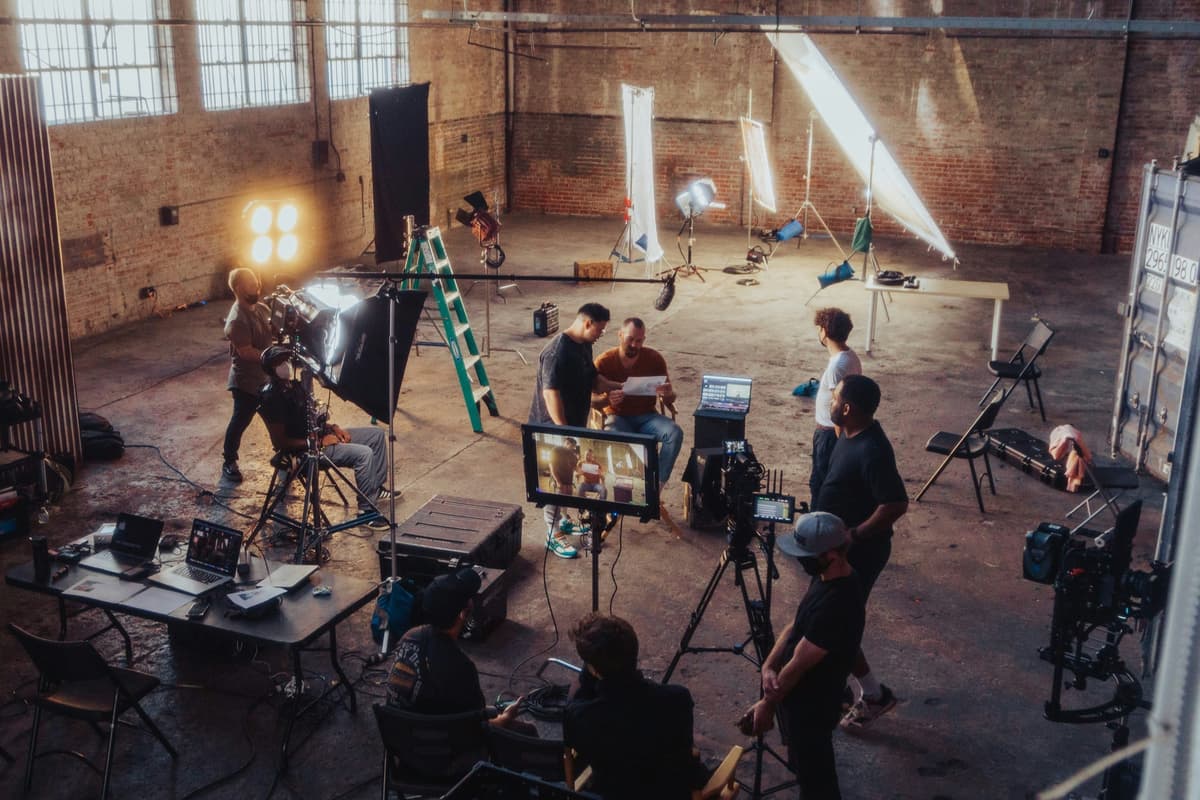
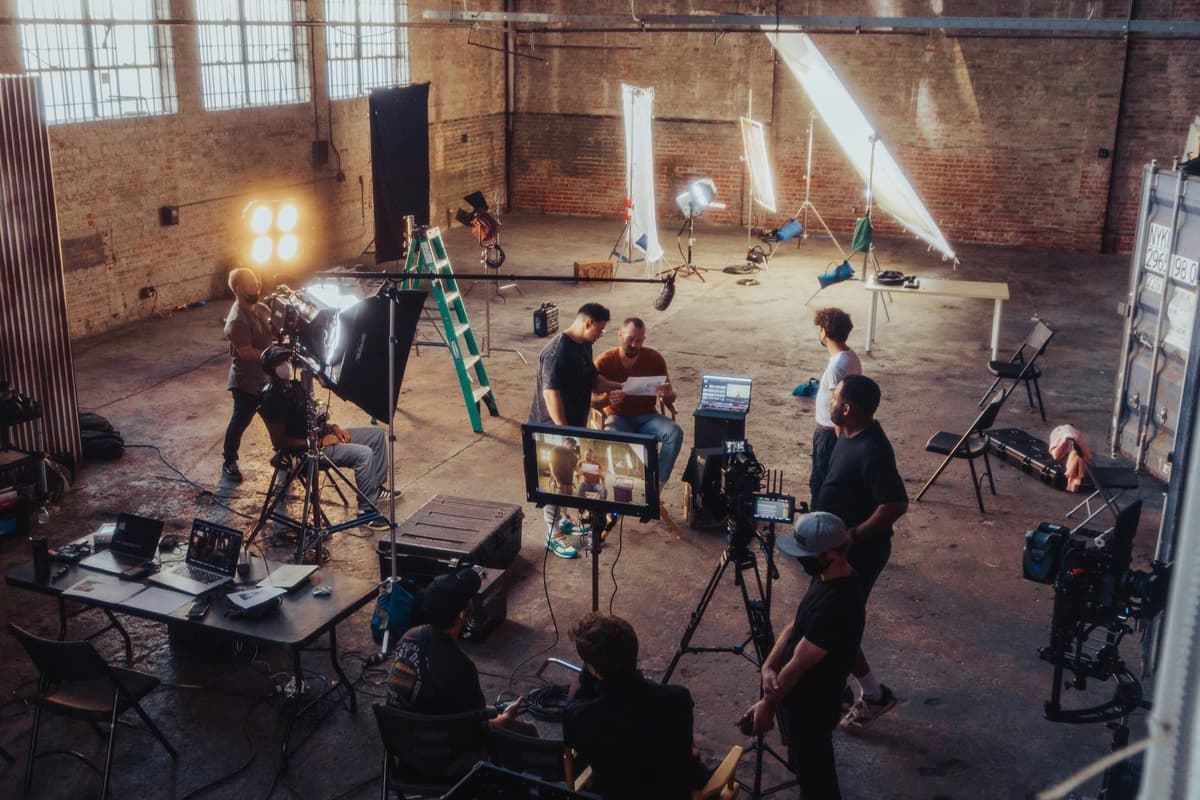
The Ronin operator works under the direct supervision of the Director of Photography (DP) and alongside the camera operator to execute moving shots that would otherwise require expensive track-and-dolly rigs or a Steadicam. They are responsible for physically operating the gimbal, rigging the camera payload, and executing precise camera moves during takes — all while maintaining frame stability through dynamic or confined environments.
Where Does a Ronin Operator Fit in the Camera Department?
The Ronin operator sits within the camera department, typically operating at the level of a camera operator or second camera operator (B-camera operator) depending on the production structure. On larger productions, the role may be a dedicated position separate from the A-camera operator. On smaller productions, the Ronin may be operated by the DP, a 1st AC, or an all-around camera operator depending on the scene requirements.
Productions that rely heavily on Ronin work — action films, music videos, documentaries, and commercials — frequently hire a dedicated Ronin operator to ensure the rig is properly prepped, tuned, and operated throughout the shoot day.
DJI Ronin: The Industry-Standard Gimbal
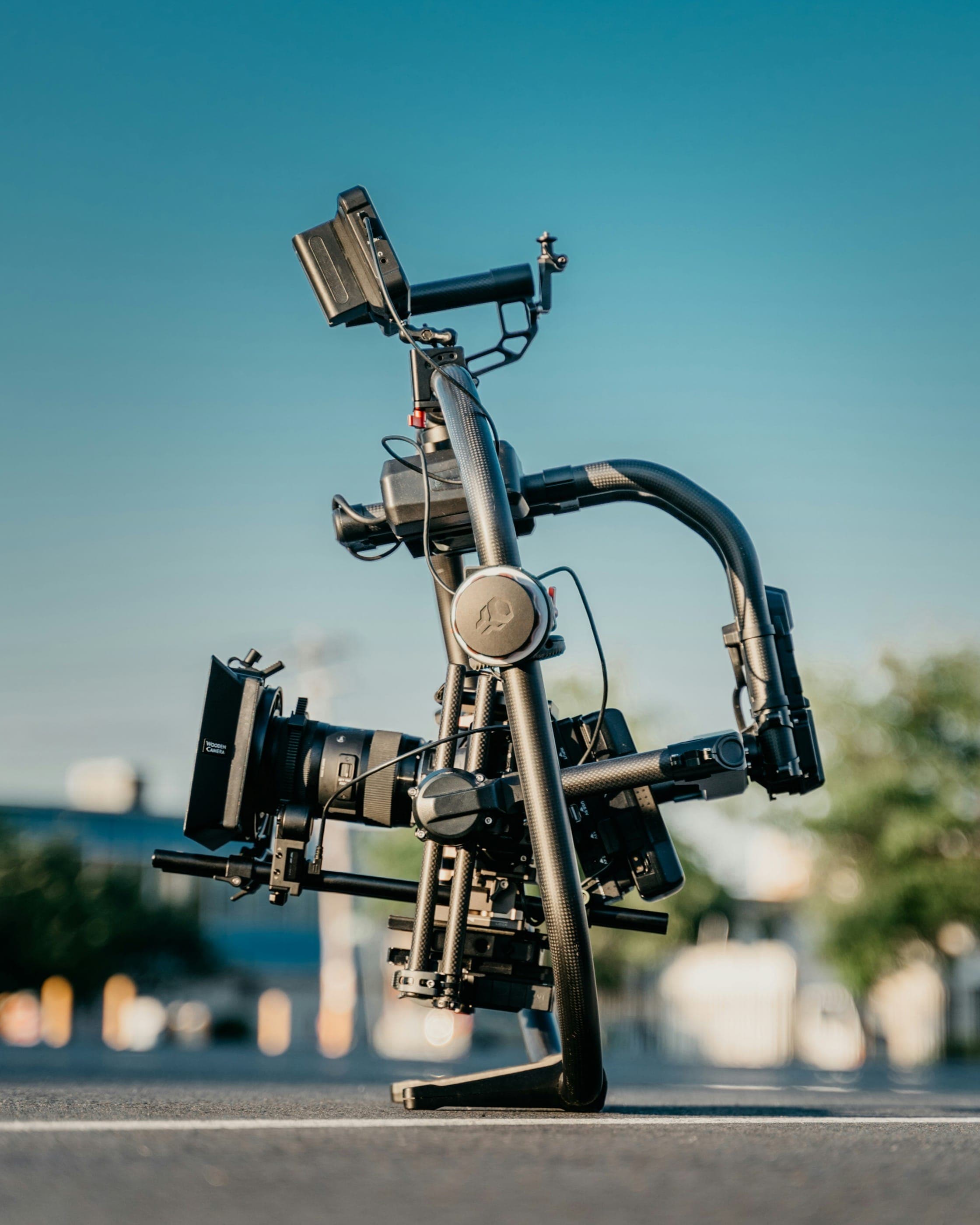
The DJI Ronin line includes several models suited to professional film production: the Ronin 2 (a high-payload three-axis gimbal supporting cinema cameras up to 30 lbs), the Ronin 4D (an integrated cinema camera and gimbal system with built-in focus and image transmission), and the Ronin-S and RS series for smaller mirrorless setups. The Ronin 2 remains the professional workhorse on major productions, capable of supporting full cinema camera builds including accessories like matte boxes, wireless focus systems, and monitor rigs.
Operating the Ronin at a professional level requires mastery of its software — DJI Ronin App — for motor tuning, axis configuration, and wireless pan/tilt control via the DJI Master Wheels or Force Pro remote systems.
Role & Responsibilities
Core Responsibilities of a Ronin Operator
The Ronin operator's responsibilities begin well before the camera rolls. Pre-production involves reviewing shot lists and storyboards with the DP to understand which shots will be Ronin-executed. On shoot days, the role encompasses both technical prep and physical performance during takes.
Gimbal Prep and Camera Rigging
Before any shot can happen, the Ronin operator must fully rig and balance the camera payload. This involves mounting the camera body, lens, follow focus system, wireless video transmitter, and any additional accessories — then physically balancing all three axes (roll, tilt, pan) so the gimbal motors are not overloaded. Proper balance extends motor life, reduces vibration, and ensures the system can absorb sudden movements without drift. Balancing a complex cinema camera rig on a Ronin 2 can take 30-60 minutes and must be redone any time the lens or accessories change.
Executing Camera Moves on Set
During production, the Ronin operator executes the DP's visual plan — following actors through tight spaces, performing reveal moves, tracking action sequences, and working in tandem with the 1st AC for focus pulls. Depending on the configuration, the Ronin can be operated in multiple modes:
- Handheld mode: The operator physically carries the gimbal while walking, running, or moving through space.
- Underslung mode: The gimbal is inverted to achieve low-angle perspectives.
- Remote head mode: The operator uses DJI Master Wheels or Force Pro to control pan/tilt remotely, with the gimbal mounted on a crane, jib, or vehicle.
- Dual-operator mode: A gimbal tech handles the physical movement while a second operator controls pan/tilt remotely.
Collaboration with the DP and Camera Team
The Ronin operator functions as a direct extension of the DP's creative vision. Communication before each take is essential — understanding the intended frame, the blocking of actors, the speed of movement, and the moment the shot starts and ends. The Ronin operator must anticipate action rather than react to it, which requires studying rehearsals and understanding the scene's dramatic intent.
On the technical side, the Ronin operator coordinates closely with the 1st AC (focus puller), ensuring the follow focus system is correctly mounted and operated, and with the DIT (digital imaging technician) to ensure the wireless video signal feeds the video village monitors reliably.
Action Sequences and Specialty Work
Ronin operators are frequently called upon for action sequences, chase scenes, fight choreography, and any production requiring dynamic movement that a dolly or crane cannot achieve. In these scenarios, the operator may need to physically run alongside performers, move through obstacles, or operate in extreme conditions (water, dust, heat) — making physical fitness and situational awareness critical safety considerations.
Maintenance and Troubleshooting
The Ronin operator is responsible for the care and basic maintenance of the gimbal system throughout the production. This includes charging batteries, updating firmware, cleaning motors, and diagnosing issues in the field. When a Ronin fails on set, every minute of downtime costs the production money — so operators must be adept at quick troubleshooting and workaround solutions.
Skills Required
Gimbal Mechanics and Payload Management
A professional Ronin operator must have deep mechanical understanding of three-axis gimbal systems. This means knowing how each motor axis (roll, tilt, pan) functions, how to properly balance a camera payload to minimize motor strain, and how to interpret motor status alerts and vibration patterns. Balancing a cinema camera rig — which may include a large zoom lens, matte box, wireless follow focus, and monitor — requires patience and precision. An improperly balanced gimbal will drift, vibrate, or fail to hold horizon on dynamic moves.
Camera Operation Fundamentals
The Ronin operator must be a capable camera operator independent of the gimbal. This means understanding exposure, framing, composition, focal length behavior, and depth-of-field. A DP will communicate shot requirements in cinematographic terms — the operator must be able to translate those instructions into physical execution. Familiarity with professional cinema cameras (ARRI Alexa, RED, Sony Venice, Blackmagic URSA) and their menus, codecs, and operational quirks is essential.
Footwork and Body Movement Technique
Unlike Steadicam, which offloads weight to a vest-and-arm system, the Ronin is supported by the operator's arms and body. Smooth shots require precise footwork — heel-to-toe walking, knee absorption, and controlled breathing — to prevent body movement from translating into the frame. Operating a heavy Ronin 2 rig (which can weigh 15-30 lbs with camera build) for extended takes is physically demanding and requires developed upper-body strength and endurance.
DJI Ronin App and Motor Tuning
Proficiency with the DJI Ronin App is non-negotiable. The operator must be able to calibrate the IMU (inertial measurement unit), tune motor stiffness and smoothness settings for different payload configurations, set up follow modes, configure joystick dead zones, and troubleshoot errors in the field. Remote operation via DJI Master Wheels or Force Pro requires additional training in the Master Wheel control interface.
Wireless Follow Focus Systems
Most professional Ronin builds include a wireless follow focus system (Preston FI+Z, Tilta Nucleus-M, or similar) to allow the 1st AC to pull focus remotely while the operator moves through space. The Ronin operator must understand how to mount and route follow focus motor cables, manage wireless signal interference, and communicate clearly with the 1st AC about lens position and mark distances.
Communication and Set Etiquette
The Ronin operator functions within a collaborative department structure. Clear, efficient communication with the DP, director, 1st AC, and script supervisor is essential. The operator must be able to absorb and execute complex blocking instructions quickly, propose alternative shot approaches when physical constraints prevent the planned move, and work quietly and efficiently between takes to reset without disrupting pace.
Physical Fitness
Operating a fully built Ronin 2 for a full shoot day — often 10-14 hours — requires significant upper-body strength and cardiovascular conditioning. Many professional Ronin operators maintain specific training regimens (resistance training for arm and core strength, low-impact cardio for stamina) to sustain performance across multi-week shoots.
Salary Guide
Ronin Operator Day Rates
Ronin operators are typically hired on a day-rate basis, with rates varying significantly by market, production budget, union status, and whether the operator supplies their own equipment. Day rates for Ronin operators in 2025-2026 generally range from $450 to $1,500+ per day depending on these factors.
Non-Union Day Rates
On non-union independent productions, Ronin operators typically earn between $450 and $750 per day for operating only (when the production provides the gimbal). If the operator provides their own Ronin 2 system — a rental value of $300-$600/day on its own — the combined equipment-and-operator package typically runs $750 to $1,200 per day. Music video and commercial work on the lower end of the budget spectrum frequently falls in the $500-$800/day range.
Union Rates (IATSE Local 600)
On union productions covered by the IATSE Basic Agreement or Network Television Agreement, Ronin operators working as camera operators or second camera operators fall under the IATSE Local 600 rate card. As of the 2024-2026 IATSE Basic Agreement, camera operator minimum rates for studio features run approximately $545-$600 per day (10-hour day) with additional overtime, kit rental, and residual provisions. Day rates on network television are similar. High-budget productions and above-the-line talent frequently negotiate rates above scale.
Commercial and Music Video Markets
Commercial production (advertising) often pays the highest day rates for Ronin operators due to compressed schedules and high production value expectations. Rates on commercial shoots in Los Angeles and New York range from $800 to $1,500+ per day for experienced operators, with equipment packages commanding additional fees. Music video budgets vary widely — major label productions can approach commercial rates, while independent music videos may be $400-$600/day.
Geographic Market Differences
Los Angeles and New York are the primary markets for professional film and television production, and day rates are highest in these cities. Atlanta (a major production hub due to Georgia tax incentives), Chicago, and New Orleans are secondary markets where rates tend to run 10-20% below LA/NY. International co-productions and location shoots vary widely by country.
Annual Earning Potential
Ronin operators who work consistently across features, television, and commercials can earn $60,000 to $150,000+ annually, depending on the number of shoot days and market rates. Operators who own their own Ronin 2 system and rent it as a package to productions can significantly increase earnings. According to the U.S. Bureau of Labor Statistics, camera operators across all specializations had a median annual wage of $68,810 as of May 2024 (BLS SOC code 27-4031), though dedicated gimbal operators on union productions typically earn above this median.
Equipment Ownership Considerations
A DJI Ronin 2 Pro Combo retails for approximately $6,999-$8,999 new. Operators who own their system and offer it as a package rental can recoup the investment over 10-15 shooting days while also commanding higher negotiating leverage for crew rates. Owning the system also allows operators to practice rigging and tuning off-set, which accelerates technical skill development.
Frequently Asked Questions
Frequently Asked Questions About Ronin Operators
What is the difference between a Ronin operator and a Steadicam operator?
Both roles achieve stabilized camera movement, but the systems and techniques differ significantly. A Steadicam operator wears a specialized vest-and-arm rig that mechanically isolates the camera from body movement, allowing very long, fluid takes with minimal physical strain on the arms. The Steadicam has a distinct "floaty" aesthetic that has defined cinematic movement for decades. A Ronin operator uses a motorized electronic gimbal — the DJI Ronin — which uses gyroscopes and brushless motors to electronically stabilize the camera. The Ronin is more compact, faster to rig, and less expensive to operate, but produces a slightly different visual aesthetic. Steadicam remains the prestige tool for long tracking shots and theatrical films; the Ronin dominates in documentary, music video, commercial, and action sequence work where agility and speed matter more than the classical Steadicam look.
Do Ronin operators need to be in a union?
Union membership is required to work on productions covered by the IATSE Basic Agreement or Screen Actors Guild (SAG) productions that have union camera crews. Ronin operators working as camera operators or second camera operators on these productions must hold IATSE Local 600 membership. Non-union productions — independent films, many commercial productions, music videos, and digital content — do not require union membership. Most professional Ronin operators working in the major markets (LA, NY) eventually join Local 600 to access higher-budget union productions.
How long does it take to become a professional Ronin operator?
The timeline varies by individual starting point, but most professional Ronin operators spend 2-5 years developing the skill set before working consistently on professional productions. This typically includes time as a camera PA or 2nd AC, dedicated practice on the gimbal system, and building credits through low-budget productions, short films, and music videos. Operators who come from a strong camera department background (1st AC experience) and invest in formal training can accelerate this timeline.
What cameras can a DJI Ronin 2 support?
The DJI Ronin 2 supports payloads up to 30 lbs (13.6 kg), making it compatible with virtually all professional cinema cameras including the ARRI Alexa Mini LF, ARRI Alexa 35, RED MONSTRO, RED RAPTOR, Sony Venice, Sony FX9, Blackmagic URSA Mini Pro, and Canon EOS C700 — in full production builds with lenses, follow focus, matte box, and monitoring accessories. Lighter mirrorless systems use smaller Ronin models (Ronin-SC, RS 3 Pro, RS 4 Pro).
What does a Ronin operator charge for equipment rental?
Ronin operators who own their own system typically charge a daily equipment rental (kit fee) in addition to their operator day rate. Equipment rental for a complete Ronin 2 package — including all accessories, batteries, and wireless video — typically runs $300 to $600 per day on non-union productions. Union productions calculate kit rentals based on IATSE Local 600 equipment provisions. Operators should carry production insurance on their equipment and ensure productions provide additional coverage.
Is Ronin operation physically demanding?
Yes. Operating a fully built Ronin 2 — which can weigh 20-30 lbs with a cinema camera, lenses, and accessories — for a 10-12 hour shoot day is genuinely physically demanding. Professional Ronin operators typically train their upper body and core strength specifically to handle extended handheld operation without fatigue-induced shake. Support rigs like the Ready Rig GS or Easy Rig can offload some of the weight to the hips and chest, significantly reducing arm fatigue during long shoot days.
Education
Is There a Formal Degree for Ronin Operators?
There is no specific degree for Ronin operators. The role is a specialization within camera operation, and most Ronin operators arrive at the position through a combination of camera department experience, self-study, and hands-on practice. That said, a foundation in film production — whether from a four-year film school, a two-year community college program, or intensive workshops — provides the contextual knowledge of production workflows, camera systems, and departmental hierarchy that is essential for working professionally.
Film School and Degree Programs
A Bachelor of Fine Arts (BFA) or Bachelor of Arts (BA) in Film Production, Cinematography, or Media Production from an accredited institution provides strong foundational training in camera systems, lighting theory, and production management. Top programs include the American Film Institute (AFI), USC School of Cinematic Arts, NYU Tisch School of the Arts, Chapman University's Dodge College of Film and Media Arts, and Full Sail University. Two-year Associate of Applied Science (AAS) programs at community colleges can also provide a solid entry point at lower cost.
However, film school alone will not make someone a competent Ronin operator. The gimbal-specific skills must be developed through dedicated practice and on-set experience.
Starting in the Camera Department
The most reliable career path to becoming a Ronin operator runs through the camera department as a production assistant (PA) or camera loader (2nd AC). As a 2nd AC, you handle slating, loading media cards, maintaining camera reports, and generally supporting the 1st AC and camera operator. This gives you proximity to camera operation and an understanding of how shots are executed on set.
Moving up to 1st AC (focus puller) deepens technical knowledge of lenses, follow focus systems, and camera payloads — all directly relevant to gimbal operation. Many Ronin operators begin experimenting with gimbal work as 1st ACs, eventually developing the skill set to operate independently.
DJI Certifications and Operator Training
DJI offers product-specific training resources through DJI Pro and has partnered with instructors like Local 600 camera operator Dave Anglin for the Ronin 2 Pro Class (r2proclass.com), which covers professional rig building, motor tuning, footwork technique, single and dual operating, and Master Wheels integration. These operator-level courses are invaluable for anyone transitioning into dedicated gimbal work on professional productions.
The International Cinematographers Guild (IATSE Local 600) lists camera operators and second camera operators in its jurisdiction — Ronin operators working on union productions typically hold Local 600 membership. Joining Local 600 requires meeting experience thresholds or qualifying through the roster system, and is essential for working on union feature films and major television productions.
Recommended Training Path
- Build foundational cinematography knowledge through film school or structured self-study
- Enter the camera department as a 2nd AC or camera PA
- Purchase or rent a Ronin and practice rigging, balancing, and operating independently
- Take formal gimbal operator courses (DJI Pro Class, local workshops)
- Build a gimbal-specific reel from short films, music videos, or spec work
- Transition to Ronin operator credits on low-budget productions, then scale up
- Join IATSE Local 600 for access to union film and television work
Last updated April 25, 2026
Budget this role in seconds with Saturation
Rate packs, fringes, and phases turn a crew list into an accurate production budget without the spreadsheet math.
Rate packs
Verified union rates, versioned.


Fringes and markupsRebuilt
Stack them, cap them, and see the split on every line.
PhasesRebuilt
Every column knows its type.
Auto-fill
Rates fill in as you type, from the source you turned on.