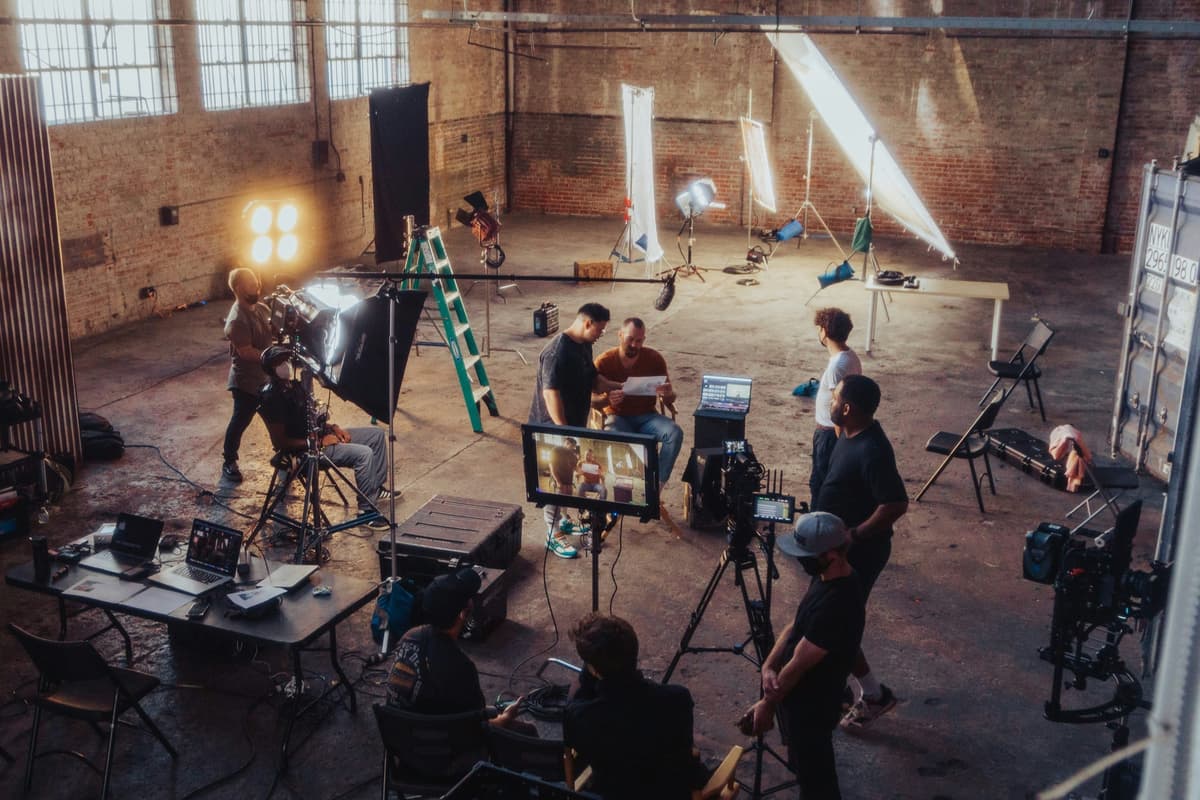
What is a MoVI Operator?
Overview
What Is a MoVI Operator?
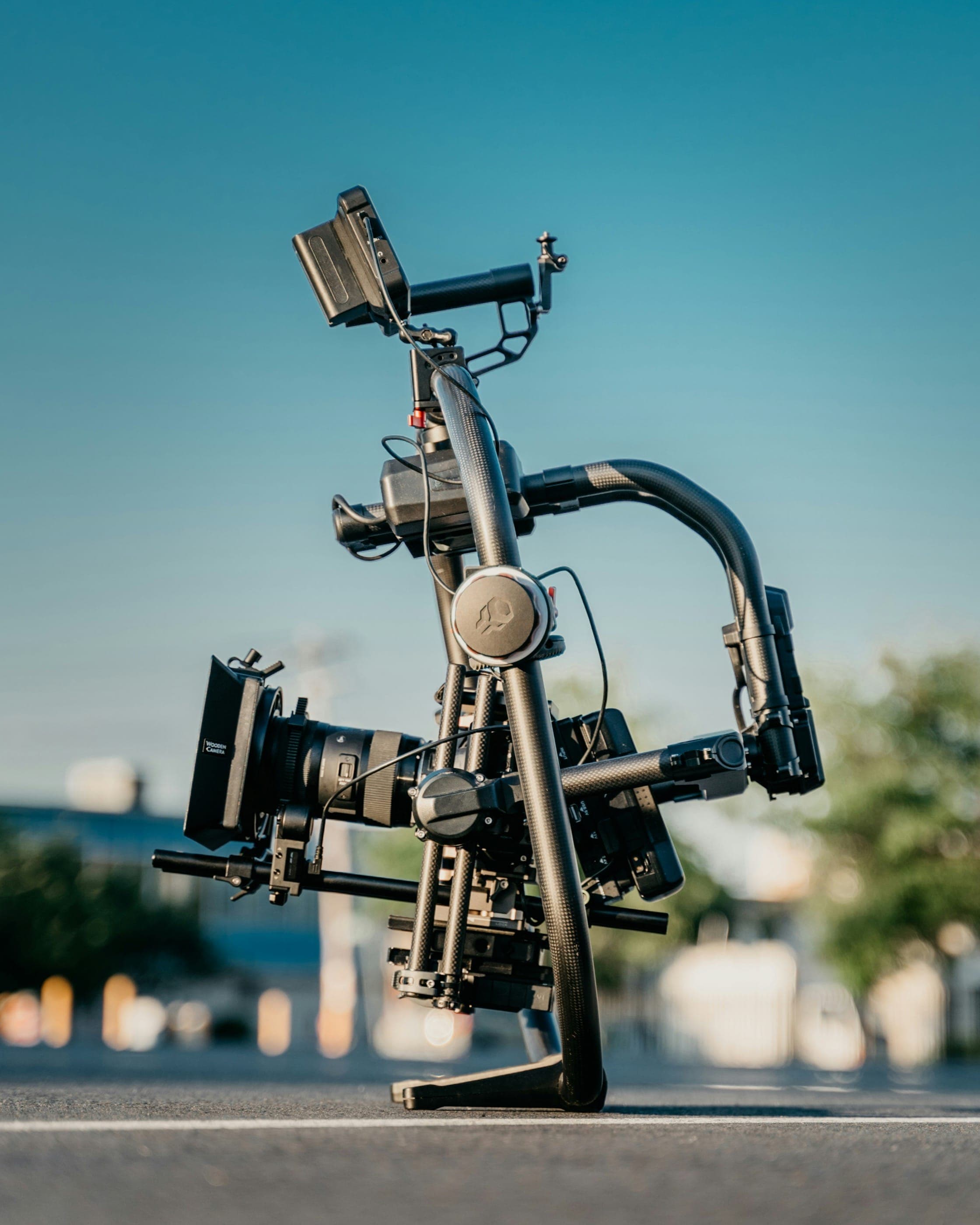
A MoVI operator is a specialized camera department technician who operates the Freefly MoVI electronic gimbal stabilizer system on professional film, television, commercial, and music video productions. The role combines the physical discipline of traditional camera operating with advanced knowledge of electronic stabilization technology, gyroscopic mechanics, and wireless control systems. MoVI operators are responsible for achieving smooth, cinematic camera movement across a wide range of shooting environments — from handheld run-and-gun sequences to precisely choreographed action scenes — without the bulk of a Steadicam vest or the infrastructure of dolly tracks.
The Freefly MoVI first appeared on professional sets in 2013, when Freefly Systems introduced the MoVI M10 and fundamentally changed how camera operators approached moving shots. Before the MoVI, smooth handheld movement required either a Steadicam system (which demands years of specialized training and a heavy mechanical vest) or traditional dolly and crane infrastructure (which requires crew, time, and often location permits). The MoVI's three-axis brushless motor stabilization system allowed operators to achieve fluid movement in a fraction of the setup time, opening up possibilities for tight spaces, dynamic action, and rapid repositioning between setups.
Modern MoVI operators work primarily with the Freefly MoVI Pro (current flagship, up to 15 lbs payload), the MoVI XL (55 lb payload for large cinema packages), and the MoVI Carbon (integrated camera system under 20 lbs). Each model requires different balancing techniques and operational knowledge, though the core skill set — gimbal tuning, axis calibration, joystick sensitivity mapping, wireless follow focus integration — transfers across the Freefly lineup. Many working MoVI operators also carry competency on the DJI Ronin 2, which has become an industry standard alongside the MoVI Pro on larger productions.
Within the camera department hierarchy, the MoVI operator typically sits alongside the camera operator or serves as a dedicated specialist brought in for specific sequences. On union productions, MoVI operators join through IATSE Local 600 (the International Cinematographers Guild), which covers camera operators, camera assistants, and related camera department positions. The MoVI tech — a role distinct from but related to the MoVI operator — handles the mechanical preparation of the gimbal system, including balance setup, motor tuning, and maintenance, freeing the operator to focus purely on movement execution during takes.
Productions that rely most heavily on MoVI operators include action features requiring continuous movement through environments that preclude dolly tracks, documentary and reality television demanding fast repositioning and spontaneous coverage, music videos where dynamic camera movement is a creative pillar, and commercial productions where tight schedules make Steadicam setup impractical. The MoVI's ability to switch rapidly between operating modes — handheld low mode, upright mode, inverted underslung, and remote head — gives the camera department a versatile tool for movement that no other single system fully replicates.
If you are building a production budget that includes specialized camera crew and equipment packages, Saturation.io provides collaborative film budgeting software designed for the full production workflow — including department-level line items for camera crew, gimbal packages, and equipment rentals.
MoVI vs. Steadicam: Understanding the Difference
The most common question about MoVI operators is how their role differs from a Steadicam operator. Both achieve smooth moving shots, but the underlying technology, training path, physical demands, and ideal use cases diverge significantly.
A Steadicam operates on a purely mechanical principle: a spring-loaded arm, a sled with a monitor and battery, and a camera balanced precisely at the sled's center of gravity create a system that isolates the camera from the operator's footsteps and body movement through inertia and counterbalance. Steadicam training takes years to master. The weight of a fully loaded Steadicam rig can exceed 50 lbs on the operator's body. Long takes are Steadicam's strength — the mechanical system maintains stability indefinitely without electronic assistance.
A MoVI uses brushless DC motors on all three axes (pan, tilt, roll) driven by gyroscopic sensors and real-time electronic feedback loops. The system actively counteracts movement rather than isolating the camera through mechanical inertia. This means the gimbal can be operated freehand without a vest, repositioned instantly between setups, mounted to a variety of platforms (arms, drones, vehicles, cranes), and operated in extreme positions that a Steadicam vest cannot accommodate. The tradeoff is that electronic systems require charging and can introduce subtle jitter if tuning parameters are misconfigured.
In practice, most productions use both. Steadicam remains the preferred tool for long walking takes following an actor through a space. MoVI excels in confined locations, action sequences requiring rapid repositioning, shots that need inverted or underslung perspectives, and any situation where speed of setup is more valuable than the specific character of Steadicam movement.
Role & Responsibilities
Core Duties of a MoVI Operator
The MoVI operator's responsibilities span pre-production preparation, on-set execution, and post-shoot equipment care. Unlike some camera department roles that are narrowly defined, the MoVI operator frequently functions as both the technical specialist responsible for the gimbal system and the creative collaborator executing camera movement alongside the director and cinematographer.
Pre-Production and Prep Day Responsibilities
Before principal photography begins, the MoVI operator typically receives the camera and lens package specifications from the director of photography. The first task is gimbal configuration: selecting the appropriate MoVI model for the payload, rigging the camera body onto the top stage, and balancing the system so that all three axes achieve the mechanical balance point before motor tuning begins. Proper balance is non-negotiable — an unbalanced gimbal forces the motors to work harder, generates heat, shortens battery life, and can introduce vibration artifacts on screen.
Balance calibration requires the complete camera package to be present: body, lens, matte box, follow focus motor, wireless video transmitter, and any accessories that will be on camera during shooting. Changing a lens — even swapping from a 35mm to a 50mm of the same brand — shifts the center of gravity and requires rebalancing. Operators who work regularly with a specific DP develop prep workflows that anticipate the full lens package, setting up predetermined balance positions for each configuration.
After mechanical balance, the MoVI operator enters the tuning phase. Using the Freefly FRX Pro app (available iOS and Android) or the dedicated controller interface, the operator configures motor stiffness, follow rate, dead band, and gyro sensitivity for each axis. Stiffness controls how aggressively the motors resist external forces. Follow rate determines how quickly the gimbal catches up when the operator intentionally pans or tilts. The specific configuration depends on the camera weight, shooting style, and director's preferences for movement feel.
Operating During Takes
On set, the MoVI operator positions the gimbal for each shot according to the shot list and the DP's instructions. Before rolling, the operator confirms that the wireless follow focus system is communicating correctly with the first AC (who pulls focus remotely using a wireless handset), that the video signal is transmitting cleanly to the village monitor where the director watches, and that the gimbal's battery level is sufficient for the planned take length.
During the take, the MoVI operator executes the camera movement while maintaining the appropriate framing. In simple handheld configurations, the operator holds the handle system and walks through the space, with the gimbal smoothing out footstep vibration and upper body movement. For more complex shots, the operator may work with a dedicated gimbal technician (MoVI tech) who controls pan and tilt remotely via a wheel controller or joystick while the operator handles physical positioning and smooth locomotion.
The operator must constantly read the set for obstacles, actor blocking changes, and lighting conditions that might require the camera to adopt a different position. Communication with the key grip, gaffer, and 1st AD is ongoing throughout the shooting day. When the director calls cut, the operator immediately stabilizes the gimbal to a rest position, checks battery levels, and reports any technical issues to the DP.
Mode Switching and Platform Mounting
One of the MoVI operator's most valuable skills is the ability to configure the gimbal for multiple operational modes within a single shooting day. The primary modes include:
- Upright handheld mode: Standard configuration, operator holds the dual-handle system with the camera at chest or eye level.
- Low mode / briefcase mode: Operator holds the gimbal below waist height with the camera close to the ground, ideal for tracking subjects at floor level.
- Inverted / underslung mode: Gimbal is flipped upside down with the camera below the operator's hands, enabling extremely low perspective shots or shooting through confined spaces.
- Remote head mode: Gimbal is mounted on a tripod, jib, or vehicle, with all axes controlled remotely by the operator or a dedicated gimbal tech.
- Drone / aerial integration: Gimbal mounted beneath a drone for aerial cinematography requiring electronic stabilization.
Each mode change requires the operator to verify that the gimbal's auto-horizon and lock modes are configured appropriately for the new position. Inverted mode in particular requires specific axis calibration to ensure the gimbal's electronic level reference is correctly oriented.
Wireless Follow Focus Integration
Contemporary MoVI operation is inseparable from wireless follow focus systems. The most common systems on professional sets are the Preston FIZ (focus, iris, zoom) controller, Tilta Nucleus-M, and the ARRI WCU-4. The MoVI operator works in close coordination with the 1st AC, who operates the focus handset from the camera village or from a position near the action. The operator must ensure that the follow focus motor is securely mounted to the gimbal's lens rod support or directly to the lens barrel, that cable management does not interfere with the gimbal's range of motion, and that the motor torque setting is appropriate for the lens being used.
Communication between the MoVI operator and the 1st AC is continuous. Before each take, they confirm the starting focus mark, the direction of travel, and any focus pulls that occur during the shot. If the operator changes position in a way that alters the subject distance unexpectedly, they communicate that to the AC immediately so focus adjustments can be made in real time.
Battery Management and Equipment Care
The MoVI Pro runs on 26V battery systems. A standard battery provides approximately 2 to 3 hours of operation under normal motor load, with heavier camera packages and more aggressive tuning reducing run time. Professional operators carry a minimum of four to six batteries on set, maintaining a rotation of charging batteries throughout the day to ensure the gimbal is never down for power.
At the end of each shooting day, the MoVI operator breaks down the camera package from the gimbal, stores all batteries on a charger, inspects motor axes for any signs of physical damage, cleans the gimbal frame and handle system, and packages the unit in its protective case. Any issues discovered — a motor that feels rough on one axis, a handle developing play, a cable connector that has become intermittent — are documented and addressed before the next shooting day.
Collaboration with Director and DP
Beyond technical operation, the MoVI operator functions as a creative collaborator. Directors and cinematographers rely on the operator's movement instincts to match the emotional tone of a scene. A chase sequence demands aggressive, reactive movement. An intimate conversation scene calls for subtle, almost imperceptible compensation that creates the feeling of a camera present in the space without calling attention to itself. The ability to read a scene and calibrate movement energy accordingly is what separates technically proficient MoVI operators from genuinely sought-after ones.
Working with the MoVI Tech
On larger productions, the MoVI operator may be paired with a dedicated MoVI tech whose sole responsibility is the mechanical preparation and maintenance of the gimbal system. The MoVI tech performs the initial balance setup and motor tuning at the start of each shooting day, handles lens changes between setups, maintains the battery rotation, and troubleshoots any mechanical issues that arise. This division of labor allows the operator to focus entirely on creative execution during takes rather than splitting attention between operating and technical upkeep. On smaller productions, the operator handles both roles independently.
Skills Required
Technical Skills Every MoVI Operator Must Have
Professional MoVI operation requires a layered skill set spanning electronic gimbal mechanics, wireless system integration, camera department protocol, and physical operating technique. The operators who work most consistently on high-level productions are those who have developed deep competency across all of these areas rather than surface-level familiarity with any single one.
Freefly MoVI System Mastery
Operating the Freefly MoVI platform at a professional level requires thorough knowledge of every model currently in production use:
- MoVI Pro: The industry workhorse. 15 lb payload capacity, compatible with cinema cameras including the ARRI Alexa Mini LF, Sony VENICE, RED KOMODO, and Canon EOS R5 C with accessories. Requires familiarity with the quick-release top stage, the dual-handle configuration, and the dedicated controller interface.
- MoVI XL: Built for large cinema packages. 55 lb payload makes it compatible with full-size ARRI Alexa LF, ARRI Alexa 35, and anamorphic lens packages. Physically demanding to operate handheld; typically paired with an Easyrig support system or operated as a remote head.
- MoVI Carbon: Compact, integrated system under 20 lbs with built-in 4K camera. Used on productions where a lightweight, rapidly deployable package is prioritized.
Across all models, operators must understand the gimbal's tuning interface. The Freefly FRX Pro application (available for iOS and Android) provides access to all motor parameters. Key tuning parameters include:
- Stiffness: How aggressively each motor resists external forces. Too low and the axis drifts under load; too high and vibration from motor cogging becomes visible on screen.
- Follow rate: How quickly the gimbal follows intentional input from the operator. Higher follow rate produces more responsive, energetic movement; lower follow rate creates smooth, floaty movement.
- Dead band: The angular threshold before the gimbal begins following an intentional pan or tilt input. Wider dead band creates a more stable locked horizon at the cost of responsiveness.
- Gyro filter: Determines how gyroscopic sensor data is processed. Incorrect settings can cause oscillation under vibration — a critical tuning point for vehicle shots and walking on uneven terrain.
DJI Ronin-2 Cross-Competency
The DJI Ronin 2 has become the primary alternative to the MoVI Pro on professional productions, and many MoVI operators are expected to be competent on both platforms. The Ronin 2 supports a payload up to 30.9 lbs and offers similar operational modes — handheld, underslung, remote head. Key differences from the MoVI include the DJI GO app interface (versus Freefly FRX Pro), a different balance plate design, and distinct motor tuning philosophy. Cross-trained operators who can switch between platforms on the same production are significantly more hirable on larger jobs where both systems may be deployed.
Wireless Follow Focus Systems
Professional MoVI operators must have working knowledge of the primary wireless follow focus systems used on set:
- Preston FIZ MDR-3/MDR-4: The industry standard on ARRI-based productions. The operator must be able to mount Preston motors securely to the gimbal's lens rod support, configure motor channel assignments, and troubleshoot communication dropout.
- Tilta Nucleus-M: Widely used on RED and Sony camera packages and on productions with tighter budgets. Similar motor mounting procedure to Preston but different handset protocol.
- ARRI WCU-4: ARRI's proprietary wireless lens control system, standard on productions shooting on Alexa cameras with ARRI lens drive motors.
- Heden M26CAN / Bartech Follow Focus: Common on European productions and on some ARRI Alexa packages.
Cable management is a critical sub-skill. The follow focus motor cable must route from the motor on the lens to the gimbal's electronics housing without restricting the pan or tilt axis range of motion. Operators develop preferred routing solutions using cable clips, spiral wrap, and strain relief mounts tailored to each specific lens and camera combination.
Wireless Video Transmission
The MoVI operator is responsible for ensuring that the camera's video output reaches the director's monitor at the production village. The standard transmission system on professional productions is the Teradek Bolt series (Bolt 4K, Bolt 6 LT). The operator must mount the transmitter to the gimbal in a position that ensures reliable line-of-sight transmission, minimizes radio frequency interference with the follow focus system, and does not shift the gimbal's center of gravity in a way that requires rebalancing.
Antenna positioning is particularly important on MoVI rigs because the gimbal's own metal frame can create signal shadow zones. Operators typically mount the Teradek transmitter antenna vertically above the gimbal's mass to maintain clear signal through the camera's full range of movement.
Physical Operating Technique
Electronic stabilization handles mechanical vibration, but smooth camera movement ultimately depends on the operator's body mechanics. Professional MoVI operators develop:
- The gimbal walk: A specific gait pattern that minimizes vertical oscillation — slightly bent knees, weight rolling through the heel to toe with each step, torso as a stable platform above the hips. Identical in principle to the Steadicam walk but adapted for the different weight distribution of handheld gimbal operation.
- Arm isolation: The ability to hold the gimbal handles steady while the body moves through space, using shoulder and elbow joints to absorb residual motion that the gimbal's electronics cannot fully compensate.
- Shot consistency: The ability to repeat a specific movement — a push-in, a lateral arc, a turn — with consistent speed and amplitude across multiple takes so that the editor has cut points that match.
- Mode transitions under time pressure: Switching from upright to inverted mode between setups without slowing production. Experienced operators can execute a mode change in under two minutes.
Joystick and Remote Controller Operation
On productions where the MoVI is operated as a remote head or where a dedicated gimbal tech controls pan and tilt via controller, the operator must understand joystick sensitivity mapping and the various controller interfaces used with Freefly and DJI systems. The Freefly MIMIC controller (an inertial controller worn on the hand) and the standard joystick controller offer fundamentally different control feels and are suited to different shot types. Operators who are fluent on both give productions the flexibility to choose the control method that best matches each specific shot's requirements.
Problem Solving and On-Set Troubleshooting
Production schedules do not accommodate extended downtime for equipment issues. The MoVI operator must be able to diagnose and resolve common problems rapidly:
- Vibration or oscillation: typically resolved by reducing motor stiffness or applying a lower-pass gyro filter setting
- Axis drift: usually indicates mechanical imbalance that has shifted due to a lens change or accessory addition
- Motor overheat warning: requires reducing motor stiffness or switching to a lighter camera configuration temporarily
- Battery dropout: requires immediate swap from the rotation carried by the operator or department assistant
- Follow focus communication dropout: verify motor pairing, check cable connections, restart the wireless system receiver
- Horizon drift: recalibrate the IMU (inertial measurement unit) in a stationary, level position
Communication and Set Protocol
IATSE Local 600 set protocol governs how camera department members communicate, handle equipment, and coordinate with other departments. MoVI operators must understand departmental hierarchy, how to communicate shot requirements to the gaffer and key grip, and how to work within the production's established safety protocols. On vehicles or in action sequences, coordination with the stunt coordinator and transportation department adds additional layers of communication responsibility. On aerial shoots, working alongside the drone pilot and aerial director of photography requires its own set of communication protocols and FAA-compliant safety procedures.
Equipment Ownership and Package Knowledge
Many professional MoVI operators own their gimbal systems and bill productions for both labor and equipment package. This requires business-level knowledge beyond technical operation: understanding depreciation schedules for equipment, maintaining insurance coverage, quoting accurate package rates, and keeping the system in rental-ready condition between productions. Operators who own equipment are effectively running a small rental business alongside their operating career, and the most successful ones treat the business side of package ownership with the same rigor they apply to technical operation.
Salary Guide
MoVI Operator Salary and Day Rate Guide
Compensation for MoVI operators varies significantly based on production type, union status, geographic market, and whether the operator is billing for labor alone or providing their own equipment package. Understanding the components of MoVI operator compensation is essential for both operators negotiating their first contracts and production managers building camera department budgets.
Day Rate Structure: Labor vs. Package
The single most important variable in MoVI operator compensation is whether the operator owns the gimbal system they are using. MoVI operators typically bill in one of two ways:
- Labor only: The operator provides their skills and time. The production rents the gimbal system from a camera rental house. Day rate: $500 to $800 for emerging operators; $800 to $1,200+ for experienced operators with established credits.
- Labor plus package: The operator provides both their services and their own MoVI system (camera body not included). The combined rate includes a box rental or package fee. Day rates including package: $1,200 to $2,500+ per day on commercial and mid-budget productions.
Owning a MoVI Pro represents an investment of approximately $10,000 to $15,000 for the gimbal body, $2,000 to $5,000 for batteries and chargers, $1,000 to $3,000 for cases and accessories, and $1,500 to $3,000 for a support system (Easyrig or ReadyRig). Operators who own their equipment typically recoup the investment within one to two years of active work at package rates, after which the package fee becomes additional income above their labor rate.
Union Rates: IATSE Local 600
On productions signatory to the IATSE Basic Agreement, MoVI operators working under the Camera Operator classification receive rates negotiated by Local 600. The IATSE Basic Agreement (covering major studio features and large-budget television) sets minimum rates for camera operators. Under the 2023 IATSE Basic Agreement:
- Camera Operator (Studio): Approximately $65 to $75 per hour / $520 to $600 per eight-hour day at scale, plus meal penalties, overtime, and turnaround provisions.
- Camera Operator (Distant Location): Scale plus location allowances, housing, and per diem as negotiated.
- Low Budget Agreement: Reduced scale rates for productions with total budgets under $6 million, with the specific tier determining the discount from full scale.
Box rentals (equipment package fees) are negotiated separately and are not covered by the basic labor scale. Union productions that require the operator's own gimbal package typically negotiate a daily box rental on top of the scale labor rate.
Commercial Production Rates
Television commercials represent some of the highest day rates available to MoVI operators. Commercial shoots typically compress significant creative ambition into one to three shooting days, which drives premium compensation. Typical commercial rates:
- Regional commercials: $800 to $1,200 per day labor; $1,500 to $2,000 per day with package
- National broadcast commercials: $1,200 to $2,000 per day labor; $2,000 to $3,500 per day with package
- Automotive and large-budget national commercials: $2,000 to $4,000 per day with package for operators with specific automotive or action credits
Music Video and Low-Budget Independent Rates
Music video production has historically been where MoVI operators build their early credits and reel. Rates reflect the genre's compressed budgets:
- Independent / artist-funded music videos: $300 to $600 per day, often with deferred or reduced package fees
- Major label music videos: $600 to $1,000 per day labor; $1,200 to $2,000 per day with package
Many operators who have built comprehensive reels through music video work note that accepting lower rates on high-visibility projects — particularly those with directors who have strong commercial and feature track records — can accelerate career advancement more effectively than maximizing day rates on lower-profile work.
Television Drama and Streaming Series
Streaming series production (Netflix, Amazon, Apple TV+, HBO) often falls under the IATSE Basic Agreement and pays union scale. However, limited budget and modified low budget agreements — which major streaming platforms have negotiated for specific project tiers — may result in rates 15 to 25 percent below full scale. Day rates for camera operators on streaming drama under IATSE agreements:
- Full Basic Agreement rate: $520 to $600 per day at eight hours, with overtime after eight hours
- Modified Low Budget Agreement (MLBA): $420 to $500 per day
- Limited Low Budget Agreement (LLBA): $300 to $400 per day
Annual Income Estimates
Annual income for MoVI operators varies widely based on market location, union status, specialty (action, commercial, music video), and whether the operator owns equipment. Rough annual income ranges:
- Emerging operators (first 3 years), non-union: $30,000 to $55,000
- Mid-level operators (3 to 7 years), mixed union and non-union: $60,000 to $95,000
- Experienced operators, union with package: $100,000 to $180,000+
- Top-tier action and commercial specialists: $200,000+ in active years
The Bureau of Labor Statistics classifies camera operators under SOC code 27-4031 (Camera Operators, Television, Video, and Film). The BLS reported a median annual wage of $68,810 for this category as of May 2024. This figure aggregates all camera operator types — including broadcast news operators, studio operators, and field operators — making it a floor reference rather than a direct MoVI operator benchmark. Specialized gimbal operators with strong commercial and feature credits in major markets typically earn well above this median.
Geographic Market Variation
Los Angeles and New York represent the highest-rate markets for MoVI operators due to concentration of major studio and streaming production. Atlanta, New Orleans, Vancouver, and Chicago have developed as significant production hubs with active gimbal operator markets, though rates in secondary markets typically run 15 to 25 percent below LA and NY equivalents. Remote and location production often adds per diem ($60 to $100 per day) and travel day payments to base rates.
Negotiating Your Rate
New operators negotiating their first significant contracts should resist pressure to undercut on rate in exchange for credits. Accepting below-market rates establishes a precedent that is difficult to reverse with the same production company. The most effective approach is to quote the appropriate market rate for the production tier, be transparent about your experience level, and let the footage on your reel justify the rate. Productions that genuinely cannot afford market rates will negotiate; those that are simply testing whether you know your worth will meet it.
Frequently Asked Questions
Frequently Asked Questions: MoVI Operator
What does a MoVI operator do on a film set?
A MoVI operator is responsible for operating the Freefly MoVI electronic gimbal stabilizer system on film, television, and commercial productions. Core duties include balancing and tuning the gimbal for each camera and lens configuration, operating the gimbal during takes to execute smooth camera movement, coordinating with the 1st AC on wireless follow focus, managing battery rotation throughout the shooting day, and maintaining the gimbal system between setups. The MoVI operator works within the camera department under the supervision of the director of photography.
What is the difference between a MoVI operator and a Steadicam operator?
A Steadicam uses a mechanical counterbalance system to isolate the camera from the operator's body movement through inertia. A MoVI uses electronic three-axis brushless motors controlled by gyroscopic sensors to actively cancel unwanted movement in real time. Steadicam excels at long takes. The MoVI can be operated without a vest, repositions quickly, and mounts to platforms a Steadicam cannot. Most productions use both systems depending on the shot requirements.
What is a gimbal operator in film?
A gimbal operator in film is a camera department specialist who uses an electronic three-axis gimbal stabilizer such as the Freefly MoVI or DJI Ronin to create smooth, stabilized camera movement. The terms gimbal operator and MoVI operator are often used interchangeably in the industry. On union productions, gimbal operators typically hold IATSE Local 600 membership in the camera operator or camera assistant categories.
How much does a MoVI operator earn per day?
MoVI operator day rates range from $500 to $1,200 for labor only, or $1,200 to $2,500+ when the operator provides their own gimbal package. On commercial productions, rates for experienced operators can reach $2,000 to $4,000 per day including equipment. Annual income for established union MoVI operators in Los Angeles typically falls between $100,000 and $180,000.
How do you become a MoVI operator?
The typical path runs through the camera department: starting as a 2nd AC or camera PA, advancing to 1st AC, and developing gimbal skills alongside camera assistant work. There is no formal degree requirement. Operators build proficiency by spending dedicated time on balance setup, tuning, and operating technique, then building a reel through music video and commercial shoots.
MoVI operator vs. DJI Ronin operator: what is the difference?
The MoVI (Freefly Systems) and the Ronin 2 (DJI) are the two dominant professional gimbal platforms. Both use three-axis electronic stabilization. Key differences include the software interface (Freefly FRX Pro versus DJI GO), balance plate design, and motor tuning philosophy. Most professional operators maintain competency on both platforms. The choice between them typically reflects the DP's or rental house's preference.
Are gimbals still relevant on professional film sets?
Yes. While the initial wave of gimbal adoption from 2013 to 2018 saw some productions over-rely on the technology, gimbals have settled into a mature and indispensable role in the professional camera toolkit. Productions across every budget tier continue to deploy MoVI and Ronin systems regularly for the specific creative and logistical advantages they provide.
What productions use MoVI operators most frequently?
Production types that most consistently employ MoVI operators include action features, music videos, television commercials, documentary and reality television, streaming drama productions, and aerial cinematography. The role is also growing in live event coverage including concerts, sporting events, and broadcast productions that benefit from the gimbal's combination of mobility and image quality.
Education
How to Become a MoVI Operator
There is no single educational pathway into MoVI operation. Unlike some below-the-line roles that have formal union apprenticeship tracks, gimbal operation sits at the intersection of camera department experience, hands-on equipment training, and self-directed skill development. The most successful MoVI operators combine a strong camera assistant background with dedicated time spent learning gimbal systems independently before seeking paid opportunities.
Camera Department Experience First
The majority of working MoVI operators entered the field through the traditional camera department path: starting as a production assistant or camera intern, advancing to 2nd assistant camera (2nd AC/clapper-loader), then to 1st assistant camera (1st AC/focus puller), and eventually to camera operator. This path develops the fundamental skills that gimbal operation requires: understanding lens optics and focus breathing, communicating with directors of photography, reading shot lists, managing camera equipment on set, and developing the physical awareness needed to execute precise camera movement.
The 1st AC experience is particularly valuable for aspiring MoVI operators because it develops intimate knowledge of wireless follow focus systems, motor tuning, and lens mechanics — all of which are directly applicable to gimbal operation. Many MoVI operators describe their transition as lateral rather than hierarchical: they developed gimbal skills alongside their AC work, built a reel of gimbal footage, and began offering themselves as specialized operators on projects that needed dedicated gimbal coverage.
Freefly Training and Self-Directed Development
Freefly Systems does not offer a formal certification program, but the company provides extensive technical documentation, tutorial videos, and a robust online community (the Freefly Forum) where operators share tuning configurations, troubleshooting solutions, and workflow tips. The most important self-directed training involves acquiring or renting a MoVI and spending dedicated time developing:
- Balance proficiency: practicing complete balance setup with different camera and lens combinations until the process is fast and reliable under set conditions
- Tuning ear: developing sensitivity to how different motor configurations affect the image, learning to diagnose subtle vibration or jitter through the monitor rather than by feel
- Mode transitions: rehearsing smooth transitions between upright, low, and inverted modes without disrupting the shot
- Endurance: building the arm strength and postural endurance to operate for extended periods without fatigue affecting the smoothness of movement
Several independent gimbal operators and rental houses offer paid workshops covering MoVI operation. Companies like Keslow Camera, Panavision, and ARRI Rental occasionally sponsor training events tied to camera package demos. Music video and commercial production companies frequently hire operators for day rates that include an implicit learning component, particularly for operators who come with strong AC backgrounds.
No Formal Degree Required
Film school or a formal degree is not a prerequisite for MoVI operation. While many working operators attended film school and may have first handled gimbals in that context, the field rewards demonstrated skill over credentials. A strong reel of gimbal footage — particularly material that shows variety of movement, different operational modes, and collaboration with competent directors and DPs — carries significantly more weight in hiring decisions than a degree.
That said, film school can accelerate entry into the camera department by providing access to equipment, structured shooting experience, and industry connections. Programs at the American Film Institute (AFI), USC School of Cinematic Arts, NYU Tisch School of the Arts, and Chapman University Dodge College of Film and Media Arts all maintain camera equipment pools that may include gimbal systems. Community college film programs and online platforms like MasterClass, Filmmakers Academy, and LinkedIn Learning offer lower-cost alternatives for building foundational camera department knowledge.
Building a Body of Work
Most MoVI operators build their initial reel through music video productions, commercial shoots, and low-budget independent features — genres where gimbal operation is stylistically appropriate and productions are willing to work with operators who have emerging rather than established credits. The dynamic, kinetic movement style common in music videos is particularly well-suited to showcasing gimbal capability.
Once an operator has a reel demonstrating technical proficiency, the path to larger productions typically runs through rental house relationships, DP referrals, and network connections within the camera department community. Online communities including the Camera Assistant Network, the American Society of Cinematographers (ASC) forums, and local IATSE 600 chapter events are important spaces for building the professional relationships that generate hiring opportunities.
IATSE Local 600 Pathway
IATSE Local 600, the International Cinematographers Guild, covers camera operators, assistants, loaders, and utility on union productions. MoVI operators working on SAG signatory productions are typically required to join Local 600 or to work under a union contract. Entry pathways into Local 600 vary by region and include:
- Experience roster: Applicants with sufficient documented days worked in camera department positions can apply directly to the experience roster, bypassing the apprenticeship track.
- Permit work: Working on union productions under a permit (available in some markets) accumulates qualifying days toward roster eligibility.
- Apprenticeship: Local 600 maintains apprenticeship programs in some regions that provide structured entry into the union through documented training and probationary work.
Non-union work — including most independent productions, music videos, and commercials below certain budget thresholds — does not require Local 600 membership. Many MoVI operators build their credits and technical proficiency entirely in the non-union sector before transitioning to union work.
Physical Conditioning as Career Preparation
Physical fitness is a genuine career consideration for MoVI operators. Extended handheld operation, particularly with heavier camera packages on the MoVI Pro or XL, places sustained demand on the shoulders, forearms, core, and lower back. Many professional operators incorporate strength training specifically oriented to the demands of gimbal operation: shoulder stability work, grip strength, core stability, and hip mobility to maintain smooth walking mechanics during takes.
Support systems including the Easyrig Vario 5 and the ReadyRig with ProArm significantly reduce fatigue on longer shooting days and are considered standard equipment for MoVI operators working with heavier payloads. Familiarity with these support systems — how to rig them quickly, how to adjust them for different body types and operating positions — is part of the professional MoVI operator's toolkit.
Last updated April 25, 2026
Budget this role in seconds with Saturation
Rate packs, fringes, and phases turn a crew list into an accurate production budget without the spreadsheet math.
Rate packs
Verified union rates, versioned.


Fringes and markupsRebuilt
Stack them, cap them, and see the split on every line.
PhasesRebuilt
Every column knows its type.
Auto-fill
Rates fill in as you type, from the source you turned on.