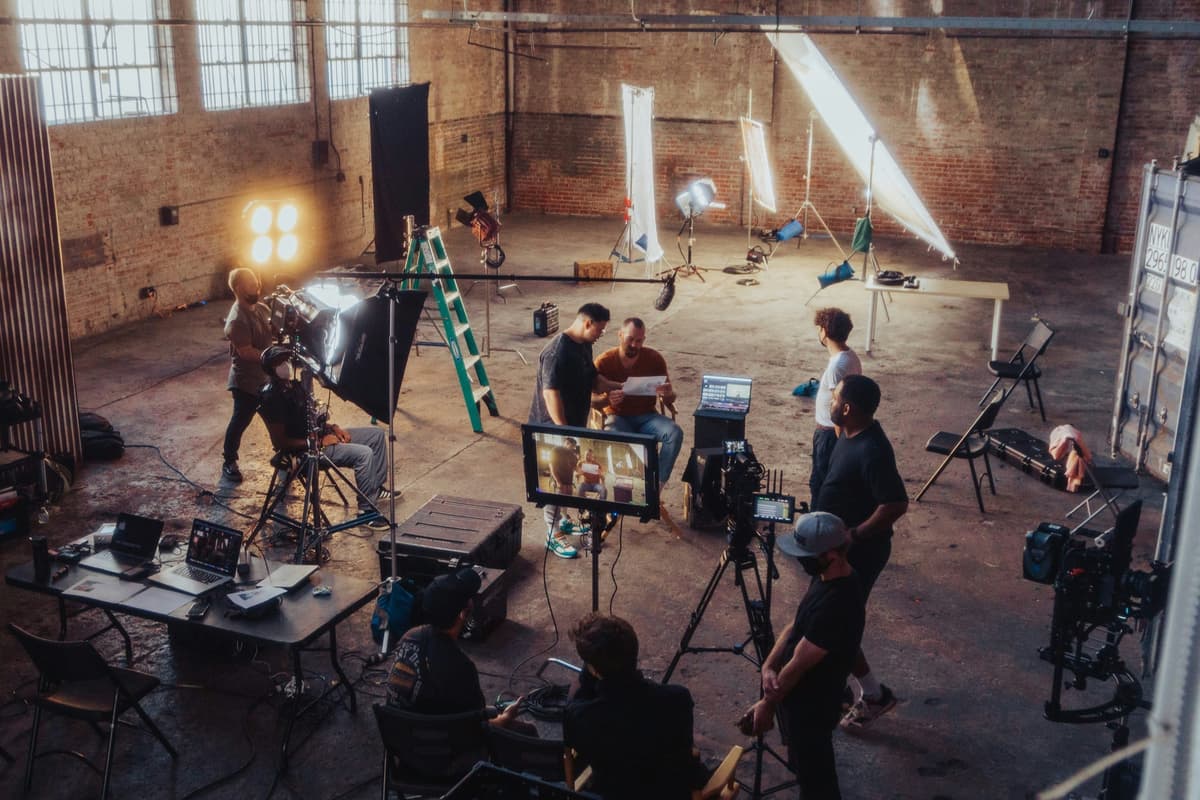
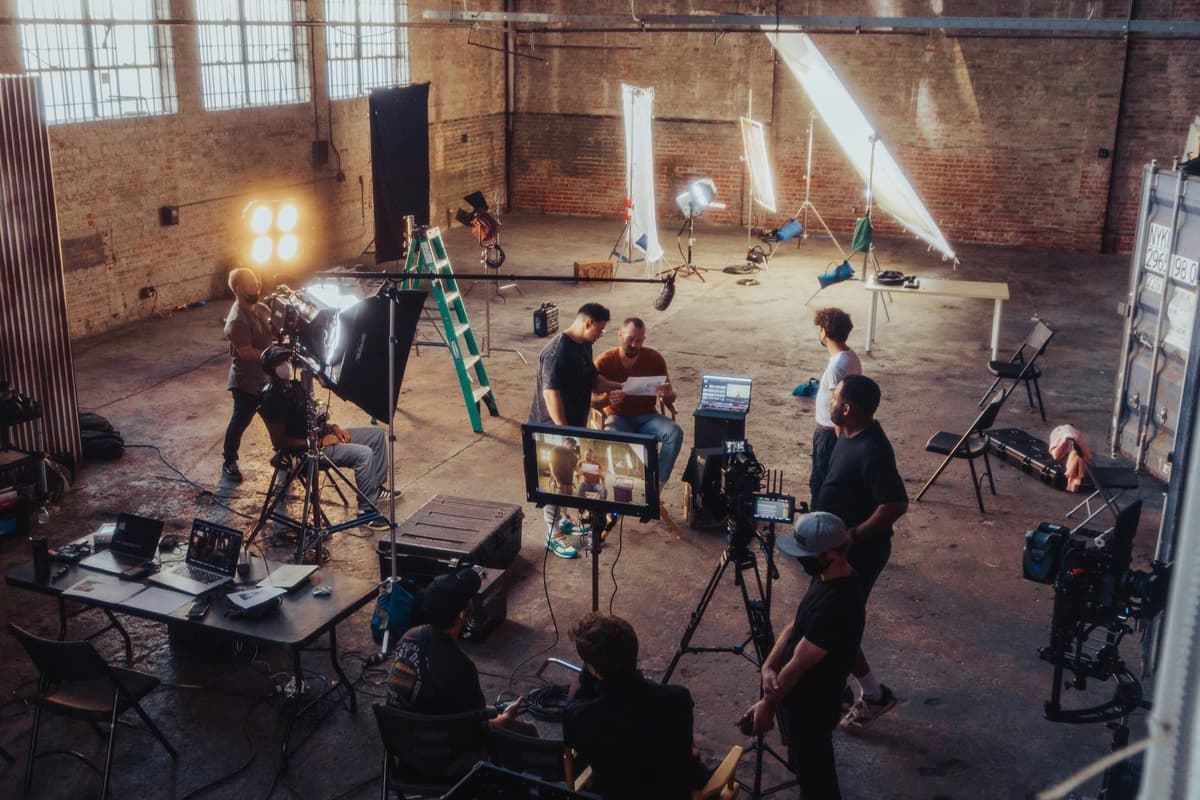
What is a Makeup Artist?
Overview
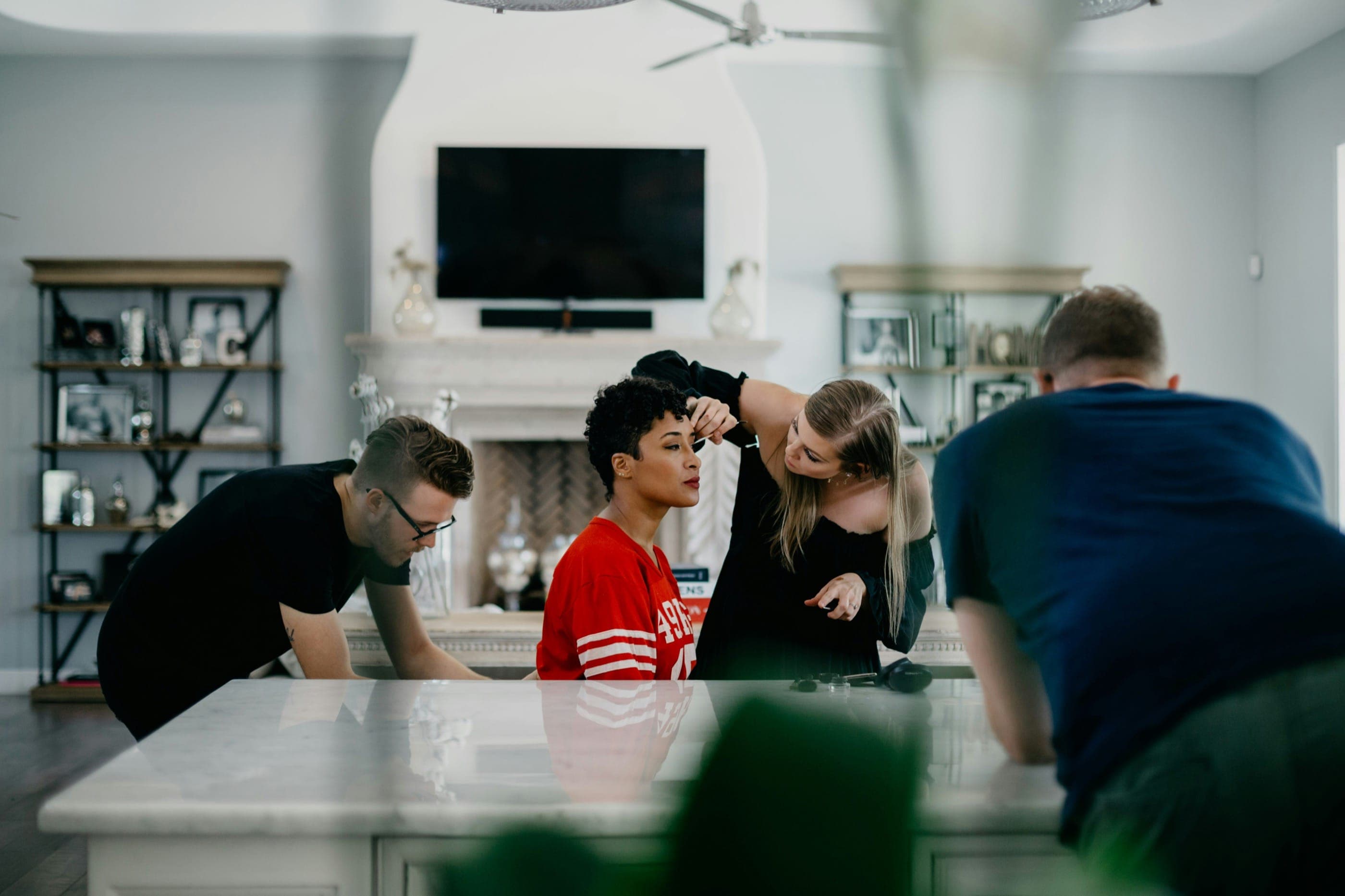
A makeup artist on a film or television production is responsible for creating and maintaining the appearance of every performer who appears on camera. Working under the key makeup artist (department head), the makeup artist applies beauty looks, character makeup, aging effects, and light special-effects work for supporting cast and day players throughout the shoot.
The Hair & Makeup department operates out of a dedicated makeup trailer on set. The key makeup artist designs the overall look for the production and handles principal actors, while makeup artists execute those designs for the rest of the cast, maintain continuity between takes, and provide touch-ups on set throughout the day. On larger productions the department may also include additional makeup artists, a body makeup artist, a prosthetics specialist, and trainees.
Film makeup differs from editorial or wedding work because every choice must survive the scrutiny of a camera lens, hold up under hot lights for 12-hour days, and match precisely from one take to the next weeks or months later. Continuity photography, product knowledge, and the ability to work quickly under pressure are as important as application technique. Production management software like Saturation.io helps producers track department budgets, kit rentals, and crew payments so makeup artists are paid correctly and on time.
Role & Responsibilities
Pre-Production: Script Breakdown and Character Design
Before cameras roll, the makeup artist reads the script alongside the key makeup artist and flags every scene that requires special makeup considerations: injuries, aging, period-specific looks, practical effects like blood, or character transformations. The team creates a makeup breakdown that maps each look to specific scenes and shooting days.
During prep, the makeup artist assists with screen tests and character consultations. They help the key makeup artist photograph reference materials, build continuity binders, and stock the kit with every product required for the production. Prep days on a union production are paid at the same scale as shoot days, and kit rentals are negotiated separately from the day rate.
Production: Daily Makeup Application
On shoot days, call time for the makeup department is typically one to three hours before the first shot of the day, depending on the complexity of the looks. The makeup artist works in the makeup trailer alongside hair stylists, applying assigned looks to their scheduled actors before they move to set.
The order of the makeup chair is determined by the assistant director's call sheet. Principal actors with complex looks go first; day players and background are worked in around principal turnaround. The makeup artist works to a strict schedule because delays in the trailer ripple through the entire production day.
On-Set Presence and Continuity
Once actors move to set, a makeup artist remains on set throughout the shooting day to provide touch-ups between takes. They carry a set bag with the essentials to match previously applied looks: pressed powder, lip products, the specific foundation used in the trailer, and reference photographs of each actor's approved look.
Continuity is one of the most important responsibilities of the set makeup artist. Every touch-up must match the last frame of the previous take exactly. The makeup artist refers to their continuity polaroids or digital reference photos before and after every touch-up to ensure there is no visible difference between shots that will be edited together.
Working with Actors
Makeup artists develop a professional, collaborative relationship with actors and must maintain confidentiality about discussions that happen in the makeup trailer. Actors vary widely in their preferences: some have specific product allergies or sensitivities, some are uncomfortable with certain application techniques, and some require more time or reassurance than others. Adaptability and a calm, professional manner are essential.
For prolonged shoots, the makeup artist also monitors the condition of an actor's skin over weeks of heavy product application. Using breathable, skin-friendly formulas and ensuring proper removal at wrap helps preserve skin health throughout a long production schedule.
Special Effects and Prosthetics Support
While full prosthetics work typically falls to a dedicated prosthetics makeup artist or special effects makeup department, the set makeup artist is often responsible for applying pre-made prosthetic pieces, maintaining and touching up practical injury effects (cuts, bruises, blood), and blending prosthetic edges so they read as natural on camera. On lower-budget productions, the makeup artist frequently handles all of this work themselves.
Wrap: Kit Cleaning and Production Documentation
At the end of each shooting day, the makeup artist is responsible for cleaning and sanitizing all brushes and tools, returning any production-owned products to the kit, and updating the continuity binder with new reference photographs and notes. At the end of the production, the department turns in a kit inventory so that any production-owned supplies can be reconciled against the original purchase list.
Makeup artists who work across a full production keep detailed records of every look, product formula, and continuity note. This documentation becomes essential if a pickup shoot is required months after principal photography wraps.
Skills Required
Beauty Makeup and Color Theory
The foundational skill for any film makeup artist is the ability to apply clean, camera-ready beauty makeup that holds up under set lighting and survives a full day of shooting. Film cameras capture texture and color in ways that require a different approach than social media or print: heavy shimmer reads as excessive, unblended edges become visible, and color shifts under tungsten, LED, and HMI lighting in ways that require an eye for camera-specific correction.
Color theory is inseparable from professional film makeup. Understanding the color wheel allows the makeup artist to correct skin tone issues -- neutralizing redness, counteracting sallowness, or evening hyperpigmentation -- and to select shades that translate accurately under the specific lighting setup being used on the production. Working with the director of photography to understand the color temperature of the set lights is part of a senior makeup artist's skill set.
Character and Aging Makeup
Translating a script's character descriptions into a camera-ready appearance is a core creative skill. Age makeup, for example, requires understanding how skin structure changes over time -- the way fat pads shift, how bone structure becomes more prominent, and how the skin's surface texture changes -- and replicating those changes with products and techniques that hold up across a 12-hour day under hot lights.
Character makeup for genre productions may include realistic injuries, cultural or period-appropriate looks, fantasy or creature-adjacent work, and non-realistic stylized design. Each requires different product knowledge and application skills beyond standard beauty technique.
Special Effects Makeup Fundamentals
Even makeup artists who do not specialize in prosthetics or SFX should understand the fundamentals: applying pre-made prosthetic pieces and blending edges, creating realistic cuts and bruises with the Mehron or Ben Nye product lines, using fresh blood and stage blood products safely on set, and matching practical effects to continuity photographs between takes. On lower-budget productions, one makeup artist often handles all practical effects alongside standard beauty work.
Skin Knowledge and Condition Management
Professional film makeup artists develop a working knowledge of skin conditions, sensitivities, and allergies that affect product selection and application technique. Actors with rosacea, eczema, acne, or latex allergies require product substitutions that still deliver the same camera-ready result. Understanding skin types -- dry, oily, combination, mature -- allows the makeup artist to select primers, foundations, and setting products that hold through the specific demands of a given actor's skin throughout a long day on set.
Continuity Photography and Documentation
Continuity is a skill unique to film and television work. Every look must match from scene to scene, often across shooting days that may be weeks or months apart. This requires systematic documentation: reference photographs taken before the first take of each new scene, detailed notes on every product used (brand, shade, finish, application method), and the discipline to check those references before every touch-up on set.
Most film makeup artists use a combination of Polaroid instant photography and digital photos on a dedicated phone or camera. The continuity binder or digital folder organized by scene is a standard production tool that professional set makeup artists maintain throughout the entire shoot and preserve after wrap for potential pickup days.
Product Knowledge
A professional film kit typically includes products from Ben Nye, RCMA, Kryolan, Temptu, Mehron, Make Up For Ever, and NARS, among others, each chosen for specific camera and set performance characteristics. Knowing which foundation formula holds under hot lights without oxidizing, which setting powder controls shine without reading gray on camera, and which adhesives are safe for extended skin contact requires hands-on experience with a wide range of professional products.
Kit rental is standard practice in film: the production rents the makeup artist's personal kit at a negotiated daily rate in addition to the day rate. Maintaining, insuring, and upgrading a professional kit is part of the business of being a film makeup artist.
Time Management and Set Etiquette
On a professional film set, time is the most expensive resource. A makeup artist who runs over their allotted time in the trailer directly delays the start of shooting, affecting the entire crew. Working quickly without sacrificing quality is a non-negotiable professional skill. Set etiquette -- knowing when to speak and when to be quiet, how to communicate efficiently with ADs, and how to handle actor requests without involving the production -- is equally important and learned almost entirely through on-set experience.
Communication and Collaboration
The makeup department works closely with the costume department to ensure that makeup and wardrobe color palettes complement each other and support the production designer's overall vision. Makeup artists also collaborate with the director of photography on how camera and lighting choices affect the appearance of makeup, and they take creative direction from the key makeup artist who is ultimately responsible for every look that appears on screen.
Salary Guide
How Film Makeup Artists Are Paid
Film makeup artists are typically paid a day rate or weekly rate rather than an annual salary. On union productions covered by IATSE, rates are set by the collective bargaining agreement between the guild and the Alliance of Motion Picture and Television Producers (AMPTP). On non-union productions, rates are negotiated directly and vary widely by production budget, market, and the makeup artist's experience level.
In addition to the base rate, makeup artists on film and television productions typically negotiate a kit rental fee -- a separate daily rate paid for the use of their personal product kit. Kit rental is standard practice and an important component of total compensation.
IATSE Local 706 Union Scale (2025-2026)
The following rates are drawn from the 2025-2026 IATSE theatrical feature film agreement as published by Topsheet Entertainment Payroll. These rates apply to union productions (major studio films, major streamer originals, and network television) in Los Angeles and other union markets.
- Makeup Artist: $54.63/hr | $546.27/day | $2,185.08/week
- Key Makeup Artist (Dept Head): $57.03/hr | $570.26/day | $2,281.04/week
- Assistant Department Head -- Make-Up: $65.81/hr | $658.10/day | $2,632.40/week
- Department Head -- Make-Up: $69.91/hr | $699.00/day | $2,796.00/week
- Apprentice/Trainee -- Make-Up: $25.00/hr | $250.04/day | $1,000.16/week
These rates reflect straight-time pay. Overtime, penalties, and golden time apply under IATSE working conditions. Work rules include an 8-hour daily minimum, 10-hour rest period between calls (9 hours at distant locations), and meal periods beginning no later than the 6th hour of work.
Union contracts also include producer pension contributions of 6.0% (approximately $10.60 per hour) and health and retirement fund contributions paid separately by the production company. This makes the effective cost of a union makeup artist to the production significantly higher than the listed rate.
Non-Union Day Rates
Non-union makeup artist day rates vary considerably by production type, budget, and market. General industry ranges as of 2024-2025:
- Student and short film: $0 to $150/day (primarily for portfolio building)
- Low-budget indie film: $150 to $300/day
- Mid-budget film or television: $300 to $600/day
- Commercial production (non-union): $600 to $900/day including kit rental
- Music video: $200 to $500/day depending on artist and budget
Non-union rates do not include pension, health, or retirement contributions. Non-union artists are responsible for all self-employment taxes and their own benefits.
Annual Salary Estimates
Because film makeup work is project-based and frequently freelance, annual earnings vary enormously based on how consistently a makeup artist books work. According to ZipRecruiter data as of late 2025, the average annual pay for a film makeup artist in the United States is approximately $52,605, with top earners (90th percentile) reaching $120,000 annually. The BLS data for makeup artists, theatrical and performance (SOC 39-5091), shows a median annual wage of $68,590 based on May 2023 data, reflecting the higher earnings of union and consistently working film and television artists.
Earnings by Market
Geographic market significantly affects earning potential. The highest-paying markets are those with the largest concentration of union production:
- Los Angeles: The primary union film and television market. Established Local 706 members working steadily can earn $80,000 to $130,000 or more annually. The high cost of living is a significant offset.
- New York: Major market for film, television, commercials, and streaming. Local 798 covers makeup and hair. Rates are comparable to Los Angeles for union productions. Strong commercial market supplements feature film income.
- Atlanta: The fastest-growing production market outside LA and New York. Non-union rates are common on mid-budget productions; Georgia's 30% tax incentive has made it a hub for studio films and streaming originals. Non-union makeup artists here typically earn $300 to $600/day on mid-budget work.
- Other growing markets: New Mexico, New Orleans, Vancouver (BC), and Toronto all have active production communities with varying union presence.
Earnings by Production Type
Production type is one of the clearest predictors of makeup artist earnings:
- Studio theatrical features: Union scale, typically 10 to 20 weeks of guaranteed work, plus additional weeks for reshoots. Highest total earnings per project.
- Network and cable television: Union scale for primetime shows; season-long contracts provide consistent annual income. Day players on episodic TV are common for makeup artists at higher budget tiers.
- Streaming originals (major platforms): Major streamers operate under IATSE agreements. Comparable to network TV in rate and consistency.
- Commercials: Non-union and union commercial work can be highly lucrative on a per-day basis, especially in New York and Los Angeles. Commercial makeup artists often earn among the highest day rates in the industry.
- Print and editorial: Separate market from film/TV, typically lower rates, but builds portfolio and allows for regular local work between productions.
Career Trajectory and Earning Growth
Entry-level film makeup artists typically begin on student films, short films, and low-budget projects to build portfolio and experience. As they accumulate documented on-set days toward IATSE membership and build a professional reputation, they move to higher-budget non-union productions and eventually to union work. The transition from non-union to union membership typically doubles the day rate and adds the value of health insurance and pension benefits.
Experienced makeup artists who move into key makeup artist or department head roles at the union scale level can earn $100,000 to $150,000 or more annually in active years, depending on the number and length of productions they work.
Frequently Asked Questions
What does a film makeup artist do?
A film makeup artist applies and maintains camera-ready makeup for actors and performers on a film or television production. Working under the key makeup artist, they apply assigned looks in the makeup trailer before each shooting day, provide touch-ups on set between takes, maintain continuity between scenes, and handle light special-effects work such as injuries or aging on supporting cast and day players. The job combines technical application skill with the discipline of working quickly and accurately under set time pressure.
How much does a film makeup artist earn?
On union productions under the IATSE Local 706 agreement, makeup artists earn $54.63 per hour ($546.27/day, $2,185.08/week) at the standard scale rate. Key makeup artists earn $57.03/hr ($570.26/day). Non-union day rates range from $150 to $600 per day depending on production budget and market. According to ZipRecruiter, the average annual income for a film makeup artist in the US is approximately $52,605, while BLS data for theatrical makeup artists shows a median of $68,590.
What is IATSE Local 706 and do I need to join?
IATSE Local 706 is the Make-Up Artists and Hair Stylists Guild, the union representing makeup artists and hair stylists on major film, television, and streaming productions in Los Angeles. Membership is required to work on union productions (major studio films, network TV, major streaming originals). The primary path to membership is the 60-60-60 method: work 60 days per year on non-union productions in Los Angeles County for three separate years within a five-year window, maintaining call sheets and pay stubs as documentation. Makeup artists also need to pass a color blindness test through CSATF. Outside Los Angeles, IATSE Local 798 covers New York productions.
How do I get into film as a makeup artist?
The most common entry path is to build a portfolio through student films, short films, and low-budget productions while learning set protocol as a makeup trainee or production assistant. Formal training through a film makeup program or cosmetology school provides foundational skills. Building the documented on-set days required for IATSE Local 706 membership requires consistent work on non-union productions over several years. Networking at industry events like IMATS and building relationships with other crew is essential. Most working film makeup artists spend three to seven years building experience before joining the union and working on major productions.
What is the difference between a makeup artist and a key makeup artist?
The key makeup artist is the head of the makeup department and is responsible for the overall makeup design for the entire production. They apply makeup to principal actors, direct the creative vision, hire the makeup team, and oversee all continuity. A makeup artist works under the key makeup artist, executing designs for supporting cast and day players, providing set touch-ups, and maintaining continuity for their assigned actors. On IATSE productions, the key makeup artist earns a higher rate ($57.03/hr vs. $54.63/hr for a standard makeup artist).
What is the difference between a makeup artist and a special effects (SFX) makeup artist?
A standard film makeup artist handles beauty, character, aging, and light practical effects. A special effects (SFX) makeup artist specializes in prosthetics fabrication and application, creature design, mold-making, and complex transformational makeup work. On large productions, SFX artists are a separate department with their own department head. On lower-budget productions, a single makeup artist may handle both roles. Many makeup artists have some SFX training and can handle pre-made prosthetic application even without specializing in SFX fabrication.
What education is required to become a film makeup artist?
There is no single required educational path. Some film makeup artists hold cosmetology or esthetics licenses, which provide valuable skin science training. Others complete film-specific makeup programs at schools like Make-Up Designory (MUD) or Cinema Makeup School. Many are self-taught through short film work and editorial experience. A state cosmetology license is not required to join IATSE Local 706 as a makeup artist (though it is required for hair stylists in the same local). What matters most to producers is a professional portfolio, documented on-set experience, and the ability to deliver high-quality work on a set schedule.
What does an entry-level film makeup artist do?
Entry-level makeup artists typically begin as makeup trainees or department assistants, assisting the makeup team with kit prep, cleaning brushes, running supplies between the trailer and set, and observing the work of experienced artists. On very low-budget productions they may begin applying makeup under supervision for background performers. Building documented on-set days, developing a professional portfolio, and learning set protocol are the primary goals of the early-career stage. Most entry-level film makeup work is unpaid or very low-paid on student and short films, transitioning to paid work on low-budget independent productions.
Education
Is a Cosmetology License Required for Film Makeup?
In the United States, a cosmetology or esthetician license is not universally required to work as a film makeup artist. Unlike hair stylists (who are required to hold a cosmetology license to join IATSE Local 706 as a hair stylist), makeup artists can join Local 706 without holding a state license. However, a license is still valuable: it provides foundational skin science and color theory training, and some states do require a license for any paid makeup work regardless of context. Always check the requirements in your specific state.
Cosmetology and Esthetics Programs
Many working film makeup artists begin their training in accredited cosmetology or esthetics programs. These programs cover skin anatomy, product chemistry, sanitation standards, and application fundamentals. A cosmetology license typically requires 1,000 to 1,500 hours of training depending on the state, and an esthetics (skin care) license usually requires 260 to 1,500 hours. Completion allows graduates to work legally in any client-facing beauty context while building toward a film career.
The main limitation of cosmetology school as a path to film work is that it does not teach camera-specific technique, continuity, or the high-pressure pace of a set. Most graduates supplement their cosmetology training with additional film-focused study or on-set experience.
Film-Specific Makeup Programs
Several dedicated film makeup programs provide hands-on training specifically for camera-ready looks, special effects, prosthetics application, and on-set workflow. Notable programs include:
- Make-Up Designory (MUD) -- schools in Los Angeles and New York focused on entertainment makeup.
- Cinema Makeup School -- Los Angeles program covering SFX, prosthetics, and film technique.
- Joe Blasco Makeup Center -- established program in Los Angeles and Orlando with a film/TV curriculum.
- New York Film Academy Makeup Artistry programs -- combining film production context with makeup technique.
These programs range from a few weeks to two years and do not lead to a state cosmetology license, but they are recognized by industry professionals and can help graduates move into entry-level film work more quickly than a cosmetology path alone.
Beauty School vs Film-Specific Training
Beauty school provides licensing credentials and foundational skin knowledge but rarely covers camera technique, continuity, or set protocol. Film programs provide production-specific skills but typically do not award a state license. Many successful film makeup artists complete both: a cosmetology or esthetics license first for its skin science foundation and licensing value, then a supplementary film program or intensive workshop for camera-specific skills.
The IMATS and Industry Trade Shows
The International Make-Up Association Trade Show (IMATS) is one of the most important professional development events for film makeup artists. Held annually in Los Angeles, New York, Toronto, and other cities, IMATS offers hands-on demonstrations, master classes taught by working film professionals, and direct access to every major professional product brand. Attending IMATS is one of the fastest ways to build technique, industry knowledge, and professional connections.
The Self-Taught and Freelance Path
A meaningful number of working film makeup artists are self-taught, having built their skills through editorial work, music video projects, wedding and event work, and short film productions. This path requires a longer runway and a strong portfolio, but it is a well-established route to professional film work, especially in non-union markets like Atlanta and other growing production hubs.
The self-taught path typically involves: building a portfolio through student and short film projects, working as a production assistant or makeup trainee on low-budget productions to learn set protocol, and accumulating the documented on-set days required for eventual IATSE Local 706 membership.
Joining IATSE Local 706
The Make-Up Artists and Hair Stylists Guild, IATSE Local 706, is the primary union representing makeup artists in Los Angeles and on major studio productions across the United States. Membership is required to work on union productions (studios, major streamers, network TV) and provides access to negotiated wages, health insurance, and pension benefits.
There is no apprenticeship program or shortcut. The primary path to the roster is the 60-60-60 method: work 60 days per year on non-union productions in Los Angeles County for three separate years within a five-year period, maintaining call sheets and paychecks as documentation. Makeup artists must also pass a color blindness test through CSATF (Contract Services Administration Trust Fund). Once on the roster, you are eligible to work on union productions and pay initiation fees and dues.
Outside Los Angeles, IATSE Local 798 covers makeup and hair for New York productions, and other locals cover specific regional markets. Non-union productions -- which are abundant in Atlanta, New Mexico, and other growing production states -- follow a different wage structure but provide the experience required to eventually qualify for union membership.
Last updated April 25, 2026
Budget this role in seconds with Saturation
Rate packs, fringes, and phases turn a crew list into an accurate production budget without the spreadsheet math.
Rate packs
Verified union rates, versioned.


Fringes and markupsRebuilt
Stack them, cap them, and see the split on every line.
PhasesRebuilt
Every column knows its type.
Auto-fill
Rates fill in as you type, from the source you turned on.