What is a Helicam Pilot?
Overview
What Is a Helicam Pilot?
A helicam pilot is a commercially certified helicopter aviator who operates manned rotorcraft exclusively for motion picture and television aerial photography. The term "helicam" — a contraction of helicopter camera — emerged from the aerial film industry to distinguish the piloting discipline from standard commercial helicopter operations. While a drone operator (UAV pilot) controls a remotely piloted aircraft from the ground, a helicam pilot sits in the cockpit, physically flying the aircraft at low altitude through precisely choreographed maneuvers designed to produce the shot the director envisioned.
The role sits at the intersection of elite aviation and cinematic storytelling. A helicam pilot must be both an exceptional airman and a visual collaborator — someone who understands framing, lens perspective, and camera movement well enough to execute a pass that serves the edit, not just the airspace. Productions from blockbuster action films to documentary series and luxury commercials hire helicam pilots when they need footage that a drone simply cannot deliver: extended-range wilderness coverage, high-speed chase sequences, ultra-smooth tracking shots over water, or sweeping establishing views of cityscapes that require flight at altitudes and speeds beyond UAV capability.
Helicam Pilot vs. Drone Pilot: Key Differences
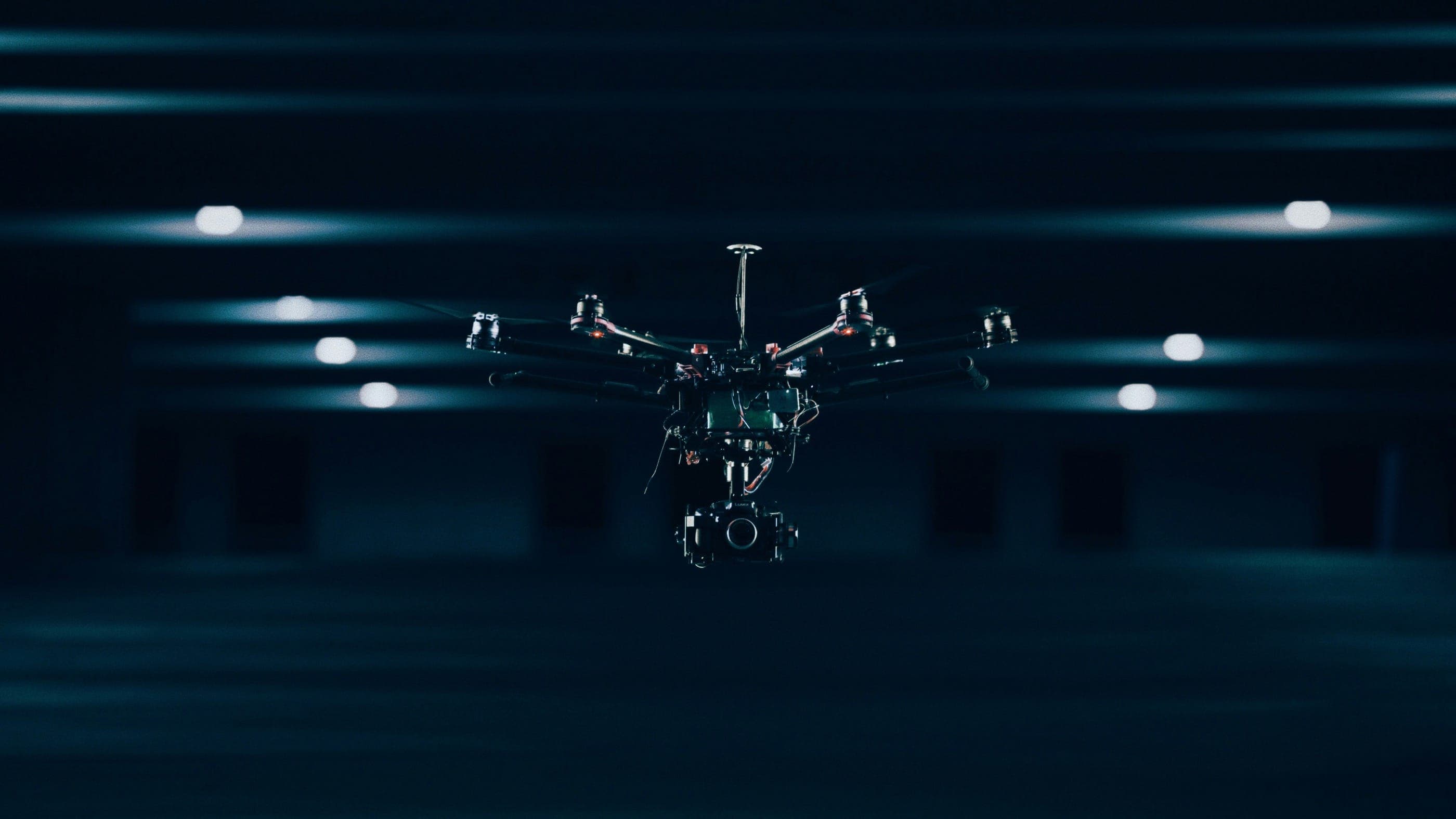
The distinction matters for both creative and regulatory reasons. A drone pilot (FAA Part 107 certificate holder) operates an unmanned aerial vehicle from the ground, typically within visual line of sight and under 400 feet AGL. A helicam pilot holds an FAA Commercial Pilot Certificate (Rotorcraft-Helicopter) and flies a full-size aircraft — often an AStar B3, Bell 206 JetRanger, or MD 500 series — with a cinematography crew payload of several thousand pounds.
Drones are faster to deploy, cheaper per shooting day, and can access tight urban canyons or interior spaces. Helicopters offer range (300–400 miles), altitude (up to 30,000 feet), greater gyro-stabilized camera payload capacity, and the ability to operate in adverse weather conditions that would ground a UAV. For productions requiring continuous aerial coverage over large geography — a cross-country chase, a wilderness expedition, a live sporting event — the helicam pilot is the only viable solution.
The Helicam Pilot's Place on the Film Crew
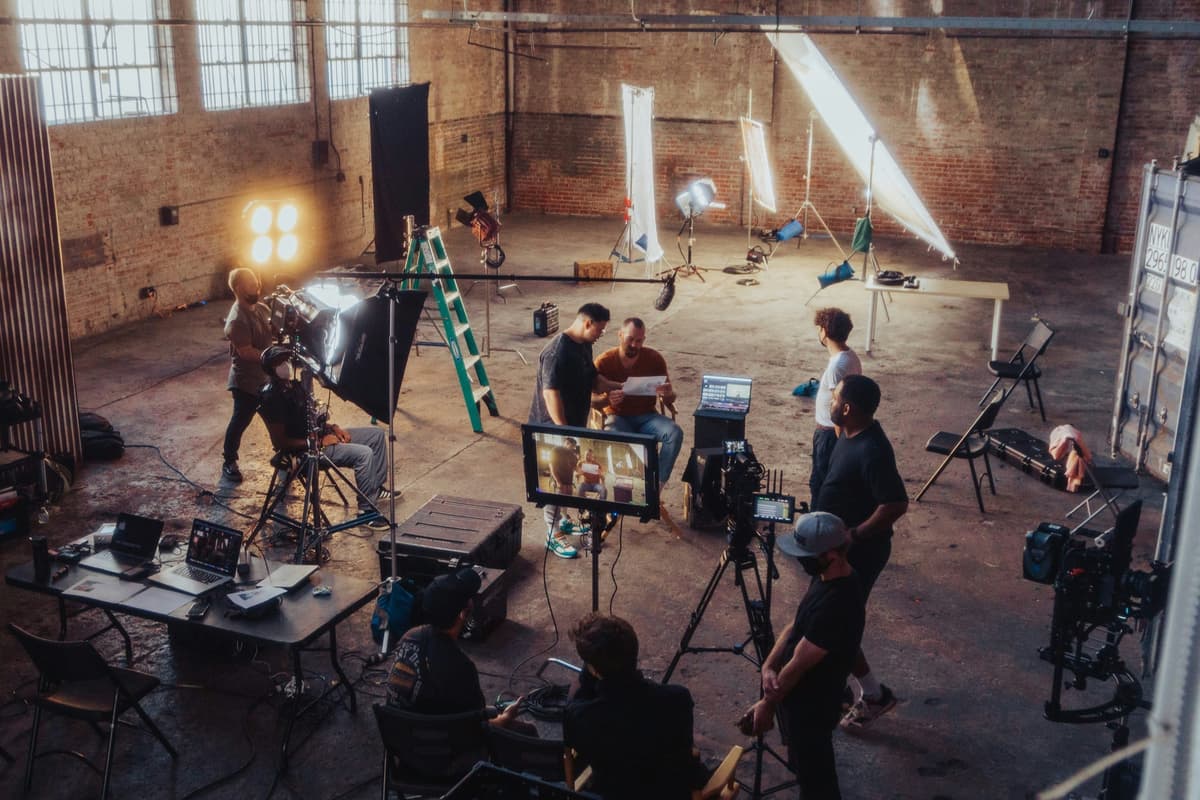
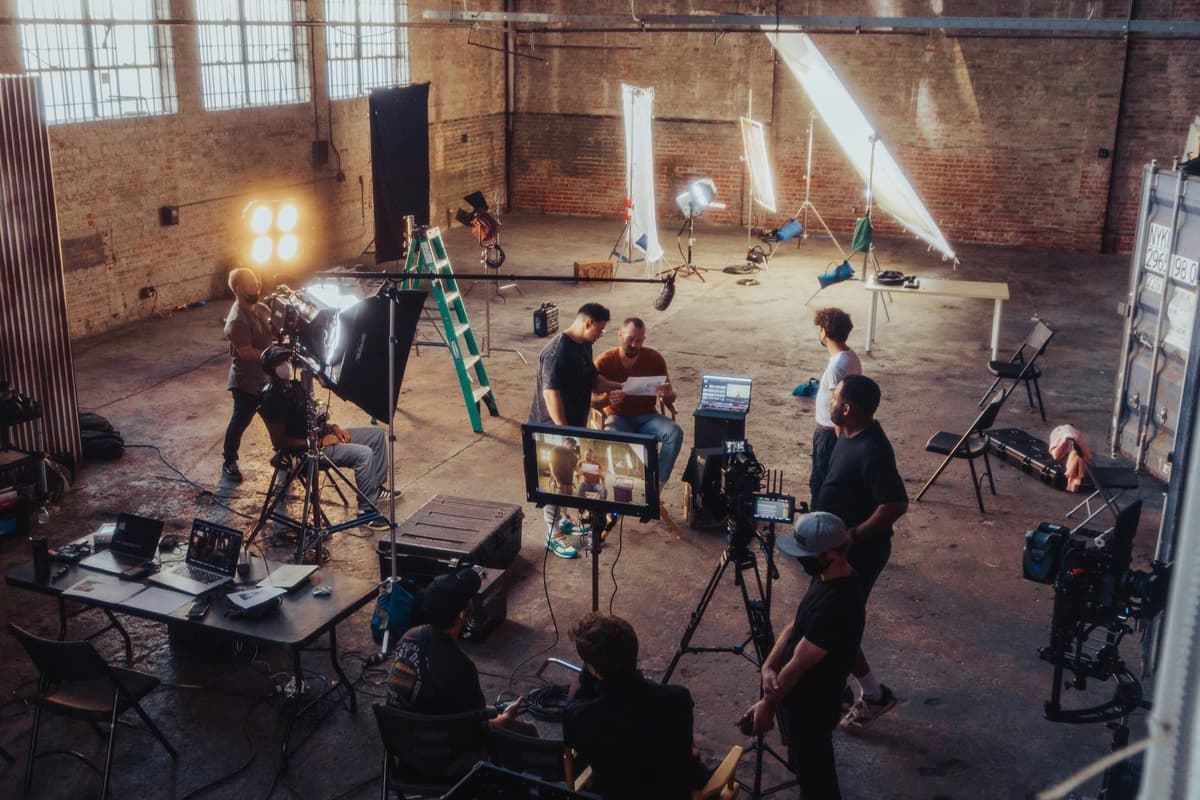
On set, the helicam pilot is part of the aerial unit, which typically operates as a second unit or specialty department. The pilot works directly with the aerial camera operator (who controls the gyro-stabilized camera mount — a Shotover K1, Tyler, or CINEFLEX system mounted externally to the aircraft), the aerial director of photography, and frequently a marine coordinator or location coordinator when filming over water or in remote terrain.
Communication during a shot runs through a dedicated intercom system linking the pilot, the aerial camera operator seated beside or behind them, and the director via radio on the ground. The pilot executes the flight path — altitude, speed, heading, bank angle, hover precision — while the camera operator steers the gyro head to frame and follow the subject. The two roles are inseparable: the best aerial camera operator in the world cannot get the shot without a pilot who can position the aircraft with centimeter-level repeatability at 80 knots.
Famous Uses in Film and Television
Helicopter aerial cinematography defines some of cinema's most iconic imagery. The opening sequence of The Shining (1980), with the Steadicam-equivalent smoothness of the helicopter following Jack Torrance's Volkswagen through Glacier National Park, was achieved by a camera helicopter using an early Tyler mount. The tidal-wave chase in Twister, the Malibu beach runs in Baywatch, the cross-country pursuit in The Dark Knight Rises, and virtually every establishing shot of a city at dawn in a major studio production all required helicam pilots.
In documentary and reality television, helicam pilots are embedded with productions covering wilderness, natural disaster response, and sporting events where drone range or endurance is insufficient. Reality competition shows, wildlife documentaries, and extreme sports broadcasts rely on the helicam pilot's ability to loiter for extended periods, reposition rapidly, and coordinate with ground units across vast terrain.
Managing Aerial Production with Saturation
When your production includes an aerial unit, the logistics of tracking helicam pilot contracts, aircraft rental invoices, FAA permit costs, and day rate reconciliations compound quickly. Saturation's production budgeting platform allows production accountants to create dedicated aerial department budget lines, track actuals against estimates in real time, and give line producers instant visibility into overages — keeping the aerial unit on budget across a multi-week shoot.
Role & Responsibilities
Pre-Production: Flight Planning for the Camera
A helicam pilot's job begins weeks before the first shooting day. In pre-production, the pilot reviews the director's shot list, storyboards, and the aerial director of photography's technical requirements. They then conduct location scouts — often by air — to assess the geography, identify hazards (power lines, restricted airspace, terrain features), plan ingress and egress routes for each shooting location, and determine the optimum altitude and heading for each shot.
Flight planning for a feature film aerial sequence is substantially more complex than planning a commercial charter flight. The pilot must account for sun angle and golden hour timing (critical for cinematography), the movement of ground vehicles or subjects that must be coordinated with the aircraft's position, wind patterns at low altitude over varied terrain, and the weight-and-balance implications of the camera system mounted on the aircraft. A Shotover K1 gimbal with a cinema lens package can weigh over 100 pounds; the pilot must compute accurate gross weight and CG position before every flight to ensure aircraft performance and safety margins.
FAA Clearances and Airspace Authorization
Film productions frequently require flying in restricted, controlled, or sensitive airspace. The helicam pilot is responsible for securing all required authorizations before the camera rolls. This includes FAA waivers for low-altitude flight (below 500 feet AGL over unpopulated areas, or any altitude over populated areas), Letters of Agreement (LOAs) with controlling air traffic facilities, Notice to Air Missions (NOTAMs) filed for the shoot area, and coordination with local law enforcement or emergency services when filming in urban environments.
For feature productions that need to fly over populated areas or within Class B/C/D airspace near major airports, the authorization process can take weeks and involves detailed safety plans, insurance documentation, and sometimes on-site FAA coordination. The pilot leads this process, drawing on their knowledge of 14 CFR Part 91 (General Operating Rules) and Part 135 (if the production company operates under an air carrier certificate) to ensure the production operates fully within the regulatory framework.
Pre-Flight Checks and Aircraft Preparation
Before every shooting day, the helicam pilot conducts a comprehensive pre-flight inspection of the aircraft — rotor system, fuel and oil levels, airframe integrity, avionics, and the camera mount attachment points. Camera mounts attach to the aircraft's nose, belly, or side hardpoints using specialized structural fittings; the pilot verifies that all mounting hardware is torqued to specification and that the gimbal's cable runs do not interfere with flight controls or create aerodynamic disturbances.
The pilot also briefs the aerial camera operator and any additional crew on emergency procedures specific to that day's location: emergency landing zones, abort procedures if the camera mount malfunctions in flight, and ditching procedures if operating over water. This safety briefing is not optional — it is a regulatory and professional standard that the pilot owns and delivers before every flight.
Executing Shot Maneuvers with Precision
During the shoot, the helicam pilot's primary job is to place the aircraft in the exact position the camera operator needs, at the right speed, altitude, and attitude, at the right moment — and to hold or move from that position with absolute repeatability across multiple takes. The demands are extraordinary. A director may call for the aircraft to approach a moving vehicle at 60 mph from a specific angle, hold station alongside it for 30 seconds while the actor delivers dialogue, then pull back and rise 200 feet as the car accelerates away — and repeat that exact sequence eight times across an afternoon.
Precision hovering, formation flying (maintaining station relative to a moving ground vehicle or boat), and coordinated banking turns that keep the camera's horizon level are the pilot's core technical skills during the shoot. At low altitude over uneven terrain, the pilot must simultaneously manage the aircraft, monitor engine instruments, communicate with the camera operator via intercom, receive director's notes over a separate radio channel, and anticipate upcoming terrain or airspace hazards — all without losing the smoothness and control precision that makes the footage usable.
Communication: Pilot, Camera Operator, and Director
The aerial intercom system links the pilot and camera operator in real time. During a take, the camera operator will call position adjustments: "Come left two degrees," "Drop fifty feet," "Faster on the push." The pilot executes these adjustments while maintaining the aircraft's overall flight path. Between takes, the director radios notes from the ground unit: "I need you to start the pass a quarter mile further back," or "Hold the zoom and come tighter on the first turn." The pilot relays technical constraints (minimum approach speed, terrain clearance requirements) that may affect how a shot can be achieved.
This three-way communication — pilot, camera operator, director — is where the creative and technical halves of the job merge. Experienced helicam pilots develop a film vocabulary that lets them interpret directorial intent and translate it into flight inputs. They know what "push through" means on a tracking shot, what "pull focus" implies about their speed and distance, and when a director's requested angle is geometrically impossible given the aircraft's minimum turn radius.
Safety Protocols for Low-Level Flying
Low-level helicopter operations for film are among the most demanding and inherently hazardous in commercial aviation. The helicam pilot operates in the regime where engine failures, wire strikes, and loss of tail rotor effectiveness (LTE) are most consequential. Industry safety protocols — developed in part by the IATSE Safety Committee and aerial production companies — require the pilot to maintain minimum terrain clearance margins, to brief and rehearse emergency procedures before each new shooting location, and to refuse to execute shot requirements that cannot be accomplished safely within applicable regulations and margins.
The pilot holds final authority over the safety of the aircraft and crew. No director, producer, or first AD can override a pilot's decision to abort a flight or decline a shot on safety grounds. This authority is absolute and legally defined under FAA regulations. On productions where schedule pressure is intense, maintaining that authority requires both technical expertise and professional confidence — qualities that the best helicam pilots develop over thousands of flight hours in demanding conditions.
Post-Flight Documentation
After each shooting day, the helicam pilot completes aircraft flight logs, recording flight time, fuel consumption, engine cycles, and any mechanical discrepancies observed during the day. These records are required by FAA regulations and by the aircraft's maintenance program. The pilot also prepares a daily aerial report for the production's records: shots attempted, shots completed, weather conditions, airspace issues encountered, and any incidents or near-misses that need to be documented and reviewed. This documentation protects the production, the pilot, and the aircraft operator in the event of any regulatory inquiry or insurance claim.
Skills Required
FAA Commercial Pilot Certificate (Rotorcraft-Helicopter)
The non-negotiable technical credential. A helicam pilot must hold an FAA Commercial Pilot Certificate with a Rotorcraft-Helicopter category and class rating, a current FAA third-class or higher medical certificate, and a current flight review (within the preceding 24 calendar months). The commercial certificate signals that the FAA has verified the pilot's aeronautical knowledge, flight proficiency, and adherence to operating standards at a level required for compensated operations.
Precision Low-Altitude Maneuvering
The defining technical skill that separates a film pilot from a general commercial helicopter pilot. Film shots routinely require flying at altitudes of 20–100 feet AGL, at airspeeds between 0 (hover) and 100+ knots, with course corrections measured in feet and seconds. The pilot must be able to maintain a fixed position relative to a moving target (a car, a boat, a running athlete), execute smooth banked turns that keep the camera horizon level, and transition from a high-speed approach to a precision hover in a confined area — all without the visual reference cues available at normal operating altitudes.
Mountain and High-Density Altitude Flying
Many of the most valuable filming locations sit at altitude: national parks, mountain passes, remote wilderness areas. At high density altitude, helicopter performance degrades significantly — hover ceiling drops, climb rate decreases, and autorotation margins tighten. The film pilot must understand these limitations precisely, compute accurate performance charts before every flight at elevation, and adjust the shot profile when aircraft performance cannot safely support the requested maneuver. Glacier National Park, for example, regularly involves filming at 6,000–9,000 feet MSL in varying temperature conditions that can change performance parameters mid-day.
Radio Communication and ATC Coordination
Film pilots frequently operate in controlled airspace near major metropolitan areas — Los Angeles, New York, Chicago — where coordination with TRACON and tower controllers is continuous. The pilot must be fluent in standard ATC phraseology, able to negotiate ad hoc clearances during a shooting day when the production's flight path changes, and capable of managing multiple radio frequencies simultaneously (ATC on one frequency, director on another, camera operator on intercom). This multi-channel communication skill is a specific proficiency that film pilots must maintain.
Weather Interpretation and Go/No-Go Decision Making
Low-level film operations have a narrower weather operating envelope than most commercial helicopter work. While a utility pilot might fly in 3-mile visibility, a camera helicopter pilot needs 5+ miles to execute the wide-angle establishing shots the director wants. The pilot must interpret METARs, TAFs, wind aloft forecasts, and PIREPs with a film production's creative requirements in mind — advising the production whether weather will support the shot list for the day, and reconfiguring the schedule if conditions require it. The ability to provide accurate, production-relevant weather briefings is a skill that directors and line producers value highly.
Weight and Balance Calculations
Every camera system — gyro-stabilized mount, cinema camera, lens, follow-focus, monitor — added to a helicopter shifts the aircraft's center of gravity and affects its loaded gross weight. The helicam pilot must compute accurate weight and balance for every aircraft configuration, accounting for the camera package, crew weight, fuel load, and any additional equipment aboard. Errors in weight and balance can result in aircraft that handle unexpectedly or cannot safely achieve flight. This computation is a flight safety requirement that the pilot owns exclusively.
Camera System Familiarity
While the helicam pilot does not operate the camera, understanding how gyro-stabilized mounts work and how their behavior affects aircraft handling is a significant professional differentiator. Heavy gyro heads like the Shotover K1, Shotover F1, Tyler Mini-Gyro, and CINEFLEX V14 create gyroscopic forces that affect aircraft controllability during aggressive maneuvering. An experienced film pilot knows how the mount's stabilization system interacts with the aircraft's flight characteristics, and can fly the shot profile in a way that works with — rather than against — the camera operator's stabilization system.
Emergency Procedures and Crew Resource Management
Autorotation (power-off emergency landing) proficiency is mandatory and must be demonstrated in every biennial flight review. But film pilots must extend standard emergency procedures to the unique circumstances of aerial production: engine failure over a film set, hydraulic failure during a low-altitude tracking shot, sudden camera mount failure creating an unexpected aerodynamic change, or loss of communication with both the camera operator and the ground unit simultaneously. Crew resource management (CRM) training teaches the pilot to use all available resources to manage emergencies without cognitive overload.
Interpersonal Communication and Set Protocol
Film sets operate on communication conventions that are different from aviation conventions, and the helicam pilot must be fluent in both. Understanding the role of the first AD, the chain of command on a second unit shoot, how to communicate a flight constraint to a director without derailing the creative conversation, and when to insist on a safety stop versus when to accommodate a schedule adjustment — these soft skills are as important as stick-and-rudder proficiency for a pilot who wants sustained work in the film industry. The best helicam pilots are known not just for their flying but for their ability to collaborate under production pressure without compromising safety.
Salary Guide
Helicam Pilot Day Rates
Helicam pilots working on union film and television productions typically negotiate day rates directly with the production company or aerial services contractor, as their role sits in a specialty category not covered by standard IATSE or SAG-AFTRA agreements. Day rates in 2025–2026 vary widely based on the pilot's experience, the complexity of the aerial work, and whether the production is hiring the pilot independently or through an aerial services company.
Typical day rate ranges:
- Entry-level / regional productions: $1,000–$1,500 per day
- Mid-level / network television and commercial: $1,500–$2,500 per day
- Feature film / senior helicam pilot: $2,500–$5,000+ per day
- Lead pilot on major studio productions: $5,000–$7,500+ per day
Aircraft Rental and Wet Rate Billing
A critical distinction in aerial production billing: the pilot's personal day rate and the aircraft rental are almost always separate line items. When a production hires an aerial services company (such as Helinet Aviation, National Helicopter, or Airborne Systems), the company provides both the pilot and the aircraft under a single "wet rate" — covering fuel, maintenance, and crew. Wet rates for a turbine helicopter with camera mount hover between $3,000–$8,000+ per day depending on aircraft type and camera system.
When a production hires an independent helicam pilot, they must separately arrange aircraft rental through an FBO or helicopter operator. In this case, the pilot's personal day rate is additive to the aircraft wet rate. Budget lines for aerial units on feature films commonly run $10,000–$25,000+ per shooting day when all costs — pilot, aircraft, camera system rental, fuel, maintenance reserve, and crew — are consolidated.
FAA Part 135 vs. Part 91 Operations
The regulatory structure under which the aerial unit operates affects both the legal framework and the cost. Part 91 (general operating rules) covers non-commercial operations — technically, a production company cannot hire a pilot for compensation under Part 91 without running afoul of commercial operating regulations. Part 135 (on-demand air carrier operations) is the correct framework for most compensated film aerial operations; it requires the aircraft operator to hold an FAA Air Carrier Certificate, maintain an approved Operations Specification, and conduct pilot check rides under company authority. Productions working with established aerial services companies automatically operate under Part 135; productions trying to hire pilots privately should verify the regulatory structure with their legal and insurance teams.
Annual Income for Film Helicopter Pilots
Helicam pilots rarely work 365 days per year — film production is seasonal and project-based. A busy working film pilot in Los Angeles or New York might log 100–150 shooting days per year across feature, television, commercial, and documentary work. At a blended day rate of $2,000–$3,000, that translates to annual income of $200,000–$450,000 for an established pilot with consistent credits. Newer pilots breaking into the industry and building their reel earn closer to $80,000–$120,000 annually, including days in slower commercial helicopter work between productions.
For BLS context: the U.S. Bureau of Labor Statistics classifies helicopter pilots under the broader commercial pilot category (SOC 53-2012). The BLS median annual wage for commercial pilots was $112,800 as of May 2024, with the top 10% earning $208,000 or more. Film-specialized helicam pilots at the top of their field substantially exceed this BLS median, reflecting the specialized skill premium and the limited supply of pilots with both extensive flight experience and an established film industry credit list.
Factors That Affect Rate Negotiation
Production type matters. Studio features with substantial aerial sequences pay premium rates because the cost of a suboptimal aerial day far exceeds the difference between a mid-tier and top-tier pilot's rate. Independent films and documentary productions typically negotiate harder on rate. Commercial and advertising productions often pay the highest day rates relative to shoot duration, since a single advertising aerial day may generate footage used across a multi-year campaign.
Location affects rate. Pilots with currency and relationships in specialized locations (Hawaii, the Canadian Rockies, the Alaskan wilderness, European co-production locations) command a premium for location-specific expertise. A pilot who has filmed extensively in Iceland's fjords or New Zealand's Southern Alps brings value that a Los Angeles-based pilot without those credits cannot easily replicate.
Insurance and Liability
Aerial operations require specialized aviation liability insurance. When hired through an aerial services company, insurance is included in the wet rate. Independent pilots must carry their own aviation liability policy — typically $2–5 million in coverage — and productions will require certificates of insurance naming the production company as an additional insured before the first flight day. Insurance costs for film-specific helicopter operations typically run $15,000–$30,000+ annually depending on coverage limits and aircraft type.
Frequently Asked Questions
What is a helicam pilot?
A helicam pilot is a commercially licensed helicopter aviator who flies manned rotorcraft for aerial cinematography on film, television, and commercial productions. The term "helicam" refers to a camera-equipped helicopter used to capture aerial footage. Unlike a drone pilot who operates an unmanned aircraft from the ground, a helicam pilot is in the cockpit flying the aircraft at low altitude through precisely choreographed maneuvers to achieve the director's vision.
What is the difference between a helicam pilot and a drone operator?
The primary difference is the aircraft and the regulatory framework. A drone operator (FAA Part 107 certificate holder) flies an unmanned aerial vehicle remotely, typically within visual line of sight and under 400 feet AGL. A helicam pilot holds an FAA Commercial Pilot Certificate (Rotorcraft-Helicopter) and physically operates a full-size helicopter — such as an AStar B3 or MD 500 — at altitudes and speeds that drones cannot reach. Helicopters offer greater range, higher altitude capability, larger camera payload capacity, and the ability to fly in adverse weather that grounds UAVs. Drones are faster to deploy and less expensive per day, making them better suited for close-range shots in accessible locations.
What FAA license does a helicam pilot need?
A helicam pilot must hold an FAA Commercial Pilot Certificate with a Rotorcraft-Helicopter category and class rating, plus a current FAA medical certificate (third-class or higher). Most aerial production companies also require an instrument rating and a minimum of 1,000–2,000 total flight hours before considering a pilot for film work. For high-altitude or remote location work, a mountain flying endorsement is typically required. If the aerial unit operates under FAA Part 135 (which most compensated film operations do), the pilot must also complete a company-specific check ride under that operator's Operations Specification.
How much does a helicam pilot earn per day?
Helicam pilot day rates range from approximately $1,000–$1,500 per day for entry-level regional productions up to $5,000–$7,500+ per day for lead pilots on major studio features. Mid-tier rates for network television and commercial work typically fall between $1,500–$2,500 per day. Note that the pilot's personal rate is separate from the aircraft rental cost (wet rate), which adds another $3,000–$8,000+ per day. A fully staffed aerial unit on a studio feature — pilot, camera operator, aircraft, camera mount, fuel — commonly costs $10,000–$25,000 per shooting day.
How do you become a helicam pilot for film?
The path to film aviation involves: (1) earning an FAA Private Pilot Certificate (Rotorcraft-Helicopter), (2) building time toward an FAA Commercial Pilot Certificate (minimum 150 FAA hours, but typically 1,000–2,000+ hours before film work), (3) obtaining an instrument rating, (4) accumulating experience in demanding commercial helicopter operations (tours, utility, EMS, offshore), (5) building relationships with aerial production companies and working helicam pilots, and (6) making contact with established aerial film companies like Helinet Aviation or Airborne Systems. Many film pilots began as ground support crew on aerial units, learning the industry from the inside before transitioning to the camera helicopter.
What types of shots does a helicam pilot achieve that a drone cannot?
Helicam pilots are uniquely suited to high-speed vehicle chase sequences (matching 100+ mph ground speeds over extended distances), wide-area wilderness coverage (flying 50–100 miles between locations in a single day), ultra-high altitude establishing shots (8,000–30,000 feet), extended hover operations in high winds that would destabilize a drone, and sequences requiring long flight endurance (1–3 hours of continuous flight vs. a drone's 20–30 minute battery life). They can also carry cinema-grade camera systems far too heavy for any current UAV platform, including large-format cinema cameras with long telephoto lenses mounted on gyro-stabilized systems like the Shotover K1.
Is a helicam pilot on the film crew call sheet?
On productions with a dedicated aerial unit, the helicam pilot and aerial camera operator are typically listed on the second unit call sheet rather than the main unit call sheet. The aerial unit operates semi-autonomously, with the helicam pilot coordinating directly with the aerial director of photography and the second unit director. The operational independence of the aerial unit — driven by airspace, weather, and safety factors — means the pilot effectively manages their own schedule within the production's overall framework.
What helicopters are commonly used for film work?
The most common camera helicopters in North American film production include the Airbus (formerly Eurocopter) AStar B3 — valued for its high-altitude performance and smooth power delivery — the Bell 206 JetRanger (workhorse of smaller productions), and the MD 500 series (compact, maneuverable, excellent for close-terrain work). Larger productions may use twin-engine aircraft like the Bell 412 or Sikorsky S-76 when greater payload, range, or redundancy is required. The choice of airframe affects what camera systems can be mounted, the achievable speed envelope, and the aircraft's performance characteristics at the shooting location's elevation and temperature.
Education
FAA Helicopter Pilot Certificates: The Required Pathway
Becoming a helicam pilot for the film industry requires the same FAA certification pathway as any commercial helicopter operation, combined with the accumulated flight experience that aerial production companies require before trusting a pilot with a $500,000 camera system on a $50 million production.
The pathway proceeds through three certificate levels:
Private Pilot Certificate (Rotorcraft-Helicopter)
The private pilot certificate is the foundation. Requirements include a minimum of 40 flight hours (most students take 50–70 hours to reach practical test standards), a written aeronautical knowledge test, and a practical test (checkride) with an FAA examiner. The private certificate allows pilots to fly for personal or recreational purposes but not for compensation. Most helicopter flight training programs complete the private certificate in 4–8 months of part-time training or 2–3 months of accelerated full-time training.
Schools offering helicopter private pilot training include Sundance Helicopters (Las Vegas), Hillsboro Aero Academy (Oregon), and university aviation programs at Embry-Riddle Aeronautical University (Daytona Beach and Prescott campuses), the University of North Dakota, and Western Michigan University. Total cost for a private rotorcraft certificate ranges from $15,000–$30,000 depending on location and aircraft type.
Instrument Rating (Rotorcraft)
An instrument rating — the ability to fly in cloud and low visibility under Instrument Flight Rules (IFR) — is not always required for film work, but it is strongly valued by aerial production companies and is often a prerequisite for flying in mountainous terrain where weather changes rapidly. The instrument rating requires an additional 50 hours of cross-country flight time and 40 hours of actual or simulated instrument flight. Most candidates complete the instrument rating concurrently with building hours toward the commercial certificate.
Commercial Pilot Certificate (Rotorcraft-Helicopter)
The commercial pilot certificate is the mandatory threshold for paid film work. FAA requirements: minimum 150 flight hours total time (including at least 100 hours in powered aircraft as pilot-in-command, 50 hours in helicopters, and 10 hours of instrument flight training), plus successful completion of the commercial written test and practical exam. In practice, aerial production companies require substantially more experience — typically 1,000–2,000 total flight hours before a pilot is considered for film work, and 3,000–5,000 hours or more for lead helicam pilot positions on major productions.
Mountain Flying Endorsement
Many of the most cinematically valuable locations — Glacier National Park, the Sierra Nevada, the Rockies, the fjords of New Zealand — require mountain flying skills that go well beyond the commercial certificate. A mountain flying endorsement demonstrates that a pilot has received specific training in high-density altitude operations, downdraft avoidance, emergency landing site selection in terrain, and the unique performance limitations of turbine helicopters at high elevation. Syllabus-based mountain flying courses are offered by providers including Hillsboro Aero Academy, helicopter operators in Idaho and Montana, and the HAI (Helicopter Association International) through its Fly Safe safety program.
Additional Ratings and Endorsements
Film productions operating over water — coastal shoots, marine sequences, island locations — often require pilots with offshore experience and formal sea survival training. Some aerial production companies require pilots to hold a Part 135 pilot certificate (issued by an FAA-approved air carrier), which requires additional training and a company check ride beyond the standard commercial certificate. Pilots seeking to work internationally on co-productions in Canada, the UK, Australia, or New Zealand will also need to validate their FAA certificates with the civil aviation authorities of those countries (Transport Canada, the UK CAA, CASA Australia, or the New Zealand CAA), a process that typically involves additional written exams and administrative steps.
Building Hours Toward Film Aviation
The most common route to film aviation is through general commercial helicopter operations: tours (Grand Canyon, New York City, Hawaii), utility work (powerline patrol, fire suppression, law enforcement), offshore oil and gas transport, or emergency medical services (EMS). Each sector builds different skills — tours develop passenger communication and precision hovering; utility work develops low-level terrain flying; EMS develops single-pilot crew resource management and emergency decision-making. Film pilots often have backgrounds across several of these sectors before transitioning to aerial production.
Networking into the aerial film industry typically begins by making contact with established aerial production companies: Helinet Aviation (Los Angeles), Papillon Grand Canyon Helicopters, Airborne Systems, National Helicopter, or Helicopter Adventures. Some pilots break in by starting as ground support crew for aerial units — loading equipment, managing fuel logistics, handling communications — and building relationships with working helicam pilots who can vouch for them as flying opportunities arise.
Film-Specific Training Programs
HAI (Helicopter Association International) offers specialized workshops on aerial cinematography operations and safety. The Society of Camera Operators occasionally presents panels on aerial camera and pilot coordination. Several established helicam pilots offer mentorship and ride-along opportunities for pilots seeking to transition into film work. These informal apprenticeships are how the majority of working film pilots actually made the transition from commercial operations to the camera helicopter.
Last updated April 25, 2026
Budget this role in seconds with Saturation
Rate packs, fringes, and phases turn a crew list into an accurate production budget without the spreadsheet math.
Rate packs
Verified union rates, versioned.


Fringes and markupsRebuilt
Stack them, cap them, and see the split on every line.
PhasesRebuilt
Every column knows its type.
Auto-fill
Rates fill in as you type, from the source you turned on.