What is a Helicam Operator?
Overview
What Is a Helicam Operator?
A helicam operator is a specialized member of the camera department responsible for capturing aerial cinematography from a helicopter or remote-controlled aerial platform. The term "helicam" originally referred to miniature remote-controlled helicopters fitted with film cameras—a technology that predated consumer drones and became a staple of feature film and television production throughout the 1990s and 2000s.
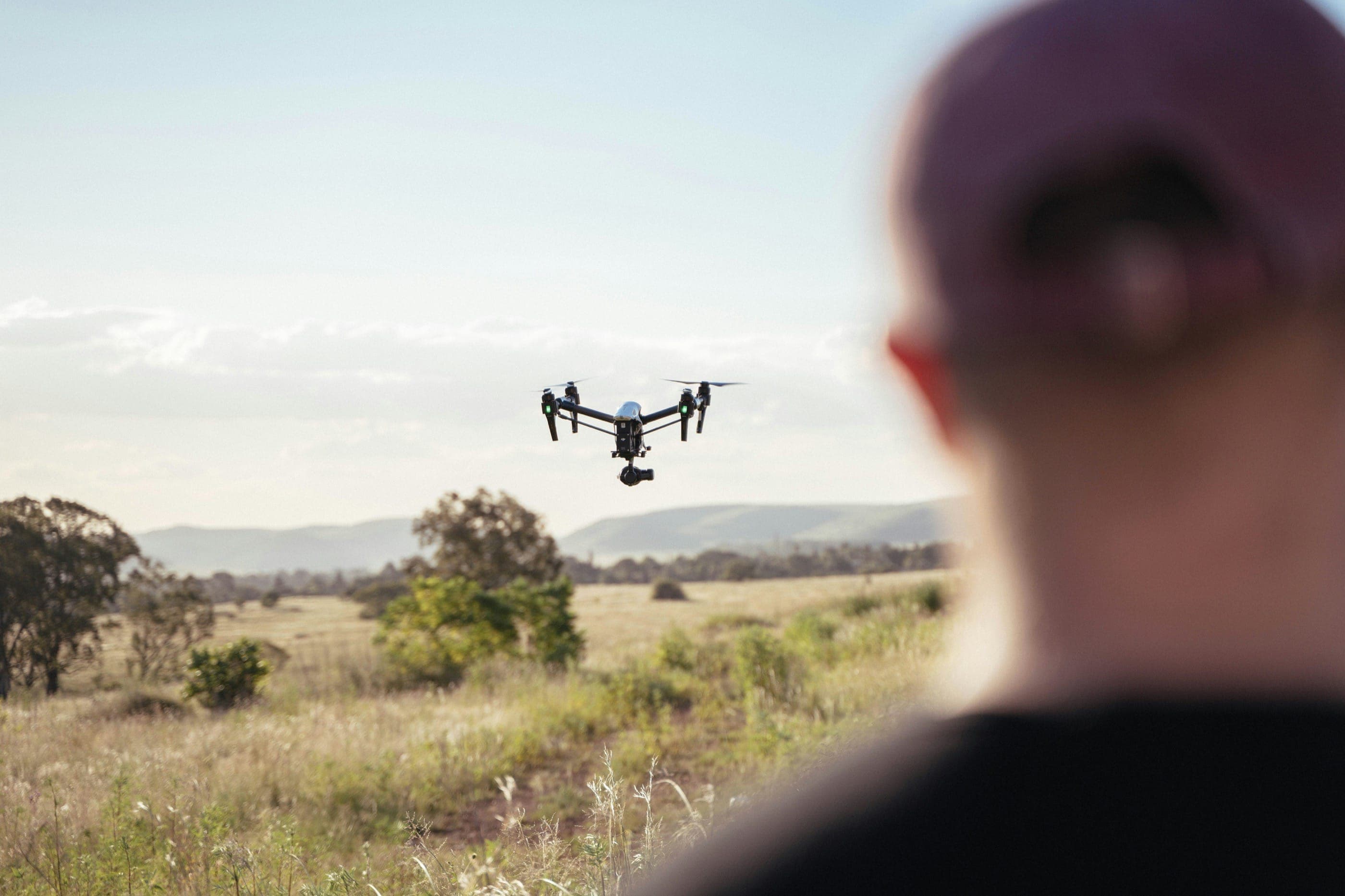
On a modern film set, the helicam operator works at the intersection of aviation and cinematography. They operate camera systems mounted inside or beneath manned helicopters using gyro-stabilized platforms such as the Tyler Mount, Wescam MX series, or Shotover K1. On lower-budget productions, the helicam operator may also pilot or oversee a heavy-lift drone system carrying cinema-grade cameras—though drone specialists are increasingly a separate role.
The helicam operator reports directly to the director of photography (DP) and coordinates closely with the helicopter pilot, flight coordinator, and aerial unit director. Their primary responsibility is executing camera movements in three-dimensional airspace—translating the director's creative vision into shots that would be impossible from the ground.
Where the Helicam Operator Fits in the Camera Department
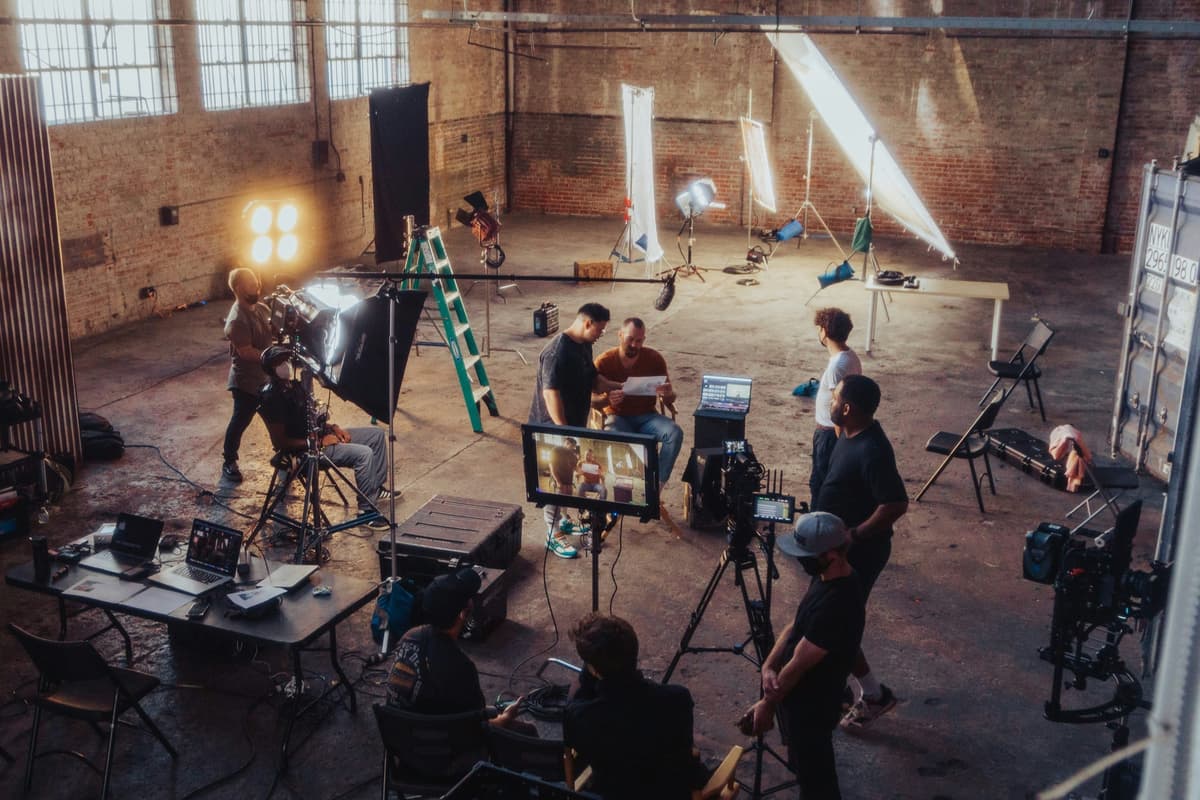
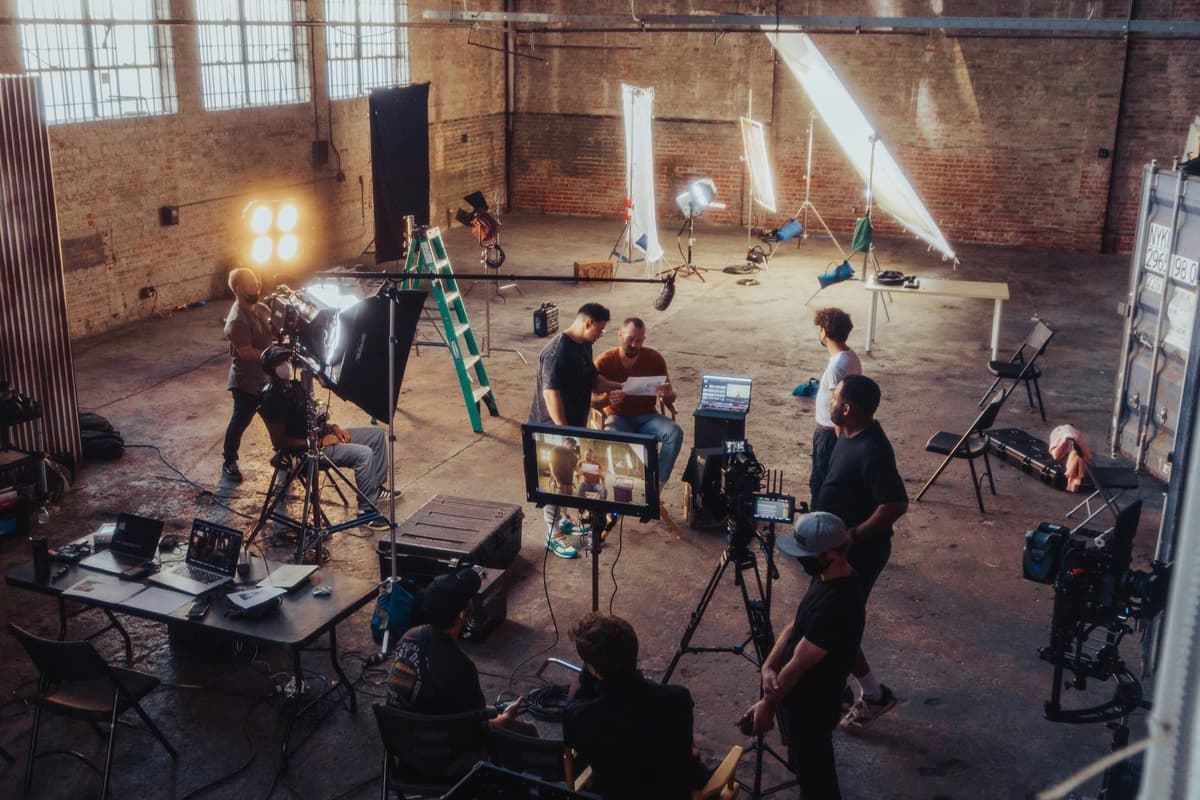
The helicam operator is a subset of the broader camera operator classification under Saturation.io's film crew structure. On major studio productions, the aerial unit operates as a separate second unit with its own chain of command. On smaller productions, the helicam operator integrates directly into the main camera department, sharing equipment trucks and coordination workflows with the A-camera and B-camera crews.
Because aerial work requires aviation permits, FAA coordination (in the US), and specialized insurance, helicam operators often operate through their own production companies or as independent aerial cinematography vendors brought in for specific shooting days rather than as full-time crew members hired for the entire production.
The Evolution from Helicam to Drone
The original Helicam—a remote-controlled miniature helicopter developed in the late 1980s—was among the first tools to give filmmakers affordable aerial shots without requiring a full-size helicopter. Productions including Bridget Jones's Diary and 24 Hour Party People used the Helicam to capture fluid aerial perspectives previously available only to big-budget studios.
As drone technology matured through the 2010s, the helicam concept expanded to include multi-rotor UAV platforms carrying cinema cameras. Today, a helicam operator may work with manned helicopters, unmanned aerial vehicles (UAVs), or hybrid rigs—depending on the production's budget, the shot requirements, and applicable airspace regulations.
Role & Responsibilities
Core Responsibilities of the Helicam Operator
The helicam operator's job begins long before the cameras roll. Pre-production involves extensive planning: scouting locations from the air, calculating sun angles and flight windows, coordinating with the production's location manager and aviation coordinator, and obtaining the necessary FAA waivers, local permits, and airspace authorizations required for aerial filming in controlled or restricted zones.
Camera Operation and Gimbal Control
During production, the helicam operator is responsible for operating the camera system while airborne. On manned helicopter shoots, this typically means controlling a gyro-stabilized gimbal—such as a Wescam MX-15, Shotover F1, or Tyler Camera Systems mount—remotely from inside the aircraft or via a remote head that decouples camera movement from the helicopter's motion.
The gyro-stabilized mount isolates the camera from the vibrations and attitude changes inherent to rotary-wing flight. The operator uses joystick controls to pan, tilt, roll, and zoom the camera independently of the aircraft's direction of travel—enabling smooth, fluid movements even during high-speed passes, banking turns, or descents.
Coordination with the Pilot and DP
The helicam operator functions as the link between the aviation team and the creative team. They translate the DP's shot requests—often described in ground-level terms—into specific headings, altitudes, and speeds for the pilot. Clear, concise communication via intercom is critical: the operator calls out "camera ready," "speed up," "come left," and "cut" in real time while monitoring the live video feed on a small onboard monitor.
On set, the ground team—typically including the DP, director, and a video village operator monitoring the downlinked feed—provides notes between takes. The helicam operator relays adjustments to the pilot and refines the shot until it meets the creative brief. This triangular communication loop between director, operator, and pilot is one of the most demanding coordination challenges in production.
Equipment Setup and Rigging
Before flight, the helicam operator oversees the mounting, calibration, and testing of the camera system. This includes:
- Balancing the gimbal to compensate for the chosen lens and camera body weight
- Calibrating gyroscopic sensors and confirming stabilization performance on the ground
- Testing the downlink video signal to ensure the ground team can monitor the shot
- Verifying lens focus marks and iris settings for the lighting conditions at altitude
- Confirming all mounting hardware is secured to aviation standards
Safety Protocols and Risk Management
Aerial film work carries inherent risks that ground-based camera work does not. The helicam operator is responsible for maintaining safety standards both in the air and around the landing zone. This includes:
- Conducting pre-flight safety briefings with all ground crew within the helicopter's operating radius
- Establishing clear communication protocols with the pilot for emergency procedures
- Maintaining awareness of weather changes, including wind speed, visibility, and approaching cloud cover
- Ensuring all crew near the aircraft wear appropriate PPE and observe rotor clearance zones
- Adhering to FAA regulations for minimum safe altitudes over people and structures (typically 500 feet above obstructions under Part 91)
- For drone operations: maintaining visual line of sight (VLOS) requirements or coordinating waivers for beyond visual line of sight (BVLOS) operations under Part 107
Post-Flight Data Management
After each flight, the helicam operator manages the footage offload, labels camera cards with take numbers and scene references, and communicates with the DIT (digital imaging technician) to ensure aerial footage is properly logged into the production's dailies workflow. On multi-day aerial shoots, they also maintain equipment logs, document battery cycles, and schedule maintenance with equipment vendors.
Skills Required
Core Technical Skills
A successful helicam operator combines the technical expertise of a camera operator with a working understanding of aviation—a rare combination that takes years to develop.
Camera Operation and Cinematographic Judgment
At the foundation, the helicam operator must be a skilled camera operator capable of assessing exposure, frame composition, lens selection, and focus—often in rapidly changing conditions at altitude. They must understand how lens focal lengths affect the apparent speed of movement from the air (wide lenses accelerate apparent motion; long lenses compress it), how altitude and distance affect depth of field, and how the quality of available light changes throughout the shooting day in ways that differ from ground-level experience.
Gyro-Stabilized Mount Operation
Proficiency with gyro-stabilized camera platforms is the defining technical skill of a helicam operator. The most widely used professional systems in film production include:
- Wescam MX-15 / MX-10: Multi-sensor stabilized camera systems with six-axis stabilization, widely used on features and high-end commercial work. Known for their exceptional stabilization performance at long focal lengths.
- Shotover F1 / K1: Six-axis gyro-stabilized aerial camera systems compatible with cinema cameras up to IMAX format. The F1 is a smaller, more versatile system; the K1 handles heavier camera packages.
- Tyler Camera Systems mounts: Legacy helicopter mounts developed by Nelson Tyler that became industry standards in the 1970s and 1980s. Still in use on some productions and relevant as the historical foundation of helicopter cinematography.
- DJI Zenmuse / Freefly Alta systems: UAV-based gimbals for drone productions, ranging from prosumer (Zenmuse X9) to professional heavy-lift configurations (Freefly Alta X with Arri Alexa Mini LF).
Aerial Communication and Crew Coordination
Communication in an aerial environment is technically demanding. The helicam operator must transmit clear, concise instructions to the pilot via intercom while simultaneously monitoring the camera output, tracking the subject, and listening to direction from the ground team via radio. They must translate cinematic language—"pull back and rise to reveal the city"—into specific aviation instructions—"climb to 800 feet, slow to 40 knots, heading 270"—without losing time or clarity.
Visual Storytelling from the Air
The helicam operator must possess a strong cinematic eye. Aerial shots serve specific narrative purposes: establishing geography, conveying scale and isolation, creating a sense of surveillance or freedom, or providing a dramatic reveal. The operator must anticipate the action below, pre-position the aircraft, and time the camera movement to land precisely on the compositional moment the director envisions—often with only one or two passes available before light changes or logistical constraints intervene.
Weather Assessment and Flight Planning
Helicam operators develop practical meteorological skills—reading cloud formations, assessing wind speeds at altitude versus on the ground, understanding how heat haze affects image quality through long lenses, and recognizing when weather conditions are approaching the limits of safe operation. Calling off a planned shoot due to unsafe conditions is one of the most important decisions an aerial operator makes, and it requires both technical judgment and the professional authority to communicate it clearly to producers who may be under budget pressure.
Safety and Risk Management
Aerial production carries risks that require systematic management. Helicam operators understand aviation safety principles, adhere to FAA regulations, maintain clear exclusion zones for ground crew during takeoff and landing, and establish emergency communication protocols with the pilot before every flight. On drone productions, this extends to battery management, obstacle avoidance, and VLOS compliance.
Post-Production Collaboration
Increasingly, helicam operators collaborate with VFX supervisors on shots that combine practical aerial footage with digital extensions. Understanding how aerial plates are used in visual effects compositing—including the importance of locked horizon lines, consistent exposure, and clean-plate passes—makes the operator a more effective collaborator in the modern pipeline.
Salary Guide
Helicam Operator Salary and Day Rates
Helicam operators typically work as freelancers or through their own aerial production companies, billing on a day rate basis rather than drawing an annual salary. Rates vary significantly by production type, budget level, geographic market, and whether the operator provides their own equipment package.
Union vs. Non-Union Rates
On union productions covered by IATSE Local 600, camera operators work under collectively bargained rate minimums. As of recent contract cycles, the minimum daily rate for a camera operator under IATSE agreements is approximately $527 for an eight-hour day, scaling to approximately $922 for a twelve-hour production day when overtime premiums are applied. Helicam operators working as union employees on major studio features would fall under these minimums as a floor—not as a ceiling.
In practice, specialized aerial operators command rates well above union minimums because of the rarity of their skill set, the capital cost of their equipment, and the risk premium associated with aviation operations. On studio feature films, a helicam operator providing their own gyro-stabilized helicopter package may negotiate an all-in rate that covers both their personal service fee and equipment rental, with total daily billings ranging from $5,000 to $20,000 or more depending on the complexity of the system and the number of flight hours required.
Day Rates by Production Type
- Independent film (non-union, drone-based): $750–$1,500 per day for operator services; equipment rental billed separately at $500–$2,000 per day depending on drone system.
- Mid-budget feature film (manned helicopter, operator-only): $1,500–$3,000 per day for the operator's personal fee, with helicopter, mount, and crew costs billed through the aerial company at $8,000–$25,000 per flight day.
- Studio feature film (full helicopter package, Wescam/Shotover system): All-in day rates of $15,000–$40,000+ covering the helicopter, gyro mount, operator, engineer, and pilot. The operator's personal rate within that package is typically $2,500–$5,000 per day.
- Television commercials: Aerial DPs and operators on high-end commercials often earn $2,000–$4,000 per day for their personal services, with total aerial packages ranging from $10,000–$30,000 per shooting day.
- Documentary and news: Rates are generally lower, with drone-based aerial operators billing $500–$1,200 per day on documentary productions.
Experience Tiers
- Entry-level (0–3 years aerial experience): Drone operators with FAA Part 107 certification typically bill $500–$900 per day. Most work is on lower-budget commercial and industrial projects.
- Mid-career (4–10 years, mixed helicopter and drone experience): Operators with credits on network television and mid-budget features typically bill $1,500–$3,000 per day for their personal service fee.
- Senior / established (10+ years, major studio credits): Top-tier aerial DPs and helicam operators with credits on major studio films bill $3,000–$6,000+ per day for personal services, exclusive of equipment.
Annual Earning Estimates
Aerial camera work is inherently project-based, and most helicam operators do not work 250 days per year. A realistic estimate for a mid-career operator working 80–120 days annually falls in the $120,000–$250,000 range when personal rates and equipment rental income are combined. Top aerial cinematographers working consistently on major productions can earn significantly more. According to the Bureau of Labor Statistics, the median annual wage for camera operators in motion picture and video industries was approximately $68,810 as of May 2024 (BLS Occupational Employment and Wages, SOC 27-4031)—a figure that understates specialized aerial operators who bill at premium rates and own their own equipment.
Equipment Ownership as Income Multiplier
One of the most significant income variables for helicam operators is equipment ownership. Operators who own professional drone systems (DJI Inspire 3, Freefly Alta X) or hold partnerships in helicopter and gyro-mount packages earn equipment rental income on top of their personal service fee. A single Shotover F1 system rents for approximately $2,500–$5,000 per day, and ownership of such equipment can meaningfully increase annual earnings over and above personal day rate income.
Frequently Asked Questions
Frequently Asked Questions: Helicam Operator
What is the difference between a helicam operator and a drone operator?
A helicam operator traditionally refers to a camera operator working from a manned helicopter using a gyro-stabilized camera mount such as a Wescam, Shotover, or Tyler Mount system. A drone operator uses a remotely piloted UAV (unmanned aerial vehicle) to carry the camera. The line has blurred as drone technology matured—many aerial cinematographers now work with both platforms and refer to themselves as helicam or aerial camera operators regardless of which system they use on a given project. The key distinction is the platform: manned helicopter work involves aviation certification requirements and produces a different category of shot (long range, high altitude, cinematic scale) than most consumer or prosumer drone work.
Do you need an FAA license to work as a helicam operator?
It depends on the platform. For drone-based (UAV) aerial work in the United States, commercial operators require an FAA Remote Pilot Certificate under Part 107. The exam is offered at FAA-approved testing centers and must be renewed every 24 calendar months. For manned helicopter operations, the operator is typically a passenger in the aircraft—the helicopter pilot holds the FAA Airman Certificate. However, the aerial unit must still comply with FAA regulations governing film flights, airspace authorizations, and waivers for operations in controlled airspace. Productions frequently hire an aviation coordinator to manage FAA permitting on large aerial shoots.
Which is better for film production—a helicopter or a drone?
Each platform excels at different types of shots. Manned helicopters excel at long-range, high-altitude, wide-area coverage: the sweeping establishing shots, high-speed chase sequences, and vast landscape reveals that define epic cinema. Helicopters can fly for hours and carry heavy cinema cameras with large-format lenses. Drones excel in confined spaces, low-altitude close-proximity work, and situations where the proximity of an aircraft would be too dangerous or too disruptive. For productions that need both capabilities, most aerial units deploy helicopter and drone systems on the same day, with the helicam operator or aerial DP coordinating both.
How much does aerial filming cost for an independent film?
Drone-based aerial filming on an independent film budget typically ranges from $1,500–$5,000 per shooting day when combining operator fees and equipment costs. A professional drone operator with an FAA Part 107 certificate and a cinema-grade system (DJI Inspire 3, Freefly Alta X) will generally bill $750–$1,500 per day for their services, with equipment rental adding $500–$2,000 on top. Full manned helicopter packages with gyro-stabilized mounts start around $8,000–$15,000 per flight day and can reach $30,000 or more on major productions. Location, duration, and permit requirements also affect total cost.
What cameras do helicam operators use?
In manned helicopter rigs, gyro-stabilized mounts like the Shotover F1 and Wescam MX-15 support cinema cameras including the Arri Alexa Mini LF, Sony VENICE 2, RED MONSTRO, and—on high-end productions—IMAX-certified camera packages. For drone operations, common cinema configurations include the DJI Inspire 3 with X9 camera, Freefly Alta X carrying an Arri Alexa Mini or RED Komodo, and Sony airborne configurations. Camera choice depends on sensor size requirements, weight constraints of the aerial platform, and the production's deliverable format.
Is aerial camera work covered by IATSE unions?
Yes. Aerial camera operators working on IATSE-signatory productions in the United States can be members of IATSE Local 600 (the International Cinematographers Guild). Many aerial operators, however, work as independent vendors providing both service and equipment—operating outside the traditional crew hire model even on union productions. The specific classification depends on the deal negotiated between the production and the aerial vendor or operator. Productions should clarify union status and coverage with their aerial vendor before contracting.
Education
Educational Background for Helicam Operators
There is no single degree path that leads directly to a career as a helicam operator. Most professionals reach the role through a combination of formal film education, hands-on camera department experience, and specialized aviation or aerial cinematography training.
Relevant Degree Programs
A bachelor's degree in film production, cinematography, or a related field provides the foundational knowledge of camera operation, lighting, and the language of cinema that helicam operators rely on daily. Programs at the American Film Institute (AFI), UCLA School of Theater Film and Television, NYU Tisch School of the Arts, Chapman University Dodge College of Film and Media Arts, and Emerson College all offer production-focused curricula where students develop cinematographic fundamentals.
Some helicam operators come from a broadcast television background, where they developed camera operation skills on ENG (electronic news gathering) or sports production crews before transitioning to aerial work. Others hold aviation-related degrees or certifications in addition to film training.
Camera Department Experience
The typical path begins as a production assistant or camera loader, progressing through second assistant camera (2nd AC) and first assistant camera (1st AC) roles before becoming a camera operator. This progression, which commonly takes five to ten years, builds the technical fluency with camera systems, lenses, and exposure that aerial work demands. Working as a steadicam operator or remote head technician on traditional ground-based shoots is also a common stepping stone, as both involve operating camera systems that decouple lens movement from platform movement—directly applicable skills for aerial gimbal work.
FAA Part 107 Certification
For helicam operators working with UAV systems (drones) rather than manned helicopters, the FAA Remote Pilot Certificate under Part 107 is a mandatory credential for commercial operations in the United States. The exam covers:
- Airspace classifications and operating requirements
- Weather and aeronautical decision-making
- Emergency procedures
- Radio communications and airport operations
- Crew resource management
The Part 107 exam is offered at FAA-approved knowledge testing centers and requires a passing score of 70% or higher. Recurrency requires passing the recurrent aeronautical knowledge test every 24 calendar months. Many productions require Part 107 certification as a minimum credential before allowing any drone-based aerial work on set.
Gyro Mount and Aerial Cinematography Training
Manufacturers of professional gyro-stabilized systems—including Wescam (a division of L3Harris), Shotover, and Tyler Camera Systems—offer operator training programs covering their specific platforms. These courses address gimbal balancing, sensor calibration, remote head operation, and troubleshooting in the field. Operators working with Wescam MX series systems or Shotover F1/K1 gimbals typically complete factory or regional training before operating the equipment on a professional production.
Organizations such as the Aerial Filming Alliance and specialized workshops at industry events like NAB and Cine Gear Expo also provide training in aerial cinematography techniques, aviation coordination, and safety protocols specific to film production.
IATSE Local 600 Membership
On union film and television productions in the United States, aerial camera operators working as employees rather than vendors are typically members of IATSE Local 600 (the International Cinematographers Guild). Joining Local 600 requires meeting experience thresholds established by the union and being sponsored by a current member or hired by a signatory production. Local 600 membership grants access to union minimums, health and pension benefits, and the professional network of the guild.
Last updated April 25, 2026
Budget this role in seconds with Saturation
Rate packs, fringes, and phases turn a crew list into an accurate production budget without the spreadsheet math.
Rate packs
Verified union rates, versioned.


Fringes and markupsRebuilt
Stack them, cap them, and see the split on every line.
PhasesRebuilt
Every column knows its type.
Auto-fill
Rates fill in as you type, from the source you turned on.