What is a Hair Stylist?
Overview
A hair stylist on a film set is a licensed hair professional who creates, maintains, and continuity-checks every hairstyle seen on camera. The role sits within the hair and makeup department, which is led by the key hair stylist (also called the department head for hair). Hair stylists report to the key hair and are assigned to specific cast members, ensuring each actor's look is locked before every take and perfectly replicated across days, weeks, or months of shooting.
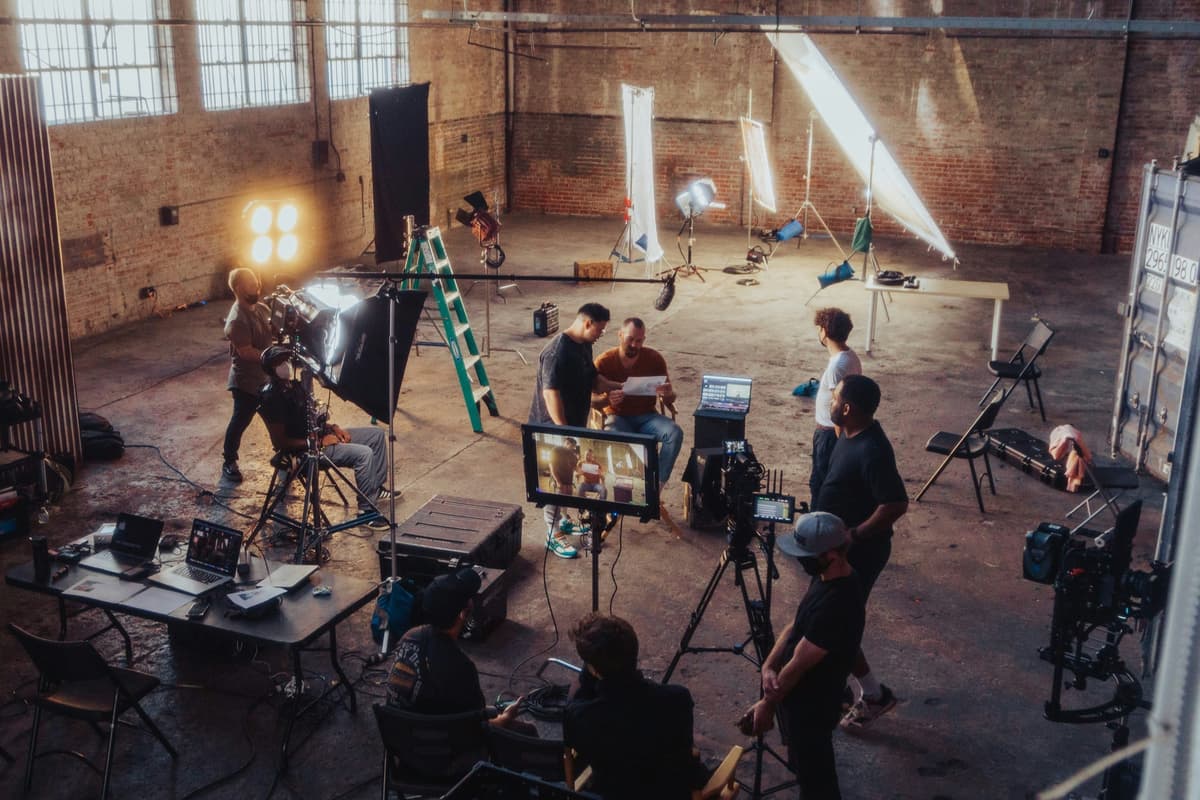
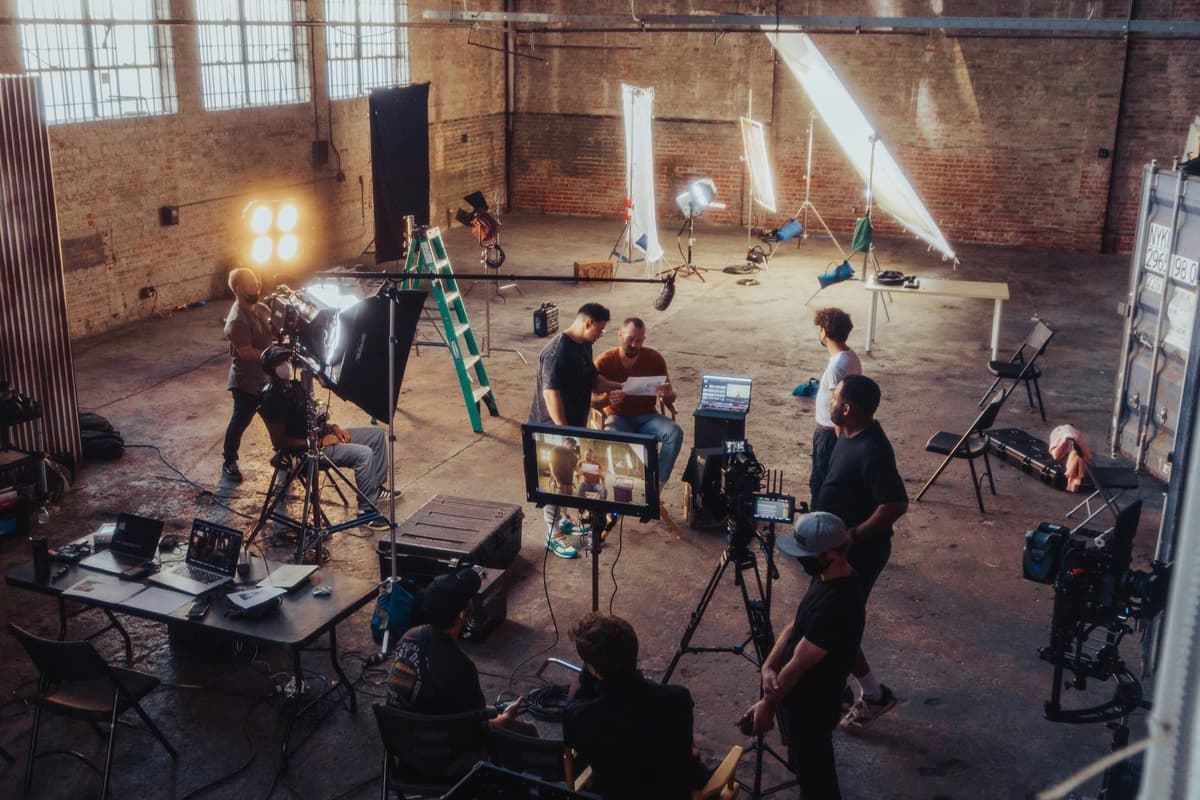
The film set environment is nothing like a salon. A salon stylist works with one client at a time in a controlled space; a film hair stylist may manage five cast members across a 14-hour day, juggling period wigs, sweat-call touch-ups in 95-degree heat, and continuity notes that must match footage shot three weeks earlier. Character appearance is a storytelling tool, and any inconsistency between shots creates a continuity error that can survive all the way to the final cut.
Hair stylists work on features, network and streaming television, commercials, music videos, and branded content. Union productions in the US fall under IATSE Local 706 (the Make-Up Artists and Hair Stylists Guild). Productions that track hair department labor costs, kit rental, and product budgets alongside every other crew expense use Saturation.io to manage it all in one place. For a related department overview, see the makeup artist role, which shares the same department structure and IATSE local.
Role & Responsibilities
Pre-Production: Character Design and Preparation
A hair stylist joins the production during prep, typically one to three weeks before principal photography on a mid-sized feature and three to six weeks on a large studio film or period project. The prep phase is where the entire visual approach to each character's hair is designed, tested, and locked before the cameras roll.
The stylist reads the full script during prep, flagging every scene with hair implications: period settings that require specific styling research, action sequences where wigs must be secured against stunt movement, water scenes that will destroy a blow-out, or aging arcs where a character's hair must evolve across the story. This script breakdown is shared with the key hair and the hair and makeup designer (on larger productions) so every department decision is coordinated.
Character consultations with each assigned actor happen during prep. The stylist learns the actor's natural hair texture, growth patterns, any sensitivities to products or heat, and their own ideas about how the character should look. These conversations shape the final design while respecting the actor's working relationship with their hair. On period productions the stylist researches historical photographs, paintings, and archival footage to build an accurate reference library for each character's era.
Wig and hairpiece sourcing is a critical prep task on any production involving wigs. The stylist works with the key hair to select, order, and prepare wigs from rental houses or wig makers. Each wig is custom-fit to the actor using a head mold or measurements, then cut, colored, and styled to match the approved design. Wig ventilating (hand-knotting individual hairs into a lace base to create a custom hairline) may be required for close-up work where an obvious wig edge would read on camera.
Continuity planning begins in prep, not on set. The stylist creates a continuity bible for each assigned character: a folder or digital record of approved photographs, product lists, tool settings, and notes for every scene. This document is the primary reference tool throughout the shoot.
Production: On-Set Responsibilities
The shoot day for a hair stylist begins in the makeup trailer, often 90 minutes to three hours before the first shot of the day. Each assigned cast member comes through the chair in sequence, beginning with principal actors and working down to supporting cast as the morning progresses. The stylist executes the approved look while managing time pressure, since the AD department is counting every minute until set is ready to shoot.
Continuity photography is one of the most important habits a film hair stylist develops. Before an actor leaves the chair and before every significant scene change, the stylist photographs the hairstyle from multiple angles: front, both profiles, and back. These photographs are stored by scene and date so that any future scene matching the same story day can be replicated exactly, even if months have passed since the original was shot.
On set, the stylist stands by during takes for "last looks," the final check of every actor's appearance immediately before the director calls action. Last looks require moving quickly without disturbing a performance or breaking an actor's concentration. Between takes the stylist monitors for sweat, wind, physical performance, or costume contact that may have disturbed the hair, and corrects it silently and efficiently before the next take.
Period styling demands the most technical precision. Finger waves, victory rolls, pompadours, marcel waves, and other historical techniques must be executed accurately enough to withstand close-up scrutiny while also being durable enough to survive a full shooting day. The stylist maintains period-appropriate tools including vintage irons and setting techniques alongside modern tools that can achieve the same results more reliably.
Wig and hairpiece management on shoot days involves applying and securing each wig using wig tape, bobby pins, and wig clips in combinations that will hold through physical action while still looking natural on camera. The stylist must be able to remove and re-apply wigs quickly between set-ups, especially when an actor is crossing departments to wardrobe or makeup between shots.
Wrap: End of Day and End of Production
At the end of each shoot day the stylist removes all wigs and hairpieces, cleans and re-set them for the next use, inventories products and tools, and updates the continuity bible with any on-set changes that were approved by the director or key hair. Wigs are stored on mannequin heads in protective bags, labeled by character and scene group.
At the end of principal photography the stylist cleans and inventories all rental wigs for return, completes any required production paperwork, and wraps out their kit. On long-running television series the hair stylist may transition directly to the next season without a full wrap, maintaining continuity through the hiatus period.
Skills Required
Period Hair Research and Historical Accuracy
Period productions are where film hair stylists face the steepest technical demands. A stylist working on a 1940s feature must understand how women set and dressed their hair in that era, which tools existed, which products were available, and how the style would have looked after hours of wear by a working-class character versus a wealthy socialite. This requires genuine research: archival photographs, fashion magazines of the period, film footage from the era, and consultation with historical references.
Errors in period styling are visible to any historically literate viewer and can undermine the credibility of an entire production. The standard is high enough that department heads frequently test prospective stylists on their period styling knowledge during interviews for period film work.
Wig Styling, Fitting, and Application
Wig work is a distinct technical skill that not every cosmetology-trained stylist possesses. Film wigs must look completely natural in high-definition close-up, which requires that the hairline be undetectable, the lace be properly tinted to match the actor's skin tone, and the wig be secured well enough to withstand physical performance without shifting.
Core wig skills for film hair stylists include:
- Fitting and blocking a wig to an actor's head shape using a head mold or live fitting
- Cutting and shaping lace-front and full-lace wigs with the same precision as natural hair
- Color-matching wig fiber or human hair to natural hair for partial pieces and extensions
- Applying wigs using wig tape, spirit gum, and bobby pin anchoring systems
- Removing wigs quickly and safely between set-ups without damaging the piece or the actor's hairline
- Storing and re-setting wigs between shooting days to maintain their shape and condition
Continuity Photography and Documentation
A hair stylist with poor continuity habits is a liability on any production. A single missed continuity photograph can result in a shot that cannot be matched when the director calls for an insert or additional coverage weeks after the original scene was filmed. The production's editor will flag the error, and the cost falls back on the department.
Professional continuity technique involves photographing every approved look from front, both profiles, and back before the actor reaches set, and again after any significant scene that might have altered the hair. Notes accompany every photograph: products used, tool settings, pin placement, and any special techniques. Digital continuity apps including Shot Lists and Pouch are used by many stylists to organize photographs by scene and character.
Color Matching and Color Theory
Hair color continuity across a production requires the stylist to match root growth, tone, and highlight patterns precisely. An actor who received a color treatment at the start of a six-month shoot will have visible root growth by the final weeks of production; the stylist must address this through touch-ups timed to each character's story timeline. On productions that age characters across the story, color must evolve in a controlled, intentional direction that reads correctly in the edit.
Actor and Talent Relationship Management
The hair chair is one of the few places on a film set where a creative professional has extended private time with the cast. Actors arrive to the trailer early, often before they are fully in character, and the stylist's manner sets the emotional tone for their day. The best film hair stylists are skilled communicators who can work efficiently without breaking an actor's concentration, provide reassurance when a wig or look is bothering the actor, and escalate legitimate concerns to the key hair without creating conflict.
Managing background actors (extras) is a separate skill. A hair stylist assigned to background may be styling dozens of actors in a single morning, requiring quick assessment of which looks need adjustment and which are already acceptable for camera.
Working Fast Under Production Pressure
Time is money on a film set, and the hair department is never given enough of it. A stylist who takes twice as long as needed to reset a hairstyle between takes costs the production coverage time. The most sought-after film hair stylists are those who work with speed and precision simultaneously, finishing each touch-up before the AD calls last looks without sacrificing the quality that will survive close-up scrutiny.
Product Knowledge and Kit Management
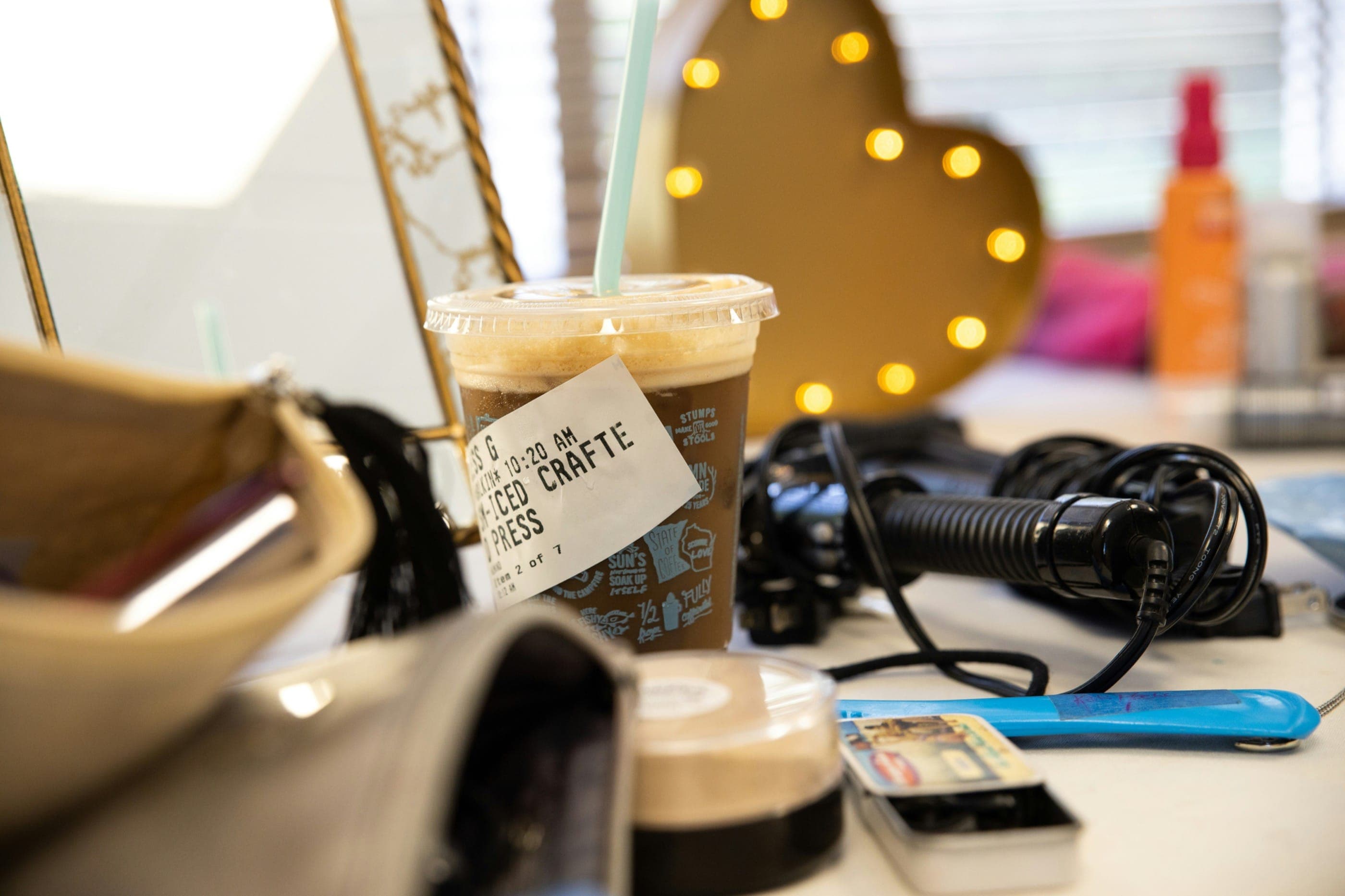
A professional film hair stylist maintains a personal kit of products and tools representing hundreds or thousands of dollars of investment. Deep product knowledge means understanding which products will hold in humidity, which will reflect under film lighting in ways that look greasy on camera, which are safe for use near sensitive skin or eye areas, and which can be quickly removed between scenes requiring a hair change. Stylists stock and personally carry their own kit, which is rented to productions as a kit fee on top of their day rate.
Salary Guide
Film Hair Stylist Salary Overview
Film hair stylist earnings vary widely based on union status, production budget, market, experience level, and the type of project. A non-union stylist on a low-budget independent feature may earn $150 to $250 per day, while a union stylist with department head credits on a streaming series can earn $8,000 or more per week. Understanding the full compensation landscape helps both aspiring and working stylists benchmark their rates and plan their career trajectory.
IATSE Local 706 Union Scale Rates
Under the IATSE Basic Agreement covering major studio theatrical and streaming productions, hair stylists working on Local 706 signatory productions receive negotiated minimum rates. While exact current scales require verification directly with IATSE Local 706, published rate sheets historically place union hair stylists in the following approximate ranges:
- Hair stylist (journeyperson): Approximately $48 to $60+ per hour on studio productions under the current Basic Agreement
- Key hair stylist (department head): Approximately $65 to $85+ per hour, reflecting additional supervisory responsibilities
- Overtime: Union contracts mandate time-and-a-half after 8 hours and double-time after 12 hours, significantly increasing daily gross on long shoot days
- Guaranteed minimum calls: Union contracts typically guarantee 8-hour minimum calls, meaning a stylist earns a full day's minimum even for shorter working days
In addition to hourly wages, union employers contribute to the IATSE Motion Picture Industry Pension and Health Plan on behalf of every covered employee, providing benefits that represent significant additional compensation value.
Non-Union Day Rates by Production Type
On non-union productions, hair stylist rates are individually negotiated. Typical non-union day rate ranges by production type:
- Student and no-budget films: Deferred pay or $0 to $100/day; primarily valuable for building credits and experience
- Low-budget independent features: $150 to $300/day for a journeyperson stylist, $250 to $450/day for a key
- Mid-budget independent features: $300 to $500/day for journeyperson, $450 to $700/day for key
- Commercials (non-union): $400 to $800/day for a stylist, $600 to $1,200/day for a department head; commercial rates often exceed feature film rates due to short schedules and brand budgets
- Music videos: $250 to $500/day depending on label and artist profile
- Corporate and branded content: $300 to $600/day for a stylist
Kit Rental Fees
Beyond their base day rate, most film hair stylists charge a kit rental fee for supplying their personal kit of tools, products, and accessories. Kit rental on non-union productions typically ranges from $50 to $150 per day for a standard kit, and $150 to $300 or more per day for a department head kit that includes professional irons, wigs, specialty products, and a full continuity system. On union productions, kit rental is negotiated separately from the wage scale.
Annual Earnings by Experience Level
Annual income for film hair stylists reflects the project-based, non-salaried nature of the work. Stylists who work consistently throughout the year can earn:
- Entry level (0 to 2 years on set): $25,000 to $45,000 per year, primarily on student films, shorts, and non-union indie projects while building credits
- Mid-career (3 to 7 years, consistent bookings): $50,000 to $85,000 per year on a mix of union and non-union work
- Experienced union stylist (7 to 15 years): $90,000 to $140,000 per year on consistent studio and streaming television work
- Department head / key hair (15+ years, major credits): $130,000 to $200,000+ per year on major features and premium streaming series
ZipRecruiter data for "film hair stylist" positions shows a broad advertised range from approximately $18 to $88 per hour depending on market and production type, with the national average hovering near $35 to $45 per hour for working stylists who book consistently.
Geographic Market Differences
Los Angeles and New York are the primary production markets and carry the highest rates. Rates in Atlanta, Albuquerque, Vancouver, and other growing production hubs have risen significantly as studio and streaming production has expanded into those markets, but they remain somewhat below LA rates, particularly for union work. Right-to-work states often have lower non-union minimums simply due to lower overall cost of living, though competitive stylists can negotiate LA-comparable rates on higher-budget productions shooting anywhere.
Feature Film vs Television vs Commercials
Television, particularly long-running streaming series, often provides the most financially stable work for union hair stylists because a single show provides 10 to 22 weeks of continuous employment per season. Features offer higher per-day prestige but may run for only 30 to 60 shooting days, leaving gaps between projects. Commercials pay the highest per-day non-union rates but are unpredictable in booking frequency. Many experienced stylists maintain a mix across all three formats to balance income stability with creative variety.
Frequently Asked Questions
What does a hair stylist do on a film set?
A hair stylist on a film set creates and maintains the hairstyles for assigned cast members throughout the shoot. Their core responsibilities include designing character looks in pre-production, applying and securing wigs and hairpieces, performing last-looks touch-ups immediately before each take, and documenting continuity with photographs so every hairstyle can be precisely replicated across different shooting days. The role sits within the hair and makeup department and reports to the key hair stylist.
How much does a film hair stylist make?
Film hair stylist earnings range from $150 to $300 per day on non-union independent films up to $60 or more per hour on union studio productions under IATSE Local 706 contracts. Annual income for a working stylist typically falls between $50,000 and $140,000 depending on experience, union status, market, and how consistently they book work. Department heads and key hair stylists on major productions can earn $130,000 to $200,000 per year. Kit rental fees, charged separately from day rates, add $50 to $300 per day to total compensation.
What is IATSE Local 706?
IATSE Local 706 is the Make-Up Artists and Hair Stylists Guild, the union representing hair stylists and makeup artists on union film and television productions in the United States. Membership requires accumulating qualifying hours of covered work, a sponsoring member, and payment of an initiation fee. Union membership provides access to negotiated minimum wages, pension contributions, and health benefits through the IATSE Motion Picture Industry Pension and Health Plan. Most major studio features, network television, and premium streaming productions are covered by Local 706 agreements.
How do you become a hair stylist on a film set?
The standard path involves: obtaining a cosmetology or hair design license in your state, building on-set experience through student films, short films, and low-budget independent productions, assisting working film hair stylists to learn department workflows, and eventually accumulating enough credits and union hours to qualify for IATSE Local 706 membership. Film-specific skills such as wig work, period styling, and continuity photography are learned primarily on the job rather than in cosmetology school.
What is the difference between a key hair stylist and a hair stylist?
The key hair stylist is the department head who oversees the entire hair department, makes all design decisions in collaboration with the director and production designer, and manages the hair team budget. A hair stylist is a crew member who reports to the key hair and is assigned to specific cast members. On small productions the key hair may also serve as the only stylist. On large productions there may be multiple stylists, a key, and one or more assistants.
Do you need a cosmetology license to do hair on a film set?
In most US states, yes. Because film hair stylists are paid professionals applying chemical and thermal treatments to other people, they fall under the jurisdiction of state cosmetology boards. California, New York, Georgia, Texas, and most other major production states require a valid cosmetology license or specialty hair design license. The specific hour requirements and exam structures vary by state. Working without a license on a professional production can expose both the stylist and the production company to regulatory liability.
What is an entry-level job in film hair?
The most common entry point is working as a hair stylist assistant (sometimes called a "second") or styling background actors (extras) under the supervision of the key hair. Student films, short films, music videos, and low-budget independent productions are the most accessible first credits. Most stylists spend two to five years assisting or doing background work before they receive their first principal cast styling credit on a professional production.
Do film hair stylists work with wigs?
Yes, wig work is a core competency for any film hair stylist working on narrative productions. Period films, biopics, fantasy and science fiction projects, and productions where actors' natural hair cannot achieve the required character look all rely heavily on wigs and hairpieces. Wig skills include fitting, cutting, coloring, applying lace-front and full-lace pieces, ventilating (for close-up hairlines), and securing wigs through physical action sequences. Stylists without wig skills are limited in which productions they can work on.
Education
Cosmetology License Requirements
In virtually every US state, working professionally on a film set as a hair stylist requires a valid cosmetology license or a specialty license covering hair design or hairdressing. The license requirement exists because hair stylists use tools and chemicals (heat tools, color, chemical relaxers) on other people for compensation, which is regulated by each state's board of cosmetology.
Cosmetology license requirements vary by state but generally follow a similar structure:
- California: 1,600 hours of cosmetology school, written and practical board exam, application through the California Board of Barbering and Cosmetology
- New York: 1,000 hours of school for a cosmetology license, or 500 hours for a specialty hair design license
- Georgia: 1,500 hours for a full cosmetology license
- Louisiana: 1,500 hours for cosmetology; specialty licenses for hairdressing available at 1,250 hours
- Texas: 1,500 hours for cosmetology; 150-hour operator renewal continuing education required
- Florida: 1,200 hours for full-specialist cosmetology
Many aspiring film hair stylists complete cosmetology school at a community college or vocational program, then pursue film-specific training afterward. The cosmetology license is the foundation, but it does not prepare graduates for the unique demands of a film set. Salon techniques and film techniques overlap in fundamentals but diverge substantially in execution.
IATSE Local 706: The Make-Up Artists and Hair Stylists Guild
Union productions in the United States are covered by IATSE Local 706, the Make-Up Artists and Hair Stylists Guild. Local 706 represents hair stylists, makeup artists, and special effects makeup artists working on theatrical features, television, commercials, and other covered production in Los Angeles, New York, and on location productions under studio agreements.
Joining Local 706 requires accumulating qualifying hours of paid, covered employment. The process typically involves:
- Working on non-union or low-budget union productions to build experience and hours
- Having an existing Local 706 member vouch for your work and professional conduct
- Submitting proof of qualifying days worked and paying the initiation fee
- Once accepted, paying quarterly dues to maintain active membership status
Union membership provides access to negotiated minimum wages, employer-paid pension and health benefits under the IATSE Motion Picture Industry Pension and Health Plan, and the professional standing required to work on major studio productions. Most hair stylists aim for Local 706 membership as a career milestone, though the path there typically takes several years of non-union work first.
Film-Specific Training vs Cosmetology School
Cosmetology school teaches the fundamentals: cutting, coloring, chemical services, and sanitation. Film-specific skills such as period styling research, wig construction and application, continuity photography, and working within the union call-sheet system are rarely covered in any cosmetology curriculum.
Aspiring film hair stylists typically supplement their cosmetology license with:
- Wig workshops: Specialty training in wig ventilating, cutting, and application, often offered by theatrical wig suppliers or independent educators
- Period styling classes: Workshops focused on historical techniques from specific decades, frequently offered through makeup and beauty schools or industry associations
- Film industry assistant programs: Some production companies and talent agencies run informal mentorship arrangements where assistants shadow working stylists
- On-set experience: Student films, short films, music videos, and low-budget independent features are the primary training ground for film-specific workflow
Starting as a Hair Stylist Assistant
Nearly every working film hair stylist started as an assistant. The assistant role is called a "second" or simply a hair stylist assistant, and it involves assisting the key hair and the primary stylists during prep and production. Assistants mix color, prep wigs, handle continuity paperwork, manage the product and tool kit, and step in to style background actors when the principals are occupied.
The assistant path is how stylists build the two most critical career assets: a network of department heads who will hire them when they have an opening, and enough on-set experience to understand how a film hair department actually operates. Most stylists spend two to five years assisting before they are offered their first independent styling credit on a professional production.
Last updated April 25, 2026
Budget this role in seconds with Saturation
Rate packs, fringes, and phases turn a crew list into an accurate production budget without the spreadsheet math.
Rate packs
Verified union rates, versioned.


Fringes and markupsRebuilt
Stack them, cap them, and see the split on every line.
PhasesRebuilt
Every column knows its type.
Auto-fill
Rates fill in as you type, from the source you turned on.