What is a Dolly Grip?
Overview
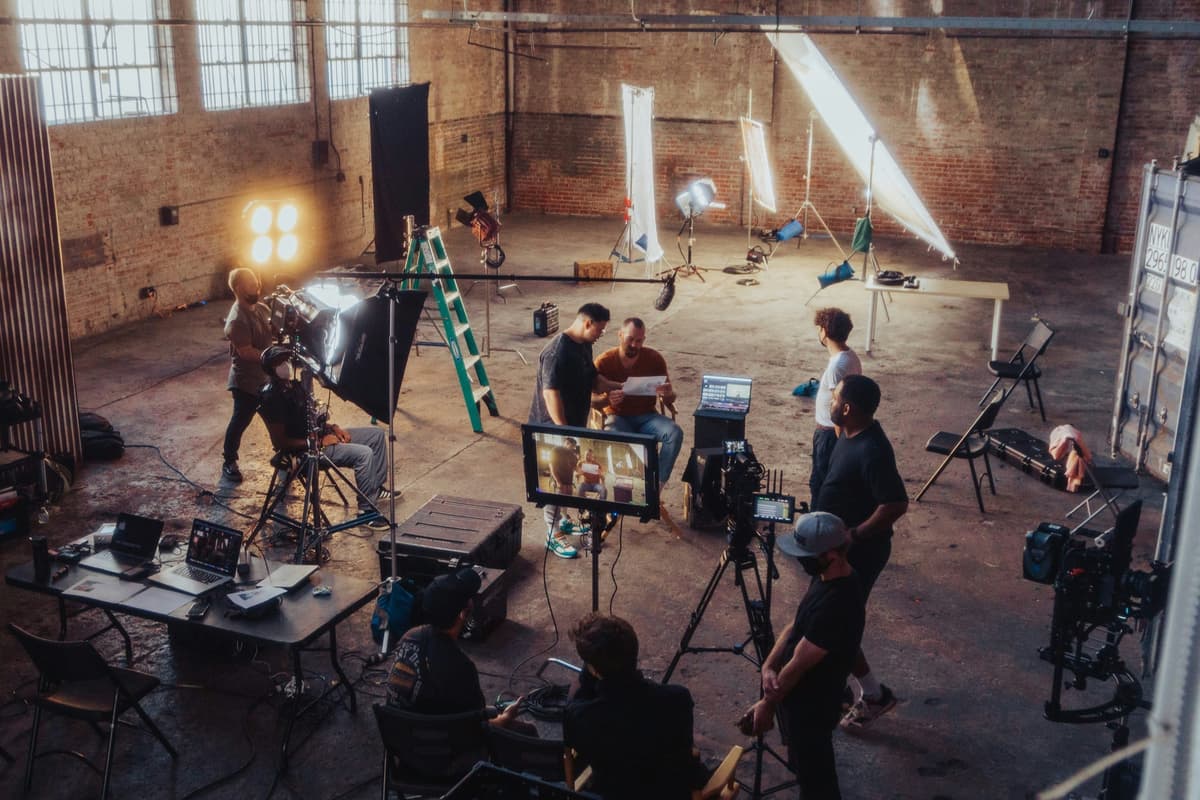
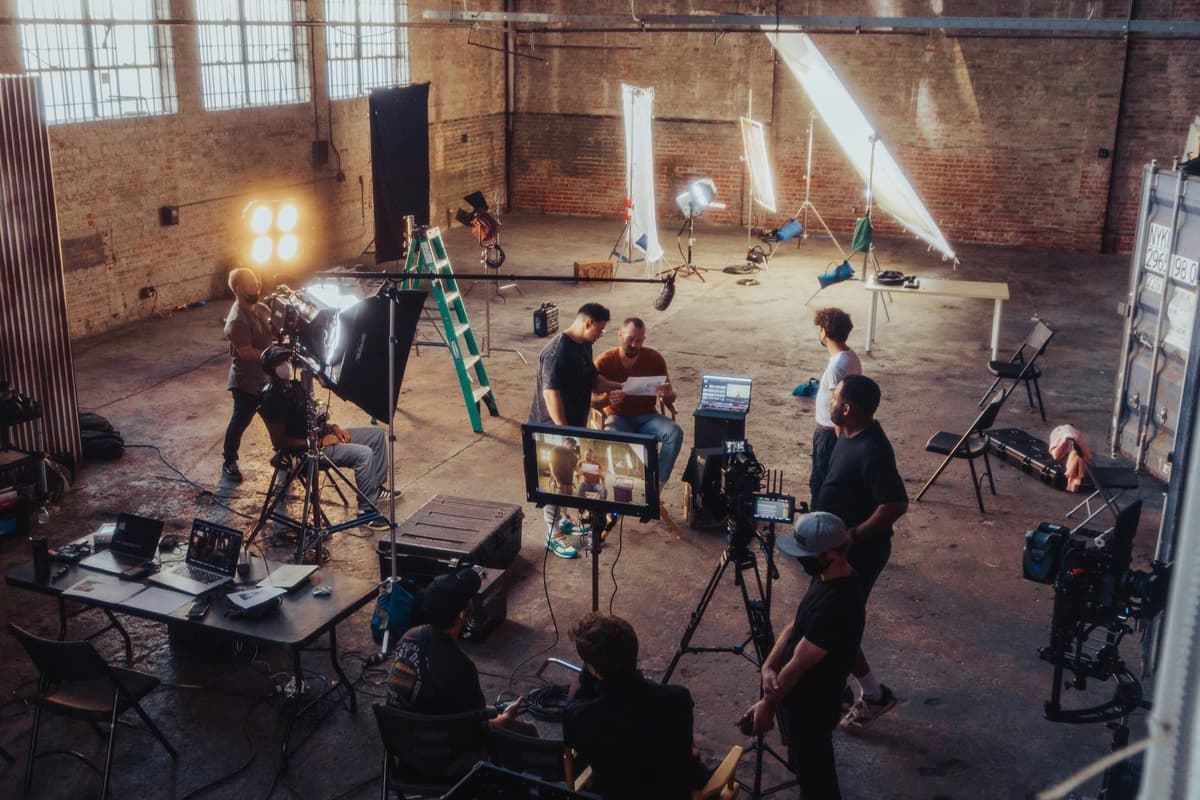
A dolly grip is a specialized camera department technician responsible for placing, leveling, and operating the camera dolly — a wheeled platform that creates smooth, controlled camera movement during filming. Working directly under the key grip, the dolly grip executes tracking shots, boom moves, and crane operations that give cinematographers the precise, fluid images audiences see on screen.
On a union set the dolly grip holds one of the most trusted positions in the grip department. Every tracking shot, every slow push in on an actor's face, and every sweeping crane reveal depends on the dolly grip's hands. The role demands an unusual combination of physical strength, mechanical aptitude, and the near-musical sense of timing that practitioners call "the touch."
Film budgeting software like Saturation.io helps production teams plan and track grip department costs, including dolly package rentals and kit fees, so nothing falls through the cracks before cameras roll.
Role & Responsibilities
What Does a Dolly Grip Do on Set?
The dolly grip's primary job is to operate the camera dolly in a way that makes every camera move feel intentional and invisible. Before a take begins the dolly grip builds the shot from the ground up, and when the director calls action they become an extension of the camera system itself.
Track Laying and Leveling
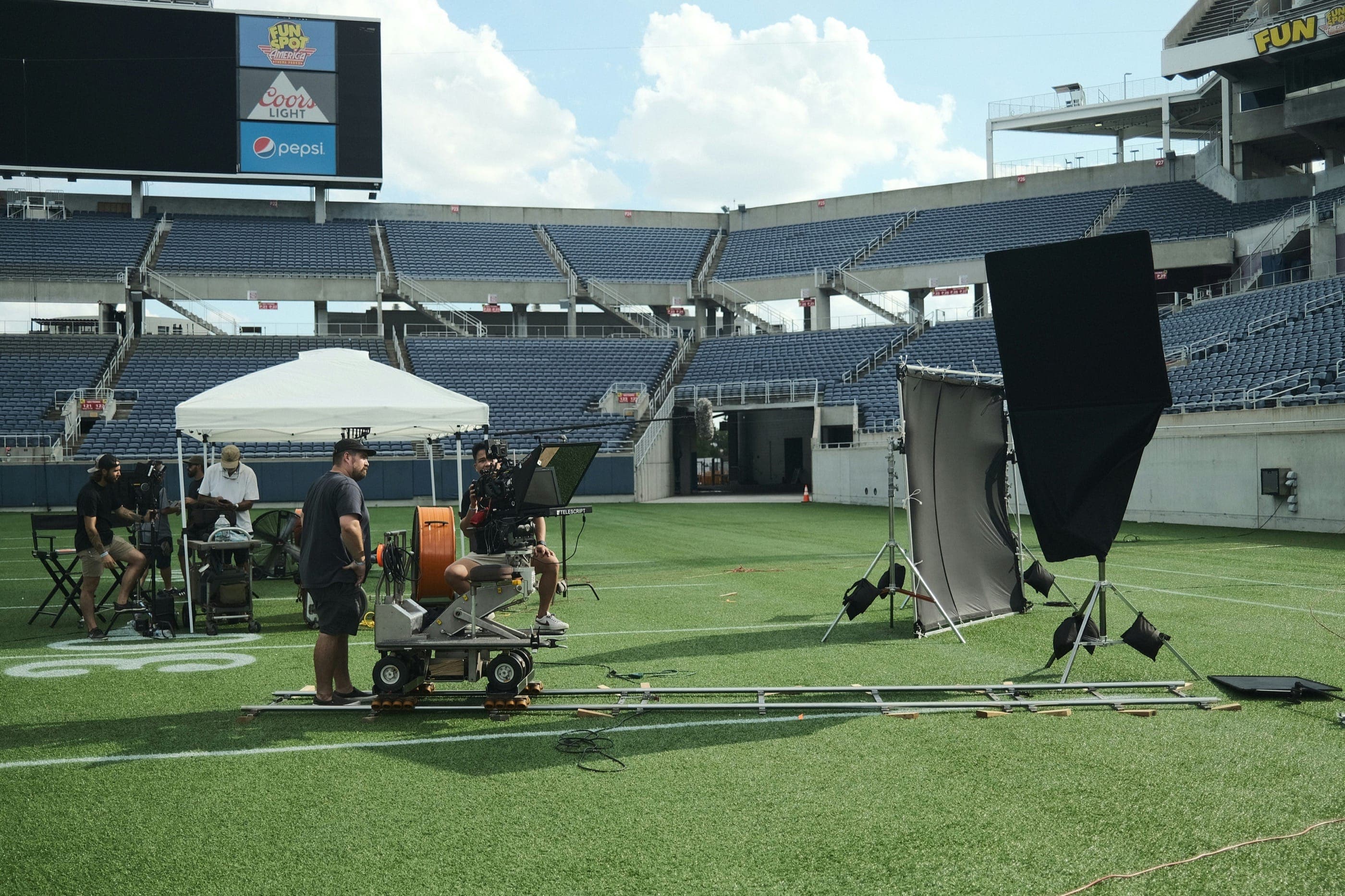
Most dolly moves begin with track. The dolly grip lays, interlocks, and levels sections of straight or curved track across any surface — hardwood stages, gravel parking lots, uneven grass, or concrete. Track is leveled using a bubble level at each joint; even a fraction of an inch of deviation will produce a visible wobble on screen. On off-road locations the dolly grip uses speed-rail or pipe grid as a substitute base before laying track on top. The entire process must happen within the camera department's window, often in under thirty minutes.
Dolly Operation and The Touch
Once the camera is mounted and the shot is rehearsed, the dolly grip pushes or pulls the dolly in sync with actor blocking, focus pulls by the 1st AC, and verbal cues from the camera operator. Experienced dolly grips learn to start and stop moves with a deceleration curve that mirrors natural human eye movement, which is why the best practitioners say the goal is to make the audience forget the camera is moving at all. This intuitive feel is called "the touch" and takes years of production experience to develop.
Booming Up and Down
Virtually every studio dolly has a hydraulic or pneumatic boom arm that raises and lowers the camera head. The dolly grip operates the boom pedal or lever simultaneously with the horizontal push move, creating compound camera moves: a push in combined with a boom up as an actor rises from a chair, for example. Mastering the simultaneous coordination of push speed, boom speed, and the camera operator's pan-and-tilt is one of the defining skills of a seasoned dolly grip.
Crane and Technocrane Operation
On productions that require longer arm extensions or higher vertical range, the dolly grip operates a Technocrane mounted on a dolly base. Technocranes (built by Movietech) range from 18 to 50-foot telescoping arms and are controlled via a remote head at the grip end and a wireless monitor at the camera end. The dolly grip manages the arm extension, column height, and base movement simultaneously while communicating with the remote head operator. Chapman and Fisher also manufacture conventional cranes that the dolly grip operates from the base.
Doorway Dolly and Non-Track Moves
Not every move requires track. The Doorway Dolly is a compact, low-profile platform with pneumatic wheels used on smooth floors for handheld-style tracking shots. The dolly grip pushes the operator and camera through doorways, hallways, and tight spaces where full-size track would be impossible to lay. Skateboard dollies and offset dollies fill similar roles on run-and-gun documentary or reality productions.
Pre-Rigging and Camera Tests
Before a shooting day begins the dolly grip often works alongside the grip and electric departments during a pre-rig day, laying track in advance of company moves, pre-assembling the dolly package, and testing the boom arm range against the shot list. On bigger productions the dolly grip may have a dolly grip trainee who assists with carrying track and maintaining equipment between setups.
Coordination with the Camera Department
The dolly grip works more closely with the camera department than with any other group. Before each take they communicate with the 1st AC about focus marks on the floor, with the camera operator about start and end framing, and with the DP about the intended feel of the move. On complex shots the dolly grip and operator rehearse the move together multiple times before any film or digital media rolls. This communication loop is critical: a bad dolly move wastes everyone's time and cannot always be fixed in post-production.
Equipment Maintenance and Safety
The dolly grip is responsible for keeping the dolly package in working order throughout the production. Wheels are cleaned of debris and lubricated to prevent squeaking. Boom arm hydraulics are checked for leaks before use. All camera mounts and wedge plates are tested for tightness before the camera is mounted. On location shoots the dolly grip also scouts surfaces for hidden hazards that could derail the dolly mid-take and put the camera at risk.
Skills Required
Equipment Knowledge: Fisher, Chapman, and Beyond
The two dominant dolly platforms in American film and television production are the Fisher 10 and Fisher 11 (Fisher Engineering, Van Nuys, CA) and the Chapman Hybrid (Chapman Leonard Studio Equipment, North Hollywood, CA). Every working dolly grip must know these systems inside out: boom arm range, column extension, hydraulic pressure adjustment, wheel configuration (rubber, pneumatic, or track), wedge plate sizes, and maximum payload capacity. The Fisher 10 is the workhorse of single-camera television drama; the Fisher 11 is preferred for features requiring heavier camera packages. The Chapman Hybrid offers a lower profile and is often used for car rigs and low-angle setups.
Technocrane Operation
The Movietech Technocrane is an extendable telescoping crane arm that mounts on a standard dolly base. Arms range from 18 feet to 50 feet of extension. Dolly grips who can confidently operate a Technocrane command significantly higher day rates and are in demand on commercials, music videos, and features that require dynamic aerial-style moves without a helicopter.
Track Laying and Leveling
Track-laying is a mechanical skill that takes time to master. Straight runs require interlocking sections flush, leveling each joint to within 1/16-inch using a digital level or bubble level, and spiking the track to the floor when needed to prevent creep during multiple takes. Curved track requires selecting the correct arc radius (typically 8-foot, 12-foot, or custom), sweeping the curve evenly, and ensuring the dolly's wheelbase clears the curve without binding. On marble, wood, or unfinished concrete, the dolly grip lays protective panels before track to prevent set damage.
Smooth and Controlled Camera Moves
The physical act of pushing a dolly is deceptively simple. Executing a push that starts and stops with an acceleration curve that matches the scene's emotional beat requires practice measured in years, not months. Dolly grips develop proprioceptive memory for how much force is needed to initiate and arrest a move at a given speed. They also learn to read the camera operator's body language during a take, making micro-corrections without verbal communication when the operator subtly shifts weight or adjusts their eyecup pressure.
Synchronization with the 1st AC
One of the most critical skills a dolly grip develops is the ability to move at the precise speed and depth that keeps the subject in focus for the 1st AC. Focus pullers mark the floor with numbered tape markers corresponding to focus distances, and the dolly grip's job is to hit those marks consistently, take after take. On complex moves with multiple focus marks, the dolly grip and 1st AC often hold brief pre-take sync conversations to coordinate timing. This coordination is invisible to the audience and essential to a clean take.
Doorway Dolly and Alternative Platforms
Beyond the studio dolly, an experienced dolly grip is fluent with alternative platforms: the Doorway Dolly for confined spaces, the Skateboard Dolly for extremely low angles, the Western Dolly for outdoor terrain, and speed-rail-based platforms built to custom specifications for unique shots. The ability to select the correct platform for the shot and to build or modify it on the fly when the shot changes separates versatile dolly grips from one-trick operators.
Physical Strength and Stamina
The dolly grip role is among the most physically demanding below-the-line positions in production. A standard grip truck carries dolly track sections weighing 15-25 pounds each, and a full track run might require 20 to 30 sections. The dolly itself (Fisher 10) weighs approximately 230 pounds unloaded, and a loaded camera package with operator riding can push the total past 600 pounds. A 12-hour shooting day may include five to eight full setup relocations, each requiring the full track to be struck and relaid. Dolly grips must maintain physical conditioning to work at this pace over a 40-plus day feature shoot.
Communication and Set Etiquette
A skilled dolly grip speaks the language of the camera department without overstepping departmental lines. They understand shot terminology (tracking shot, push in, pull out, whip pan, crane up, boom down), know when to ask questions versus when to simply execute, and develop the discretion to flag a safety concern with a DP without embarrassing a director in front of the cast. On union sets, the dolly grip also maintains awareness of IATSE work rules, overtime thresholds, and meal break requirements for the crew.
Problem-Solving Under Pressure
Film sets are dynamic environments where the shot that was planned yesterday changes overnight. A dolly grip must be able to adapt track layouts on the fly, improvise non-standard platforms when the intended equipment is unavailable, and find solutions to surface problems without delaying camera. This improvisational competence, built from wide experience across different formats and locations, is one of the most valued qualities in a senior dolly grip.
Salary Guide
Dolly Grip Salary Overview
Dolly grip compensation varies widely based on union status, market, production format, and individual experience. According to ZipRecruiter data (February 2026), the national average annual salary for a dolly grip in the United States is approximately $82,500 to $83,000, with top earners reaching $84,000 or more annually. Hourly equivalent rates for full-time union dolly grips in major markets typically fall between $38 and $65 per hour, depending on the applicable union agreement and production type.
IATSE Local 80 Scale Rates (Los Angeles)
In Los Angeles, union dolly grips who are members of IATSE Local 80 (Studio Grips) work under the Basic Agreement negotiated with the Alliance of Motion Picture and Television Producers (AMPTP). Studio-scale rates for grips, including dolly grips, are among the highest in the country. For the 2025-2026 contract period, Local 80 minimum scales for camera grips start at approximately $504 per day on studio features and major network productions. Weekly guaranteed rates for a 5-day week typically exceed $3,700 at scale. These rates do not include overtime, which begins after 8 hours on studio shoots and adds 1.5x or 2x the hourly rate depending on hours worked.
IATSE Local 52 Scale Rates (New York)
New York dolly grips working under IATSE Local 52 follow a separate scale schedule negotiated with New York-area production companies and studios. New York rates are broadly comparable to Los Angeles, with differences in specific classifications and zone pay for location work. Feature film rates in New York typically range from $450 to $500-plus per day at scale for experienced dolly grips, with streaming productions (Netflix, Apple TV+, HBO) generally paying at or above scale due to competitive demand.
Entry-Level: Swing Grip and Dolly PA
Entry-level workers in the grip department who aspire to dolly grip positions typically start as swing grips or grip PAs, earning between $18 and $25 per hour on non-union productions, or minimum IATSE scale as a trainee on union shows. At this stage, compensation is secondary to accumulating on-set hours and building a relationship with a working dolly grip willing to mentor. Non-union features and independent productions in secondary markets may pay grip PAs a flat rate of $150 to $250 per day regardless of hours.
Mid-Career: Established Dolly Grip
A dolly grip with three to seven years of production experience and a union card can expect to earn $55,000 to $80,000 per year in total compensation, factoring in a mix of feature film, television, and commercial work. In Los Angeles and New York, mid-career dolly grips on steady network drama or streaming series work regularly earn above $80,000 annually when production schedules run 40-plus shooting days per project. Kit rental fees for a dolly grip's personal track and accessories add a supplementary income stream.
Senior: Established Feature Film Dolly Grip
Experienced dolly grips who work consistently on major studio features or long-running television productions can earn $90,000 to $120,000 per year or more in total compensation when overtime, kit rental, and pension contributions are included. Top dolly grips attached to A-list directors, those who follow a specific director from project to project, develop a long-term working relationship that provides career stability and premium rates. Some senior dolly grips with extensive Technocrane experience command day rates of $750 to $1,000-plus on commercials, where budgets are higher and schedules are compressed.
Non-Union and Independent Productions
Outside of major union markets, dolly grip rates vary enormously. On student films and micro-budget productions, a dolly grip may work for deferred pay or a flat rate of $100 to $200 per day. On mid-budget independent features (production budgets of $1M to $10M), a non-union dolly grip typically earns $350 to $500 per day, sometimes with a small kit rental allowance. Signing on to a non-union project while holding a union card can result in penalties from the applicable IATSE local, so career-stage dolly grips must weigh these decisions carefully.
Commercial and Music Video Work
Commercial production typically pays dolly grips at or above feature film rates, with day rates often in the range of $600 to $900 per day for experienced operators on national campaigns. Commercial shoots are usually 1 to 5 days in duration, requiring the dolly grip to be fully prepared on day one with no rehearsal period. Music videos follow a similar structure, though rates may be lower on independent artist projects and higher on major label productions where the creative team demands cinematic production value.
Kit Rental Income
Many experienced dolly grips own their own dolly track and accessories, including curved track sections, speed-rail, wedge plates, Mitchell mounts, and offset arms, and rent this kit to productions as a separate line item. Kit rental rates for a comprehensive personal track package typically range from $75 to $200 per day, added on top of the individual's day rate. For a working dolly grip completing 150-plus shooting days per year, kit rental can add $15,000 to $25,000 to annual gross income.
Geographic Market Comparison
Los Angeles and New York command the highest rates due to union density and the concentration of major studio production. Secondary markets such as Atlanta, Albuquerque, Chicago, New Orleans, and Vancouver (Canada) have grown significantly due to state and provincial tax incentive programs, and dolly grips in those markets increasingly earn near-LA rates on major streaming productions. Regional non-union markets still pay substantially below union scale, often in the $250 to $400 per day range for experienced dolly grips.
Comparison with Related Grip Roles
The dolly grip typically earns more than a swing grip or best boy grip assistant, but may earn less than a key grip on productions where the key grip commands a premium rate for department head responsibilities. On smaller productions, the key grip and dolly grip rates may be equivalent. The Bureau of Labor Statistics reported a median annual wage of $68,810 for camera operators in May 2024, a figure that underrepresents experienced union dolly grip earnings in major markets where scale alone exceeds that figure.
Frequently Asked Questions
What does a dolly grip do on a film set?
A dolly grip places, levels, and operates the camera dolly, a wheeled platform that allows for smooth, controlled camera movement during filming. Responsibilities include laying track, operating the boom arm to move the camera vertically, running crane systems such as the Technocrane, and coordinating every camera move in real time with the camera operator and 1st AC. The dolly grip works directly under the key grip and is present for every camera setup that involves a dolly or crane move.
How much does a dolly grip make?
Dolly grip salaries range from approximately $18 to $25 per hour for entry-level non-union work up to $750 to $1,000-plus per day for senior dolly grips on commercial shoots. In Los Angeles, union dolly grips working under IATSE Local 80 earn approximately $504 per day at scale on studio features, with annual totals of $80,000 to $120,000-plus when overtime and kit rental are included. ZipRecruiter data from February 2026 shows a national average in the $82,500 to $83,000 range annually.
What is the difference between a dolly grip and a key grip?
The key grip is the department head responsible for all grip equipment and rigging on a production, managing the full grip crew and reporting to the director of photography. The dolly grip is a specialized operator who reports to the key grip and focuses exclusively on camera dolly and crane operation. On small productions, the key grip may also operate the dolly, but on mid-size and large productions these are distinct positions with different rates and responsibilities. See our full key grip guide for more detail on how these roles interact.
How do you become a dolly grip?
Most dolly grips enter the industry as grip PAs or swing grips on low-budget productions, spending several years carrying track, maintaining equipment, and observing experienced operators. In Los Angeles, the formal path runs through IATSE Local 80's apprenticeship program, which requires industry experience and passing a competitive review process. Film school programs can accelerate initial exposure, but on-set hours are the primary credential. Attending dolly manufacturer clinics from Fisher Engineering and Chapman Leonard is also valuable for technical depth.
Is the dolly grip in IATSE Local 80?
In Los Angeles, yes. Dolly grips working on studio features, major network dramas, and most streaming productions in the LA area are covered by IATSE Local 80 (Studio Grips). New York productions are covered by IATSE Local 52. Union membership provides access to negotiated scale rates, health insurance, pension contributions, and grievance procedures. Non-union dolly grips may work on non-signatory productions but do not receive these benefits.
What equipment does a dolly grip own?
Many working dolly grips own a personal kit of track and accessories that they rent to productions separately from their day rate. A typical personal kit might include straight and curved track sections in various lengths, wedge plates and Mitchell mounts, offset arms, baby pins, sandbags, and specialized tools for track repair and adjustment. Owning a dolly itself is less common, as production companies rent full dolly packages from grip houses. Kit rental from a personal track package typically earns $75 to $200 per day in extra income.
Is being a dolly grip physically demanding?
Yes. The dolly grip role is one of the most physically demanding positions in the grip department. Track sections weigh 15 to 25 pounds each, and a full track setup may require 20 to 30 sections. A loaded dolly with camera package and riding operator can exceed 600 pounds. On a 12-hour shooting day with five to eight company moves, a dolly grip may carry track, strike and relay full setups, and physically push hundreds of pounds of equipment across a wide range of surfaces. Physical conditioning is not optional for sustained career longevity in this role.
What is the entry-level path to becoming a dolly grip?
The entry-level path typically starts as a grip PA or swing grip on student films, non-union shorts, and low-budget indie productions. At this stage the goal is to accumulate on-set hours, develop relationships with working dolly grips who may invite you to help on their shows, and build a reputation for reliability and physical work capacity. In union markets, collecting enough vouchers to qualify for IATSE membership is the next milestone. Expect two to seven years in swing roles before operating the dolly independently on professional productions, depending on market and networking success.
Education
Do You Need a Degree to Become a Dolly Grip?
No formal degree is required to work as a dolly grip. The vast majority of working dolly grips entered the industry through apprenticeships, grip PA work, and years of on-set experience rather than through a film school curriculum. That said, the right education can accelerate the learning curve and open networking doors that pure hustle alone cannot.
The Grip PA to Dolly Grip Pipeline
The most common entry point is working as a grip production assistant (PA) or a swing grip on low-budget productions. In this role you carry track, move equipment, sand floors for the dolly grip, and observe every move being made. Over time, typically two to five years for union markets, you accumulate enough experience to operate the dolly on smaller shoots independently. Many current A-list dolly grips spent three to eight years in swing roles before they were trusted with the dolly on a major feature.
IATSE Local 80 Apprenticeship (Los Angeles)
In Los Angeles, the primary path into union dolly grip work runs through IATSE Local 80 (Studio Grips). Local 80 is the grip union covering studio and location work in the greater Los Angeles area, including major studio lots (Universal, Warner Bros., Paramount, Sony, Disney). The union operates an apprenticeship program that provides on-the-job training, wage scales, and health and pension benefits. Acceptance is competitive and often requires existing industry connections, a verified work history, and passing a physical assessment. New York dolly grips typically work under IATSE Local 52.
Film School as a Foundation
Film school programs at institutions such as AFI, USC School of Cinematic Arts, NYU Tisch School of the Arts, and Chapman University offer hands-on production courses where students operate grip equipment including dollies. While a film degree does not automatically qualify someone to work as a union dolly grip, it provides structured exposure to grip techniques and creates a network of future directors, DPs, and producers who may hire you when they move into professional work.
Community College and Vocational Programs
Many working dolly grips point to community college film production programs as a practical and affordable alternative to four-year institutions. Programs at Los Angeles City College, Santa Monica College, and similar institutions offer hands-on production courses at a fraction of the cost. Some programs have formal equipment access agreements with grip houses, which gives students direct exposure to professional dolly packages.
Dolly Manufacturer Training
Fisher Engineering and Chapman Leonard, the two dominant dolly manufacturers in Hollywood, occasionally offer clinics and training days for grip professionals. These sessions cover the mechanical specifics of their respective dolly designs: weight ratings, boom arm maintenance, track configurations, and Technocrane operation. Attending these sessions signals commitment to the craft and provides direct contact with the manufacturers whose equipment you will operate throughout your career.
Self-Teaching and Informal Training
Many dolly grips are self-taught in the most fundamental sense: they learned by doing, watching, and asking questions on set. Industry blogs, YouTube channels, and forums like Reddit's r/cinematography contain accumulated knowledge from working dolly grips about specific equipment, move techniques, and career advice. The practical knowledge required, how to seat track, how to feather a boom move, how to communicate with a camera operator, ultimately comes from the floor of a sound stage.
Key Certifications and Safety Training
While no government-mandated certification exists specifically for dolly grips, OSHA 10-hour construction safety certification is increasingly required on larger productions, particularly for any work involving cranes or elevated platforms. First aid and CPR certification is also commonly requested by production safety coordinators on SAG-AFTRA signatory shoots. Some studio lots require lot-specific safety orientation before anyone can work on their stages.
Last updated August 31, 2026
Budget this role in seconds with Saturation
Rate packs, fringes, and phases turn a crew list into an accurate production budget without the spreadsheet math.
Rate packs
Verified union rates, versioned.


Fringes and markupsRebuilt
Stack them, cap them, and see the split on every line.
PhasesRebuilt
Every column knows its type.
Auto-fill
Rates fill in as you type, from the source you turned on.