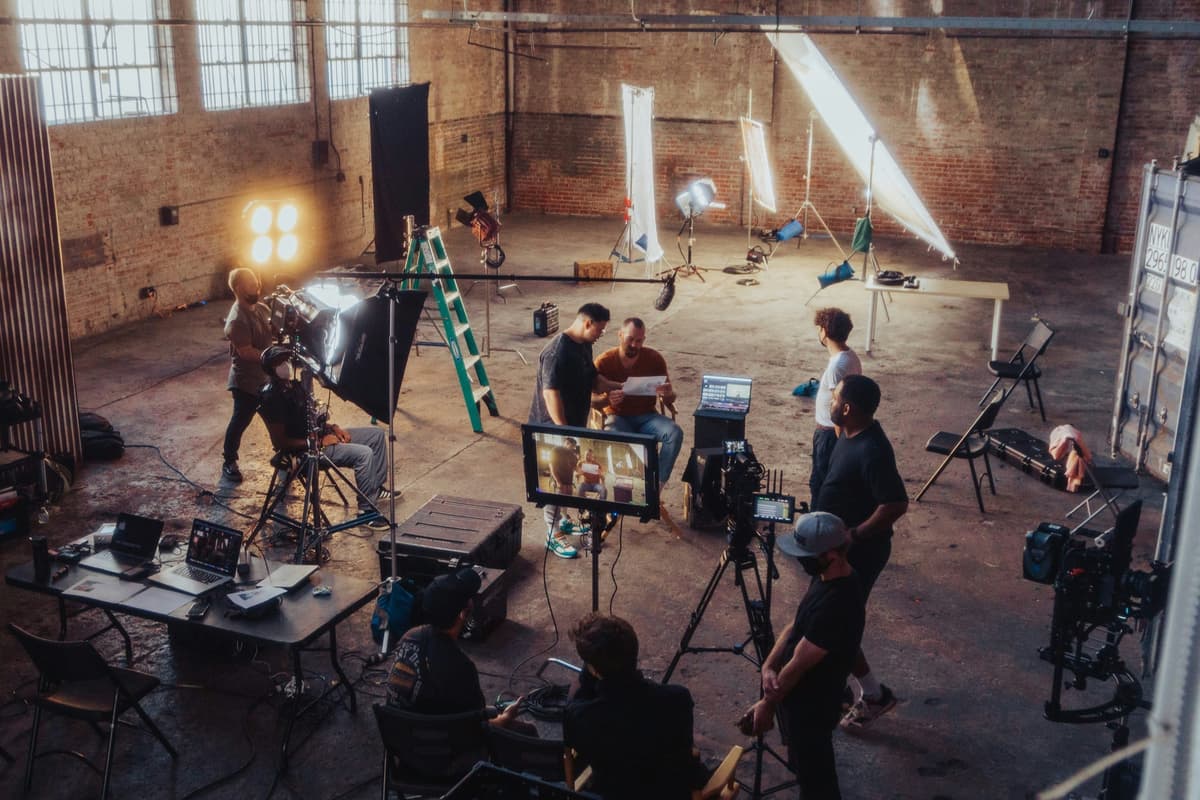
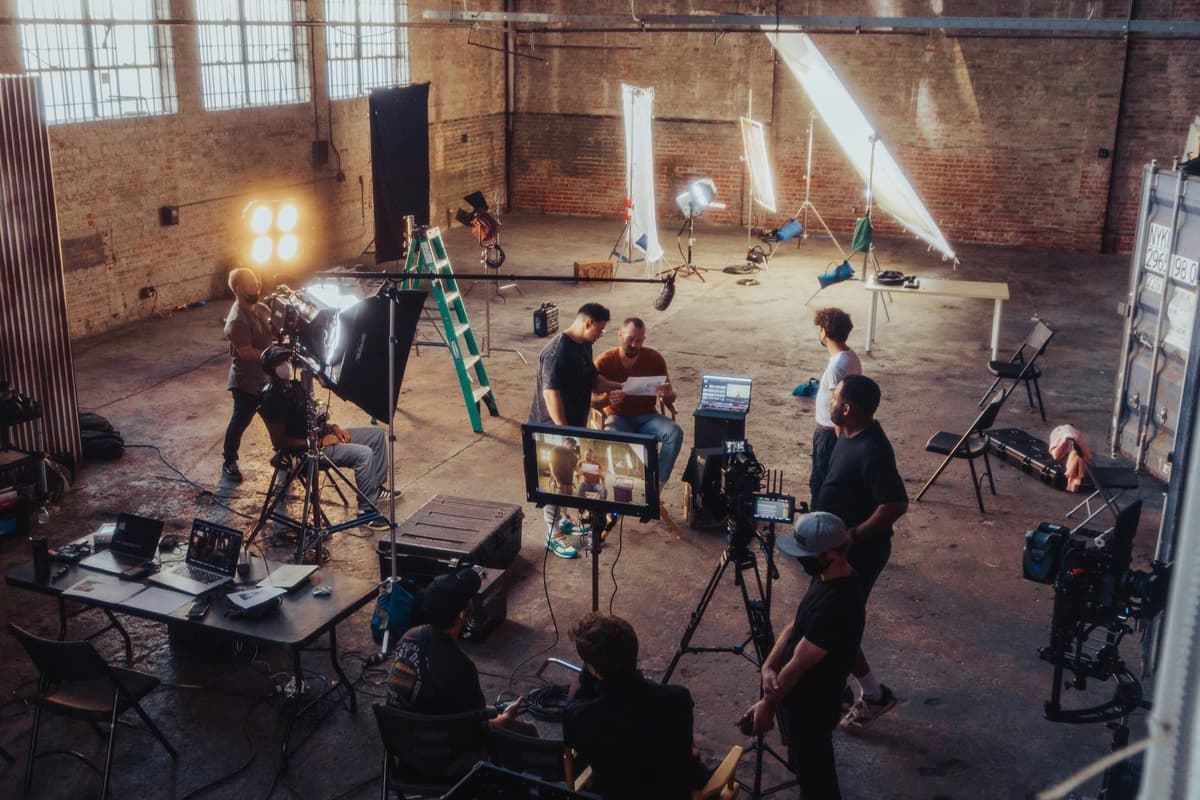
What is a Creative Producer?

Overview
What Is a Creative Producer?
A creative producer is a hybrid production role that sits at the intersection of artistic vision and operational execution. Unlike a line producer who focuses primarily on budgets and logistics, the creative producer is responsible for shepherding the creative direction of a project from concept through delivery — while keeping production on track.
In film and television, the creative producer often acts as the bridge between the director and the production company, ensuring the creative vision established in development is preserved as the project moves through pre-production, production, and post. In commercial and branded content, they frequently serve as the primary point of contact between a brand client and the production crew, translating marketing objectives into cinematic storytelling.
Creative Producer vs. Producer: What Is the Difference?
A traditional producer manages money, schedules, and logistics. A creative producer does all of that — but their primary accountability is to the creative output itself. They are the person who will push back if a location swap undermines the visual language of the film, or advocate for additional shooting days when the story demands it. They hold both creative authority and production responsibility simultaneously.
In advertising and commercial production, the creative producer title is especially common. They act as the liaison between the creative agency, the brand, and the production company — managing client relationships, interpreting creative briefs, and ensuring the director's vision aligns with what the client actually approved.
Where Creative Producers Work
Creative producers work across a wide range of production contexts: independent films, studio features, television drama and comedy, documentary, streaming originals, commercials, music videos, and branded content. The role is flexible by nature and often carries different weights of authority depending on the production scale and budget.
Role & Responsibilities
Core Responsibilities of a Creative Producer
The creative producer's day-to-day duties vary significantly by production type, but several core responsibilities appear consistently across film, television, and commercial work.
Project Development and Creative Direction
Creative producers frequently originate or acquire projects. In narrative film, this means identifying source material — a script, a book adaptation, a true story — and bringing it into development. They work closely with writers during script development, providing story notes, shaping character arcs, and ensuring the material is producible on the available budget. They may also collaborate with directors during the vision-setting phase, helping define the film's tone, visual references, and thematic goals.
Director and Talent Relationships
One of the most critical functions of a creative producer is recruiting and supporting creative talent. They often have an existing roster of directors they trust and will match the right director to the right project. On set, they serve as the director's creative ally — someone with the authority and trust to provide honest feedback, intervene when the shoot drifts off course, or advocate for additional resources to realize the creative vision.
Client and Stakeholder Communication
In commercial and branded production, the creative producer manages the client relationship throughout production. This includes presenting treatment documents and shot lists, facilitating approval rounds, managing feedback from multiple stakeholders, and ensuring deliverables align with the original creative brief. Strong client communication skills are essential — creative producers often need to translate highly subjective creative feedback into concrete production adjustments.
Budget Awareness and Creative Trade-offs
Creative producers do not always own the budget in the way a line producer does, but they must understand it deeply. Every creative decision carries a cost implication. A creative producer who cannot read a budget — or who refuses to make creative trade-offs — will quickly lose the confidence of the production. The best creative producers know how to get maximum creative value from available resources, identifying where to spend and where to economize without compromising the work.
Pre-Production Oversight
During pre-production, the creative producer is involved in location scouting, casting, production design approvals, and schedule reviews. They attend tone meetings and concept presentations, provide feedback on storyboards and mood boards, and ensure the director's vision is being faithfully interpreted by department heads. They may also be involved in music supervision, title design, and post-production planning.
Post-Production and Final Delivery
Creative producers often stay engaged through post-production — reviewing cuts, providing editorial notes, approving color grades and sound mixes, and managing client feedback on revisions. They ensure the final deliverable matches the creative intent established at the outset and that all contractual obligations around deliverables are met.
Skills Required
Essential Skills for a Creative Producer
The creative producer role demands an unusually broad skill set — one that spans artistic judgment, interpersonal communication, and operational competence. The following capabilities define the most effective creative producers working today.
Storytelling and Creative Judgment
Above all else, a creative producer must have a strong, developed sense of story. They need to recognize what makes a script work, identify structural problems before they become expensive production mistakes, and articulate creative feedback in specific, actionable terms. This is not a role for someone who is merely enthusiastic about film — it requires genuine creative literacy developed through extensive study and practice.
Visual Literacy
Creative producers communicate constantly with directors, cinematographers, and production designers in visual terms. Comfort with visual references, an understanding of how cinematography and production design serve story, and an ability to read and evaluate shot lists and storyboards are core competencies. The creative producer doesn't need to operate a camera — but they need to speak the visual language fluently.
Project Management and Organizational Skills
Managing the creative development of a project requires rigorous organizational discipline. Creative producers track script drafts, manage approval chains, coordinate development timelines, and stay across multiple projects simultaneously in many cases. Production management software — including platforms like Saturation for budget tracking and expense management — helps creative producers maintain financial oversight without losing sight of creative priorities.
Client Communication and Relationship Management
In commercial and branded content, the ability to manage clients — presenting creative work with confidence, fielding feedback diplomatically, and protecting creative integrity while keeping the client satisfied — is a defining skill. This requires emotional intelligence, persuasive communication, and a clear understanding of the client's underlying business objectives beyond the immediate creative brief.
Budget Literacy
Understanding how production budgets are structured, where money is typically spent, and how creative decisions affect costs is essential. A creative producer who cannot engage intelligently with a budget will be sidelined by producers and line producers who control the money. The most effective creative producers can hold a creative conversation and a budget conversation simultaneously.
Negotiation and Problem-Solving
Production is a constant stream of problems. Locations fall through, actors become unavailable, weather disrupts schedules. A creative producer who can solve problems creatively — finding alternatives that preserve the creative vision while working within new constraints — is invaluable on any production. Negotiation skills are critical both with talent and vendors.
Salary Guide
Creative Producer Salary Overview
Creative producer compensation varies widely based on industry sector, experience level, market, and production type. Salaries range from entry-level positions in the mid-$40Ks to senior commercial creative producers earning well above $150,000 annually.
National Salary Ranges (United States)
According to ZipRecruiter (January 2026 data), the national salary range for creative producers spans:
- 25th percentile (early-career): approximately $70,000/year
- Median: approximately $90,000–$95,000/year
- 75th percentile: approximately $114,500/year
- 90th percentile (senior/executive level): up to $153,000/year
Entry-level creative producer roles — often titled Junior Creative Producer or Associate Producer — typically start between $40,000 and $60,000, particularly in smaller markets or at independent production companies.
Salary by Experience Tier
- Entry-level (0–3 years): $40,000–$65,000. These roles typically involve supporting senior producers, coordinating logistics on smaller projects, and learning the development process.
- Mid-level (3–7 years): $70,000–$100,000. At this stage, creative producers are leading projects independently, managing client relationships, and building director rosters.
- Senior (7–12 years): $100,000–$130,000. Senior creative producers at production companies or agencies may also carry executive producer credits on some projects.
- Executive/Director level (12+ years): $130,000–$160,000+. These producers often operate as heads of production or creative development at larger companies.
Salary by Market
- Los Angeles: The highest-paying market for film and commercial creative producers, with mid-level salaries averaging $95,000–$120,000.
- New York: Comparable to LA, particularly for advertising and branded content production. Median around $90,000–$110,000.
- Chicago and other major markets: Generally 10–20% below LA/NY rates, but with lower cost of living offsetting the gap.
- Remote/freelance: Freelance creative producers working across markets can earn day rates of $500–$1,500 depending on project type and experience.
Film vs. Advertising: Compensation Differences
Commercial and advertising creative producers often earn more consistently than their narrative film counterparts. Narrative film production is project-based with significant gaps between projects, while advertising creative producers may work on a rolling retainer with agencies or production companies, providing more income stability. Music video creative producers tend to earn on the lower end of the range given the budget constraints typical of the format.
Benefits and Additional Compensation
Salaried creative producers at studios, networks, and larger production companies often receive health benefits, 401(k) contributions, and production bonuses. Freelancers and project-based producers typically negotiate all-in day rates or project fees without benefits, and must account for self-employment taxes and gaps between projects in their rate calculations.
Frequently Asked Questions
Frequently Asked Questions: Creative Producer
What is the difference between a producer and a creative producer?
A traditional producer (often a line producer) is primarily responsible for the budget, schedule, and logistics of a production. A creative producer focuses on the artistic and creative dimensions of a project — developing the story, working with directors and writers, managing creative vision through production, and ensuring the final product delivers on its creative intent. In practice, many creative producers also handle substantial production oversight, making the roles overlapping rather than entirely separate.
What does a creative producer actually do day to day?
On any given day, a creative producer might review a new script draft and send development notes, attend a pre-production meeting to approve location choices, field client feedback on a commercial rough cut, scout directors for an upcoming project, and review a production budget with the line producer to find cost efficiencies. The role is highly varied and rarely follows a fixed routine.
Do creative producers need a film degree?
A film degree is common but not universally required. Many working creative producers have degrees in film production, communications, theater, or related fields. However, production experience is equally or more important — most creative producers built their way up through production assistant, coordinator, and junior producer roles before taking on the title. Industry programs through Sundance Institute, Film Independent, and similar organizations offer career development without requiring a traditional degree path.
How much do creative producers make in the US?
National salary data from ZipRecruiter (January 2026) shows the majority of US creative producer salaries fall between $70,000 and $114,500 annually, with a median around $90,000 to $95,000. Top earners at the 90th percentile earn approximately $153,000. Entry-level creative producers typically start between $40,000 and $65,000. Freelance creative producers negotiate day rates, typically ranging from $500 to $1,500 per day depending on market and experience.
What is the difference between a creative producer and a creative director?
A creative director is typically responsible for the overall creative vision and brand identity, particularly in advertising and marketing contexts. They lead creative strategy but may not be involved in day-to-day production execution. A creative producer, by contrast, is actively involved in the production process itself, managing the logistics of realizing the creative vision, coordinating talent and crew, and overseeing delivery. The creative director sets the vision; the creative producer executes it.
Can a creative producer also be a director?
Yes, many creative producers are also directors, particularly in the independent film and commercial space. Some filmmaker-producers develop, produce, and direct their own projects simultaneously, wearing all hats on smaller productions. As projects scale up, the dual role becomes more difficult to sustain, and the creative producer function typically separates from the directing function.
Education
Education Paths for Aspiring Creative Producers
There is no single mandatory degree for becoming a creative producer, but most working creative producers hold a bachelor's degree in a field closely related to film production, media, or communications. What matters more than the specific degree is the combination of creative sensibility, industry knowledge, and hands-on production experience.
Film Production and Producing Programs
A Bachelor of Fine Arts (BFA) or Bachelor of Arts (BA) in Film Production or Film Studies is the most direct route. Programs at schools like NYU Tisch School of the Arts, USC School of Cinematic Arts, AFI Conservatory, and Chapman University's Dodge College offer specialized tracks in producing that cover script development, production management, financing, and distribution. These programs place heavy emphasis on real production experience — students produce short films and work across multiple crew roles before graduating.
The American Film Institute's MFA in Producing and Columbia University's Creative Producing program are among the most prestigious graduate-level options. Columbia's program specifically frames the producer as a "creative force," training students in both the artistic and business dimensions of the role.
Communications, Media, and Advertising Degrees
For creative producers working in commercial and branded content, degrees in advertising, communications, or media production are equally valid. Many advertising-side creative producers came up through agency creative departments or production company roles, learning the craft through experience rather than formal film education.
Theater, Writing, and Creative Arts Backgrounds
Some creative producers enter through theater production, screenwriting, or related creative arts. A strong foundation in storytelling — whether from a writing MFA, theater directing, or literary studies — combined with production experience can be a viable path. The key is developing fluency in both creative language and production logistics.
Building Experience Alongside Education
Internships, production assistant work, and entry-level positions at production companies are essential regardless of educational background. Most creative producers spend years working as production coordinators, development assistants, or junior producers before taking on the creative producer title. Industry programs like the Sundance Institute's producers track, Film Independent, and IFP (Independent Filmmaker Project) offer additional mentorship and networking pathways.
Last updated April 25, 2026
Budget this role in seconds with Saturation
Rate packs, fringes, and phases turn a crew list into an accurate production budget without the spreadsheet math.
Rate packs
Verified union rates, versioned.


Fringes and markupsRebuilt
Stack them, cap them, and see the split on every line.
PhasesRebuilt
Every column knows its type.
Auto-fill
Rates fill in as you type, from the source you turned on.