What is a Costume Designer?
Overview
A costume designer is the creative and logistical head of the costume and wardrobe department on a film, television, or commercial production. Every piece of clothing, accessory, and wearable prop that appears on screen passes through the costume designer's vision. They are not shoppers or stylists: they are storytellers who use fabric, color, and silhouette to communicate character, period, and theme before a single line of dialogue is spoken.
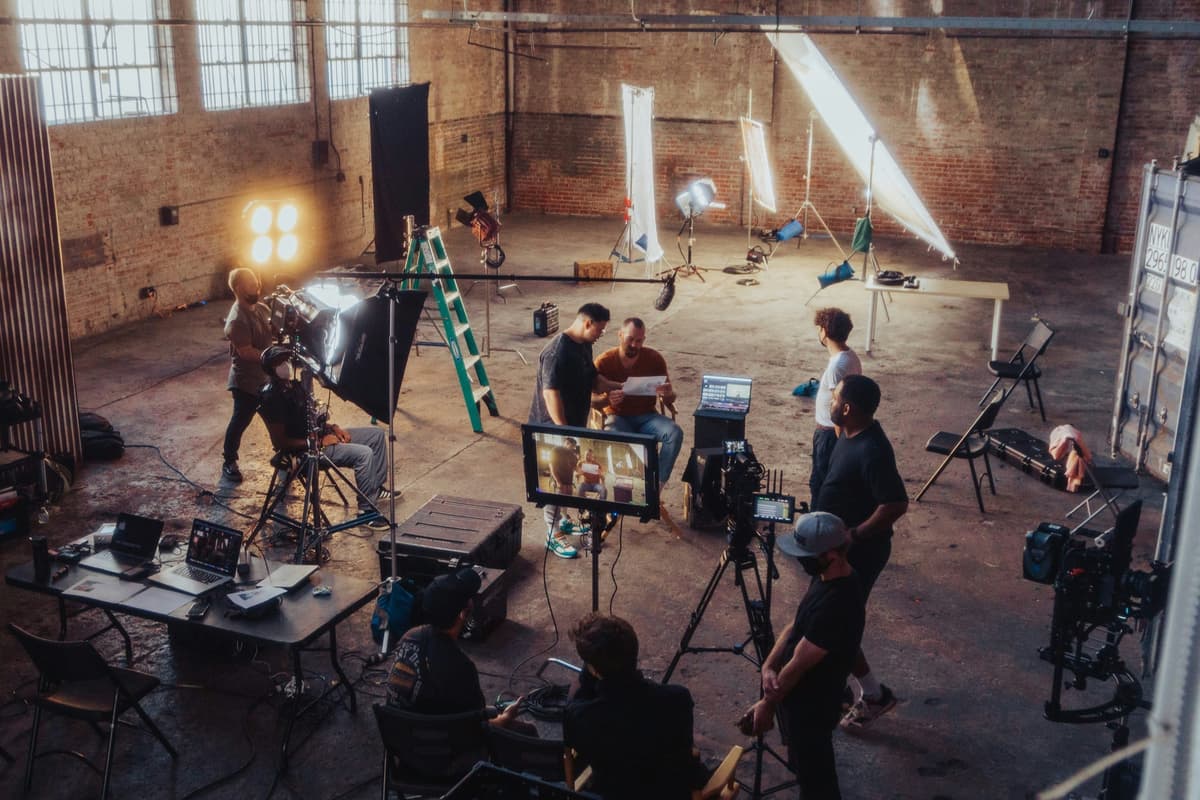
On a film set, the costume designer collaborates directly with the director and the production designer to establish a unified visual language for the project. A character's wardrobe tells the audience who that person is, where they come from, and what they want, often more efficiently than the script can. That work starts months before the first day of principal photography and does not end until picture wrap.
Managing a production's wardrobe department requires the same financial discipline as any other department head role. Costume budgets on mid-range features commonly run from $50,000 to several hundred thousand dollars, and the costume designer is accountable for every dollar. Tools like Saturation give production teams real-time visibility into departmental spending, which helps costume designers track against their line items without waiting for weekly accounting reports.
The costume designer role exists across every production format: feature films, episodic television, limited series, commercials, music videos, and theatrical productions. The responsibilities scale with the production, but the core skill set remains the same regardless of budget size.
Role & Responsibilities
The costume designer's work begins in pre-production, long before cameras roll. Reading the script is the first task: not for plot, but for wardrobe clues. Every scene note about weather, time of day, physical action, or character transformation is a design constraint. A chase scene means the lead actor needs multiple identical copies of the same outfit. A period drama means sourcing or building garments that did not exist in modern supply chains.
Pre-Production Responsibilities
- Script breakdown: Cataloguing every costume reference, character change, and continuity requirement scene by scene
- Character research: Building visual profiles for each character (occupation, class, psychology, and arc) that inform every wardrobe choice
- Period and location research: Studying the historical moment or world of the story to ensure accuracy or intentional deviation from it
- Budget planning: Developing the costume department budget in collaboration with the line producer, breaking out rental, purchase, build, and labor costs
- Concept presentation: Presenting mood boards, fabric swatches, and design sketches to the director and production designer for approval
- Vendor and rental house sourcing: Identifying which items to rent from costume houses, purchase from retail, or build from scratch in the workroom
Production Responsibilities
- Fittings: Conducting costume fittings with actors and principal cast, making adjustments based on movement and camera considerations
- On-set supervision: Overseeing the set costumer and wardrobe supervisor who maintain continuity and manage quick changes between takes
- Continuity coordination: Working with the script supervisor to ensure costume continuity across scenes shot out of chronological order
- Department management: Supervising the assistant costume designer, costume coordinator, wardrobe supervisor, set costumers, and stitchers
- Damage control: Managing costume damage, replacements, and alterations as production demands change
Collaboration with Other Departments
The costume designer works in constant dialogue with the director of photography, because fabric texture and color respond differently under different lighting setups. A dress that reads correctly under natural light can become a problem under tungsten or LED. The costume designer also coordinates with hair and makeup, since the full character look is a collaboration. The production designer sets the color palette for the physical world of the film, and the costume designer ensures wardrobe fits within or intentionally contrasts with that palette for dramatic effect.
Skills Required
Costume design for film and television requires a combination of craft skills, research ability, interpersonal fluency, and financial management. No single skill dominates: it is the integration of all of them that makes an effective department head.
Design and Craft Skills
- Garment construction: Understanding how clothing is built (pattern drafting, cutting, sewing, draping) allows the designer to communicate clearly with workroom staff and to assess what is possible within budget and time constraints
- Textile knowledge: Knowing how different fabrics behave on camera, under different lighting conditions, and during physical action is essential. Certain materials create unwanted noise on the sound track; others read poorly on screen in specific colors.
- Fashion history: A working knowledge of clothing across periods and cultures is necessary for period productions and for understanding how contemporary fashion has evolved
- Sketching and illustration: Many costume designers create detailed costume sketches to communicate their vision to the director and to guide the workroom. Digital tools have supplemented but not replaced hand illustration in most workflows.
- Color theory: Understanding how colors relate to each other and to the production's overall palette is a foundational design skill
Research and Analytical Skills
- Historical and cultural research: The ability to research quickly and accurately across historical periods, geographic regions, and subcultures is a core competency
- Character analysis: Reading a script and understanding what each costume choice communicates about character psychology and story arc requires close reading and narrative instinct
- Sourcing: Knowing where to find unusual or period-specific garments (auction houses, estate sales, specialty rental houses, international suppliers) is a practical research skill with direct budget implications
Leadership and Communication Skills
- Department management: The costume designer supervises a team that can range from two people on a small independent film to dozens on a major studio production. Clear delegation and crew management are non-negotiable.
- Actor relations: Fittings require the designer to put actors at ease while making quick creative and practical decisions. Trust between the actor and the costume designer directly affects performance.
- Cross-department collaboration: Regular communication with the director, DP, production designer, hair and makeup, and script supervisor is essential throughout production
Budget and Production Management
- Budget tracking: The costume designer is responsible for staying within the approved departmental budget, tracking purchases, rentals, and labor costs against the line items established in pre-production
- Vendor negotiation: Working with costume rental houses, fabric suppliers, and specialized craftspeople requires negotiation skills and knowledge of market rates
- Scheduling: Costume work runs on a separate timeline from the shooting schedule. The designer must plan fittings, alterations, builds, and pickups around the production calendar without disrupting camera.
Salary Guide
Costume designer compensation varies significantly based on union status, production budget, market, and experience level. The following data reflects conditions as of 2024-2025 in the United States.
BLS Benchmark: Fashion Designers
The U.S. Bureau of Labor Statistics classifies costume designers under the broader "Fashion Designers" category (SOC 27-1022). As of May 2024, the median annual wage for fashion designers was $80,690. The lowest 10 percent earned under $35,970; the top 10 percent earned over $169,620. Employment in this category is projected to grow approximately 2 percent from 2024 to 2034.
These figures encompass the full range of fashion design employment including apparel and accessories manufacturing. Film and television costume designers at the union level typically earn above the median, particularly in major production markets.
IATSE Local 892 Union Rates
Costume designers working on union productions under the IATSE Basic Agreement (covering major studio film and television) are covered by the Costume Designers Guild (IATSE Local 892) contract. Under union scale:
- Weekly minimum rate: Approximately $3,000 to $3,500 per week for union productions
- Negotiated rates: Established costume designers negotiate above scale based on credits and quote. Senior designers on major studio features regularly earn $5,000 to $10,000+ per week.
- 2024 milestone: The Guild achieved pay parity with other department head classifications under the IATSE Basic Agreement following the 2024 negotiations with the AMPTP, closing a gap that had historically placed costume designers 30-65% below peers in comparable roles
Salary by Production Type and Market
- Major studio features (Los Angeles/New York): $5,000–$15,000+/week for established designers. Award-contending productions may negotiate above this range.
- Streaming episodic television: $3,500–$8,000/week depending on budget tier and number of episodes
- Independent film: $1,000–$3,000/week, often deferred or below scale on micro-budget productions
- Commercials: Day rates commonly $1,000–$2,500/day. High-end national spots can pay significantly more.
- Music videos: Day rates from $500 to $2,000+ depending on label budget and artist profile
Career Trajectory and Earning Potential
Most costume designers begin as production assistants or costume department interns, progressing through roles as set costumer, wardrobe supervisor, or assistant costume designer before accumulating the credits needed to work as a department head. The trajectory from entry level to lead designer typically spans 5 to 10 years in competitive markets. Top-tier costume designers with major studio credits and awards recognition, particularly those with multiple Oscar or Emmy nominations, can command $15,000 to $25,000 per week on prestige productions.
Frequently Asked Questions
What does a costume designer do on a film set?
A costume designer is responsible for all clothing and wearable items that appear on screen in a film or television production. Their work begins in pre-production: breaking down the script for costume requirements, developing character looks in collaboration with the director, managing the departmental budget, sourcing or building garments, and conducting fittings with cast. During production, they oversee the wardrobe department, ensure continuity across scenes, and handle any costume issues that arise on set. The costume designer is a department head, equivalent in seniority to the production designer, director of photography, and other creative leads.
How much do costume designers get paid?
Pay depends heavily on union status, production budget, and experience. Under the IATSE Local 892 Basic Agreement covering major studio productions, the minimum weekly scale runs approximately $3,000 to $3,500 per week. Established designers negotiate above scale, commonly $5,000 to $10,000 per week on studio features and major streaming productions. The Bureau of Labor Statistics reports a median annual wage of $80,690 for fashion designers (the closest BLS category), with the top 10 percent earning over $169,620 annually. On independent films, rates vary widely and may fall below union minimums on low-budget productions.
What degree do you need to become a costume designer?
There is no single required degree, but most working film and television costume designers hold a BFA or BA in fashion design, theatrical costume design, or a related fine arts discipline. Programs at Parsons, FIT, NYU Tisch, Carnegie Mellon, and RISD are well-regarded entry points. Practical experience, built through student films, independent productions, and work as a set costumer or assistant costume designer, carries as much weight as formal education. Union membership through IATSE Local 892 (Costume Designers Guild) is required to work on major studio productions and is earned through qualifying professional credits.
Education
There is no single prescribed path into costume design for film and television, but most working costume designers hold formal education in a related discipline and build their careers through years of on-set experience before moving into the department head role.
Relevant Degree Programs
- Fashion Design (BFA or BA): Provides technical training in pattern making, draping, garment construction, and textile knowledge. Schools like Parsons School of Design, Fashion Institute of Technology (FIT), RISD, and Pratt offer strong programs.
- Theatre Design or Theatrical Costume Design: Many working film costume designers began in theatre. Programs at NYU Tisch, Carnegie Mellon, and Yale School of Drama train students in character-driven design from the start.
- Fine Arts (BFA) with a Design Concentration: Builds foundational visual literacy, color theory, and compositional thinking that transfers directly to costume work.
- Film Production Programs: Some designers enter through film school, taking on costume roles in student productions before transitioning into the industry.
Portfolio and Practical Experience
A portfolio of produced work matters more in this field than academic credentials alone. Most costume designers build their portfolios through student films, low-budget independent productions, music videos, and regional theatre before accumulating the credits needed to join the guild. Internships with established costume designers or at major costume rental houses provide the hands-on workroom and on-set experience that classrooms cannot replicate.
IATSE Local 892 Membership
In the United States, professional costume designers working on union productions are members of the Costume Designers Guild, IATSE Local 892. Membership requires a qualifying combination of professional experience and credits. The Guild represents costume designers, assistant costume designers, and costume illustrators working under the IATSE Basic Agreement with the major studios. In 2024, the Guild achieved pay parity with other department heads under the IATSE Basic Agreement, a milestone after years of negotiation.
Motion Picture Costumers (IATSE Local 705) represents on-set wardrobe crew including set costumers and costume supervisors, which is a separate classification from the designer role.
Last updated April 25, 2026
Budget this role in seconds with Saturation
Rate packs, fringes, and phases turn a crew list into an accurate production budget without the spreadsheet math.
Rate packs
Verified union rates, versioned.


Fringes and markupsRebuilt
Stack them, cap them, and see the split on every line.
PhasesRebuilt
Every column knows its type.
Auto-fill
Rates fill in as you type, from the source you turned on.