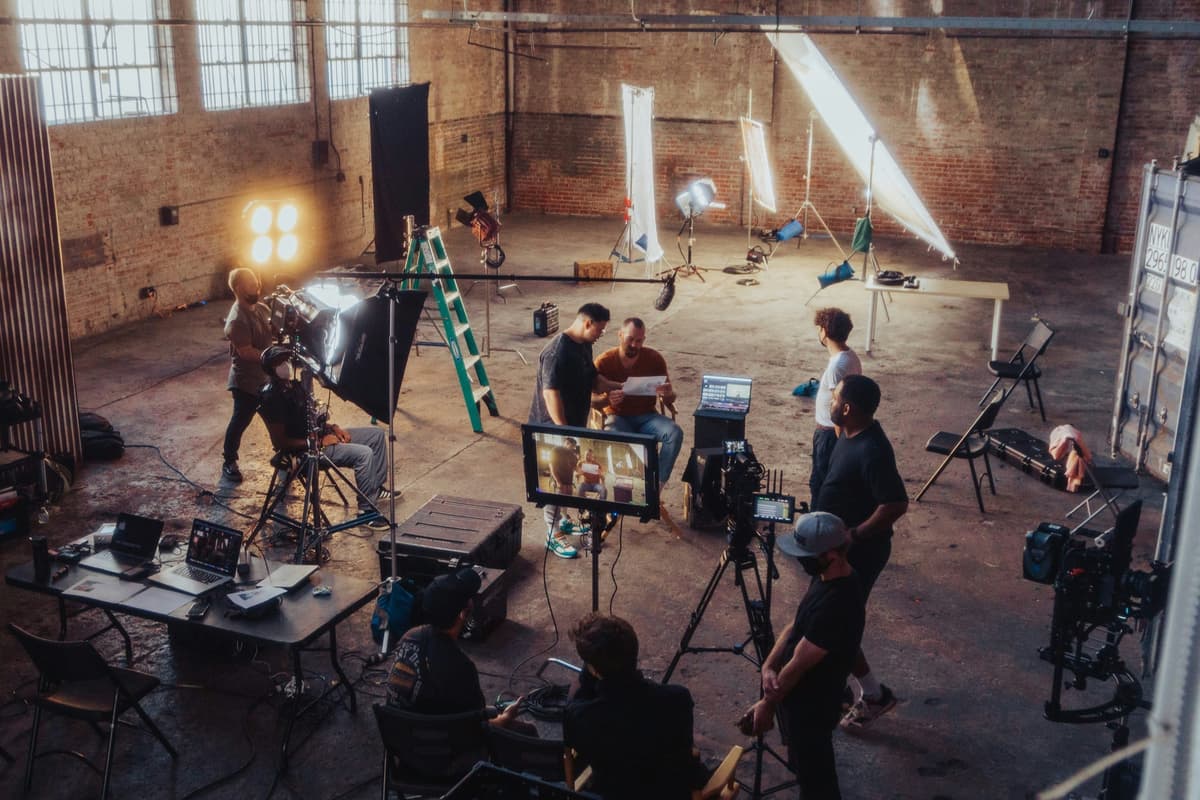
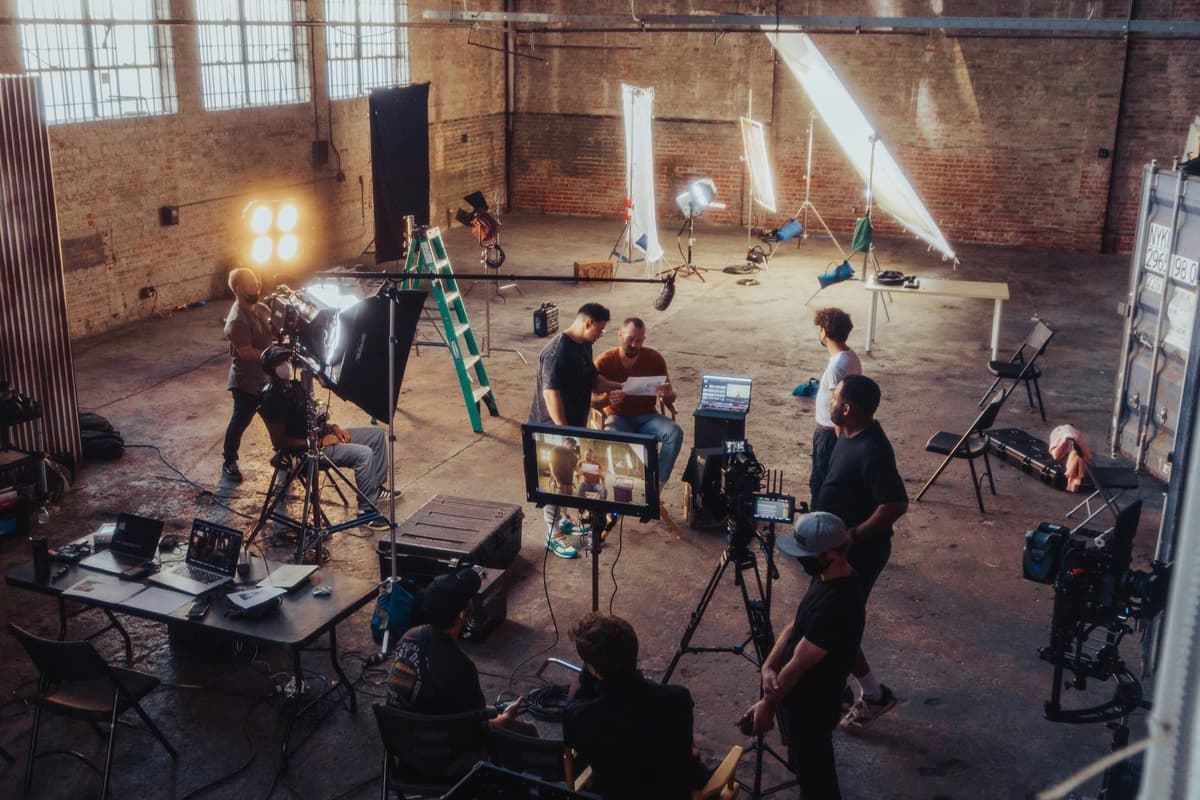
What is a Compositor?
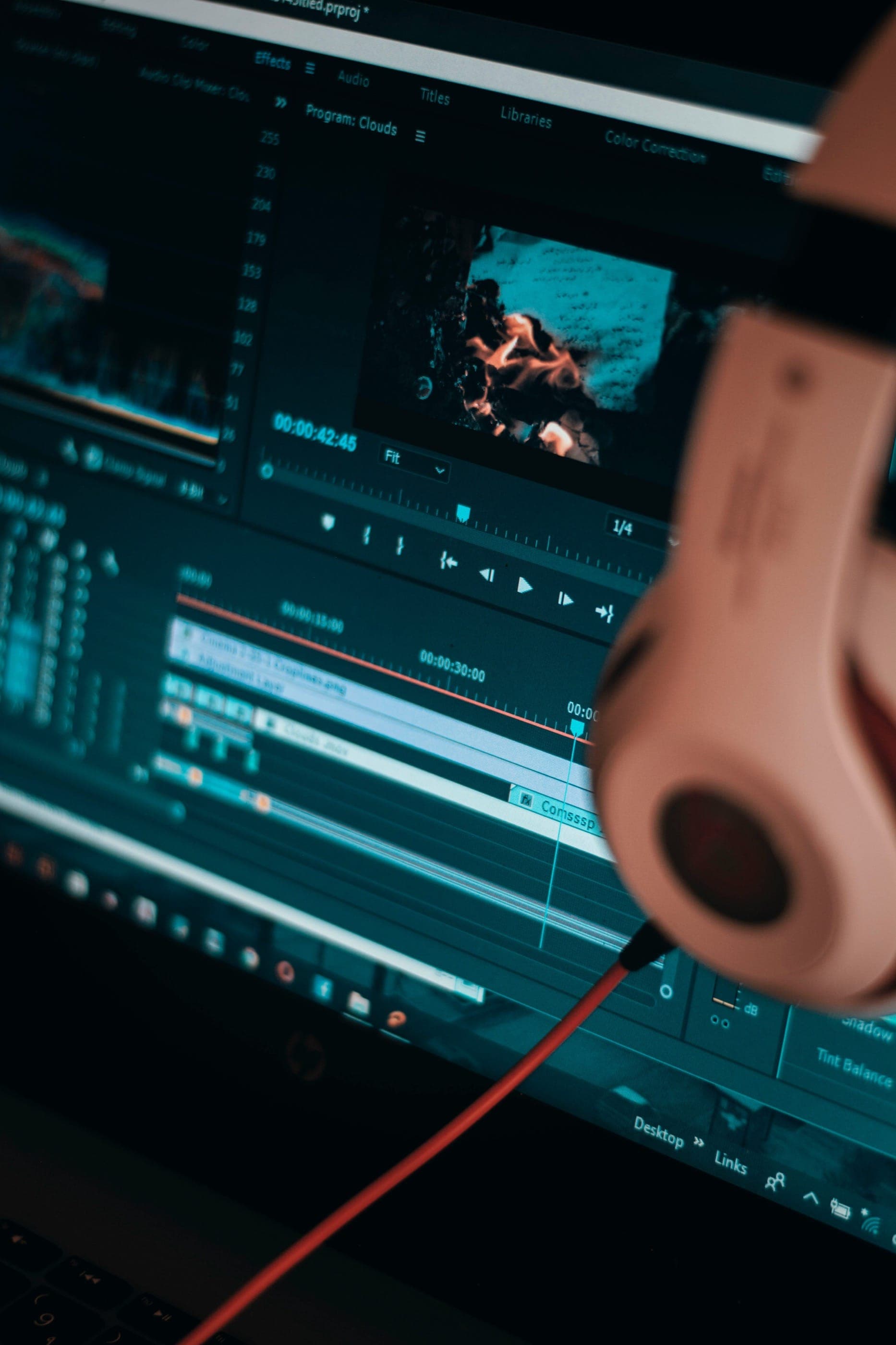
Overview
What Is a Compositor in Film and VFX?
A compositor is the visual effects artist responsible for assembling and integrating all the separate digital elements of a shot into a single, seamless final image. They sit at the end of the VFX pipeline and are often the last creative hands on a frame before it is delivered to the edit. When you watch an actor stand in front of a raging alien city, a sweeping mountain range that doesn't exist, or a fireball that was added entirely in post-production, you are looking at a compositor's finished work.
The discipline draws from multiple disciplines simultaneously: photography, painting, color science, and software engineering. Compositors must understand how light behaves in the real world so they can convincingly merge elements that were captured or rendered separately. A CG spaceship rendered in a three-dimensional environment must inherit the same color temperature, depth of field, grain, and atmospheric haze as the live-action plate it sits inside — otherwise the human eye will immediately detect the mismatch.
Compositing vs. VFX Artist: Key Distinction
Compositors are frequently confused with VFX artists in general, but the roles are distinct. VFX artists — such as modelers, riggers, lighters, and FX simulation artists — create individual elements: a CG creature, a particle explosion, or a rendered building. The compositor receives all of those finished elements and combines them into one image. Where VFX artists work in three-dimensional space (Maya, Houdini, Blender), compositors work primarily in two-dimensional node-based or layer-based workflows (Nuke, After Effects, Fusion).
Where Compositors Work
Compositors are employed across a broad range of production types: Hollywood feature films, episodic streaming television, commercial advertising, music videos, and increasingly in real-time virtual production workflows. Major VFX houses — Industrial Light & Magic, DNEG, Framestore, MPC, Weta FX, Rising Sun Pictures — maintain large compositing departments. Mid-size boutique studios and in-house post facilities also hire compositors regularly. Freelance compositing is a common career path, particularly for artists with five or more years of experience.
The Compositor's Place in Production
Compositing occurs during post-production, after principal photography is complete and after CG departments have finished rendering their assets. The compositor receives deliverables from multiple upstream departments — renders from 3D artists, scanned matte paintings from concept and environment teams, tracked camera data from matchmove artists, and the original camera negative or digital footage from set. They sequence and layer these inputs, make final color and lighting adjustments, and hand off polished shots to the VFX supervisor for approval before final delivery to the director and editor.
Role & Responsibilities
Core Compositing Duties
The primary function of a compositor is integrating visual elements into a cohesive final frame. In practice, this means working inside a compositing software package — almost universally Foundry's Nuke at the professional level — to build a node-based tree (or "script") that processes each element and merges them in precise order. A single shot may involve dozens of individual render passes, painted elements, and camera data inputs, all flowing through hundreds of nodes before producing the output frame.
Green Screen and Chroma Keying
One of the most common compositor tasks is pulling a clean key from green screen or blue screen footage. Actors, props, or miniatures are filmed against a solid color background on set; the compositor then isolates the foreground subject from that background so it can be placed into an entirely different environment. Achieving a convincing key requires careful spill suppression (removing the green or blue tint that bounces onto the subject), accurate edge treatment on fine detail like hair and translucent clothing, and matching the resulting subject to the motion, lighting, and color of the background plate.
Rotoscoping and Paint Work
When a key is not possible — because an actor was shot against a grey wall, or a wire needs to be removed from a stunt, or a logo needs to be erased from a product — the compositor performs rotoscoping. This is the process of hand-drawing frame-by-frame mattes around specific subjects, a labor-intensive but essential skill. Closely related is paint work: removing boom microphones from the top of frame, eliminating set extensions that weren't cleaned up on set, or adding elements that were flagged by the director during the edit.
Matte Painting Integration
Compositors integrate the work of matte painters, who create photorealistic extensions of real environments or entirely fabricated worlds. A matte painting might replace a gray sky with storm clouds, extend a practical set into a sweeping vista, or construct an entire alien city. The compositor takes the painted image and combines it with live-action footage, adding atmospheric effects, parallax movement from tracked camera data, and matching grain and color to ensure the painted element reads as a photographed environment.
Color Grading and Matching
Every element entering a compositor's script arrives with its own color characteristics. CG renders are typically delivered in linear light space and must be converted to the project's display transform. Live-action plates are recorded in log or RAW formats. Matte paintings may be painted in display-referred color space. The compositor must understand color management pipelines (ACES, OCIO configurations), and must manually match the color, contrast, and saturation of all elements so they appear to exist in the same photographic environment.
Tracking and Camera Integration
For CG elements to appear grounded in live-action footage, they must move with the camera. Compositors receive tracking data — either 2D point tracks or 3D solved camera data from a matchmove artist — and use it to lock CG renders and painted elements to specific positions in the live frame. When tracking data is unavailable or insufficiently accurate, compositors perform 2D tracking directly inside their compositing script using tools within Nuke or After Effects.
Collaboration With the VFX Team
Compositors work closely with the VFX supervisor, who sets the creative and technical standards for all shots on a production. They take direction from VFX producers who manage shot counts, deadlines, and client feedback cycles. On larger productions, compositors may be supervised by a compositing supervisor who oversees the quality and consistency of all composite work before it goes to the VFX supervisor for final sign-off. Junior compositors may be assigned simpler shots — clean plates, paint fixes, sky replacements — while senior compositors handle hero shots with complex CG integration.
Deliverables and Technical Standards
Compositors are responsible for delivering shots to precise technical specifications: resolution (2K, 4K, 6K or higher), frame rate, color space, bit depth, and codec. For theatrical features, delivery is typically to a Digital Cinema Package (DCP) standard. For streaming productions, deliverables follow platform specs (Netflix IMF, Amazon HDR standards). Understanding these technical pipelines is not optional — incorrectly formatted deliverables can fail QC and cause significant downstream delays.
Skills Required
To excel as a Compositor, one must possess a strong understanding of color theory, lighting, and perspective. Attention to detail, problem-solving abilities, and the capacity to work under tight deadlines are essential. Additionally, proficiency in compositing software, knowledge of industry trends, and the ability to collaborate effectively with other team members are key skills for a successful Compositor.
Frequently Asked Questions
What does a Compositor do?
What Is a Compositor in Film and VFX?
What are the main responsibilities of a Compositor?
Core Compositing Duties
What skills does a Compositor need?
To excel as a Compositor, one must possess a strong understanding of color theory, lighting, and perspective. Attention to detail, problem-solving abilities, and the capacity to work under tight deadlines are essential. Additionally, proficiency in compositing software, knowledge of industry trends, and the ability to collaborate effectively with.
What education or training do I need to become a Compositor?
Formal Education Paths for Compositors
Education
Formal Education Paths for Compositors
There is no single required educational credential for working as a VFX compositor, but formal training significantly accelerates career entry. Most professionals come from one of three pathways: a bachelor's degree in visual effects or related fields, a specialized VFX certificate program, or an intensive online mentorship-based program. The VFX industry places high value on demonstrated skill — the demo reel is the primary hiring document — so the quality of hands-on training matters more than institutional prestige.
Bachelor's Degree Programs
Several universities offer four-year degrees with a concentration in visual effects or digital filmmaking that includes compositing coursework. Programs worth researching include:
- Savannah College of Art and Design (SCAD) — BFA in Visual Effects; strong industry connections and dedicated VFX labs
- Academy of Art University (San Francisco) — MFA and BFA in Visual Effects; students work on real studio projects
- Ringling College of Art and Design — Computer Animation BFA with a VFX track
- Chapman University (Los Angeles) — Digital Arts program with post-production emphasis
- Full Sail University — Film production degrees with hands-on VFX and compositing training
A four-year degree offers broad foundation skills — color theory, photography, cinematography, storytelling — that directly benefit a compositor's understanding of photorealism. However, the four-year timeline and cost must be weighed against faster, more targeted alternatives.
Specialized VFX Certificate and Diploma Programs
Shorter, more intensive programs focus exclusively on VFX skills and get students job-ready faster:
- CG Spectrum — Online compositing courses taught by industry professionals; mentorship model with real feedback on student work
- GNOMON School of Visual Effects (Los Angeles) — Certificate programs in compositing, widely respected by LA studios
- Vancouver Film School (VFS) — One-year Visual Effects program; strong placement in Vancouver's large VFX industry
- Escape Studios (London) — VFX and compositing courses oriented toward the UK industry (DNEG, Framestore, MPC)
- FXPHD — Online platform with deep, technical Nuke training; popular for working artists upgrading their skills
Software Training as a Career Foundation
Beyond formal programs, compositors must develop deep fluency in industry-standard tools. Nuke, developed by Foundry, is the software of choice at virtually every professional VFX studio worldwide. Learning Nuke is non-negotiable for anyone pursuing a studio-level compositing career. Key software to master includes:
- Foundry Nuke — Node-based compositing; industry standard for film and high-end television
- Adobe After Effects — Layer-based compositing; common in commercial, motion graphics, and smaller productions
- Blackmagic Fusion — Node-based, free version available; strong alternative to Nuke, growing adoption
- Autodesk Flame — High-end finishing and conform tool used at broadcast and commercial facilities
- Python scripting — Nuke's Python API allows compositors to automate repetitive tasks and write custom tools
Self-Directed Learning and Demo Reel Building
Many working compositors are self-taught or supplemented formal education with free resources. Platforms such as YouTube (Compositing Academy, Film Riot, Rebelway), FXPHD tutorials, and Foundry's own training library provide excellent technical instruction. What separates a qualified self-taught compositor from one who cannot find work is a polished demo reel. The reel should demonstrate 8-12 shots showing range: a clean green screen key, a CG integration shot, a paint removal, and a complex multi-element composite. Quality beats quantity — five outstanding shots outperform twenty mediocre ones.
Last updated October 24, 2026
Budget this role in seconds with Saturation
Rate packs, fringes, and phases turn a crew list into an accurate production budget without the spreadsheet math.
Rate packs
Verified union rates, versioned.


Fringes and markupsRebuilt
Stack them, cap them, and see the split on every line.
PhasesRebuilt
Every column knows its type.
Auto-fill
Rates fill in as you type, from the source you turned on.