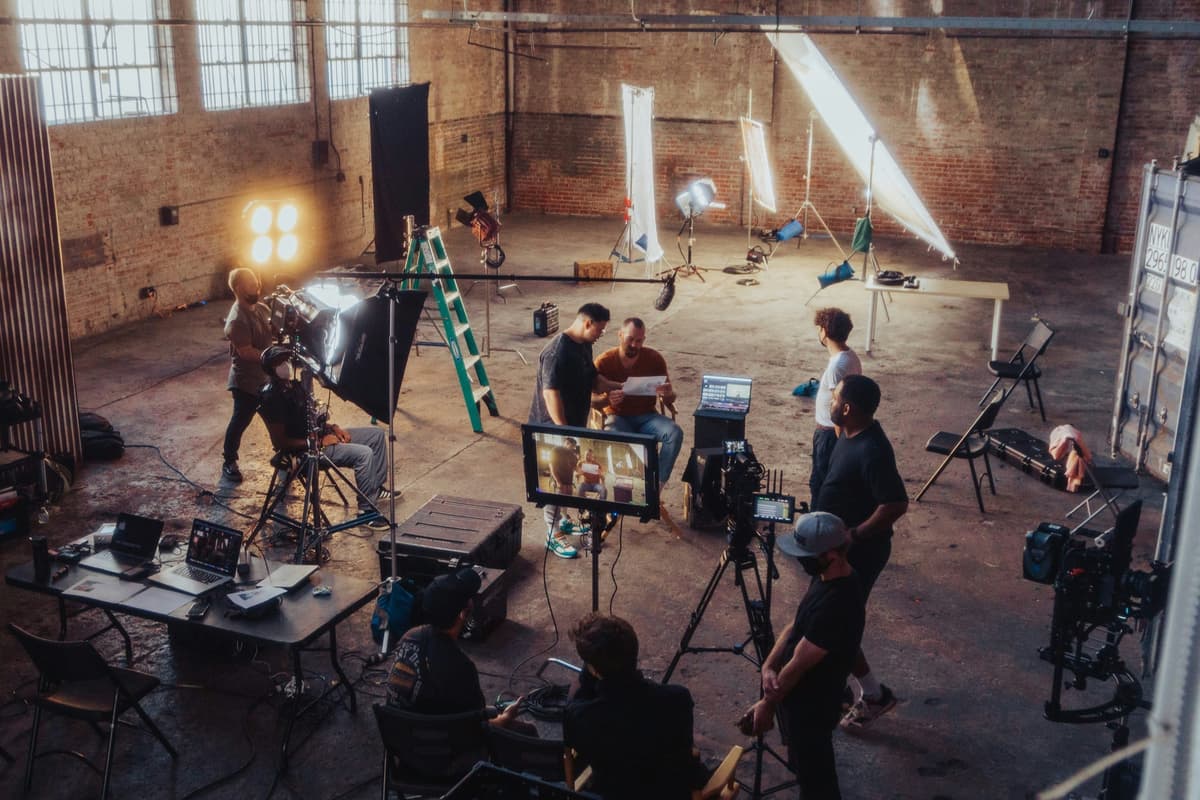
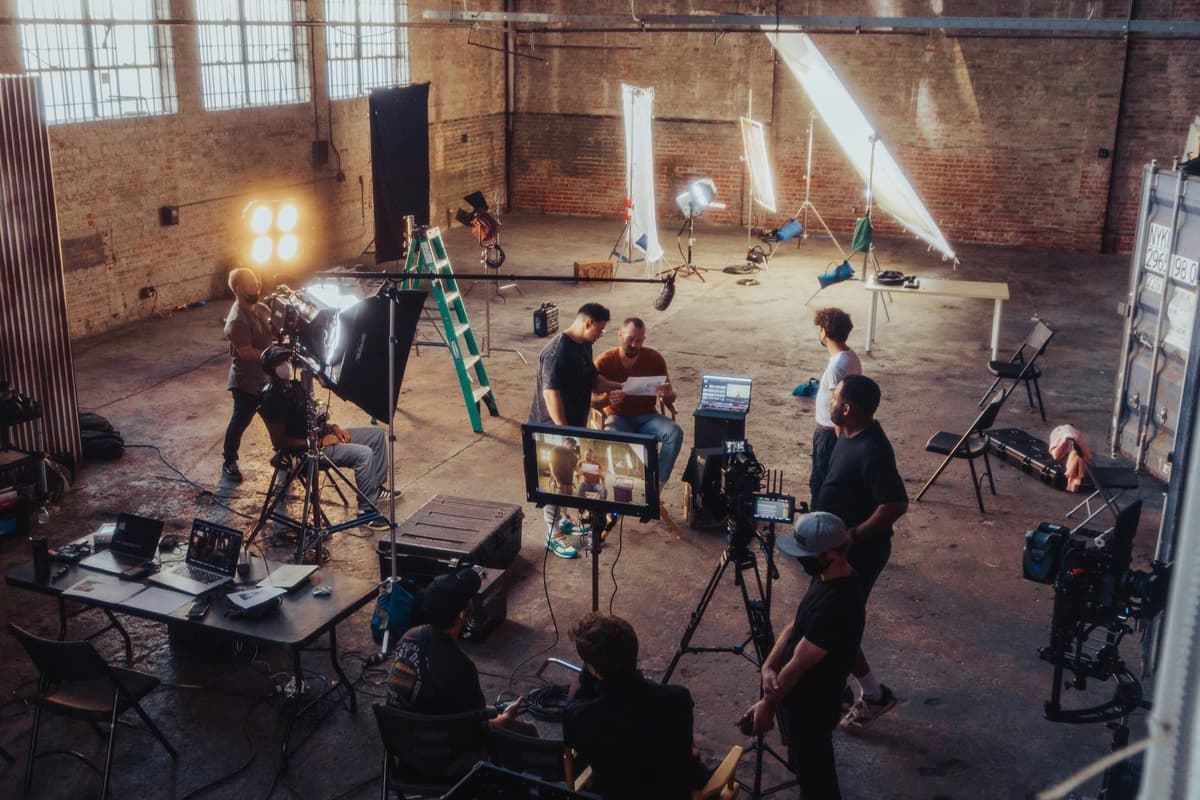
What is a Clapper Loader?
Overview
What Is a Clapper Loader?
A clapper loader is the camera department crew member responsible for operating the clapperboard at the start of each take and managing all physical media — whether film magazines or digital memory cards — that pass through the camera. The role sits at the base of the camera department hierarchy and serves as the organizational backbone of the entire camera team on set.
In the United States, the job is almost universally called the 2nd Assistant Camera (2nd AC). In the United Kingdom, Australia, and most of Europe, the same position carries the title clapper loader — a name that captures the job's two defining duties: clapping the slate and loading the camera. Both titles refer to exactly the same role; the terminology shifts with geography, not with the scope of the work.
US vs. UK Terminology
The divergence in terminology has historical roots. British film production grew from a tradition where the operator's assistant was responsible for both the clapperboard and for physically loading film into the camera magazine — hence "clapper loader." The American system, which evolved partly from studio labor agreements and IATSE jurisdictional definitions, categorized the role as the second layer of assistant camera work, producing the title "2nd AC."
On international co-productions, the US term tends to dominate in crew contracts and call sheets, but the actual job description is identical. If you are working with a British crew and someone refers to the clapper loader, they are talking to the same person a Hollywood production would call the 2nd AC.
Camera Department Hierarchy
The camera department runs in a clear chain of command:
- Director of Photography (DP / Cinematographer) — heads the department, makes all creative decisions about image
- Camera Operator — executes the DP's vision behind the eyepiece
- 1st Assistant Camera (1st AC / Focus Puller) — manages focus, oversees camera equipment, coordinates the 2nd AC
- 2nd Assistant Camera / Clapper Loader — runs the slate, loads media, handles paperwork, supports the 1st AC
- Camera Trainee / Camera PA — entry-level position, assists the 2nd AC
The clapper loader reports directly to the 1st AC and is the last line of camera department support on the floor. Every piece of equipment, every card, every magazine, and every camera report flows through this position.
Clapperboard Function: Syncing Audio and Video
The clapperboard — also called a film slate, clapboard, or simply "the board" — serves a critical technical function: it creates a visual and audible sync point that allows editors and sound engineers to align picture and sound in post-production. When the sticks clap, the sharp, distinctive sound spike appears on the audio waveform at the exact frame where the two arms meet on camera. The editor snaps these two markers together to achieve frame-accurate sync.
Before digital audio workstations made syncing more automated, this manual process was the only reliable way to marry separately recorded picture and sound. Even today, with tools like PluralEyes and Resolve's auto-sync, a well-slated take saves hours in the edit and provides a fail-safe when audio waveforms alone are ambiguous.
Digital vs. Film Loading: How the Job Has Changed
When film was the dominant medium, the clapper loader's loading duties were genuinely technical and time-sensitive: magazines had to be loaded in complete darkness using a changing bag, the film had to be threaded without touching the emulsion, and exposed magazines had to be sealed and labeled before any contact with daylight. A mistake could ruin an entire camera roll and cost thousands of dollars in reshoots.
Digital production replaces film magazines with memory cards — CFexpress, SxS, R3D, ProRes RAW, and other formats depending on the camera system. Loading is faster and mistakes are less catastrophic, but the 2nd AC's organizational responsibilities have grown proportionally. Digital media requires meticulous labeling, tracking across multiple cameras, offloading verification with the DIT (Digital Imaging Technician), and chain-of-custody documentation to prevent data loss.
On productions that still shoot on film — features seeking a specific aesthetic, commercials, music videos, or passion projects — the clapper loader's film handling skills remain fully in play, and the darkroom discipline is non-negotiable.
The Role's Place in Production Management
Managing a film or television budget requires tracking every department's costs in real time. Saturation.io gives production accountants and coordinators cloud-based tools to monitor camera department expenditures — from media stock to equipment rentals — alongside the full production budget, without the lag of legacy desktop software.
Role & Responsibilities
Core Duties of a Clapper Loader
The clapper loader's responsibilities span pre-production prep, every shooting day, and wrap. The work is physically demanding, mentally precise, and unglamorous — and it is the foundation on which the entire camera department runs.
Clapperboard Operation
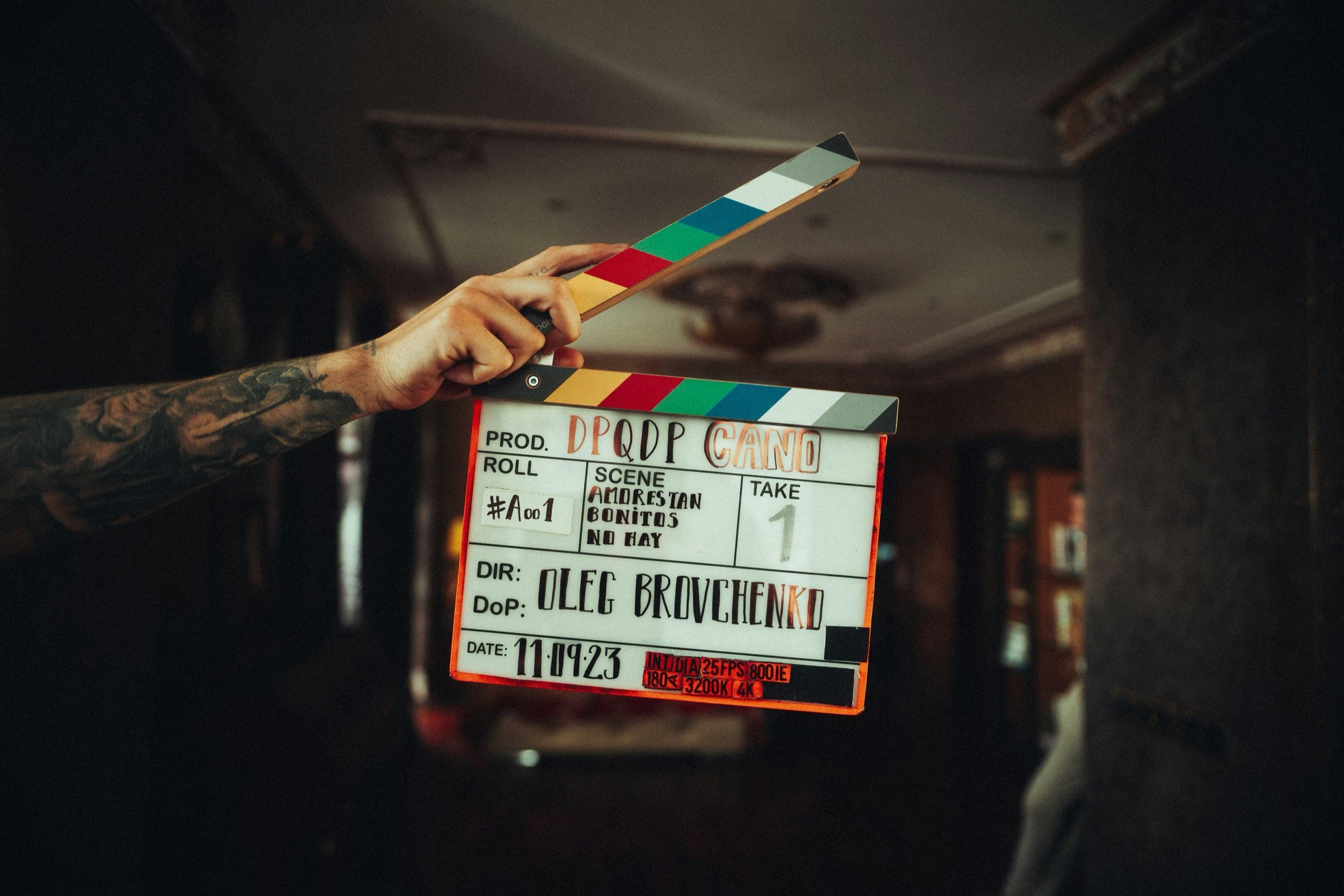
Operating the slate is the most visible part of the job. At the start of every take, the clapper loader positions the board in front of the camera, announces the scene, shot, and take information audibly so it is captured on the sound recording, and then claps the sticks together on the camera operator's or 1st AC's signal.
Slate information recorded on the board typically includes:
- Production title and director's name
- Cinematographer's name and date
- Camera designation (A, B, C camera)
- Roll number, scene number, and take number
- Frame rate and shooting conditions (day exterior, interior, night, etc.)
On multi-camera shoots, each camera has its own slate. The 2nd AC on a multi-camera production often has a camera trainee shadow-slating additional cameras while the primary 2nd AC manages the A camera and the overall paperwork.
Tail Slates (End Boards)
When it is impractical to slate at the head of a take — recording a sleeping actor's close-up, a delicate nature shot, or any moment that would be disrupted by the sound — the clapper loader performs a tail slate at the end of the take. The slate is presented upside down to signal to the editor that the sync point appears at the end of the shot rather than the beginning. The verbal call is "end board" or "tail slate."
MOS Takes
A "MOS" (without sound) take is recorded without a live audio track. For MOS takes, the 2nd AC places a hand or fingers between the clapper sticks rather than clapping them. This signals to editorial that no audio sync is needed for this shot. The slate is still presented and logged identically; only the clap is omitted.
Blind Slates
A blind slate is called when the camera is already rolling before the slate can be presented — typically because the director wanted to capture a spontaneous moment. The 2nd AC presents the slate as quickly as possible after the action starts, often partially out of frame or at an unusual angle. The blind slate alert is called verbally so post-production is aware the sync point may require manual search.
Loading and Unloading Film Magazines
On film productions, the clapper loader loads camera magazines in a changing bag or darkroom. The process requires:
- Threading the correct film stock from the supply can onto the feed side of the magazine without touching the emulsion surface
- Routing the film leader correctly through the magazine gate
- Sealing the loaded magazine in a black bag, labeling it with stock type, ASA, and roll number, and logging it in the camera report
- After exposure, removing the exposed magazine in the dark, sealing and labeling it as "exposed," and logging it for transport to the lab
Common film gauges handled by the clapper loader: Super 16mm, Standard 16mm, Super 35mm, and anamorphic 35mm. Each format and camera body (Arricam, ARRI 416, Moviecam, Aaton LTR) has specific magazine loading procedures the loader must know in advance.
Digital Media Management
On digital productions, the clapper loader manages memory cards across all active cameras. Duties include:
- Formatting cards at the start of each shooting day after confirmed backup from the previous day
- Labeling cards with camera designation, roll/card number, and date before inserting
- Swapping full cards promptly to minimize shooting interruptions
- Tracking which cards are in-camera, which are full, and which have been handed to the DIT
- Maintaining a chain-of-custody log so no card is ever unaccounted for
- Never reformatting a card until the DIT confirms offload verification (checksum match)
Common card formats: CFexpress Type A/B (Sony VENICE, FX9), SxS (older Sony), CFast 2.0 (Arri ALEXA Mini LF), Codex magazines (ALEXA 35), ProRes RAW cards (Nikon Z), and Red MINI-MAGs (DSMC2/DSMC3).
Camera Reports
The camera report is the paper record of every roll or card shot during the day. It documents the magazine or card number, footage shot, scene and take information, film stock or format, any special instructions for the lab or DIT, and whether the roll is exposed, short-end, or waste. On digital shoots, an equivalent digital camera report or media log fulfills the same function.
Camera reports are essential for continuity, billing (labs charge per roll), insurance claims in the event of damage, and editorial logging. A missing or inaccurate camera report can delay post-production significantly.
Lens Changes and Equipment Support
The clapper loader assists the 1st AC with lens changes — retrieving the requested lens from the camera cart, confirming it is clean, and returning the used lens to its case. On fast-moving shoots, the speed of this handoff directly affects how quickly the crew can move to the next setup. The 2nd AC also assists with mounting and dismounting the camera from the head, attaching accessories (mattebox, follow focus, monitors), and generally being the extra hands the 1st AC needs at every setup change.
Building and Breaking Down Camera
At the start of every shooting day and at every significant setup change, the clapper loader helps build the camera package: attaching the baseplate, mounting the head, connecting cables, attaching the mattebox, threading any on-board filters, and confirming the sensor or film path is clean before the first take. At the end of the day or during company moves, the 2nd AC breaks down the package and secures it for transport, keeping an inventory against the equipment manifest.
Focus Marking
While focus pulling is the 1st AC's primary job, the 2nd AC assists by placing colored tape marks on the floor at measured positions during rehearsals to indicate where actors should stand for their assigned focus distances. These marks — called focus marks or blocking marks — allow the 1st AC to rack focus to a pre-measured distance with confidence.
Media Distribution to DIT
On larger digital productions with a dedicated DIT, the clapper loader is the primary contact for handing off full media cards. The hand-off protocol includes verbal confirmation of card label, roll number, and camera designation, plus a physical sign-off on the media log. The DIT copies, verifies, and returns the card (or a fresh formatted card) to the 2nd AC. This loop must be tracked meticulously — particularly on long shooting days with multiple cameras where dozens of cards may change hands.
Skills Required
Essential Skills for a Clapper Loader
The clapper loader role demands a specific blend of technical knowledge, physical dexterity, administrative precision, and interpersonal skill. Unlike positions where depth in one area compensates for gaps in others, the 2nd AC must be competent across all dimensions simultaneously — because a failure in any one area disrupts the entire camera department's workflow.
Clapperboard Operation
Professional slate technique goes far beyond holding up a board and hitting the sticks. Competent clapperboard operation requires:
- Correct positioning: The slate must be fully visible in frame and close enough to be readable, with position determined by the focal length in use — wider lenses require the slate closer to camera than telephotos do
- Clear verbal calling: Scene, shot, and take numbers must be spoken clearly before the clap so the sound recordist captures them on the audio track
- Crisp stick clap: The two arms must meet decisively — a soft clap or a bounced double-clap creates ambiguous audio spikes that complicate syncing in post
- MOS discipline: For MOS takes, a hand is placed between the sticks before the slate is presented, preventing any editorial confusion about whether the take requires audio sync
- Tail slate execution: Holding the slate upside down cleanly and calling "end board" so there is no ambiguity about where the sync point falls
- Blind slate recovery: Moving quickly into frame without disrupting the scene's energy or entering the DP's eyeline
Experienced 2nd ACs develop a rhythm that minimizes the time between "speed" and the clap — allowing the crew to move quickly between takes without unnecessary holds.
Film Loading: 16mm and 35mm
For productions shooting on film, the clapper loader must be able to:
- Load and unload film magazines completely in the dark using a changing bag, without touching the emulsion surface
- Thread film correctly through the magazine gate for each specific camera body
- Identify and handle different film stocks (color negative, black-and-white, reversal) according to their individual requirements
- Seal, label, and store exposed magazines against light leaks before transport
- Complete lab reports with correct processing instructions for each roll
- Track short ends (partially used rolls) and waste footage separately from the main camera report
Each film gauge and camera body has specific magazine loading procedures. A loader stepping onto a film shoot is expected to know the camera system — not learn it on the clock.
Digital Media Management
Digital production has added a data management layer to the clapper loader role:
- Card labeling protocol: Each card must be labeled before insertion — production initials, camera designation, roll number, and date. Unlabeled cards create post-production confusion that can take hours to untangle.
- Format verification: Confirming the correct card type is being inserted (CFexpress Type A vs. Type B, SxS Pro+ vs. SxS-1) and that the camera is configured to record to the correct media slot
- Offload tracking: Maintaining a media log that traces every card from insertion through DIT handoff and backup verification before reformatting
- Never formatting unverified media: A card is not reformatted until the DIT's offload log shows a confirmed checksum-verified backup — this is the cardinal rule of digital media management on set
- Capacity awareness: Knowing the recording time remaining at current camera settings (format, frame rate, codec) so a swap does not interrupt a critical take
Camera Report Paperwork
The camera report documents every roll or card shot during the production day. Skills required:
- Filling out reports accurately in real time during shooting, not reconstructing from memory at day's end
- Recording the correct data: roll or magazine number, scene and take, footage or clips recorded, camera designation, any special handling instructions
- Maintaining legibility under pressure — reports are read by post-production coordinators who may never meet the 2nd AC in person
- Keeping reports organized for distribution to the DP, production office, lab or DIT, and editor
Lens Knowledge and Handling
A clapper loader works with lenses constantly — retrieving them, handing them to the 1st AC, and tracking their location on the camera cart. Working knowledge includes:
- Prime vs. zoom differentiation and proper handling technique for each
- Anamorphic vs. spherical lens identification (anamorphic elements are more delicate and require extra care)
- Recognition of major lens sets: Cooke, Zeiss, Leica, Sigma Cine, ARRI Signature, Canon K-35
- Consistent lens cap discipline — capped at all times when not mounted
- Filter identification and mattebox filter stage management
Speed and Multitasking Under Pressure
A 2nd AC on a fast-moving set may simultaneously be tracking a full card in camera A, slating the next take on camera B, fetching a lens for camera C, and answering a question from the script supervisor — all within a three-minute window between takes. The role requires:
- Clear prioritization: a full in-camera card takes precedence over a lens retrieval request
- Physical efficiency on set — moving without stepping into eyelines or disrupting the DP's lighting
- Working memory for multiple scene numbers, take counts, and media labels simultaneously
- Calmness under director pressure: when a director wants to roll immediately, the 2nd AC communicates any brief hold clearly and professionally
Communication and Set Protocol
The clapper loader communicates with nearly every department: sound (for slate calls), script supervisor (for take information), DIT (for media hand-offs), camera operator (for slate framing), and 1st AC (for equipment needs). Strong communication skills include:
- Clear verbal communication on a noisy set with varying acoustics
- Walkie-talkie etiquette and radio protocol on larger productions
- Diplomatically communicating holds to the AD without causing production friction
- Maintaining a calm, professional demeanor during the inevitable high-pressure moments
Physical Stamina and Fine Motor Dexterity
The clapper loader is on their feet for the entirety of every shooting day — commonly 12 to 14 hours on features and commercial productions. The role requires:
- Ability to carry and move camera cases, lenses, and accessories across varied terrain
- Fine motor control for loading magazines and handling small, expensive components (lens elements, memory cards) in confined or awkward positions
- Sustained organizational precision over long days without cognitive degradation under fatigue
Salary Guide
Clapper Loader / 2nd AC Salary and Pay Rates
Clapper loader pay varies based on market (US vs. UK), union status, production type (feature, TV episodic, commercial, music video), and experience. Below are current benchmarks across all relevant dimensions.
Non-Union Day Rates (United States)
On non-union productions in the United States, 2nd AC day rates fall in the following ranges depending on the production budget tier:
- Low-budget / indie features (under $1M): $200–$350 per 12-hour day, sometimes with deferred compensation components
- Mid-range features and episodic ($1M–$10M): $350–$500 per 12-hour day
- Commercial work (non-union): $450–$650 per day, with high-end commercial markets paying $700+ for experienced 2nd ACs
- Music videos: $200–$400 per day depending on label budget and creative scope
IATSE Local 600 Union Rates (United States)
In union markets, the 2nd AC works under the IATSE Basic Agreement negotiated by the International Cinematographers Guild (Local 600). Union rates are the contractually mandated minimum; employers may pay above scale but not below it.
Under current IATSE Basic Agreement rates (2024–2026 contract cycle), 2nd AC minimum studio rates are approximately:
- Day rate (studio, 8-hour guarantee): approximately $540–$600 per day
- Weekly rate (studio): approximately $2,000–$2,400 per week (5-day guarantee)
- Overtime: time-and-a-half after 8 hours, double-time after 14 hours under most agreements
- Benefits: Employers contribute an additional percentage above gross wages to the MPI (Motion Picture Industry) health and pension fund — effectively increasing total compensation 20–30% above the headline rate
Location adjustments apply: Los Angeles and New York command the highest rates as the primary union markets. Area standards agreements in secondary markets (Atlanta, New Orleans, Chicago, New Mexico) may differ slightly from the Basic Agreement floor.
Weekly Rates on Episodic Television
Television episodic production typically hires camera assistants on weekly contracts rather than daily rates, providing income stability during a production run. Current weekly ranges for 2nd ACs on episodic:
- Non-union episodic: $1,400–$2,000 per week
- Union episodic (network / major streamer): $2,200–$2,800 per week at scale, with above-scale agreements for experienced 2nd ACs on premium productions
A 22-episode network season running for seven months at a weekly rate provides substantially more annual income than piecemeal day rates on indie features — making episodic TV the income target for most working 2nd ACs.
Annual Income Estimates
Annual income for a clapper loader depends on how consistently they work and whether they are in a union market:
- Entry-level / occasional work: $25,000–$45,000/year
- Working non-union 2nd AC (regular bookings): $45,000–$75,000/year
- Union 2nd AC (well-booked, LA or NY market): $80,000–$130,000/year
- Senior union 2nd AC (top-tier episodic / features): $130,000–$180,000/year with overtime and pension contributions factored in
According to U.S. Bureau of Labor Statistics data for camera operators, median annual wages in the broader camera operator category sit around $62,000–$70,000, though the BLS does not specifically distinguish the 2nd AC from other camera positions in its occupational categories.
UK Clapper Loader Pay
In the United Kingdom, the clapper loader title is standard and BECTU agreements set minimum rates on unionized productions. Current UK benchmarks:
- Low-budget feature (BFI / Screen Scotland funded): £200–£300/day
- Mid-range UK feature or TV drama: £300–£450/day
- High-budget HETV (High-End Television, Netflix/HBO/Disney+): £500–£700/day, with premium rates on major US streamer productions filmed at UK studios
UK clapper loaders frequently work as daily freelancers. Long UK drama series do provide extended runs comparable to US episodic production in terms of income continuity.
Union vs. Non-Union: The Trade-off
The decision about when to pursue IATSE Local 600 membership involves real trade-offs:
- Union advantages: Guaranteed minimums, overtime protections, health insurance through MPI (after meeting eligibility hours), pension accrual, contractual meal breaks and turnaround requirements
- Non-union advantages: More accessible entry-level work, flexibility on low-budget productions that cannot afford union rates, ability to work with interesting creative teams before building union-level credits
Most 2nd ACs in LA and NY markets aim to join Local 600 once they have built enough experience to sustain consistent union bookings — because the income stability and benefits package significantly outpaces what non-union work provides at comparable experience levels.
Frequently Asked Questions
Frequently Asked Questions: Clapper Loader
What does a clapper loader do on set?
A clapper loader operates the clapperboard at the start of each camera take to synchronize audio and video, loads and unloads film magazines or digital memory cards, maintains camera reports, assists the 1st AC with lens changes and equipment, and manages the flow of media to the DIT. The role is also called 2nd Assistant Camera (2nd AC) in the United States.
What is the difference between a clapper loader and a 2nd AC?
There is no difference in job responsibilities. "Clapper loader" is the standard UK and Australian term; "2nd AC" (2nd Assistant Camera) is the standard US term. Both titles describe the same role: the camera department crew member who operates the slate and manages all media. On international co-productions, you may see both titles used — they refer to the same person doing the same work.
What does the clapperboard actually do?
The clapperboard creates a visual and audible sync point. When the two clapper sticks come together, they produce a sharp visual signal on camera (the exact frame where the sticks meet) and an equally sharp audio transient captured on the sound recording. In post-production, the editor snaps these two markers together to synchronize picture and sound with frame accuracy. This process is called syncing rushes or syncing dailies.
What is an MOS take?
MOS (without sound) is a designation for takes recorded without a live audio track. When shooting MOS, the 2nd AC places their hand between the clapper sticks rather than clapping them — a universal signal to everyone on set and in post-production that no audio sync is needed. The origin of "MOS" as an acronym is disputed in industry lore, but its application is universally understood across all film markets.
How much does a clapper loader earn?
In the United States, non-union 2nd ACs typically earn $250–$500 per day. IATSE Local 600 union rates run approximately $540–$600 per day or $2,000–$2,400 per week on episodic television. Annual income for well-booked union 2nd ACs in Los Angeles or New York typically ranges from $80,000 to $130,000. In the UK, day rates run from £200 to £700+ depending on production budget and union agreement.
How do you become a clapper loader?
The most common path starts as a camera PA (camera trainee in the UK), building experience on low-budget productions, music videos, and commercials before moving up to 2nd AC on higher-budget shoots. Film school is useful but not required. IATSE Local 600 membership opens union productions in the US — joining typically requires accumulated days of experience, sponsorship from existing Guild members, and payment of initiation fees.
What is the difference between loading film and loading digital media?
Film loading requires working in complete darkness inside a changing bag, physically threading 16mm or 35mm stock through the magazine mechanism without touching the emulsion. A mistake can expose the film and destroy a full camera roll worth thousands of dollars. Digital loading replaces this with inserting memory cards — faster and mechanically more forgiving, but with stricter data management requirements. Digital media must be labeled, tracked through the DIT, and verified before reformatting — no card is ever reformatted without confirmed offload checksum.
What is a tail slate or end board?
A tail slate (end board) is a clapperboard presented at the end of a take rather than the beginning — used when slating at the head would disrupt the shot (a sleeping actor, a delicate nature setup, a spontaneous moment). The slate is held upside down to signal to editorial that the sync point is at the end of the clip. The verbal call is "end board" or "tail slate."
Education
Education and Training Pathways for Clapper Loaders
There is no formal degree requirement to become a clapper loader or 2nd AC. The role is fundamentally a craft position — you are hired for your practical knowledge of cameras, media, and set protocol, not for academic credentials. Specific educational pathways do accelerate the learning curve, but experience on set consistently outweighs classroom credentials in hiring decisions.
No Formal Degree Required
The film industry operates on a portfolio-of-experience model: what you have done matters far more than where you studied. Many working 2nd ACs never attended film school. What every 2nd AC must have, however, is hands-on familiarity with:
- The camera systems common in their target market (ARRI, Sony, RED, Blackmagic)
- The physical mechanics of loading magazines (if working in film) or managing digital media
- Set etiquette and union protocols in their market
- Camera paperwork and media management workflows
Film School Camera Department Track
Film schools provide structured exposure to camera department roles and hands-on time with professional equipment. Relevant programs include:
- AFI Conservatory (Los Angeles) — cinematography program with practical emphasis
- NYFA (New York Film Academy) — hands-on production programs at multiple levels
- Chapman University, Dodge College (Orange, CA) — strong production curriculum and industry connections
- Columbia College Chicago — cinema and television arts with a practical production track
- NFTS (National Film and Television School, UK) — camera department specialist pathway
The practical value of film school for an aspiring 2nd AC is the access to equipment and the network of classmates who become directors, DPs, and producers. The connections and reel material built during school projects matter more than the curriculum itself.
Camera PA to Clapper Loader Path
The most common path into the 2nd AC role in US markets runs through the Camera PA (also called Camera Trainee in UK markets) position — the entry-level role in the camera department. Camera PAs assist the 2nd AC, often shadow-slating secondary cameras, helping break down and build camera packages, running equipment between departments, and learning set rhythm from the ground up.
Typical progression timeline:
- Camera PA / Camera Trainee — 1 to 3 years, building experience on low-budget features, music videos, commercials, and reality TV
- 2nd AC / Clapper Loader — 3 to 7 years, accumulating credits across different camera systems and production types
- 1st AC / Focus Puller — requires deep focus pulling skill and established DP relationships
- Camera Operator — an optional intermediate step; many 1st ACs move directly to DP without operating
- Director of Photography — rare ascent, requires complete creative and technical mastery of image making
IATSE Local 600 Membership Pathway
In US union markets — primarily Los Angeles and New York — camera department crew work under the jurisdiction of the International Cinematographers Guild, IATSE Local 600. Working on a union production as a 2nd AC requires either existing Local 600 membership or a qualification process if the production cannot find a union member for the position.
The pathway to Local 600 membership typically involves:
- Accumulating qualifying days on non-union productions to demonstrate experience
- Being sponsored or vouched for by existing Local 600 members
- Passing the Guild's qualifying process, which may include a camera knowledge assessment
- Paying initiation fees and ongoing dues
Once in the Guild, the 2nd AC is covered by the IATSE Basic Agreement or applicable area standards agreement, setting minimum wages, overtime rules, turnaround requirements, and benefit fund contributions (health, pension, IAP). In the UK, BECTU (Broadcasting, Entertainment, Communications and Theatre Union) is the equivalent body.
Short Courses and Manufacturer Training
Several organizations offer courses specifically targeting camera assistant skills:
- ARRI Training — official manufacturer training on ALEXA Mini LF, ALEXA 35, and film camera systems
- Sony Professional Training — courses on VENICE 2, FX9, and FX6 systems, including media management workflows
- RED Digital Cinema Training — training on DSMC2 and DSMC3 systems, MINI-MAG management, and post workflows
- Screenskills (UK) — skills checklists and continuing professional development resources for camera department roles
Self-Directed Study: Camera System Manuals
Every camera manufacturer publishes free technical documentation. Any aspiring 2nd AC should study the manuals for systems most common in their target market:
- ARRI ALEXA Mini LF and ALEXA 35 camera operation guides
- Sony VENICE 2 and FX9 operation and media guides
- RED MONSTRO, RAPTOR, and V-RAPTOR operation and MINI-MAG management guides
- Blackmagic URSA Mini Pro G2 and Cinema Camera 6K guides
Physical practice — building and breaking down a camera body, changing lenses under time pressure, loading a magazine in a changing bag — cannot be replicated through reading alone. Most aspiring 2nd ACs find ways to rent or borrow camera packages to practice before stepping onto their first professional set.
Last updated April 25, 2026
Budget this role in seconds with Saturation
Rate packs, fringes, and phases turn a crew list into an accurate production budget without the spreadsheet math.
Rate packs
Verified union rates, versioned.


Fringes and markupsRebuilt
Stack them, cap them, and see the split on every line.
PhasesRebuilt
Every column knows its type.
Auto-fill
Rates fill in as you type, from the source you turned on.