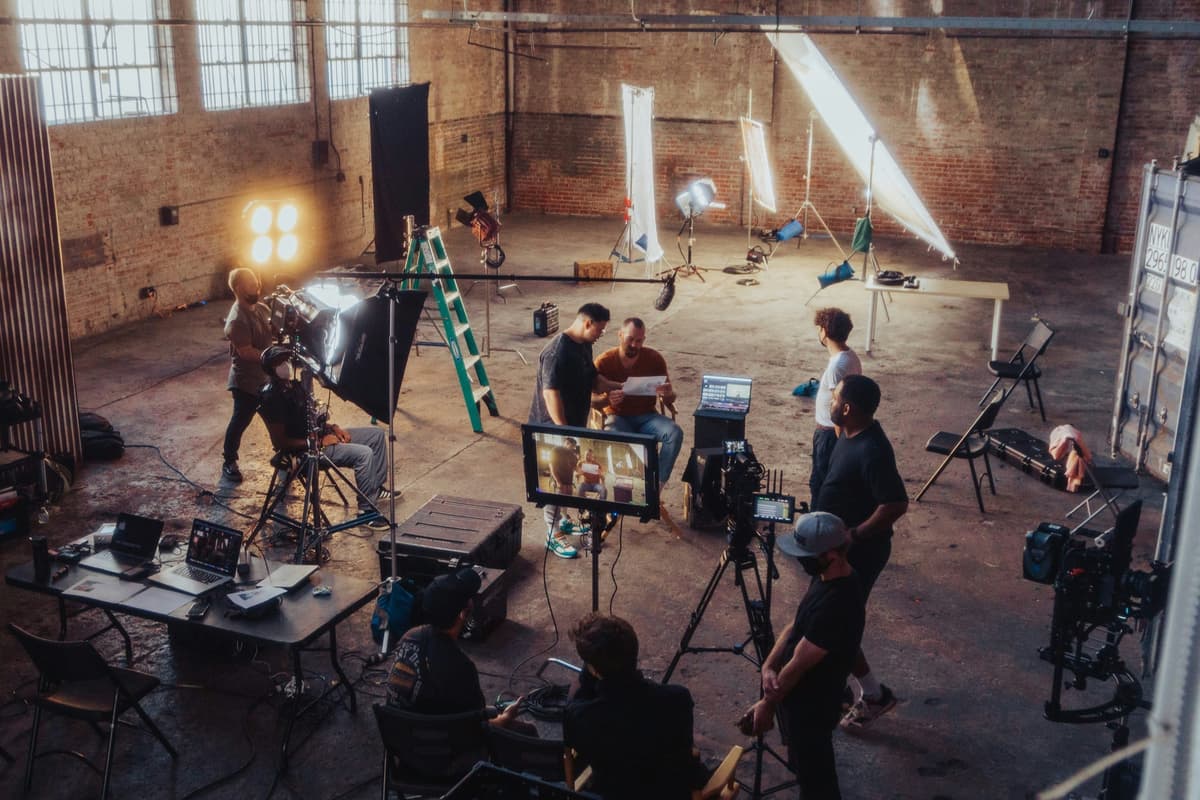
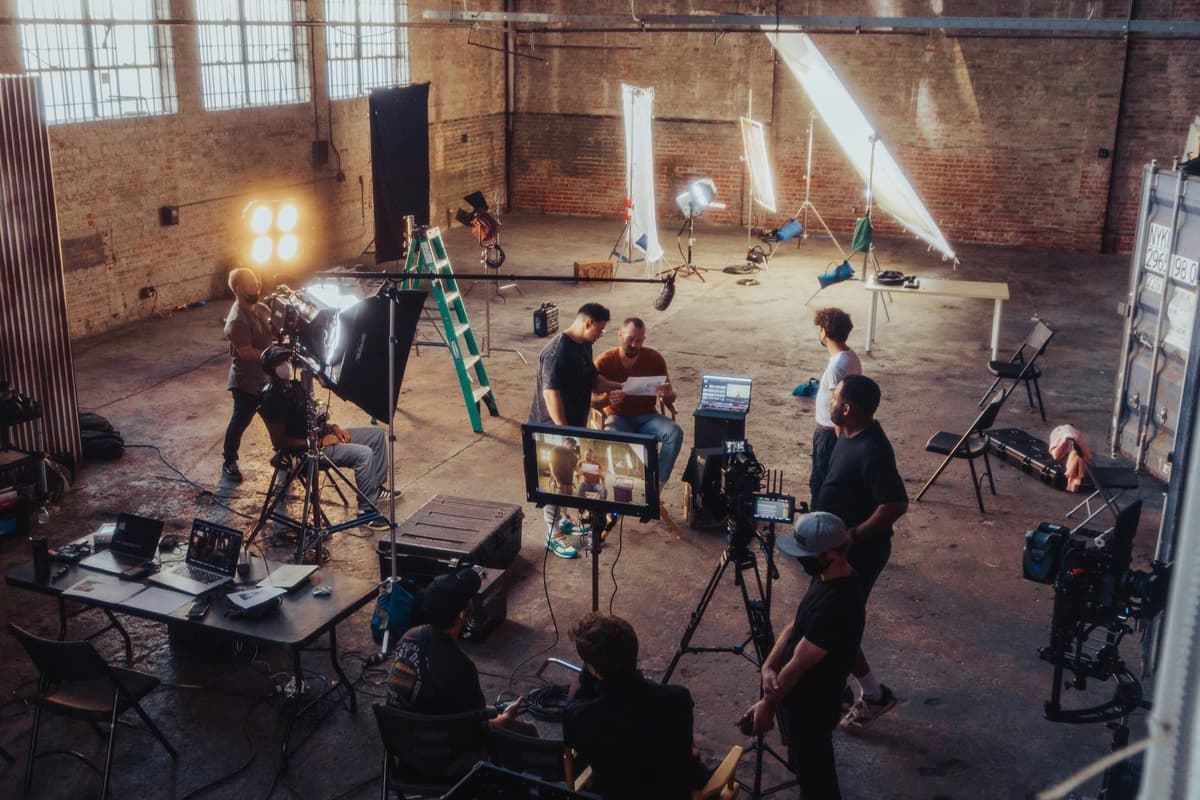
What is a Film Set Carpenter?

Overview
What Is a Film Set Carpenter?
A film set carpenter is a skilled tradesperson who builds, installs, and strikes physical sets for motion pictures, television series, commercials, and music videos. Working under the construction coordinator and construction foreman, set carpenters are the hands that turn a production designer's blueprints into three-dimensional worlds — from a character's cramped apartment to a medieval throne room to a futuristic spacecraft interior.
Set carpenters are part of the art department's construction crew, operating alongside painters, plasterers, scenic artists, and prop makers. They are distinct from set dressers (who furnish and decorate finished sets) and property masters (who manage on-screen props). The set carpenter's job is structural: frame the walls, lay the floors, build the platforms, and assemble every wooden or composite element that forms the backbone of a production's physical environment.
Where Do Film Set Carpenters Work?
Most film set carpenters work out of a studio mill — a large workshop where sets are prefabricated — before transferring completed pieces to a soundstage or location. Major production hubs include Los Angeles (home of IATSE Local 44, the primary union for Hollywood set construction), New York (Local 52), Atlanta (where Georgia's film tax incentives have fueled rapid industry growth), and Vancouver, New Mexico, and Louisiana.
Productions range from independent short films shot in a single weekend to Marvel tentpoles that occupy multiple soundstages for months. A single feature film may employ dozens of carpenters simultaneously, while a smaller TV commercial may need just two or three skilled hands for a half-day build.
Film Set Carpenter vs. Commercial Carpenter
Although the tools are the same, the craft differs in important ways. Commercial construction demands code-compliant, structurally permanent builds. Film set carpentry prioritizes speed, visual appearance, and repeatability over permanence. A set wall may be framed at 24 inches on center (instead of the standard 16) to save weight and lumber. A floor may be built to support camera dollies and 300-pound equipment carts rather than permanent occupancy loads. And a "breakaway" door or wall must shatter convincingly on cue and be rebuilt identically before the next take.
Managing your film production budget — including set construction costs — is much easier with modern tools. Saturation.io is a cloud-based film budgeting platform built specifically for productions, helping line producers and production accountants track construction labor, materials, and equipment costs in real time, so your art department never goes over budget.
Role & Responsibilities
Core Duties of a Film Set Carpenter
The day-to-day responsibilities of a film set carpenter vary by production type and department structure, but the core duties remain consistent across projects.
Reading and Interpreting Blueprints
Before a single piece of lumber is cut, set carpenters must understand the set designer's technical drawings. These blueprints specify dimensions, elevations, material callouts, and construction sequences. A set carpenter who cannot read a blueprint accurately risks building the wrong set — a mistake that can cost thousands of dollars and valuable shooting days to correct. Most experienced carpenters also work directly with the art director to resolve design conflicts or suggest structural alternatives when a specified approach is not buildable as drawn.
Framing and Structural Construction
Framing is the foundation of set construction. Film set carpenters build wall flats (lightweight wooden frames covered in lauan plywood or muslin), platforms, stairways, ramps, false ceilings, and structural supports. Because sets must be built and struck repeatedly and often transported between the mill and stage, framing is engineered for portability: bolted connections rather than nailed, modular panels that can be disassembled, and hardware that allows rapid reconfiguration between setups.
Flooring Installation
Film floors carry significant loads — camera cranes, dolly tracks, large lighting rigs, and dozens of crew members moving simultaneously. Set carpenters level and install subfloor structures, lay surface materials such as hardwood, tile simulation panels, or painted concrete flats, and build sloped or textured surfaces that create visual interest on camera without creating safety hazards for crew. Smooth dolly run surfaces are especially critical: even a slight imperfection can show up as a camera bump that ruins an otherwise perfect take.
Building Breakaway and Specialty Elements
Among the most technically demanding aspects of film carpentry is constructing breakaway elements — set pieces designed to be destroyed or damaged on camera. A breakaway wall that collapses when a character crashes through it must look solid on screen, shatter convincingly in the take, and be fully rebuilt before the next shot. Common breakaway materials include balsa wood, scored lauan, foam-core panels, and pre-weakened plywood. Set carpenters building these elements work closely with the special effects department to ensure timing and safety.
Working with Other Construction Trades
Film construction is a team discipline. Set carpenters hand off completed structural work to scenic painters who apply surface finishes, to plasterers who add texture and detail, and to set decorators who dress the finished environment. Electricians run conduit through walls before the carpenters close them in. Riggers attach set pieces to overhead grid systems. A film set carpenter must coordinate constantly with adjacent departments to ensure work sequences do not create conflicts, especially under tight production deadlines.
Stage and Location Builds
Some productions are shot entirely on a studio soundstage, where controlled conditions allow for precise construction. Others require location work — building a temporary set inside a warehouse, a historic building, or an exterior location. Location builds introduce challenges: uneven floors, limited electrical access, weather exposure, and the need to restore the location to its original condition once filming wraps. Set carpenters who work location builds must adapt standard construction practices to each unique environment.
Set Strike and Demolition
When filming wraps on a set, carpenters are responsible for striking (dismantling) it. Lumber is sorted for reuse or disposal, hardware is collected and inventoried, and the stage floor is swept clean. Some elements — flat walls, standard platforms, stock set pieces — are returned to the production company's inventory for future use. Efficient strike work keeps studio rental costs low and is an important part of the set carpenter's professional reputation.
Daily Work Life
Film set carpenters typically work 10- to 14-hour days during heavy build periods. Prep (pre-production) is the most carpenter-intensive phase: the entire set must be built before cameras roll. During principal photography, carpenters are often on-set in a swing gang or standby capacity, making modifications, repairs, and additions as needed between setups. Post-production may include building additional inserts, pickups, or reshoots. Union work rules specify meal break intervals, turnaround times, and overtime rates — all of which are governed by the applicable IATSE collective bargaining agreement.
Skills Required
Essential Skills for Film Set Carpenters
Film set carpentry demands a combination of technical craftsmanship, creative problem-solving, and professional conduct on set. The following skills are consistently cited by construction coordinators and department heads when evaluating candidates for their crews.
Carpentry Expertise: Framing, Finish, and Scenic
Proficiency across the full spectrum of carpentry — rough framing, finish work, and scenic construction — sets a versatile set carpenter apart from a journeyman who knows only one discipline. Rough framing skills enable you to build the structural bones of a set quickly and accurately. Finish carpentry skills allow you to produce the detail work — moldings, casings, custom millwork — that makes a set read as believable on camera. Scenic carpentry is the film-specific layer: understanding how surfaces photograph differently than they appear in person, and building scenic elements (false perspectives, oversized or undersized props, forced-perspective streets) that enhance the director's visual storytelling.
Blueprint and Technical Drawing Reading
The ability to read and interpret architectural drawings, orthographic projections, elevations, and section views is non-negotiable. Film set designers work in both imperial (feet and inches) and metric scales, and drawings may include unconventional specifications for scenic elements. A carpenter who can ask the right clarifying questions of the art director — and understand the answers — saves production time and material costs.
Power Tool Proficiency and Safety
Film set carpenters use the same toolkit as commercial carpenters: circular saws, table saws, jigsaws, routers, nail guns, power drills, planers, and belt sanders. But on a film set, these tools operate in close proximity to camera and sound equipment, cables, lighting rigs, and actors. OSHA-standard safe tool practices are baseline requirements. Many film productions also require carpenters to hold specific safety certifications (for example, aerial work platform certification for scissor lift operation) before being dispatched to a job.
Working Safely at Height
Constructing overhead set pieces, rigging scenic elements to the stage grid, and working on multi-story set structures all require comfort and competence at height. Scaffolding erection and use, scissor lift and boom lift operation, and fall-arrest harness protocols are standard knowledge for experienced set carpenters. Productions typically require carpenters to show certification before operating aerial work platforms, and the construction coordinator is ultimately responsible for worksite safety compliance.
Scenic Materials Knowledge
A film set carpenter must be fluent in the materials that are specific to scenic construction. Lauan (a thin, lightweight tropical plywood) is the ubiquitous surfacing material for wall flats and set furniture. Muslin is stretched over frames for translucent or painted surface applications. Dutchman (strips of fabric or flexible compound) covers flat joints to create seamless wall surfaces. Foam, fiberglass, and urethane casting materials are used for decorative elements and breakaway constructions. Understanding the visual and structural properties of these materials — and knowing when to substitute one for another — is a mark of an experienced film carpenter.
Speed and Production Schedule Awareness
A set must be camera-ready by the day the director arrives to shoot — no exceptions. Film set carpenters must be able to estimate how long a given build will take, allocate work efficiently across a crew, and escalate to the foreman or coordinator if a schedule is at risk. The ability to work quickly without sacrificing quality is the most consistently valued trait in the film construction community. Productions frequently compress build schedules when shooting begins earlier than planned, and a carpenter who can adapt to changing timelines earns repeat bookings.
Teamwork and Communication
Film construction is collaborative by nature. A typical set build involves carpenters, painters, plasterers, electricians, riggers, and set dressers all working in overlapping sequences. A set carpenter who communicates clearly with adjacent departments — flagging conflicts, coordinating access, and respecting other crews' work — is a valued member of any department. Conversely, a carpenter who operates in isolation or fails to communicate can create costly rework for the entire production.
Physical Stamina and Adaptability
Film set work is physically demanding: long shifts, heavy lifting, repetitive motion, and work in temperature extremes (unheated stages in winter, un-air-conditioned locations in summer). Physical fitness, endurance, and the ability to remain sharp and accurate during hour 12 of a 14-hour day are genuine professional assets. Set carpenters who can also drive a truck, operate a forklift, or read a production schedule have additional value to construction coordinators assembling a versatile crew.
Salary Guide
Film Set Carpenter Salary Guide (2025–2026)
Compensation for film set carpenters varies significantly based on union status, production tier, market, and experience level. The data below reflects publicly available wage information as of 2025–2026 and should be used as a reference baseline — actual rates on any given production are determined by the applicable collective bargaining agreement or negotiated deal memo.
Union vs. Non-Union: The Fundamental Divide
The most significant pay variable for a film set carpenter is whether the production is signatory with IATSE (or a relevant regional union). Union productions pay established scale rates with guaranteed benefits including pension contributions, health coverage, and vacation pay. Non-union productions negotiate rates individually and offer no mandated benefit contributions.
As a general benchmark, union carpenters in major production markets earn 30–60% more per hour than their non-union counterparts on comparable productions, plus the value of benefits packages that are difficult to replicate independently. For carpenters building a long-term career in film, union membership is strongly associated with higher lifetime earnings and more stable work.
IATSE Local 44 — Hollywood Rates (Los Angeles)
IATSE Local 44 (Affiliated Property Craftspersons) covers set construction in the Los Angeles area under the Hollywood Basic Agreement. Specific construction coordinator rates negotiated under the 2024–2027 Basic Agreement run approximately $970/day ($4,050/week) for construction coordinators — the senior role overseeing all carpenters on a production. Journeyman carpenter rates under union feature film agreements in Los Angeles typically fall in the range of $48–$65 per hour depending on the specific agreement and classification, with overtime at time-and-a-half after 8 hours and double-time after 12 hours.
Union fringe contributions (pension, health, IATSE Annuity Fund, vacation) add a significant percentage on top of the hourly scale rate, meaning the true cost to a production company per carpenter hour is substantially higher than the take-home rate. For film budgeting purposes, production accountants typically add 30–35% to union scale rates when estimating total labor costs.
IATSE Area Standards and Regional Markets
Outside Los Angeles, IATSE's Area Standards Agreement (ASA) covers much of the United States, with locally negotiated rates that reflect each market's cost of living and production volume. Atlanta has emerged as one of the highest-demand markets outside Los Angeles, driven by Georgia's 20–30% production tax incentive. Set carpenters working on major studio productions in Atlanta (under Georgia's applicable IATSE agreements) typically earn $38–$55/hour, with scale rates continuing to rise as local demand for trained production workers increases.
New York City set construction is governed by IATSE Local 52 for commercials and hybrid film agreements for feature work. New York rates are comparable to Los Angeles, often slightly higher given the city's higher cost of living. Carpenters on major television productions shooting in New York can earn $55,000–$90,000 annually with consistent bookings.
BLS Benchmark: Carpenter Median Wage
The U.S. Bureau of Labor Statistics reports a median annual wage of $59,310 for all carpenters (SOC 47-2031) as of May 2024, with the top 10% earning above $98,370 annually. Film set carpenters at the journeyman level in major markets typically earn above the BLS median, particularly on union productions. For current BLS data, visit BLS National Occupational Employment and Wage Statistics.
Non-Union Day Rates
On non-union independent productions, set carpenter day rates vary widely by budget level:
Micro-budget and student films: $150–$250/day (10-hour day). Often structured as flat day rates with no overtime.
Low-budget independent films: $250–$400/day, with some overtime provisions negotiated individually.
Mid-budget features and streaming productions (non-signatory): $400–$600/day, increasingly common as streaming platforms fund mid-range content outside formal union agreements.
Commercials (non-union): $350–$700/day depending on the agency budget and production company. Commercial builds are often compressed into one- to three-day shoots, and rates reflect the intensity of the work.
Factors That Affect a Film Carpenter's Earning Power
Experience and specialization: A carpenter who specializes in scenic techniques, breakaway construction, or high-precision finish work commands premium rates. Construction foremen and coordinators earn significantly more than journeyman carpenters — the construction coordinator on a major studio feature can earn $5,000–$8,000/week.
Market: Los Angeles and New York offer the highest union rates and the most consistent work volume. Atlanta, Albuquerque, and New Orleans are growing markets where a carpenter willing to relocate can find steadier bookings than in smaller production cities.
Network: Film construction is a word-of-mouth industry. A carpenter recommended by a trusted construction coordinator or foreman will be booked before less-connected competitors with equivalent skills. Building relationships with coordinators and art directors is as important as technical skill.
Production type: Feature films, high-budget streaming series, and commercials offer the highest rates. Television episodics offer steadier, longer-term bookings. Independent films offer experience and creative opportunity, often at lower pay.
Frequently Asked Questions
Frequently Asked Questions: Film Set Carpenter
What does a film set carpenter do?
A film set carpenter builds and installs the physical sets used in motion pictures, television productions, and commercials. This includes framing wall structures (flats), constructing platforms and staircases, laying floors, building breakaway elements, and striking (dismantling) sets when filming wraps. Set carpenters work from blueprints provided by the art department and report to the construction foreman and construction coordinator.
What is the difference between a film carpenter and a commercial carpenter?
Commercial carpenters build permanent, code-compliant structures for long-term occupancy. Film set carpenters build temporary, visually convincing environments designed to look right on camera — not necessarily to meet residential or commercial building codes. Film carpentry prioritizes speed, portability, and aesthetic detail over structural permanence. A film carpenter may also build breakaway elements designed to be destroyed on camera, which has no equivalent in commercial construction.
How much does a film set carpenter make?
Compensation depends heavily on union status and market. Union film set carpenters in Los Angeles and New York typically earn $48–$65/hour under IATSE agreements, with the potential to earn $55,000–$90,000 per year with consistent bookings. The BLS reports a median annual wage of $59,310 for all carpenters. Non-union rates on independent productions range from $150–$600/day depending on budget level.
How do I become a film set carpenter?
The most common path is to first master the carpentry trade through a vocational program or apprenticeship, then gain experience on local productions (theater, student films, independent projects), and gradually build industry relationships that lead to union work. In Los Angeles, joining IATSE Local 44 is the milestone that opens doors to major studio and network television productions.
Is film carpentry a union job?
At the major studio and network television level, yes. IATSE (International Alliance of Theatrical Stage Employees) represents film and television set construction workers in most major U.S. production markets. In Los Angeles, IATSE Local 44 (Affiliated Property Craftspersons) covers set construction. Non-union work exists on independent productions and in smaller production markets, but union membership is the standard for sustained, well-compensated film careers.
What is IATSE Local 44?
IATSE Local 44, formally known as the Affiliated Property Craftspersons, is the Hollywood-based union local covering art department construction and property crafts for the film and television industry. It represents set construction workers, prop makers, property masters, and related crafts on major studio, streaming, and network television productions in the Los Angeles area. Local 44 negotiates wages, benefits, and working conditions with signatory production companies under the Hollywood Basic Agreement.
Do carpenters build movie sets?
Yes — carpenters are the primary tradespeople responsible for constructing movie sets. While scenic artists, plasterers, and set dressers all contribute to the finished look of a set, the carpenter builds the structural framework: the walls, floors, platforms, and supporting structures that give a set its physical form. On large productions, a construction crew may include 20–50 carpenters working simultaneously during the prep phase.
Education
How to Become a Film Set Carpenter
There is no single required degree or credential to become a film set carpenter, but a combination of trade training, industry exposure, and union membership is the well-established path into the profession at the major studio level.
Carpentry Trade School and Apprenticeships
The most direct route to film carpentry begins with mastering the trade itself. Vocational programs at community colleges and trade schools teach framing, finish carpentry, blueprint reading, materials science, and tool safety — all of which translate directly to set construction work. Most carpenters enter the trade through a formal apprenticeship program, typically lasting four to five years, where they earn while they learn under the supervision of a journeyman or master carpenter. The United Brotherhood of Carpenters (UBC) offers apprenticeship programs in most U.S. cities that are transferable to film and television work.
Theatrical Scenic Construction Background
Many successful film set carpenters come from theatrical backgrounds, having built sets for regional theater companies, opera houses, or touring productions. Theatrical scenic construction is functionally identical to film set construction: you build environments to a designer's specs, work within a budget and schedule, and collaborate with scenic painters, costume designers, and directors. Studying scenic design or technical theater at a university or conservatory provides direct preparation. Programs at schools such as the North Carolina School of the Arts, the Yale School of Drama, and Carnegie Mellon offer MFA-level training in scenic technology and production design.
IATSE Local 44 — The Hollywood Path
In Los Angeles, the primary union for film and television set construction is IATSE Local 44, Affiliated Property Craftspersons. Local 44 covers a wide range of art department construction crafts, including set construction and related property work. Getting on the Local 44 roster is the gateway to union feature film and television work in Hollywood.
The typical path to Local 44 membership involves accumulating a minimum number of days worked on signatory productions (productions that have signed IATSE agreements), building a network of industry contacts who can vouch for your work, and passing any applicable skill assessments or interviews. Many carpenters first work non-union on independent productions to build experience and industry relationships before transitioning to union work.
Outside Los Angeles, IATSE jurisdiction for set construction falls under various local agreements. In New York, Local 52 covers many set construction functions. In other major production states such as Georgia (Atlanta), Louisiana (New Orleans), and New Mexico (Albuquerque), IATSE Area Standards Agreement or location-specific agreements apply. Film set carpenters working in these markets should contact the relevant local to understand membership requirements and applicable rates.
Transitioning from Commercial Construction
Experienced commercial carpenters who want to move into the film industry have a genuine advantage: the technical skills transfer almost entirely. The transition challenge is cultural and strategic rather than technical. Film and television production operates on compressed, unpredictable schedules and social networks that are very different from commercial construction contracting. Key steps for commercial carpenters making the move:
Start by taking any available work on independent productions, student films, or short-form commercials to begin building a film-specific resume. Connect with your local film commission to learn about non-union production activity in your area. Reach out to local IATSE offices to understand the roster or dispatch process. Consider volunteering for a day or two on a local production to learn how a film construction department operates before committing fully to the industry.
On-the-Job Learning from Journeymen
Much of what makes a great film set carpenter cannot be taught in a classroom. Understanding which materials photograph well, how to build a wall that can be "wild" (removable for camera access), and how to pace a build to hit a production's shooting schedule are skills that are learned by working alongside experienced foremen and construction coordinators. Many successful film carpenters describe their most formative training as their first few years working under a skilled journeyman who could explain not just how to build something but why it had to be built that way for the camera.
Last updated April 25, 2026
Budget this role in seconds with Saturation
Rate packs, fringes, and phases turn a crew list into an accurate production budget without the spreadsheet math.
Rate packs
Verified union rates, versioned.


Fringes and markupsRebuilt
Stack them, cap them, and see the split on every line.
PhasesRebuilt
Every column knows its type.
Auto-fill
Rates fill in as you type, from the source you turned on.